
Alta Forma presents: THE RING PROJECT, 2025
3 - 19 July, 2025
The Ring Project
Alta Forma is delighted to present ‘The Ring Project’ - over 30 artists, over 100 rings and select artworks celebrating this iconic jewellery archetype. Across cameo, class, cocktail, eternity, guard, key, mood, promise, signet and many more. With sculptural, floral arrangement by Molly Cook. Exhibition dates: 3-19 July.
Featuring:
Talloulah Angel - Ella Badu - Roseanne Bartley - Renee Becker - Susan Buchanan - Melissa Cameron - Juliette Claire - Ko Jou Chen - Katie Collins – Molly Cook - Hedwig Crombie - Laura Deakin - Helen Dilkes - Celia Dottore - Debris Facility Pty Ltd - Eli Giannini - Holly Gregory - Mary Hackett - Kirsten Haydon - Teegan Horat - Po Li - Vicki Mason - Emily McCulloch Childs - Bhanu Mistry - Mascha Moje - Belinda Newick - Emily O’Brien - Dee Robinson - Rosy Shank - Rachel Simoons - Audrey Tan - Meredith Turnbull - Roma Turnbull-Coulter - Manon van Kouswijk - Anna Varendorff - Elisa Zorraquin
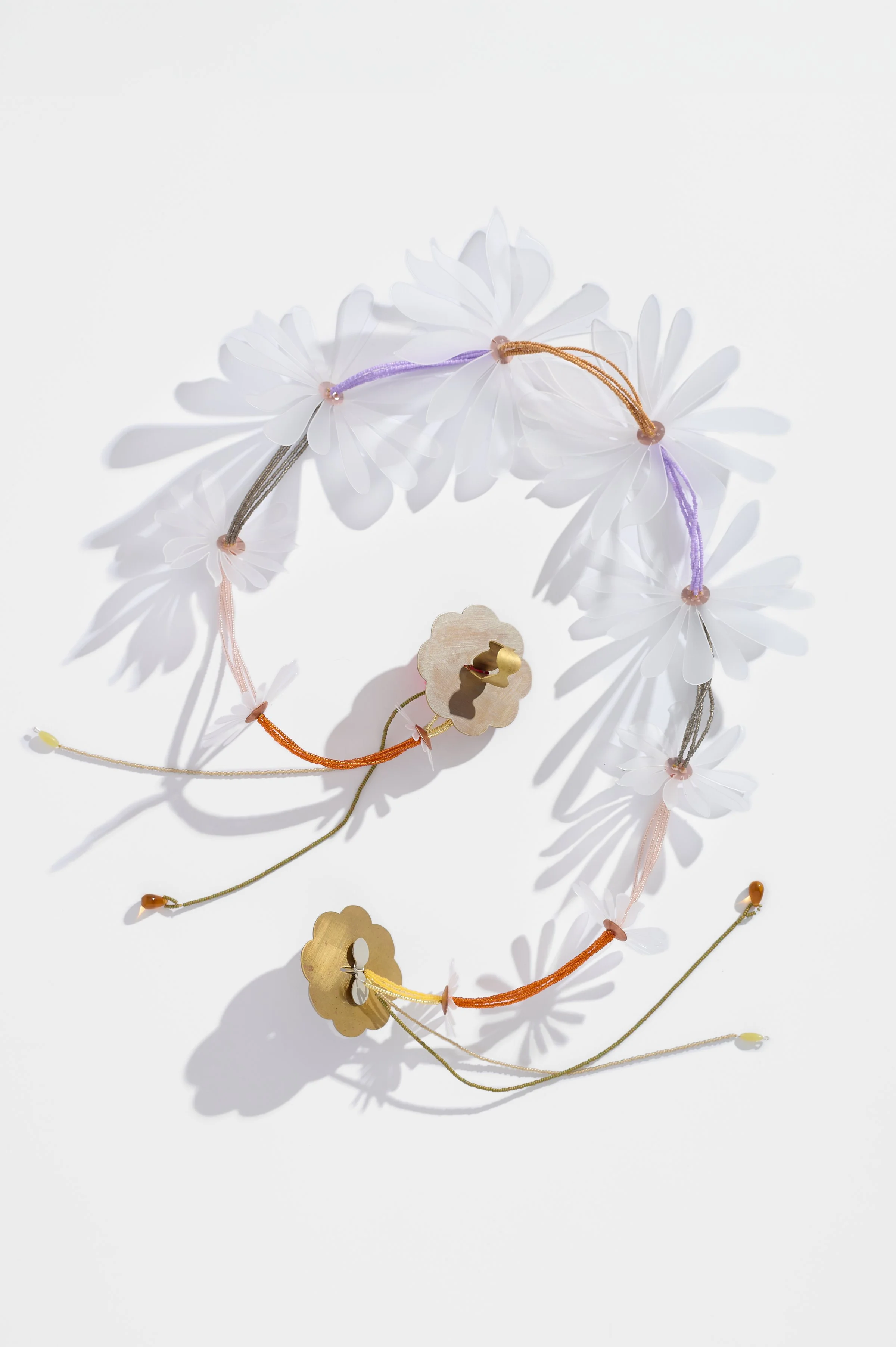
Artwork detail: Elisa Zoraquin, 'Do we know each other?', stainless steel wire, french wire, repurposed glass beads, brass, polypropylene, crimps, paint, 140 mm x 140 mm x 950 mm, 2024.
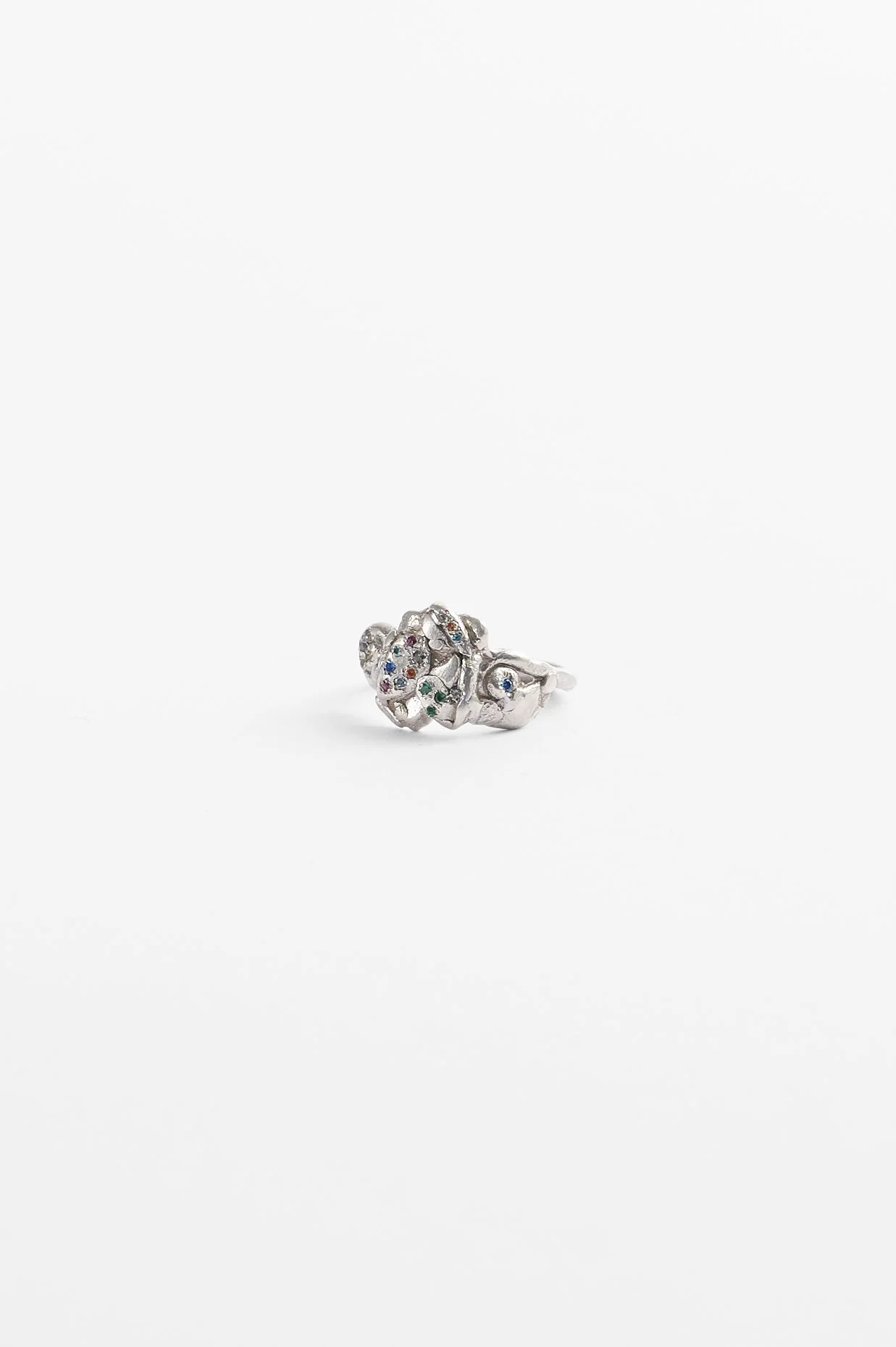
Audrey Tan (25) 1. ‘Crushed sandcastles’, sterling silver, lab grown spinel, ruby, moissanite, nano and sapphire, approx. size K, 2025. Photography: Ross Coulter
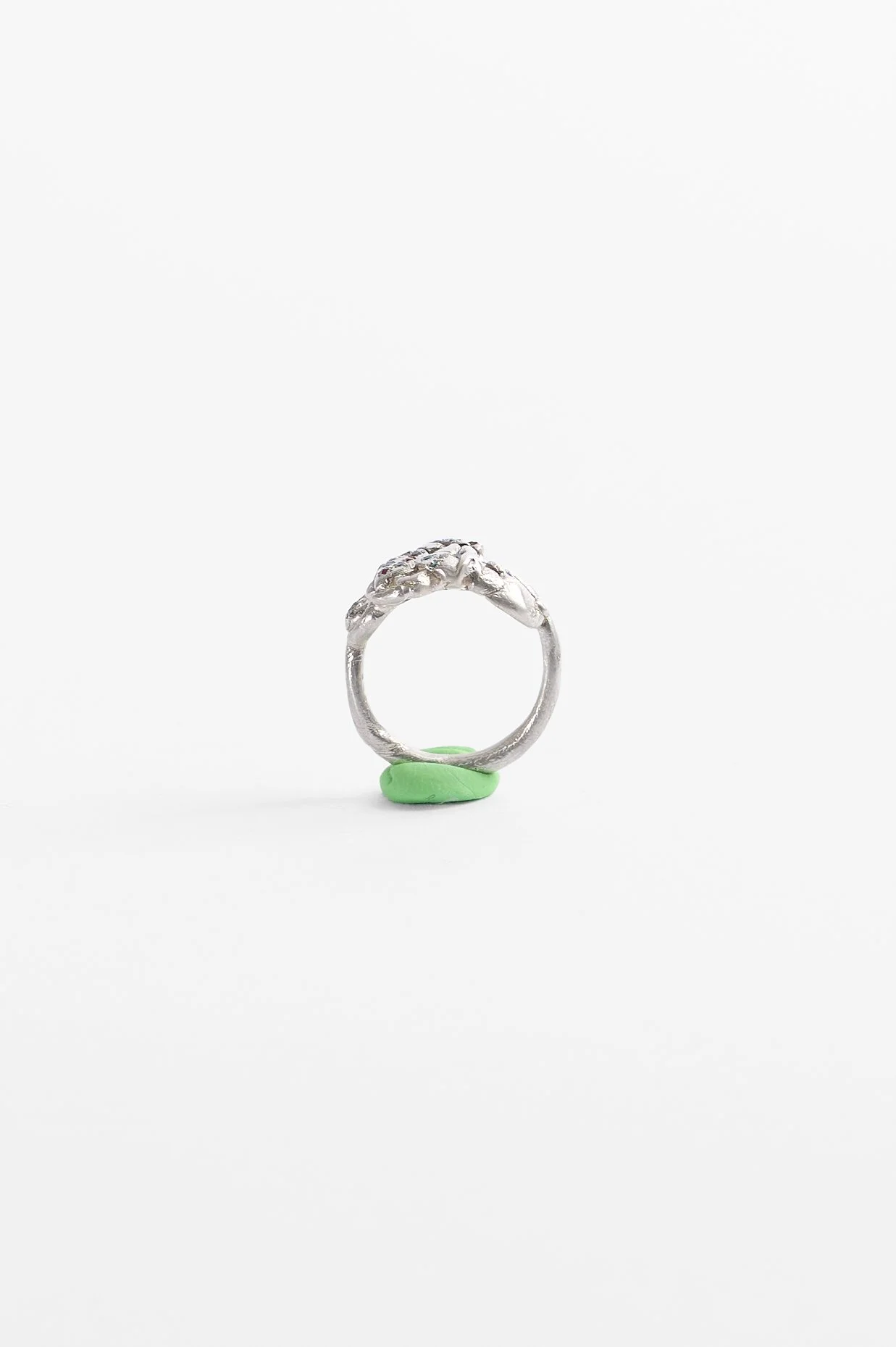
Audrey Tan (25) 1. ‘Crushed sandcastles’, sterling silver, lab grown spinel, ruby, moissanite, nano and sapphire, approx. size K, 2025. Photography: Ross Coulter
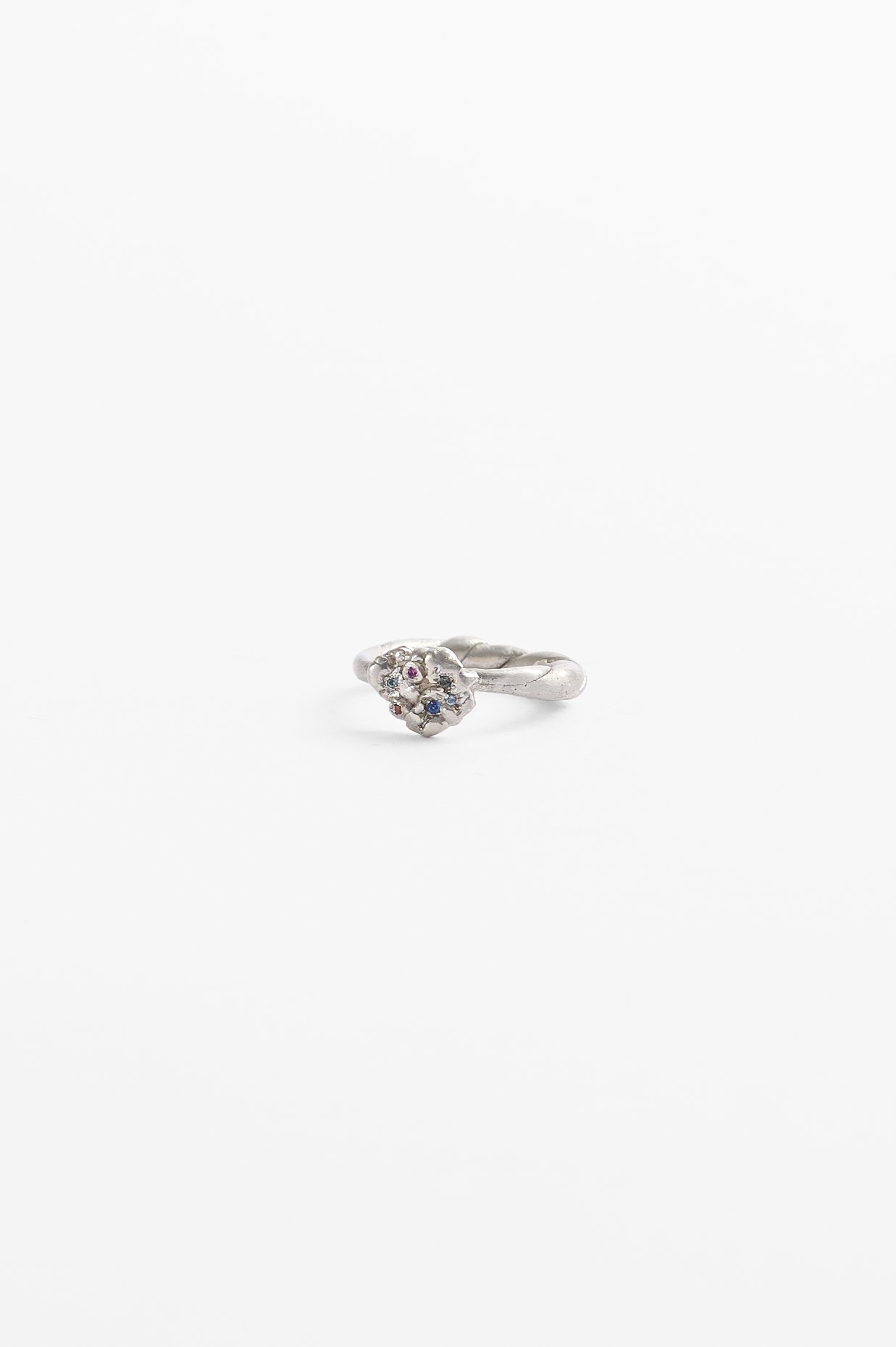
Audrey Tan (25) 3. Bug Croissant’, sterling silver, lab grown spinel, ruby, moissanite, nano and sapphire, approx. size K, 2025. Photography: Ross Coulter
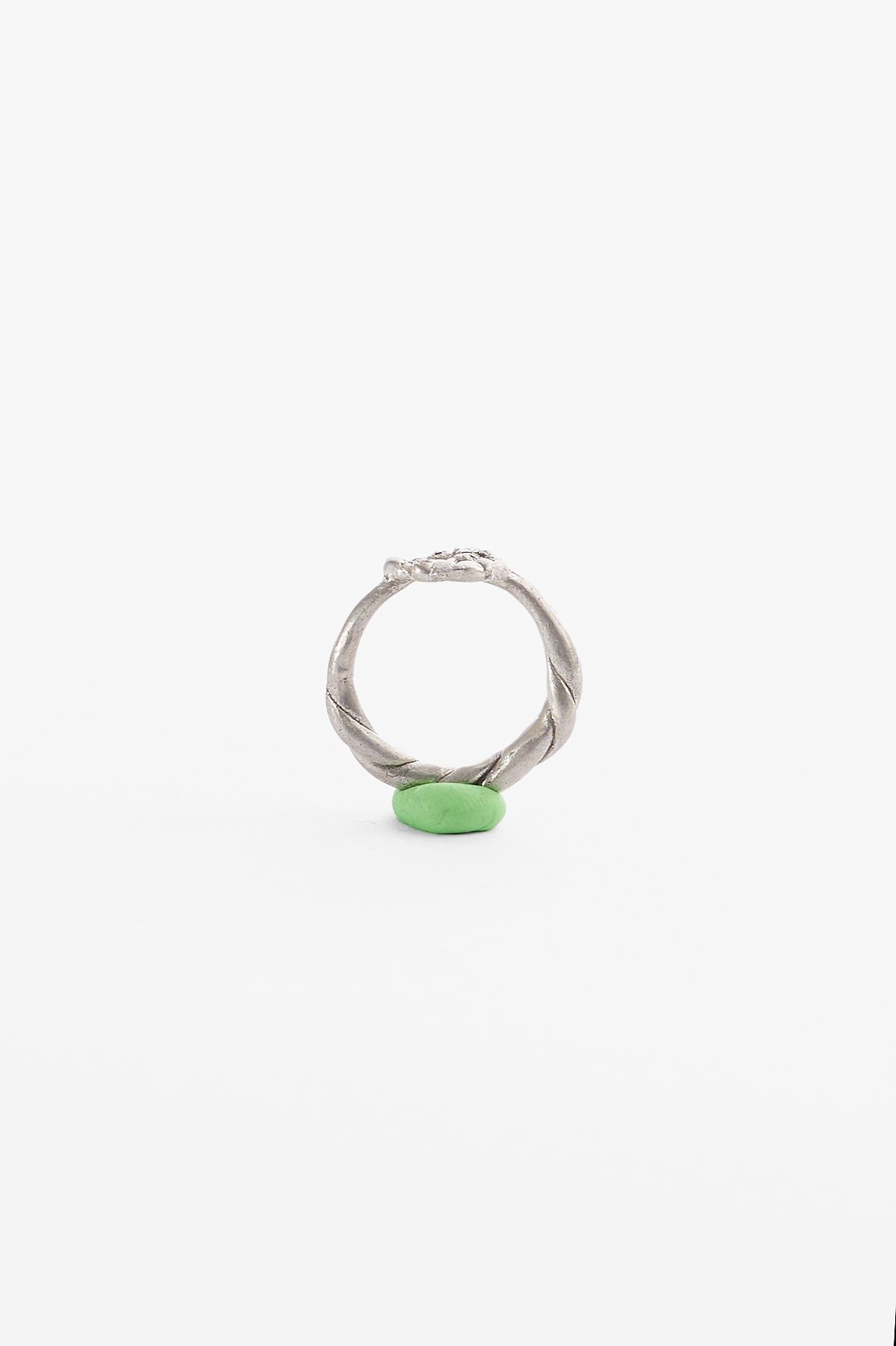
Audrey Tan (25) 3. Bug Croissant’, sterling silver, lab grown spinel, ruby, moissanite, nano and sapphire, approx. size K, 2025. Photography: Ross Coulter
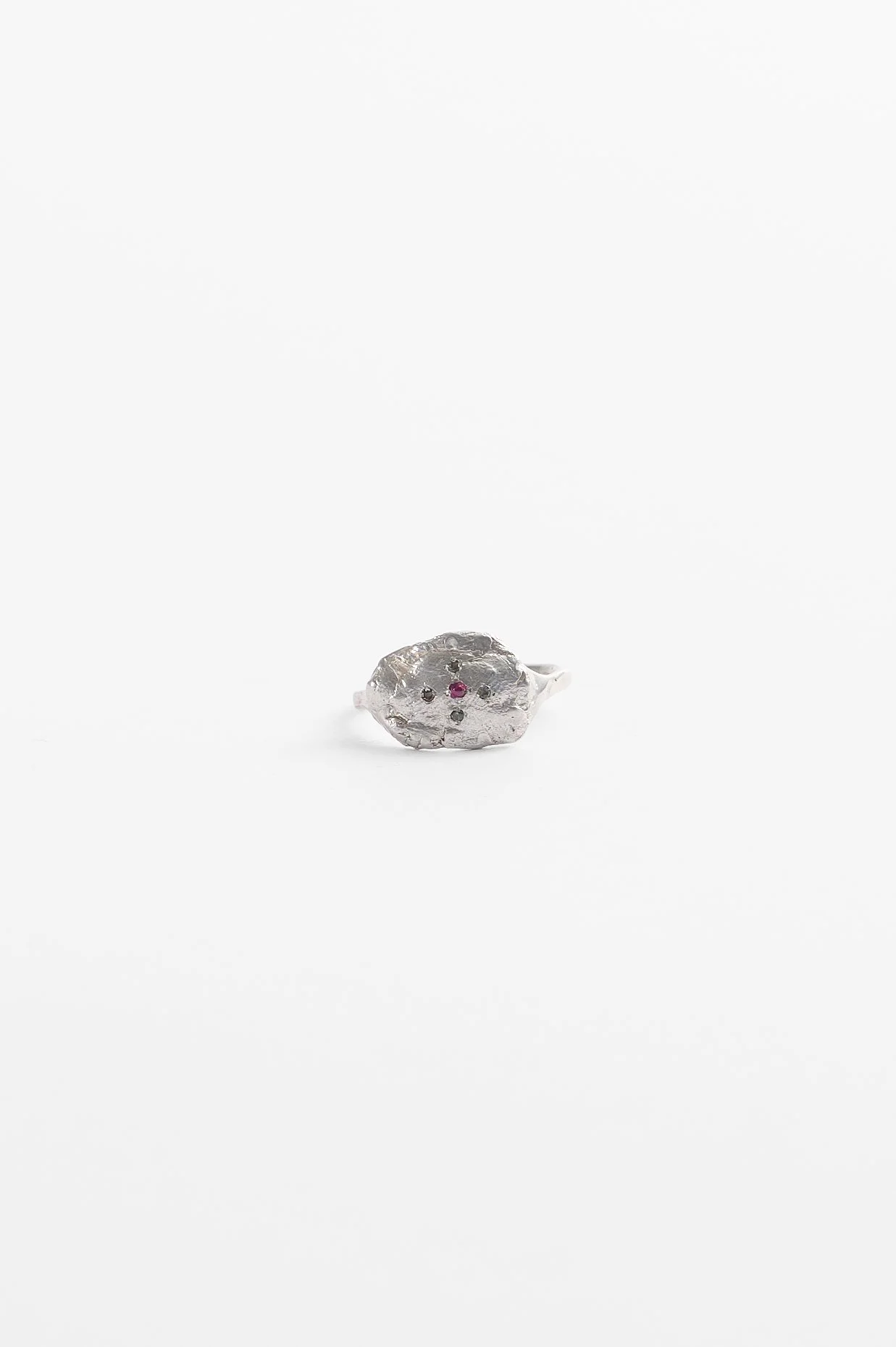
Audrey Tan (25) 2. ‘Beetle shield’, sterling silver, lab grown spinel and ruby, approx. size M, 2025. Photography: Ross Coulter
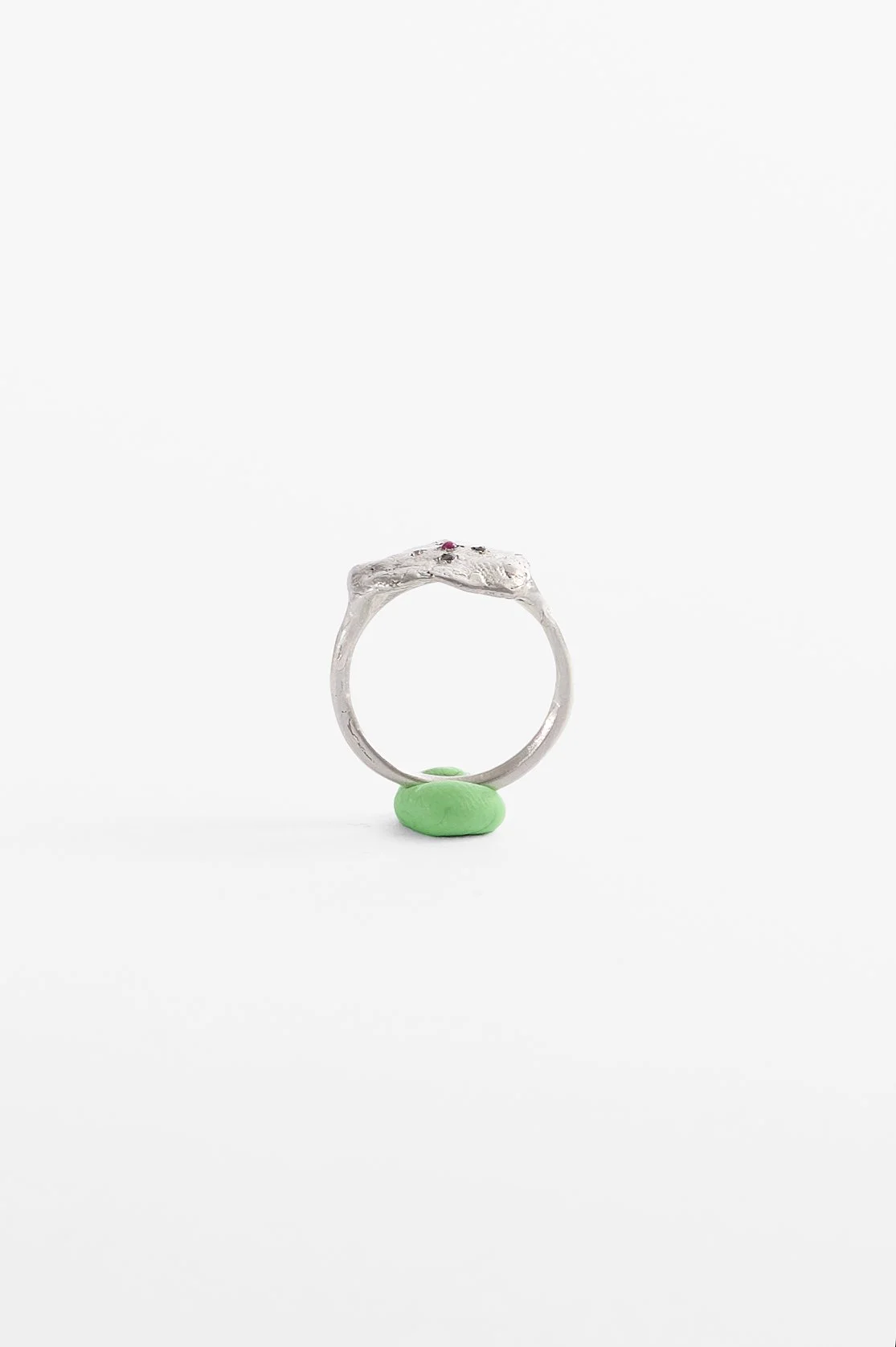
Audrey Tan (25) 2. ‘Beetle shield’, sterling silver, lab grown spinel and ruby, approx. size M, 2025. Photography: Ross Coulter
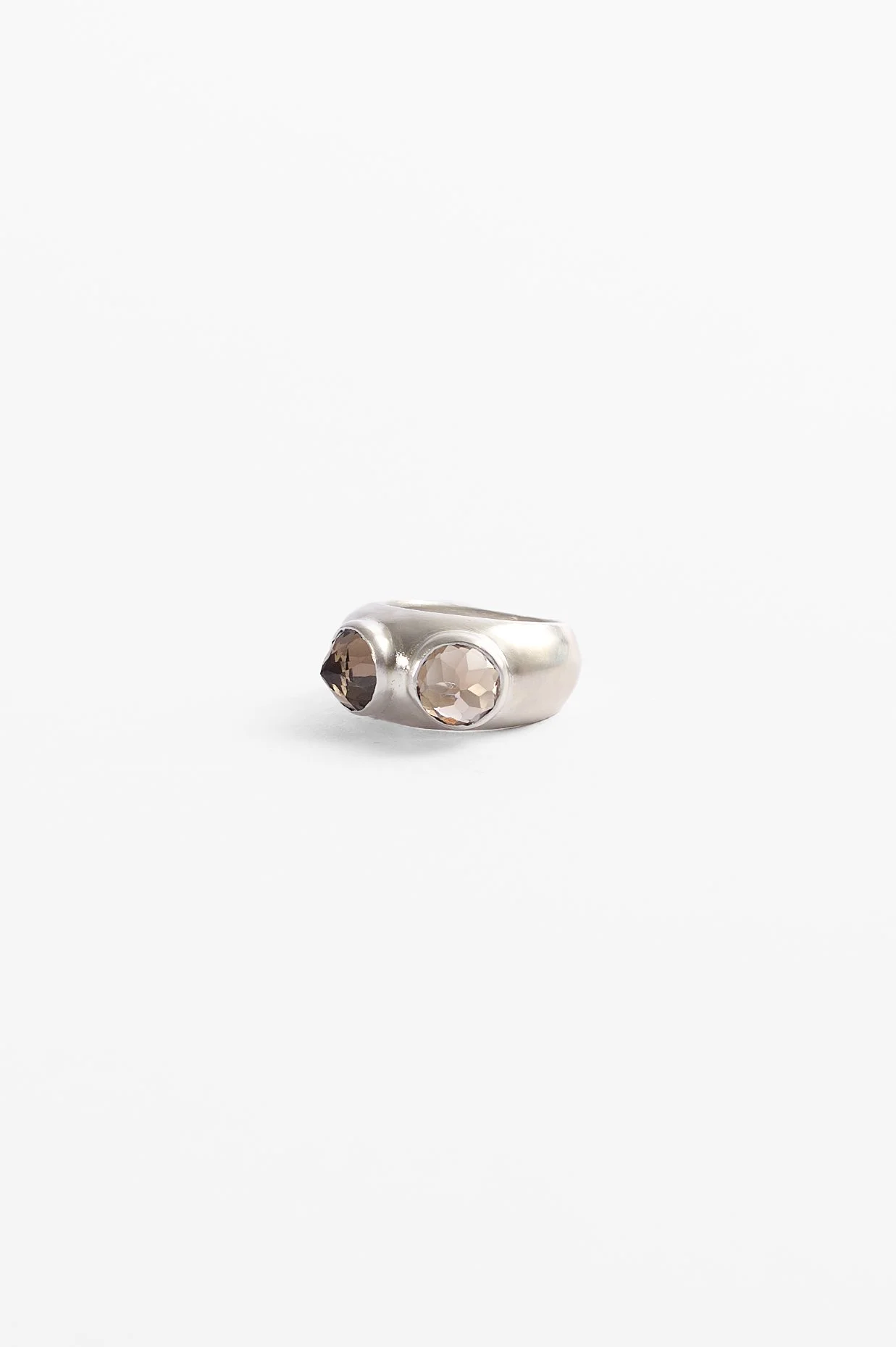
Anna Varendorff (17) ‘The eyes have it’, sterling silver and smoky quartz, approx. size K, 2025. Photography: Ross Coulter

Anna Varendorff (17) ‘The eyes have it’, sterling silver and smoky quartz, approx. size K, 2025. Photography: Ross Coulter

Bhanu Mistry (16) 2. ‘Abundance ring’, sterling silver, approx. size L, 2016. Photography: Ross Coulter
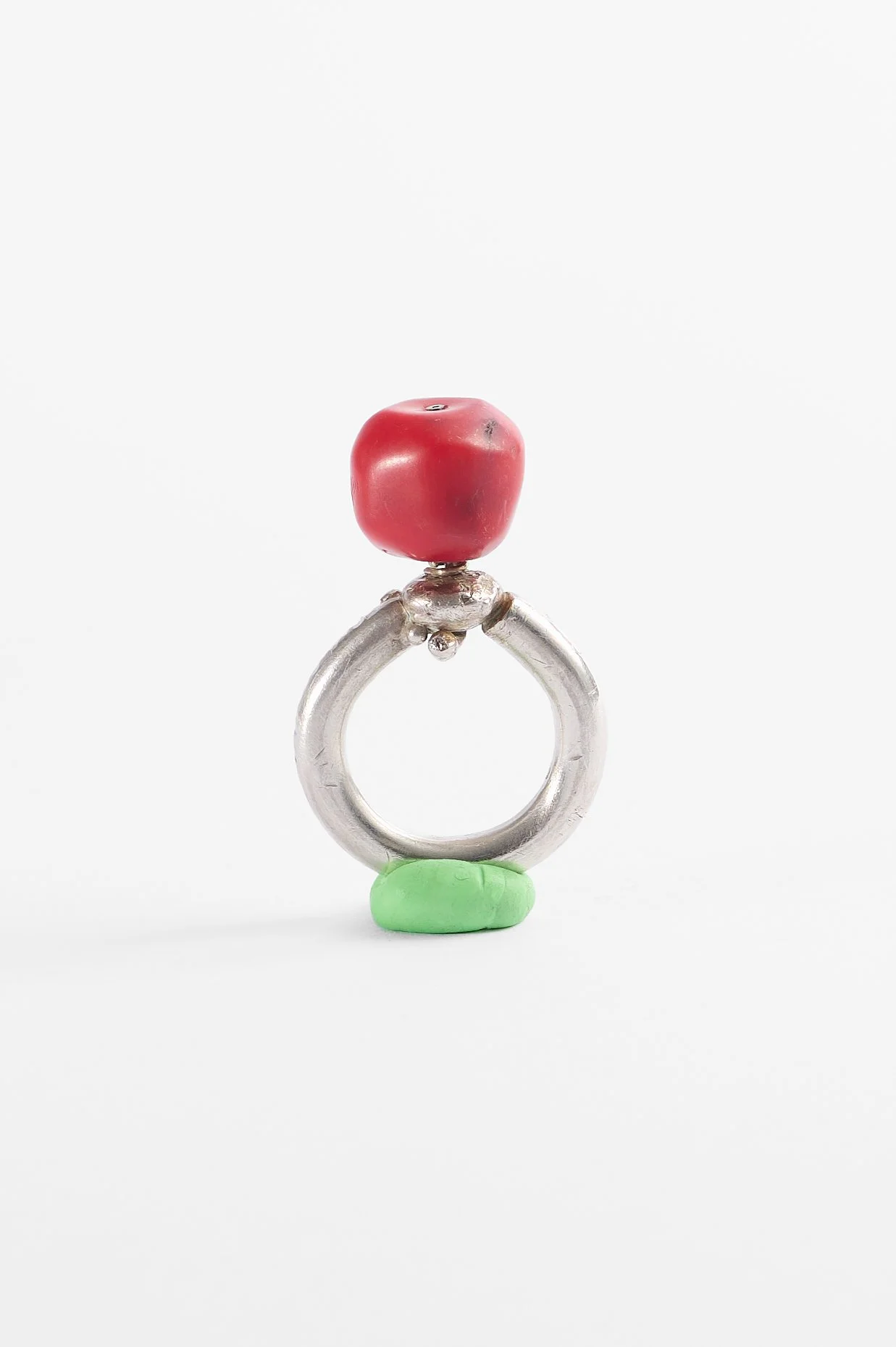
Bhanu Mistry (16) 4. ‘Coral ceremonial fasting ring’, sterling silver, approx. size P1/2, 2021. Photography: Ross Coulter
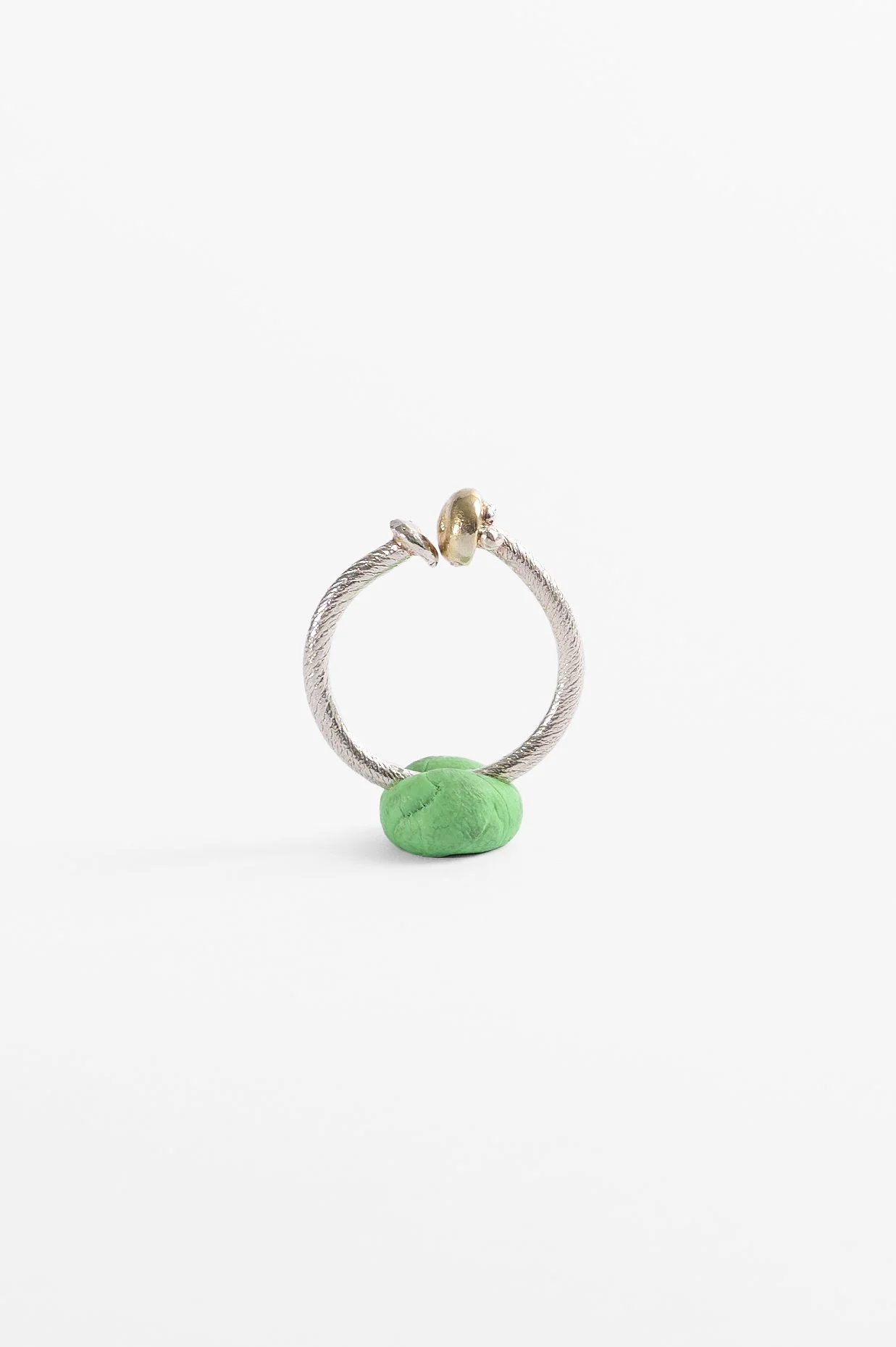
Bhanu Mistry (24) 2. ‘Nail ring with gold embellishment’, sterling silver, approx. size Q, 2021. Photography: Ross Coulter
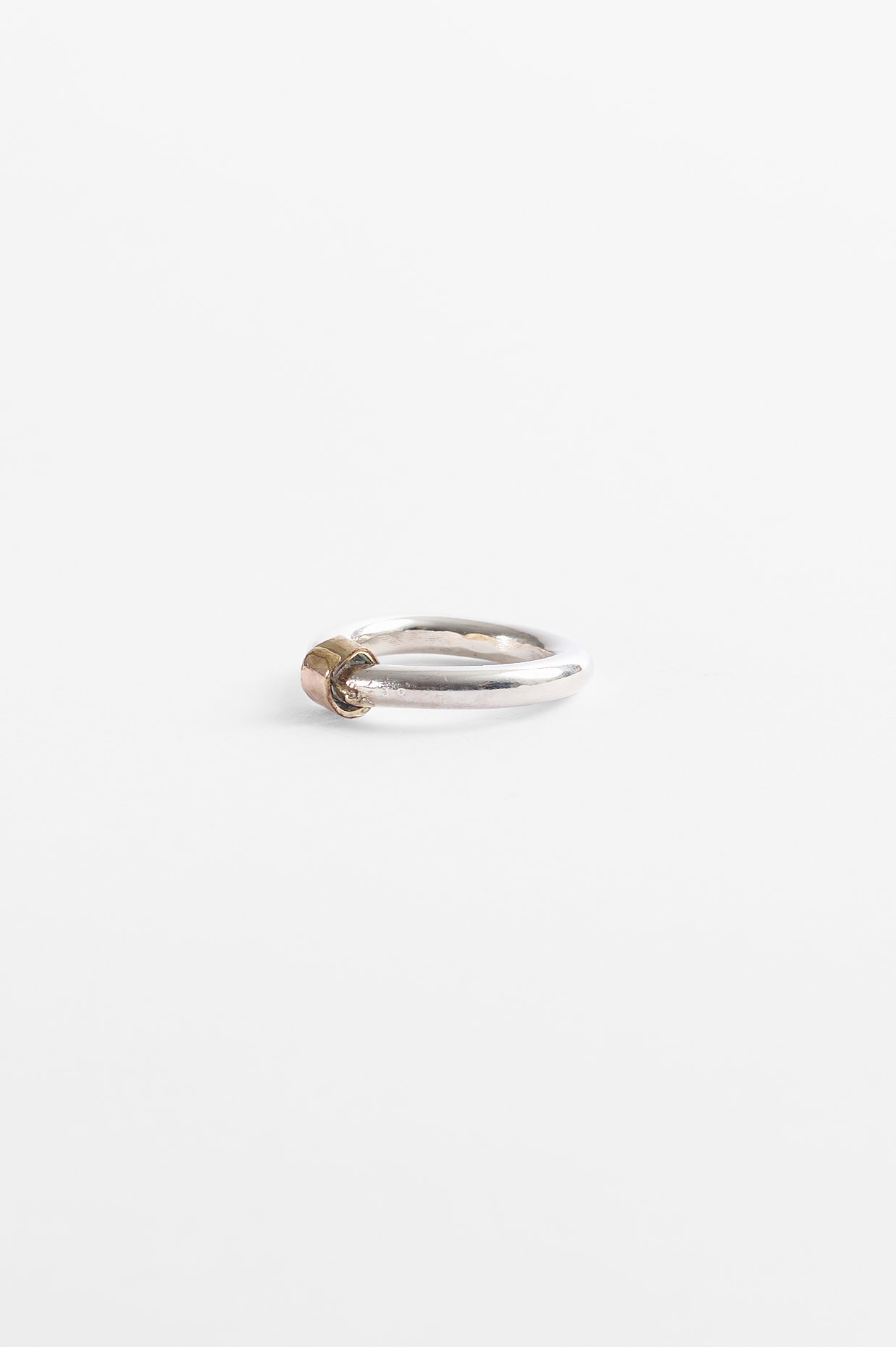
Bhanu Mistry (24) 3. ‘Silver/gold ceremonial ring’, sterling silver, approx. size T, 2024. Photography: Ross Coulter
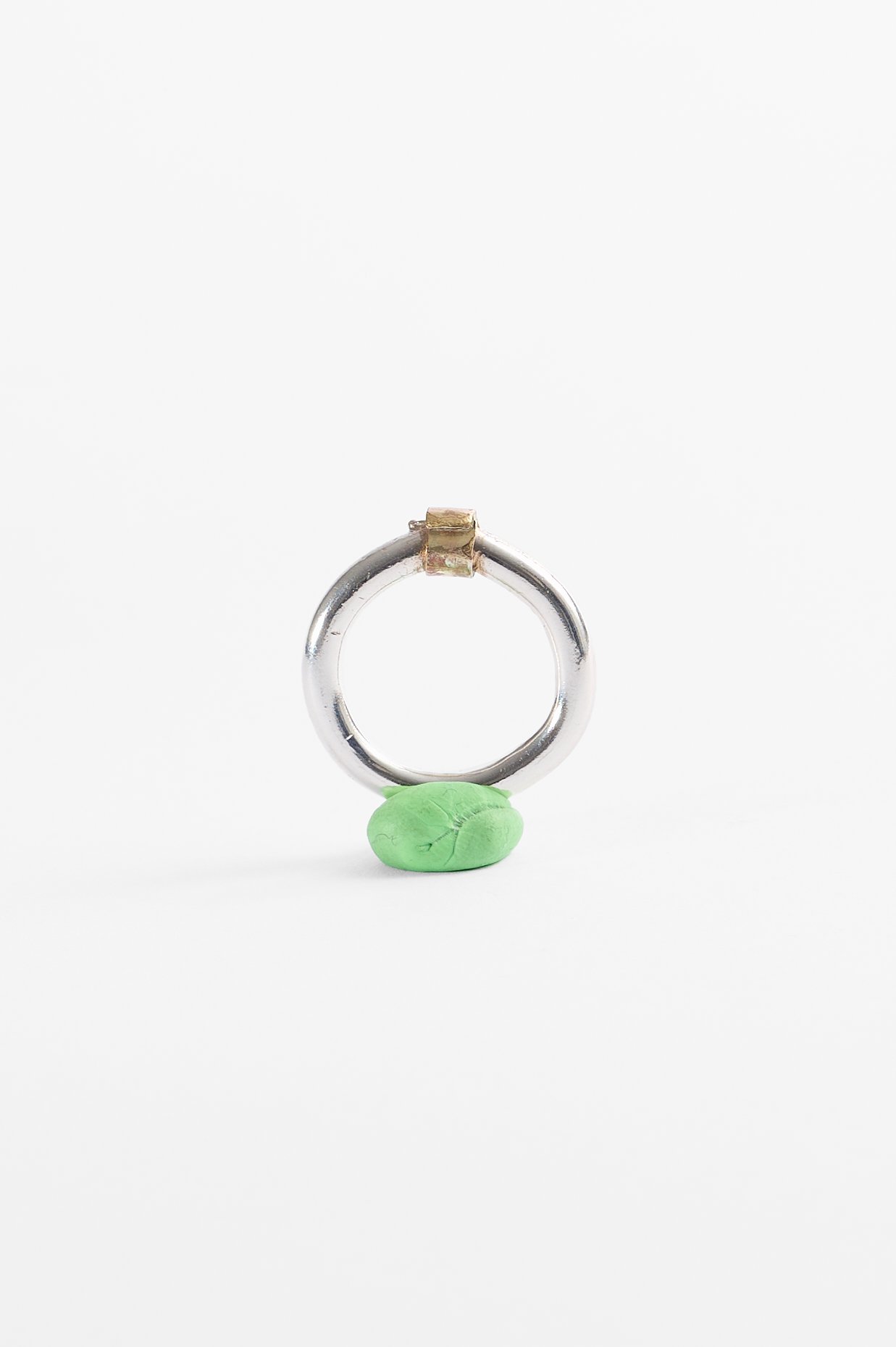
Bhanu Mistry (24) 3. ‘Silver/gold ceremonial ring’, sterling silver, approx. size T, 2024. Photography: Ross Coulter
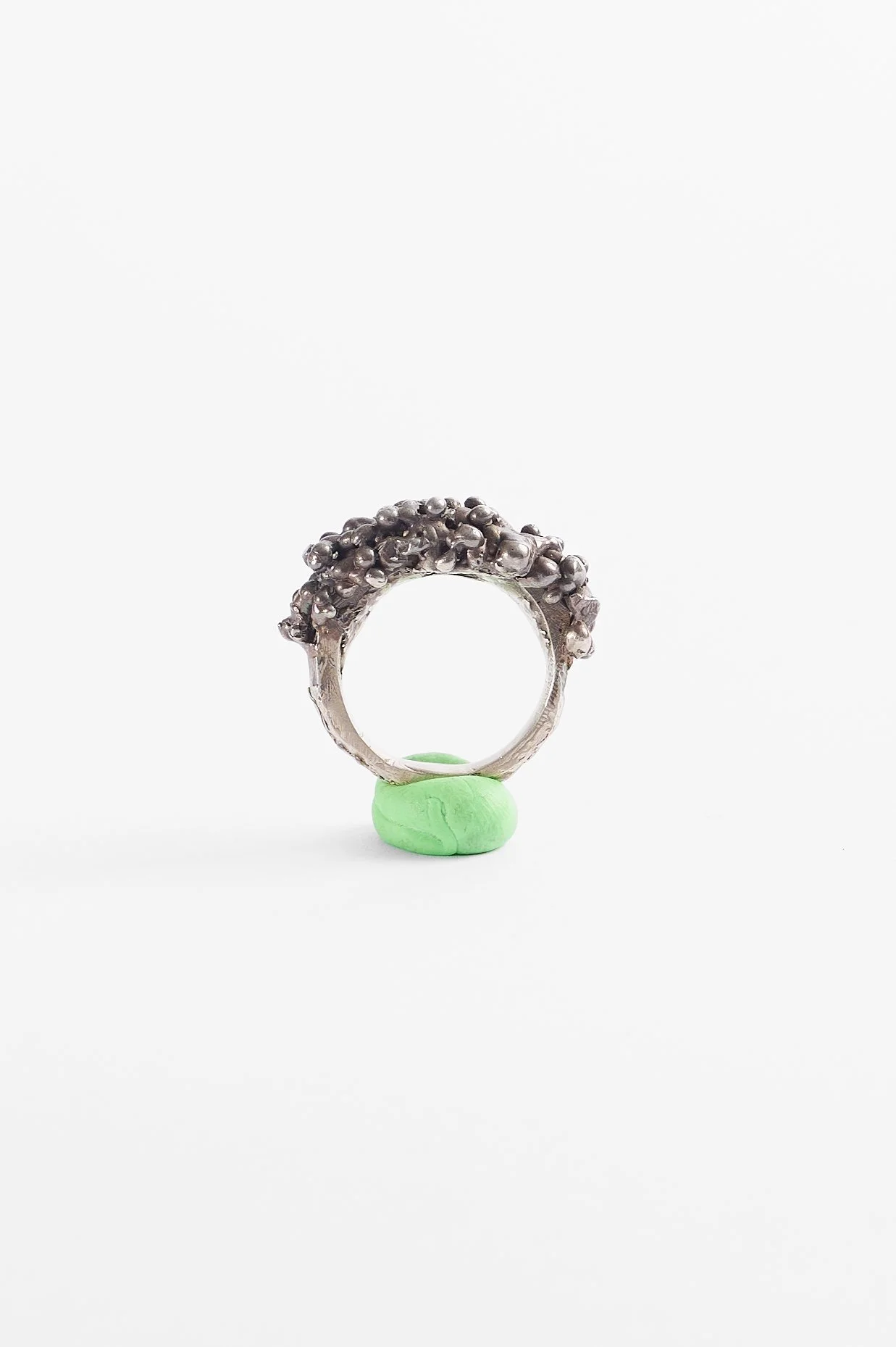
Bhanu Mistry (16) 3. ‘Poppyseed ring’, sterling silver, approx. size O, 2023. Photography: Ross Coulter
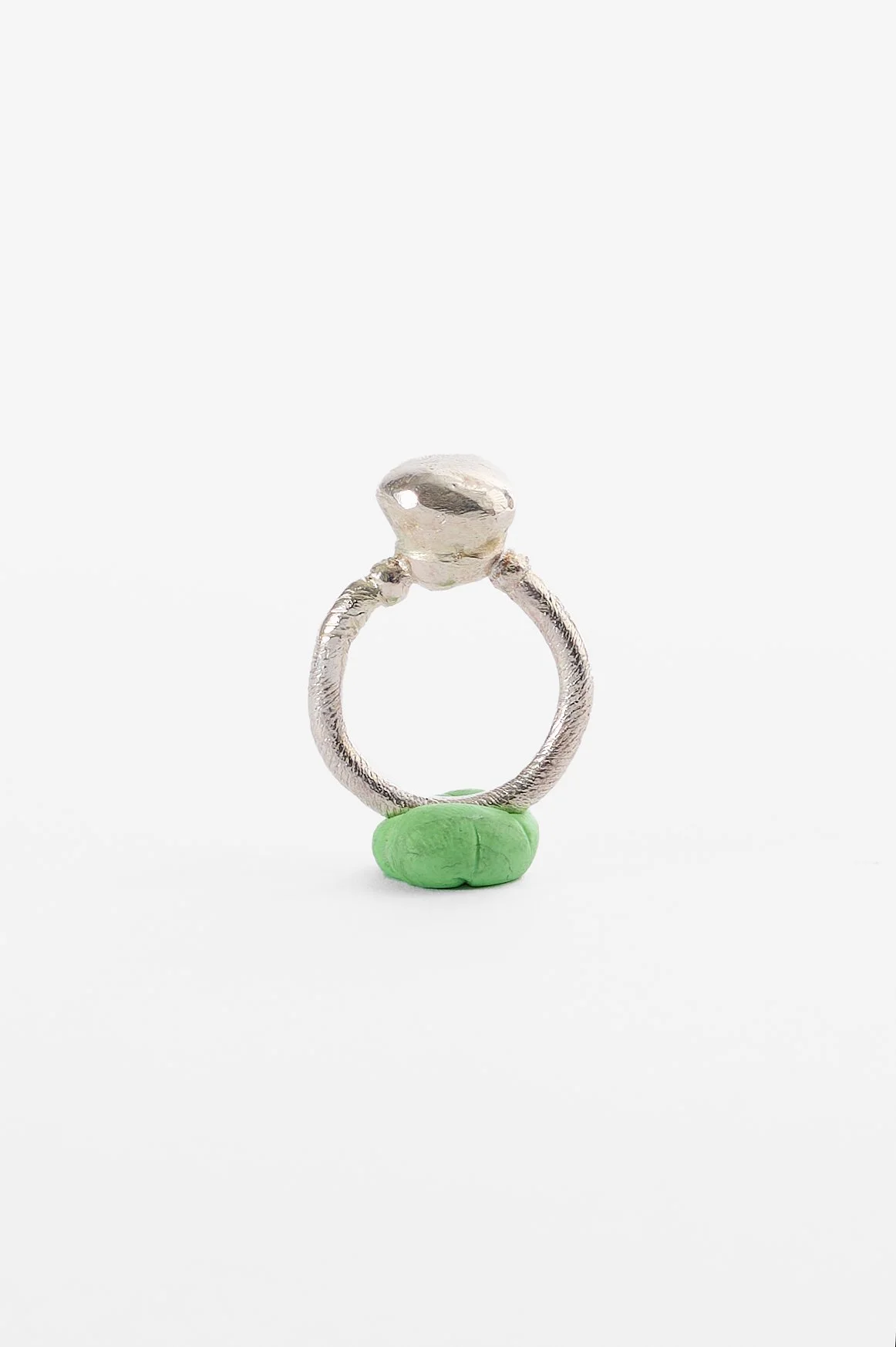
Bhanu Mistry (14) 5. ‘Pussy willow inspiration ring v2’, sterling silver, approx. size M, 2023. Photography: Ross Coulter
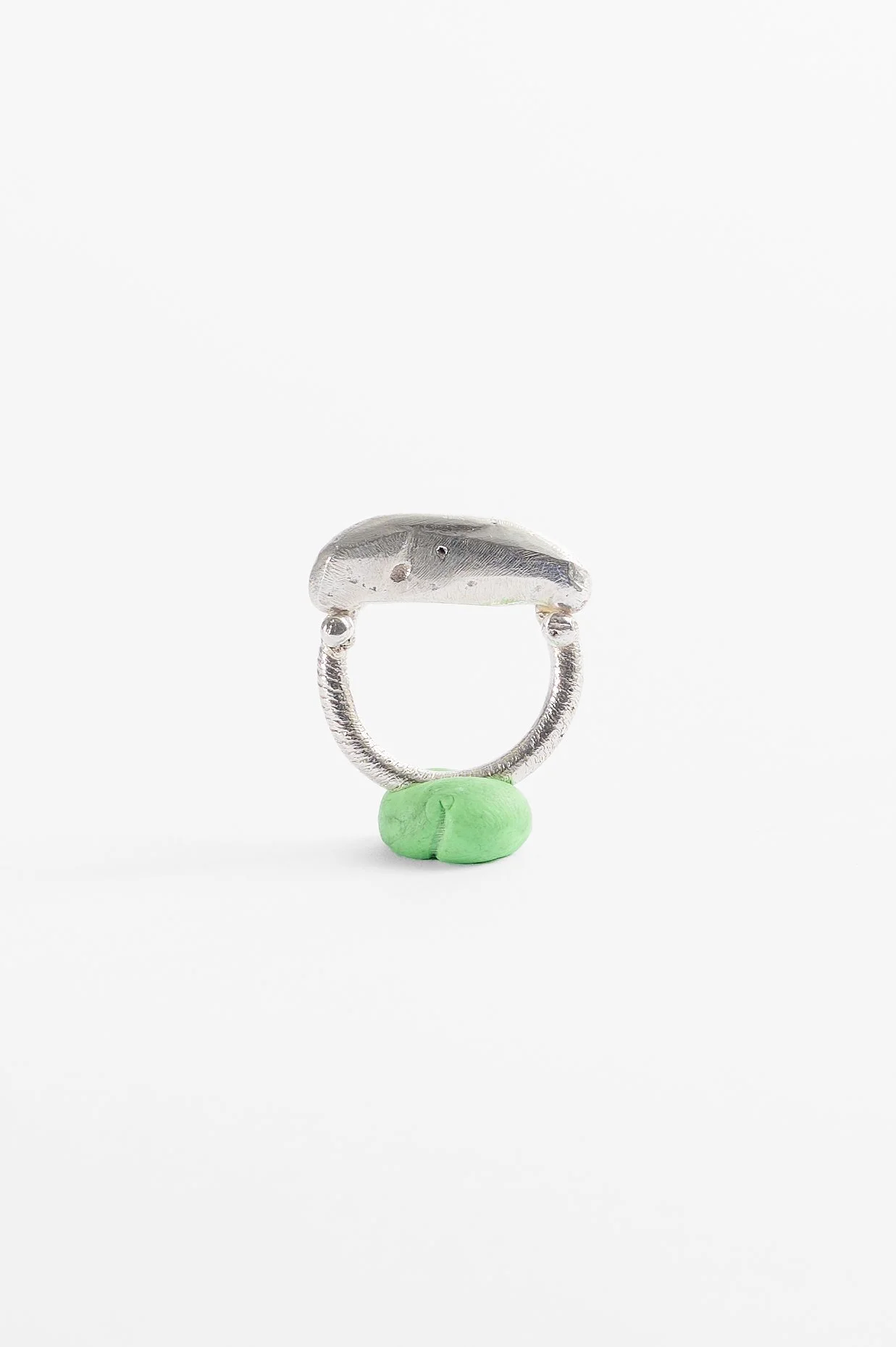
Bhanu Mistry (14) 2. ‘Sea frond ring’, sterling silver, 2021. Photography: Ross Coulter
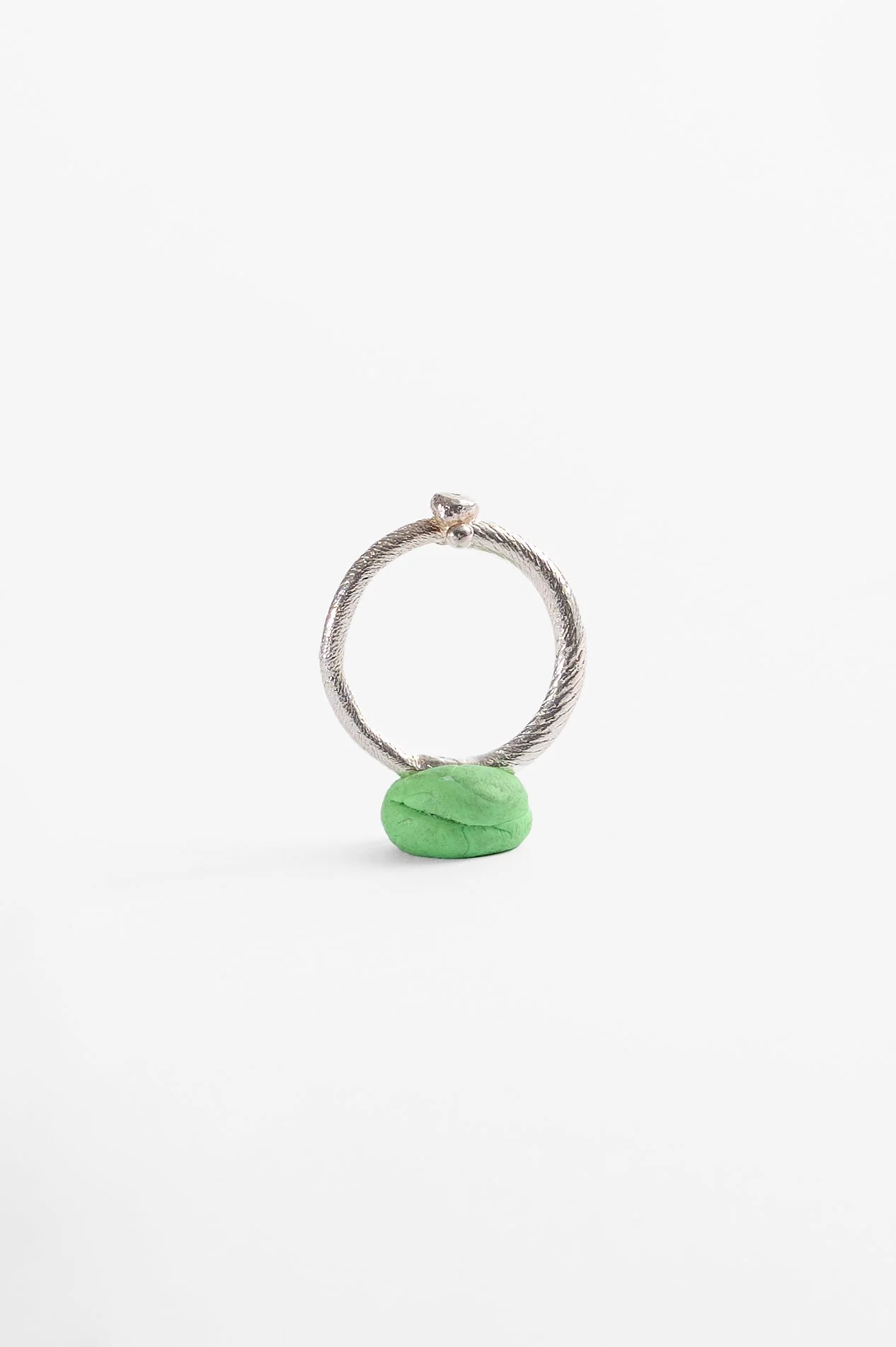
Bhanu Mistry (14) 3. ‘Nail ring’, sterling silver, approx. size T, 2021. Photography: Ross Coulter

Bhanu Mistry (14) 4. ‘Sea pod ring’, sterling silver, 2021. Photography: Ross Coulter
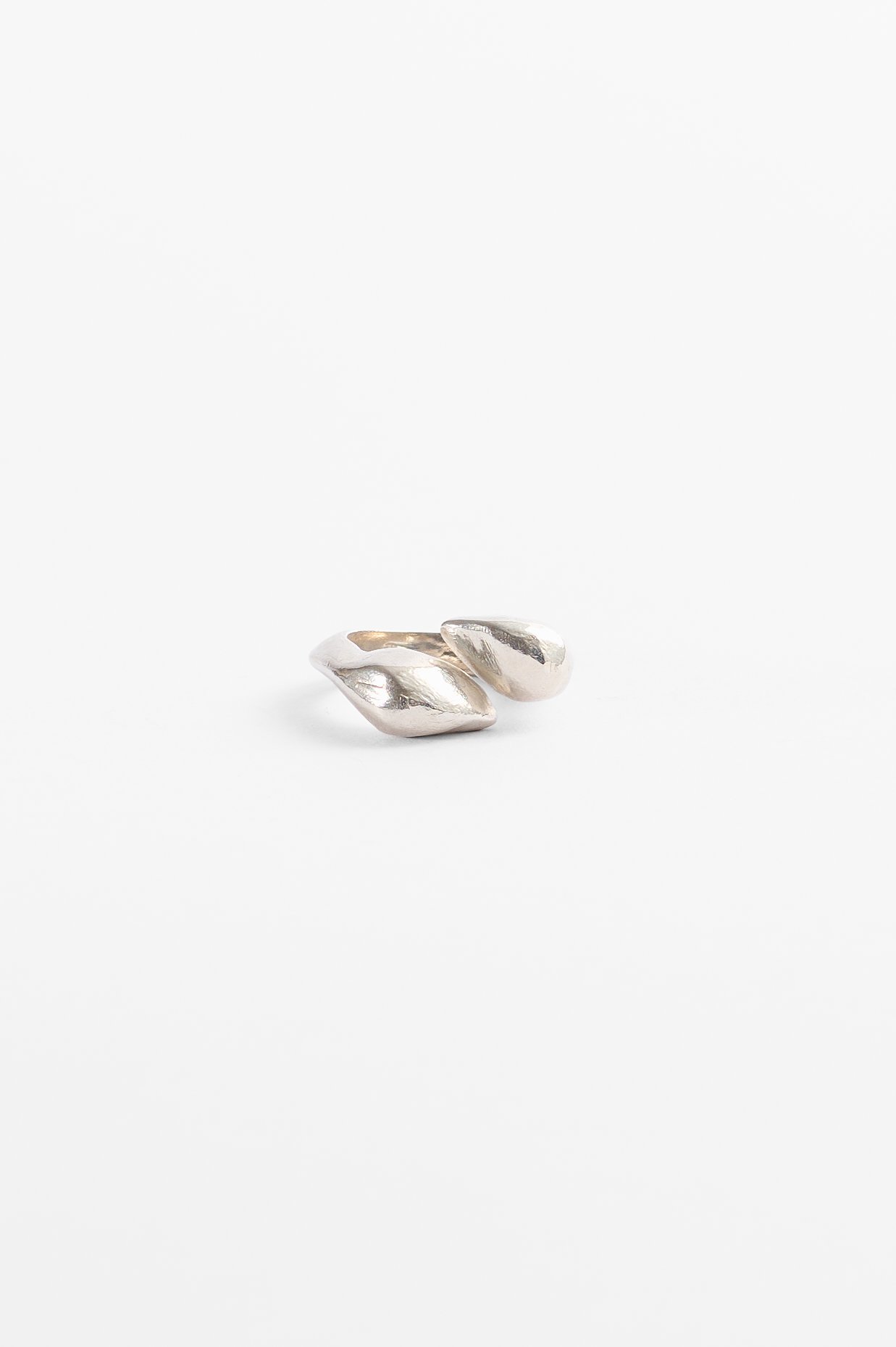
Bhanu Mistry (14) 5. ‘Pussy willow inspiration ring v2’, sterling silver, approx. size M, 2023. Photography: Ross Coulter
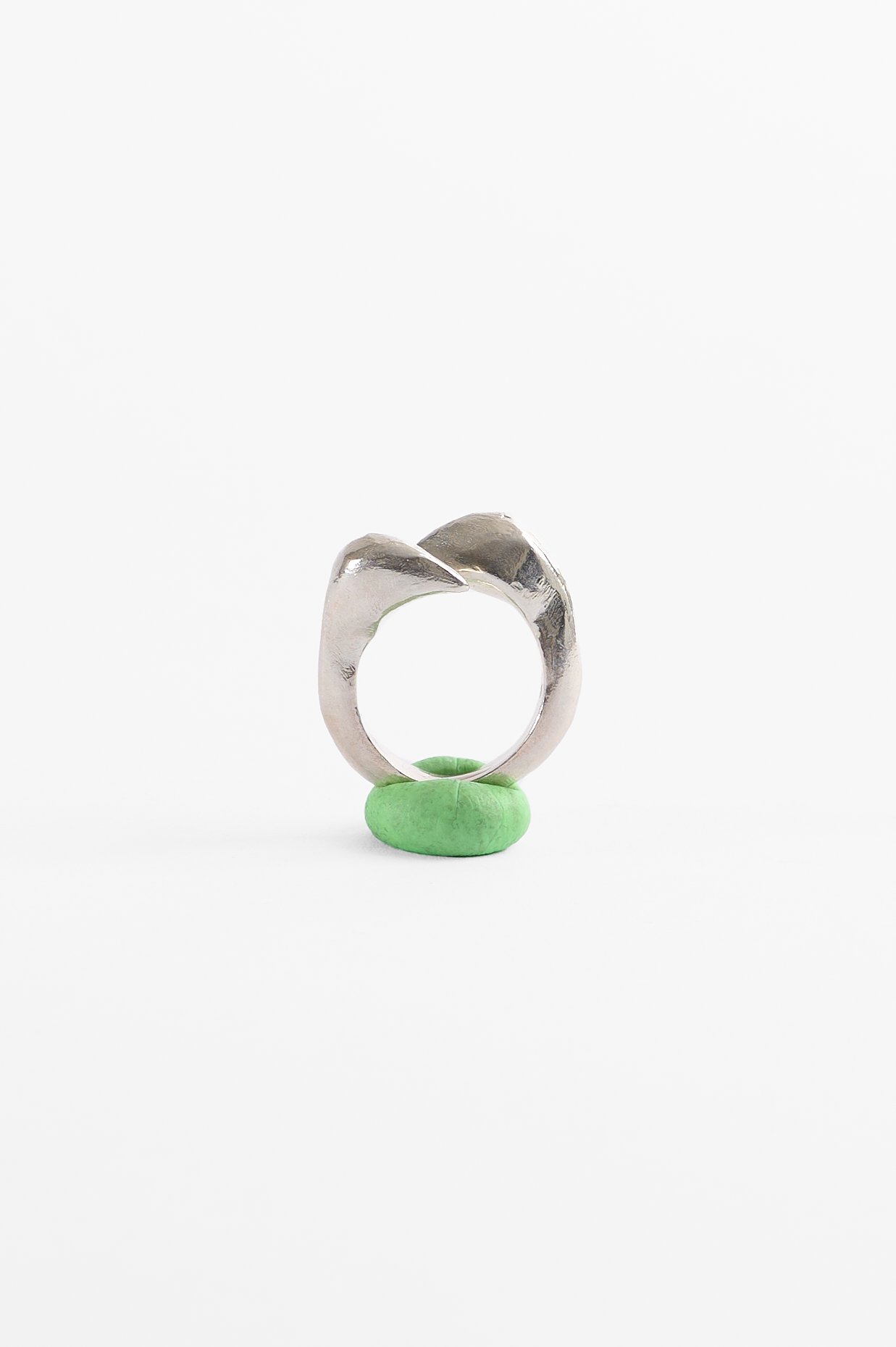
Bhanu Mistry (14) 5. ‘Pussy willow inspiration ring v2’, sterling silver, approx. size M, 2023. Photography: Ross Coulter
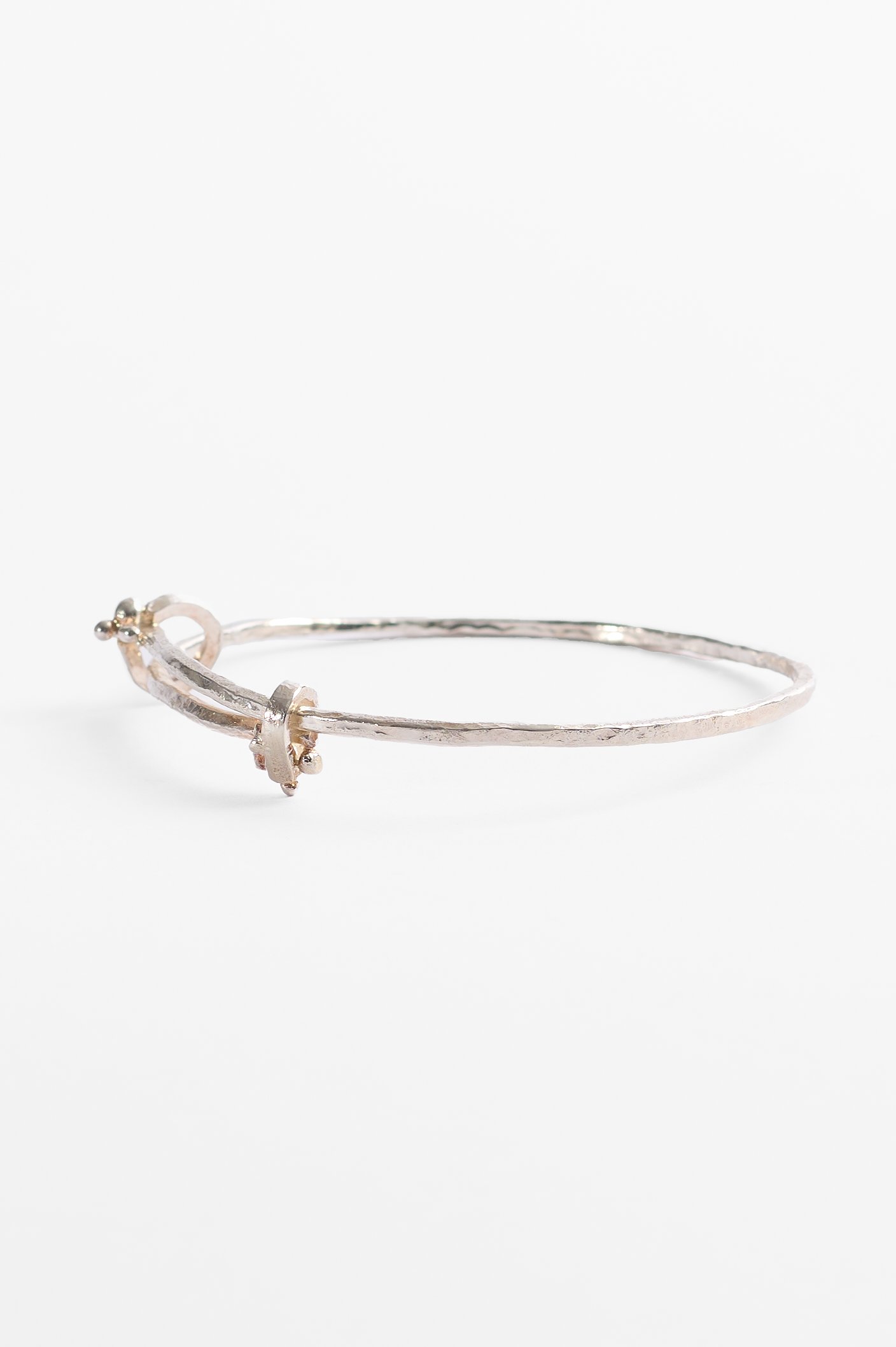
Bhanu Mistry (14) 1. ‘Bracelet’, sterling silver, 65 x 75 x 10mm adjustable, 2024. Photography: Ross Coulter
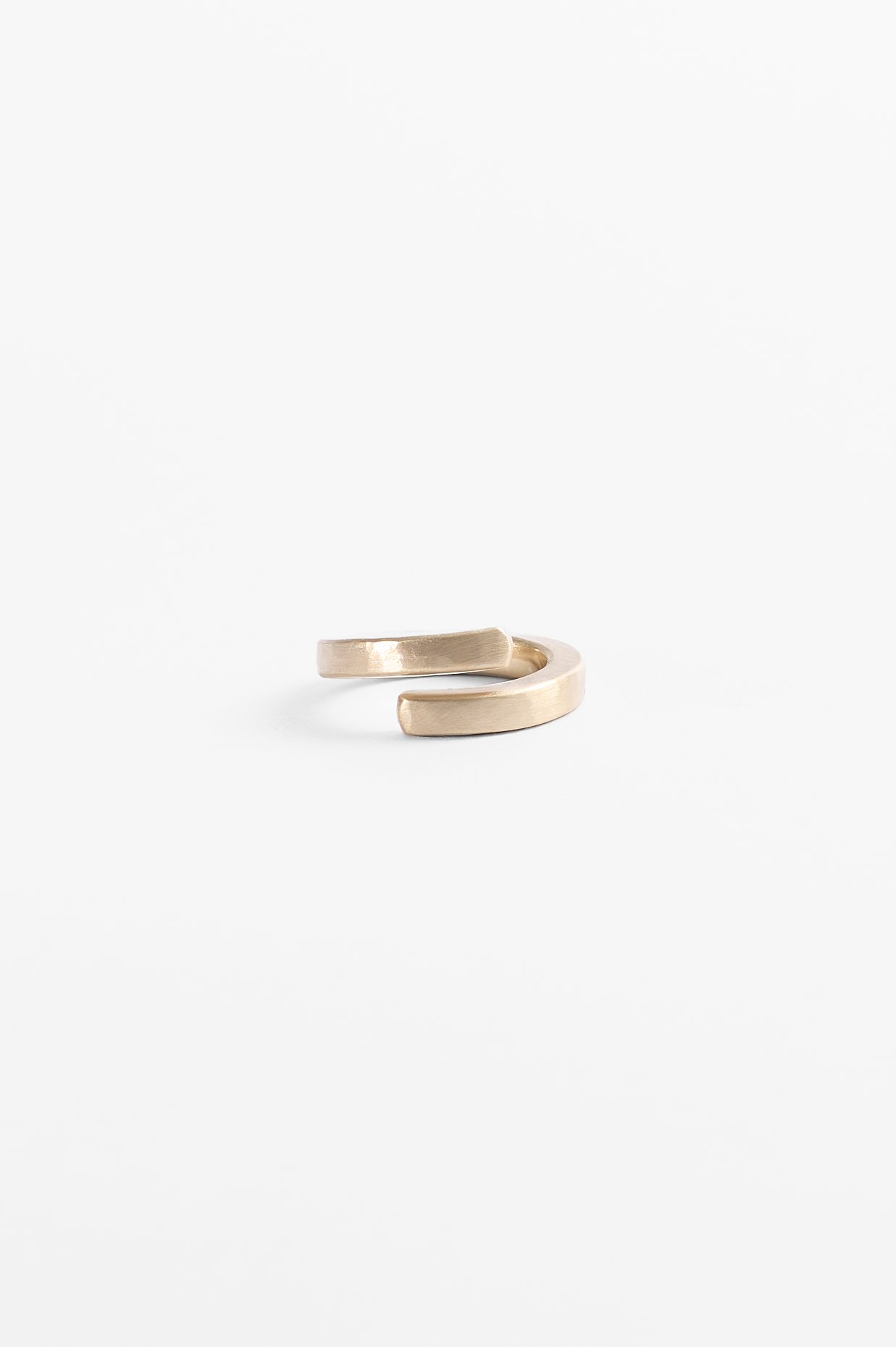
Belinda Newick (28) 4. ‘Amy ring’, 9ct yellow gold split ring, approx. size O, 2025. Photography: Ross Coulter
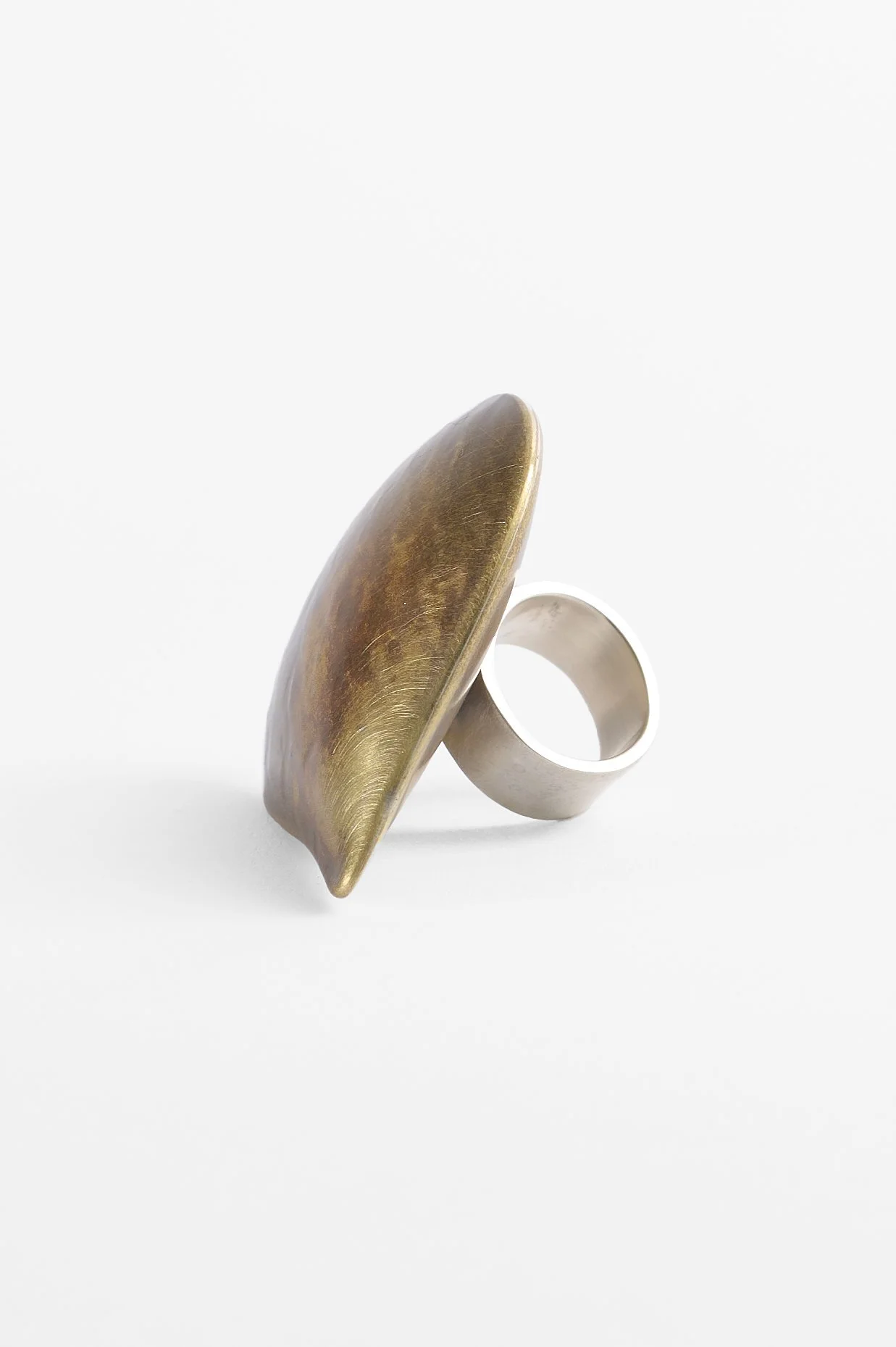
Belinda Newick (28) 1. ‘Teardrop ring’, brass, patina, 925 silver, 2025. Photography: Ross Coulter
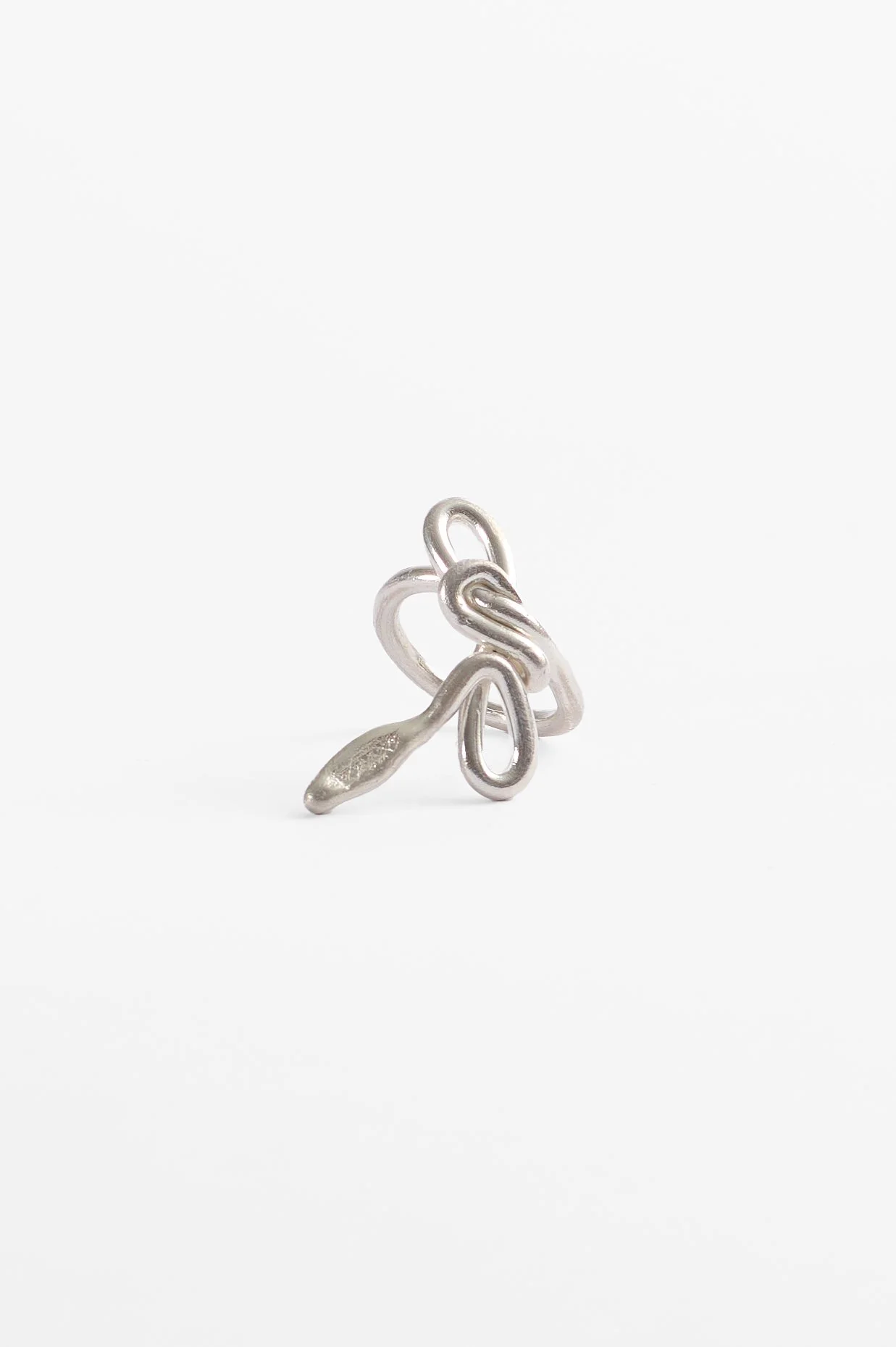
Celia Dottore (2) ‘Serpent Shield’, (1-approx size U: 2-approx size O; 3-approx size O; 4-approx size P1/2; 5-approx size K1/2; 6-approx size K), sterling silver, dimensions variable, 2025. Photography: Ross Coulter
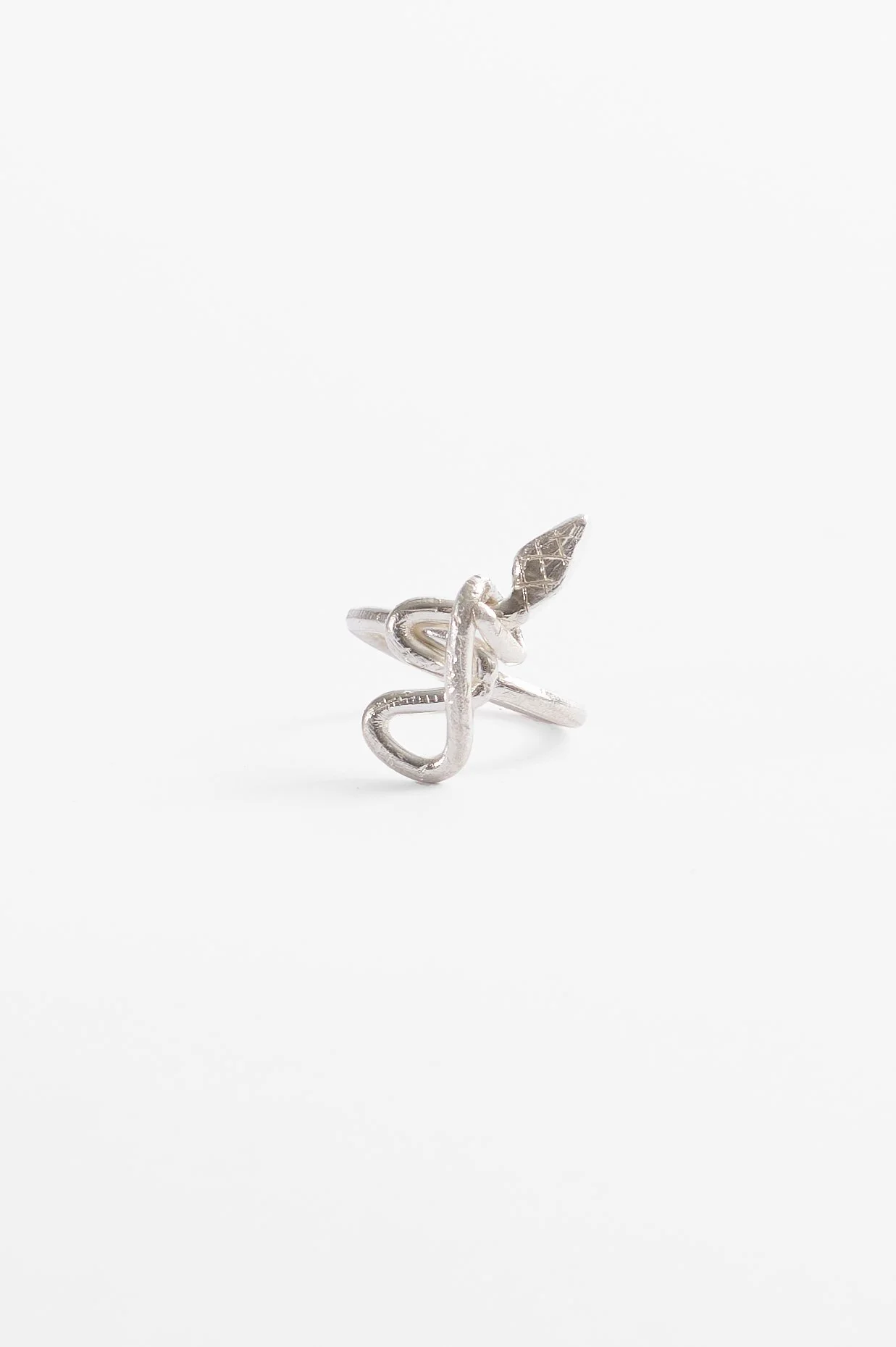
Celia Dottore (2) ‘Serpent Shield’, (1-approx size U: 2-approx size O; 3-approx size O; 4-approx size P1/2; 5-approx size K1/2; 6-approx size K), sterling silver, dimensions variable, 2025. Photography: Ross Coulter
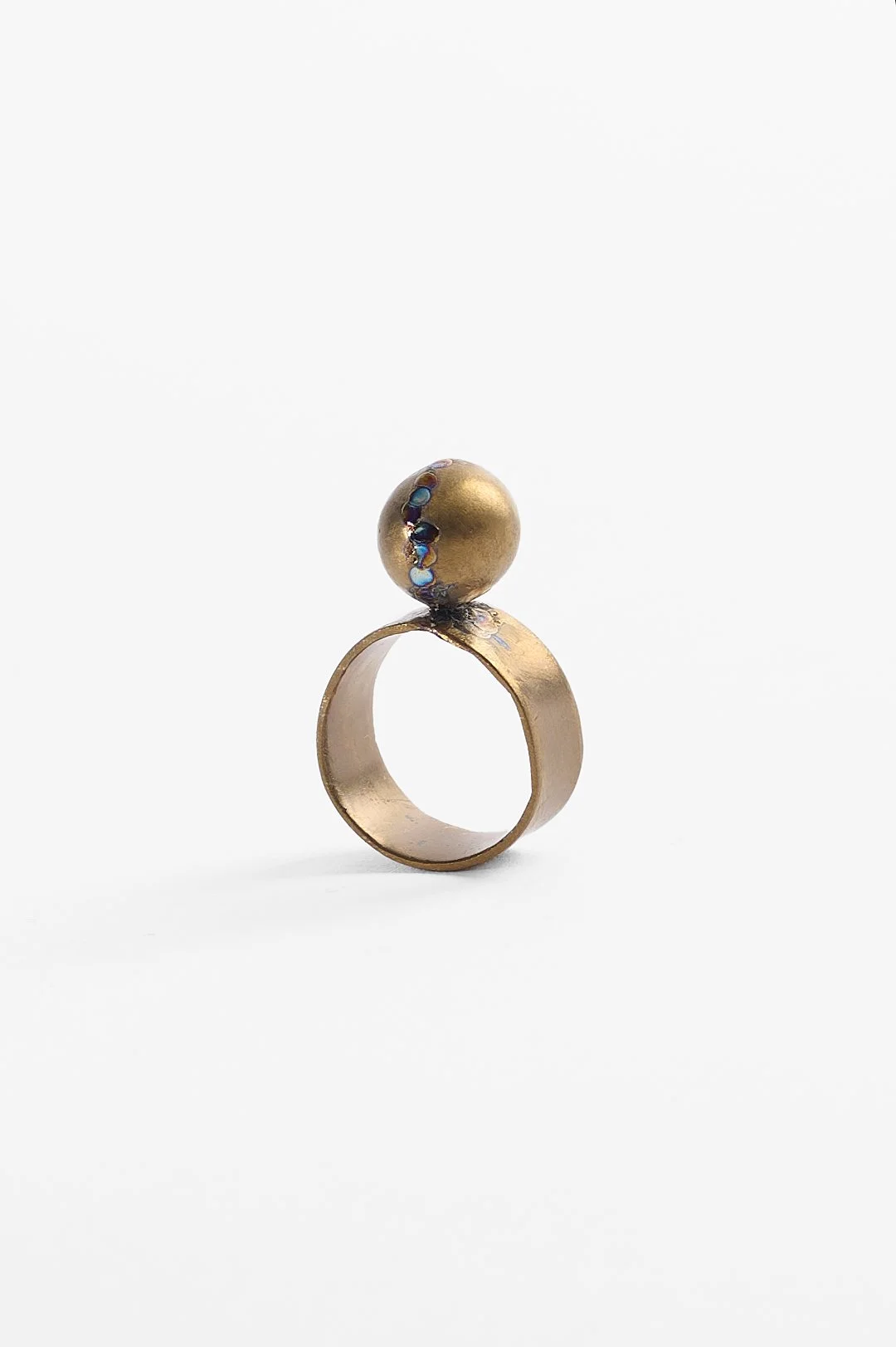
Dee Robinson (5) 2. ‘Several Circles 2’, (gold with welds thick band), annodised titanium, approx. size O, 2025. Photography: Ross Coulter
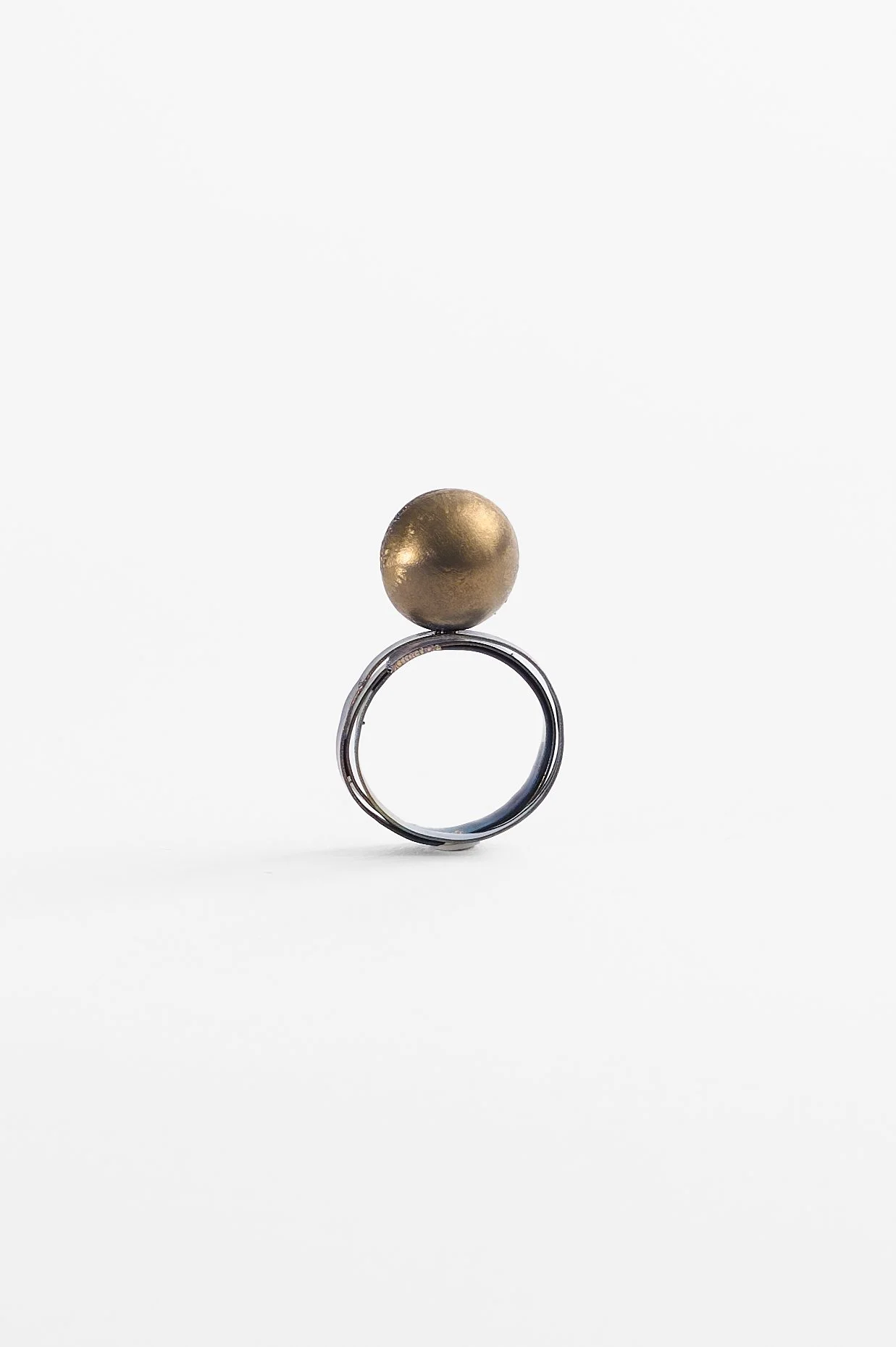
Dee Robinson (5) 3. ‘Several Circles 3’, (blue double band and gold), annodised titanium, approx. size M, 2025. Photography: Ross Coulter
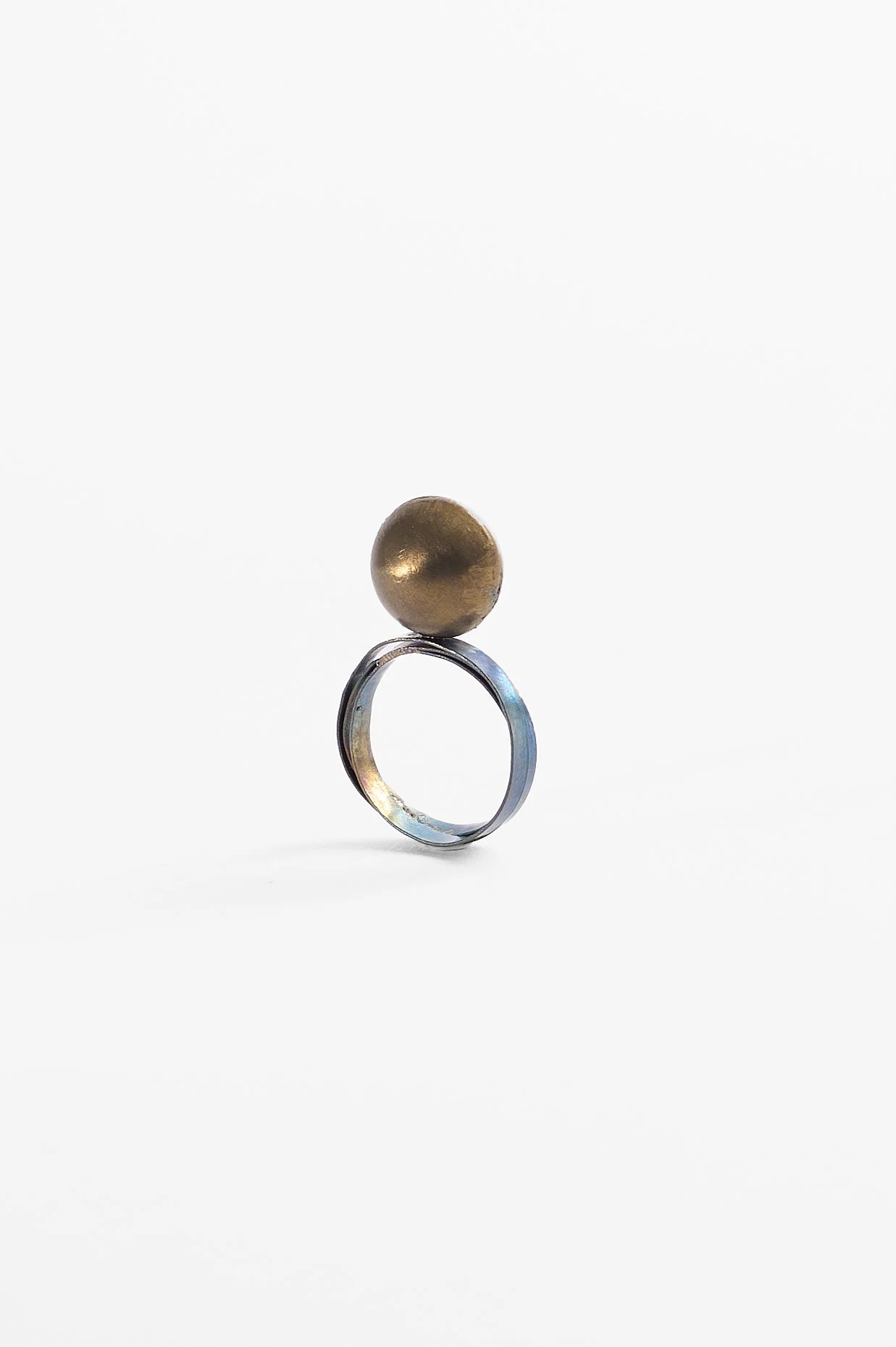
Dee Robinson (5) 3. ‘Several Circles 3’, (blue double band and gold), annodised titanium, approx. size M, 2025. Photography: Ross Coulter
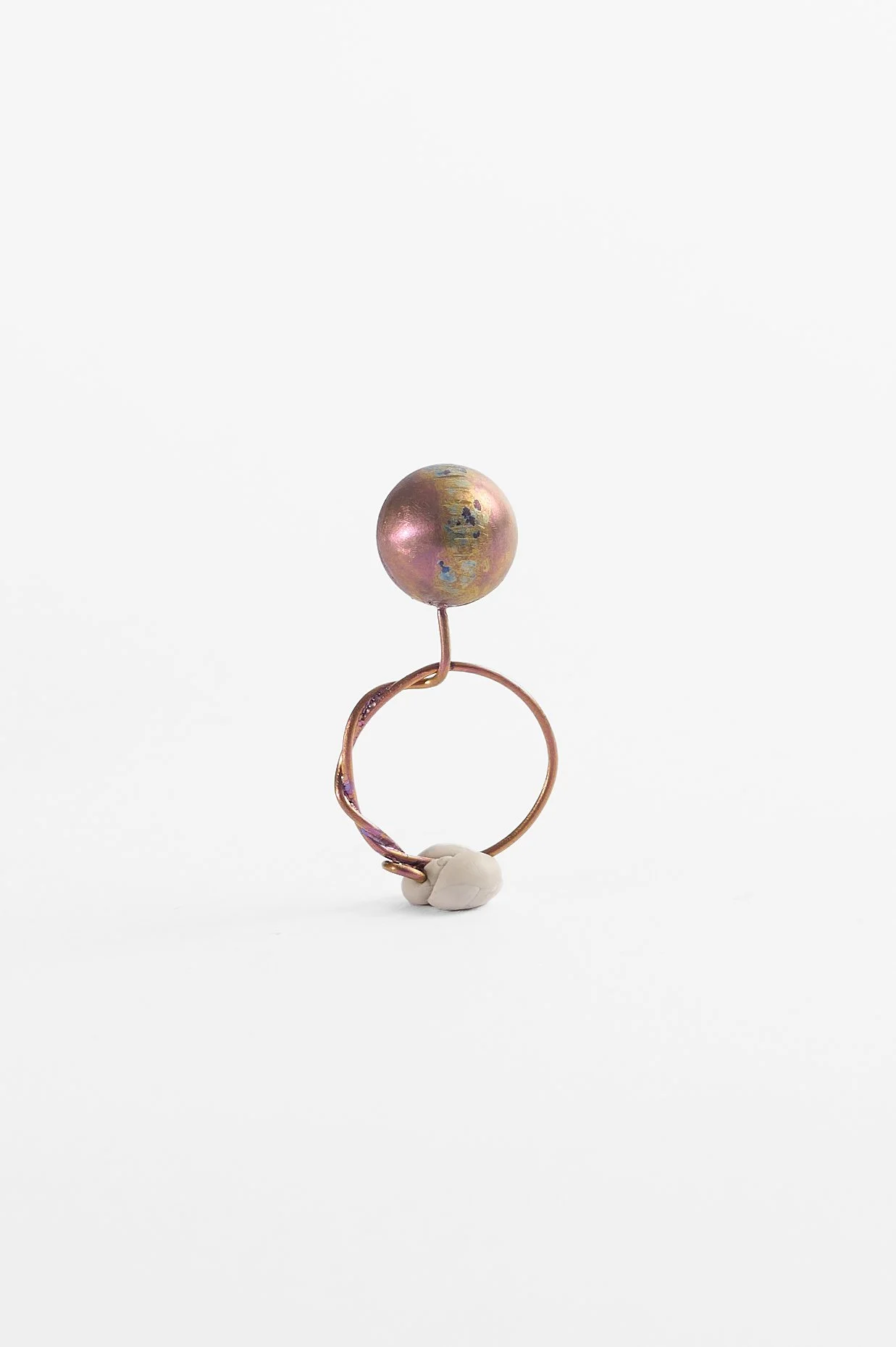
Dee Robinson (5) 4. ‘Several Circles 4’, (purple and bronze on teal disc), annodised titanium, approx. size K, 2025. Photography: Ross Coulter
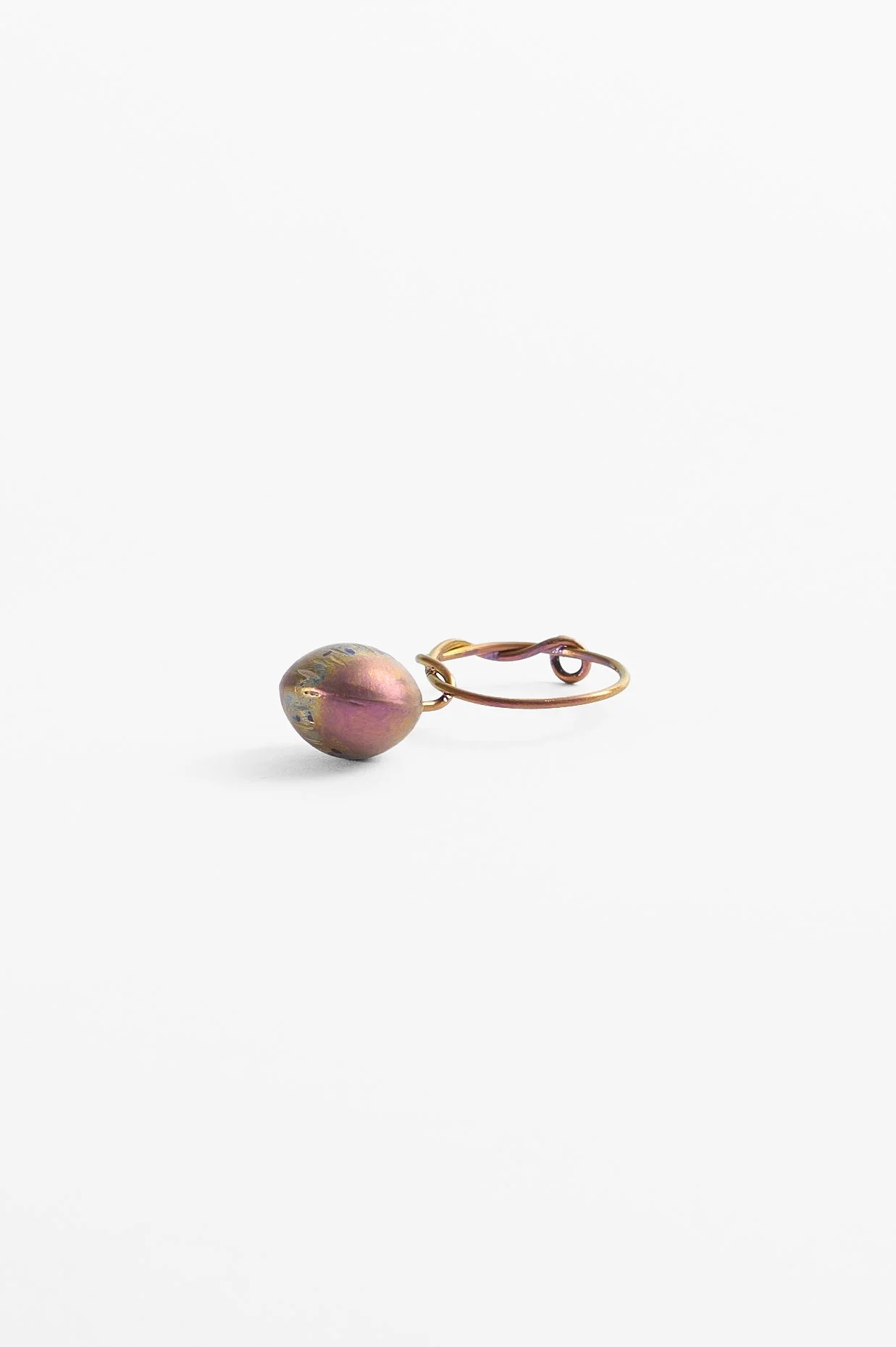
Dee Robinson (5) 4. ‘Several Circles 4’, (purple and bronze on teal disc), annodised titanium, approx. size K, 2025. Photography: Ross Coulter
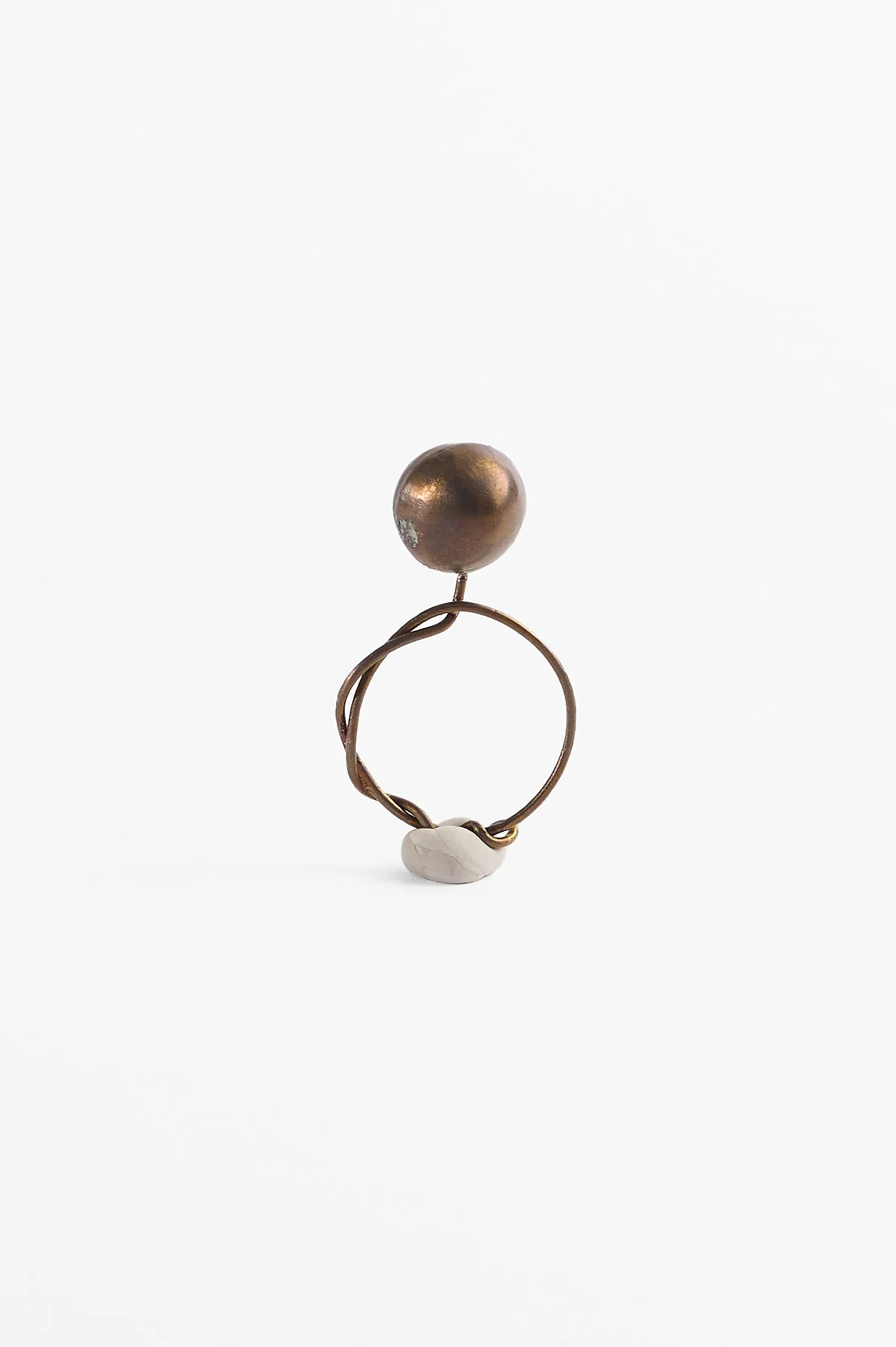
Dee Robinson (5) 1. ‘Several Circles 1’, (bronze fine wire), annodised titanium, approx. size O, 2025. Photography: Ross Coulter
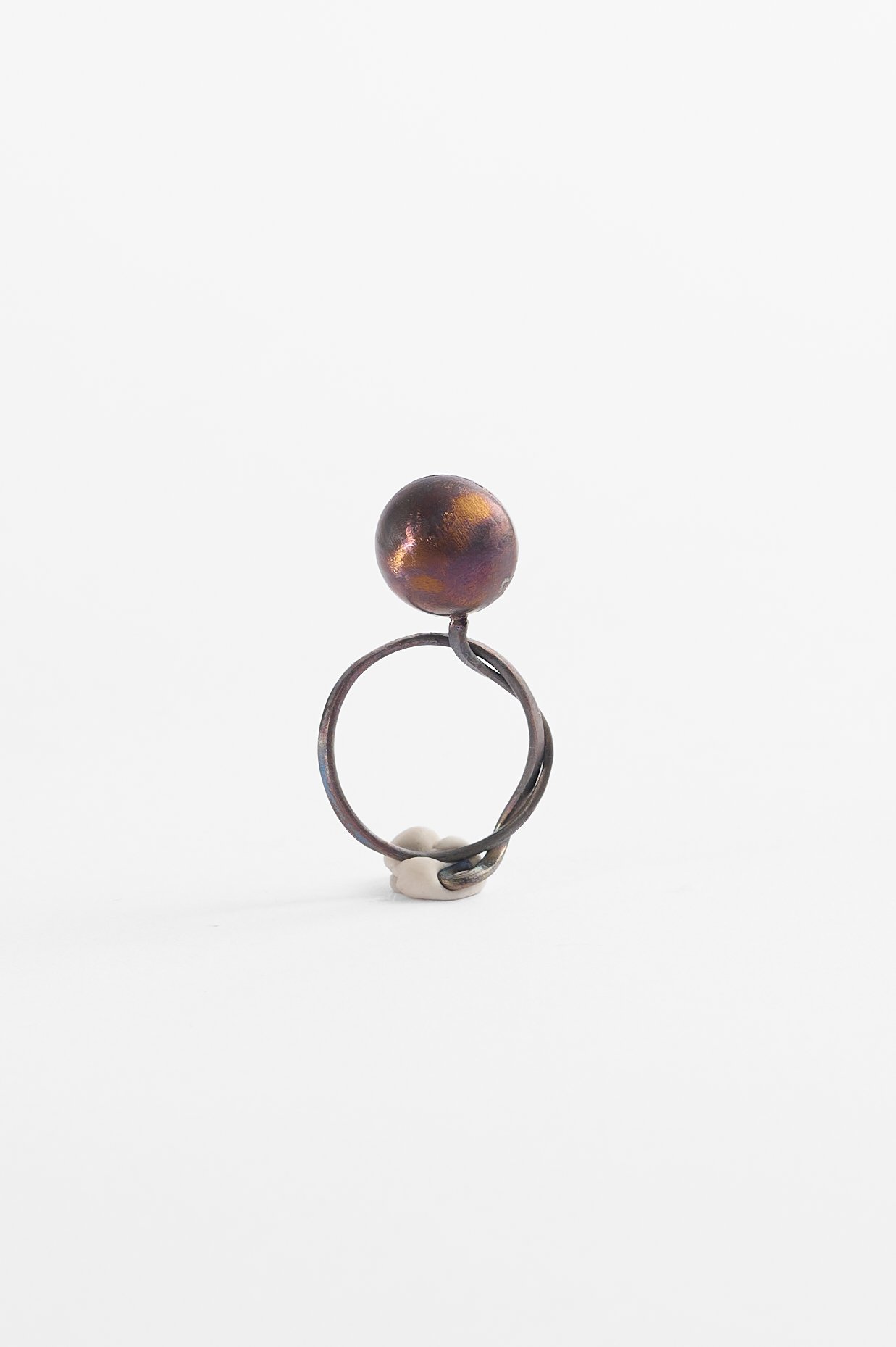
Dee Robinson (5) 6. ‘Several Circles 6’, (dark bronze/purple thicker wire), annodised titanium, approx. size O, 2025. Photography: Ross Coulter
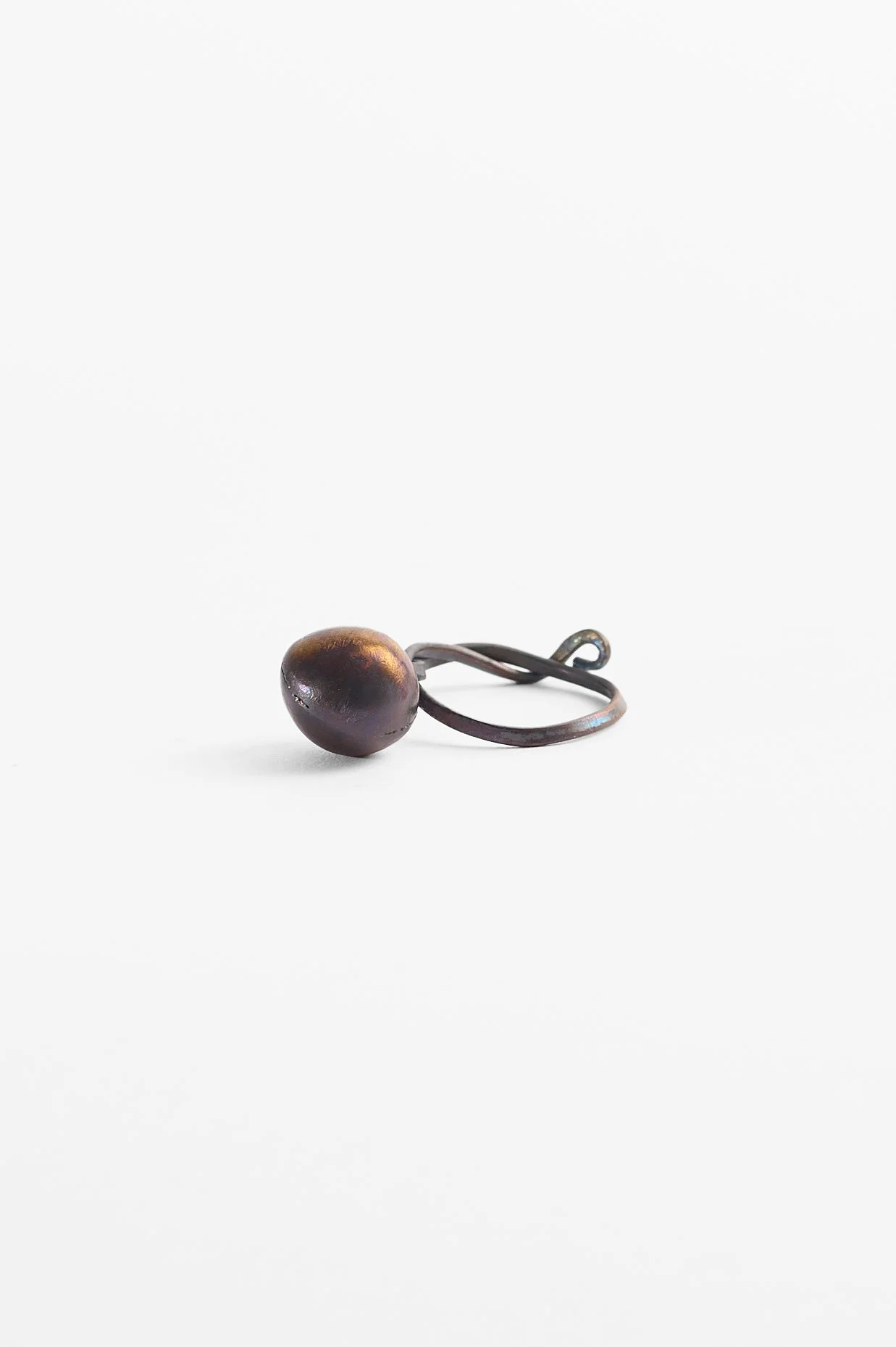
Dee Robinson (5) 6. ‘Several Circles 6’, (dark bronze/purple thicker wire), annodised titanium, approx. size O, 2025. Photography: Ross Coulter
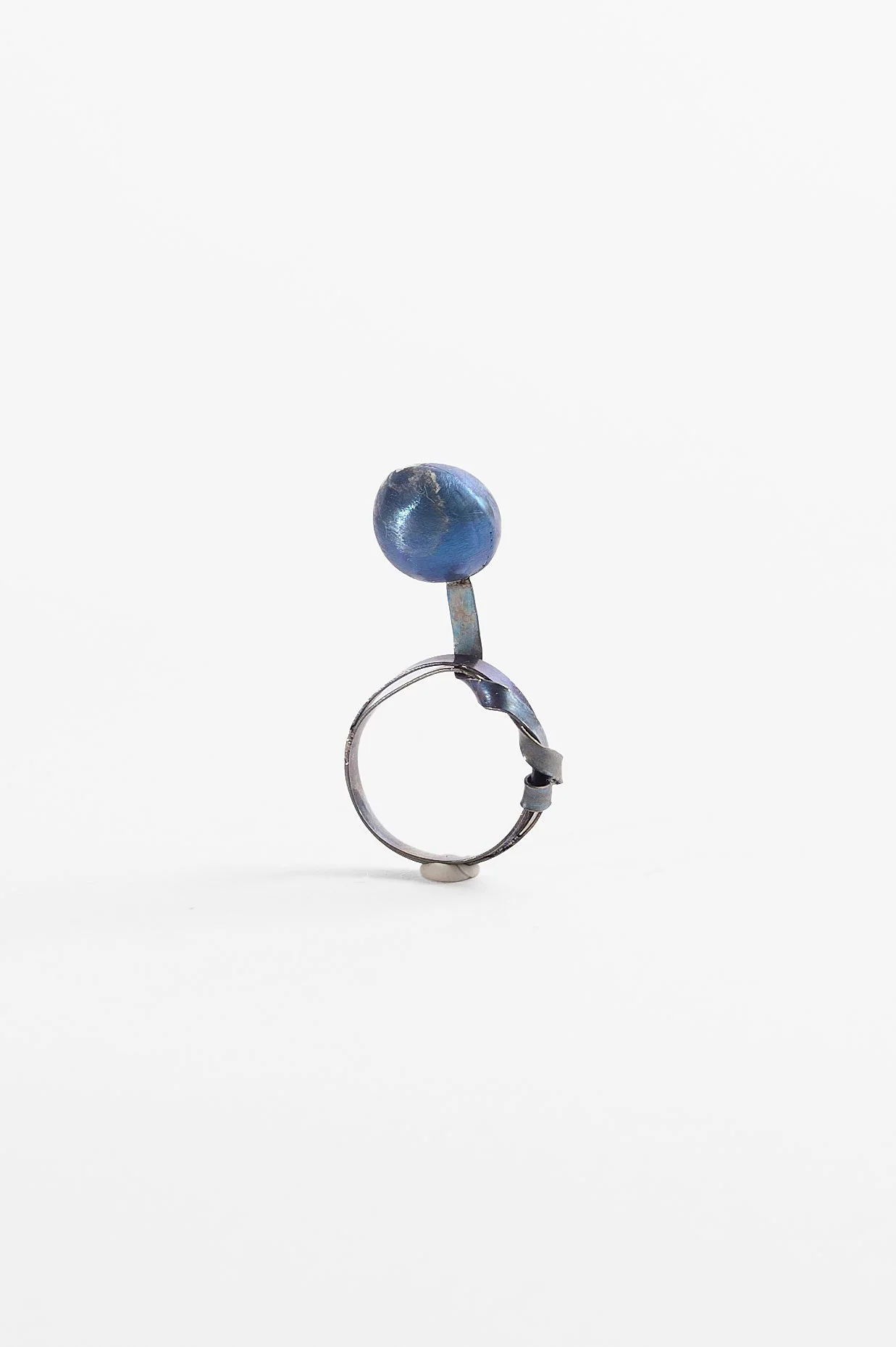
Dee Robinson (5) 7. ‘Several Circles 7’, (blue double flat band), annodised titanium, approx. size K, 2025. Photography: Ross Coulter

Dee Robinson (5) 7. ‘Several Circles 7’, (blue double flat band), annodised titanium, approx. size K, 2025. Photography: Ross Coulter
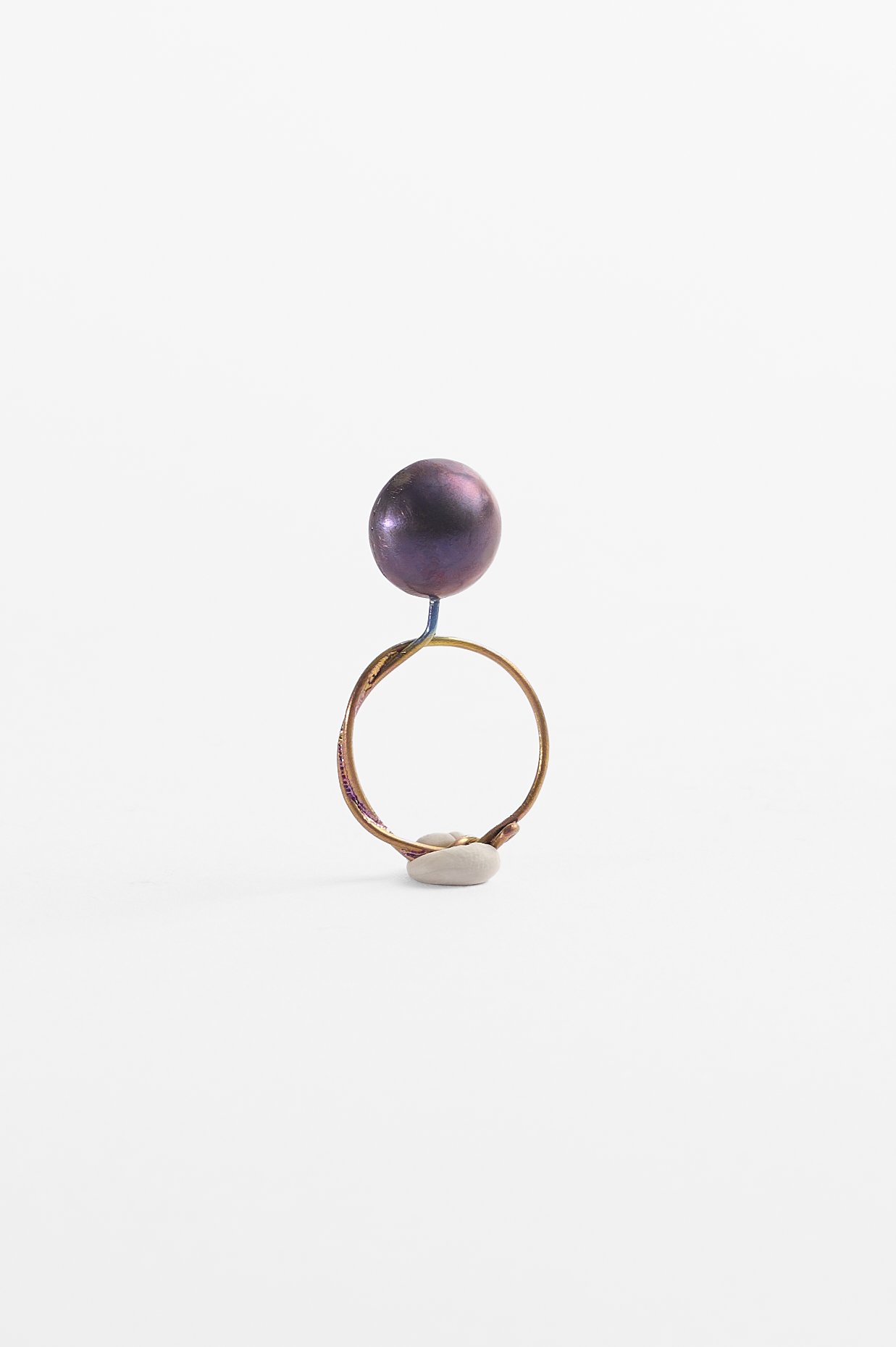
Dee Robinson (5) 8. ‘Several Circles 8’, (fine gold band and dark purple), annodised titanium, approx. size N, 2025. Photography: Ross Coulter
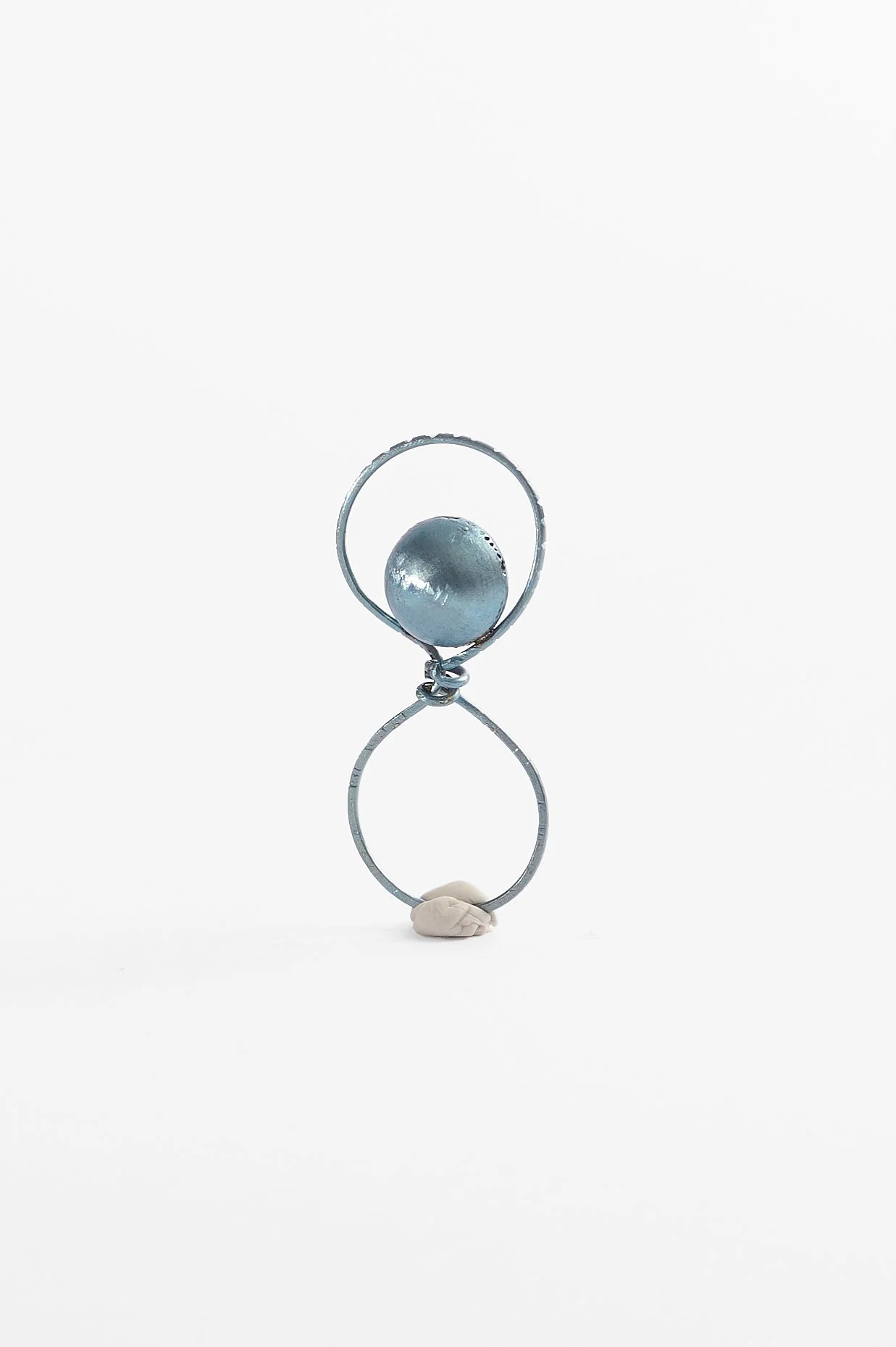
Dee Robinson (5) 5. ‘Several Circles 5’, (blue double circle), annodised titanium, approx. size M, 2025. Photography: Ross Coulter
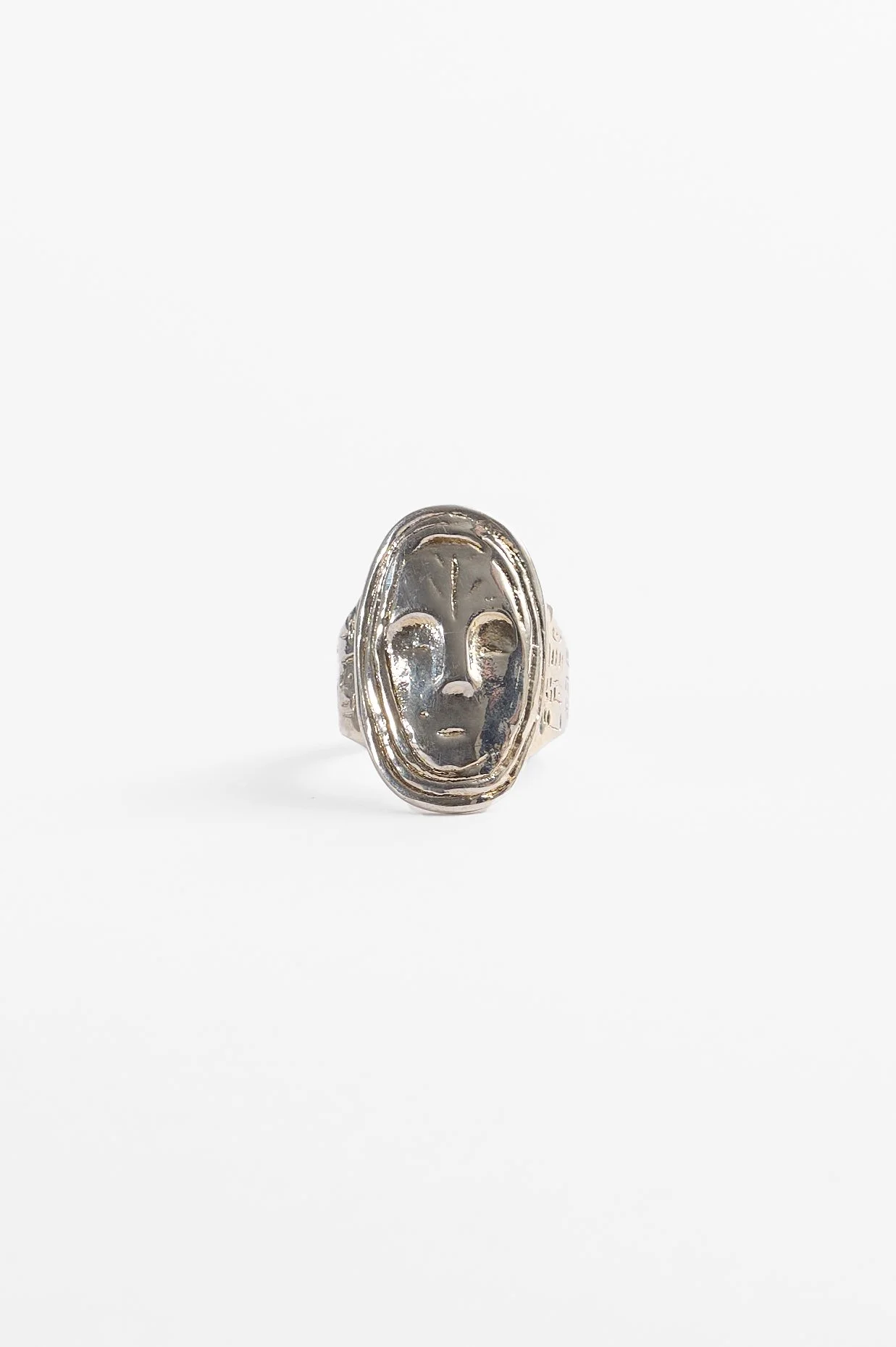
Ella Badu (12) 3. ‘Yoro’ ring (large silver face open band), sterling silver. Photography: Ross Coulter
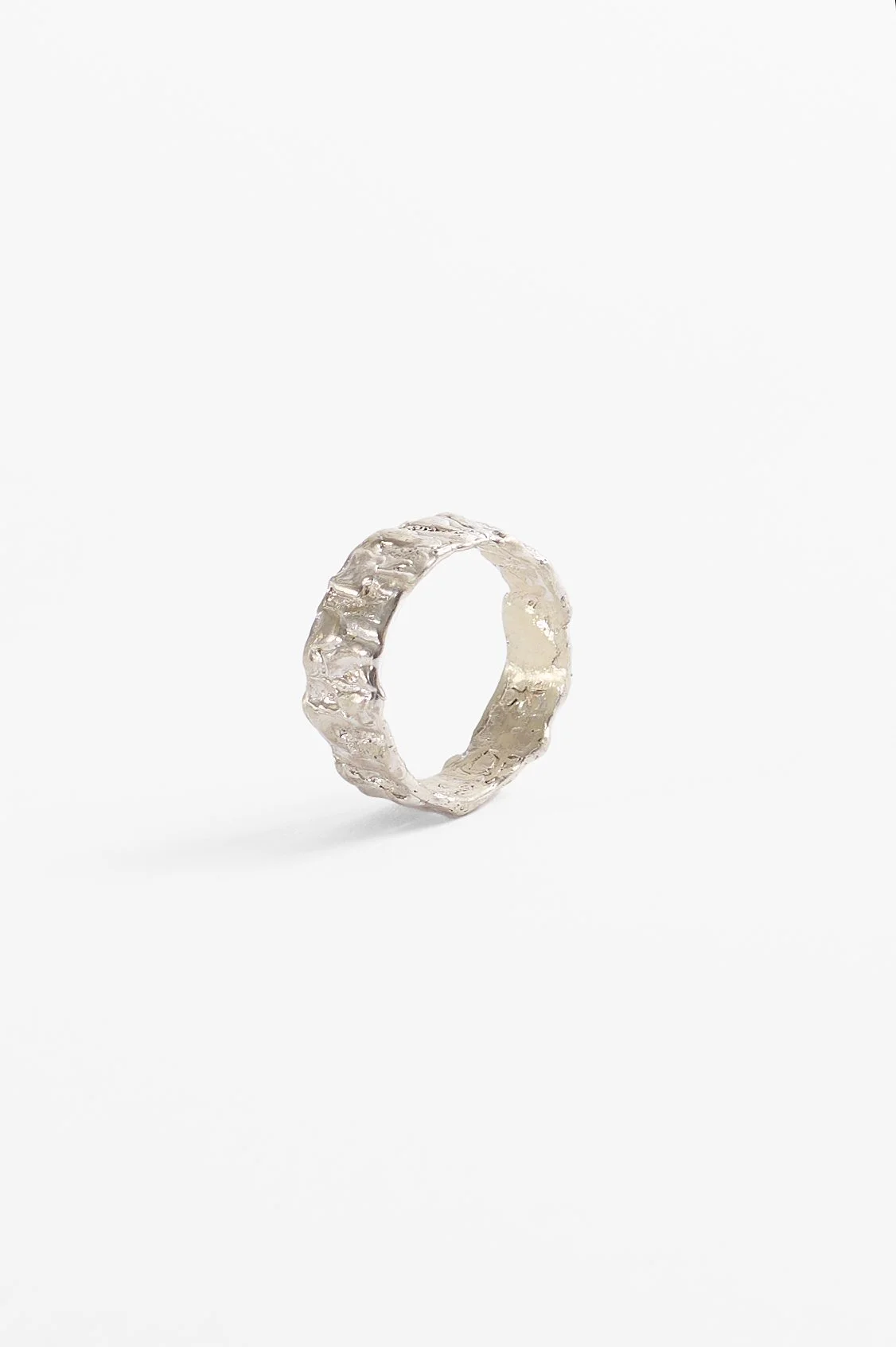
Ella Badu (12) 5. ‘Agbe (2)’, (silver textured ring band), recycled sterling silver, approx. size T, 2024. Photography: Ross Coulter
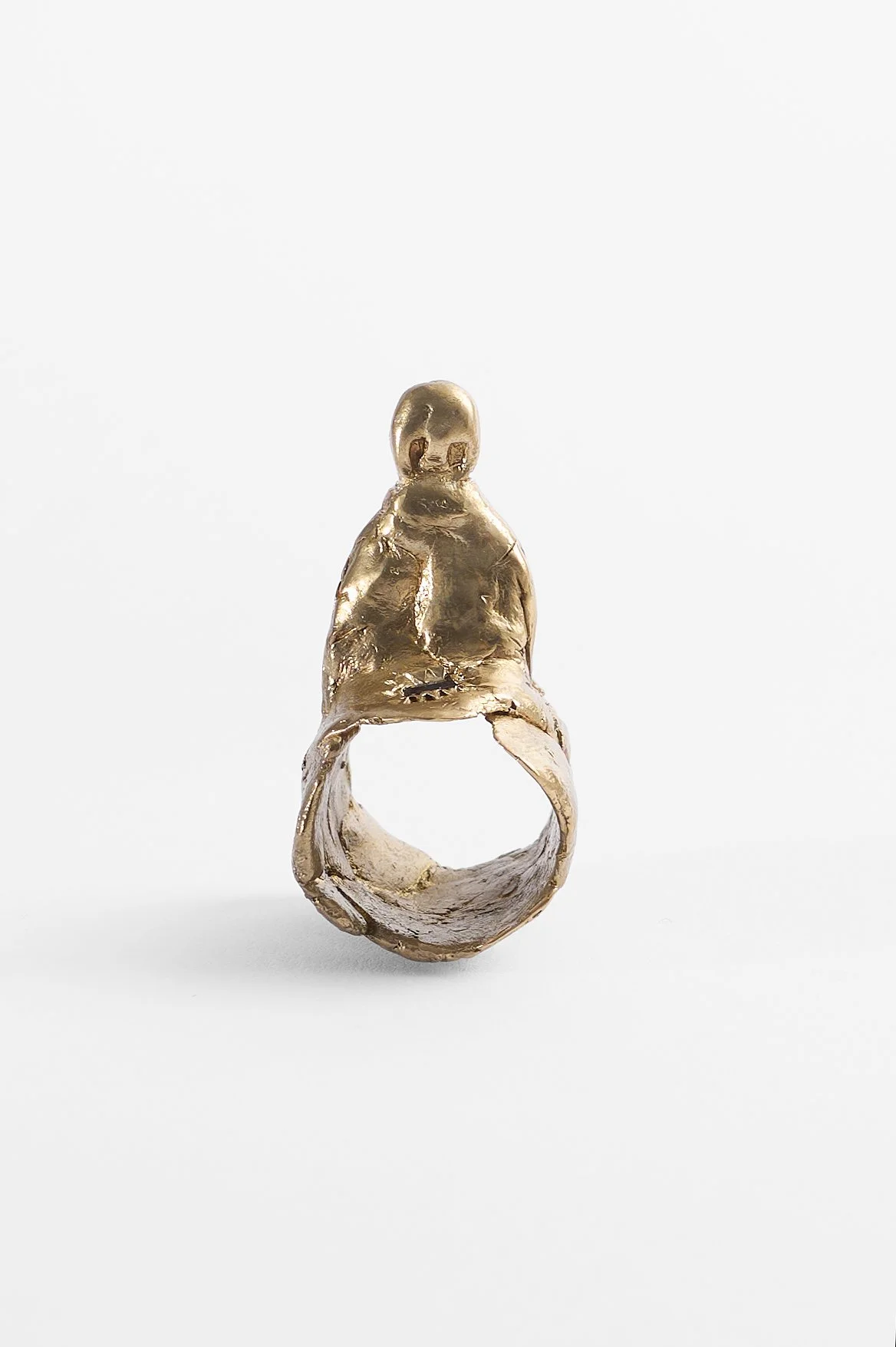
Ella Badu (12) 8. ‘Bocio’, (protection sculpture brass ring with stone - figure), recycled brass, 8. black spinel, approx. size N, 2024. Photography: Ross Coulter
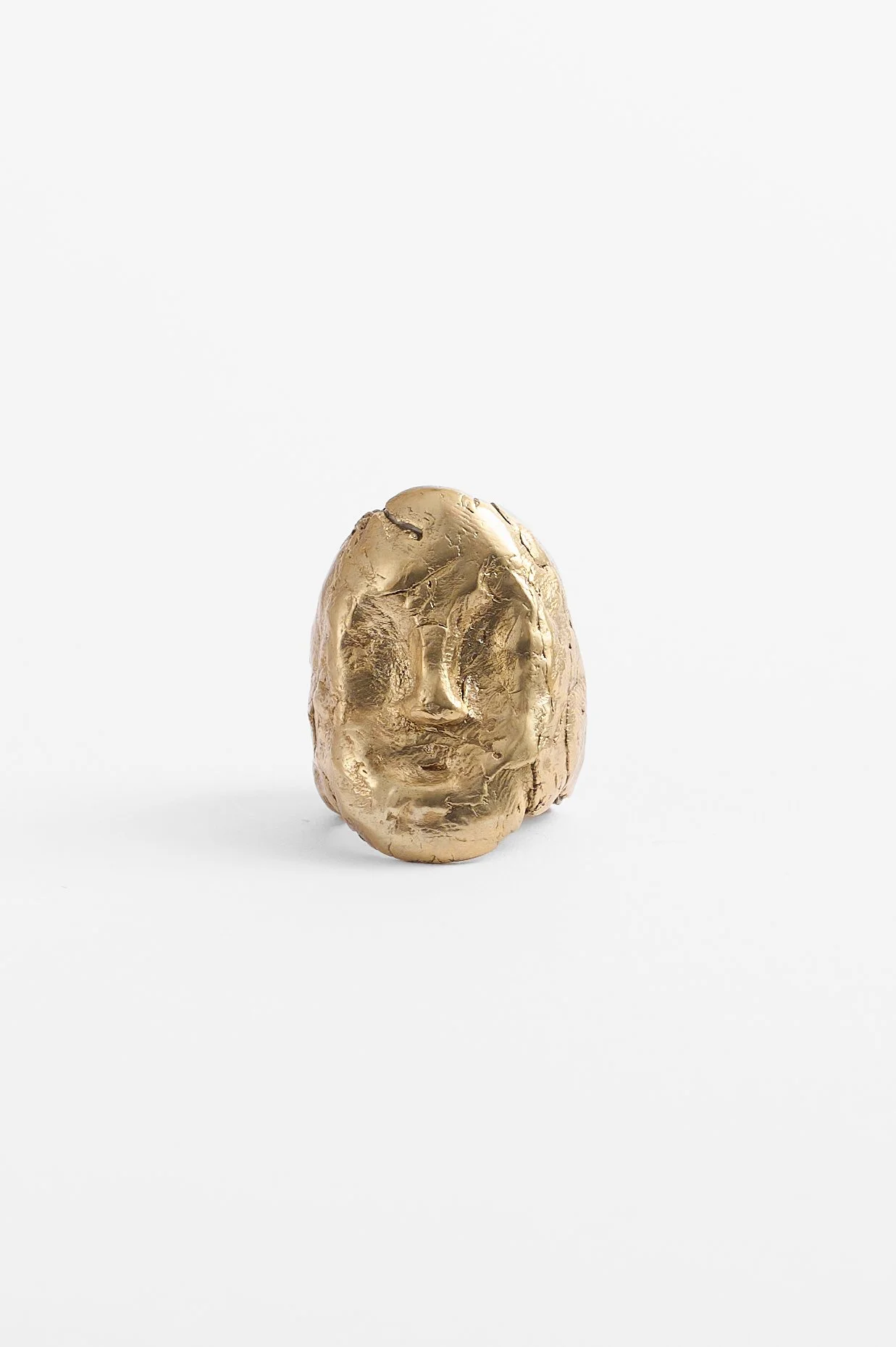
Ella Badu (12) 7. ‘Jòtò’, (brass ring - face), recycled brass, approx. size N, 2024. Photography: Ross Coulter
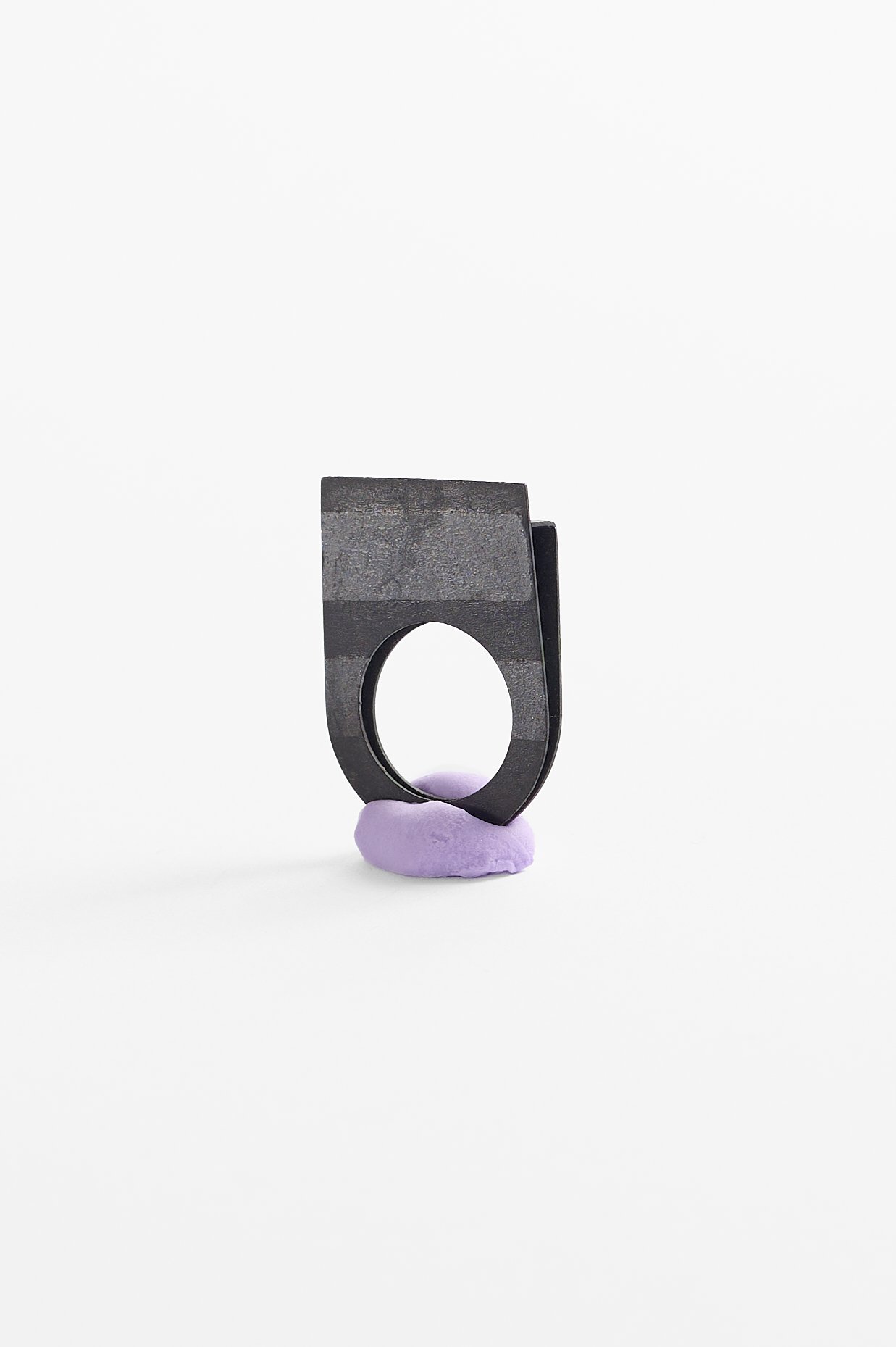
Eli Giannini (33) 1. ‘Stripes’, mild steel and fired vitreous enamel, approx. size K1/2. Photography: Ross Coulter
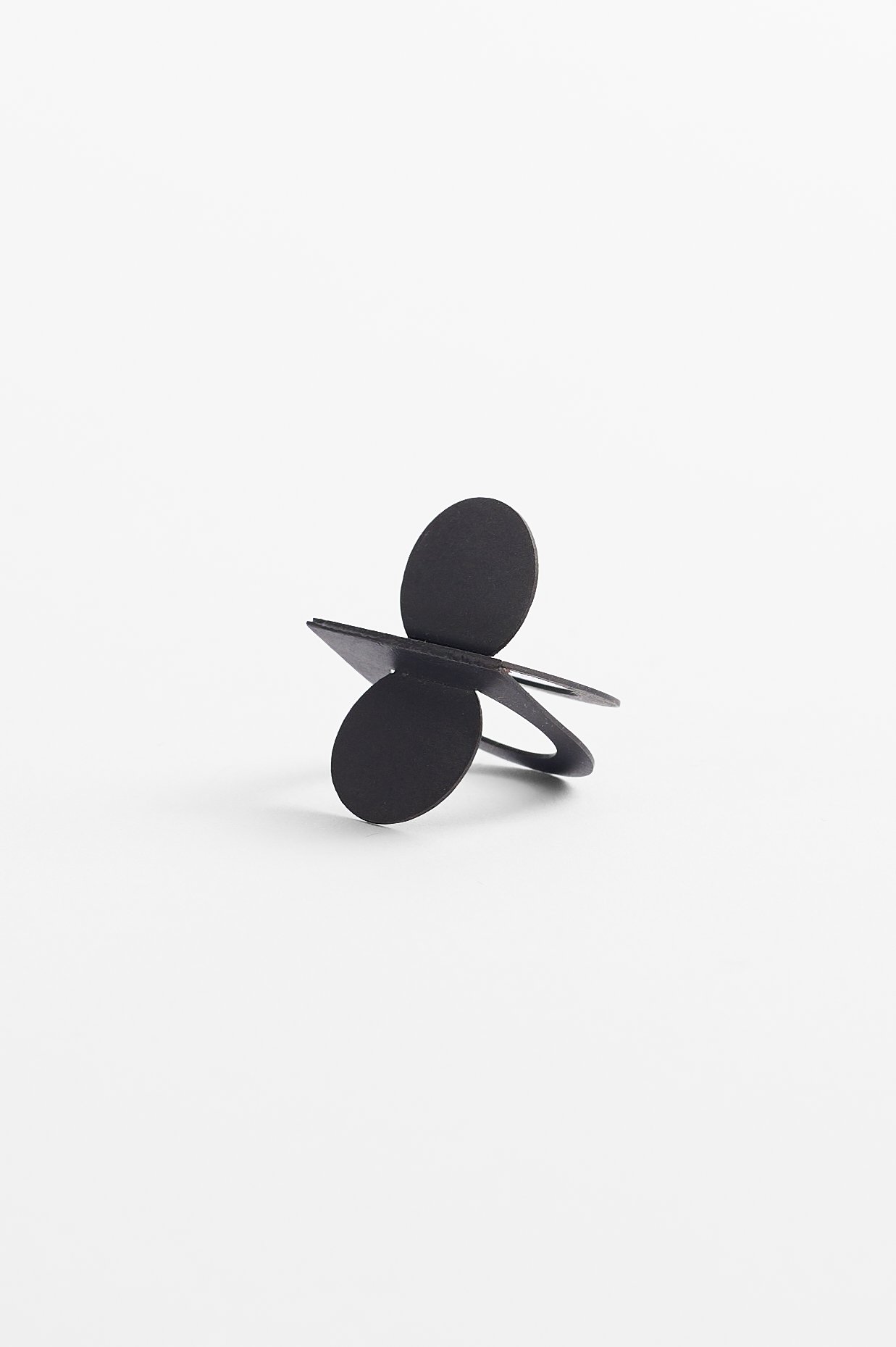
Eli Giannini (33) 2. ‘Stealth Ring #1’, blackened mild steel, approx. size K. Photography: Ross Coulter
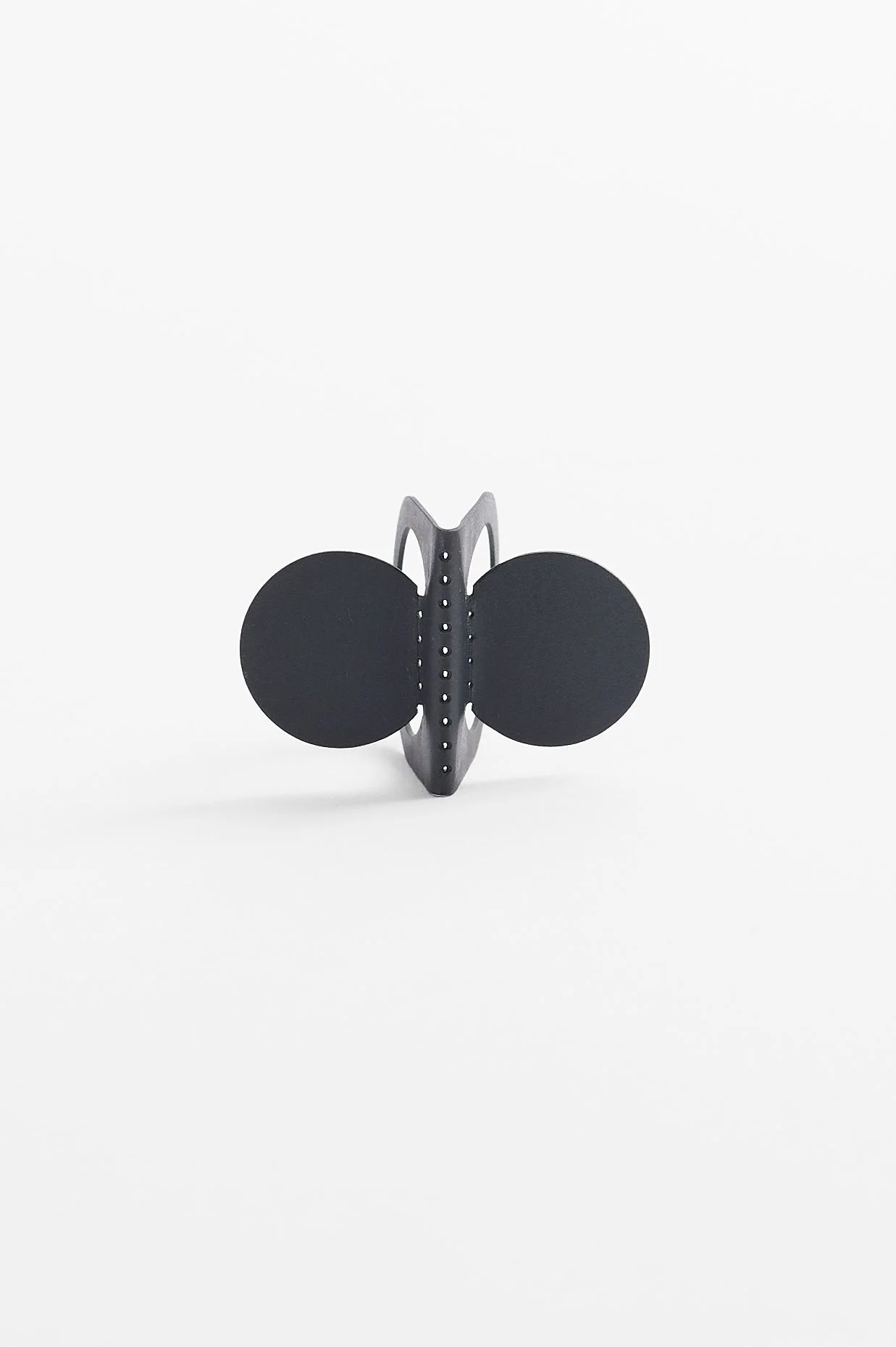
Eli Giannini (33) 3. ‘Stealth Ring #12, blackened mild steel, approx. size K. Photography: Ross Coulter
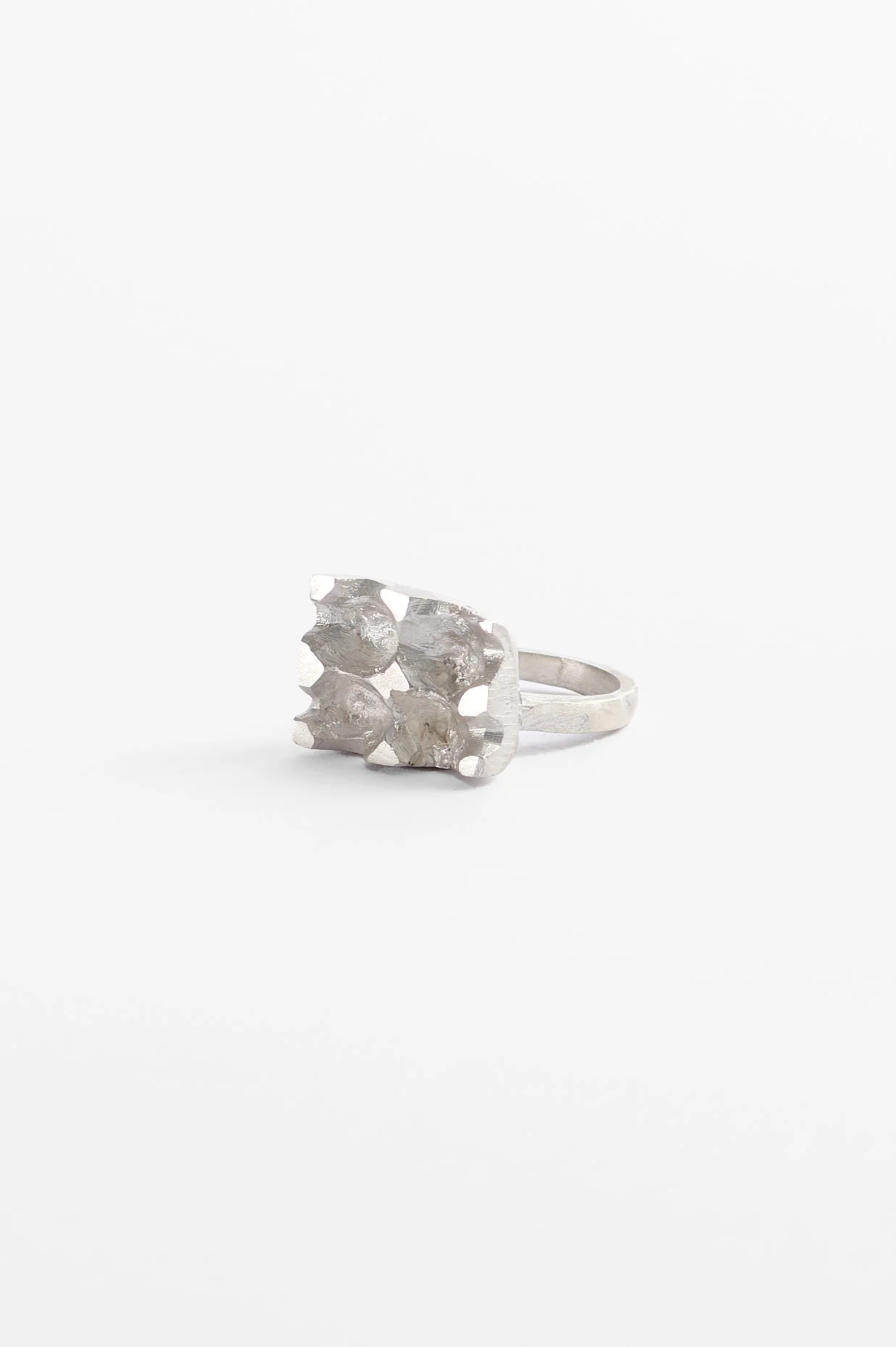
Emily McCulloch Childs (23) 2. ‘Ring’, sterling silver, 2.5 x 3.5 cm, approx. size Q, 2025. Photography: Ross Coulter
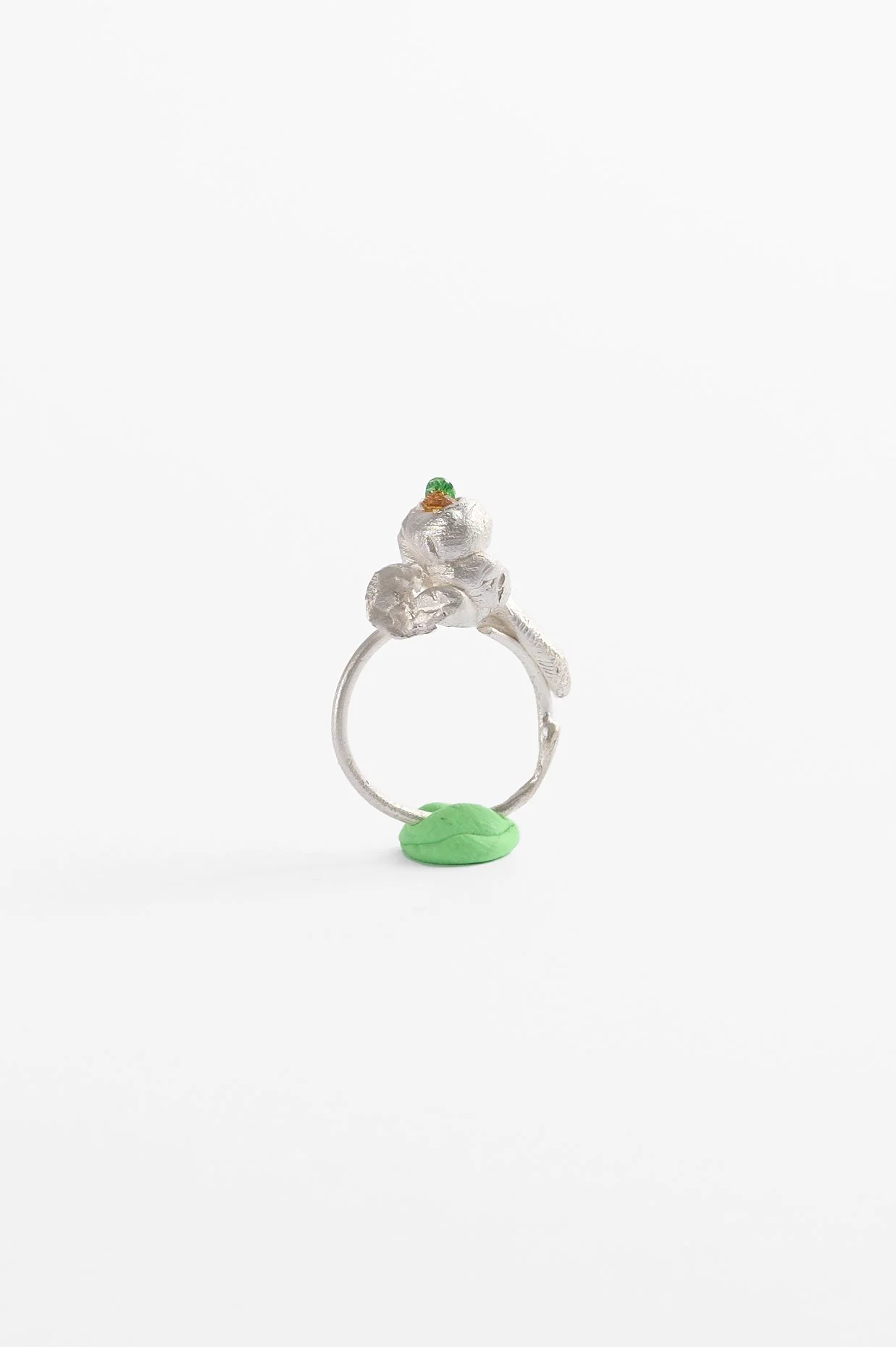
Emily McCulloch Childs (23) 3. ‘Ring’, sterling silver, nano sital (lab grown) gemstones, 2 x 3 cm, approx. size O, 2025. Photography: Ross Coulter
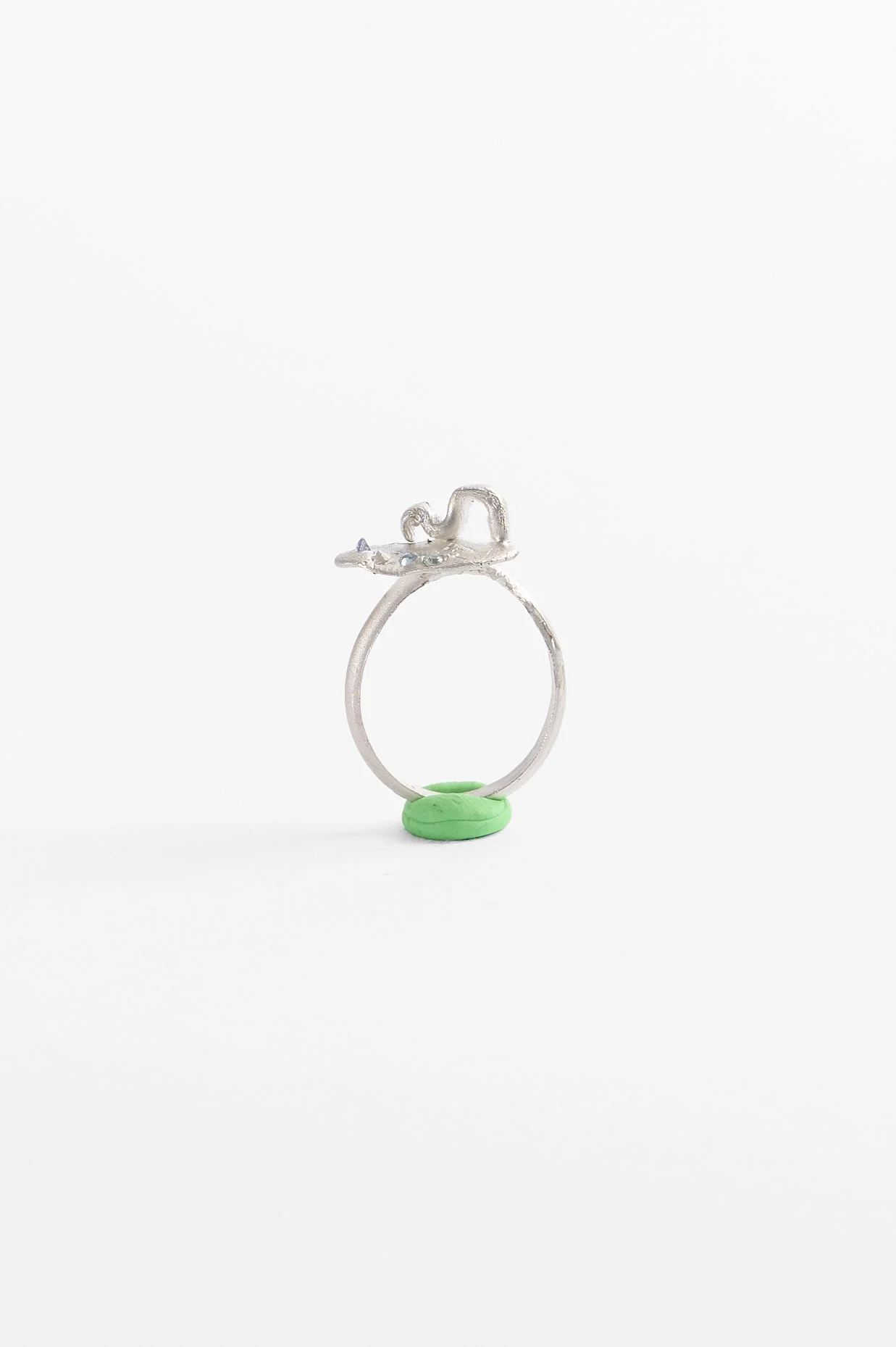
Emily McCulloch Childs (23) 4. ‘Ring’, sterling silver, nano sital (lab grown) gemstones, 2 x 3.1 cm, approx. size P, 2025. Photography: Ross Coulter
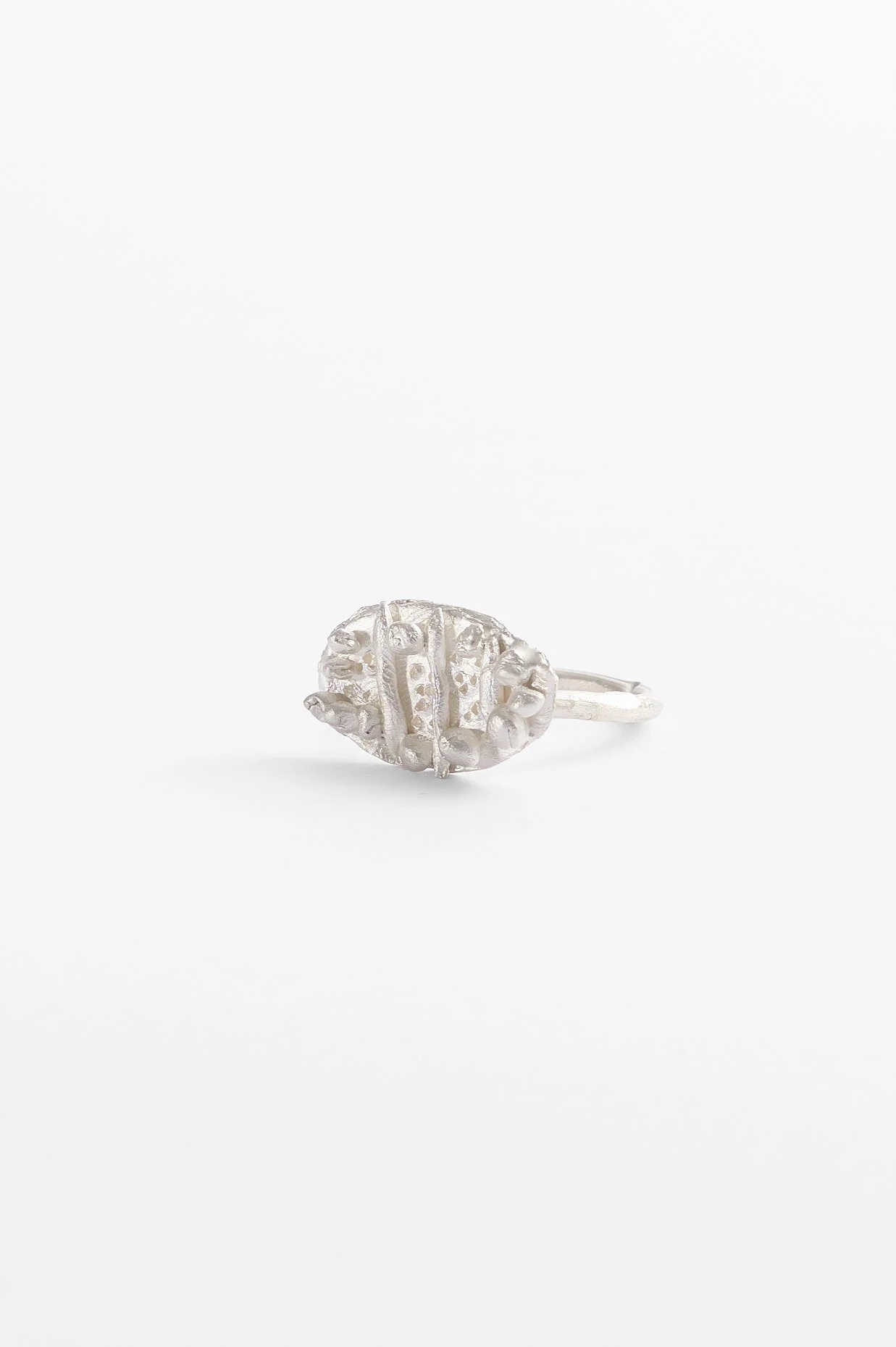
Emily McCulloch Childs (18) ‘Ring’, sterling silver, 2.7 x 3.3 cm, approx. size W, 2025. Photography: Ross Coulter
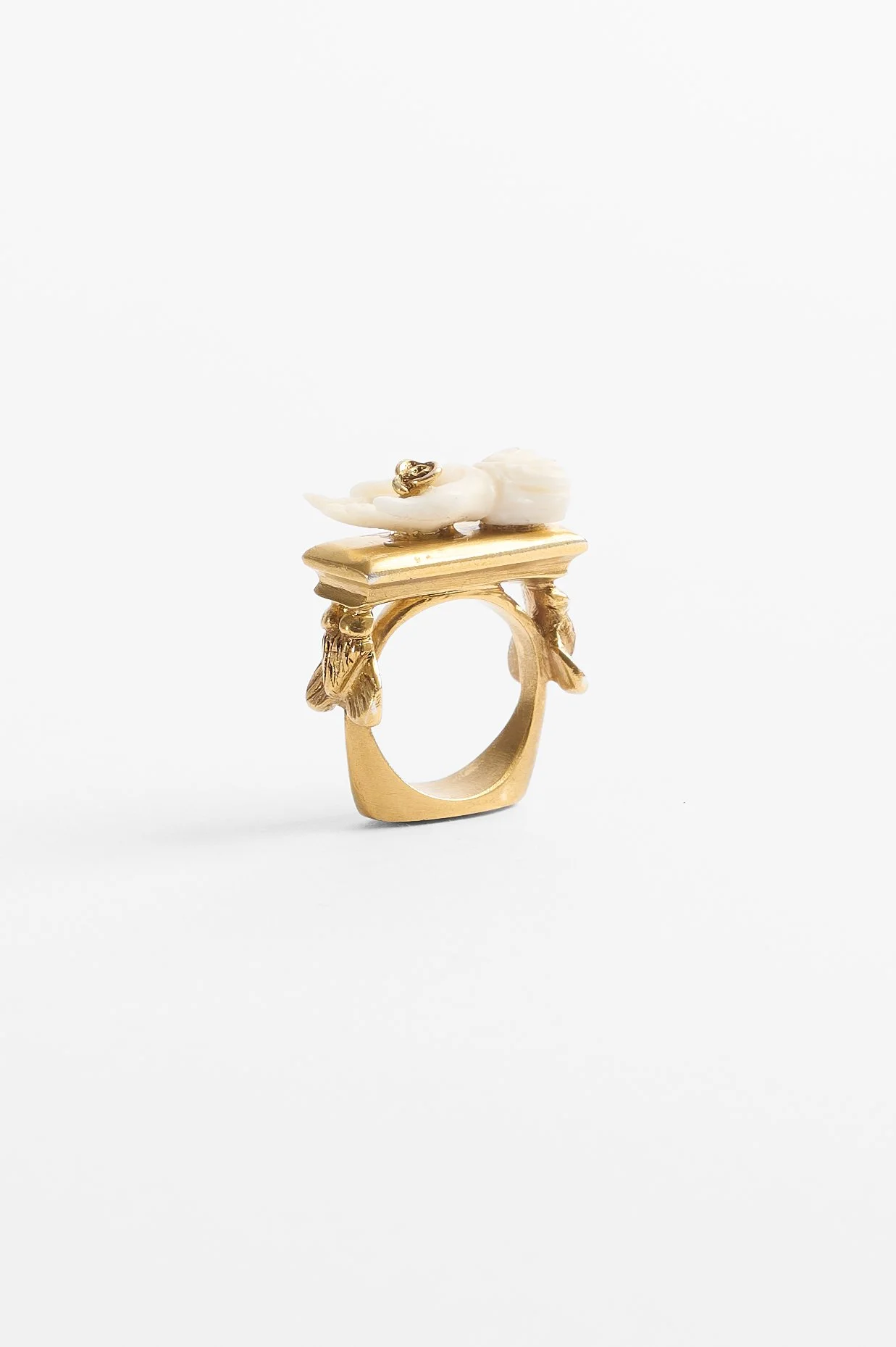
Emily O’Brien (13) 1. ‘Plinth Ring – Life’, sterling silver, 18ct gold plating, carved bone, approx. size R, 33 x 25 x 10mm, 2025. Photography: Ross Coulter
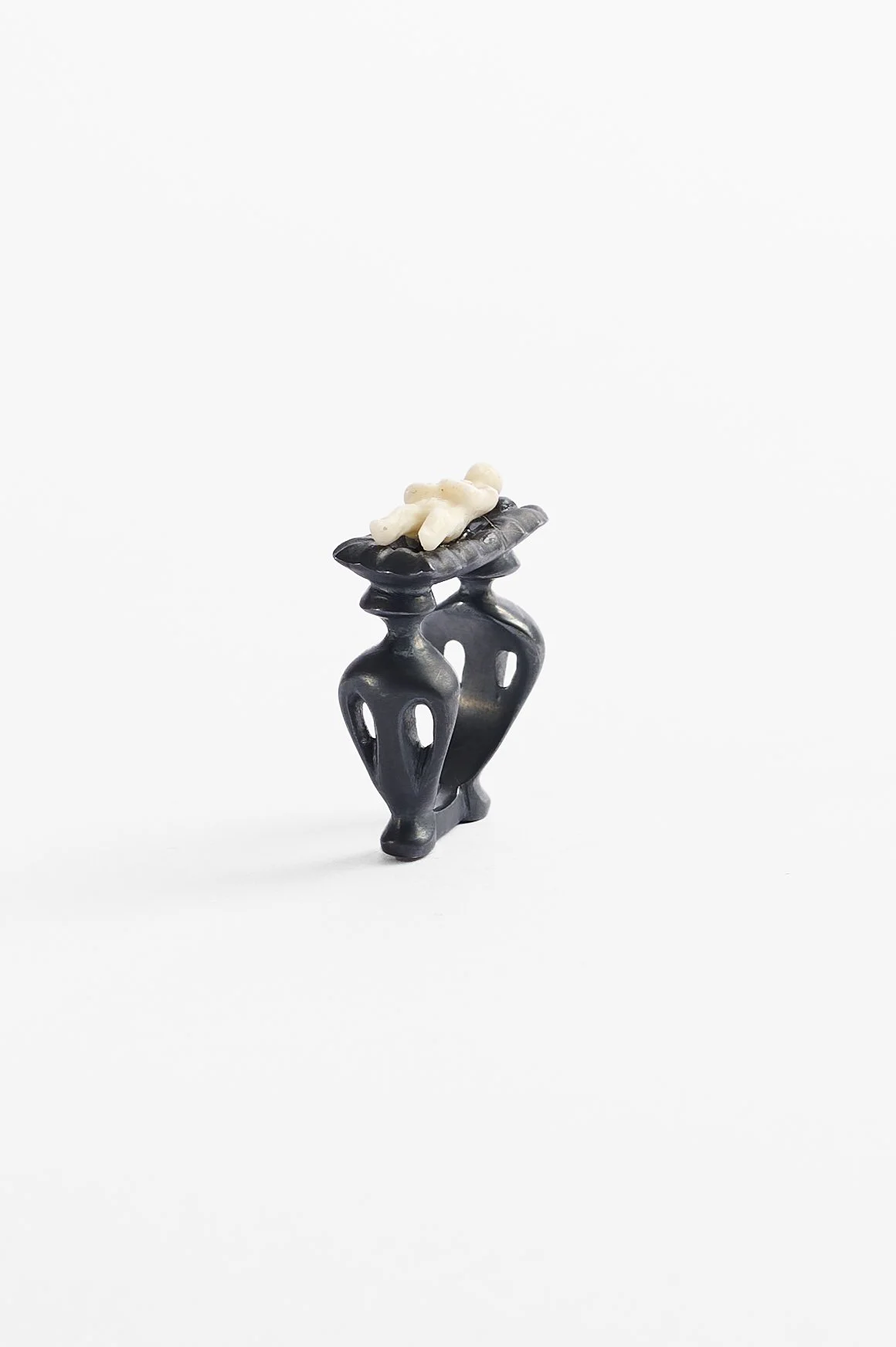
Emily O’Brien (13) 2. ‘Plinth Ring – Past’, oxidised sterling silver, carved bone, approx. size O, 32 x 25 x 11mm, 2025. Photography: Ross Coulter
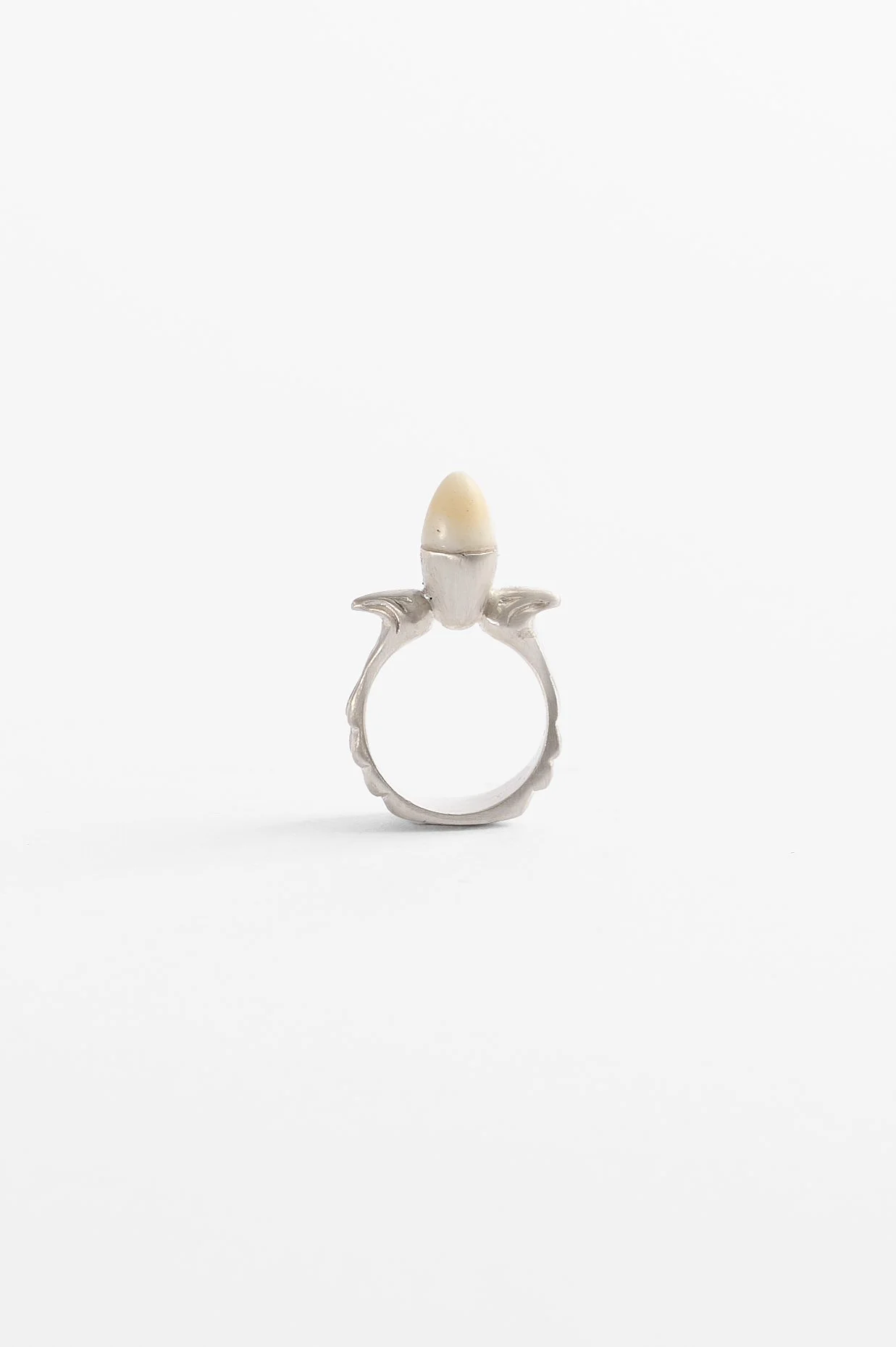
Emily O’Brien (13) 3. ‘Plinth Ring – Creation’, sterling silver, carved bone, approx. size M, 34 x 21 x 8mm, 2025. Photography: Ross Coulter
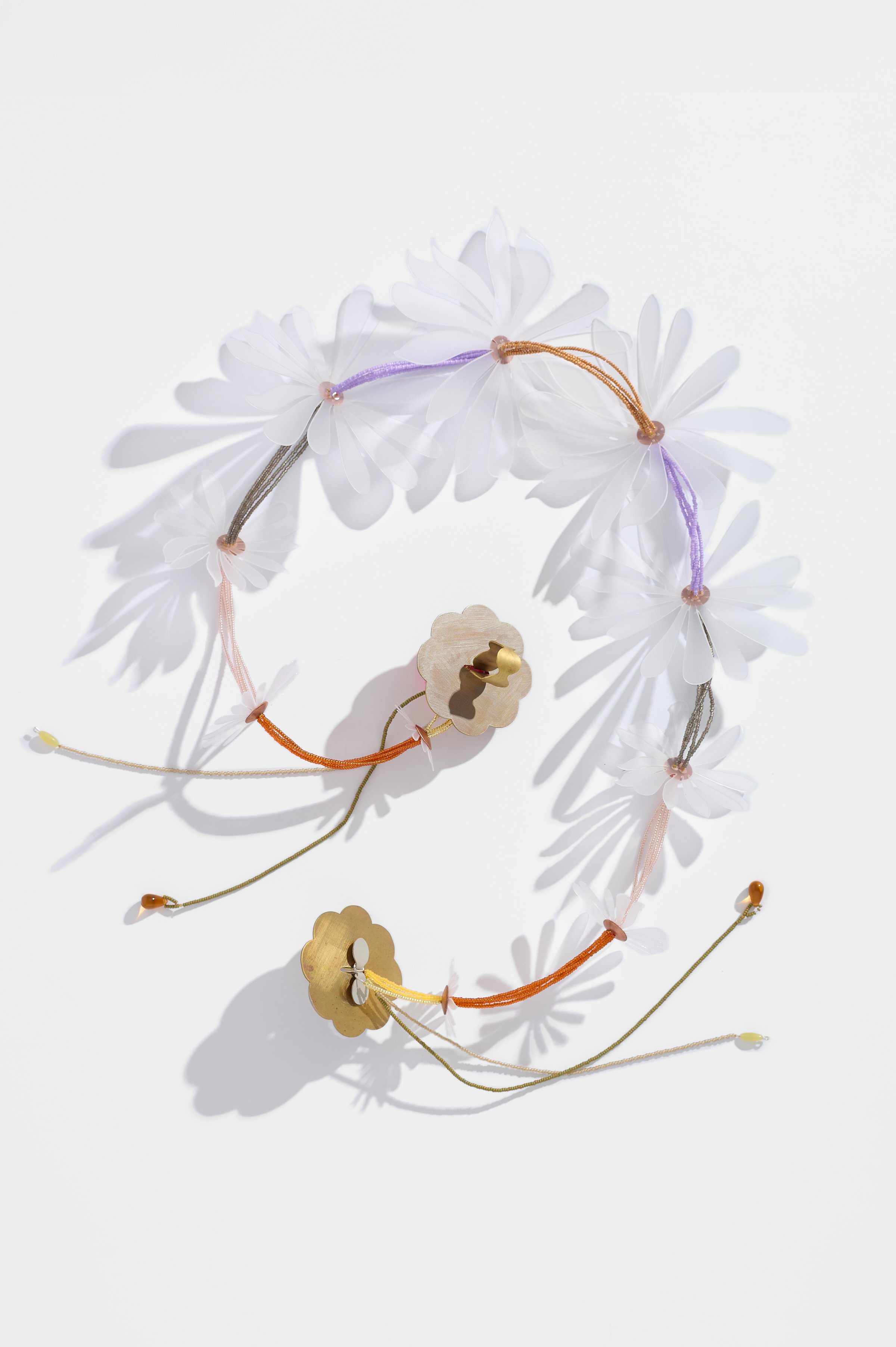
Elisa Zorraquin (43) 1. ‘Do we know each other?’, stainless steel wire, French wire, repurposed glass beads, brass, polypropylene, crimps, paint, 140 x 140 x 950mm, 2024. Photography: Ross Coulter
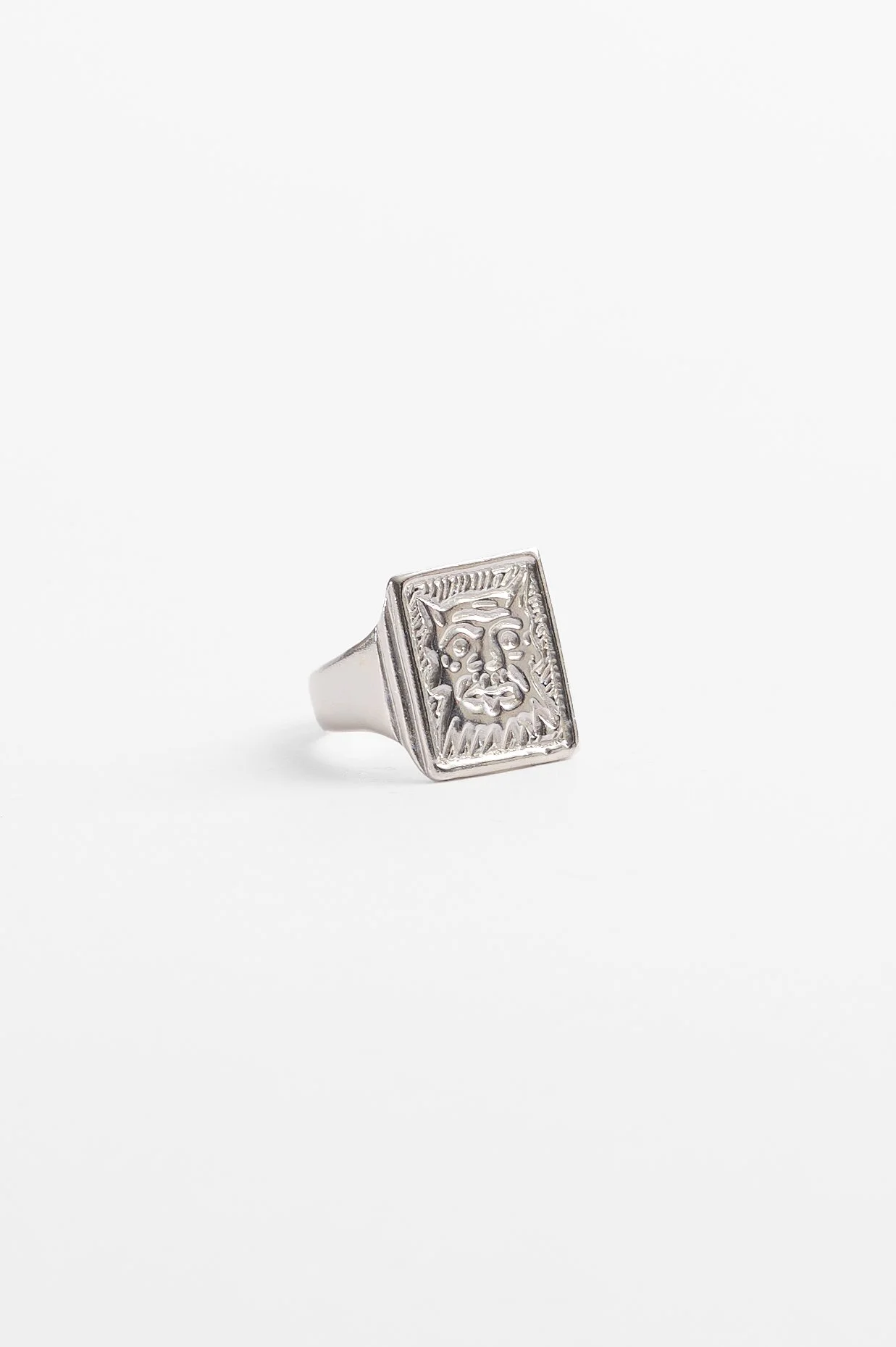
Hedwig Crombie (27) 3. ‘Grotesque 2’, (smaller square), sterling silver, 20 x 20 x 20mm, 2025. Photography: Ross Coulter
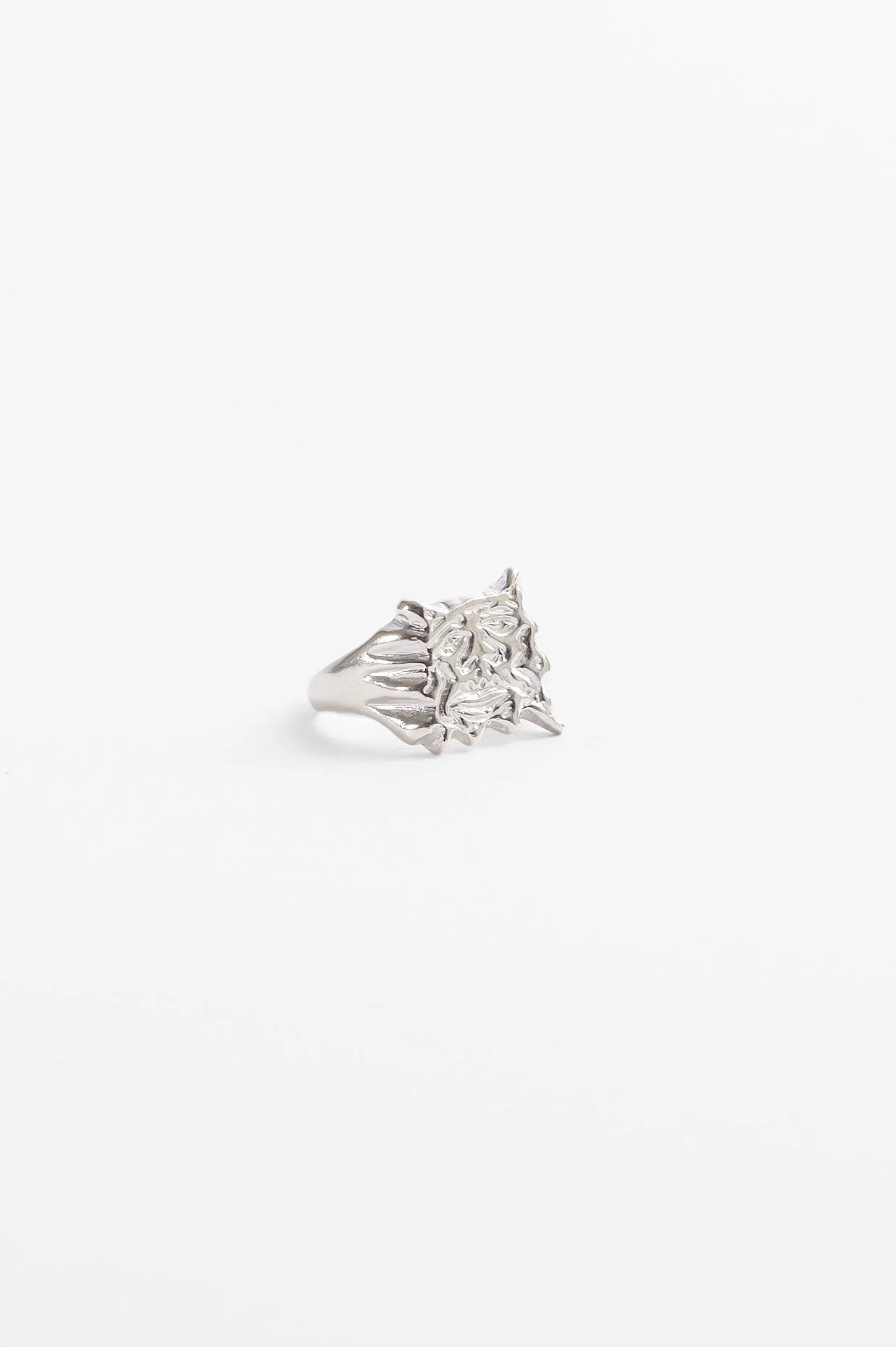
Hedwig Crombie (27) 1. ‘Grotesque 4’, (spiky face), sterling silver, 20 x 20 x 15mm, approx. size Q, 2025. Photography: Ross Coulter
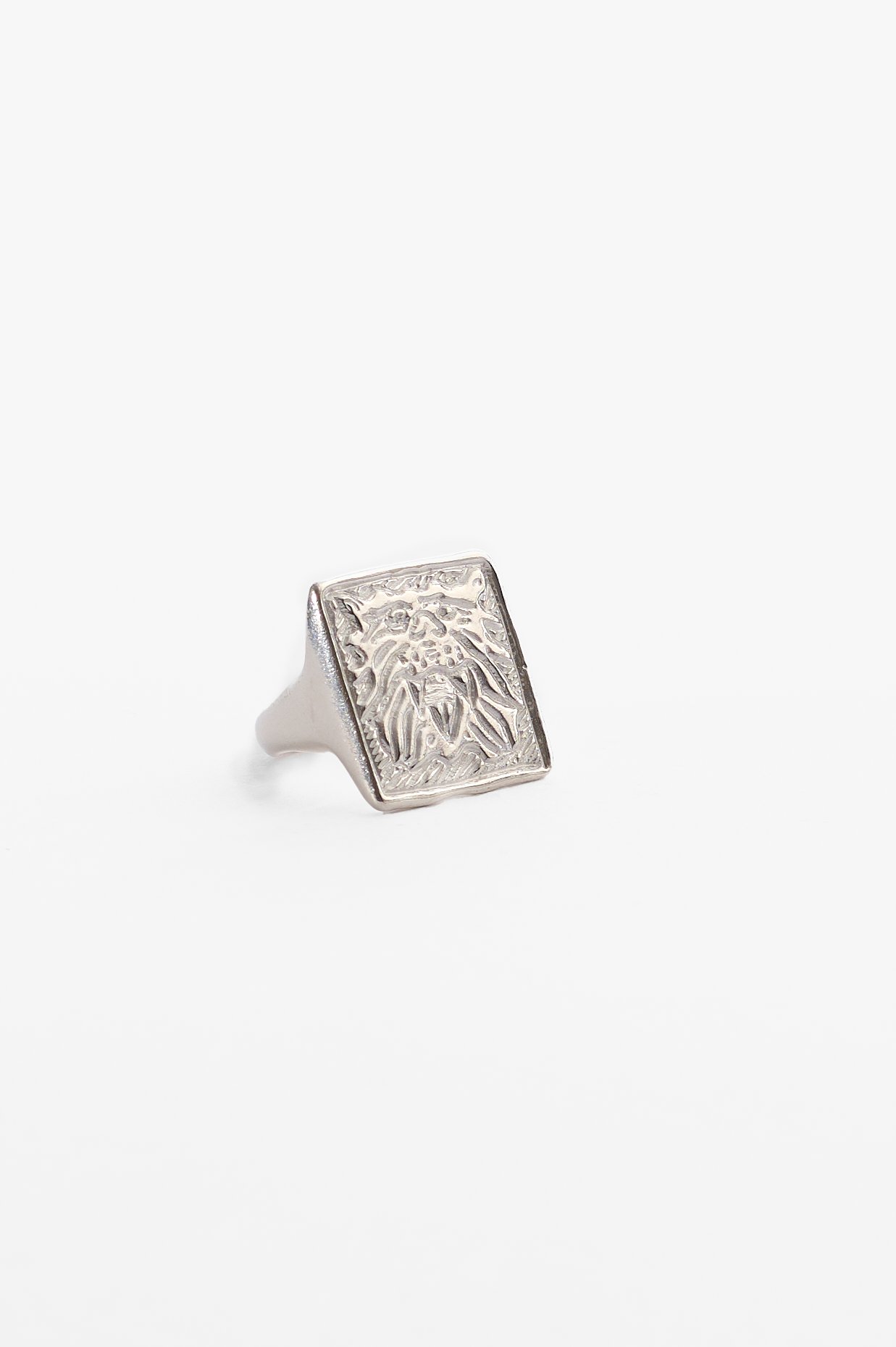
Hedwig Crombie (27) 2. ‘Grotesque 1’, (large square), sterling silver, 22 x 22 x 23mm, approx. size Q, 2025. Photography: Ross Coulter

Helen Dilkes (6) Cuttlefish impression faceted stone, rings, 925 silver, 14 carat gold, Australian zircon, Australian amethyst, dimensions variable 40 x 25 x 5mm to 33 x 22 x 3mm, 2025 Photography: Ross Coulter
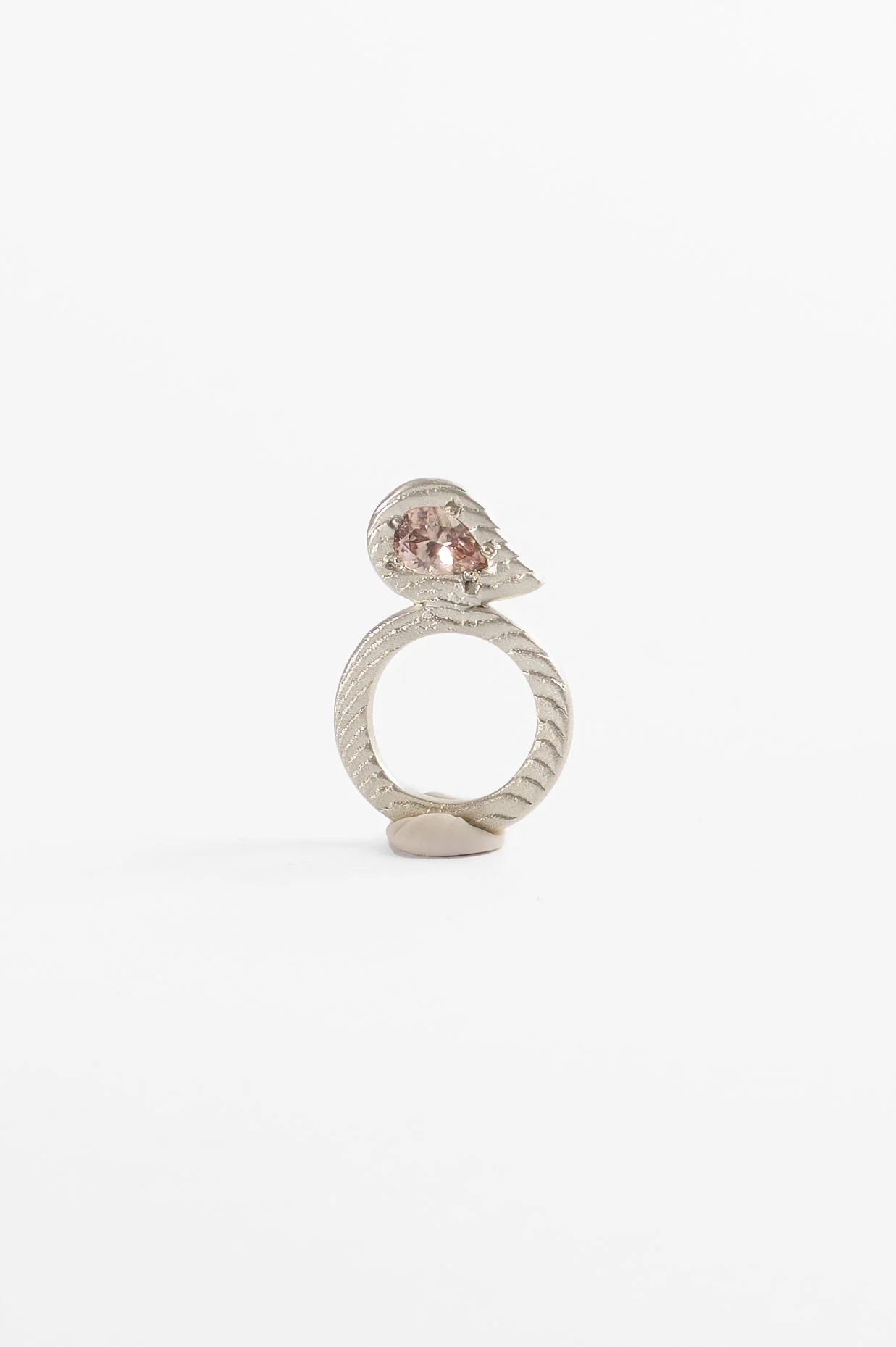
Helen Dilkes (6) Cuttlefish impression faceted stone, rings, 925 silver, 14 carat gold, Australian zircon, Australian amethyst, dimensions variable 40 x 25 x 5mm to 33 x 22 x 3mm, 2025 Photography: Ross Coulter
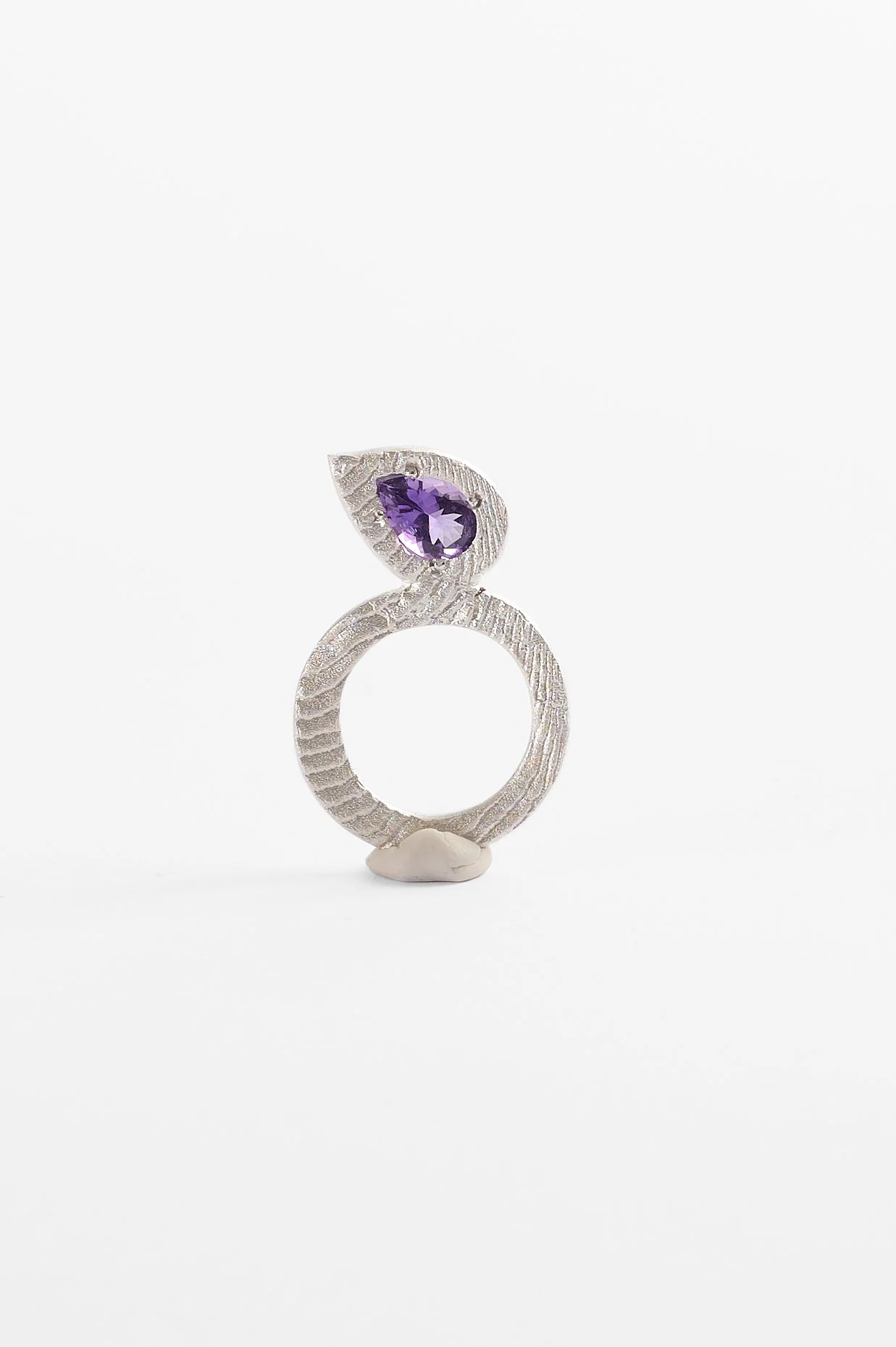
Helen Dilkes (6) Cuttlefish impression faceted stone, rings, 925 silver, 14 carat gold, Australian zircon, Australian amethyst, dimensions variable 40 x 25 x 5mm to 33 x 22 x 3mm, 2025 Photography: Ross Coulter
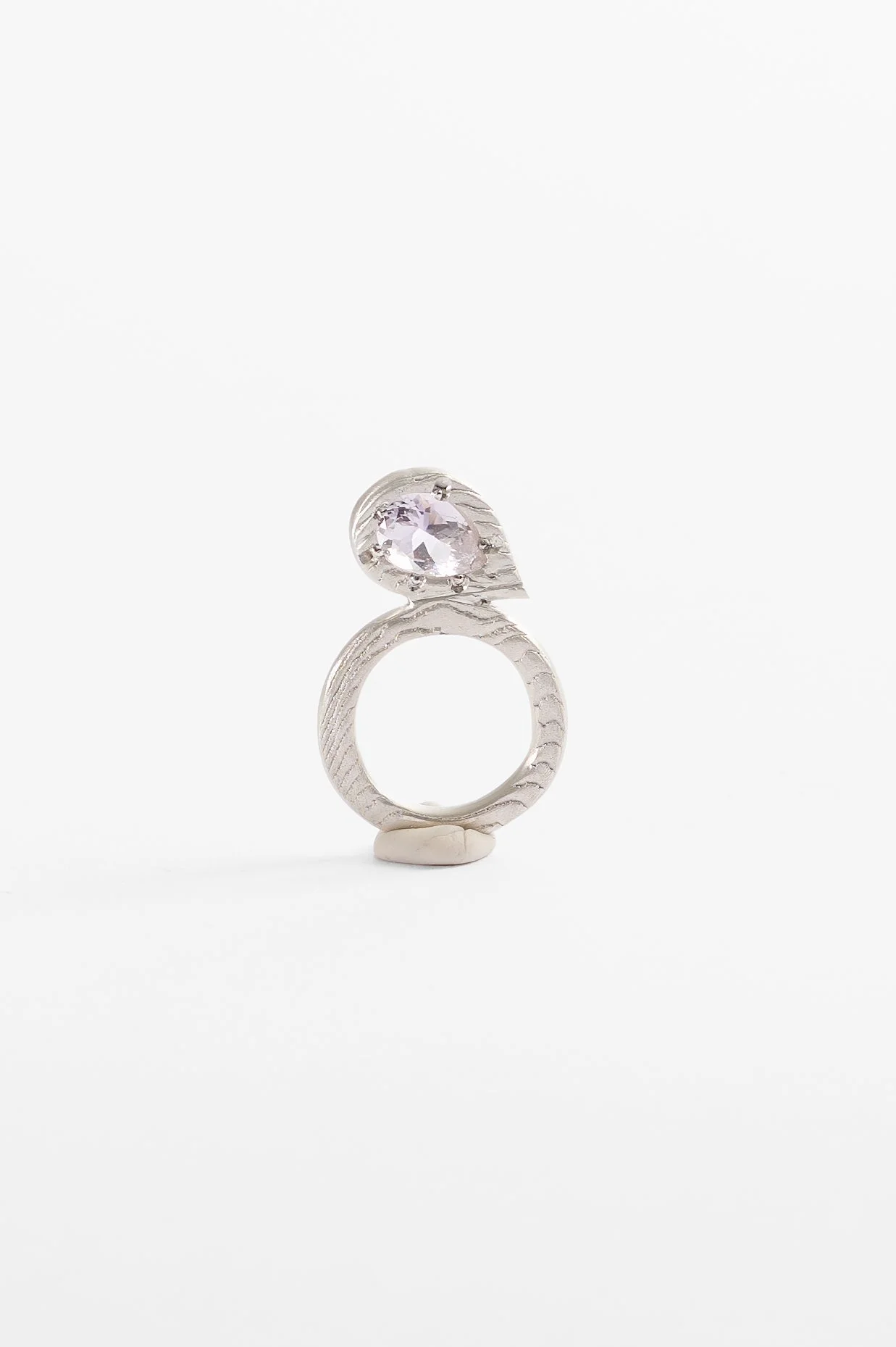
Helen Dilkes (6) Cuttlefish impression faceted stone, rings, 925 silver, 14 carat gold, Australian zircon, Australian amethyst, dimensions variable 40 x 25 x 5mm to 33 x 22 x 3mm, 2025 Photography: Ross Coulter
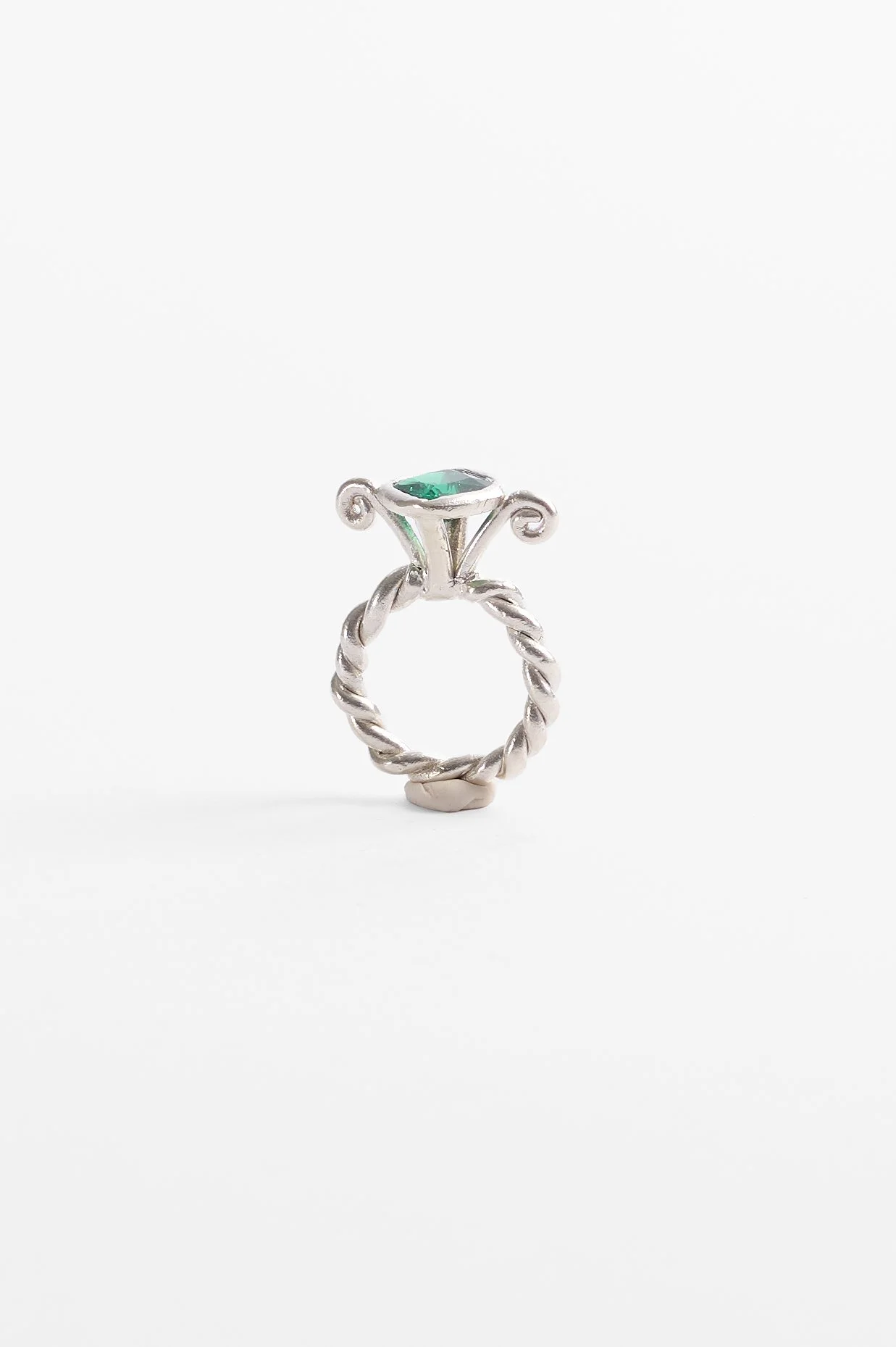
Holly Gregory (19) ‘Clown Ring #1: The Birthday’, sterling silver and synthetic tsavorite garnet, approx. size K, 2023. Photography: Ross Coulter
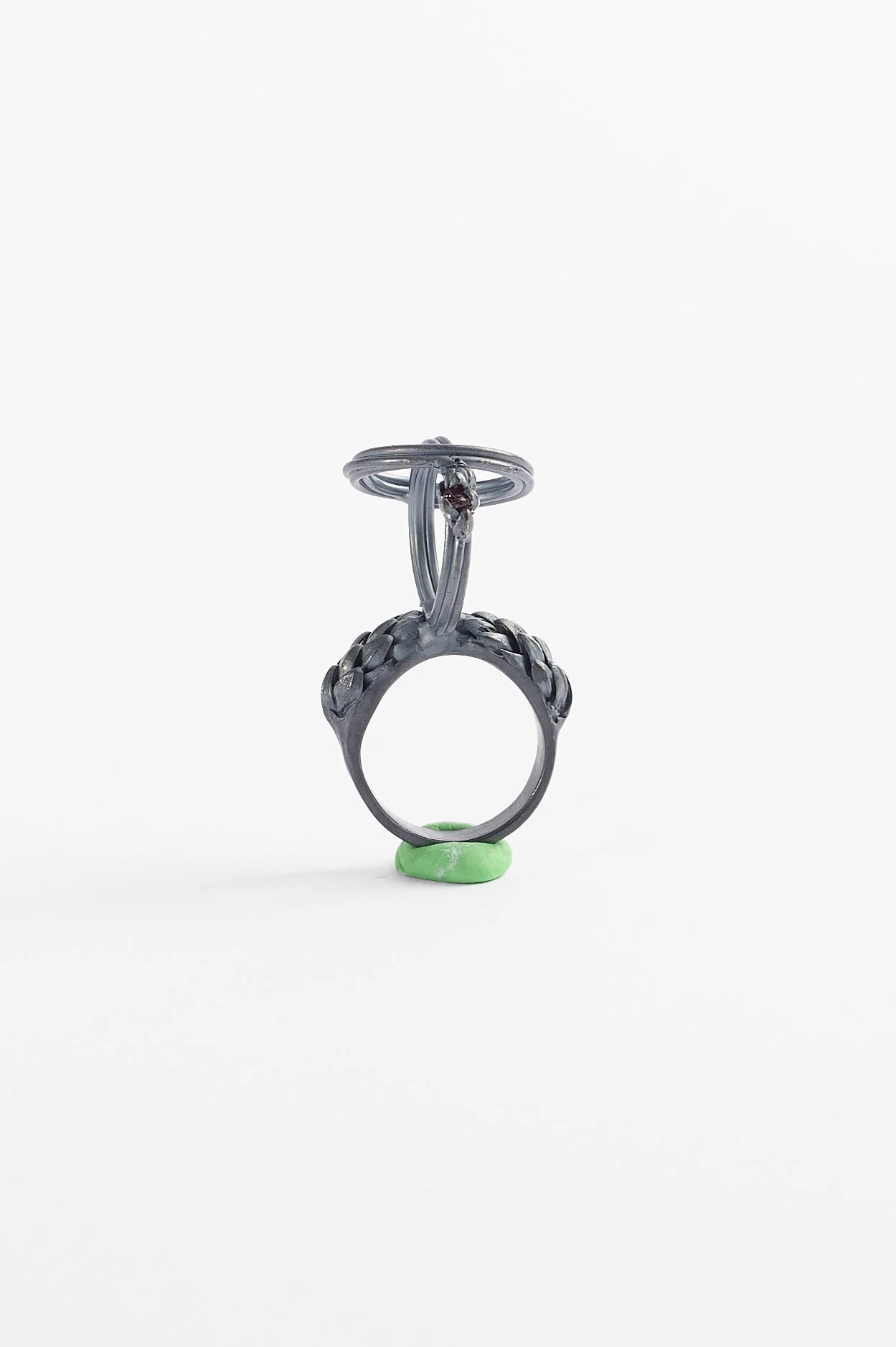
Juliette Claire (9) 3. ‘Liquorice I’, oxidised sterling silver, rough garnet, size: approx. L, 2025. Photography: Ross Coulter
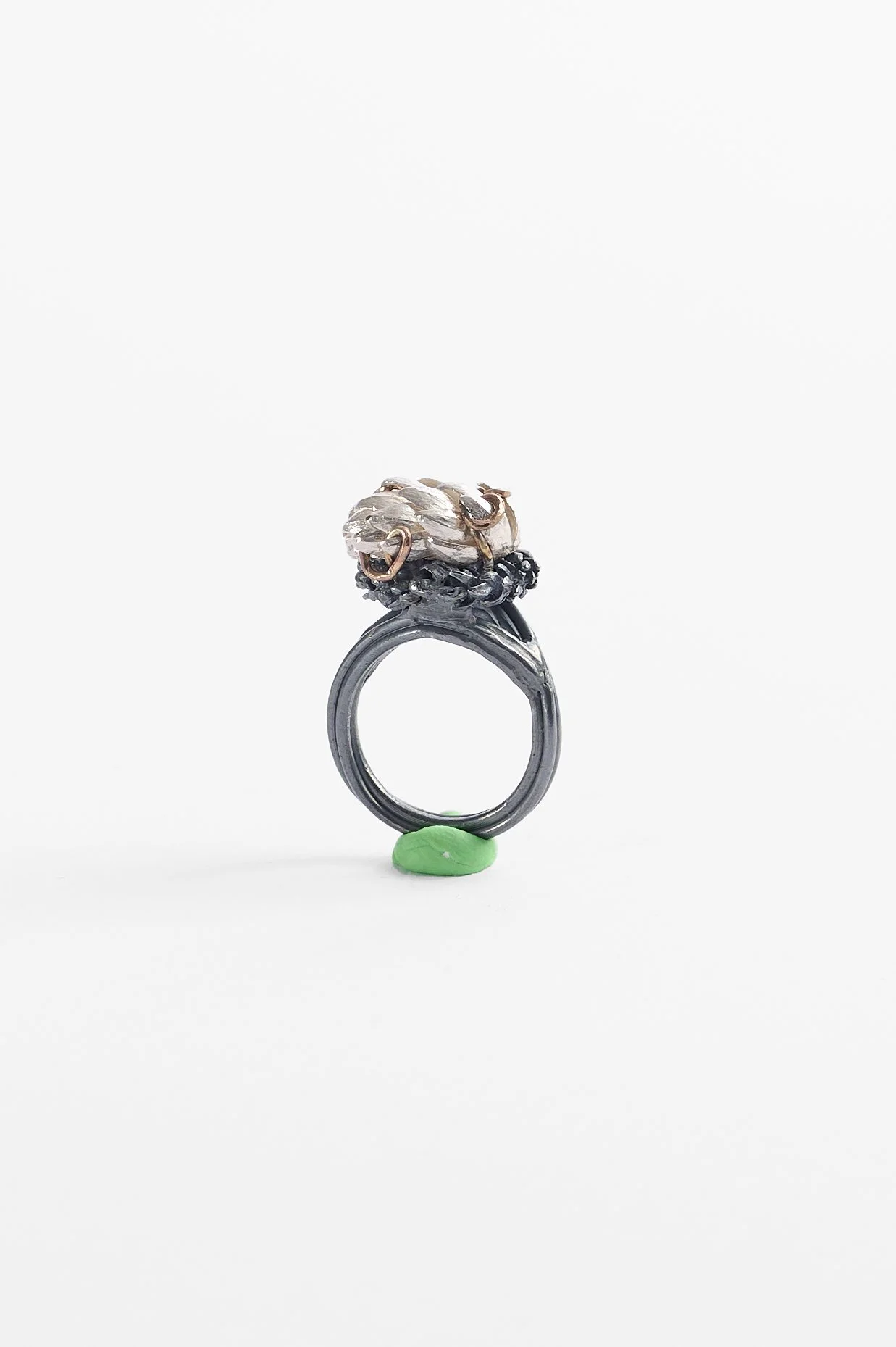
Juliette Claire (9) 2. ‘Liquorice II’, oxidised sterling silver, 9ct gold, size: approx. M 1/2, 2025. Photography: Ross Coulter
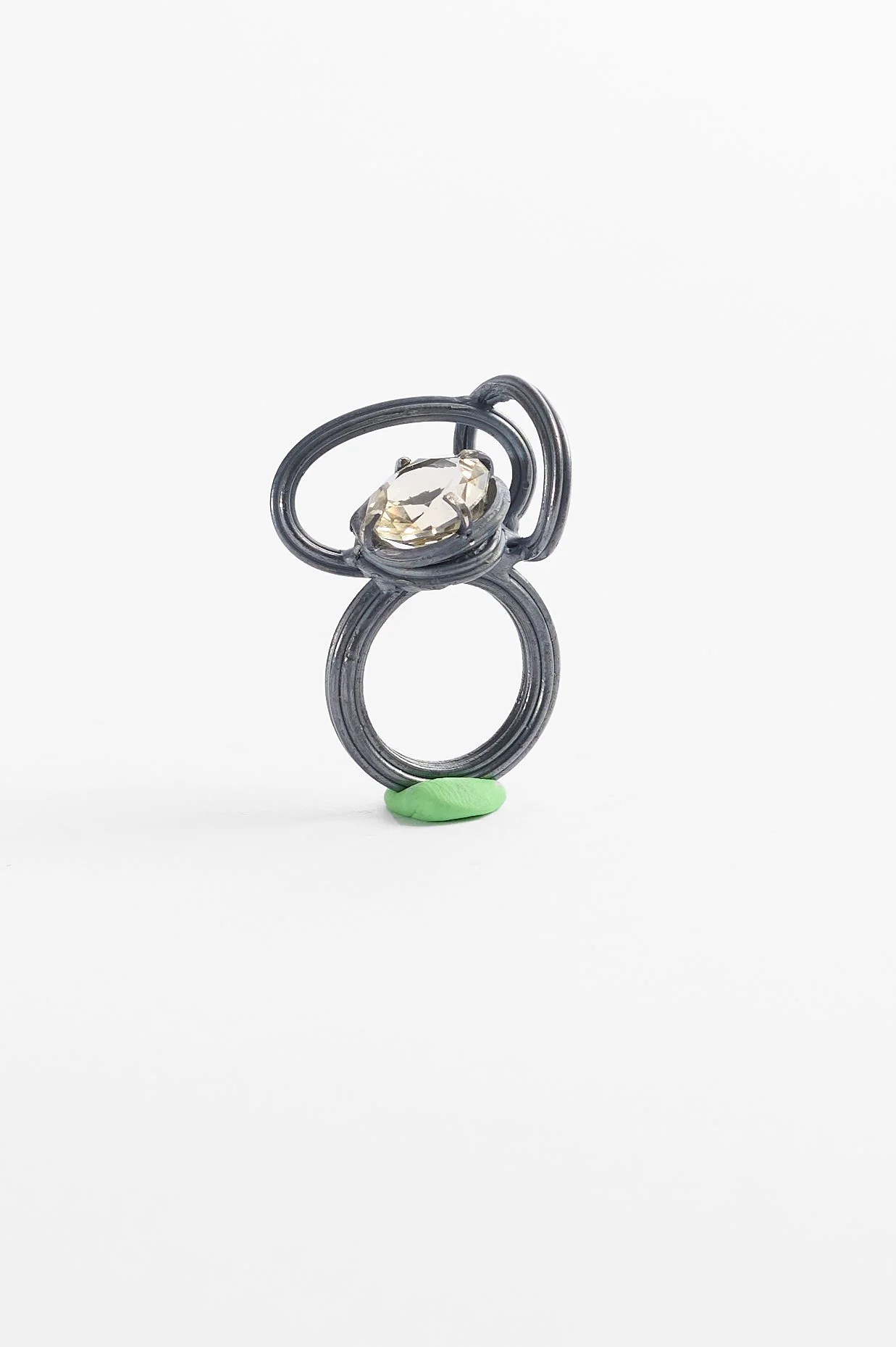
Juliette Claire (9) 1. ‘Liquorice III’, oxidised sterling silver, yellow labradorite, size: approx. L, 2025. Photography: Ross Coulter
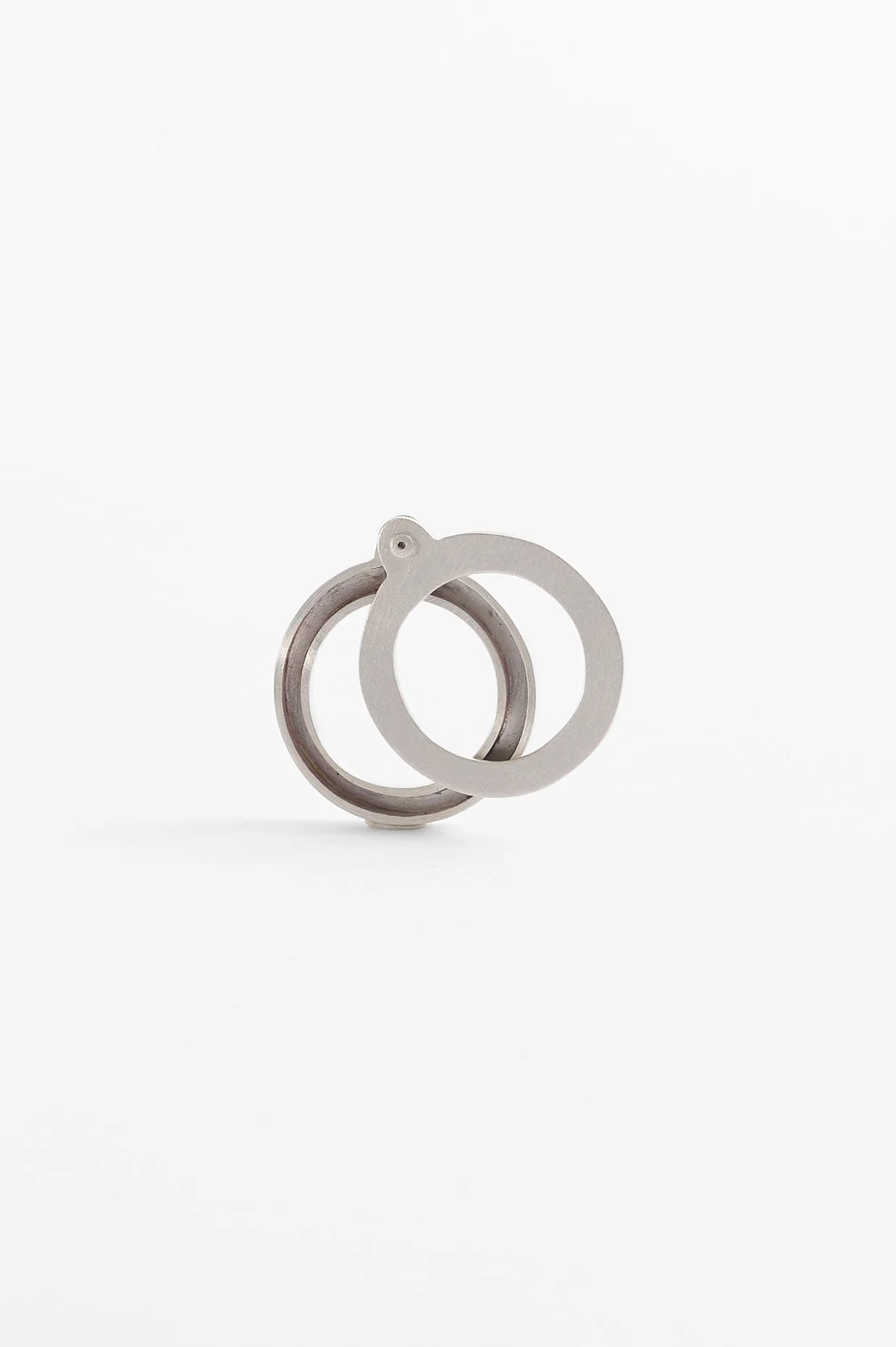
Katie Collins (36) 3. ‘Promises kept’, sterling silver, 24 x 29 x 5mm, approx. size M, 2025. Photography: Ross Coulter
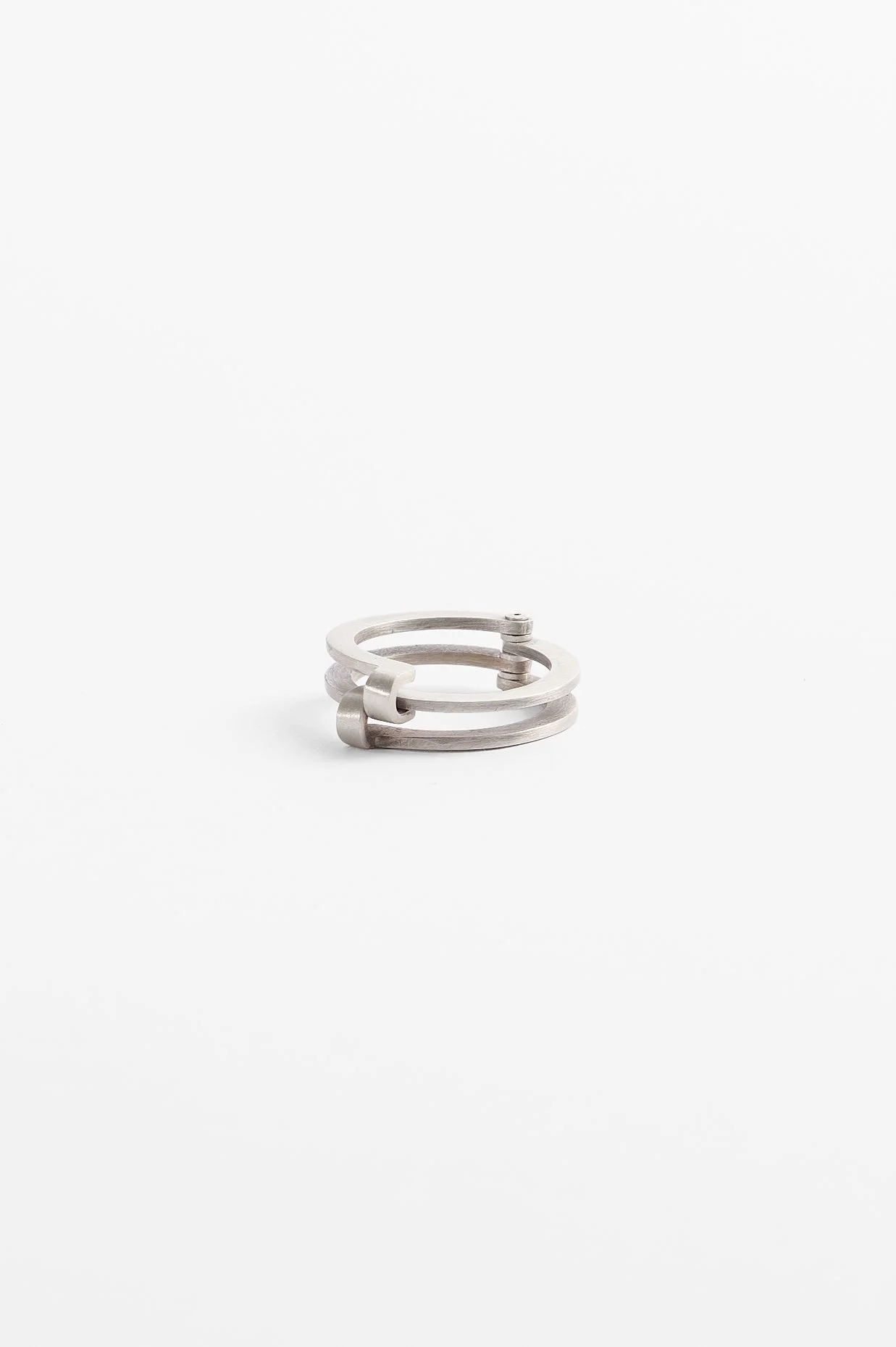
Katie Collins (36) 2. ‘On and off again’, sterling silver, 27 x 24 x 8mm, approx. size Q, 2025. Photography: Ross Coulter
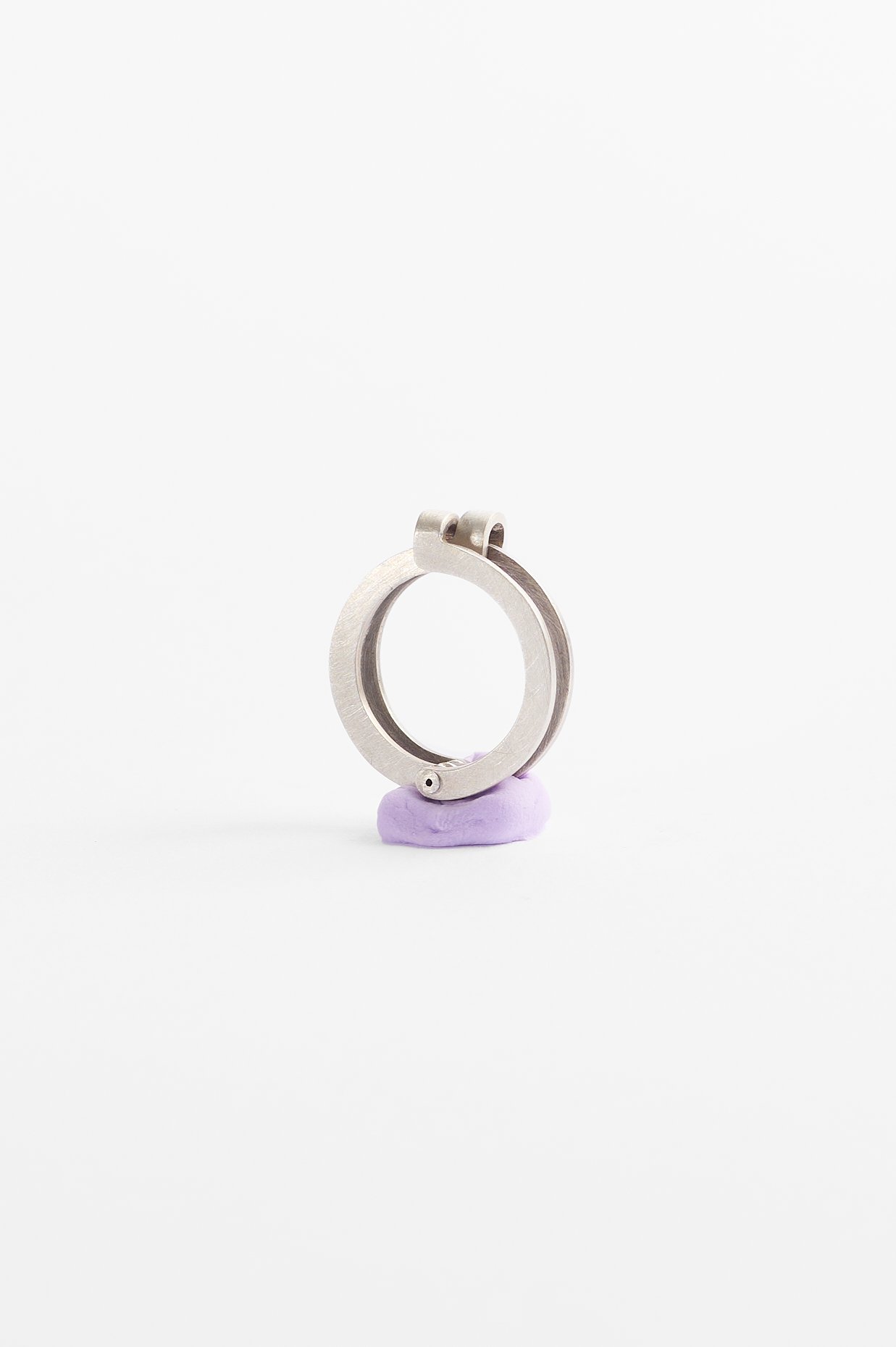
Katie Collins (36) 2. ‘On and off again’, sterling silver, 27 x 24 x 8mm, approx. size Q, 2025. Photography: Ross Coulter
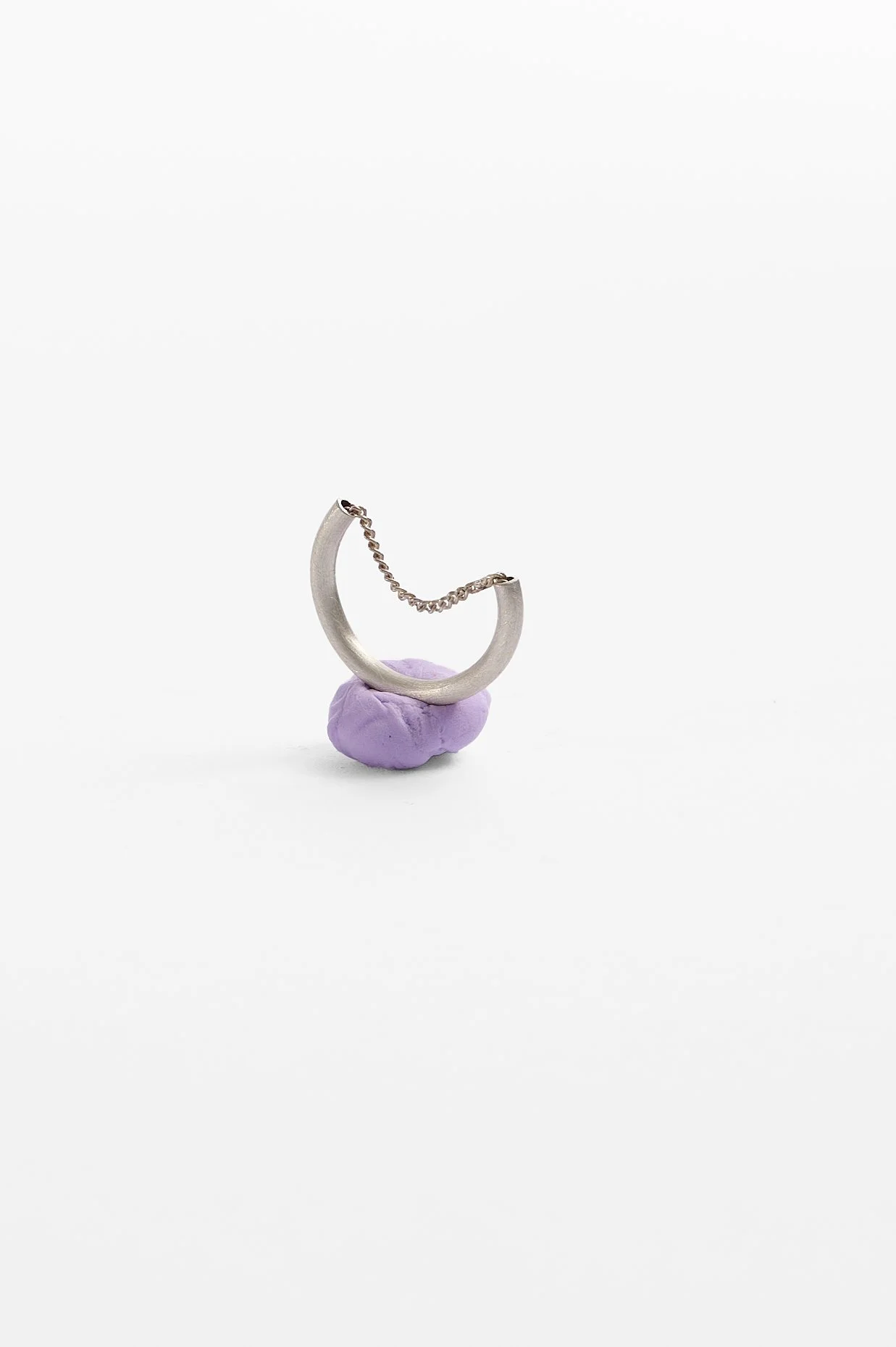
Katie Collins (36) 1. ‘What runs deep’, sterling silver, 22mm⌀ x 2.5mm, approx. size O, 2025. Photography: Ross Coulter

Katie Collins (36) 5. ‘Melting’, sterling silver, 22mm⌀ x 2mm, approx. size S, 2025 and 1. ‘What runs deep’, sterling silver, 22mm⌀ x 2.5mm, approx. size O, 2025. Photography: Ross Coulter
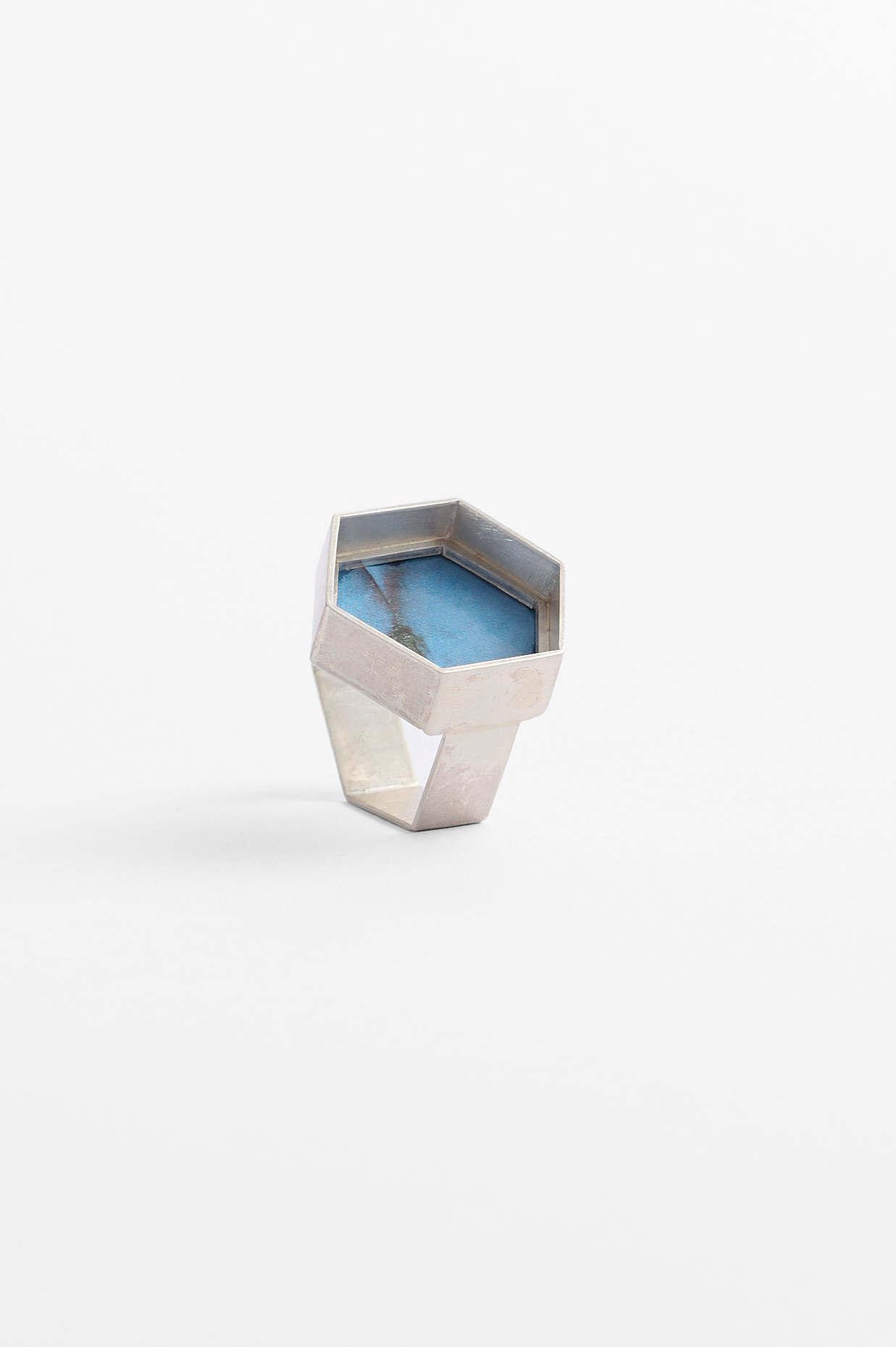
Kirsten Haydon (31) ‘Ice Inside’, ring, silver, steel, enamel, photo transfer. Photography: Ross Coulter
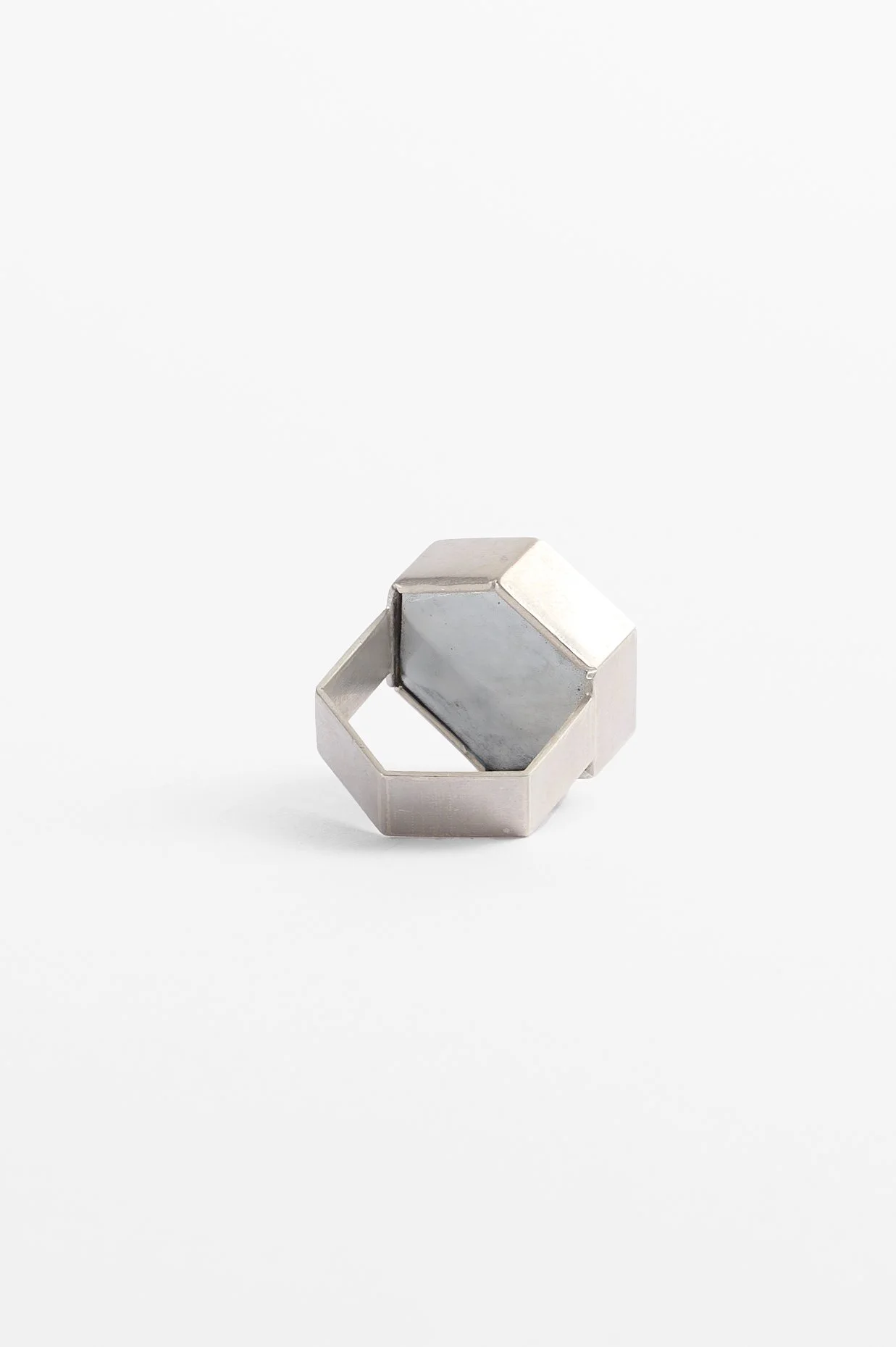
Kirsten Haydon (31) ‘Ice Inside’, ring, silver, steel, enamel, photo transfer. Verso. Photography: Ross Coulter
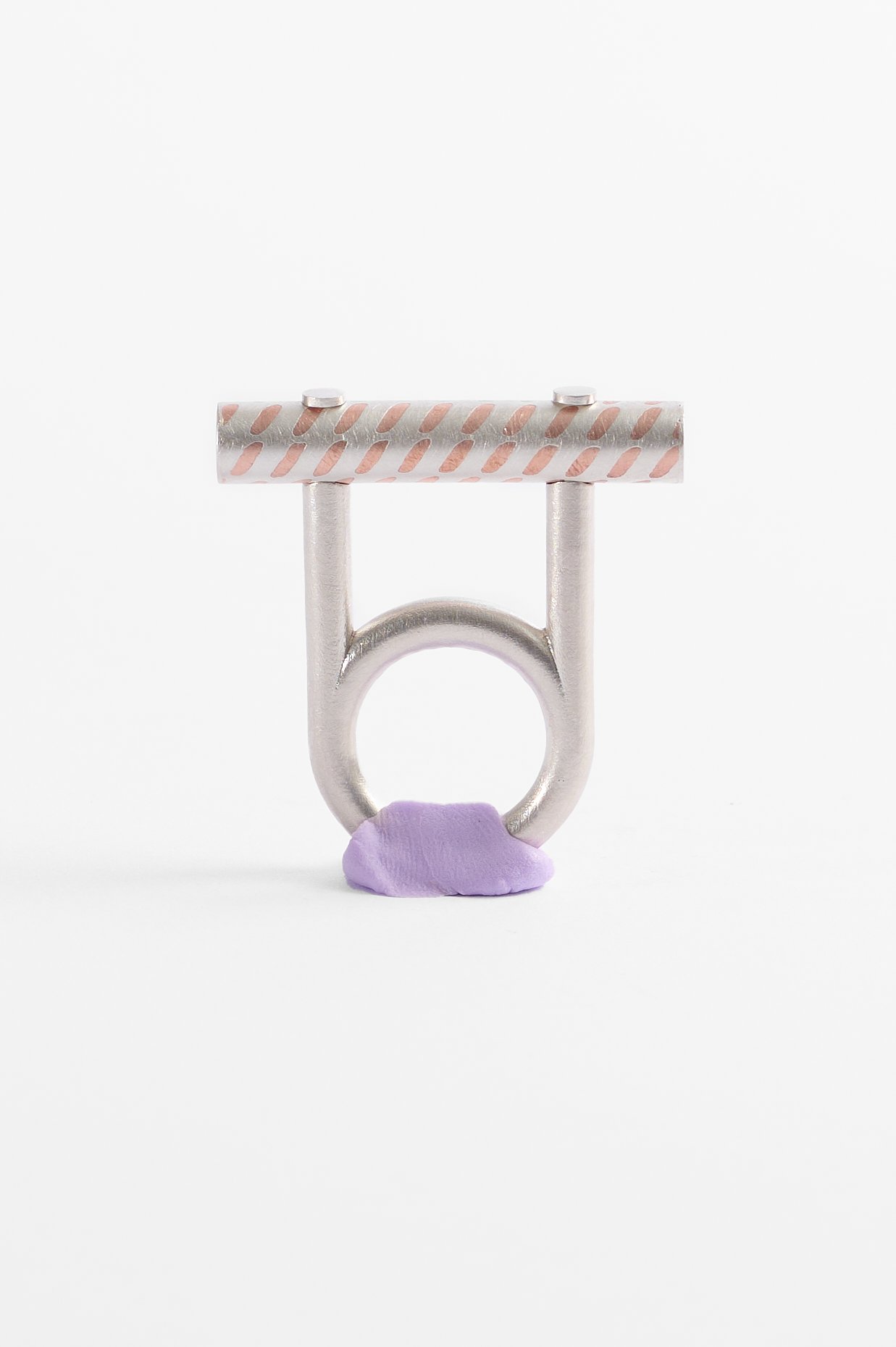
Ko Jou Chen (3) ‘Torri ring 2' brass, copper, silver, approx. size O, 40x35x9mm, 2025. Photography: Ross Coulter
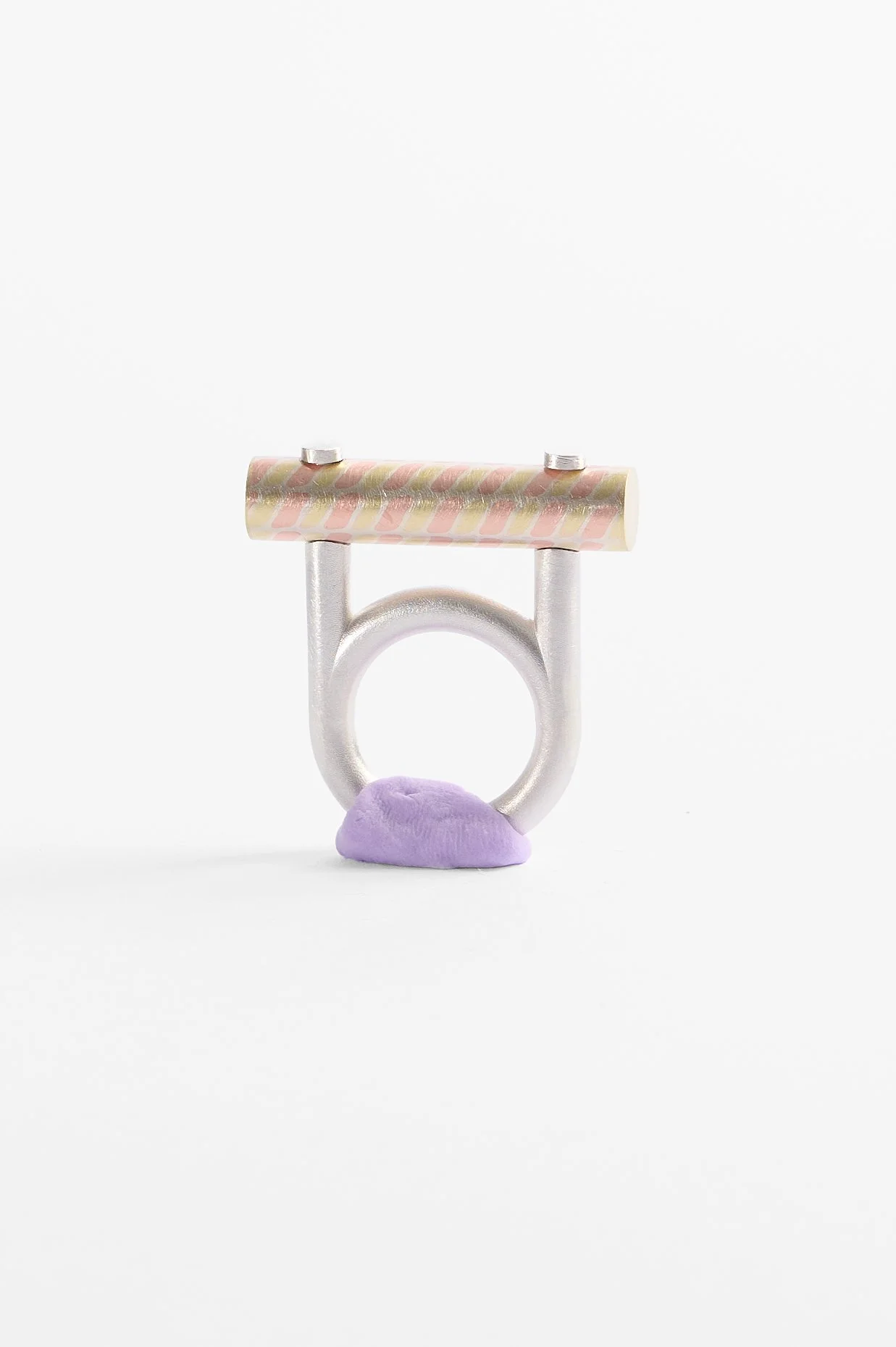
Ko Jou Chen (3) 'Torri ring 1' copper, silver, approx. size N, 44x45x8mm, 2025. Photography: Ross Coulter
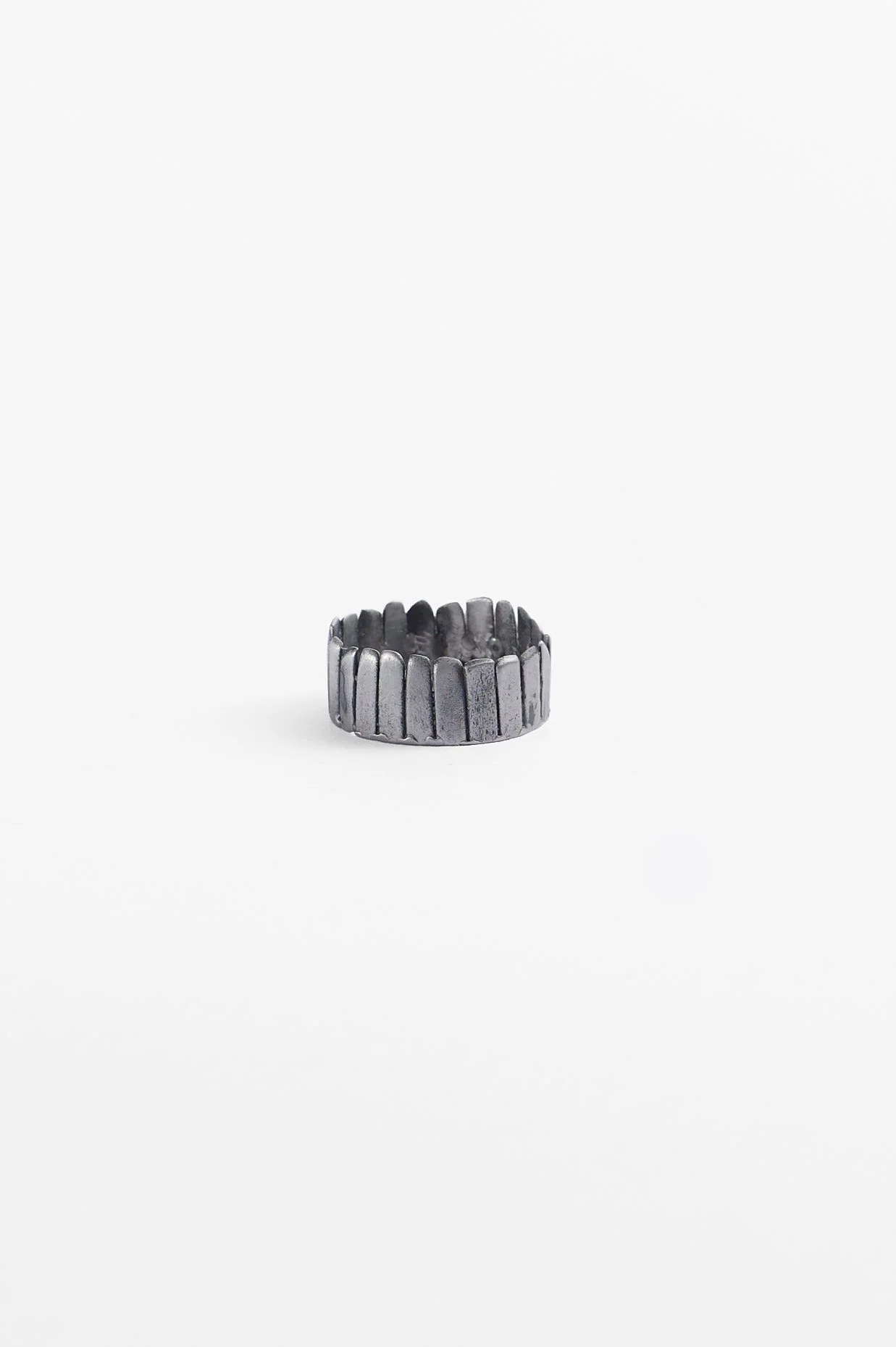
Melissa Cameron (35) ‘end rings’, 1-5, (xl, l, m, s , xs) found steel street sweeper bristles, 21 x 21 x 10mm (largest), 2025. Photography: Ross Coulter
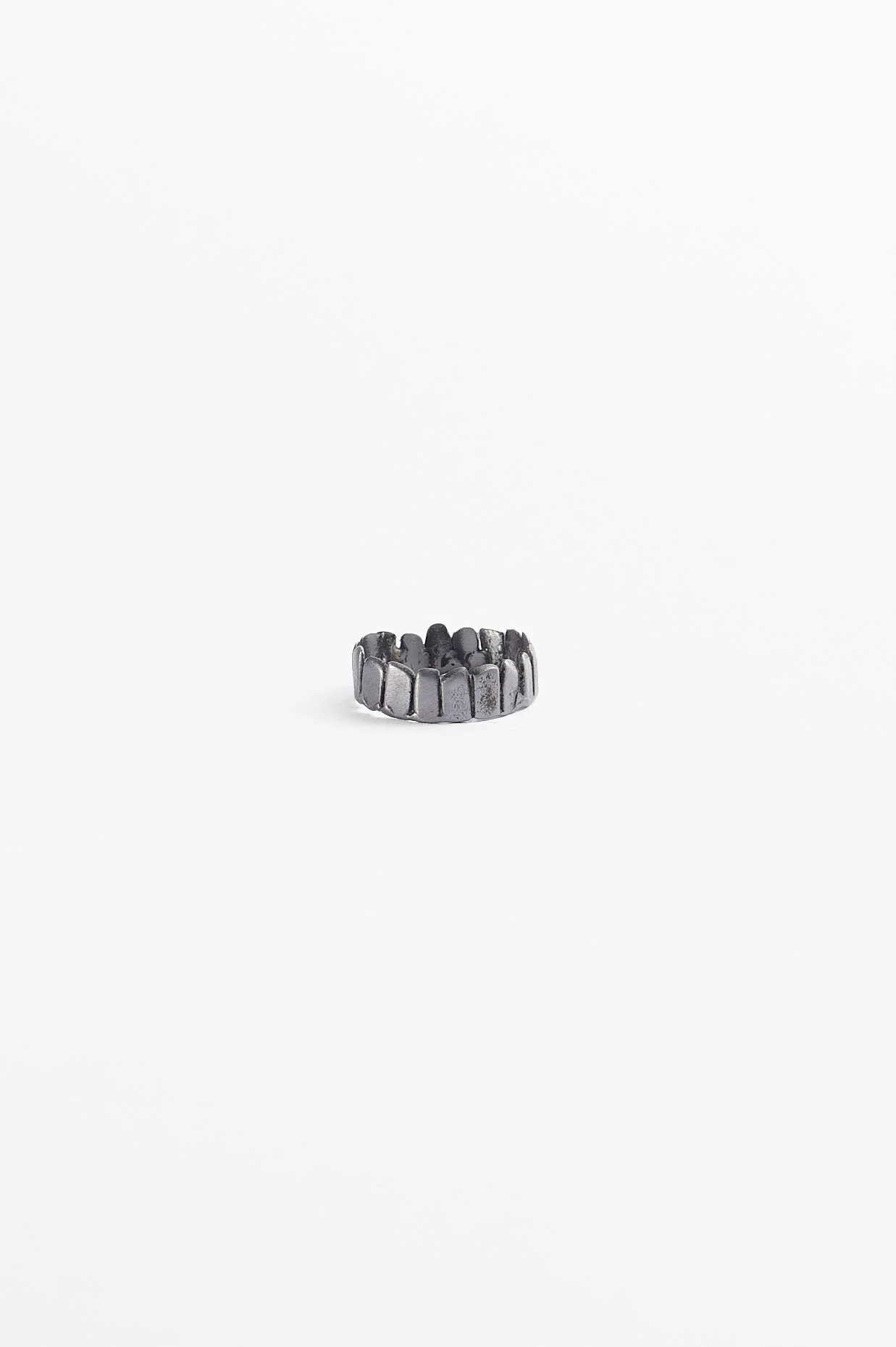
Melissa Cameron (35) ‘end rings’, 1-5, (xl, l, m, s , xs) found steel street sweeper bristles, 21 x 21 x 10mm (largest), 2025. Photography: Ross Coulter
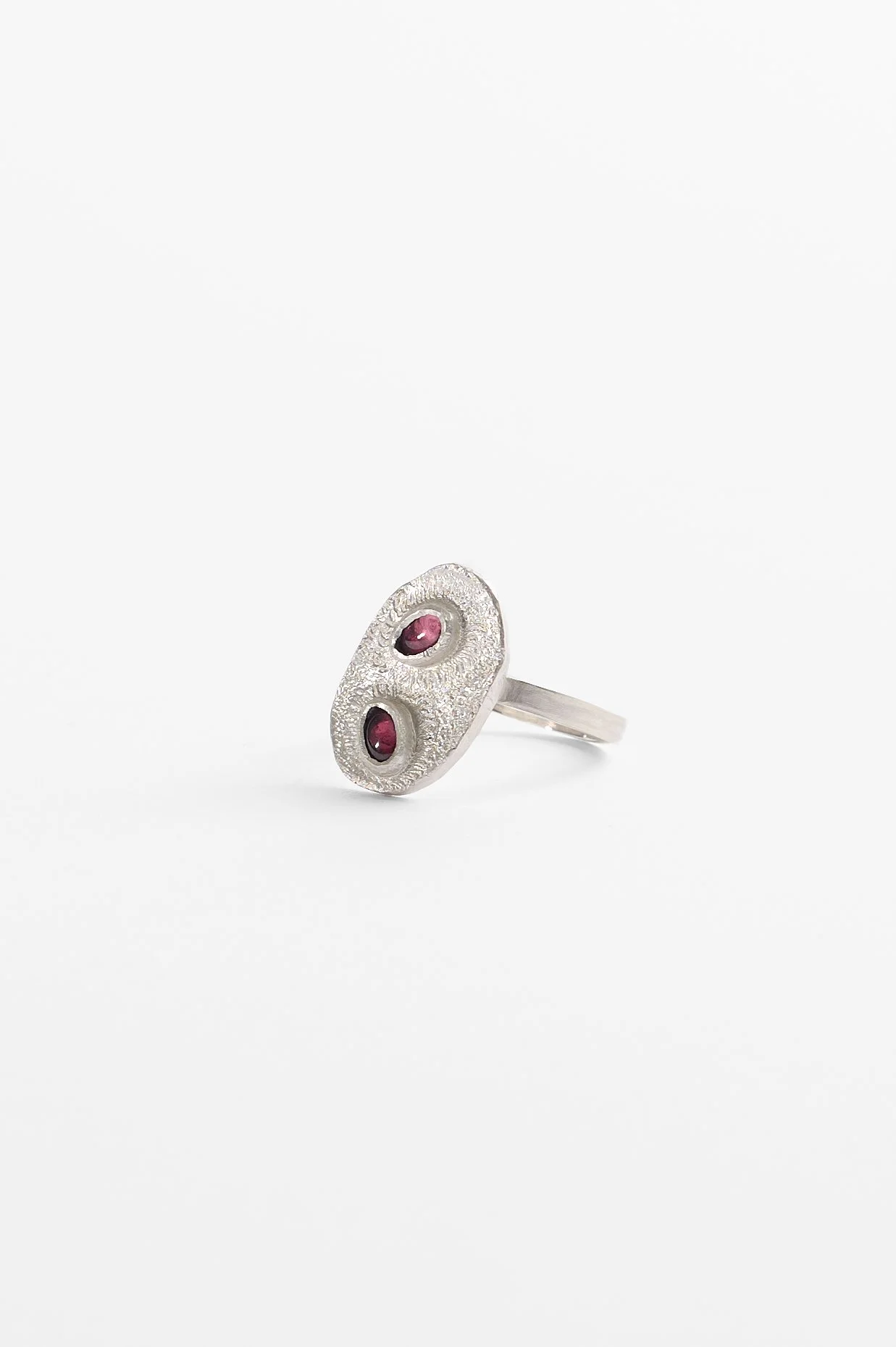
Mary Hackett (22) 2. ‘I see you, Birdie’, sterling silver, garnets, 24 x 23 x 27mm, 19 mm inside diameter, approx. size R, 2025. Photography: Ross Coulter
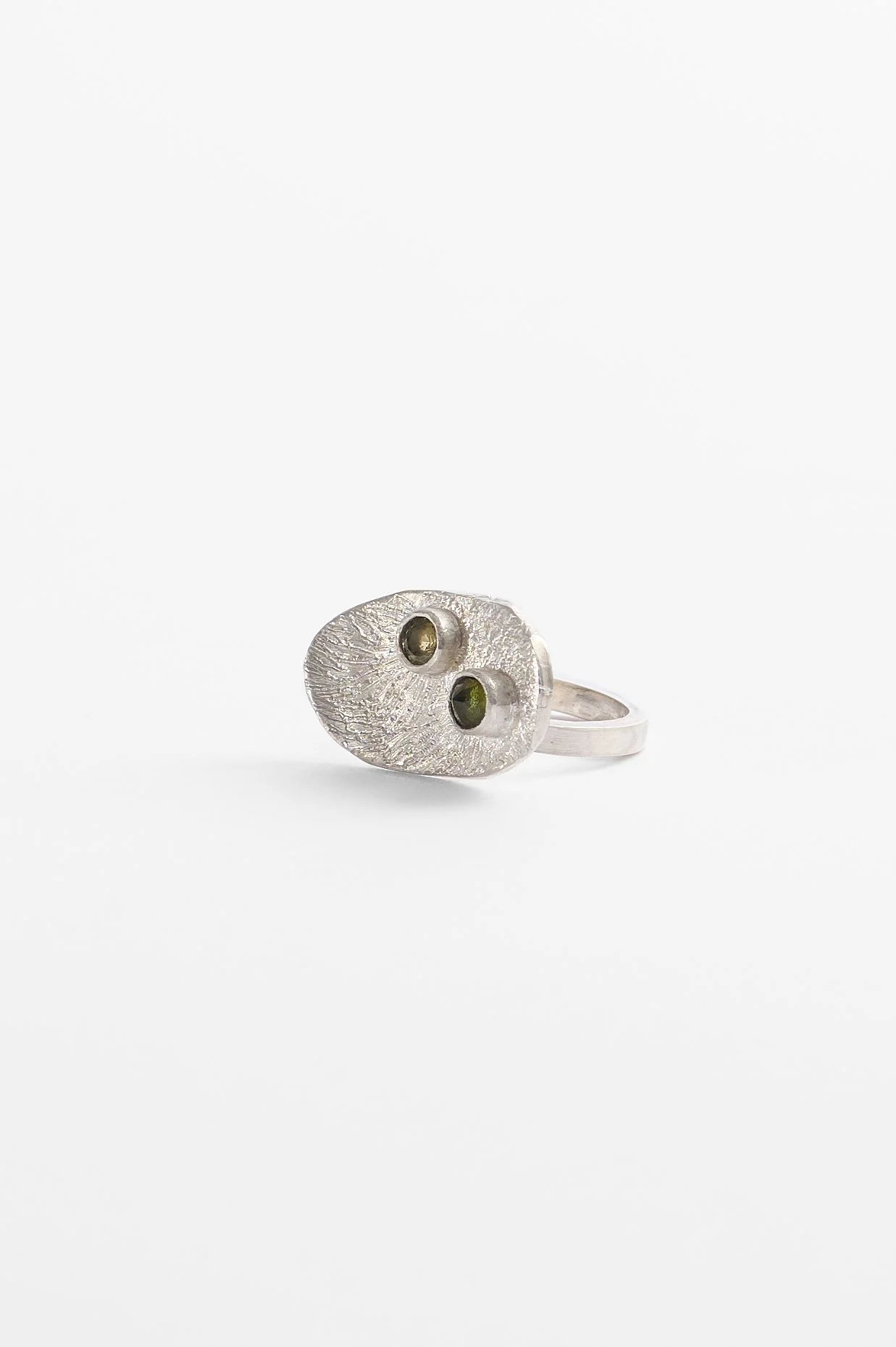
Mary Hackett (22) 1. ‘Green is my heart’, sterling silver, Western Australian tourmalines, 29 x 18 x 30mm, 20mm inside diameter, approx. size T, 2025. Photography: Ross Coulter
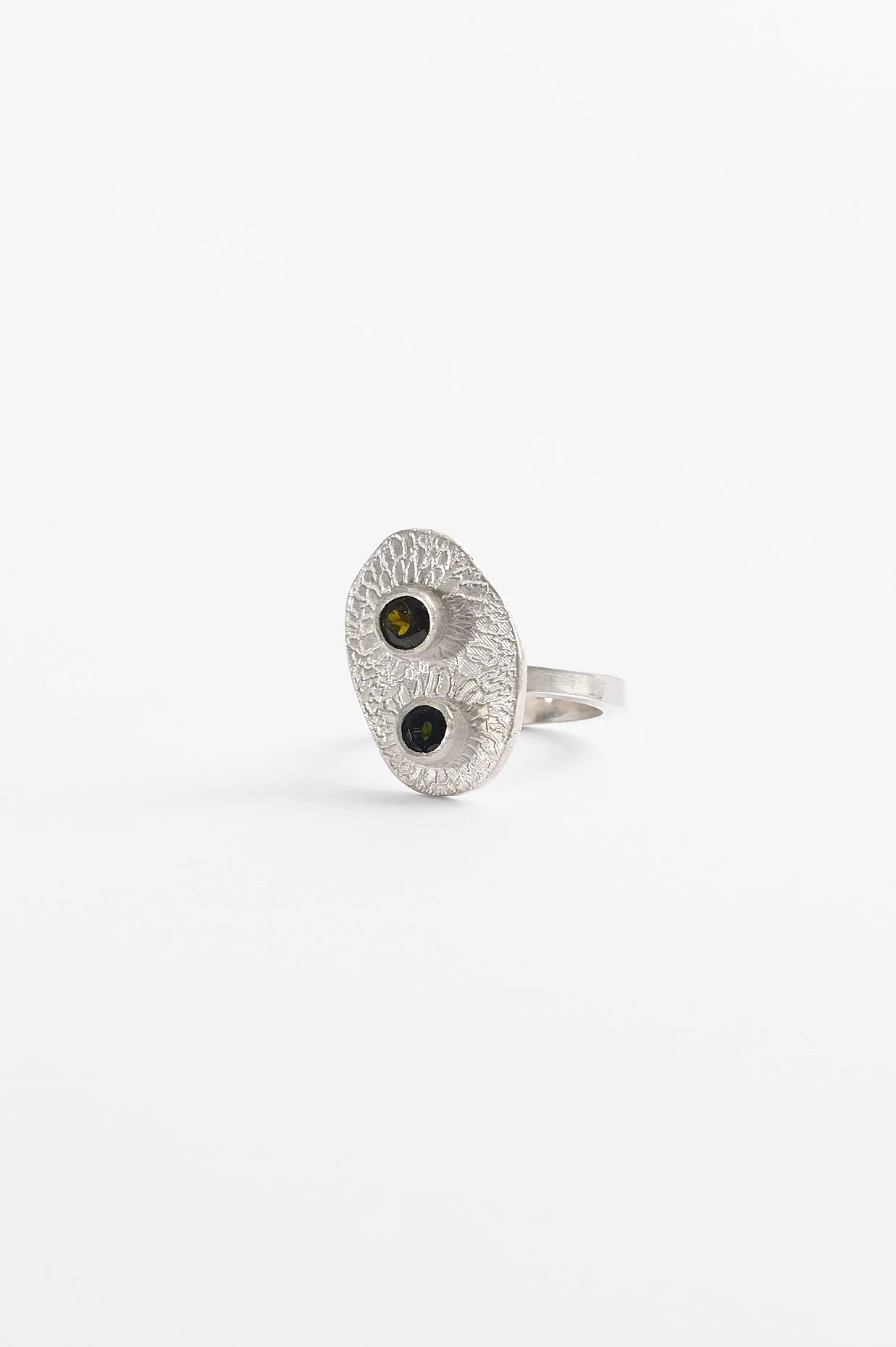
Mary Hackett (22) 3. ‘Little daisies’, sterling silver, Western Australian tourmalines, 24 x 25 x 28mm, 20 mm inside diameter, approx. size S, 2025. Photography: Ross Coulter
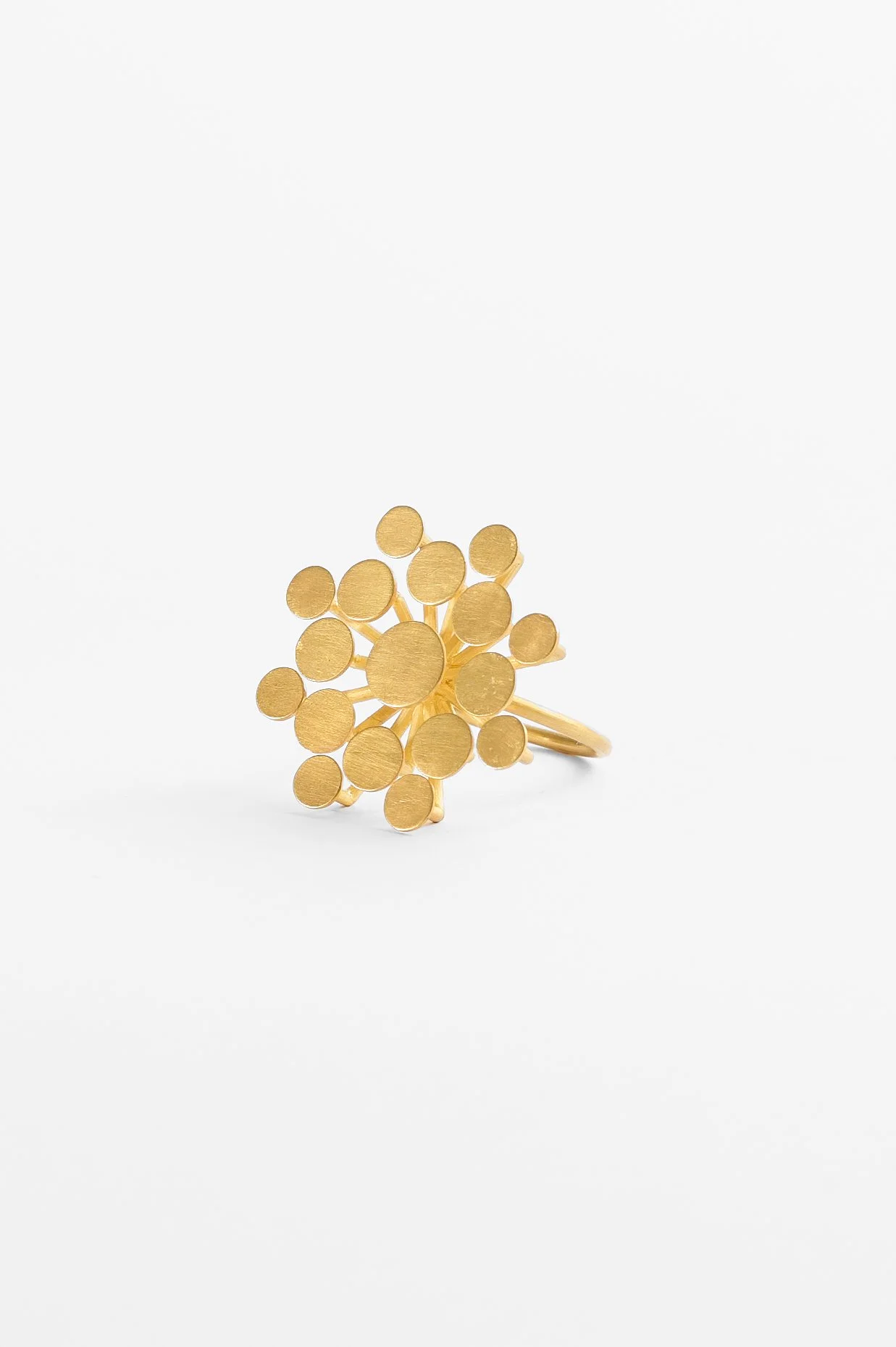
Mascha Moje (4) 1. ‘Untitled’, 20ct gold ring, size Q1/2, 2025. Photography: Ross Coulter
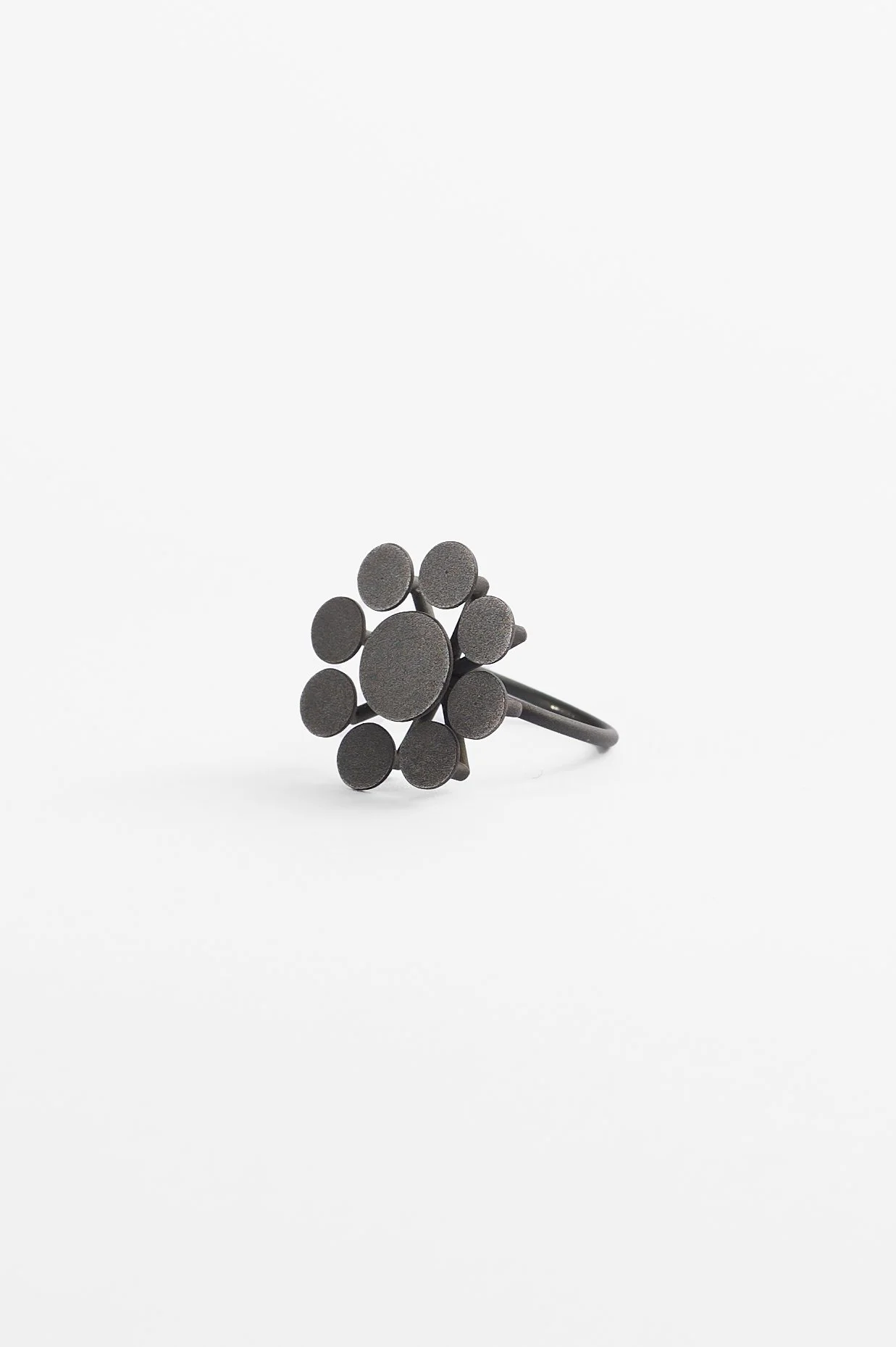
Mascha Moje (4) 2. ‘Untitled’, oxidized mild steel ring - round face, size Q, 2025. Photography: Ross Coulter
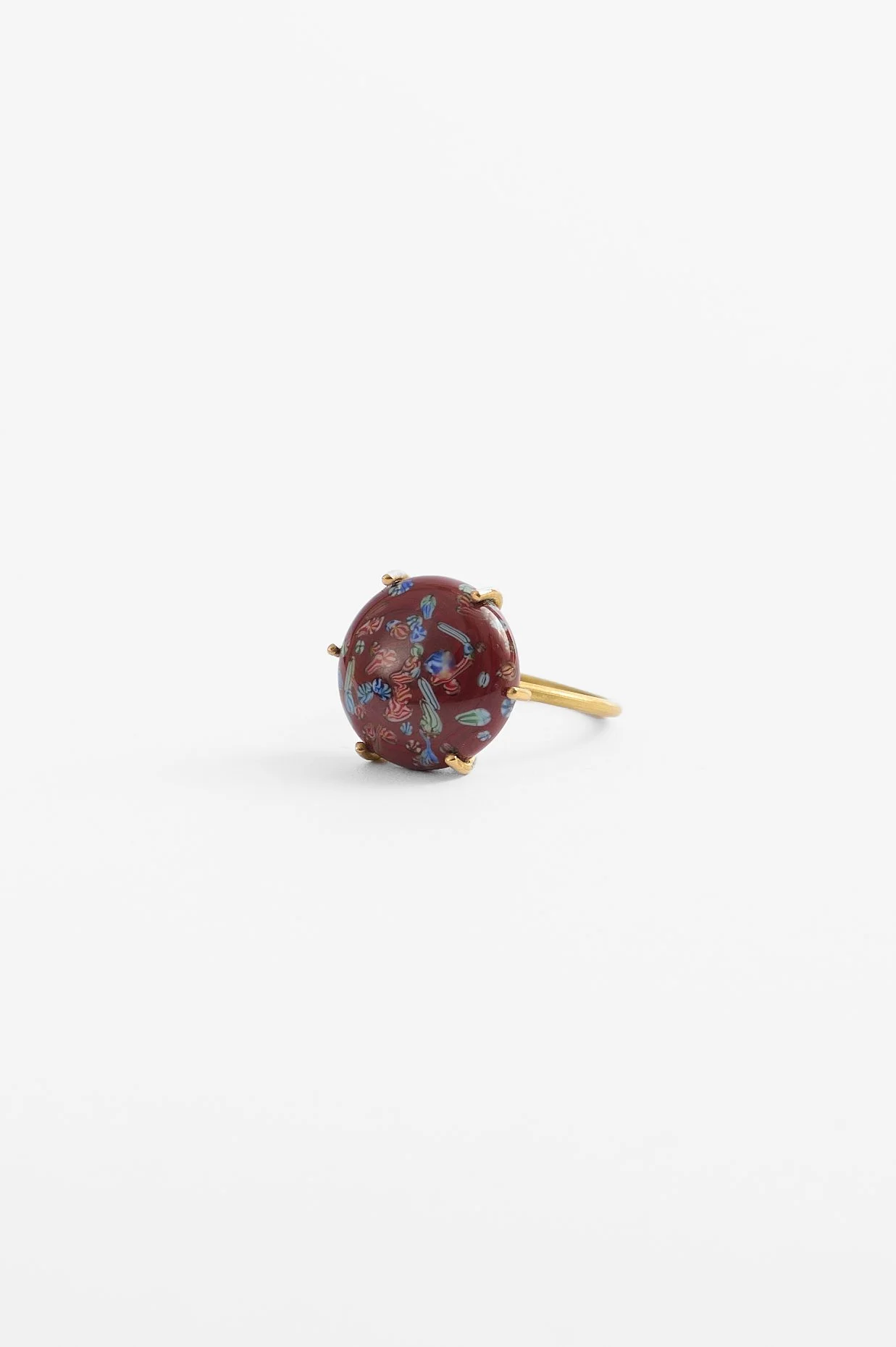
Mascha Moje (4) 3. ‘Untitled’, 20ct gold ring with glass brown millefiori, 10 x 20 x 20mm, size S1/4, 2025. Photography: Ross Coulter
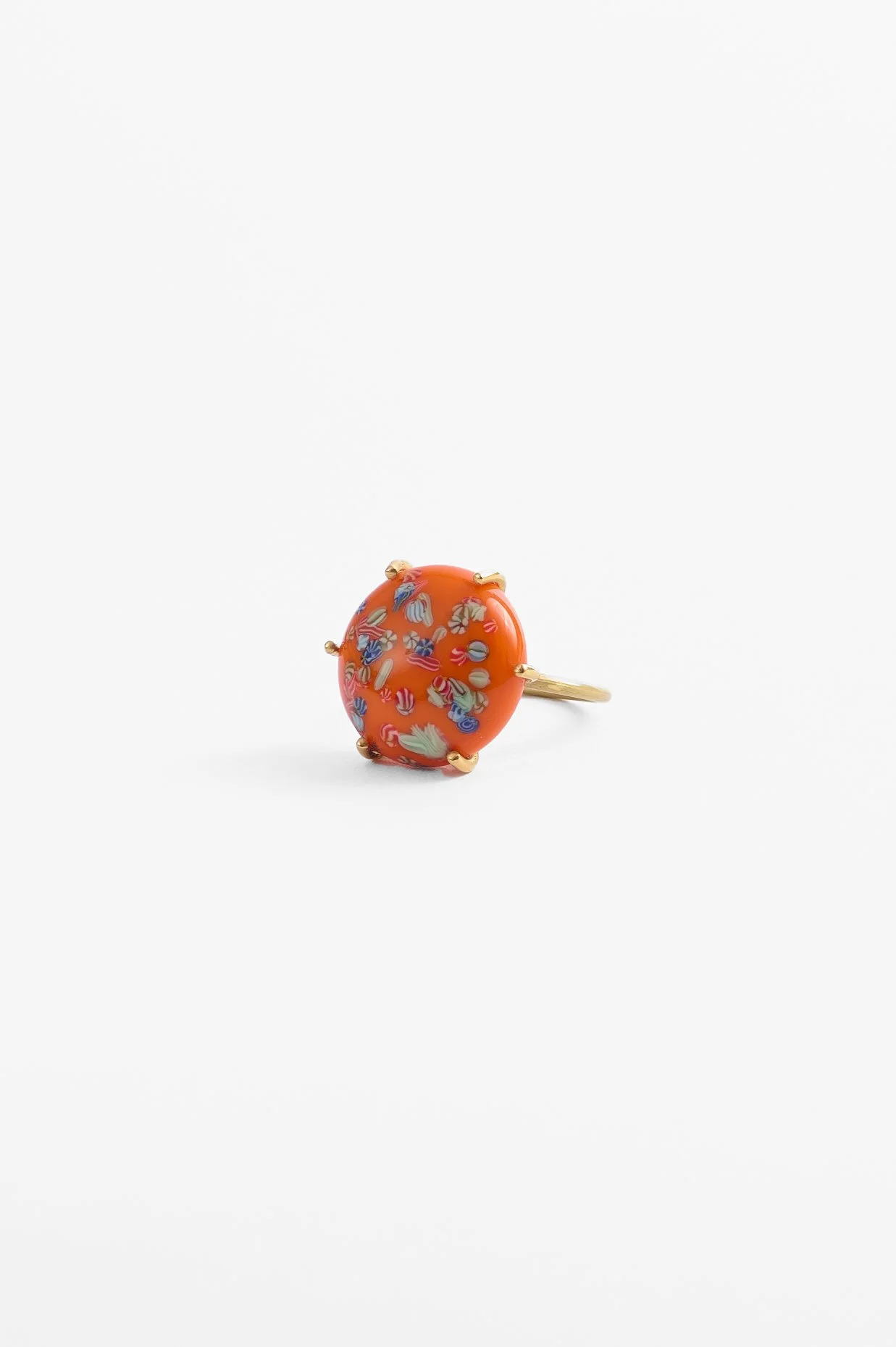
Mascha Moje (4) 4. ‘Untitled’, 20ct gold ring with glass orange millefiori, 10 x 20 x 20mm, size Q, 2025. Photography: Ross Coulter
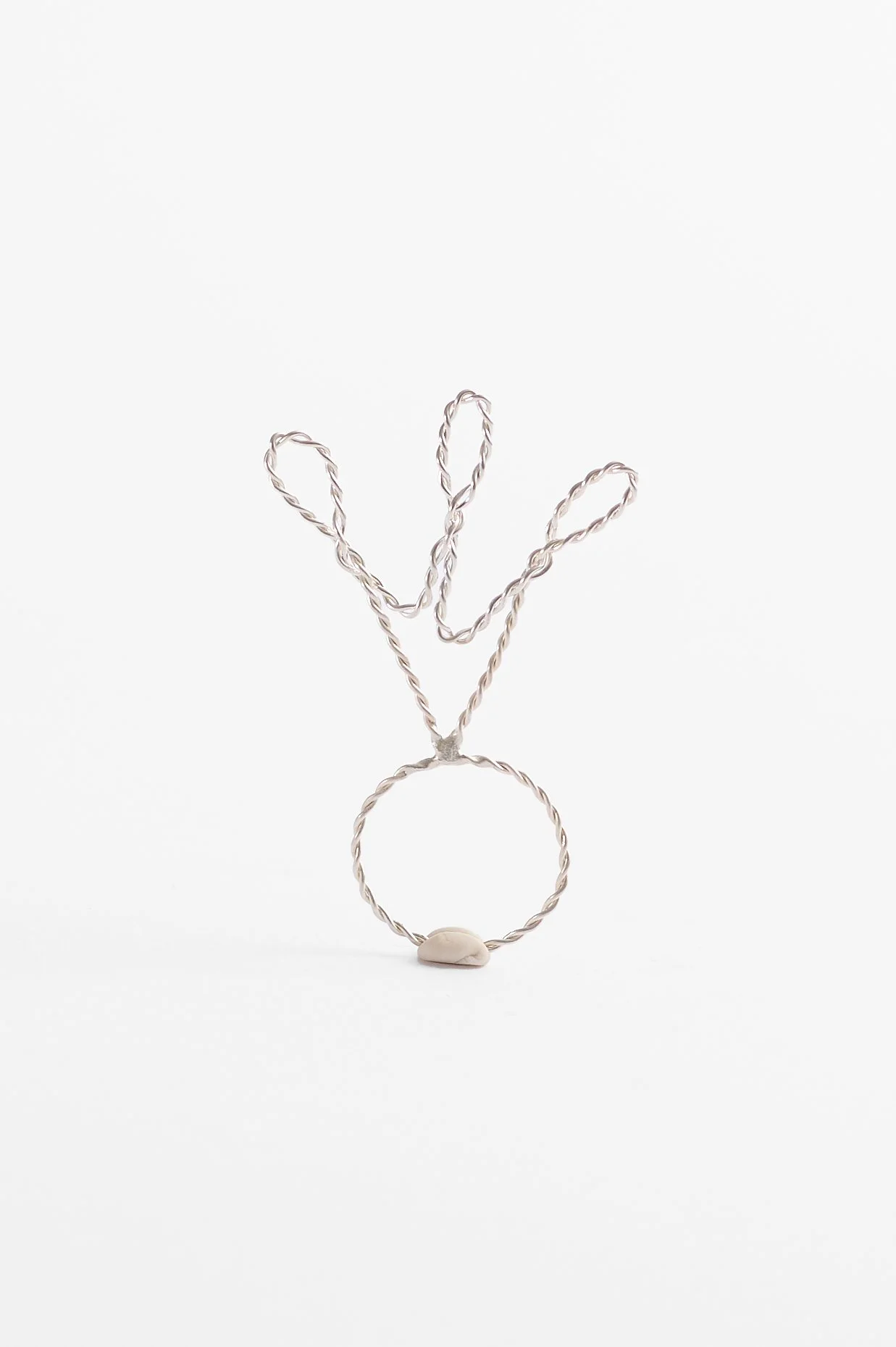
Meredith Turnbull (34) ‘Ring/pendant’, 1-20, sterling silver, dimensions variable, 2024-2025. Photography: Ross Coulter

Meredith Turnbull (34) ‘Ring/pendant’, 1-20, sterling silver, dimensions variable, 2024-2025. Photography: Ross Coulter
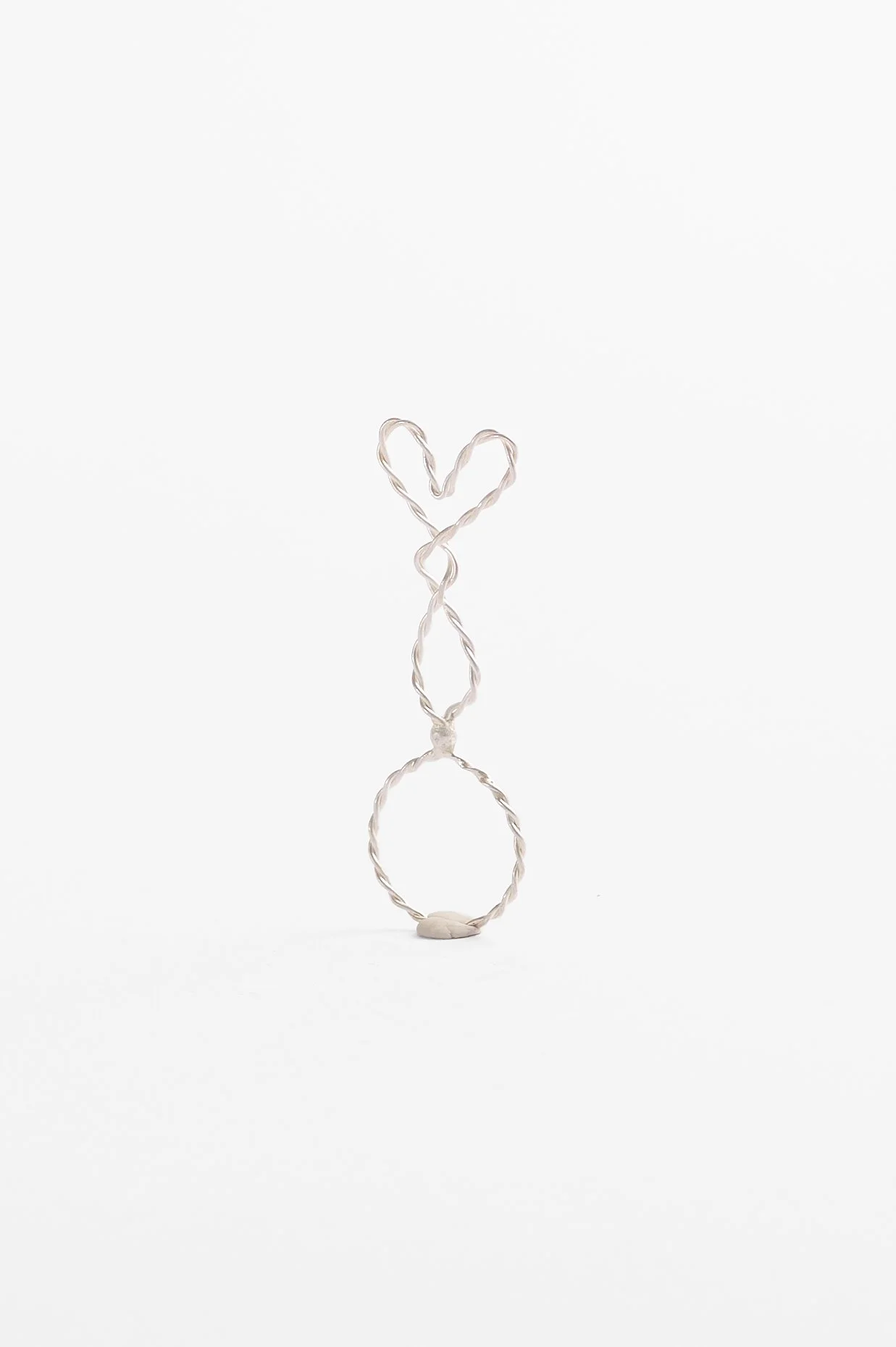
Meredith Turnbull (34) ‘Ring/pendant’, 1-20, sterling silver, dimensions variable, 2024-2025. Photography: Ross Coulter
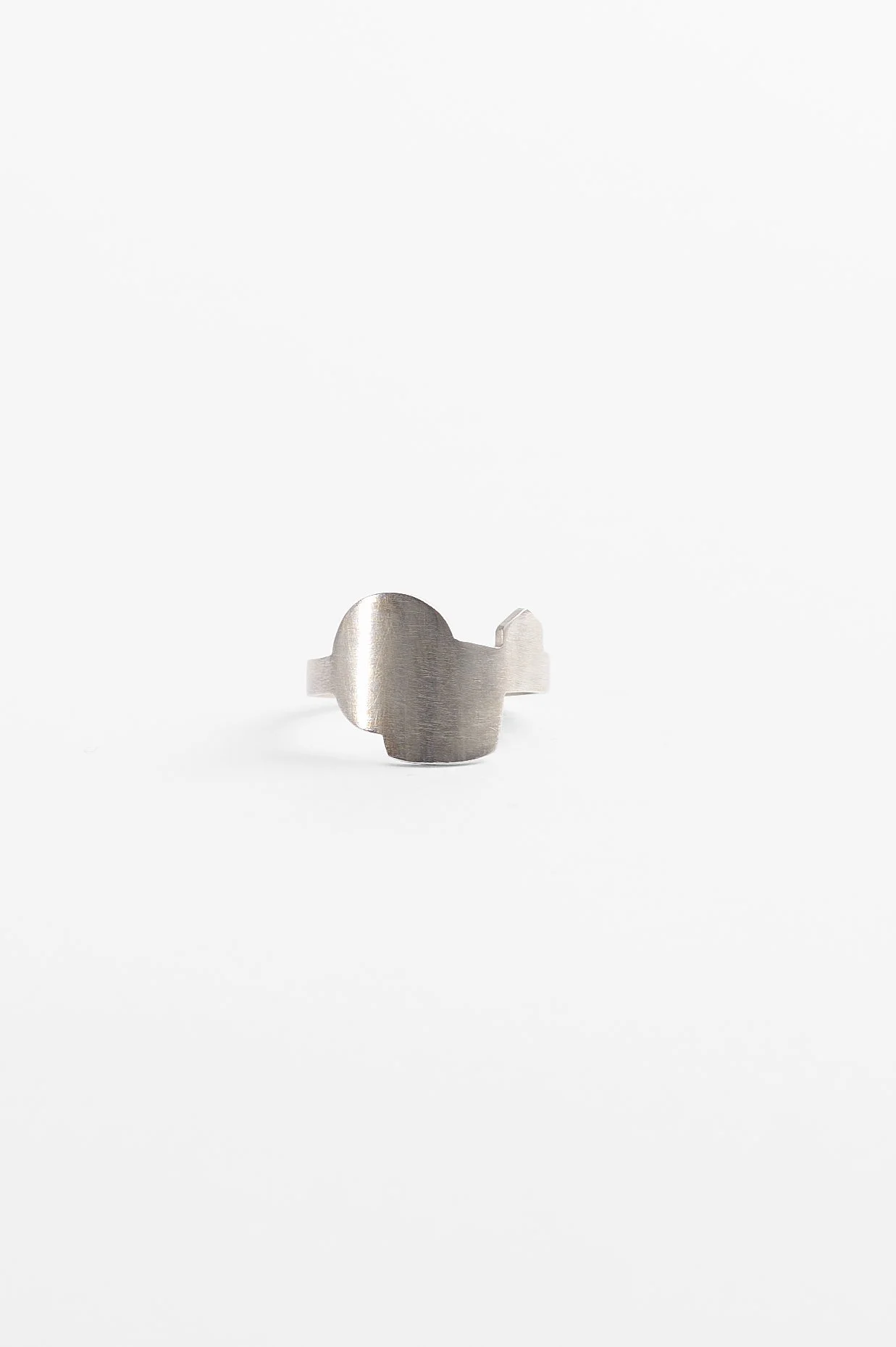
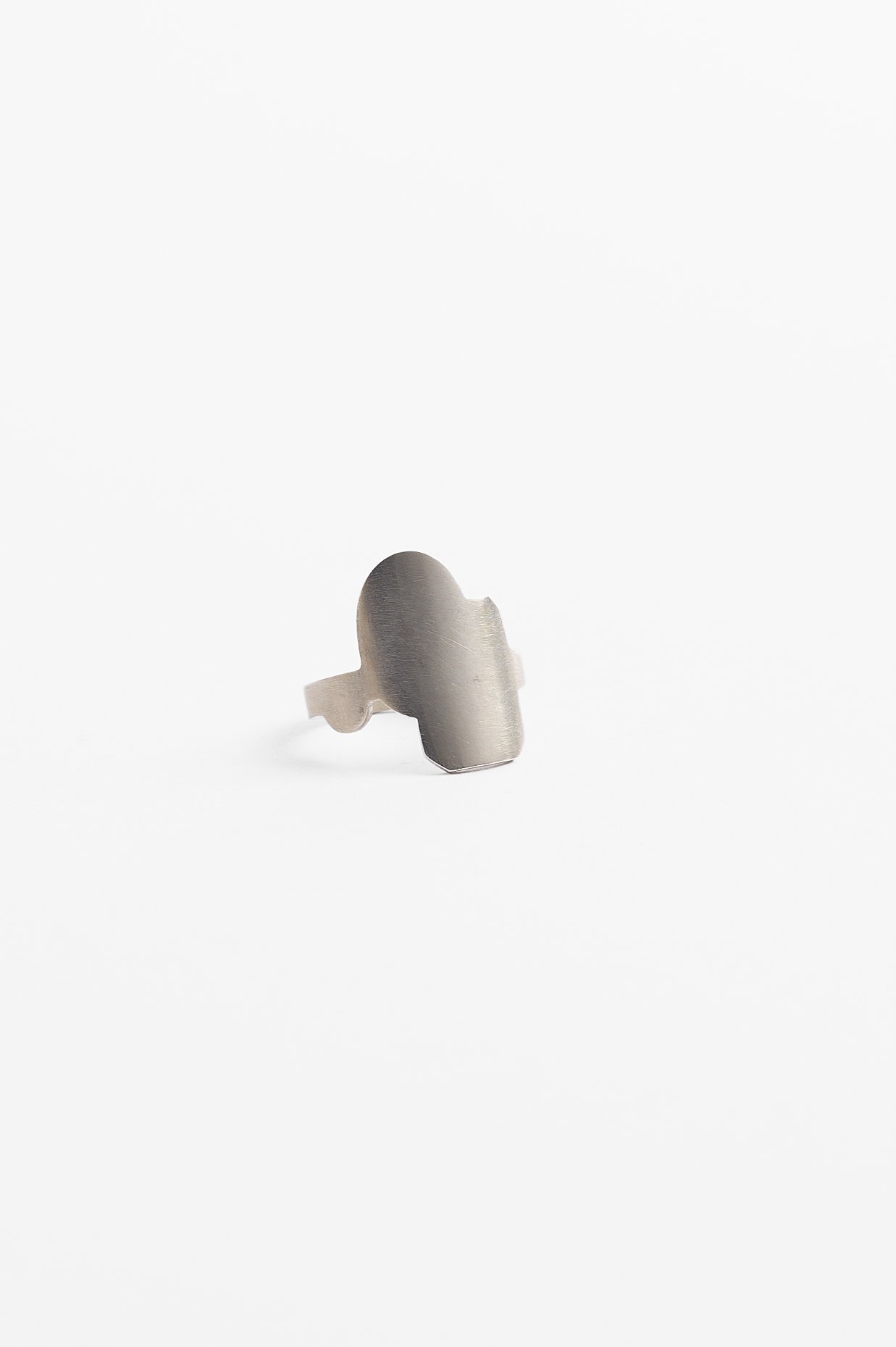
Manon van Kouswijk (38) ‘Diamonds & Gemstones 1-3’, (1-approx size N; 2-approx. size U (sold); 3-approx size P), sterling silver, 20 x 20 x 1.2mm, 2025. Photography: Ross Coulter
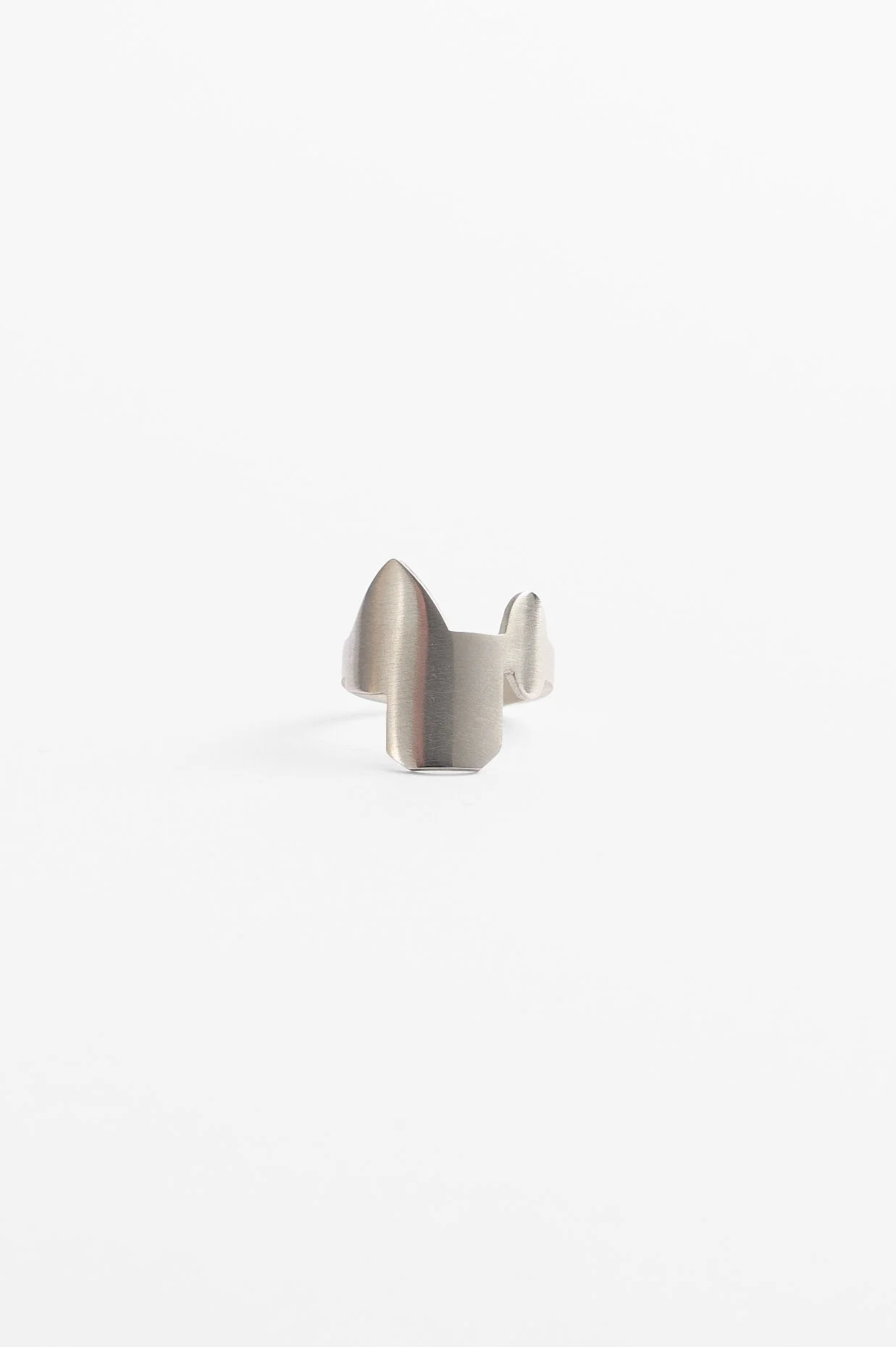
Manon van Kouswijk (38) ‘Diamonds & Gemstones 1-3’, (1-approx size N; 2-approx. size U (sold); 3-approx size P), sterling silver, 20 x 20 x 1.2mm, 2025. Photography: Ross Coulter
Manon van Kouswijk (38) ‘Diamonds & Gemstones 1-3’, (1-approx size N; 2-approx. size U (sold); 3-approx size P), sterling silver, 20 x 20 x 1.2mm, 2025. Photography: Ross Coulter
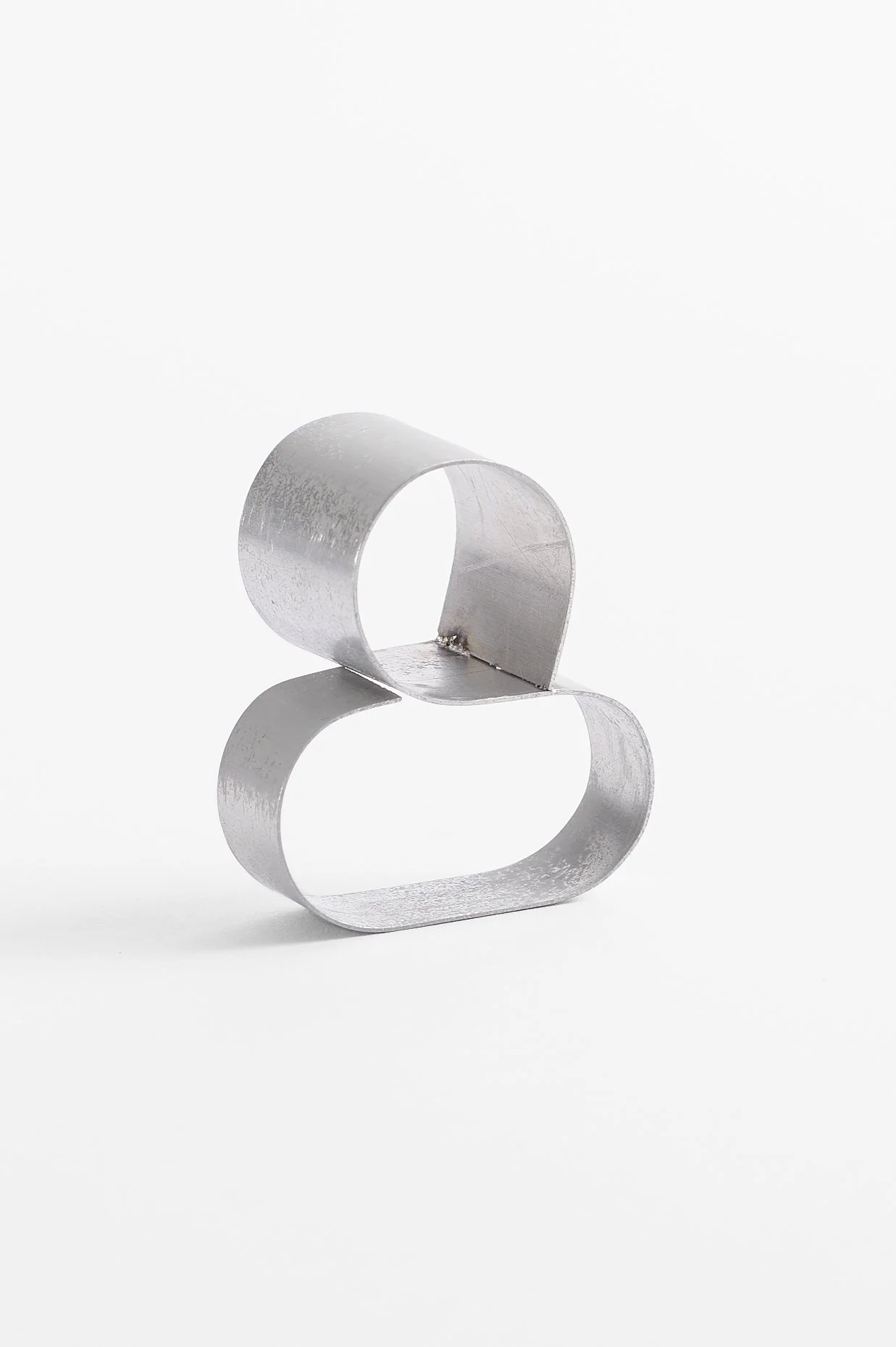
Po Li (32) ‘Loop-the-loop’, 1-4, (1 sold) aluminium, dimensions variable, 2025. Photography: Ross Coulter
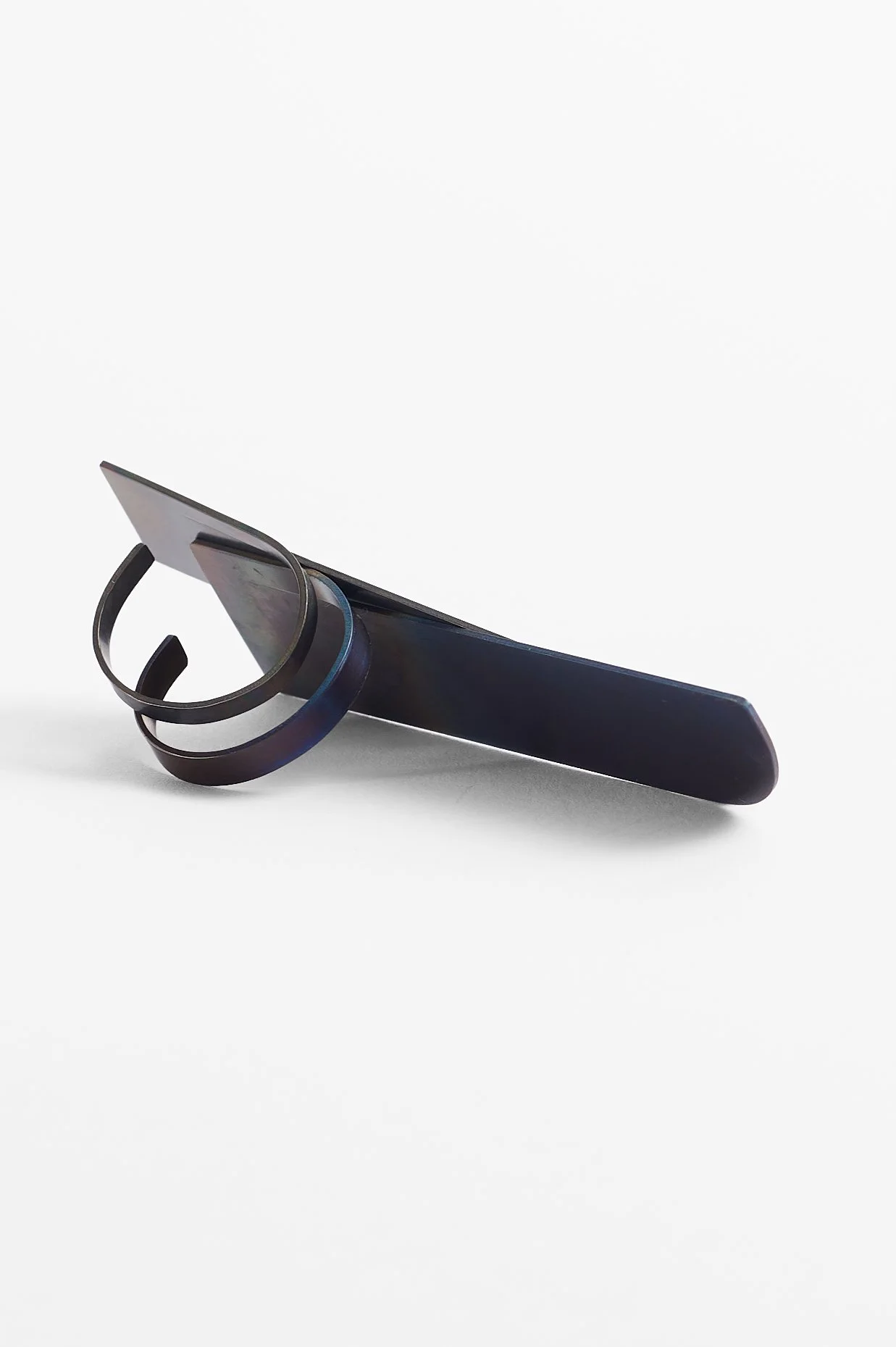
Po Li (39) ‘Banner series 3’, (1-12), (8,9,10 sold), titanium, dimensions variable, 2025. Photography: Ross Coulter
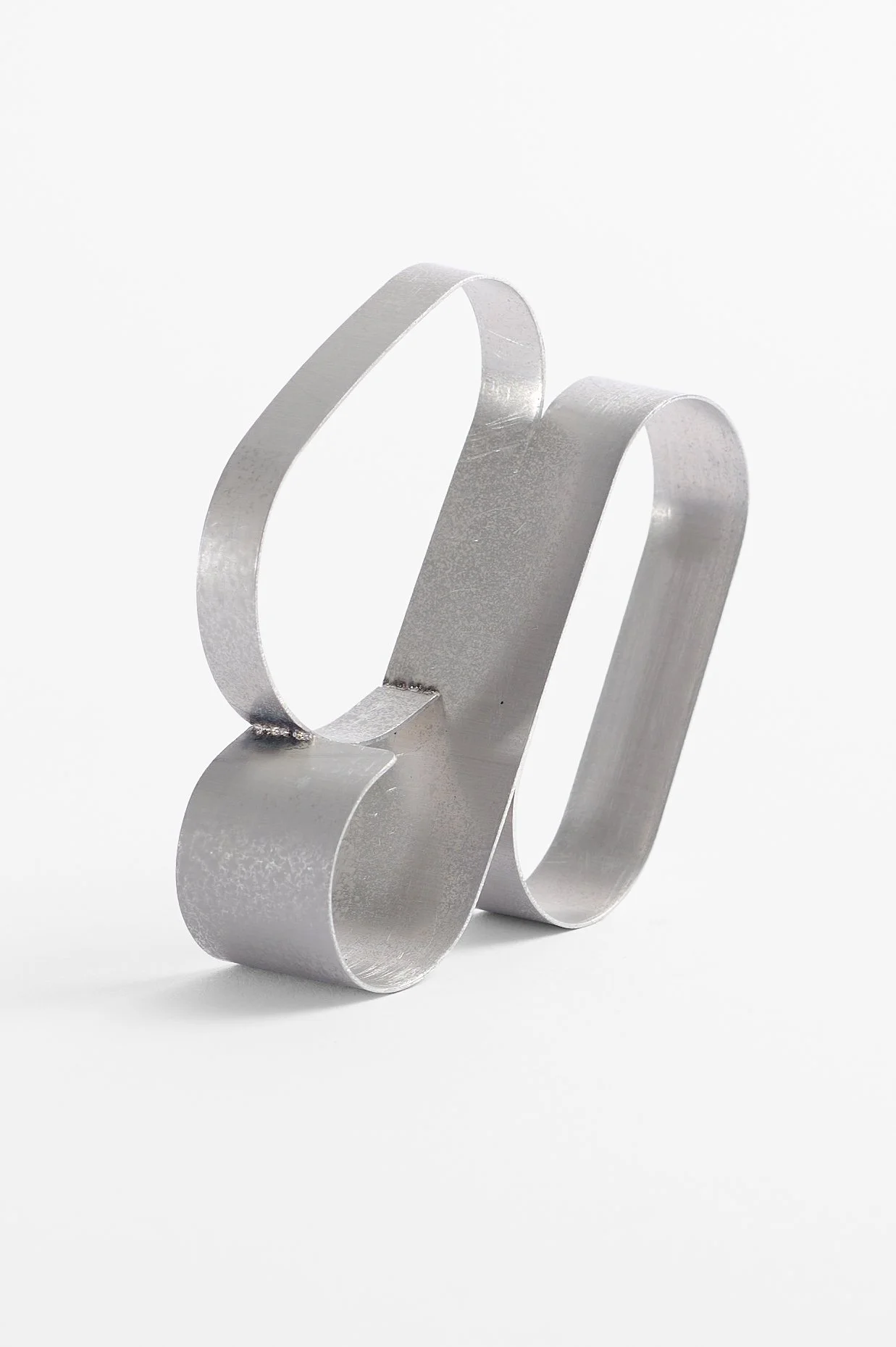
Po Li (32) ‘Loop-the-loop’, 1-4, (1 sold) aluminium, dimensions variable, 2025. Photography: Ross Coulter
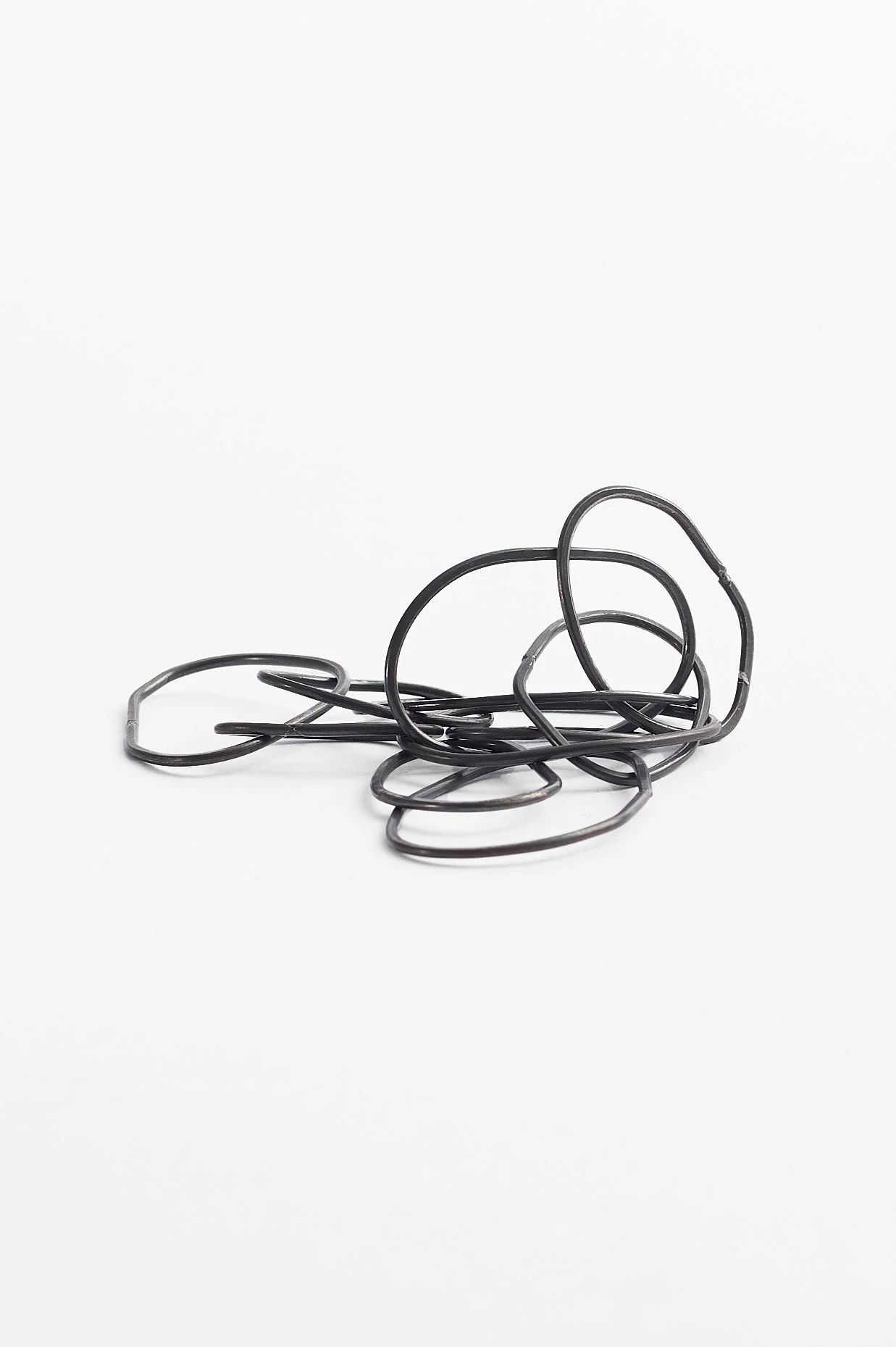
Po Li (32) ‘Drape’, ring/brooch 1-7, (1 sold), mild steel and magnet, dimensions variable, 2025. Photography: Ross Coulter
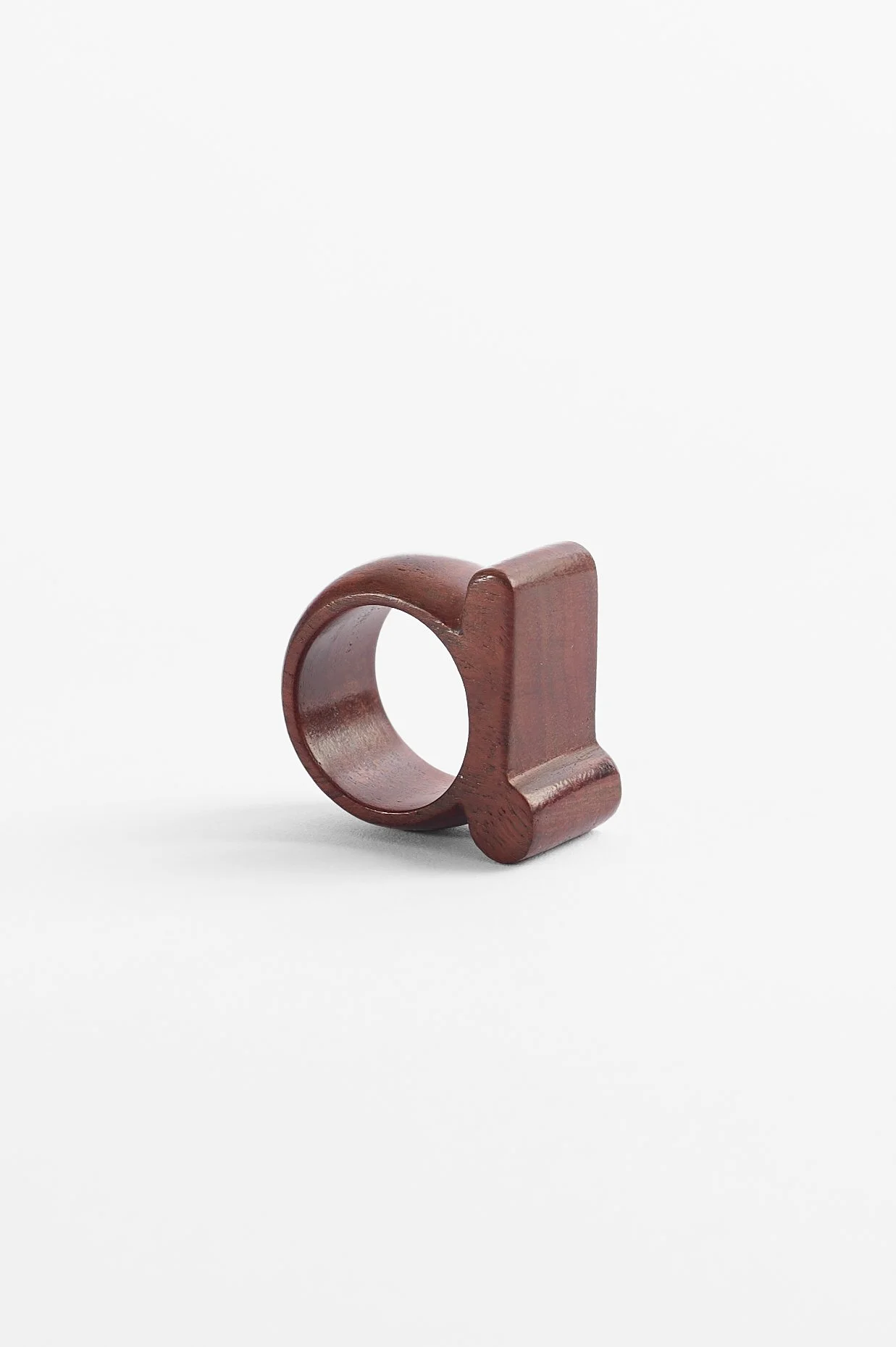
Roseanne Bartley (29) ‘A Howling of Trees: vowel rings’, repurposed red gum (A&O) mulga (I&Y) and ebony (E&U), 10 x 25 x 25mm, 2025. Photography: Ross Coulter

Roseanne Bartley (29) ‘A Howling of Trees: vowel rings’, repurposed red gum (A&O) mulga (I&Y) and ebony (E&U), 10 x 25 x 25mm, 2025. Photography: Ross Coulter
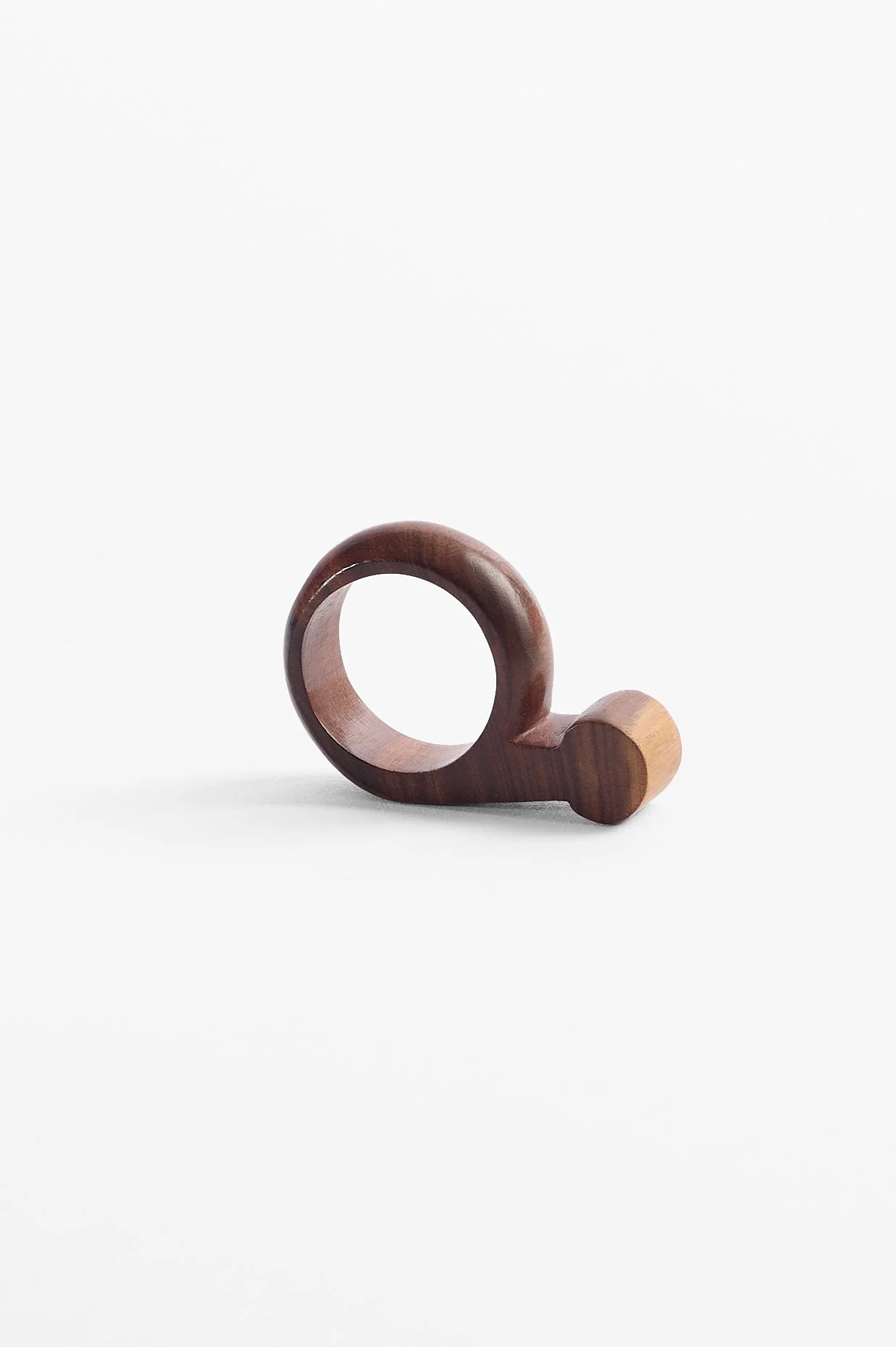
Roseanne Bartley (29) ‘A Howling of Trees: vowel rings’, repurposed red gum (A&O) mulga (I&Y) and ebony (E&U), 10 x 25 x 25mm, 2025. Photography: Ross Coulter

Roseanne Bartley (29) ‘A Howling of Trees: vowel rings’, repurposed red gum (A&O) mulga (I&Y) and ebony (E&U), 10 x 25 x 25mm, 2025. Photography: Ross Coulter
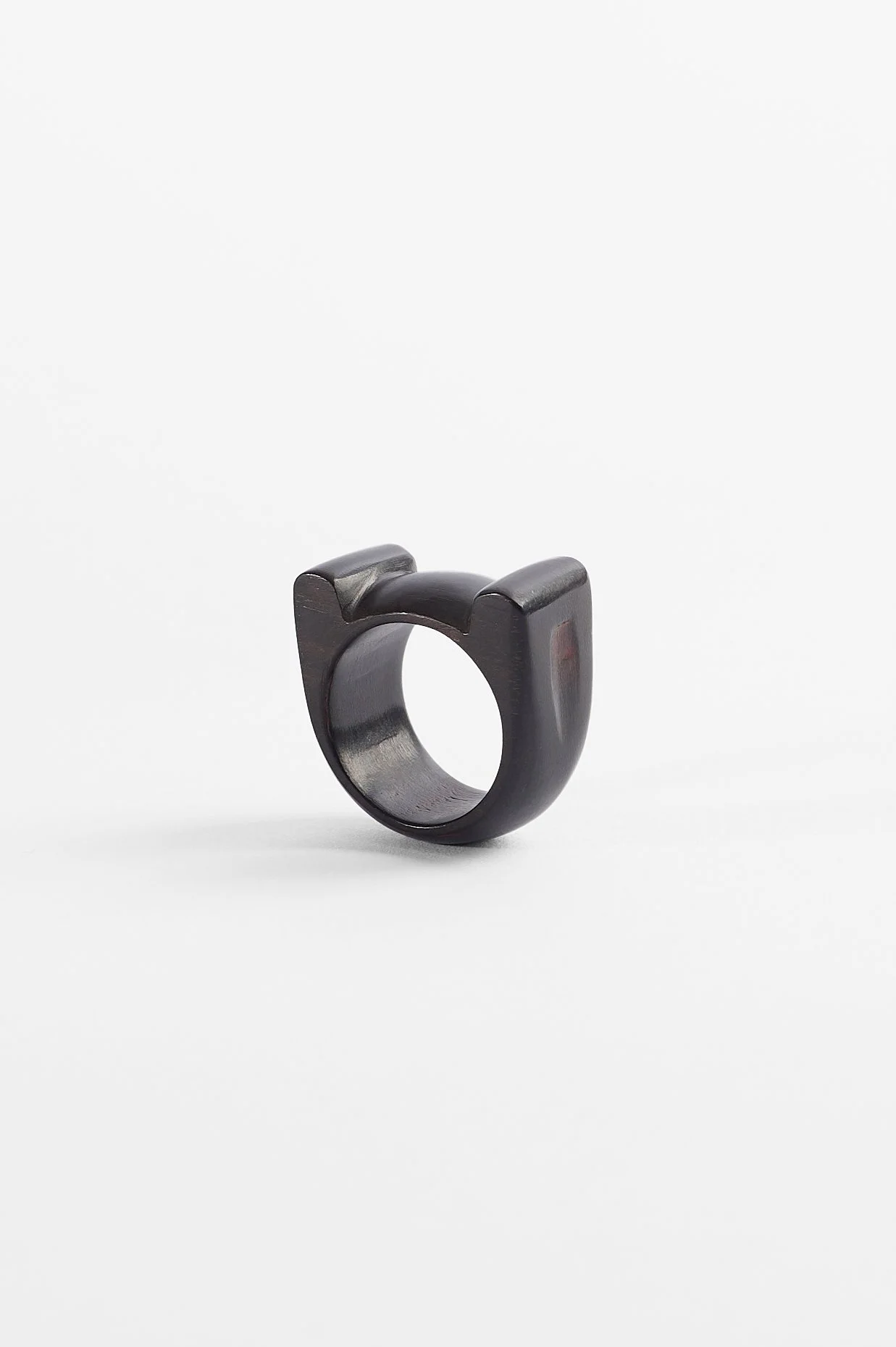
Roseanne Bartley (29) ‘A Howling of Trees: vowel rings’, repurposed red gum (A&O) mulga (I&Y) and ebony (E&U), 10 x 25 x 25mm, 2025. Photography: Ross Coulter

Roseanne Bartley (29) ‘A Howling of Trees: vowel rings’, repurposed red gum (A&O) mulga (I&Y) and ebony (E&U), 10 x 25 x 25mm, 2025. Photography: Ross Coulter
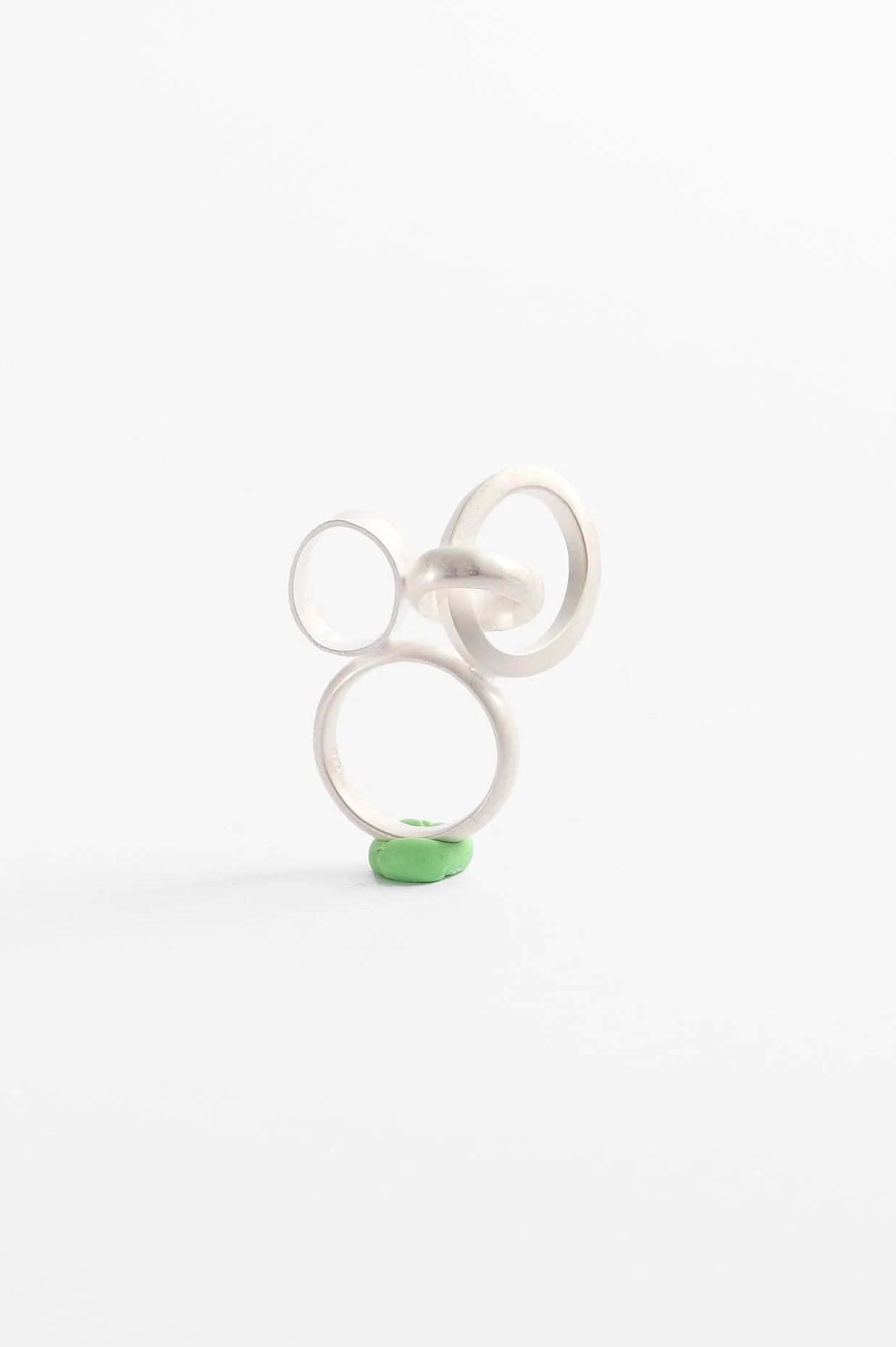
Renee Becker (20) 3. She'll Shock Ring, sterling silver, approx. size J, 2025. Photography: Ross Coulter
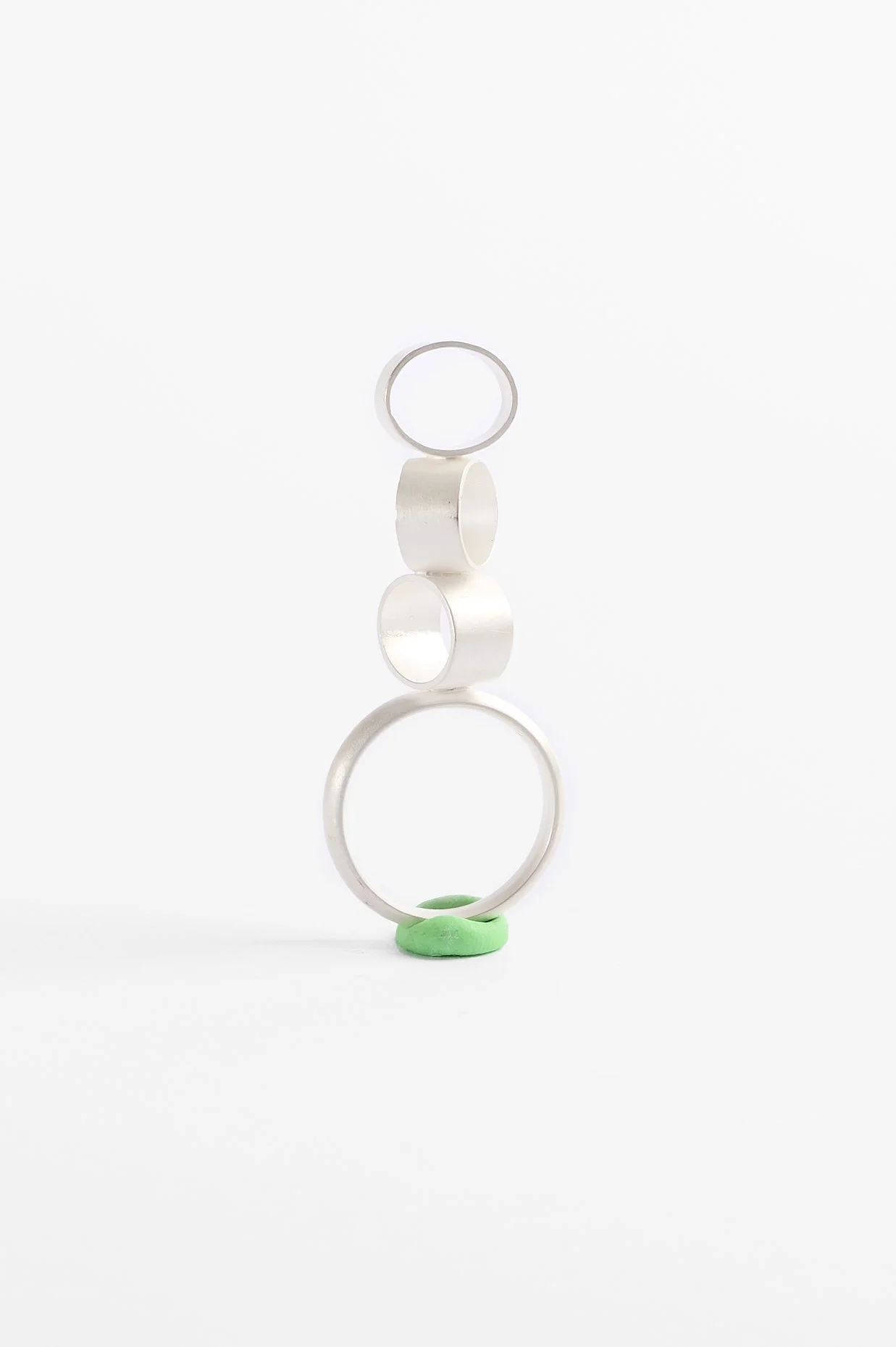
Renee Becker (20) 2. Triple O Ring, sterling silver, approx. size R, 2025. Photography: Ross Coulter
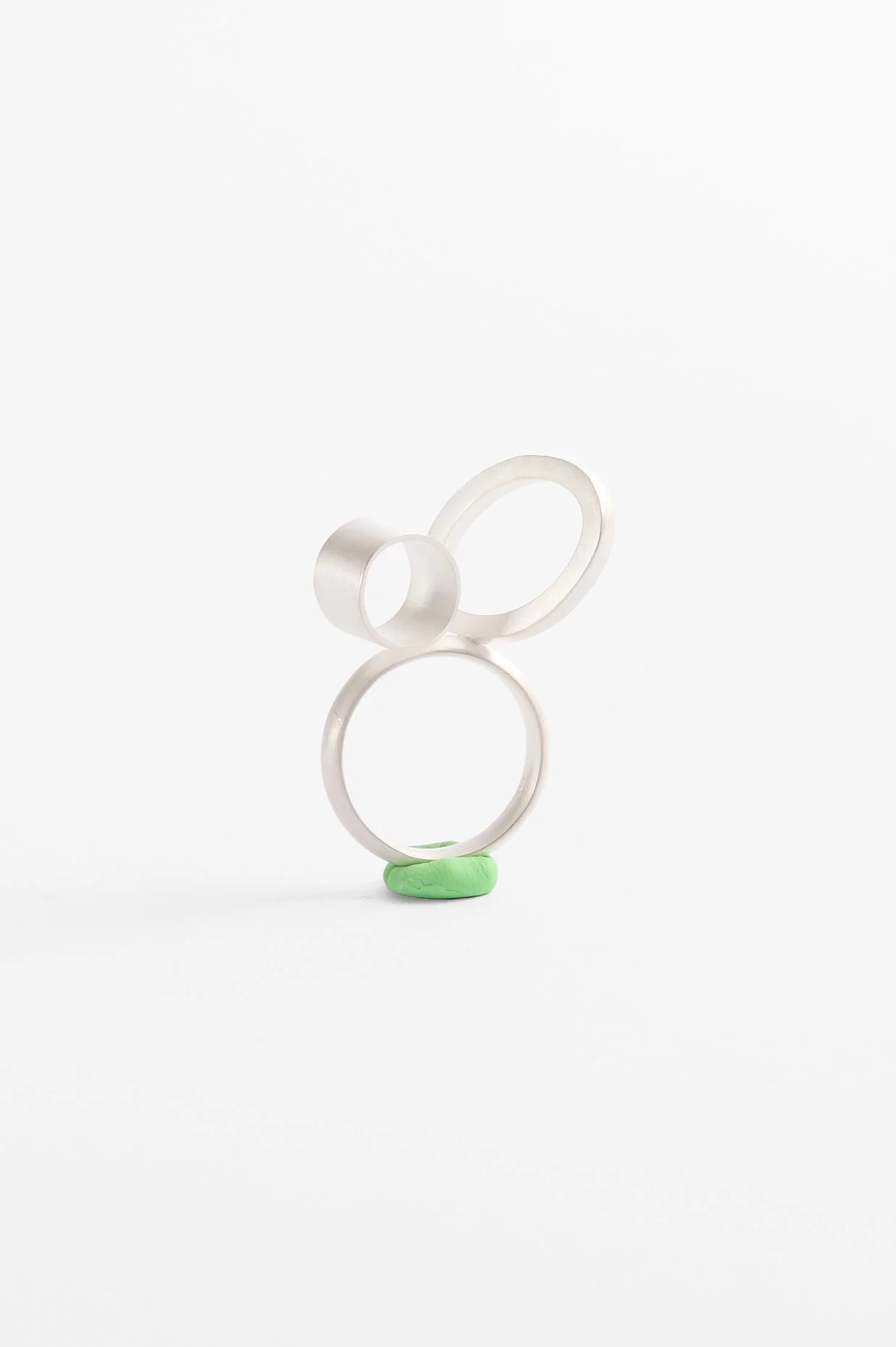
Renee Becker (20) 2. Triple O Ring, sterling silver, approx. size R, 2025. Photography: Ross Coulter
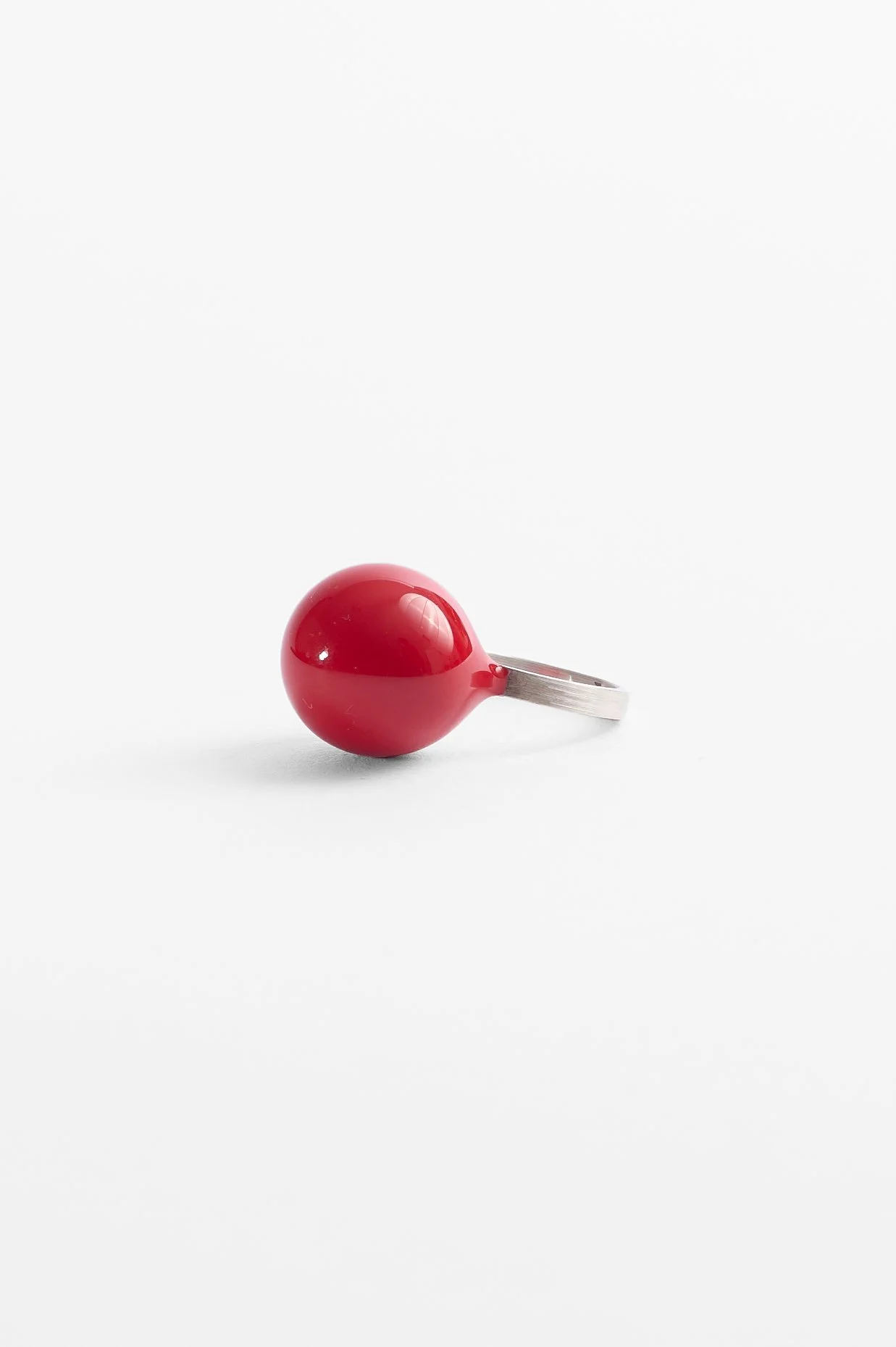
Rosy Shanks (7) ‘Oolite’ rings, (Dark Green (sold), Blue, Yellow, Red, Black, White (sold), sterling silver and resin, 2019. Photography: Ross Coulter
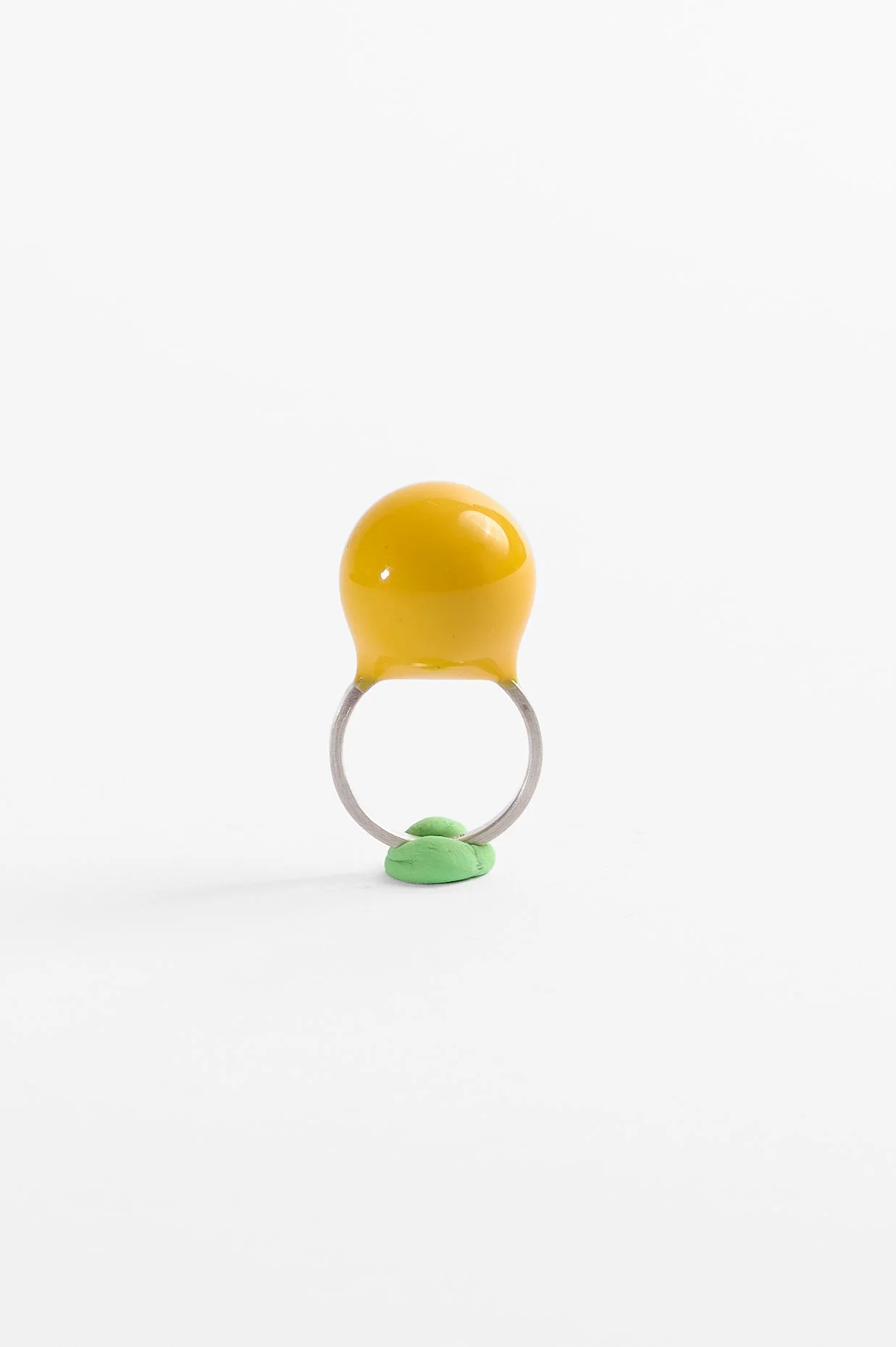
Rosy Shanks (7) ‘Oolite’ rings, (Dark Green (sold), Blue, Yellow, Red, Black, White (sold), sterling silver and resin, 2019. Photography: Ross Coulter
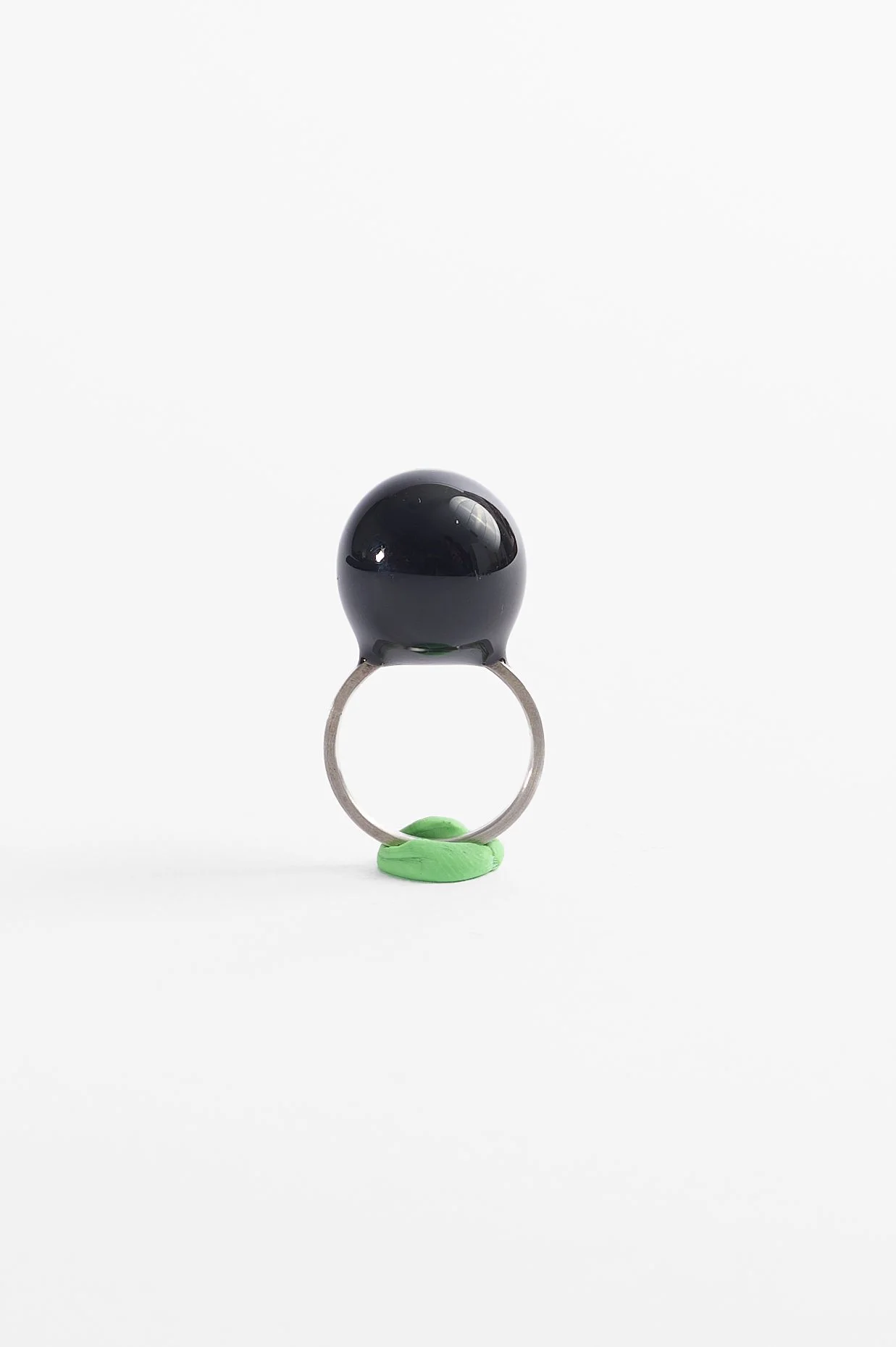
Rosy Shanks (7) ‘Oolite’ rings, (Dark Green (sold), Blue, Yellow, Red, Black, White (sold), sterling silver and resin, 2019. Photography: Ross Coulter
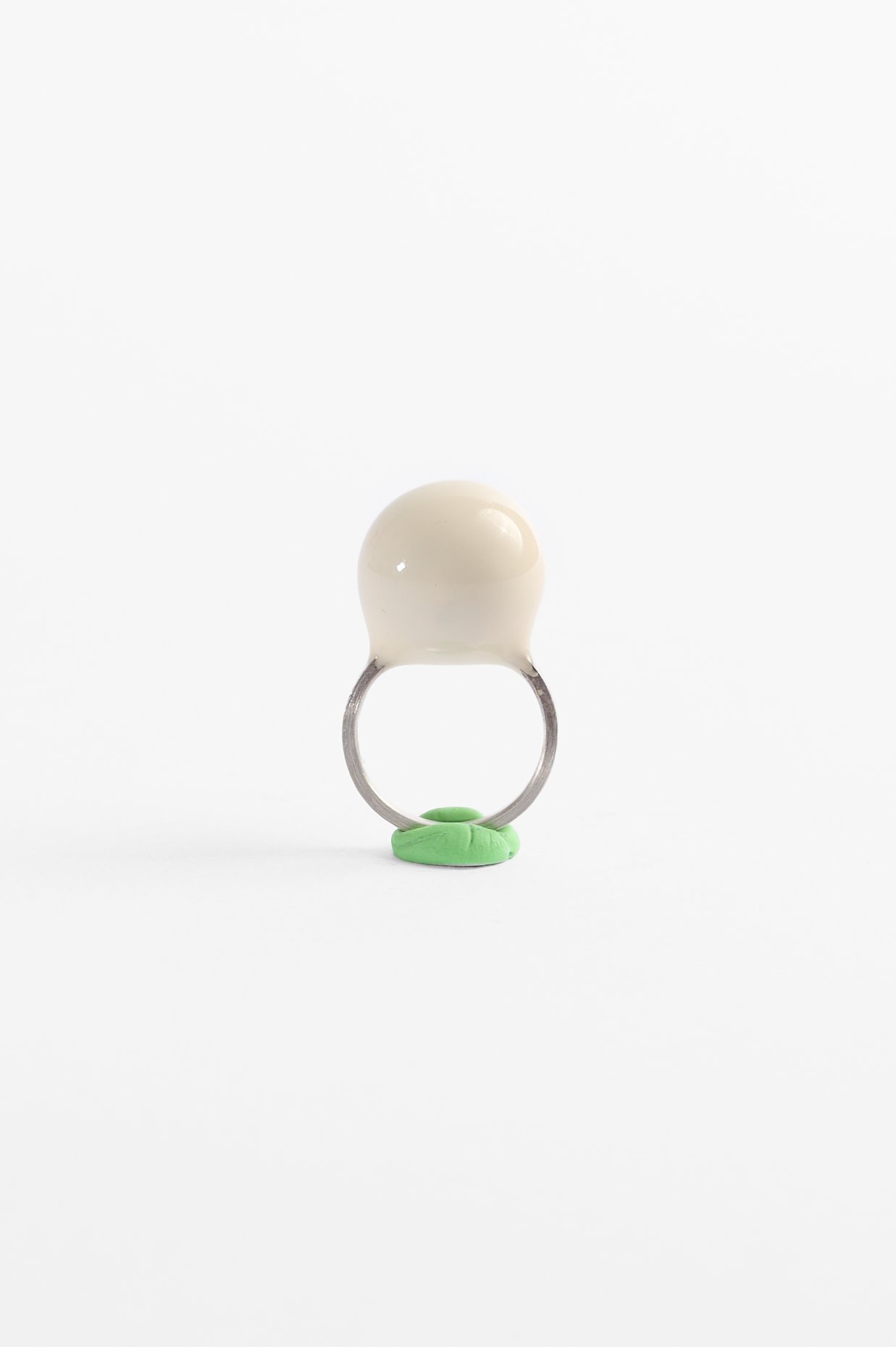
Rosy Shanks (7) ‘Oolite’ rings, (Dark Green (sold), Blue, Yellow, Red, Black, White (sold), sterling silver and resin, 2019. Photography: Ross Coulter
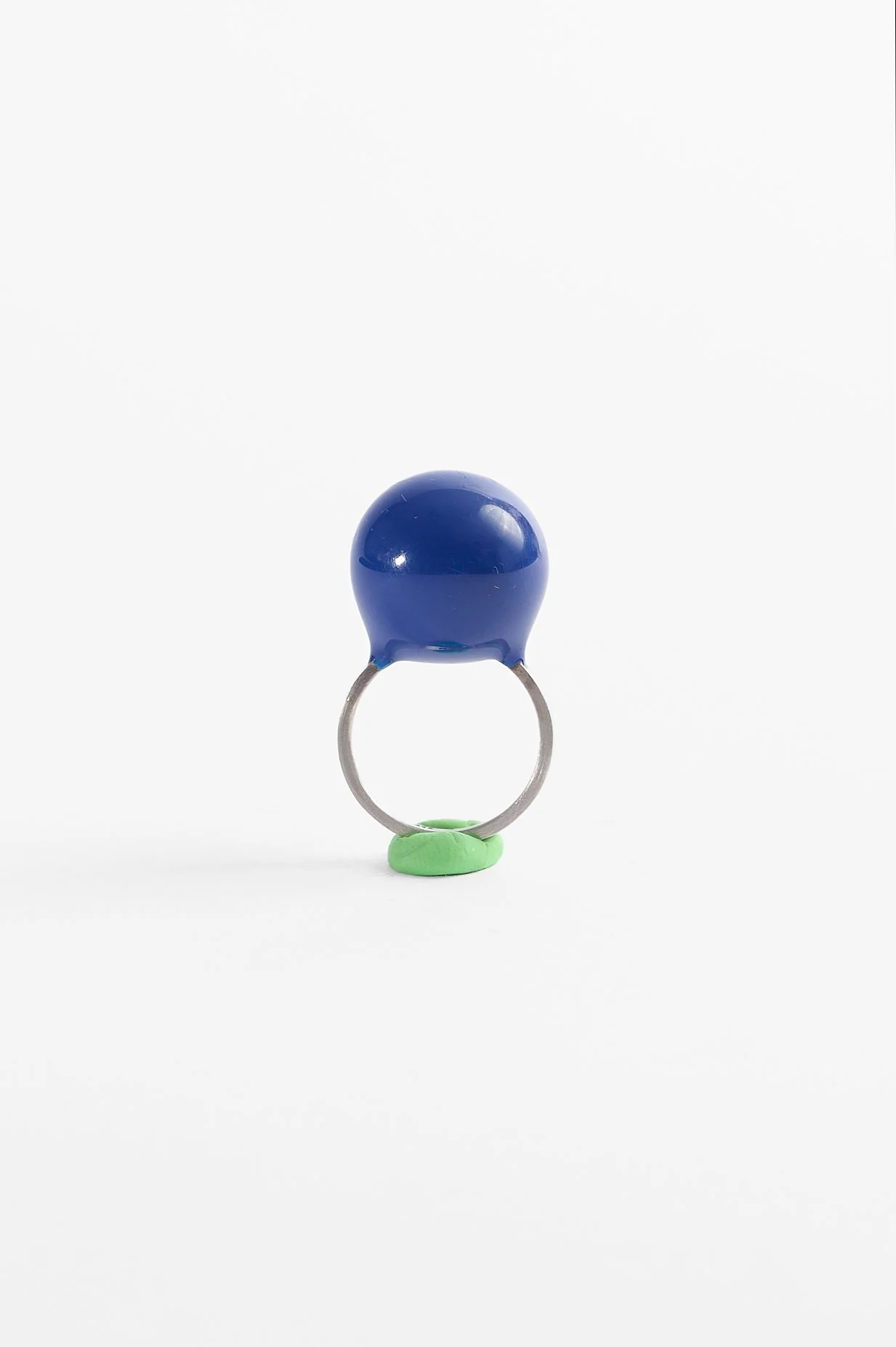
Rosy Shanks (7) ‘Oolite’ rings, (Dark Green (sold), Blue, Yellow, Red, Black, White (sold), sterling silver and resin, 2019. Photography: Ross Coulter
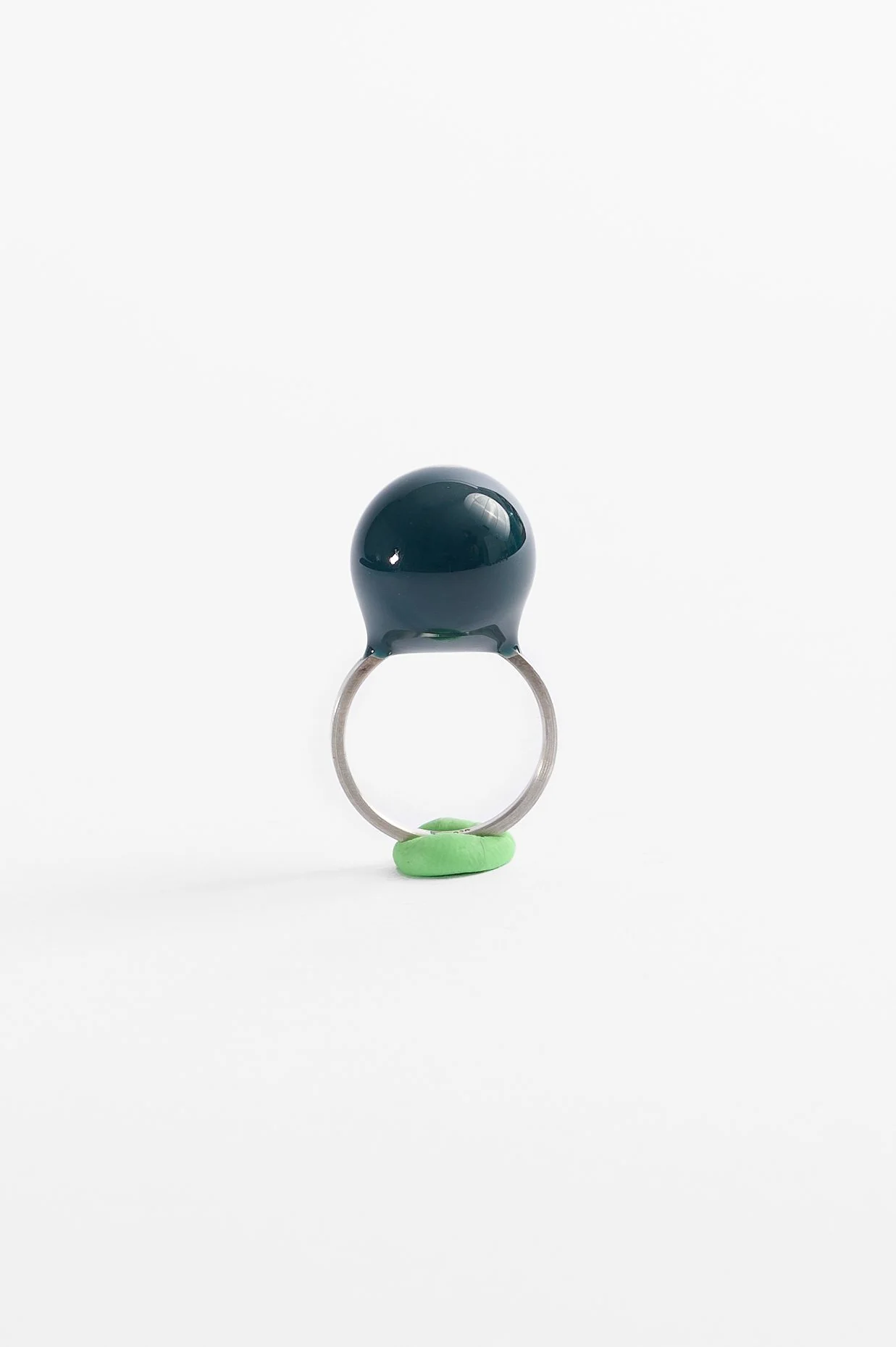
Rosy Shanks (7) ‘Oolite’ rings, (Dark Green (sold), Blue, Yellow, Red, Black, White (sold), sterling silver and resin, 2019. Photography: Ross Coulter
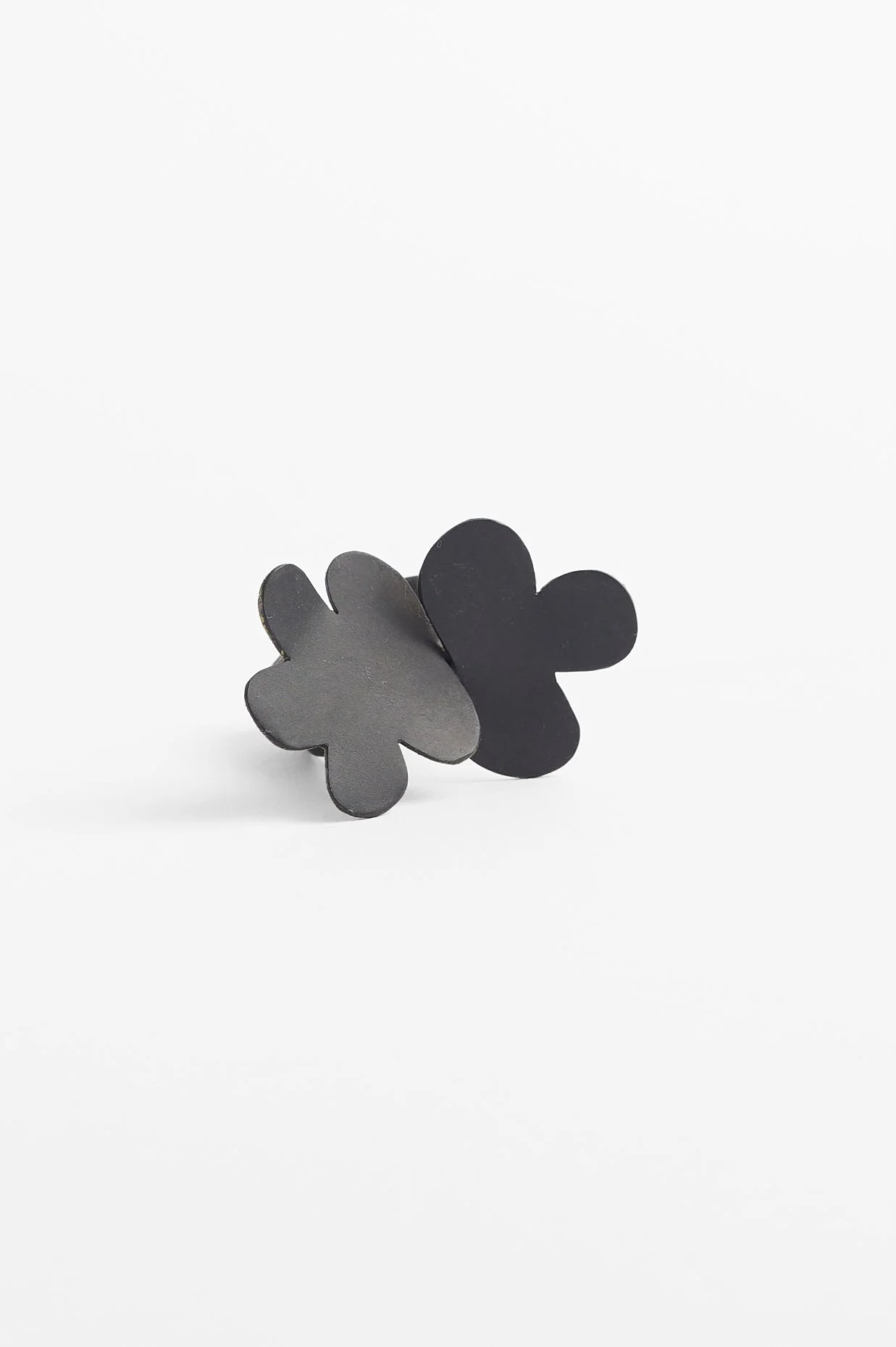
Susan Buchanan (37) 2. ‘Peony Ring’, mild steel, paint, 2025. Photography: Ross Coulter
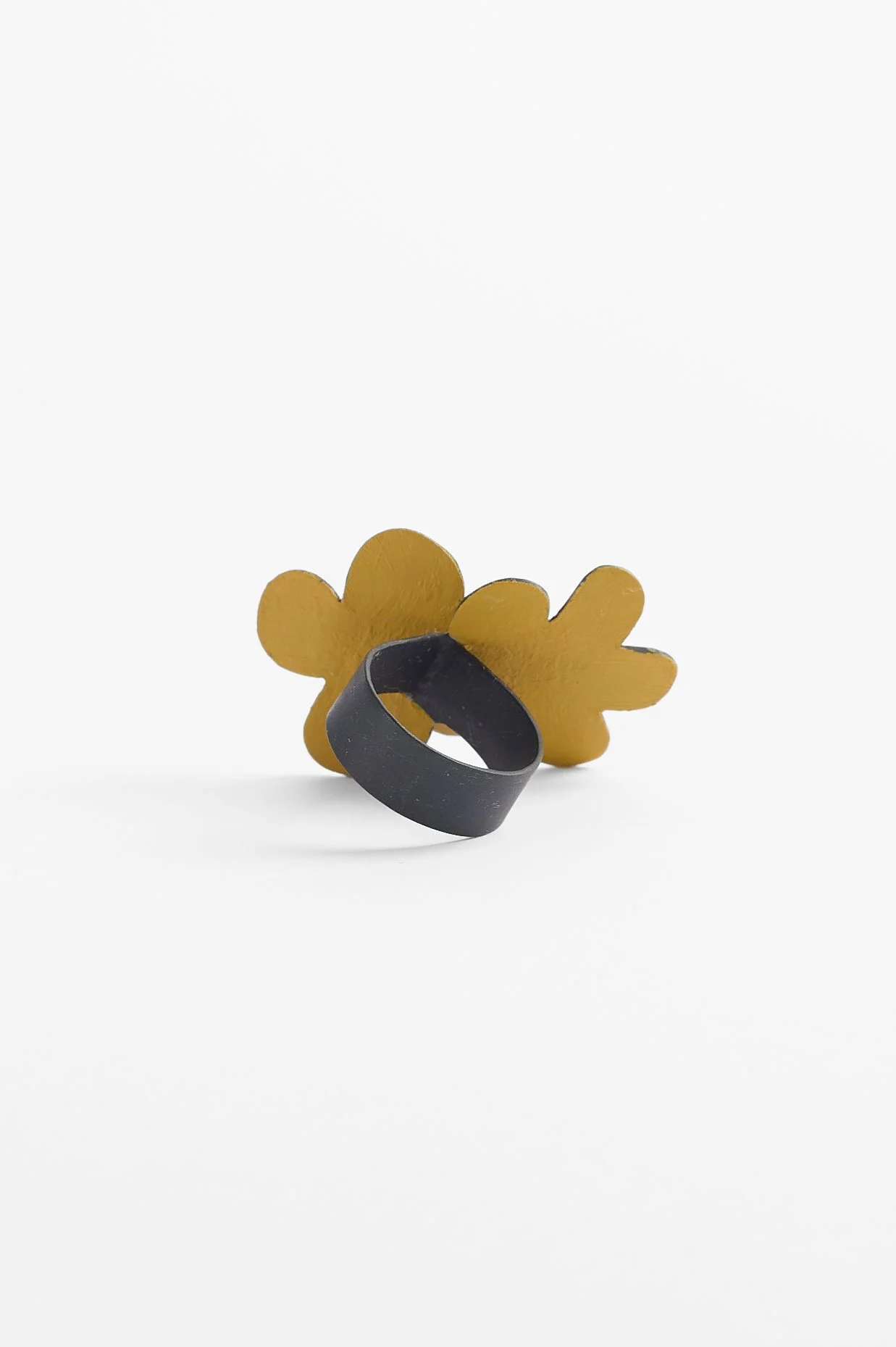
Susan Buchanan (37) 2. ‘Peony Ring’, mild steel, paint, 2025. Verso. Photography: Ross Coulter
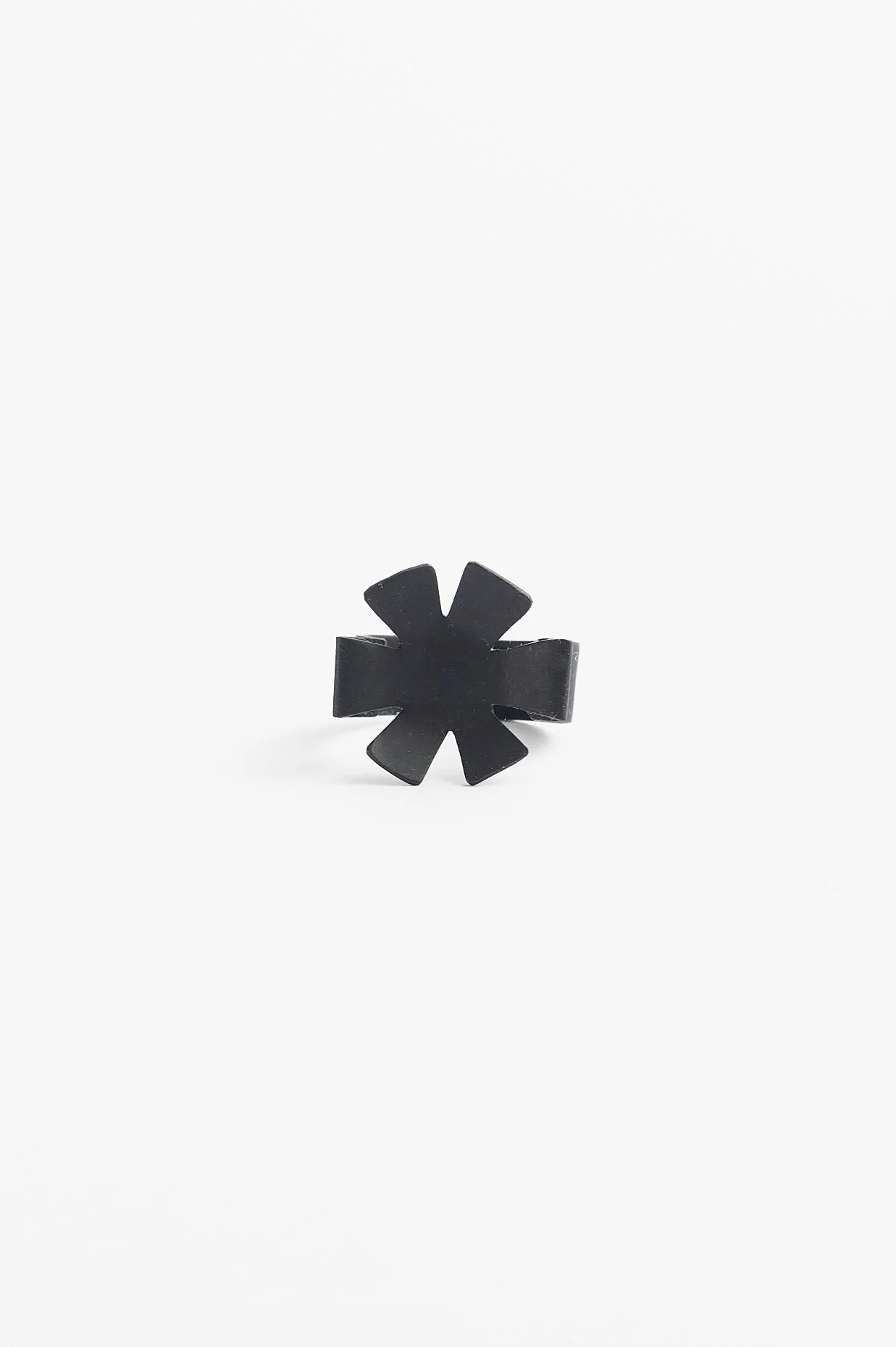
Susan Buchanan (37) 3. ‘Asterisk Ring’, mild steel, 2025. Photography: Ross Coulter
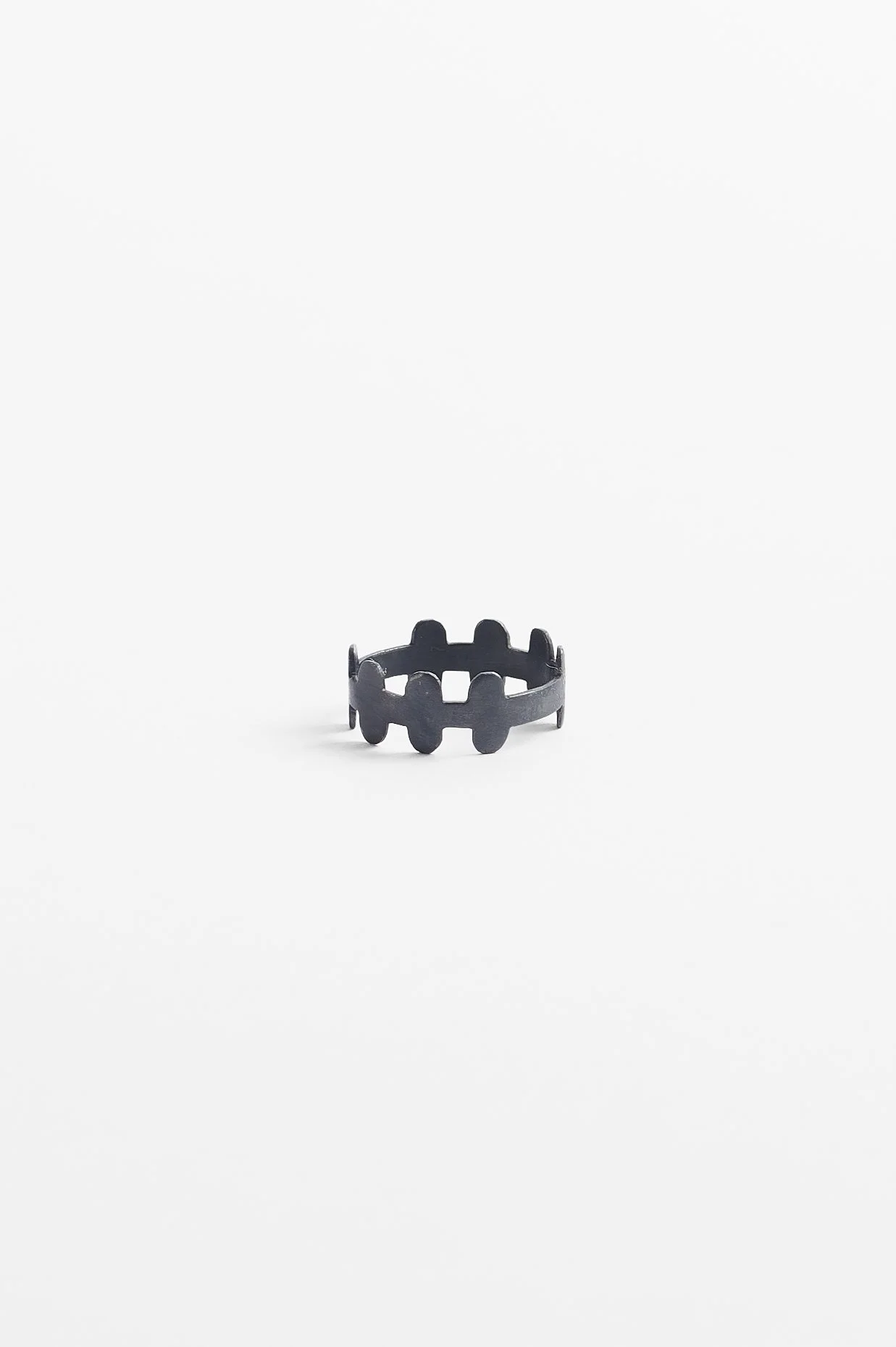
Susan Buchanan (37) 1. ‘Ric Rac Ring’, sterling silver, 2011. Photography: Ross Coulter

Susan Buchanan (37) 1. ‘Ric Rac Ring’, sterling silver, 2011. Photography: Ross Coulter
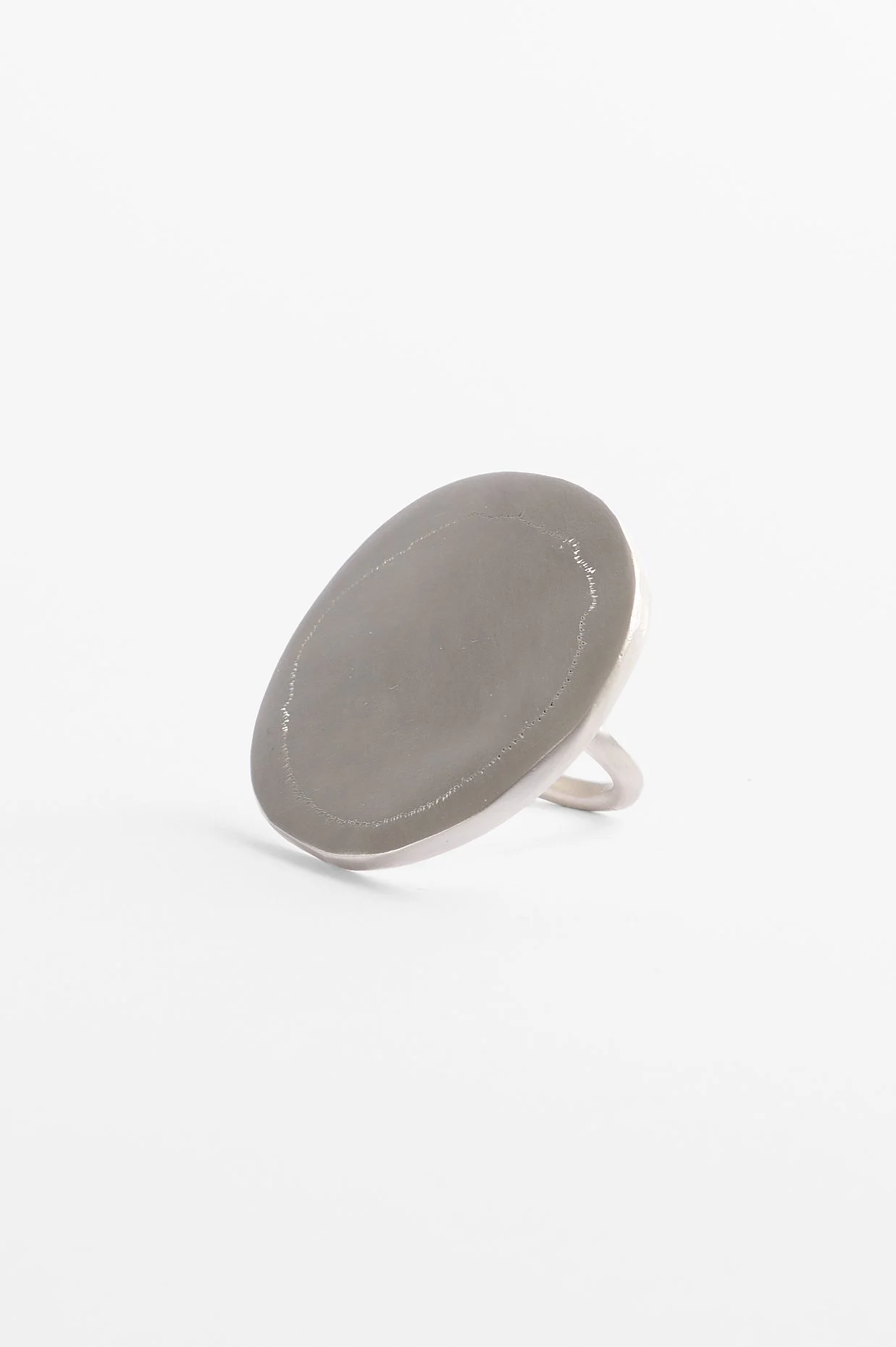
Talloulah Angel (8) 1. ‘Ancestral Silver Ring’, fine silver, sterling silver, green sapphire, approx. size 0, 2024. Photography: Ross Coulter
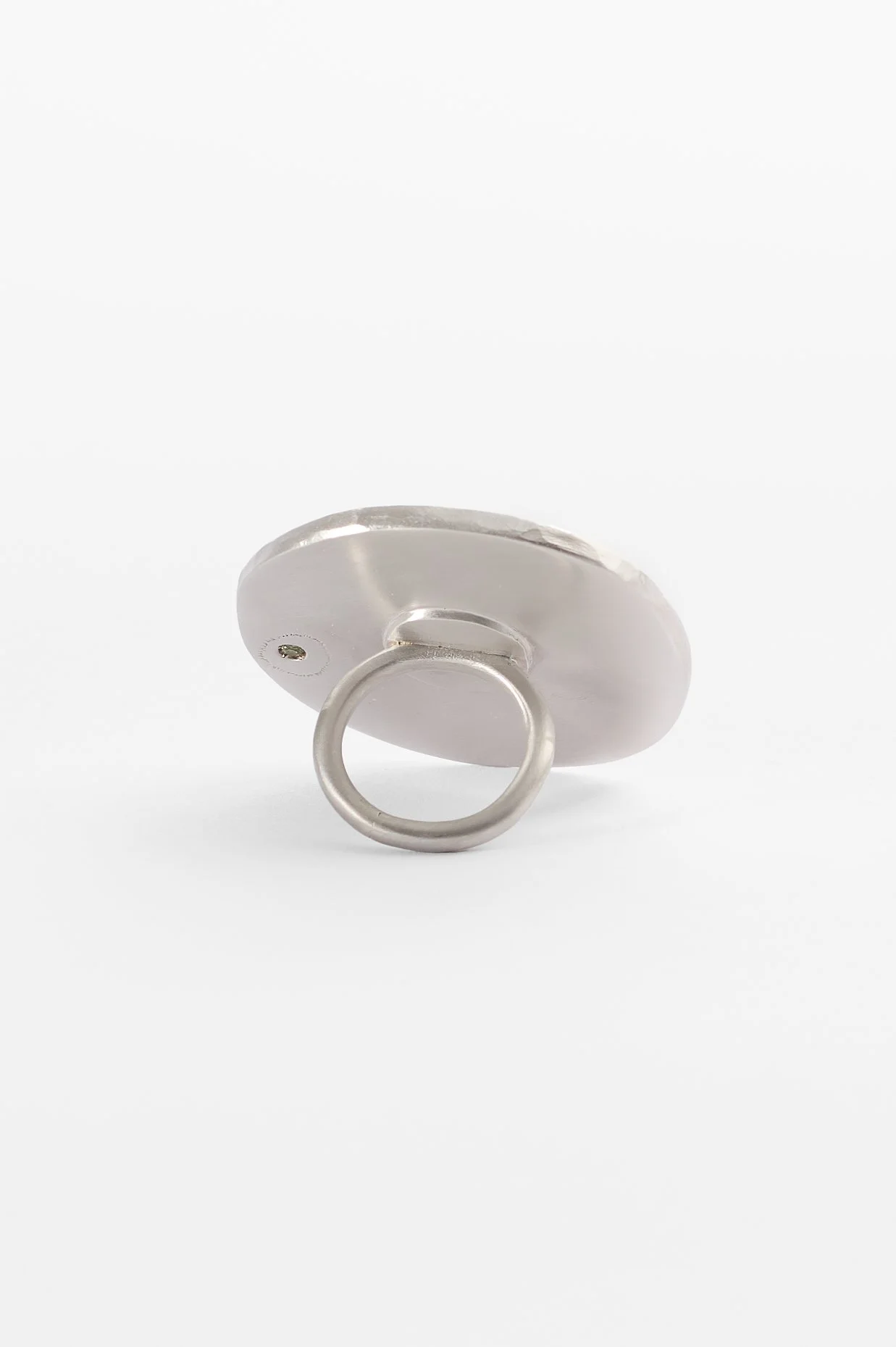
Talloulah Angel (8) 1. ‘Ancestral Silver Ring’, fine silver, sterling silver, green sapphire, approx. size 0, 2024. Photography: Ross Coulter
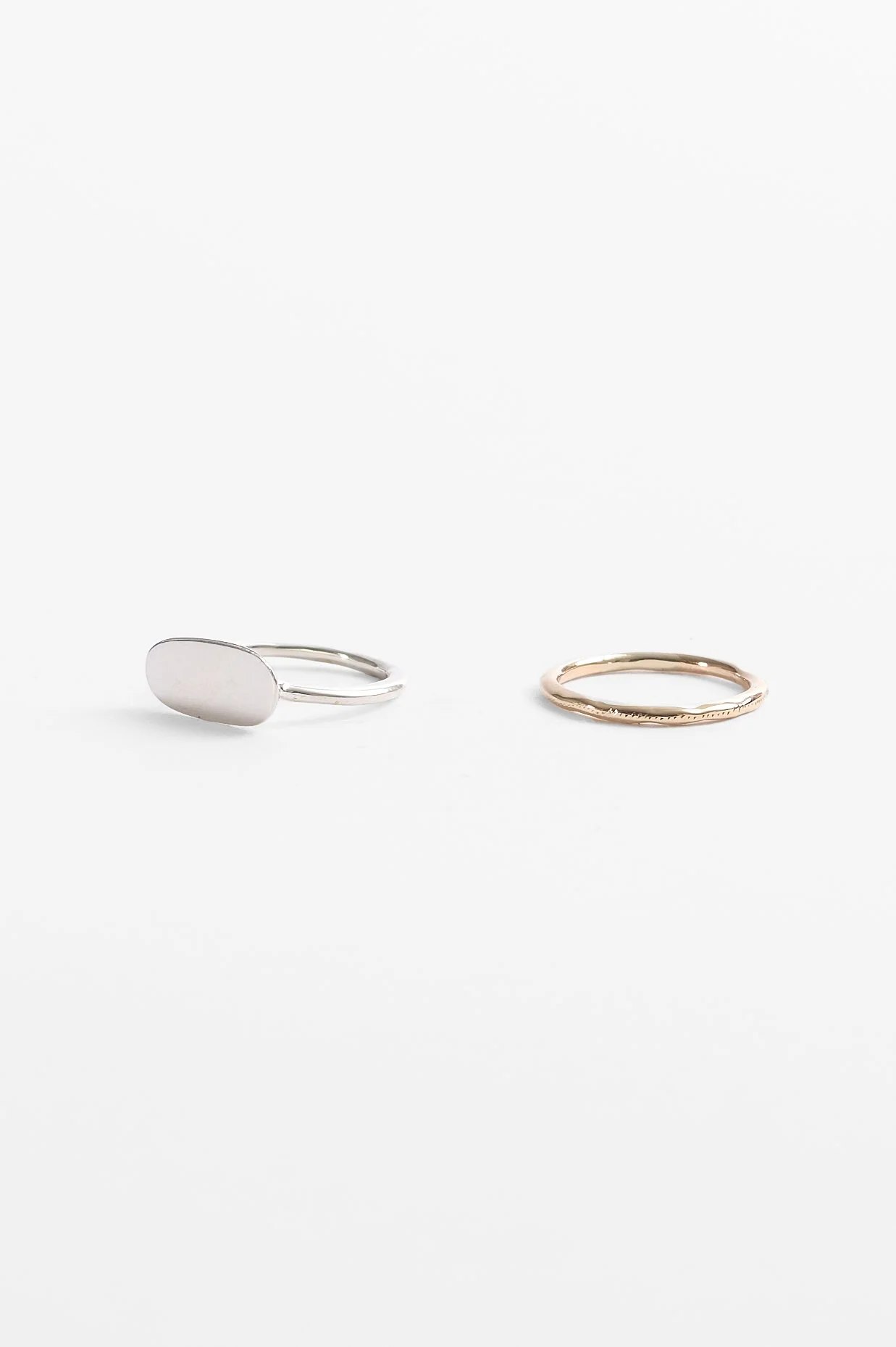
Talloulah Angel (8) 8. ‘Grounding Ring’, sterling silver, size 0, 2024 and 2. ‘Ancestral Gold Band’, 9ct gold, approx. size 0, 2024. Photography: Ross Coulter
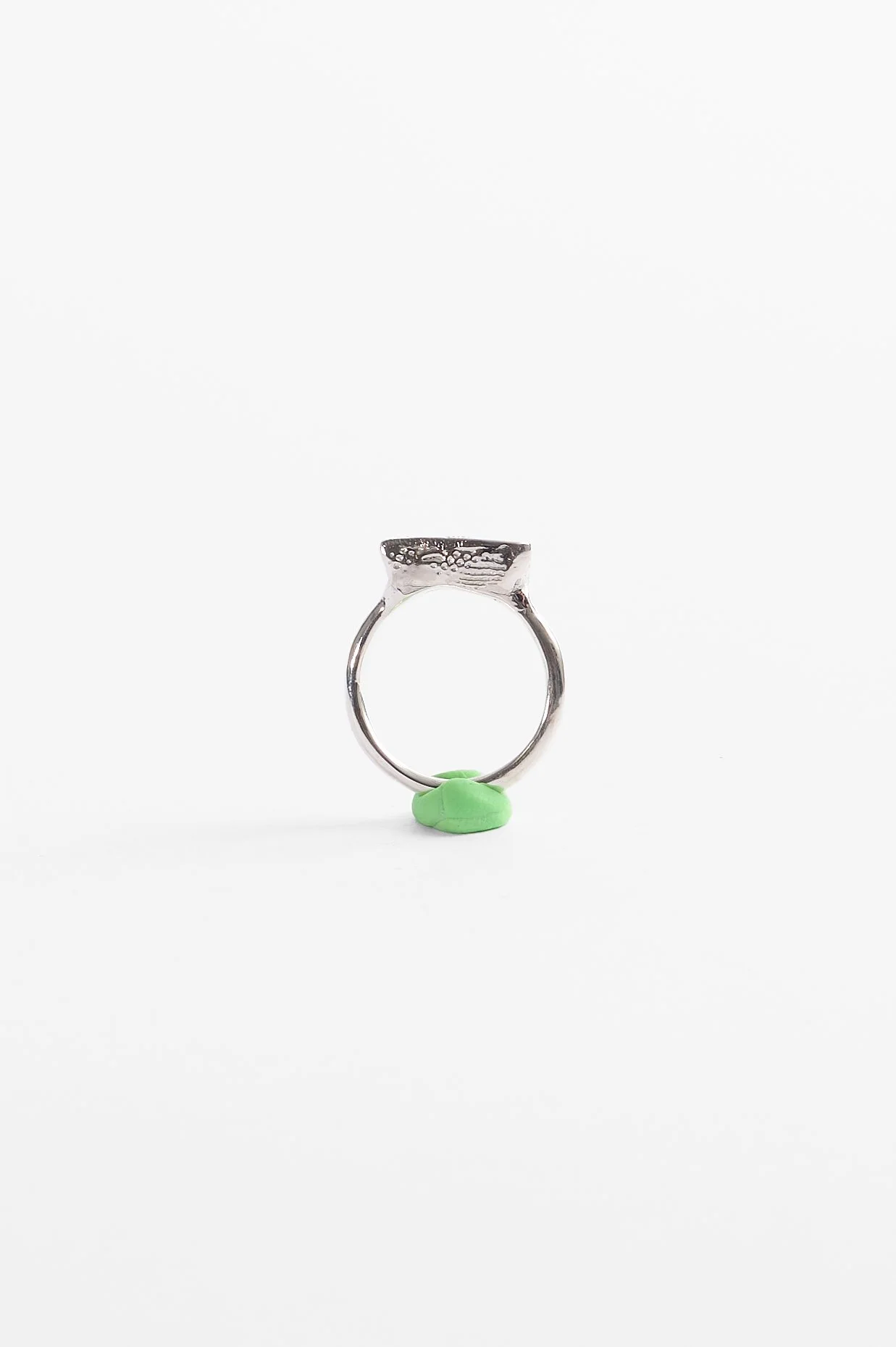
Talloulah Angel (8) 6. ‘Through My Mother’s Hands Ring 2’, sterling silver, approx. size 0, 2025. Photography: Ross Coulter
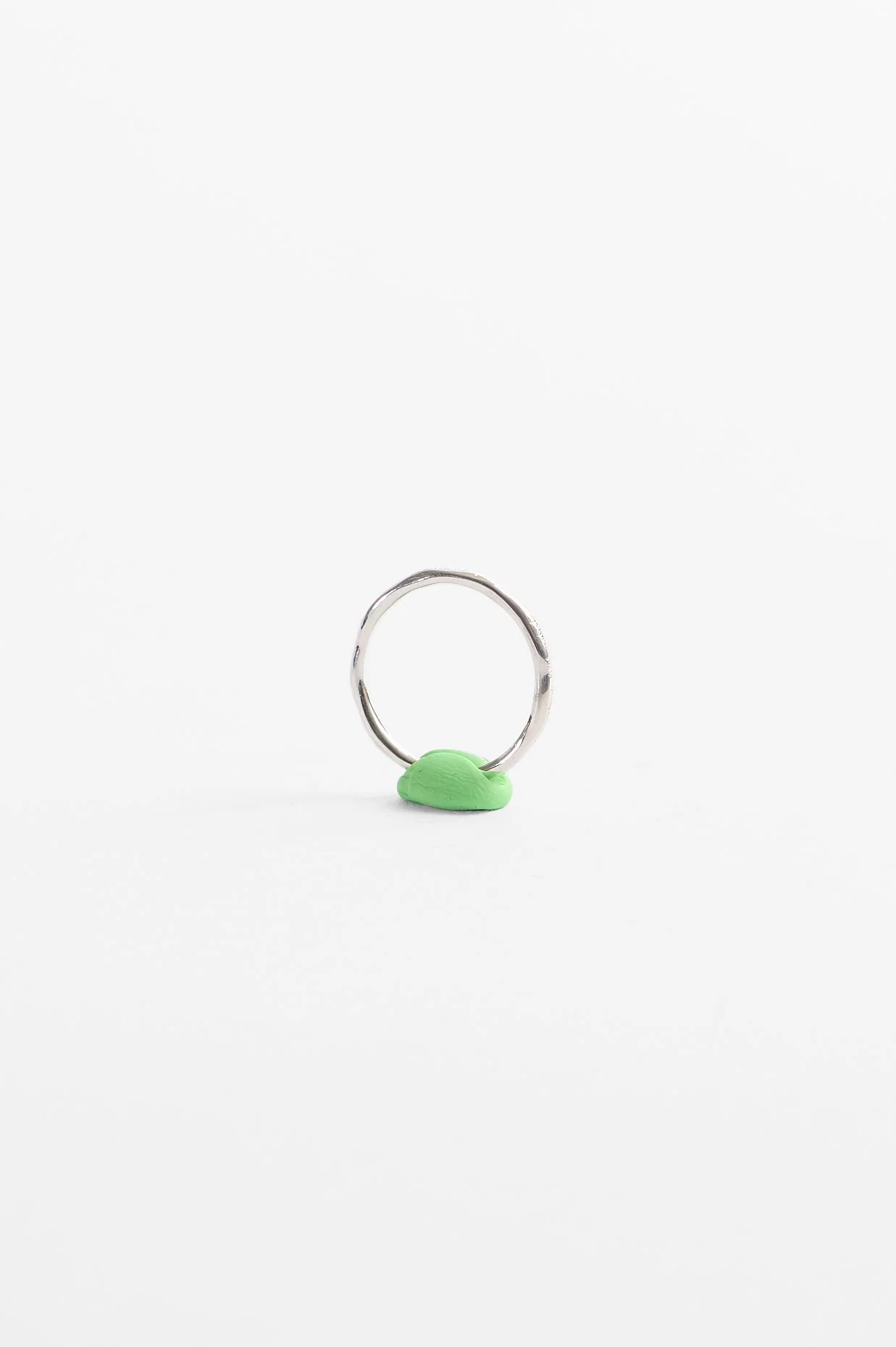
Talloulah Angel (8) 1. ‘Ancestral Silver Ring’, fine silver, sterling silver, green sapphire, approx. size 0, 2024. Photography: Ross Coulter
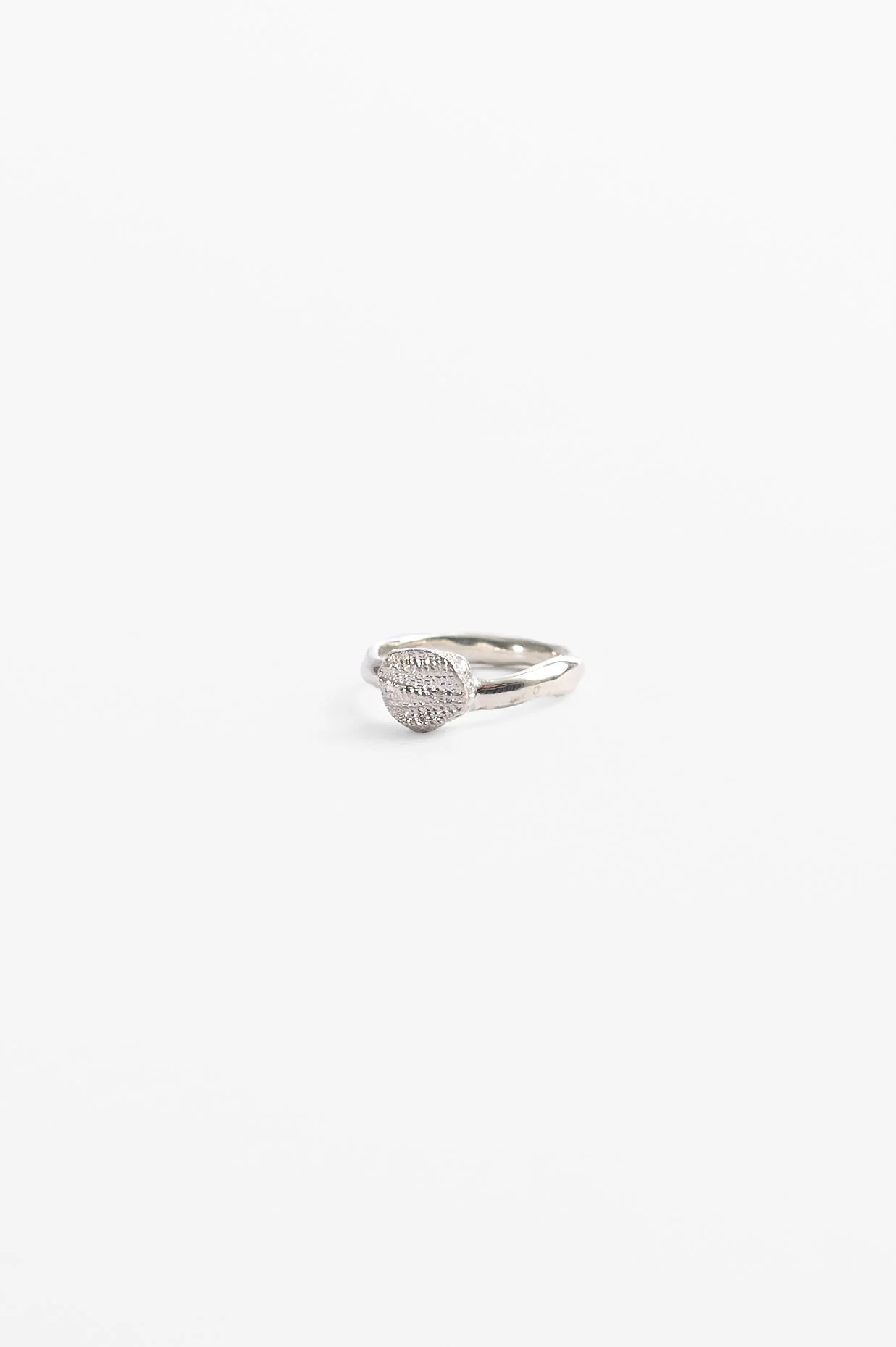
Talloulah Angel (8) 5. ‘Through My Mother’s Hands Ring 3’, sterling silver, approx. size 0, 2025. Photography: Ross Coulter
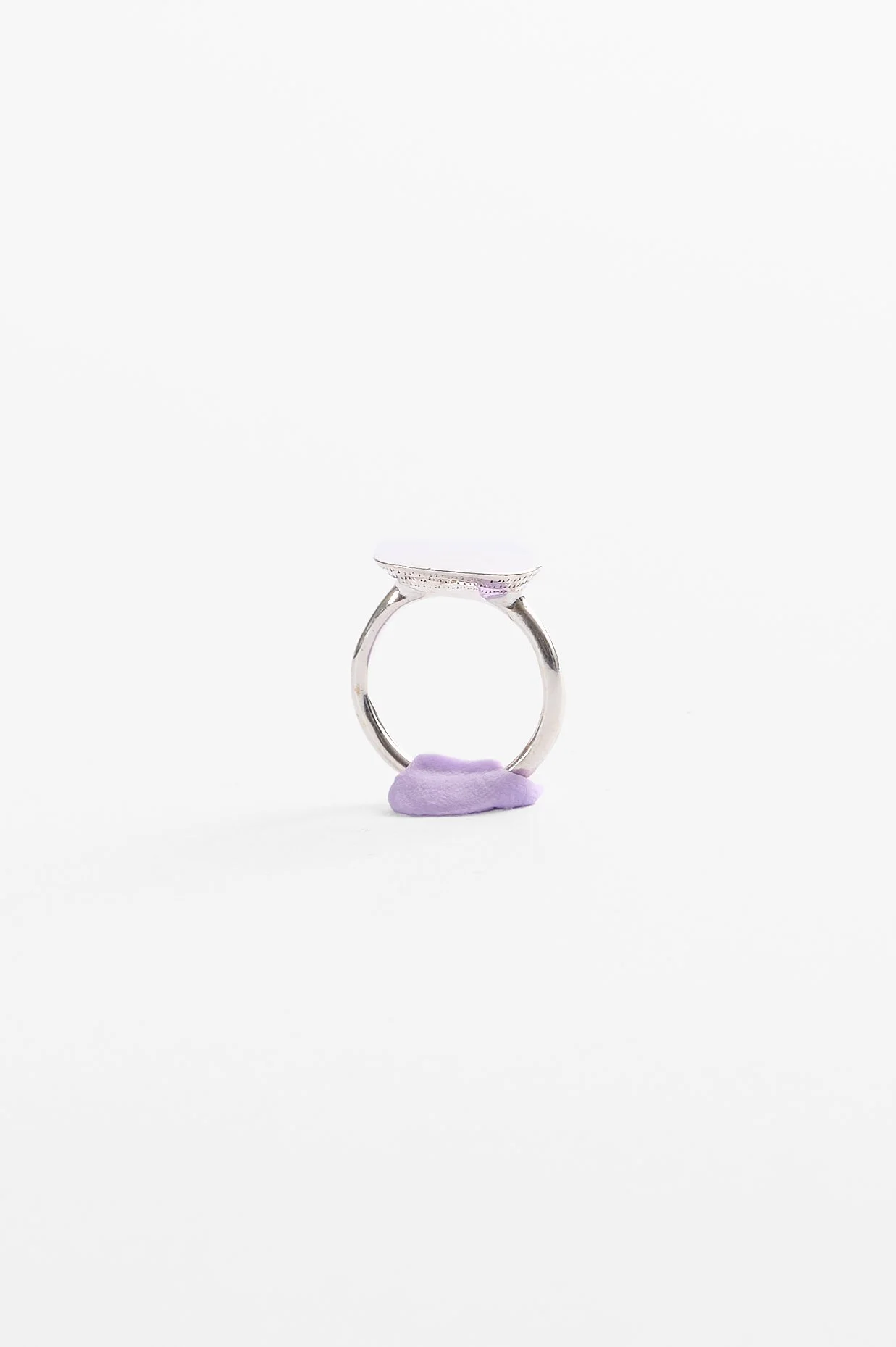
Talloulah Angel (8) 8. ‘Grounding Ring’, sterling silver, size 0, 2024. Photography: Ross Coulter
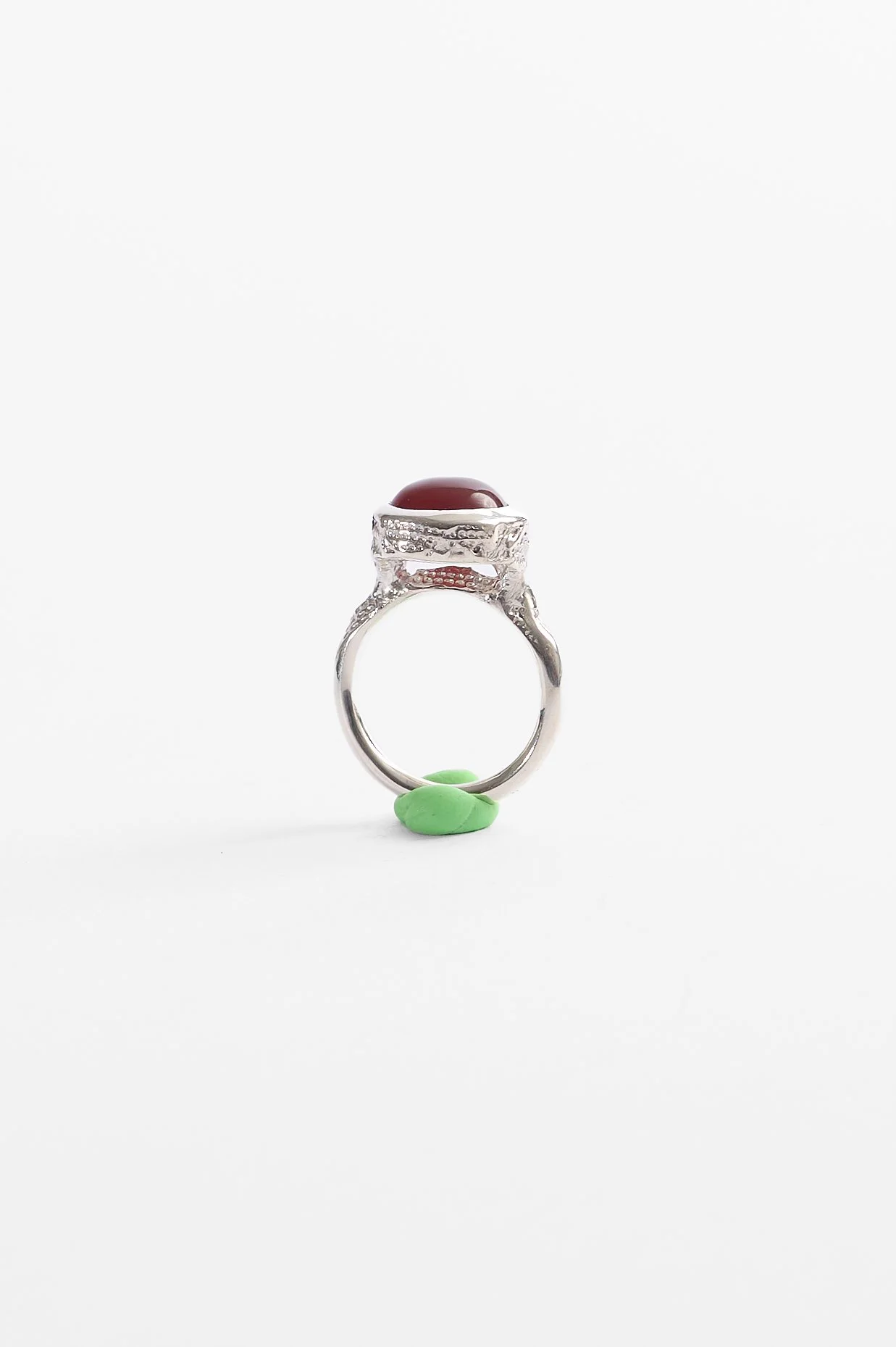
Talloulah Angel (8) 3. ‘Echo Ring’, sterling silver, carnelian, approx. size 0, 2024. Photography: Ross Coulter
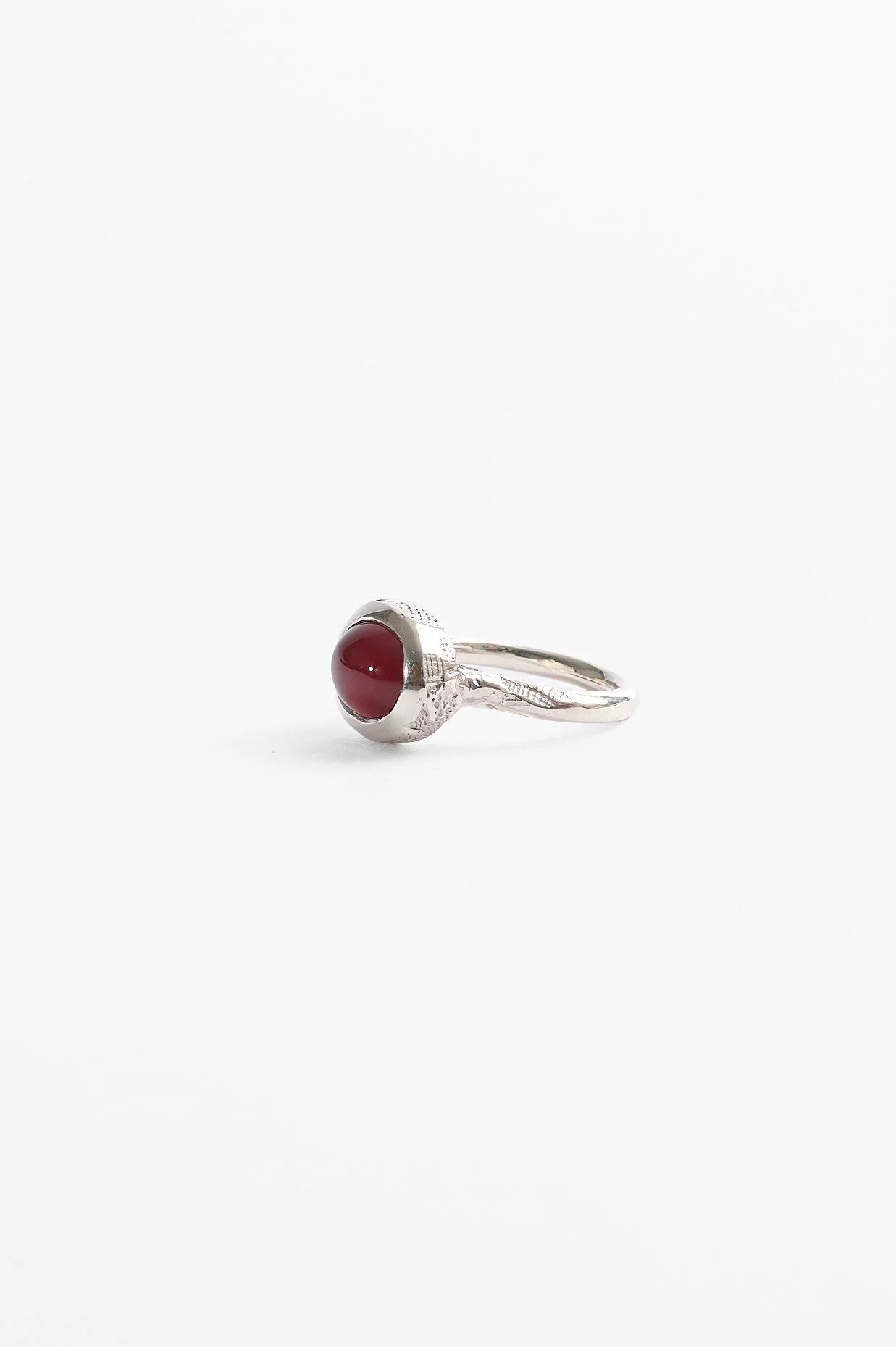
Talloulah Angel (8) 3. ‘Echo Ring’, sterling silver, carnelian, approx. size 0, 2024. Photography: Ross Coulter
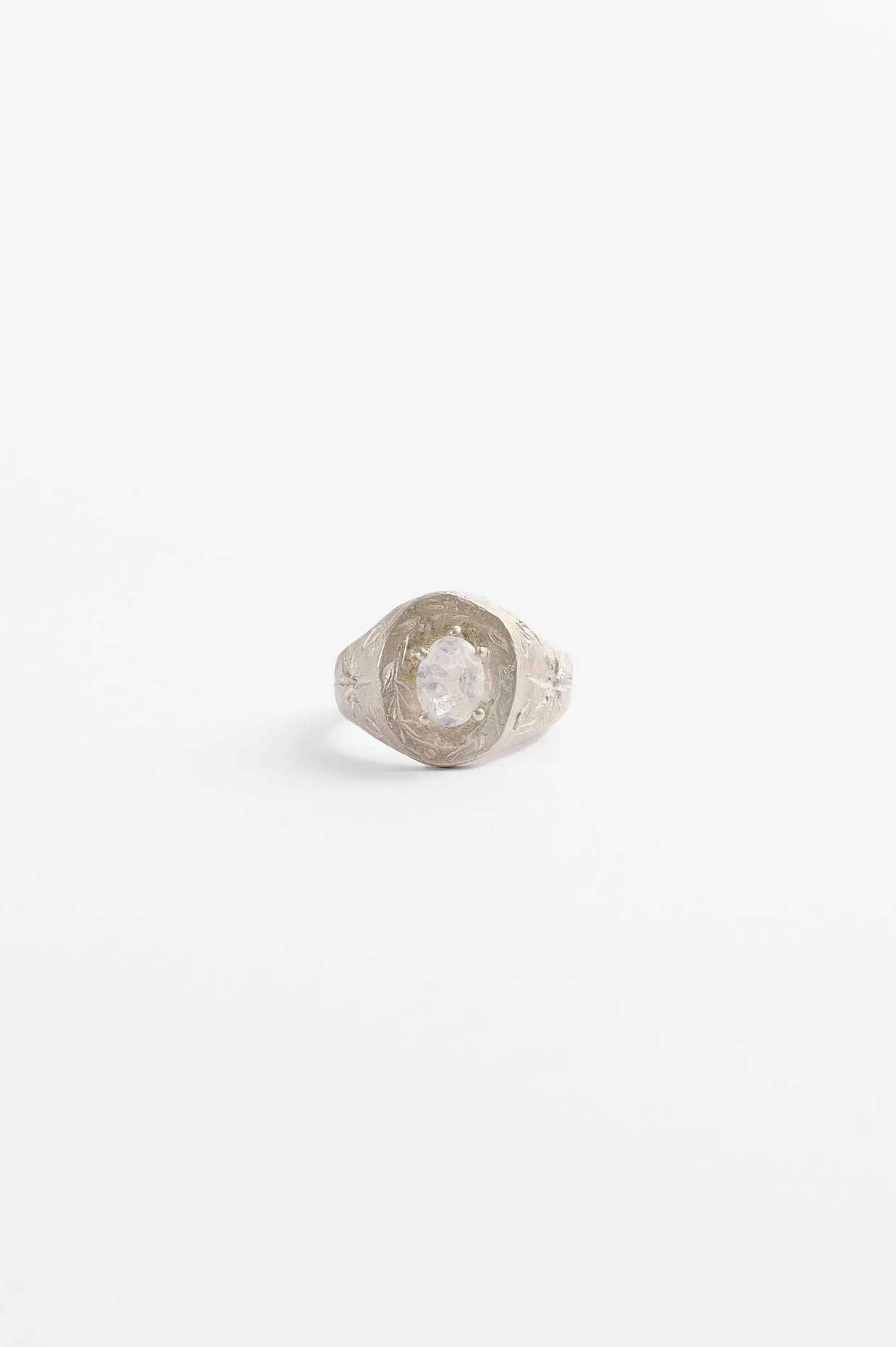
Teegan Horat (11) 8. ‘Growth, Change’, (moonstone signet), sterling silver, moonstone, approx. size O, 2025. Photography: Ross Coulter

Teegan Horat (11) 12. ‘Guiding ring’, (star), sterling silver, approx. size K, 2025. Photography: Ross Coulter
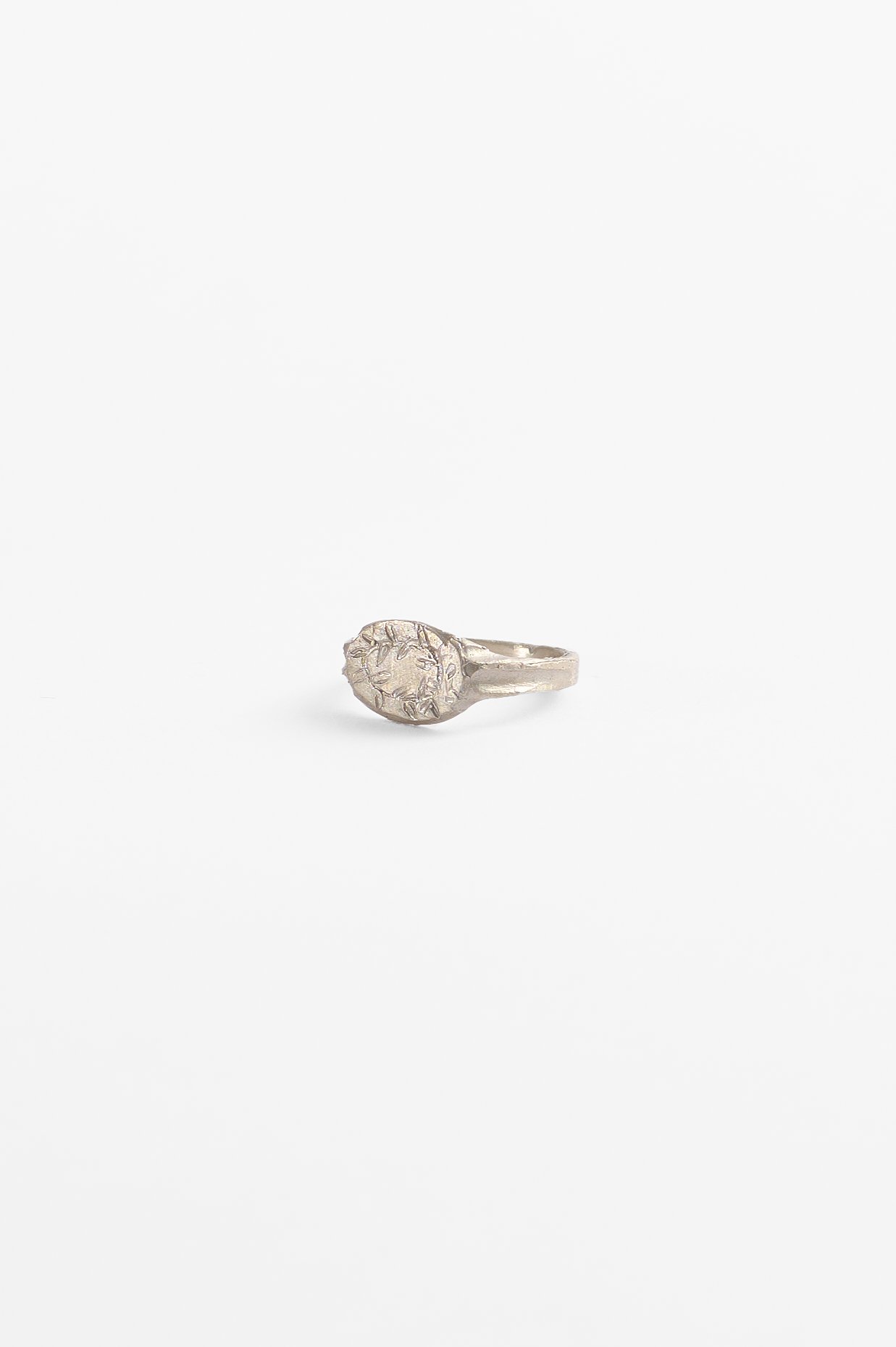
Teegan Horat (11) 4. ‘Protection ring’, (wreath), sterling silver, approx. size K, 2025. Photography: Ross Coulter
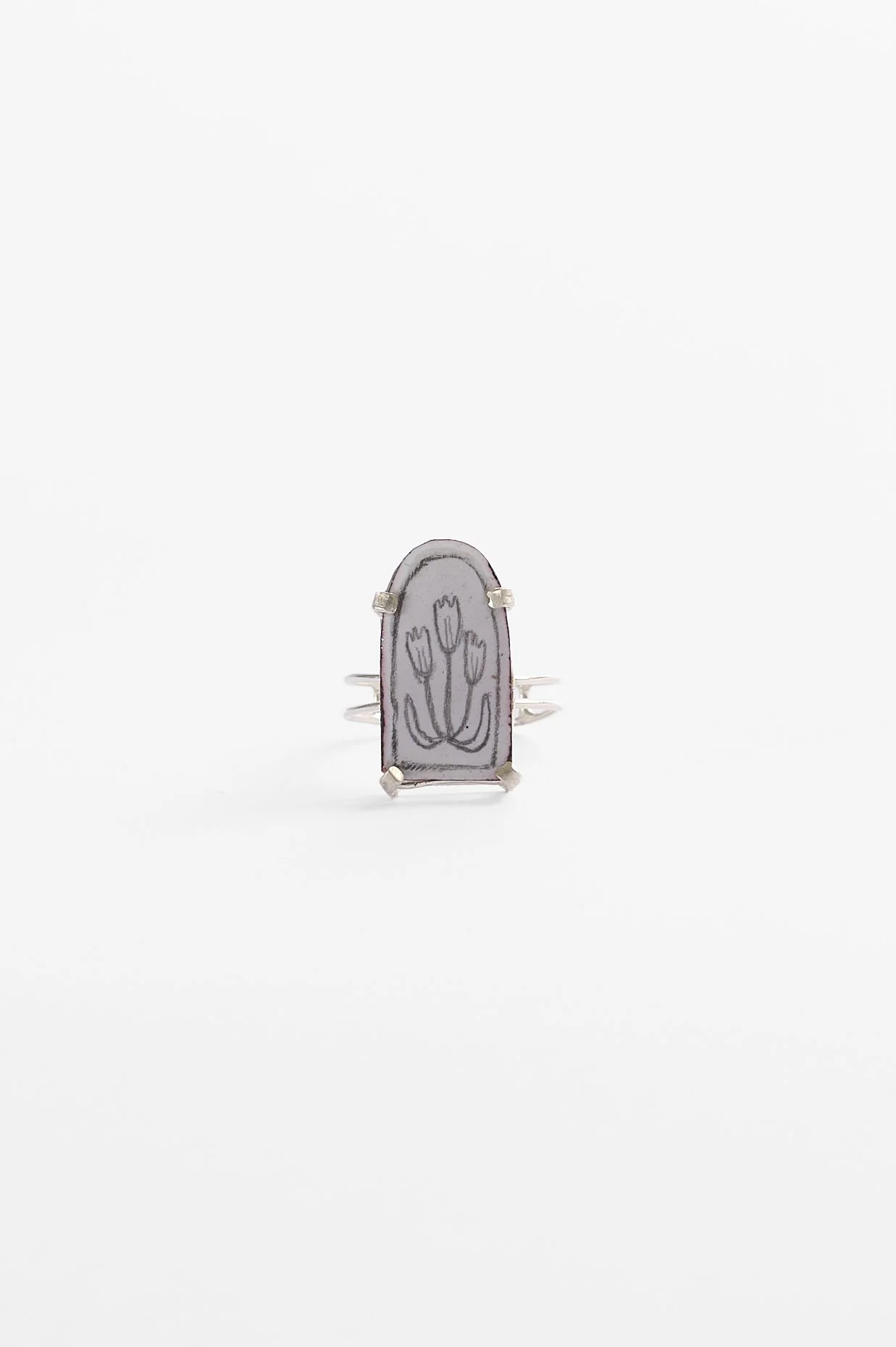
Teegan Horat (11) 2. ‘Night Blooms’, sterling silver, vitreous enamel on copper, graphite, approx. size K1/2, 2025. Photography: Ross Coulter
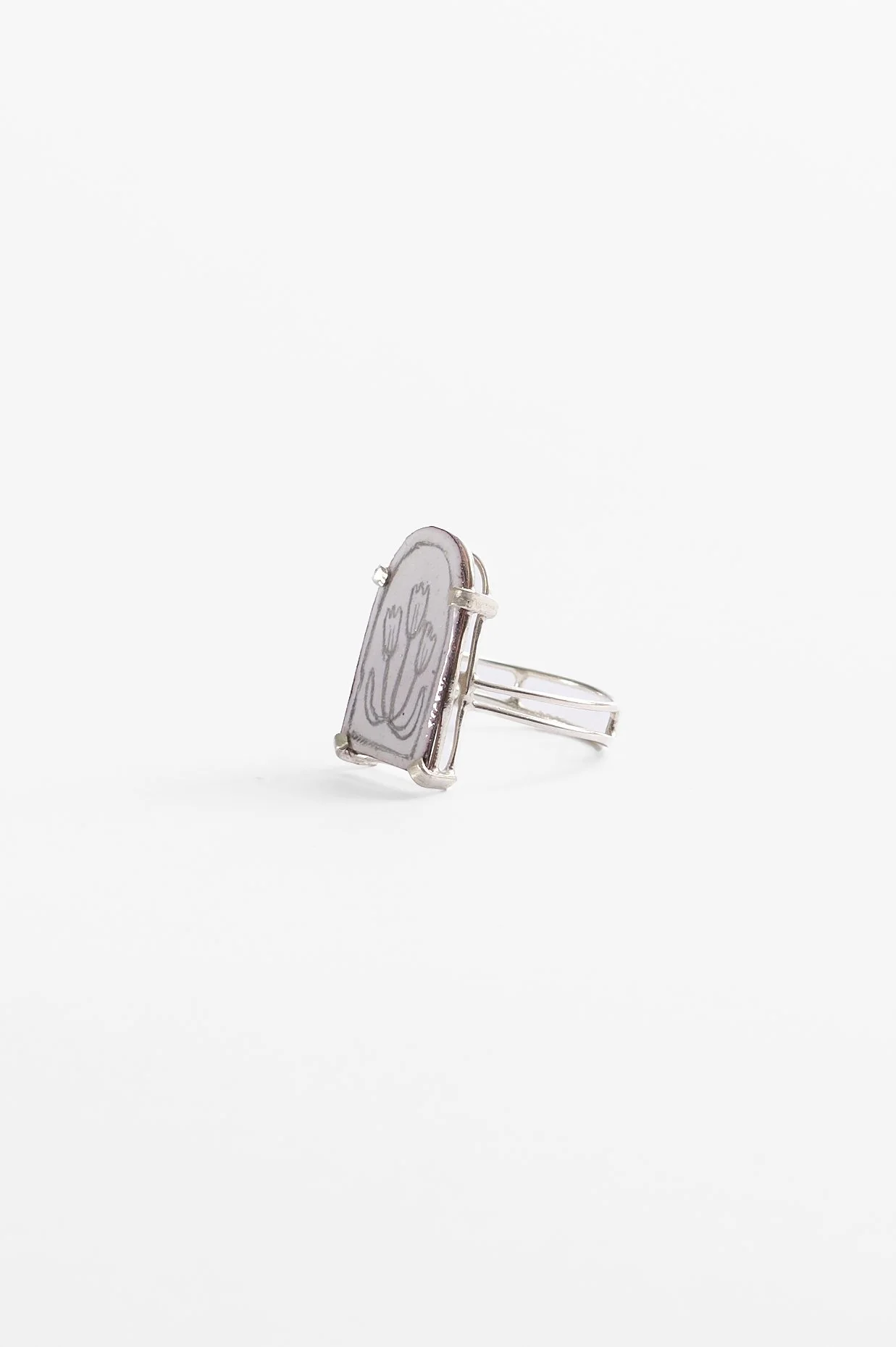
Teegan Horat (11) 2. ‘Night Blooms’, sterling silver, vitreous enamel on copper, graphite, approx. size K1/2, 2025. Photography: Ross Coulter
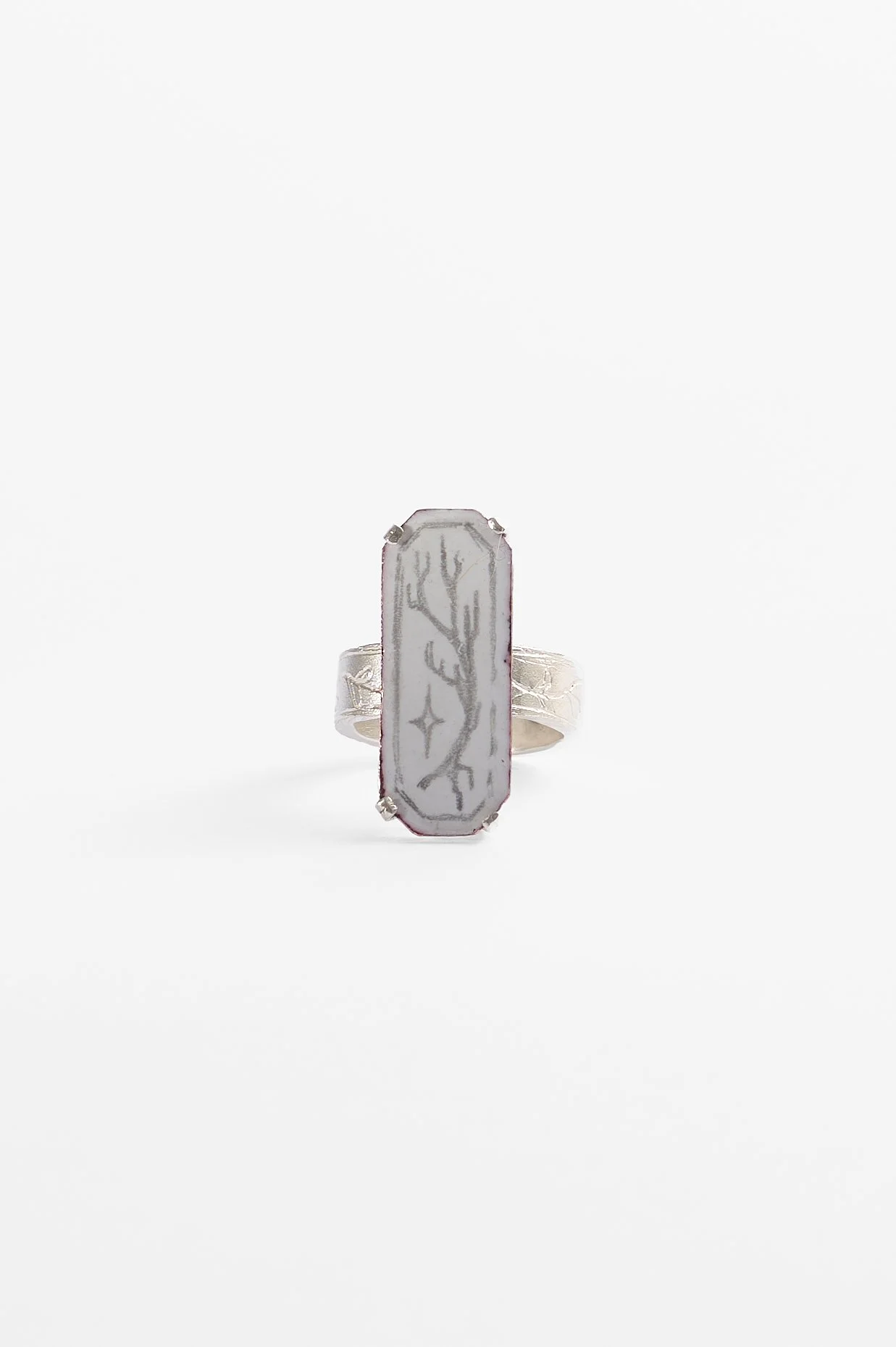
Teegan Horat (11) 3. ‘Dead Tree at Night’, sterling silver, vitreous enamel on copper, graphite, approx. size P, 2025. Photography: Ross Coulter
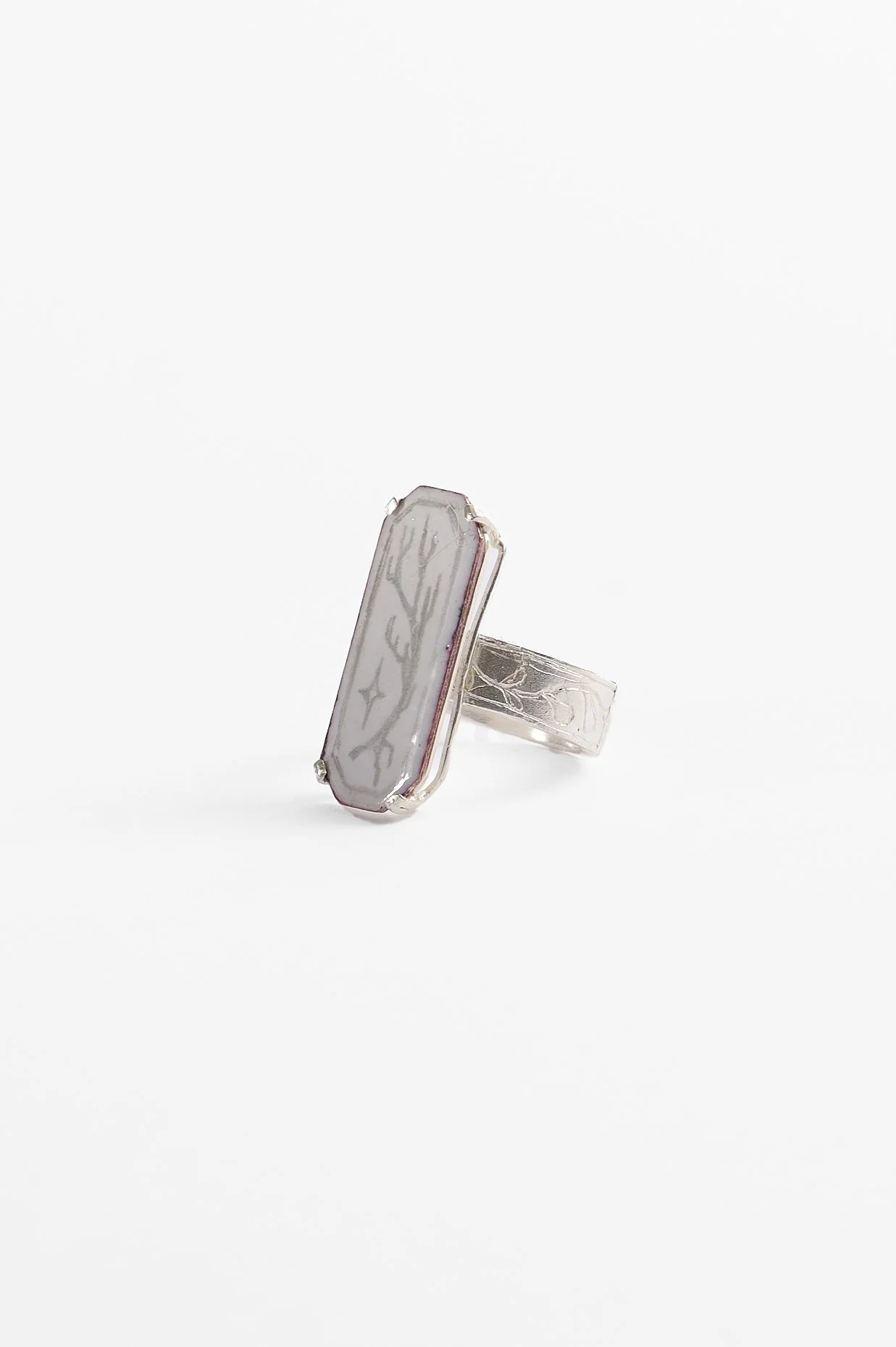
Teegan Horat (11) 3. ‘Dead Tree at Night’, sterling silver, vitreous enamel on copper, graphite, approx. size P, 2025. Photography: Ross Coulter

Teegan Horat (11) 1. ‘Nightlight’, sterling silver, vitreous enamel on copper, graphite, approx. size J1/2, 2025. Photography: Ross Coulter
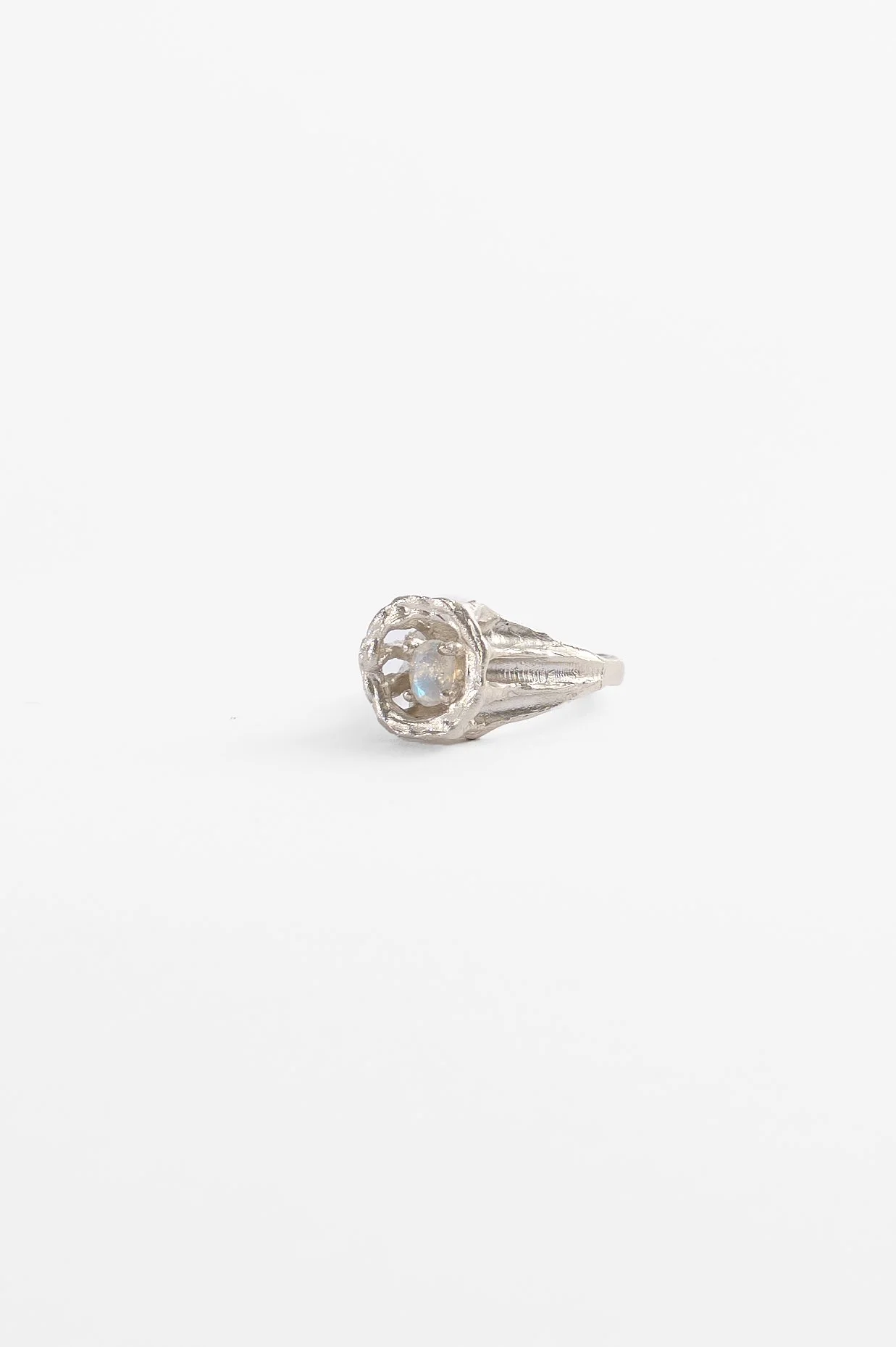
Teegan Horat (11) 10. ‘Lunar Eclipse’, sterling silver, moonstone, approx. size M, 2025. Photography: Ross Coulter
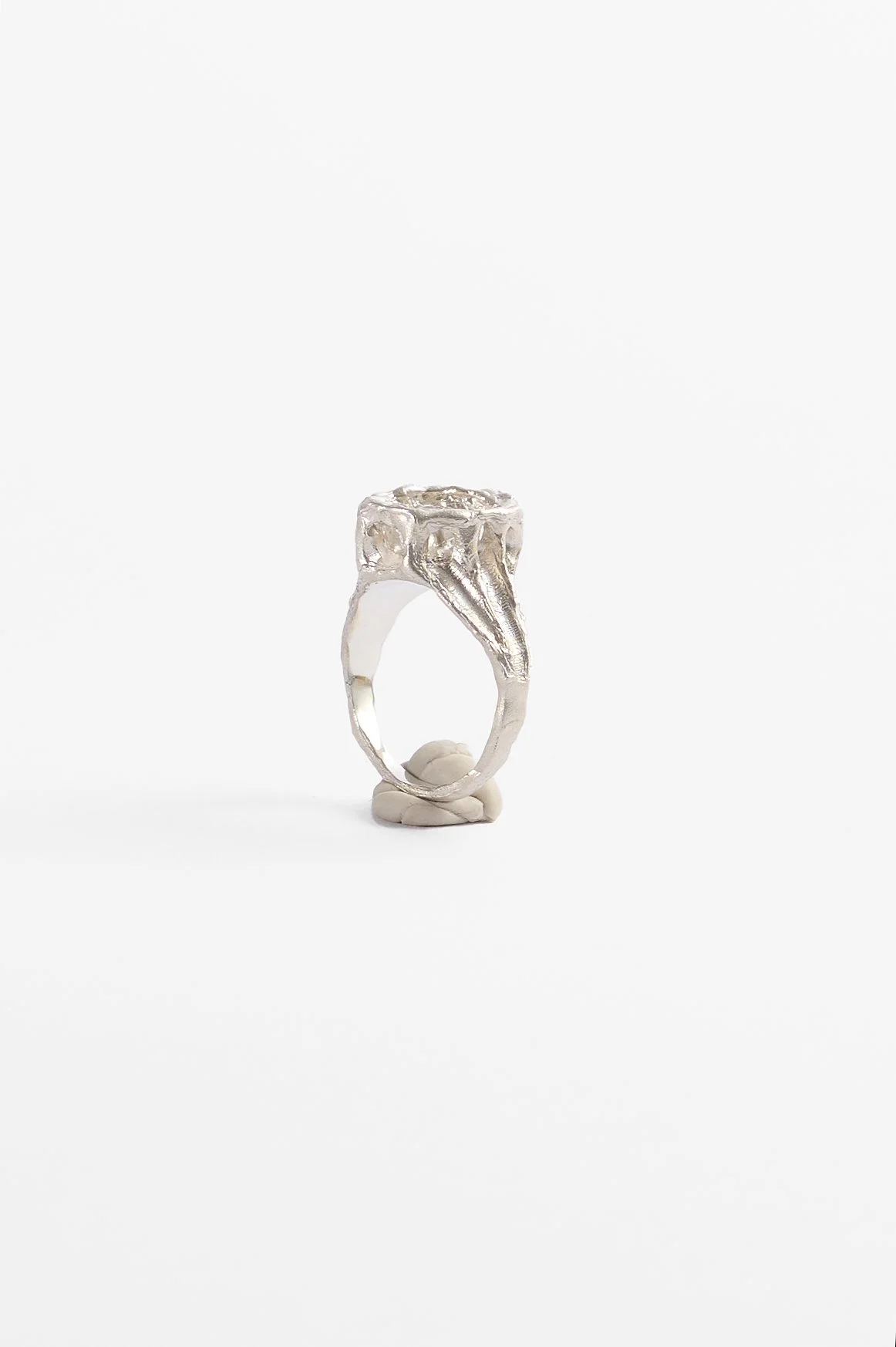
Teegan Horat (11) 10. ‘Lunar Eclipse’, sterling silver, moonstone, approx. size M, 2025. Photography: Ross Coulter
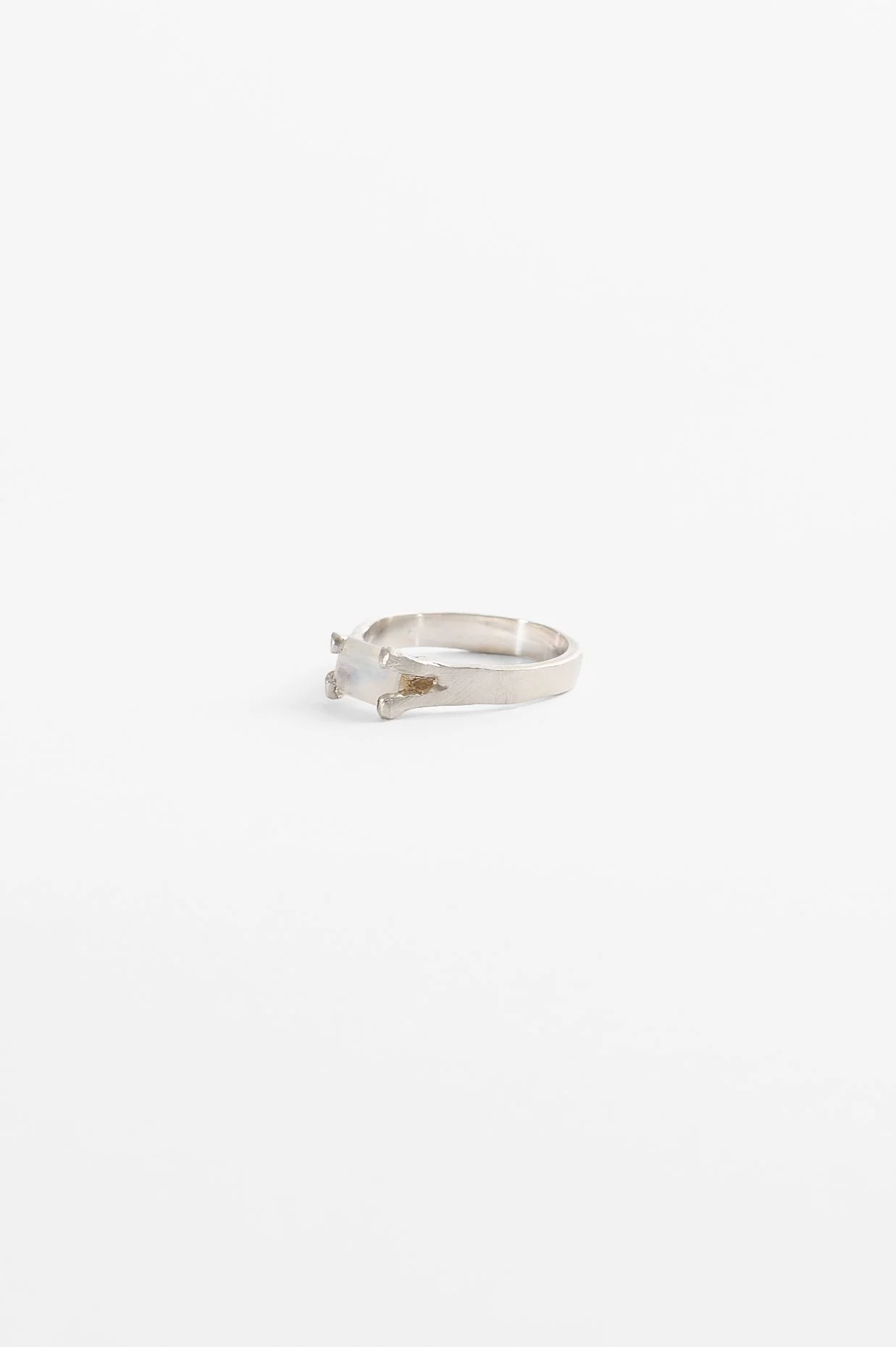
Teegan Horat (11) 5. ‘Moon Between Branches’, sterling silver, moonstone, approx. size O, 2025. Photography: Ross Coulter
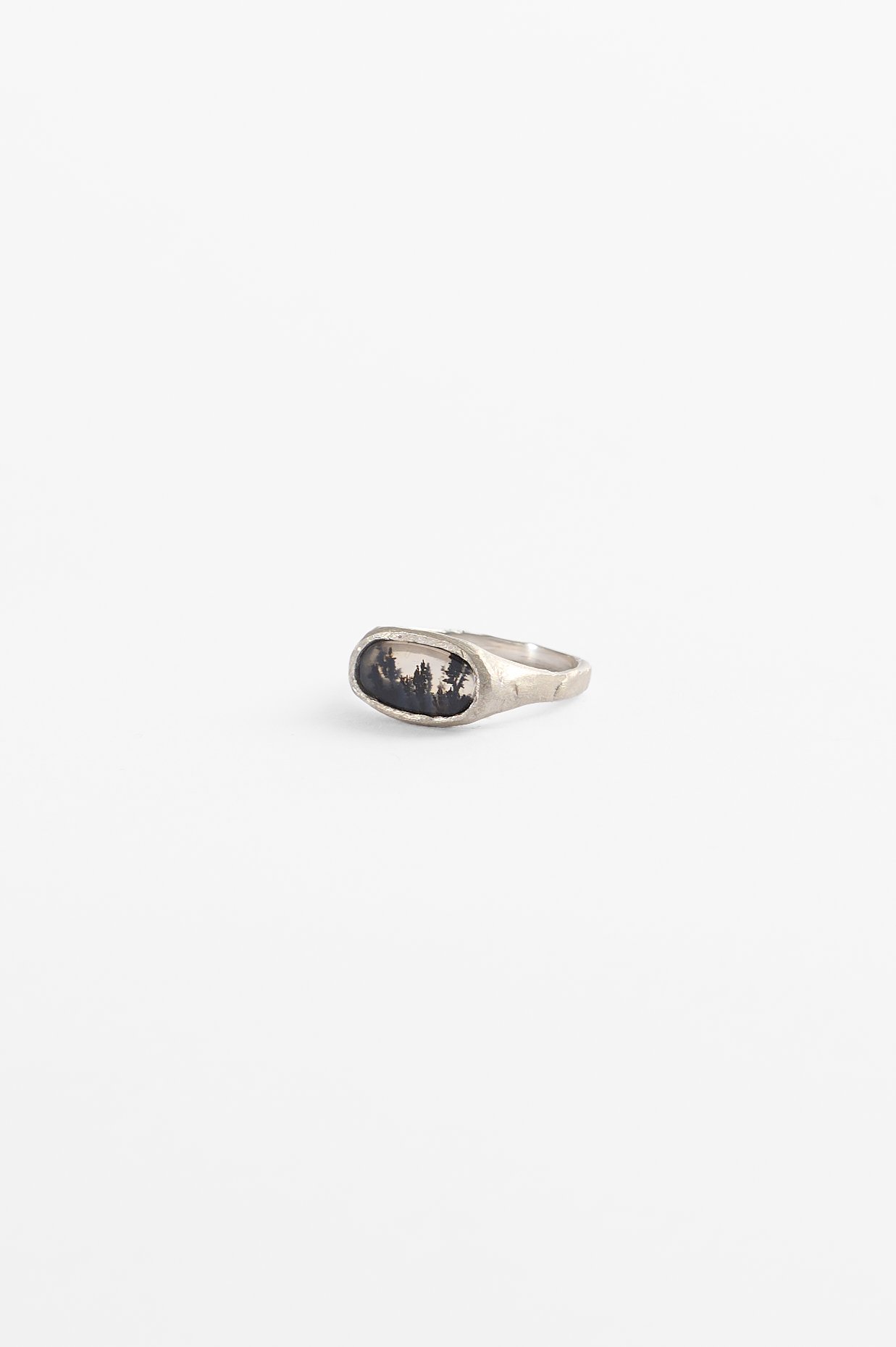
Teegan Horat (11) 11. ‘Fenceline at Night II’, sterling silver, agate, approx. size N, 2025. Photography: Ross Coulter
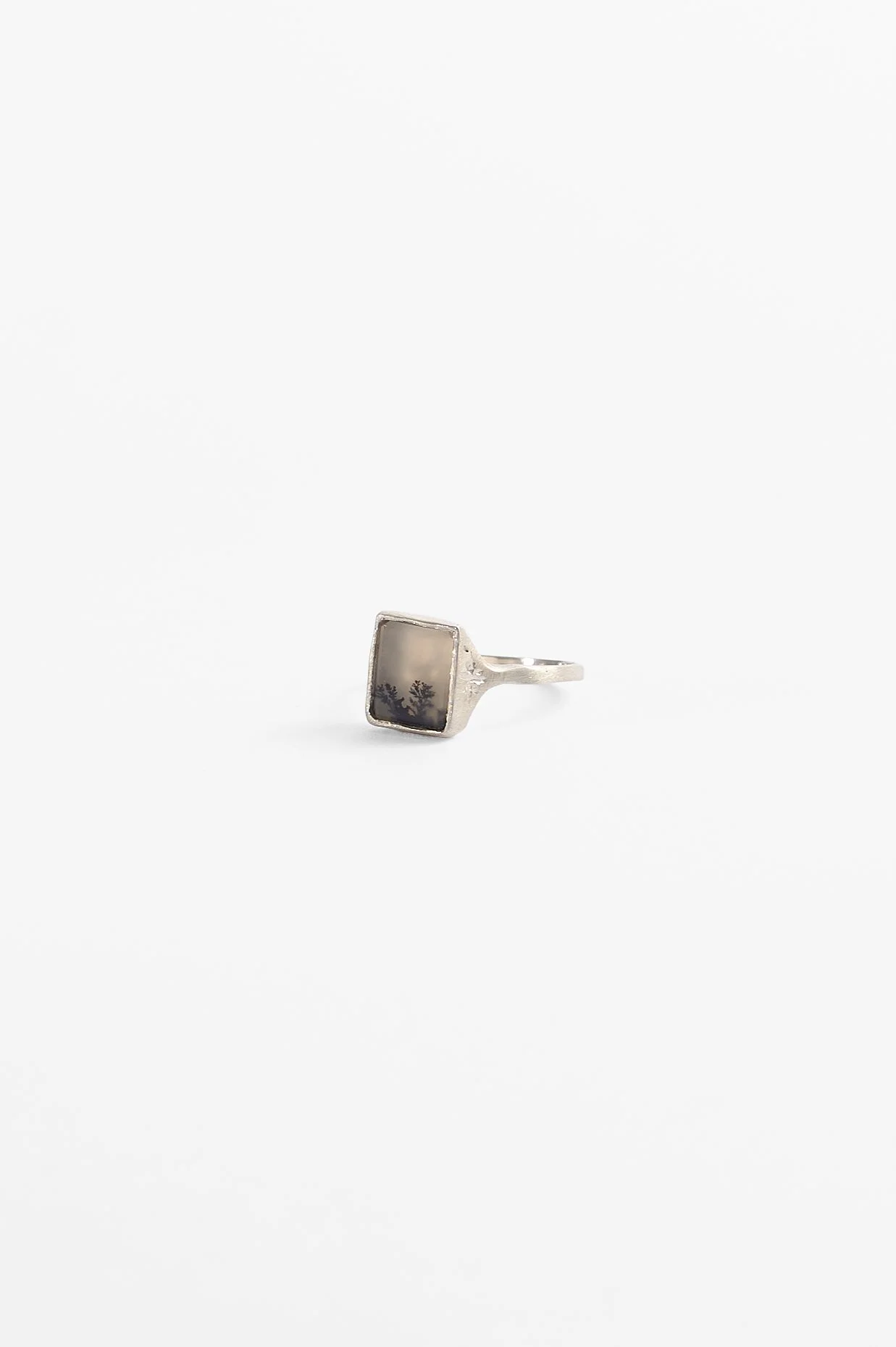
Teegan Horat (11) 7. ‘Fenceline at Night I’, sterling silver, agate, approx. size L1/2, 2025. Photography: Ross Coulter

Teegan Horat (11) 6. ‘Moon and Stars’, sterling silver, moonstone, approx. size N1/2, 2025. Photography: Ross Coulter
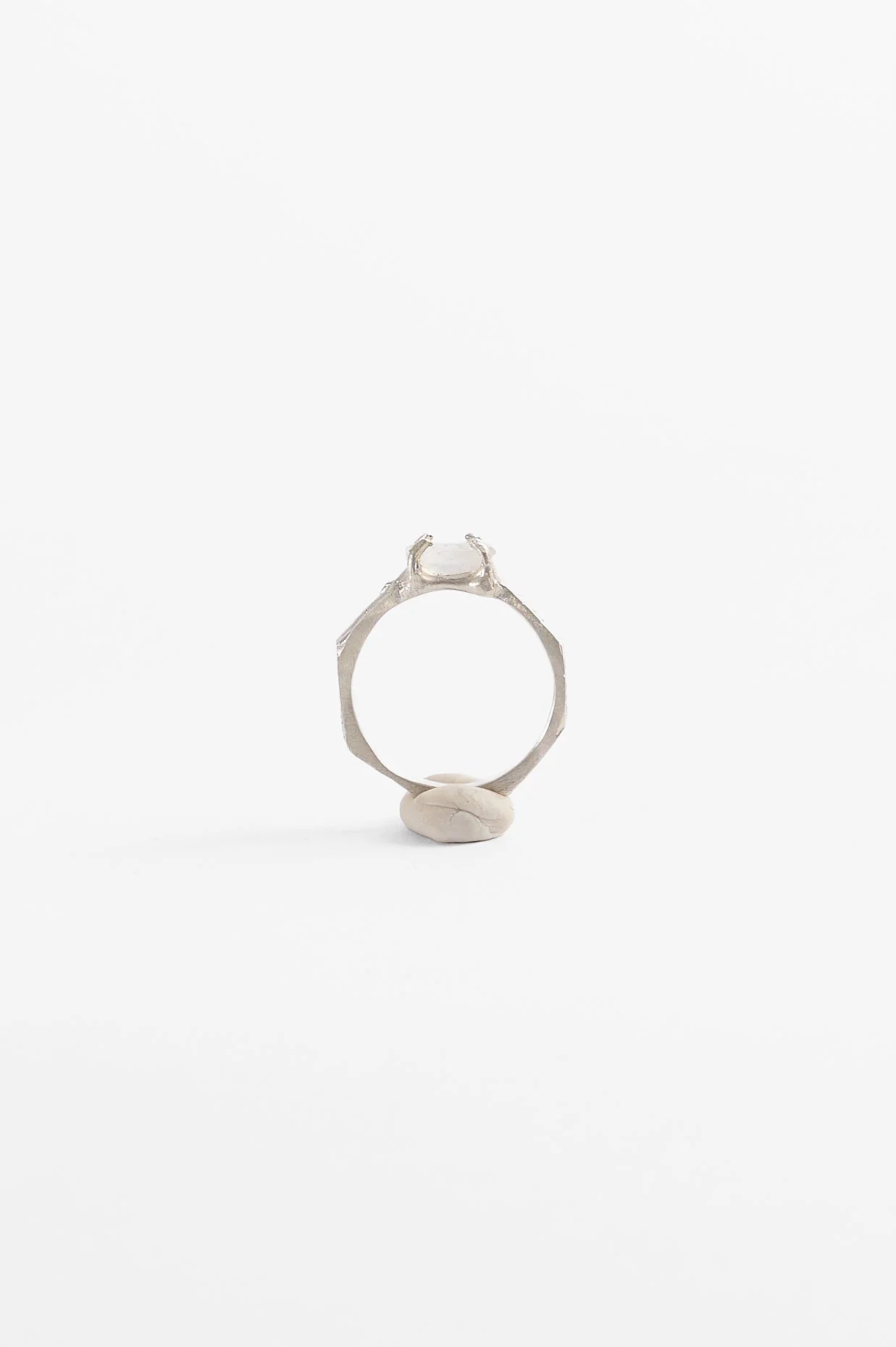
Teegan Horat (11) 6. ‘Moon and Stars’, sterling silver, moonstone, approx. size N1/2, 2025. Photography: Ross Coulter
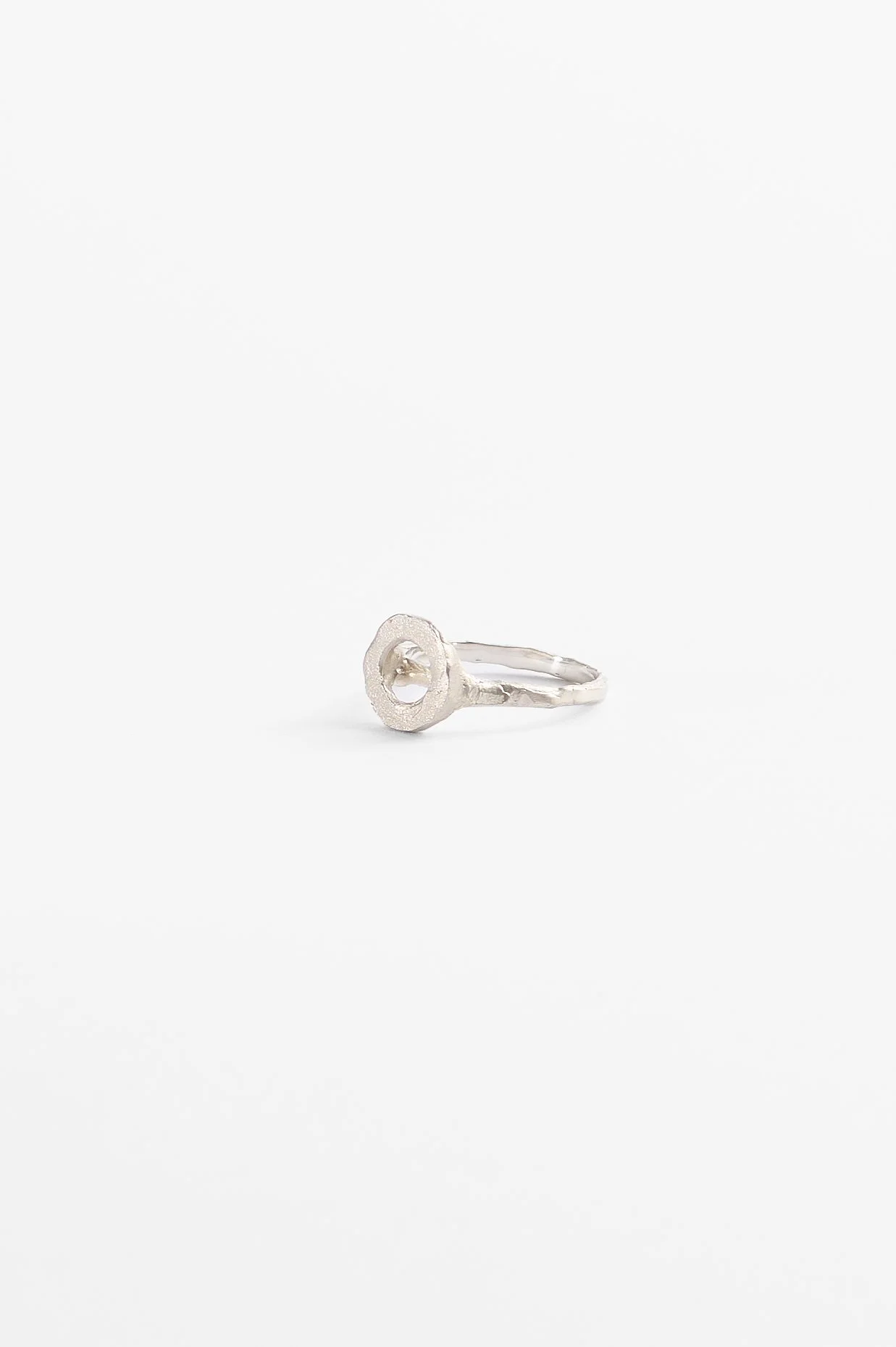
Teegan Horat (11) 9. ‘Solar Eclipse’, sterling silver, approx. size N, 2025. Photography: Ross Coulter
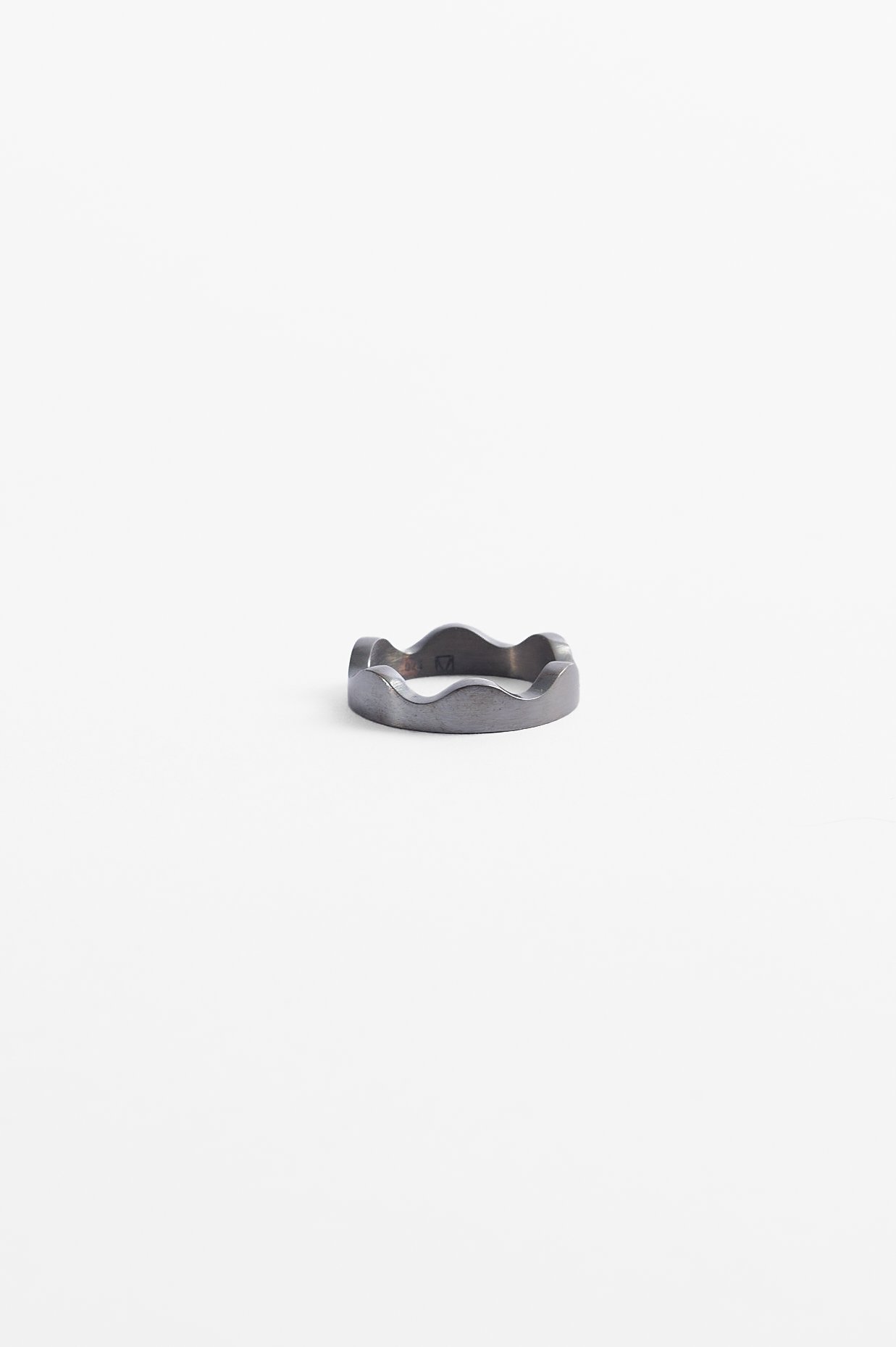
Vicki Mason (30) 1. ‘Undulate (wavy) leaf margin’, (narrow band, low wavy edge), oxidised sterling silver, approx. size M, 21 x 21 x 5mm, 2025. Photography: Ross Coulter
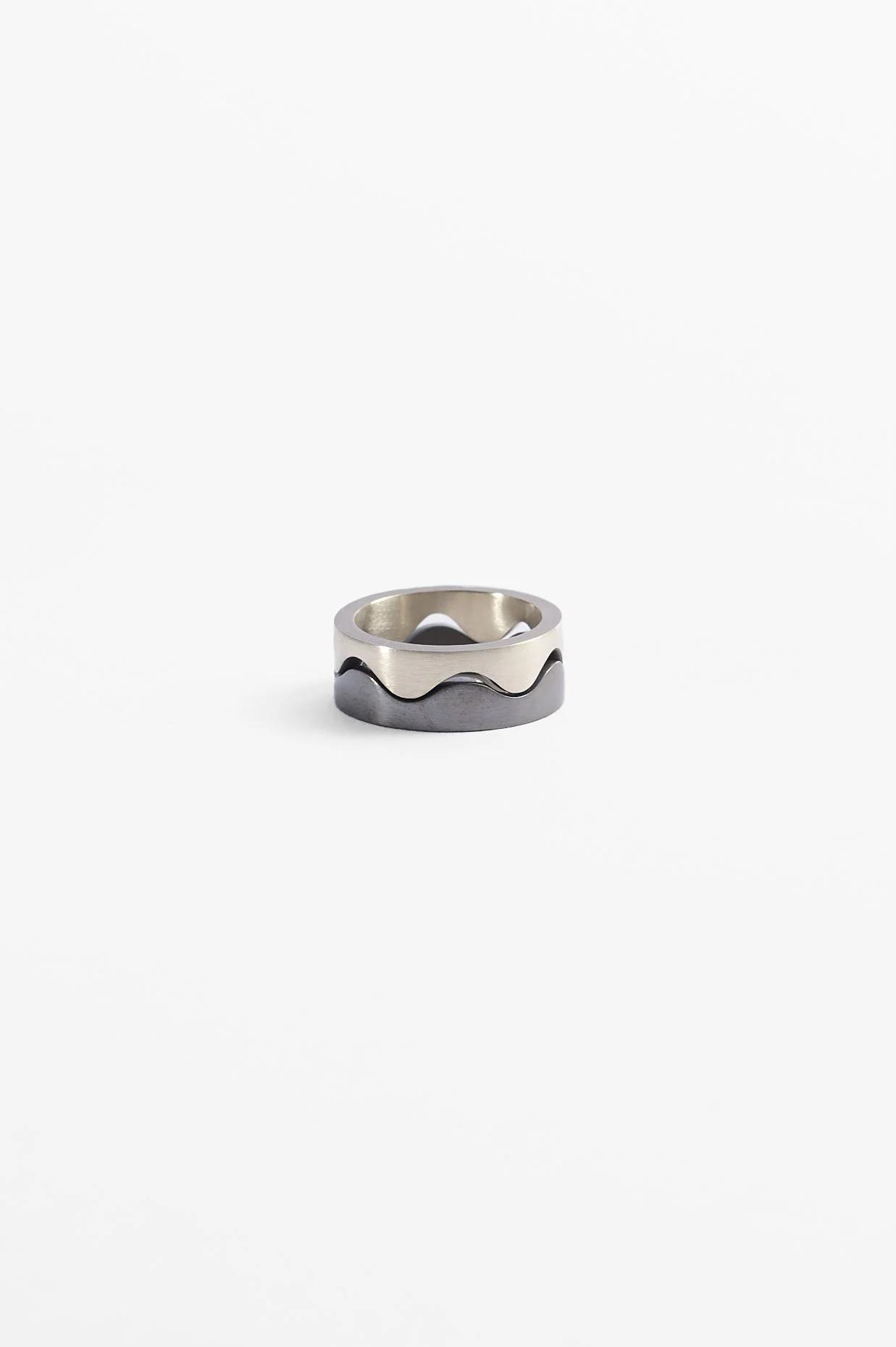
Vicki Mason (30) 5. ‘Undulate (rolling) leaf Margin’, (narrow band, high wavy edge, top edge oxidised), sterling silver, oxidised sterling silver, approx. size M, 21 x 21 x 45mm, 2025 and 1. ‘Undulate (wavy) leaf margin’, (narrow band, low wavy edge), oxidised sterling silver, approx. size M, 21 x 21 x 5mm, 2025. Photography: Ross Coulter
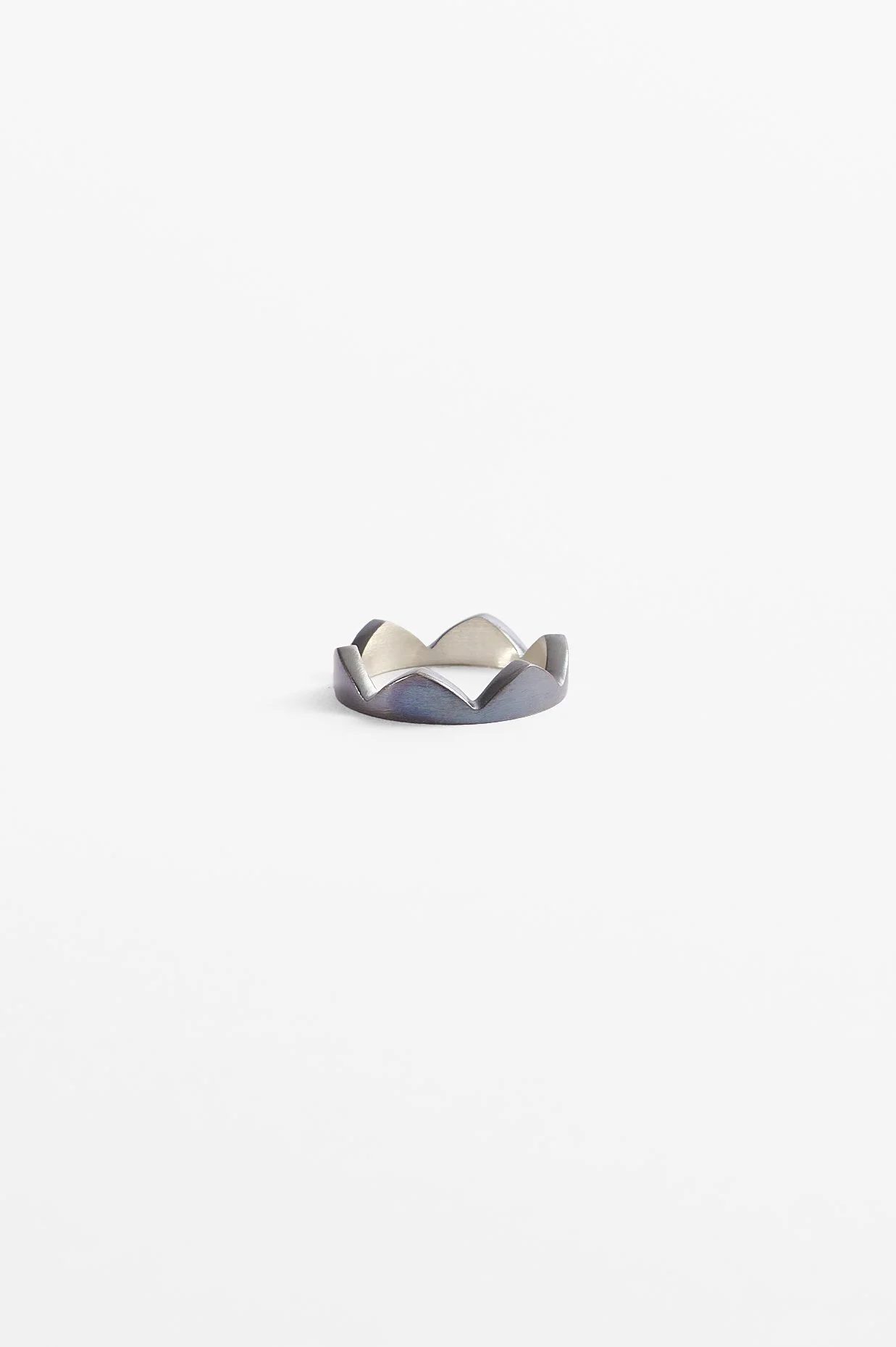
Vicki Mason (30) 6. ‘Denticulate (peaked) leaf margin’, (narrow/low band, curved triangular edge, top edge and outside oxidised, inside and lower edge silver), sterling silver, oxidised sterling silver, approx. size M, 21 x 21 x 5mm, 2025. Photography: Ross Coulter
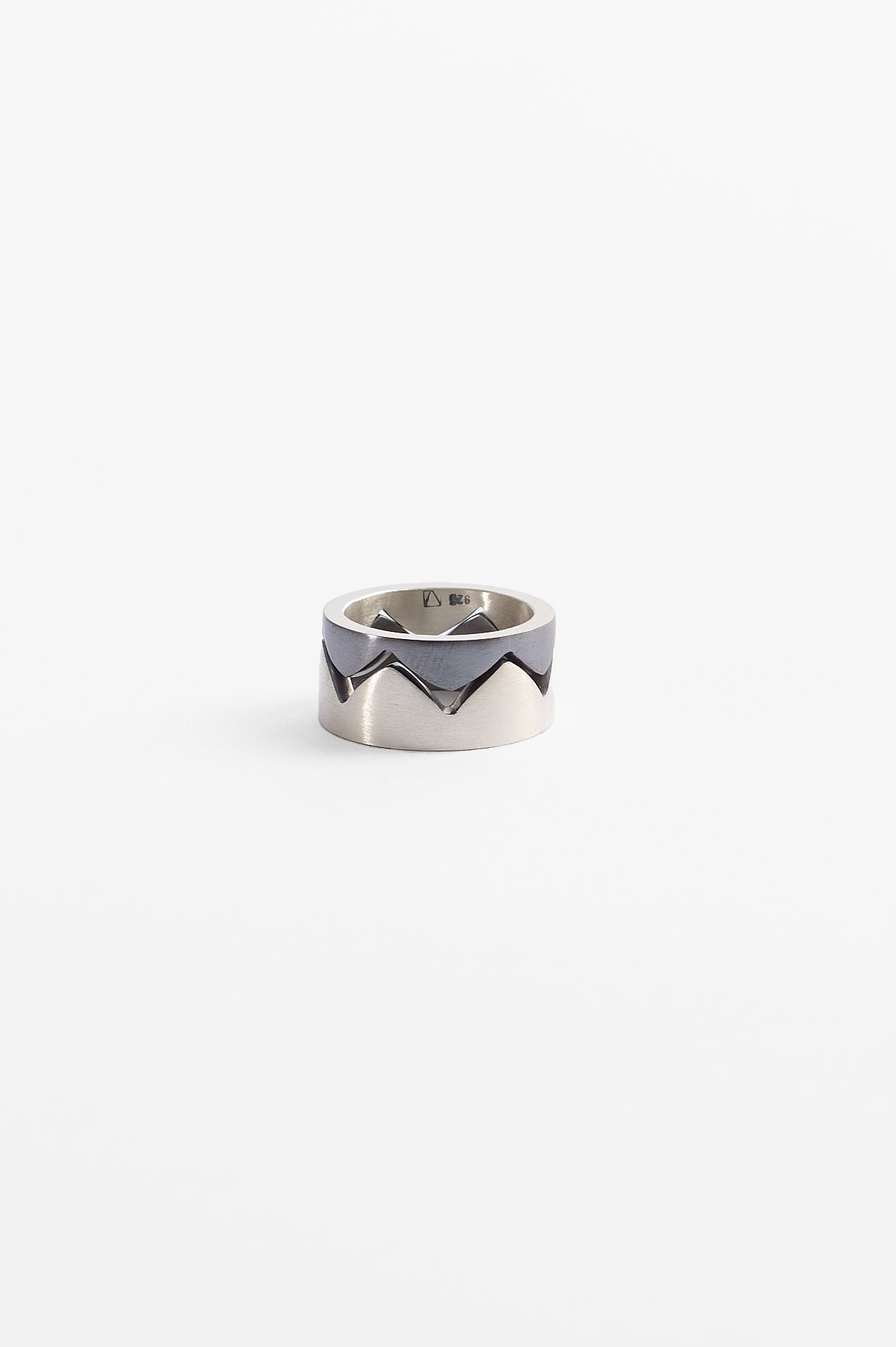
Vicki Mason (30) 6. ‘Denticulate (peaked) leaf margin’, (narrow/low band, curved triangular edge, top edge and outside oxidised, inside and lower edge silver), sterling silver, oxidised sterling silver, approx. size M, 21 x 21 x 5mm, 2025 and 4. ‘Denticulate (incisive) leaf margin’, (wide band, high triangular edge, edges oxidised), sterling silver, oxidised sterling silver, size N 1/2, 21.5 x 21.5 x 8mm, 2025. Photography: Ross Coulter
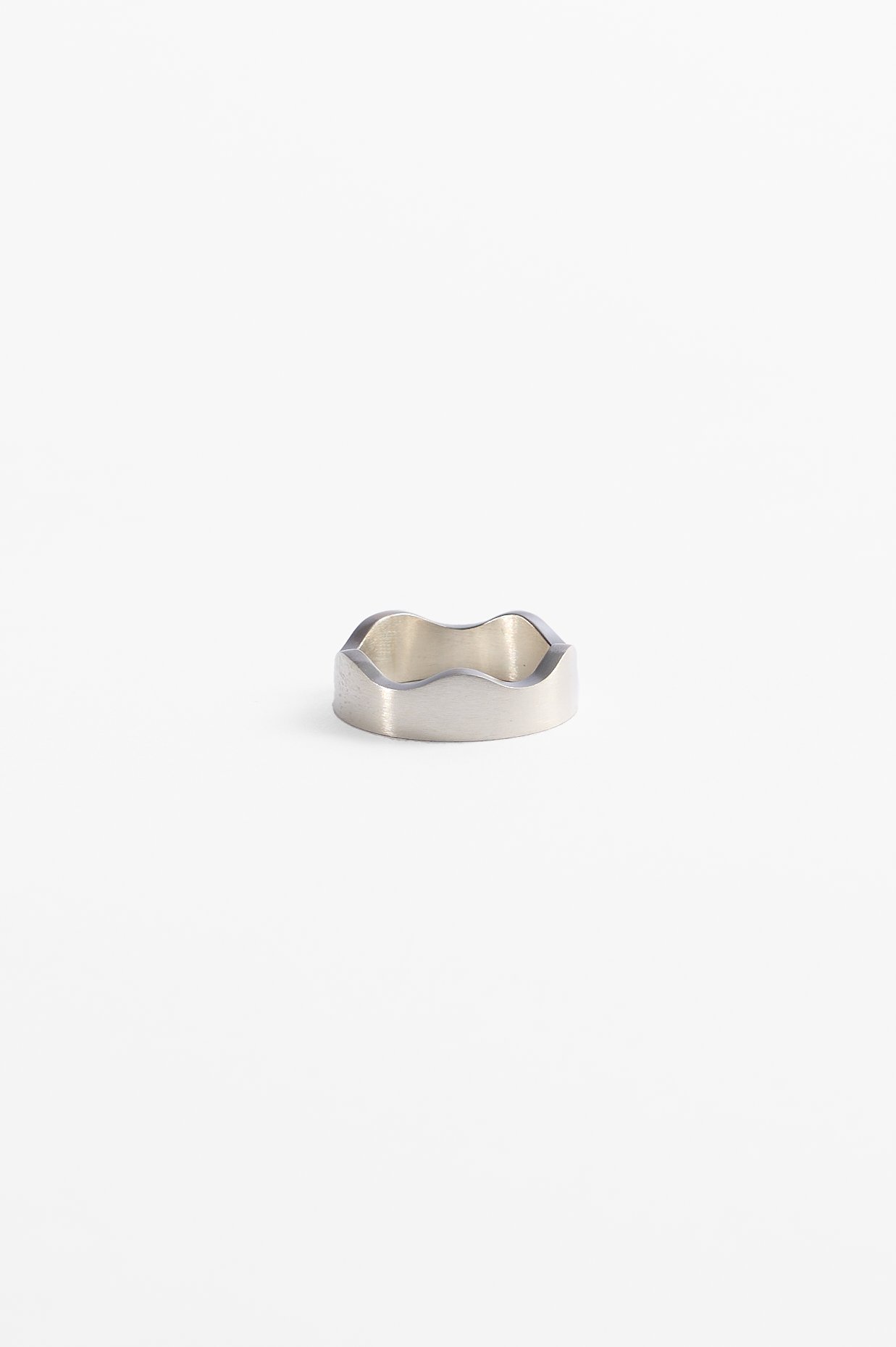
Vicki Mason (30) 2. ‘Undulate (wavering) leaf margin’, (wide band, low wavy edge, top and bottom edges oxidised, sterling silver, oxidised sterling silver, approx. size P, 22 x 22 x 7mm, 2025. Photography: Ross Coulter
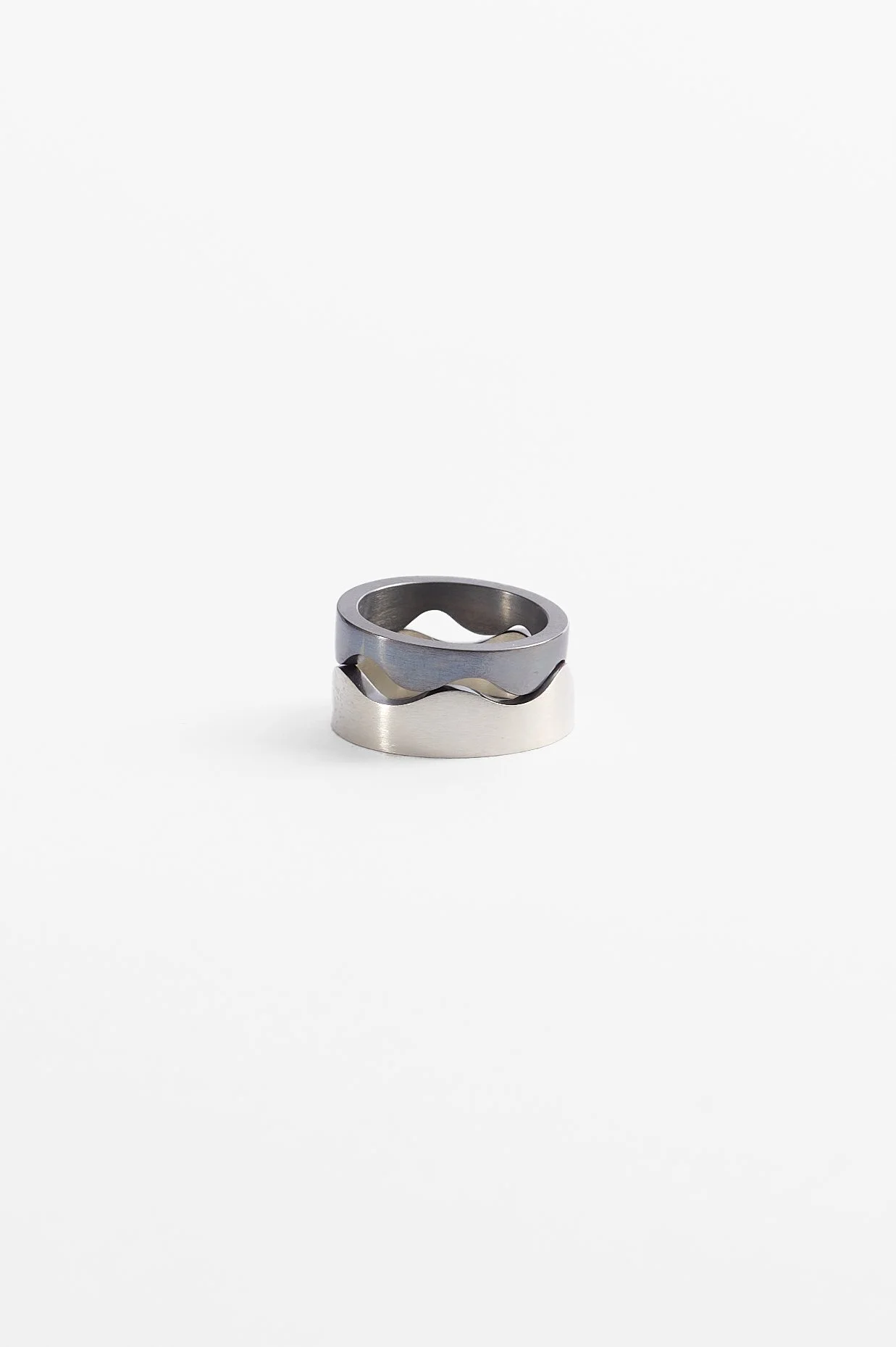
Vicki Mason (30) 2. ‘Undulate (wavering) leaf margin’, (wide band, low wavy edge, top and bottom edges oxidised, sterling silver, oxidised sterling silver, approx. size P, 22 x 22 x 7mm, 2025 and 7. ‘Undulate (sinuous) leaf margin’, (narrow band, low wavy edge, all oxidised), oxidised sterling silver, approx. size N 1/2, 21.5 x 21.5 x 45mm, 2025. Photography: Ross Coulter
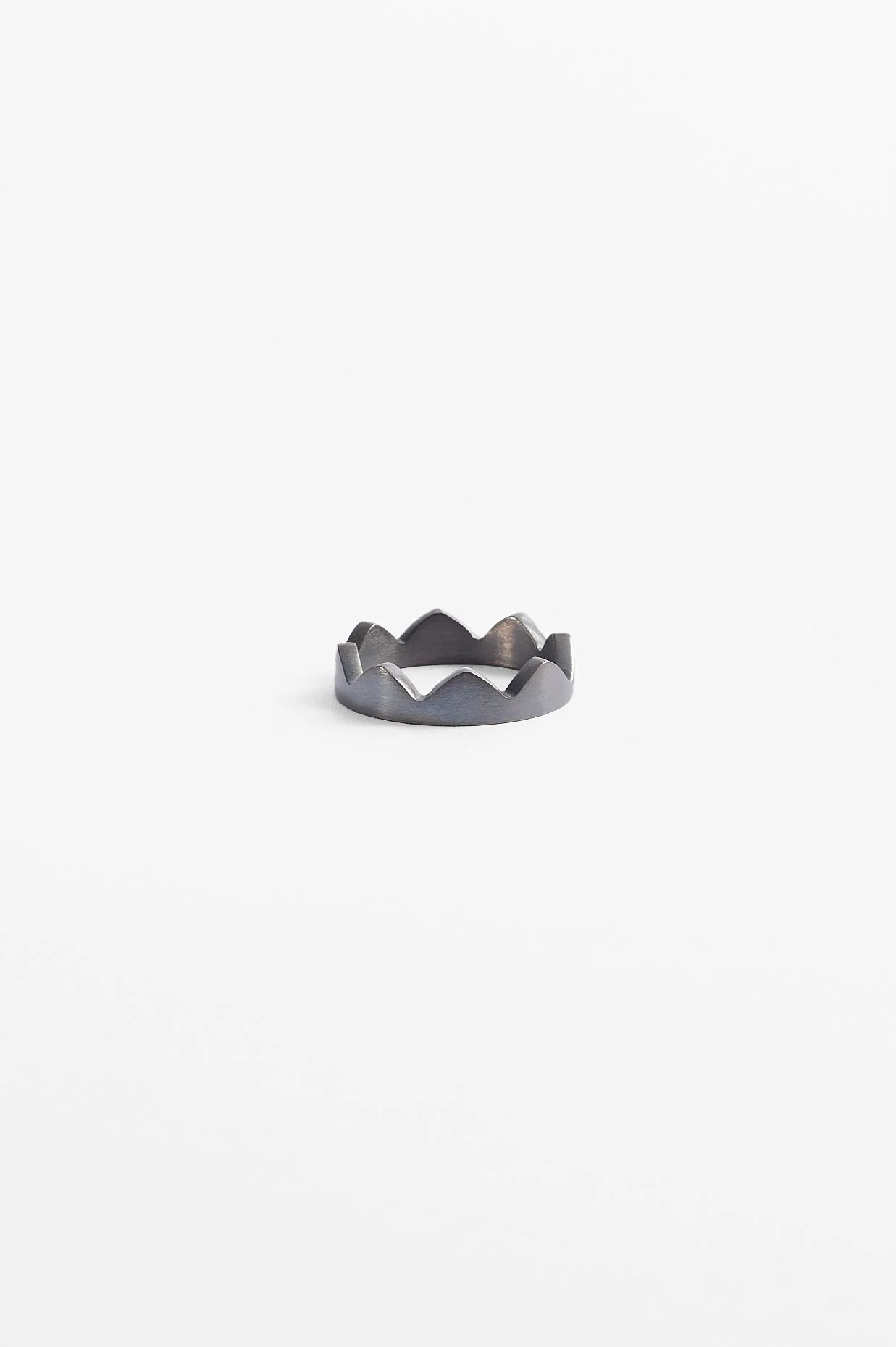
Vicki Mason (30) 3. ‘Denticulate (apex) leaf margin’, (medium width band, triangular edge with curve), oxidised sterling silver, approx. size P, 22 x 22 x 5mm, 2025. Photography: Ross Coulter
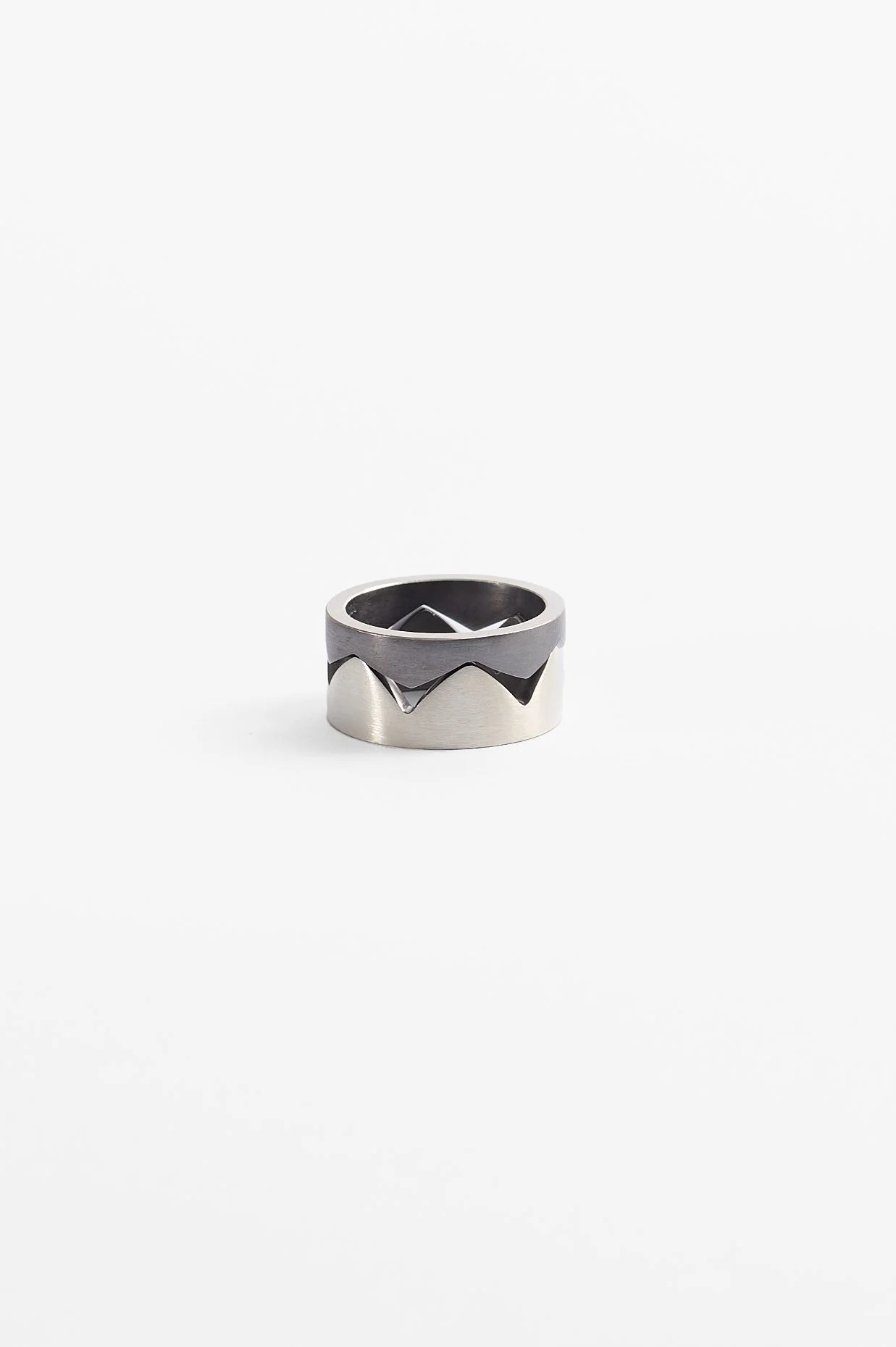
Vicki Mason (30) 3. ‘Denticulate (apex) leaf margin’, (medium width band, triangular edge with curve), oxidised sterling silver, approx. size P, 22 x 22 x 5mm, 2025 and 4. ‘Denticulate (incisive) leaf margin’, (wide band, high triangular edge, edges oxidised), sterling silver, oxidised sterling silver, size N 1/2, 21.5 x 21.5 x 8mm, 2025. Photography: Ross Coulter
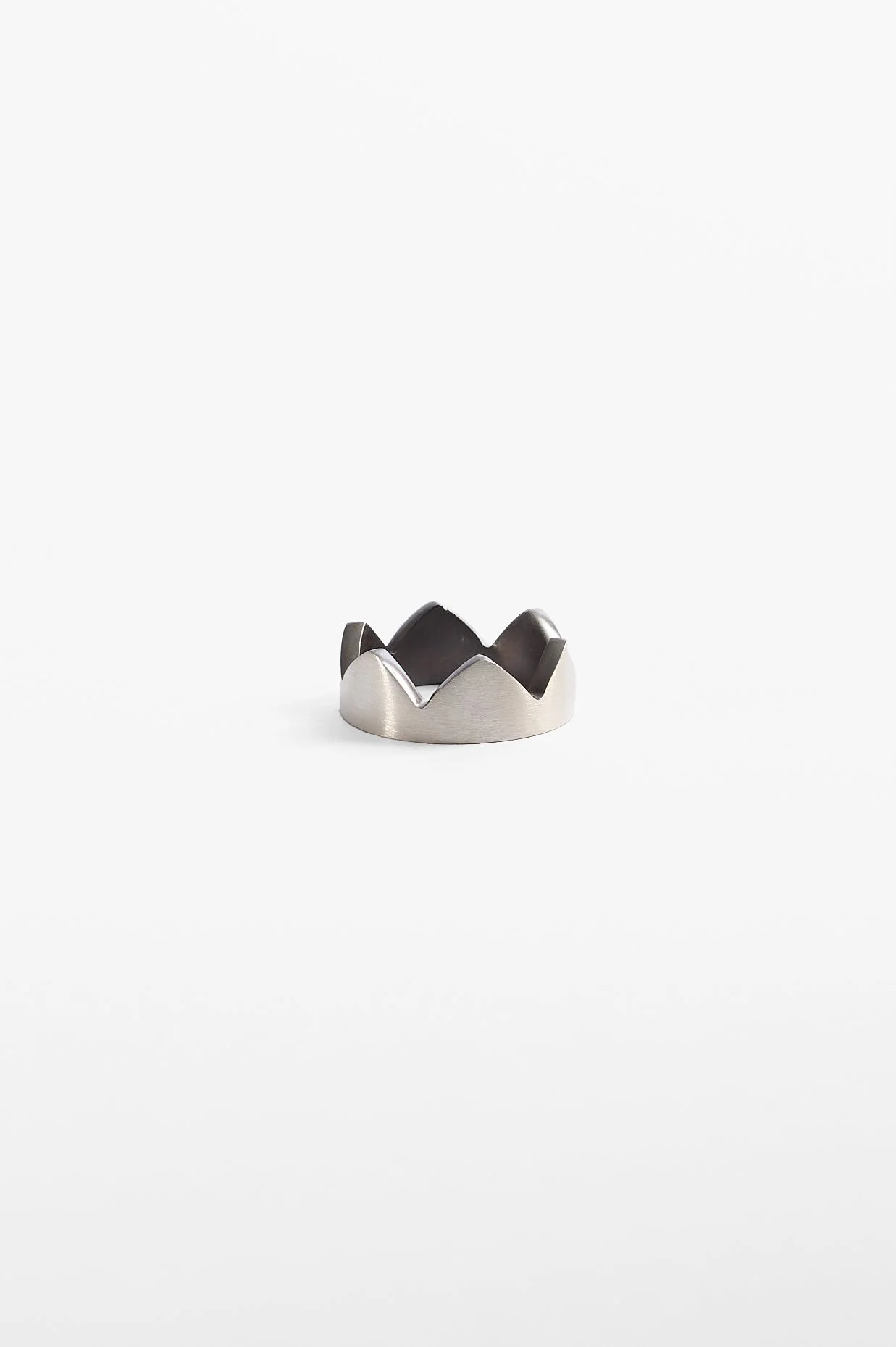
Vicki Mason (30) 4. ‘Denticulate (incisive) leaf margin’, (wide band, high triangular edge, edges oxidised), sterling silver, oxidised sterling silver, size N 1/2, 21.5 x 21.5 x 8mm, 2025. Photography: Ross Coulter
About the artists:
Talloulah Angel is a Wirangu artist currently living on Gunditjmara Country. Her practice explores her connection to Wirangu Country, creating a visual dialogue through symbols and mark-making. Intuitive and thematic, her work responds to memory and the land. Working with natural materials that can return to the earth, she often impresses objects from Country into her works, embedding stories of place, presence, and care. Talloulah completed the Advanced Diploma of Jewellery and Object Design at Melbourne Polytechnic in 2024. She is currently undertaking a Bachelor of Fine Art (Gold and Silversmithing) at RMIT. Her recent group exhibitions include In All Forms (2024) and A Semblance (2023).
Ella Badu is a Naarm-based artist whose practice explores adornment as a site of memory, resilience and transformation. Working primarily in recycled metal, she draws on West African material traditions and spiritual technologies, creating ornamentation as a vessel for ritual, symbolism and continuity. Ella’s practice synthesises traditional West African craftsmanship with contemporary principles of sustainable design. Grounded in her Ghanian heritage, she draws on ancestral fabrication methods from Ashanti goldsmithing, beadwork and symbolic pattern systems. With a background in chemical engineering, specialising in metallurgy and sustainability, and over a decade of experience in materials recovery, Ella brings a systems-based understanding to her making. Her technical foundation informs every stage of production, positioning craft as both ecologically responsible and culturally embedded.
In 2023, supported by a Creative Victoria grant, she undertook a residency in West Africa, apprenticing with Ashanti goldsmiths and engaging with spiritual custodians and cultural workers. These exchanges shape her current work, where ornamentation becomes a vessel for ritual, symbolism and cultural continuity. Recent exhibitions include Commune Gallery, Craft Victoria, Alta Forma and NGV Design Week, where her jewellery explores memory, resilience and diasporic materiality. Her series Raised (2025) reflects on how the body carries experience, both as witness and as archive. Referencing scarification practices, each piece is modelled by hand in locally sourced beeswax, then cast in recycled sterling silver. The forms recall the texture of skin, with its folds, scars and layered histories, and the stories held within them. Embedded with lab-grown alexandrite, a chameleonic gemstone that shifts colour under different light. It becomes a quiet gesture toward the instability of identity and the way meaning moves through the body over time.
Roseanne Bartley is an artist-jeweller and creative writer whose practice explores the intersections of language and the communicative potential of jewellery. Her work investigates how jewellery acts as a medium for dialogue—between humans, materials, and more-than-human entities. Spanning narrative, social, and material processes, her projects position jewellery not only as form but as a dynamic tool for fostering connections between bodies, environments, and spatial contexts. Roseanne holds a PhD from the School of Architecture & Urban Design at RMIT University (2018), a Master of Fine Art in Gold and Silversmithing (RMIT, 2006), and a Bachelor of Fine Art with Honours (1991). Her research-led practice has been supported by numerous grants and residencies, including an ARC scholarship (2014), an Australia Council Barcelona residency (2004), and funding from the Australia Council (2001, 2006, 2012), Arts Victoria (2001, 2008), Punctum, and the Ian Potter Foundation. In 2024, she published Love Letters and Other Correspondences, an artist-curated book featuring creative responses to the alphabet through epistolary and jewellery-based mediums. Her work is held in the collections of the National Gallery of Victoria, the Powerhouse Museum, and the Toowoomba Regional Gallery.
Renee Becker is a maker and jeweller currently practising on Kaurna Country. Renee’s practice is guided by her playful lens and sentimental attachments, where levity and sensitivity intersect as she explores the materiality of metal, memory, and our relationship to both. Renee is undertaking her first year at Jam Factory, Adelaide as an Associate in the Metal and Jewellery studio. Previously, Renee completed a Certificate II in Engineering (Jewellery), Melbourne Polytechnic in 2022 and an Advanced Diploma of Jewellery and Object Design, Melbourne Polytechnic in 2023. Renee curated a group exhibition for Radiant Pavilion 2024 titled ‘Senti-Metal’ and is continuing to exhibit her jewellery and metal objects presently.
Susan Buchanan is a Naarm-based artist and architect, currently undertaking a PhD in Fine Art at RMIT. Using traditional tools alongside modern technologies, Susan’s jewellery outcomes express an attitude and a way of thinking about how we both engage with our urban surrounds and consider the future. Her PhD project, Urban Jewels, offers wearable artifacts of belonging to the city. She typically works with mass-produced plastics and steel – often found or re-used material – and subverts their industrial production through making by hand. With slow and deliberate methods of seeing, beholding and responding to place, Susan uses the vernacular of contemporary jewellery to question the ways we see, feel, and inhabit the spaces around us. Her most recent series of flower forms are inspired by the resilience of plants pushing through the cracks in concrete footpaths - expressed as abstract, awkward, yet familiar forms - that speak of hope in their persistence and insistence in an often-hostile environment.
Susan has degrees in both Architecture and Fine Art - Gold and Silversmithing as well as a TAFE Diploma in Visual Arts. Susan has exhibited locally and internationally including this year at Schmuck, Munich; Atta Gallery, Bangkok and as part of Nelson Jewellery Week in New Zealand. She was awarded a prize in the National Contemporary Jewellery Award 2024 and is a finalist in Contemporary Wearables ’25. Susan also has a collaborative practice with Eli Giannini as SUPERPLEASED presenting work in several sculpture shows including finalists in the Melbourne Prize for Urban Sculpture 2017. As part of Radiant Pavilion 2024 they presented a participatory event, ‘Taking up space’. Susan lives and works on Wurundjeri Woi Wurrung and Boonwurrung lands.
Melissa Cameron is an Australian artist who works on Whadjuk Noongar land in Perth and has lived and worked in Naarm/Melbourne and on Duwamish lands in Seattle, USA. Her aesthetic sensibility is influenced by her early studies in computer science and her first career and BFA (hons) in interior architecture (Curtin University, 2001). She holds a Postgraduate Diploma in Jewellery Production (Curtin University, 2006) and a jewellery and metalsmithing MFA (Monash University, 2009). Her practice alternates between meticulously researched socially aware / protest art, and technology / materials-based investigations. She has works in the collections of the National Gallery of Australia, the University of Iowa Museum of Art, and Cheongju Collection in South Korea, amongst others, and she has exhibited in the prestigious Schmuck exhibition in Munich. Cameron has received grants and prizes, presented at conferences, attended residencies, and published writings on jewellery and architecture globally.
‘Rings: In the last year or so I have made over 250 m of chain from thousands of street sweeper bristles, collected from streets all over the world. The unused offcuts, too small for chain making, come from the ends of the brushes that are worn into a curve from contact with the road surface while cleaning. I used these short segments, stood on their ends, to make mild steel rings. Prints: I make chain with street sweeper bristles, after annealing the hardened found steel. One result is iron fire scale; brittle rust chips that fall as I work the metal, scattering on the bench and forming piles of 'rust dust'. One day in the studio I started to collect my inadvertent rust drawings by working over paper. As an amateur calligrapher, I know that iron is a key dye component of old-fashioned ink recipes. Further research pointed to a variation on the centuries old ferro-tannic ink which I could make by immersing my rust dust in vinegar to make iron acetate, a workable substitute for the more common ingredient, iron sulfate. I have now made an ink that records the pattern of fallen fire-scale onto paper, and in this case, the location of other iron placed in the centre of the paper before treatment - a ring.’ Melissa Cameron, 2025.
Juliette Claire is a multisensory mixed-media artist based in Naarm, practising on the unceded lands of the Wurundjeri. Juliette’s work focuses on ecological loss and mourning within the web of the Capitalocene. Her ongoing intention is to build relationships with place, people and more-than-human-bodies, situating art practice in opposition to a hierarchical and extractivist approach to life, imagining other possible futures no longer subsumed by capitalism.
Juliette holds a First Class Honours in Fine Art (RMIT University) 2024, a Bachelor of Fine Art Sculpture (RMIT) 2013 and an Advanced Diploma of Object and Jewellery Design (Melbourne Polytechnic) 2023. Juliette's multisensory practice engages installations and performance as well as jewellery, sculpture and mark making. Recent exhibitions include - Locating in Disarray, First Site Gallery RMIT, solo show 2025; The Relational Ecologies Laboratory - as part of - The Charge that Binds - with Climate Aware Creative Practice (CACP) at ACCA 2024-2025; Graduate Metal XVI – contemporary jewellery award exhibition, Gallery Central, Perth 2024; Senti-Metal – group show for Radiant Pavilion, No Vacancy Gallery, Melbourne 2024; rePRESENTING the Past – group show, Craft Contemporary, Mycelium studios, Melbourne 2024; Of a thing that could not be put back – group show, Art at the Bank through Mars Gallery, with SVOO, Melbourne 2023.
Ko Jou Chen is a Taiwanese artist based in Naarm/Melbourne. She uses the technique of married metals to create small-scale objects that hold personal and cultural memory. Her practice reflects on private time, material value, and the quiet rituals of domestic space. Ko Jou is currently undertaking a Master of Fine Art at RMIT University, following a Bachelor of Fine Arts (Gold & Silversmithing) from RMIT and an Advanced Diploma of Jewellery and Object Design from Melbourne Polytechnic. Her work was selected for the Fresh! Award at Craft Victoria in 2024.
Katie Collins is a maker of jewellery and objects based in Naarm/Melbourne. Katie’s work explores the activation of objects and their qualities of engagement, often integrated through movement. She has an interest in understanding the connections between people and objects, and how this generates sentimentality, support, meaning or provocation. This new series of rings is an interrogation of the ring as a symbol. The ring often stands to represent continuity and consistency; however, our relationships can be more complicated. This series explores alternative storylines of what the ring may symbolise through the alteration of the form of the circular ring band.
Katie is a graduate of RMIT, completing bachelor honours degrees in Interior Design and Fine Art, specialising in Gold and Silversmithing. Her work has been selected for national and international exhibitions, including the Itami International Craft Exhibition in Japan, Mari Funaki Award Exhibition in Australia and Talente in Germany. She is a sessional lecturer at RMIT University. In 2014, Katie exhibited her jewellery pieces at Galerie Marzee, in the Netherlands, where she received the Marzee International Graduate Prize. Her work is included in permanent collections in the Dallas Museum of Art and the NGV.
Molly Cook completed a Bachelor of Fine Art (with Honours) at The Victorian College of the Arts in 2009. Since graduating she has exhibited in solo and group exhibitions across Naarm/Melbourne and Australia including TCB Art Inc, Rearview, Seventh, Nabe Studios, Daine Singer, Stockroom and Sawtooth. Molly works predominantly with found objects, recycled art works, and an expanded drawing practice. Her mixed media artworks contain sculptural structures, ceramics, brightly drawn/painted elements and flowers. The work explores ideas of feminism and the role of the mother. They are intentionally playful and blur the lines between art and craft and the role of woman as maker.
Hedwig Crombie is a jeweller based in Naarm/Melbourne. She creates pieces using mainly the lost wax casting technique. Her creations often feature strange creatures and devil characters, which are inspired by her fascination with mythology and folklore. Hedwig completed a Bachelor of Fine Art in Gold and Silversmithing at RMIT (Naarm/Melbourne) in 2018, and a Certificate of Art and Design at Whitecliffe College of Art and Design (Tāmaki Makaurau/Auckland). Hedwig has exhibited around Melbourne and has had work in Melbourne Fashion Week, recent exhibitions include, Yucky Yucky, Milney’s (2025), Mela, Alta Forma (2024), Things (solo show) Alta Forma (2023) and Building The Palace, Blindside (2023).
Laura Deakin is a Naarm based jeweller. In 2003, she completed a Bachelor of Fine Arts with Honours at Monash University, Melbournein in gold and silversmithing. In 2010, she was awarded her Masters from Akademie der Bildenden Künste (The Academy of Fine Art) in Munich. Since the completion of her undergraduate studies, Deakin’s work has received numerous awards, grants and stipends. She has been accepted into the prestigious exhibition 'Schmuck' on four occasions with four separate series of work, including for her more recent body of work, Mygration, Yourgration, Ourgration. Deakin’s work has toured extensively in both local and international exhibitions. Her work can be seen in permanent collections at The Museum of Modern Art & Design in Munich, Gallery Wittenbrink in Munich, Gallery Marzee in The Netherlands, Gallery O in Seoul, and The National Gallery of Victoria (NGV) in Melbourne.
Helen Dilkes is a studio artist-jeweller-researcher working on Wurundjeri country, Melbourne. Her work explores temporal-spatial continuums via geometries of surfaces with pieces ranging from wearable art jewellery to small sculpture. Paying attention to her collected cuttlefish bones, and Australian stones, Helen Dilkes revisits her cuttlefish Argyle diamond ring idea from 2013, and her improvised/invented method of transferring cuttlefish texture to a metal surface. Each ring texture is unique though choreographed to capture the distinctive feel of her first ‘cuttlefish ring’.
Helen completed a PhD (Art), RMIT University, Melbourne, 2017, with supervisors in Gold and silversmithing, and Architecture; holds an MFA, RMIT (Gold and silversmithing); an MEd, University of Melbourne; BMus, University of Western Australia. Helen’s recent solo exhibition 'In and out of time… I am a unity and a multiplicity', Small Space Jewellery, Fitzroy North, 2024, included her new book 'Fluidifiying… object to event'. Helen’s work has been selected for group exhibitions locally and internationally: 'Chaos & Control', Munich, Madrid, 2025; 'National Contemporary Jewellery Award,' Griffith, NSW, 2024; 'ITAMI International Jewellery Exhibition', Japan, 2023; 'Re:ACTION', Budapest, 2023; 'Dynamics of Air International Exhibition', RMIT Gallery, Melbourne, 2018.
Celia Dottore is a Naarm based artist, curator and writer. Working primarily with precious metals, alongside found and collected materials, her practice is largely process driven in transforming and reassembling materials by hand. Her work explores concepts of memory, ritual and superstition and is inspired by the natural world, religious art and philosophy. Through her practice she examines the meaning and symbolism attached to jewellery, inviting deeper reflection on the connections we form with both sacred and secular objects in our daily lives. Celia’s Serpent Shield series is based on ancient jewellery traditions associated with healing; the snake represents protection, renewal and transformation. Made of sterling silver, each design is unique and handcrafted.
Celia has held the roles of Project Manager, Radiant Pavilion; Project Manager, Artistic Programs, Art Gallery of South Australia; Program Curator, Flinders University Museum of Art; and Exhibition Coordinator for the 13th Jewellers and Metalsmiths Group of Australia Conference, Adelaide. Celia has worked on large-scale exhibition and festival projects, including development and delivery of new commissions, site-specific installations, and large-scale public artworks. She is currently Creative Projects Manager at Craft Victoria. Celia holds a Bachelor of Visual Art and Applied Design from Adelaide College of the Arts and a Master of Arts (Studies in Art History) from University of Adelaide. Celia is a studio artist at Parslow Street Studios, Clifton Hill and had exhibited in solo and group exhibitions since 2014.
The Debris Facility Pty Ltd has been operating for a decayed in Narrm/ Melbourne de/producing culture and waste management in the form of a para-corporation. They run “Conduction” as a multi-function art space in Footscray, alongside sessional teaching and other contracts. They have contributed to large scale exhibitions, performances and publications with and beyond institutional spaces. A white settler born in Canberra in 1986 alongside the Chernobyl nuclear disaster, persistently attempting to avoid alienation through cultural frameworks.
‘365 New Financial Yearings 25/26’ is a calendar of wearing, disposability, excess, exchange and speculative embodiment. Recurring jewellery and wearable calendar projects have persisted in the Facility since 2008, each iteration re-framing the embodiment of de-capitalist commodity forms. Jewellery is a parasite which sticks like petrol to our skin. Magnetic desires are looped and degraded, dispersed through wearing. A plastic pharmakon and bio-medicial subjectivity are stretched into thin membranes. The cosmos collapses into the cosmetic.
Eli Giannini is a Melbourne architect, practicing artist and art critic. She has promoted design, theory and research through her writing, exhibitions and conference presentations and as eminent architect of design competitions juries. Eli’s practice includes extensive collaborations with Sue Buchanan (SUPERPLEASED) specializing in site-responsive works and exhibiting with Sue in object-based shows. Her art practice revolves around storytelling through the use of precedents and traditions, catching the essence of the idea through the object as a means of communicating something more. Perhaps provoking a knowing smile or nod of recognition. I am not interested in luxury and exclusivity, so I enjoy working with modest means and materials while creating objects that are tactile and fun to wear. Eli asks: how is jewellery to be worn today? The 'Stealth Ring' from 'The Ring Pull Series' takes its cue from an everyday object, something our fingers engage with every day. The works is meant to be playful and played with.
Eli’s contemporary jewellery has been exhibited during Radiant Pavilion in 2015, 2017, 2019, 2021 and 2024 and was selected for the Toowoomba Regional Gallery Contemporary Wearables Prize in 2017 and 2021 and 2023. Eli’s works have been shown in group exhibitions at QV Mag, Launceston, Tasmania, First Site Gallery, RMIT and at the RMIT Gallery. As part of the SUPERPLEASED collaborative duo with Sue Buchanan she has been a finalist in the Griffith National Contemporary Jewellery Award in 2021 and 2024, the Melbourne Prize for Urban Sculpture and the Helen Lempriere National Sculpture Award. Eli has reviewed contemporary art jewellery shows for Arts Crafts International, Klimt2 and Architecture AU.
Holly Gregory is a Melbourne/ Naarm based artist working across jewellery and objects. Her practice is shaped by the emotional weight of process, where making becomes a quiet, reflective dialogue between maker and material. Holly’s practice has grown around a symbolic fascination with the clown. Both tragic and joyful, the clown is a mirror to the creative process. Holly graduated from a Bachelor of Fine Arts in Drawing, at Victorian College of the Arts in 2014. With the desire to expand her practice into more sculptural work, she then went on to complete a Certificate II in Engineering Jewellery (2017) as well as an Advanced Diploma of Jewellery and Object Design at Melbourne Polytechnic (2018).
Holly’s Clown Ring #1: The Birthday – was the first piece born from her poetic entanglement with the clown. It features two spirals beside a synthetic stone, curling outward and down, symbolising the slow unravelling of the artist’s process where creative struggle and passion coexist in a fragile balance. The ring is lopsided and imprecise, yet full of expression and charm. The form is inspired by the traditional theatrics of commedia dell’arte and the melancholic figure of Pierrot, a sad, white-faced clown that encapsulates the dualities of both joy and sorrow.
Mary Hackett is a lutruwita/Tasmania born, Vandemonian metalsmith who works with traditional jewellery making processes. Her work references the agency of matter, biophilic design and the human condition. In 2019, Mary completed a PhD in Fine Art at RMIT which focused on historical and material agencies of both blacksmithing and sculpture. Prior to her PhD, Mary completed a Master of Fine Art, with Distinction, RMIT, resulting in being placed on the Vice-Chancellor’s List for Academic Excellence in 2011. Earlier studies were in jewellery and metalsmithing, first in a Bachelor of Visual Art at University of Tasmania and an Advanced Diploma in jewellery engineering at Melbourne Polytechnic. Mary has exhibited nationally and internationally and is represented in public and private collections. She lives and works on the lands of the Wurundjeri people of the Kulin nation in Naarm/Melbourne, and gardens on Taungurung country.
‘When I was a child I took imaginary pets to school. They were fleas. I kept them in a box in my pocket. They could do tricks and I would train them at lunchtime. Now that I have grown up and visit my garden, I converse with all that are in it – the birds, trees, animals, plants and insects. I feel more comfortable talking to them than to people. They are my friends. The things that live in my home, the clothes that I wear, the vessels that I drink from, are also my companions. When I lose a piece of clothing, or something breaks, I mourn. Jewellery, too. They experience life alongside me, gathering and holding history. These rings that I fabricated, set stones in and engraved hold moments of my wonderings and wanderings. Little tiny pieces of birds and plants sit together with late night scribbles’. Mary Hackett, 2025
Kirsten Haydon's practice, crafts and explores connections and observations of the environment through concepts of historic photography and micro-mosaics. Site and archival studies inform the concepts for works which aim to engage the act of remembering and the fragile futures of ice. The ring ice inside depicts a moment within the crevasse of an immense glacier. The subterranean space and light altering perceptions and changing everything that had been previously understood. Kirsten Haydon has been exhibiting internationally since 1996. Completing an MA by Research in 2002 followed by a PhD in 2009 Kirsten has been teaching at the School of Art, RMIT University since 2002. Kirsten travelled to Antarctica as a New Zealand Antarctic Arts Fellow in 2004.
Teegan Horat is a multidisciplinary artist based in Naarm / Melbourne, working across various media including silver, ceramics, found objects, and illustration. Her jewellery is characterised by recurrent natural and celestial motifs, drawing on historical forms to create pieces that evoke reverence and sentimentality. She has been making jewellery for 5 years and currently works out of a small garden studio in the eastern suburbs. Teegan completed a Bachelor of Fine Art (Honours) at RMIT University in 2023 following a Diploma in Product Design in 2019. In 2024 she was awarded a place in both Craft Victoria’s Fresh! Fellowship and the Radiant Pavilion Creative Production Mentoring Program. Alongside her studio practice, Teegan is committed to building and supporting creative community within Melbournes Jewellery scene, organising events such as the Pin Swap for Radiant Pavilion.
Po Li is a musician and artist based in Elwood, Naarm. Po is interested in the relationship between the body and the worn object as creative toys which invigorate the experience of gesture. The language of each piece is developed through idiomatic play with form and material. Po holds Bachelor degrees in Planning and Design, and Music and Architecture from the University of Melbourne, and a Master of Music Performance from Peabody Institute of Johns Hopkins University. Po began experimenting with alternative and analogue photographic methods at the Melbourne Camera Club before commencing a Fine Arts degree at RMIT in 2024 where Po is currently studying Gold and Silversmithing, and Printmaking. Po has exhibited a variety of works including concept piece "sliding hall table" at the Meat Market Woodworks, "Roomplooms" installation at George Paton Gallery with Cristina Rus, "Kodama" series with the Friends of Photography at Brunswick Gallery, and photography and artist books in the Analogue Group winter exhibitions at the Melbourne Camera Club.
Vicki Mason is a jeweller/artist/maker, writer and teacher who works in Naarm/Melbourne. She is interested in unpacking our relationship(s) with plants within the contemporary context. She tells stories about life, through plants, while also seeking to build knowledge and raise awareness about the natural world in a technologically focussed age.
Vicki completed a Bachelor of Arts in Classical Studies at the University of Otago and a Diploma in Craft Design from Otago Polytechnic School of Art (Jewellery) before working at Fluxus workshop/gallery with renowned Swiss goldsmith Kobi Bosshard. She was awarded a Master of Philosophy degree (Research) in Gold and Silversmithing (ANU) in 2012. She runs production and exhibition practices and teaches. Vicki was a finalist in 2025 the prestigious international contemporary jewellery exhibition Schmuck held in Munich annually. She has been awarded many grants/awards including the Australia Council for the Arts Barcelona Studio residency in 2014. Her work is held in public and private collections including the Shanghai Institute of Visual Arts, Shanghai, Powerhouse Museum, Sydney and the Art Gallery of South Australia. She interviews for Art Jewelry Forum, the international online platform for contemporary jewellery and is treasurer on the board of the World Crafts Council – Australia.
Vicki: Plants are not merely decorative background fuzz in our lives but are essential to our lives. Plants native to Australia, exotic plants, plant forms found in the fine/decorative arts and plants used in gardens are just some sources referenced and researched. Her interest in jewellery stems from a belief that jewellery has the capacity to provoke a viewer to respond or interact with a worn jewel, and therefore the wearer. A dialogue is opened up—jewellery then acts not only as a portable tool for the communication of ideas, but as a social object.
Emily McCulloch Childs is gallerist, curator, writer, researcher based and maker on Bunurong Country, Mornington Peninsula. She founded The Indigenous Jewellery Project in 2013, a nation-wide contemporary jewellery project working with First Nations jewellers in Aboriginal-owned art centres across Australia and public galleries. Through this project she has studied silversmithing with the project’s contemporary jewellery advisor and teacher, Melinda Young, leading to their exhibition The Other Side, Everywhen Art, 2024. Her practice focuses on the lost wax technique, often working with natural beeswax and rings. Much of her work is informed by the Country she works on, wherein she connects with the history of the people who’ve lived there, allowing their memory to come through in the work in an unconscious way.
Emily is co-author & publisher of the 4th edition of McCulloch's Encyclopedia of Australian Art and McCulloch's Contemporary Aboriginal Art: the complete guide, and author and co-publisher of New Beginnings: Classic paintings from the Corrigan Collection of 21st Century Aboriginal Art. She undertook art studies as a child with her grandfather and completed a BA (Hons) in English at La Trobe University in 1998. She has been guest curator, writer in residence, a speaker on panels, exhibition openings and events, and a contributing curatorial catalogue essayist. In 2013 she created The Indigenous Jewellery Project (IJP), the first nation-wide Indigenous Australian contemporary jewellery project, working with art centres and public institutions. The conceptual nature of contemporary jewellery allows a new dimension into her work as a researcher and communicator, alongside a practice of the handmade, craft and body adornment.
Bhanu Mistry is a Naarm based, multi-disciplinary artist, her practice includes jewellery - object design and small-scale tapestry and freehand needlepoint- embroidery works. Bhanu’s artwork explores how her lived experience of Vedic culture emerges in her creative process. She is curious about others' cultural values, interpretations of the meanings we hold energetically, including connections to others, shared memories, embedded history, spirituality, and function in jewellery they wear.
Bhanu studied Jewellery and Object design at Melbourne Polytechnic in 2015. Trained as a tapestry weaver in the mid 80's with a grant from the Crafts council of Australia, this led to working on the large-scale tapestries that are part of the collection at Parliament House in Canberra and a yearlong project at the Australian Tapestry Workshop. Bhanu exhibited widely during this period and recently exhibited her textile works. Bhanu has a Masters in Art Therapy and works as a counsellor and art therapist.
Mascha Moje’s practice distils ideas of material memory, while employing the impeccable craft of the master maker across a broad range of materials. For more than two decades Mascha has predominantly worked within the field of Jewellery, her interest stemming from questions of how objects are worn and the interface of body and object. She employs a reductionist mode of making, fascinated with the language of the material and the essence of form. Mascha’s practice is not defined by material, craft or placement, but the careful consideration of given parameters, be they the interface of body and worn object or object in space. Mascha welcomes these challenges to expand on possible answers around closely investigated concepts.
Mascha Moje was born in Hamburg Germany. In 1984 she travelled to Australia to undertake training in gold and silversmithing at the Australian National University, Canberra Institute of the Arts, completing her studies in 1989. She went on to teaching roles at RMIT University, ANU and Monash University. Moje has exhibited extensively in Australia, as well as exhibitions in Denmark, Holland, Belgium, New York, Germany, Austria, Japan and completed a 3-month residency in the Ceramic Centre Hertogenbosch, Holland. Her work is widely collected in both private and public collections including NGA, NGV, AGSA, Museum for Art and Design in New York, and several public collections in Germany.
Belinda Newick is a contemporary jeweller, curator and writer whose diverse practice explores cultural hybridity, place and social engagement. She has been an educator at Melbourne Polytechnic in the Jewellery and Object Design program since 2007. Belinda is the Program Lead of the Jewellery Department. She completed a Master of Creative Industries, Melbourne Polytechnic, 2022, a BA in Art (Jewellery and 3D design) Curtin University WA and a Design Associateship Metal Design Studio Jamfactory SA. She was a tenant at Gray Street Workshop and Zu design jewellery + objects SA and was awarded an Asialink Residency in Sri Lanka 2004. She has exhibited in Asia, New Zealand, USA and in galleries nationally. Winner of 2019 Lynne Kosky Award for Contemporary Jewellery, Victorian Craft Awards. Belinda is the curator of Island Welcome, which has been touring nationally since 2017.
Belinda: A collection of found, gifted and recycled materials rings: circle | teardrop | split ring | place holder| memory. Compiled and handmade considering the beautiful, gifted chain; the materials and their transformation as varied and individual as each individual maker. The teardrop is a symbol of my maternal ancestry threading a path from Europe to Ceylon/Sri Lanka in the mid- 1600’s…teardrop off the ear of India… teardrops of the kidneys. A form I have used to demonstrate press-forming each year whilst teaching. Ring Chain, the graduating 2023 Adv Diploma students from Melbourne Polytechnic collectively made this precious chain —a ring made by each student, carefully linked and soldered together— gifted to me after kidney transplant recovery. An overwhelming gesture of kindness and care, a memento of these bright emerging makers, each ring an embodiment of creative individual, yet linked to form a whole wearable piece.
Emily O’Brien is a contemporary artist working on the traditional lands of the Wurundjeri Woi-wurrung People. Her practice centres on wearable art, enriched by a multidisciplinary background in design, sculpture, film, and performance. Emily’s practice critically engages with the constructs of belief, conformity, and social expectation, addressing embodied experiences of fear, trauma, and societal expectations. Central to her work is an exploration of how these themes manifest when situated on the body, positioning jewellery as both a site of psychological resonance and potential empowerment. Employing symbolism as a form of visual language, she translates complex emotional states into material form, using the interplay of gesture, scale, and traditional metalworking techniques to articulate meaning. Her work invites a reconsideration of jewellery not merely as ornament, but as a conduit for narrative and a vehicle for personal and collective expression.
Emily holds a Bachelor of Visual Art (Honours) from ANU and an Advanced Diploma of Jewellery and Object Design from Melbourne Polytechnic. She has exhibited and performed nationally and internationally. In 2007 her 'Hair Chairs’ were acquired by the National Gallery of Australia. She co-founded Optical Eyes in 2008, an immersive performance group that toured nationally and collaborated across disciplines. That same she collaborated with eX de Medici at Canberra Contemporary Art Space. She received the 2012 Cancer Council Victoria Arts Award (Visual Art) for her video work Wash Me and I Shall Be Purer than Snow. Earlier this year she was a finalist in PROFILE 2025: JMGA Contemporary Jewellery and Object Award and is also a finalist in the upcoming Contemporary Wearables Biennial Jewellery Award and Exhibition at Toowoomba Regional Art Gallery.
Dee Robinson is a Naarm based artist working in metal. Dee’s practice plays on the tension between labour and playfulness whilst questioning historical narratives which challenge hierarchies in art. Dees objects generate a curiosity for metalwork and the potential loss of tacit skills within the craft of gold and silversmithing. Dee's first series of rings are an exploration of the fabrication and annodising processes of Titanium. Colours and Movement informed by Wassily Kandinsky’s 1926 oil painting ‘Several Circles’. Dee holds a Bachelor of Fine Arts Honours (Gold and Silversmithing) from RMIT University (2024) and a Diploma of Jewellery and Objects from Melbourne Polytechnic. In 2024, Robinson was a recipient of the RMIT Creative Residency, as awarded by Patricia Piccinini and The Wardle Craft Prize at Craft Victoria's 2025 Fresh Exhibition.
Rachel Simoons is an artist and contemporary jeweller. Her work is conceptually driven, using material experimentation to investigate the absurd poetics of human technologies. Coming from a Dutch Pakeha upbringing in Aotearoa/New Zealand, she is now based in Naarm/Melbourne. She brings her other career as a policy researcher to her art practice through work that explores economics, psychology, and social systems. The 'reading the circuits' rings use one-off wax pressings from printed circuit boards. Small galaxies of electronic hieroglyphics, they are a play with soft and hard, structures and flows, the moment and what will last.
Rachel completed a Bachelor of Fine Arts (Honours) at RMIT in 2023, where she won the Wolf Wennrich Award for Craftsmanship and the Alpha60 Award. She was a finalist in Fresh! 2024 at Craft Victoria, the 2023 Itami International Jewellery Exhibition (Japan), and Contemporary Wearables 23 (Australia). Recent exhibitions include 9—5/5—9 (with Beth Sanderson) at Alpha60, 2024, and Figure 2.4 (with Sandra Flores) at 138 Gallery, 2024. In her policy research career, Rachel completed an MSc in Social Research Methods from the London School of Economics in 2003. She has led research teams at Arts Council England and Creative Australia and is now a Research & Analysis Manager with SaCSA (Services and Creative Skills Australia).
Audrey Tan is a multidisciplinary artist based in Naarm/Melbourne via Boorloo/Perth. Working across drawing, bricolage, metal smithing and gardening, Audrey is specifically interested in the entanglements that exist between people and objects - and how objects of adornment can act as absorbers of energy, and markers of time, site and self. Audrey completed a Bachelor of Fine Art (Honours) at Monash University in 2014, and an Advanced Diploma of Jewellery and Object Design at Melbourne Polytechnic in 2018. Recent projects include: an invitation to dance, Cool Change Contemporary, 2024, salt water buffet, Alta Forma, 2024, triple power of plants, Goolugatup Heathcote, 2023, I’m writing this in case there is a spell to make me forget, Assembly Point, 2023, eternal return boulevard, TCB, 2021 & Swamp Breathing, Blindside, 202.
Roma Turnbull-Coulter is an emerging artist based in Naarm, who’s practice includes slime, painting, drawing, photography, video, performance and sculpture. Roma’s first exhibition was in 2016 when she was invited collaborate with Meredith Turnbull in the group exhibition “Mum” at the Stockroom in Kyneton, curated by Claire Needham. She has subsequently gone on to show in the annual c3 fundraiser, ‘Faux Studio’ in 2016, with Ross Coulter at Musée du Strip in 2019 and in ‘All Together’ at Social at Salamanca Arts Centre and at SAM Shepparton in 2022.
Meredith Turnbull is a Naarm based artist, curator and writer. Meredith’s practice focuses on human connections to the world of objects and things, making and material, and the experiential and temporal registers of forms. Her practice engages various disciplines and approaches including making, writing, curating, collaboration and inter-generational production.Meredith completed a PhD in Fine Art at the Faculty of Art and Design, Monash University in 2016, a Bachelor of Fine Art, Gold and Silversmithing at RMIT University in 2005, a Bachelor of Arts and Honours in Art History from La Trobe University in 1999 and the Certificate of Photography from Photographic Imaging Centre – PIC, Hawthorn in 1996. Meredith has exhibited and curated exhibitions nationally and internationally and developed major projects in Australia for Ian Potter Museum of Art, Melbourne University, the Centre for Contemporary Photography, the National Gallery of Victoria and Heide Museum of Modern Art. Recent exhibitions include: Hold, Melbourne Design Week, Daine Singer, Brunswick, 2024, All Together (with Ross Coulter and Roma Turnbull-Coulter), Shepparton Art Museum, 2024, RITA 4: Décor Drive: Jeremy Eaton, John Meade, Reg Preston, Meredith Turnbull, Sutton Project Space, 2023. Meredith Turnbull is represented by Daine Singer.
Manon van Kouswijk is a Dutch artist and contemporary jeweller who lives and works in Naarm and Toora, Australia. She studied fine art and contemporary jewellery at the Gerrit Rietveld Academy in Amsterdam where later on she worked as Head of the Jewellery Department before moving to Australia in 2010. Manon’s works are connected through a consistent interest in archetypal objects and in the public and private contexts in which these objects are used, worn, displayed and / or preserved. Manon’s work is exhibited in galleries and museums and is part of private and public collections worldwide. The word ‘findings’ has multiple meanings. It is commonly used to describe the outcome of research, investigation or a discovery however it also refers to the small tools and various materials used by an artisan: a jeweler’s findings. This duality is very accurate in describing Manon van Kouswijk's position as an artist within the field of contemporary jewellery. She views her practice as an ongoing exploration of the potential for jewellery to happen. Her findings are mediated through the making of objects, through photography, drawing, artist books and exhibitions. Manon is represented by Gallery Funaki, Melbourne.
Anna Varendorff is an artist, designer and educator working in Naarm/Melbourne. Her practice engages with sculpture, installation, object design and jewellery. ‘Bulbous forms, rising up and rounding out, are repeated and ongoing motifs in my jewellery. These forms express inherent generosity and are the dominant geometries in the jewellery I make and wear for myself.’ AV, 2025. Anna has exhibited in Australia and internationally since 2004, including at the National Gallery of Victoria (NGV), at the Australian Centre for Contemporary Art (ACCA), in Milan for Salone del Mobile in 2017, 2018 and 2019 and at the Victoria and Albert Museum, London in 2008. She has created large public works for Brisbane City Council and various private clients. In 2016, Anna founded the ACV design studio. ACV studio has received local and international recognition, including the Wallpaper* designer of the year award in 2018 for ‘Glass Half Full Vase’.
Elisa Zorraquin is an Argentinian artist based in Australia. She investigates how jewellery practices, situated within art and design, serve as a medium for relational inquiry. Rooted in feminist materialist methodologies and influenced by social practice, installation, and durational art, Elisa explores jewellery as a site of encounter, reciprocity, and emotional exchange. Central to her practice is the wearing of jewellery during ephemeral, participatory moments to promote dialogue and shared experience. The work resists dominant values of productivity by incorporating delicate subtleties that encourage slow and open ways of being in the world. Using slow, intentional methods influenced by motherhood and daily life, this jewellery is created from overlooked materials and gestures. By highlighting process over product, Elisa invites a reconsideration of jewellery as a living practice, one that is deeply entangled with personal, social, and environmental contexts.
Elisa is currently undertaking a PhD in Fine Art at RMIT University, titled Crafting Connections: How Emergent Material Practices in Jewellery Build Community. She completed an MFA at RMIT in 2020, following a Bachelor and Honours degree in Industrial Design at the Universidad de Buenos Aires, Argentina, in 2015. Elisa has exhibited nationally in Australia and internationally, including in Melbourne, Sydney, Geelong, and Hobart, as well as in the USA, Germany, and Argentina. In 2022, she was selected for the prestigious Talente Prize in Jewellery. Recent exhibitions include Crafting Connections as part of Radiant Pavilion: Contemporary Jewellery Biennial in Melbourne (2024), and Rings with Taller Eloi, shown both in Buenos Aires and during New York City Jewellery Week, USA (2024). She couldn’t imagine a better way to begin exhibiting in 2025 than with Alta Forma!Robert Baines is a jeweller and a scholar. His astonishingly detailed metalwork, reflects studies in archaeometallurgy, embodies ancient techniques, such as linear wirework and granulation, with the scale, grandeur, and irony of current practice. She sometimes incorporates objects, either found or fabricated, into his complex “worlds,” often commenting sardonically on historical narratives. One of the most prominent contemporary goldsmiths in the world, he has been included in many solo and group exhibitions, most recently Fake News and True Love: Fourteen Stories by Robert Baines at the Museum of Arts and Design in New York (2019). He is the recipient of numerous international awards, among them the Bayerischer State Prize (2005) and Friedrich Becker Prize (2008) from Germany; and the Cicely and Colin Rigg Craft Award (1997), the richest craft prize in Australia. He holds a PhD from RMIT in Melbourne, where he is a professor emeritus of gold and silversmithing. In 2010, he was designated a Living Treasure: Master of Australian Craft. His work is in countless international museum collections, including National Gallery of Australia, Canberra; Powerhouse Museum, Sidney; National Gallery of Victoria, Melbourne; The Museum of Fine Arts, Houston; Metropolitan Museum of Art, New York; Schmuckmuseum, Pforzheim; Museum für Kunst und Gewerbe, Hamburg;and Musée des Arts Décoratifs, Paris. Baines was designated Klassiker der Moderne (Modern Classic) at “Schmuck,” during Munich Jewellery Week 2022.