
ALTA FORMA x FUTUREOBJEKT x MELBOURNE ART FAIR
19 - 22 February, 2026
Alta Forma is thrilled to present artworks by Roseanne Bartley, Sam Blomley and Gilda Jones, Melissa Cameron, Katie Collins, Debris Facility Pty Ltd, Eli Giannini, Peta Kruger, Mascha Moje, Yongping Ren, Audrey Tan, Anna Varendorff, Raewyn Walsh, Benjamin Woods, Danni Schwaag, Rosy Shanks, Elisa Zorraquin. We can be found in booth E15, FUTUREOBJEKT, Melbourne Art Fair. Read more about each of these artists below.
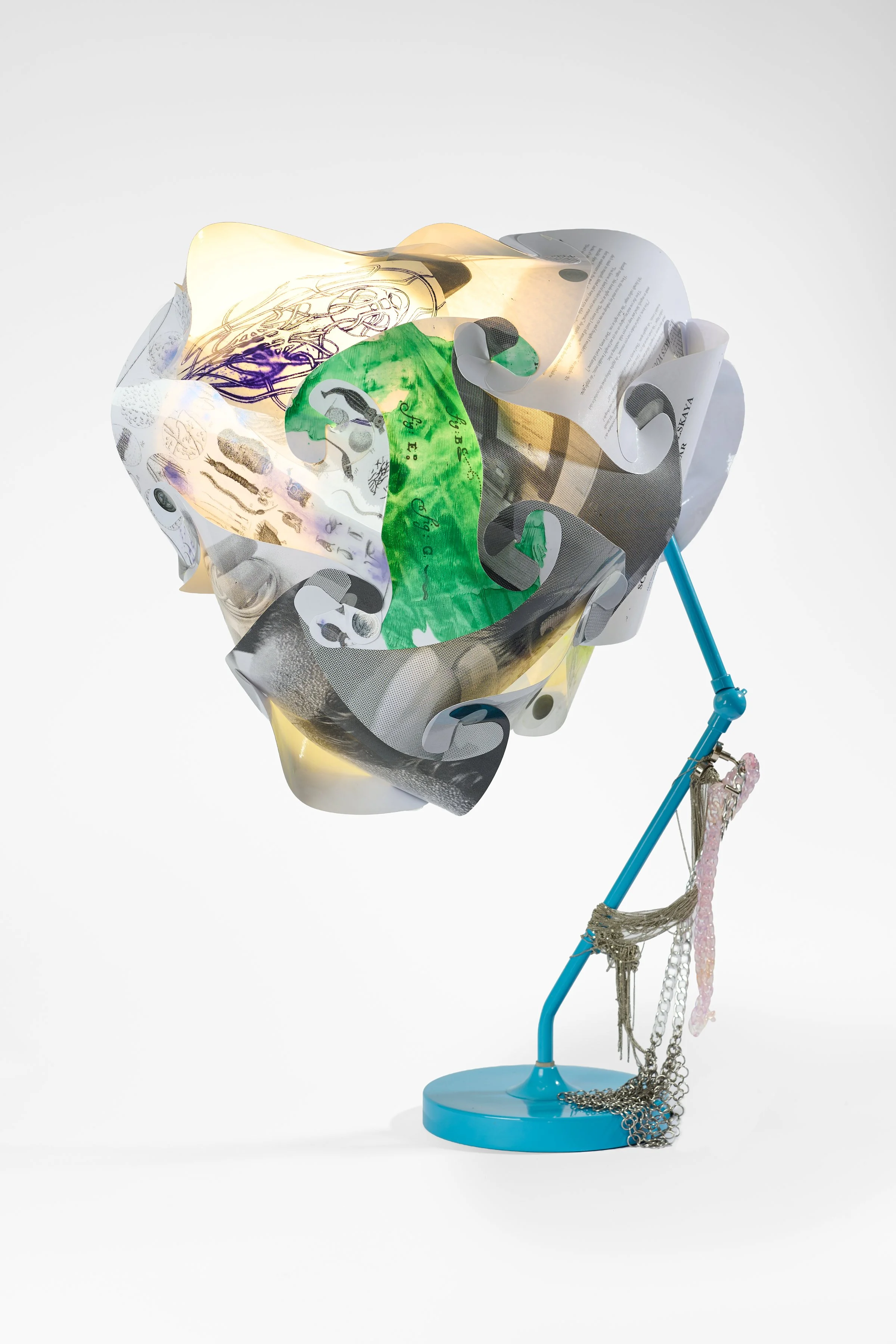
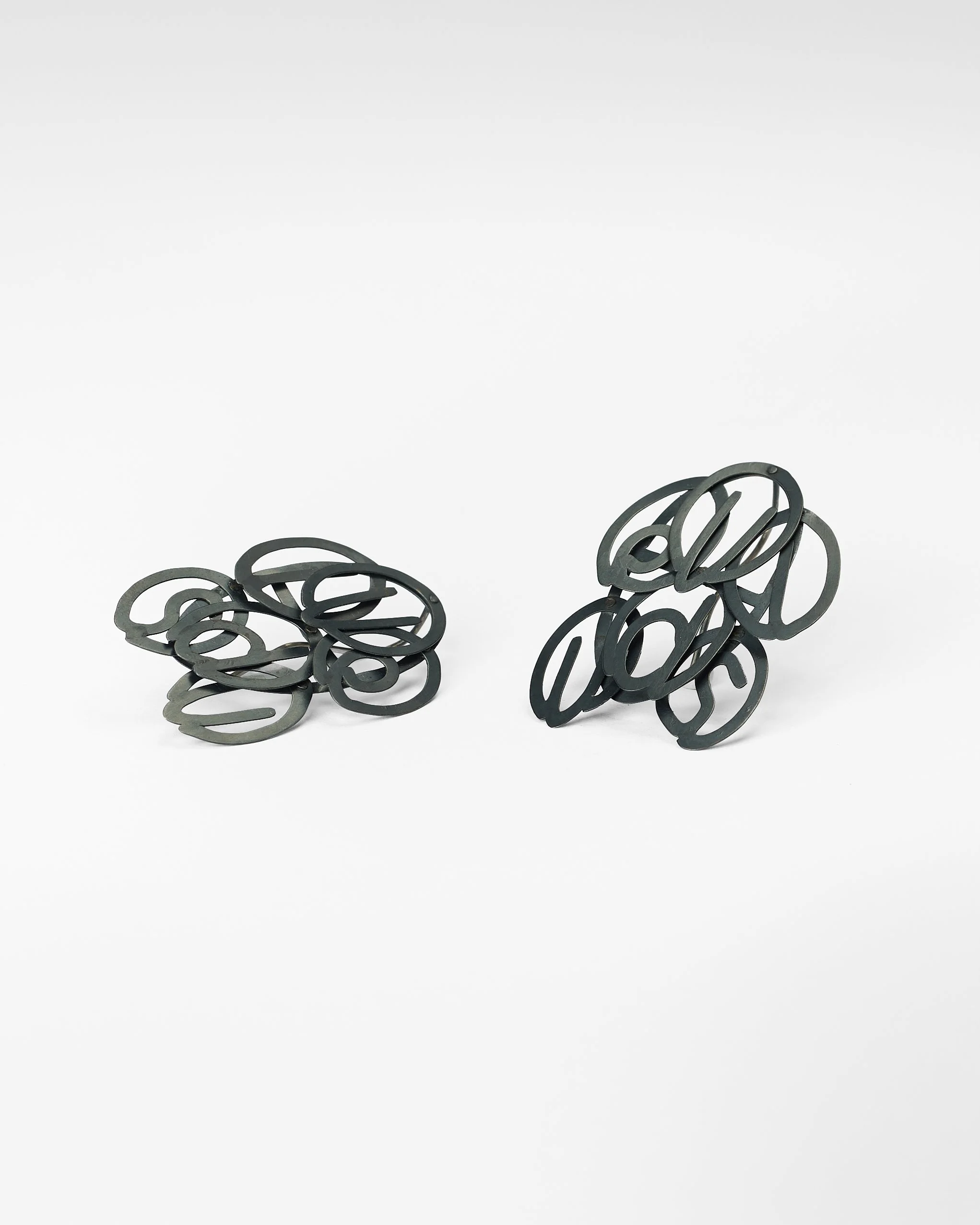
Artwork detail: Roseanne Bartley, ‘Common Raven’ earrings, oxidised 925, 2026; and Debris Facility Pty Ltd, ‘PlastiCorpus 2.6’, 2024–2026, found Light fixtures, replica ‘IQ lampshades’ (processed digital images, laminated printed paper, tattoo transfer paper c/o Dreambod Remit, text via Holly Childs) laminated plastic, PVA glue, acrylic, makeup, holographic authenticity stickers), magnets, jewellery, 66x46x32cm.
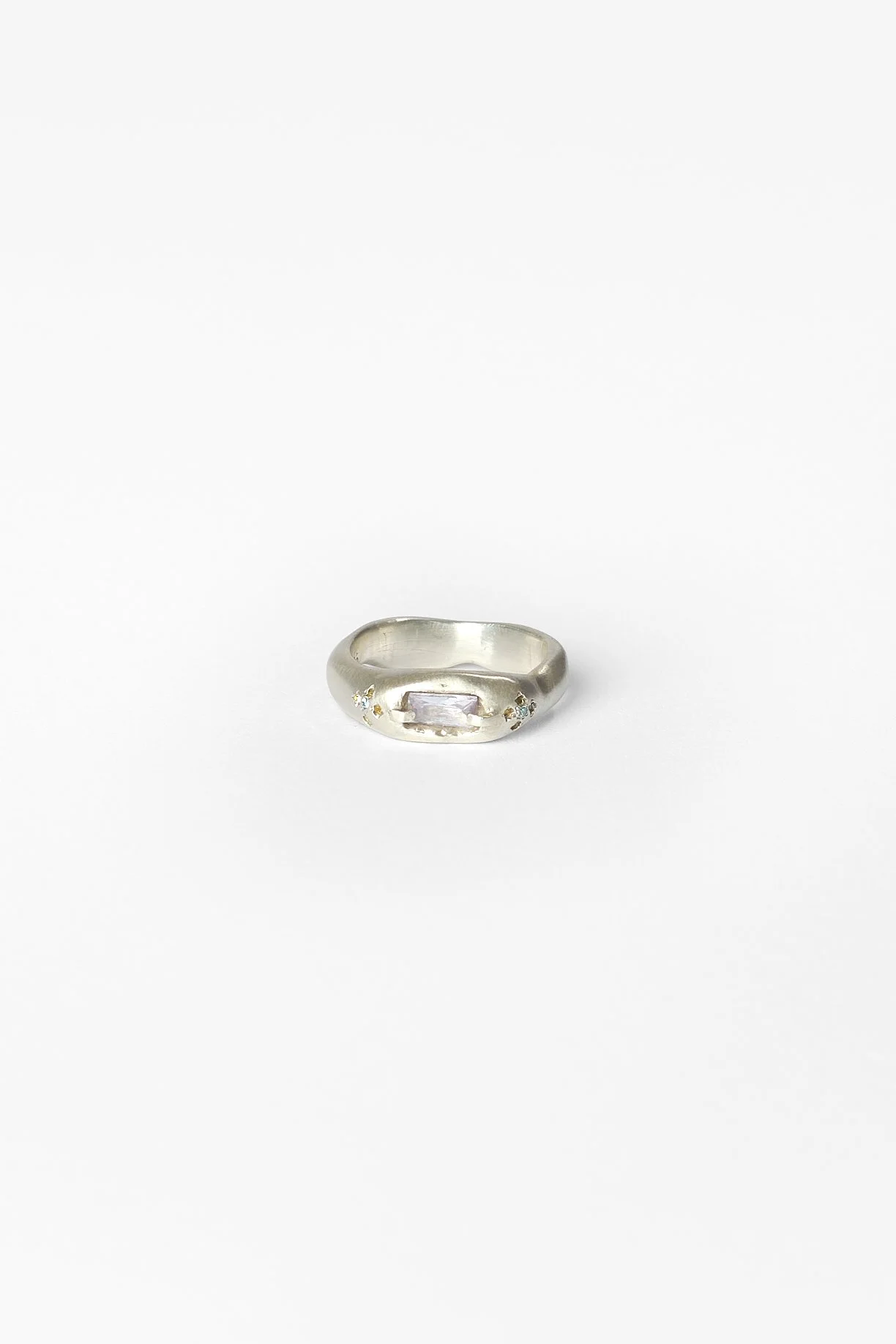
1. Audrey Tan, ‘silken tofu’, 2025 recycled sterling silver, cubic zirconia, moissanite, approx. size K ½. Price: $450
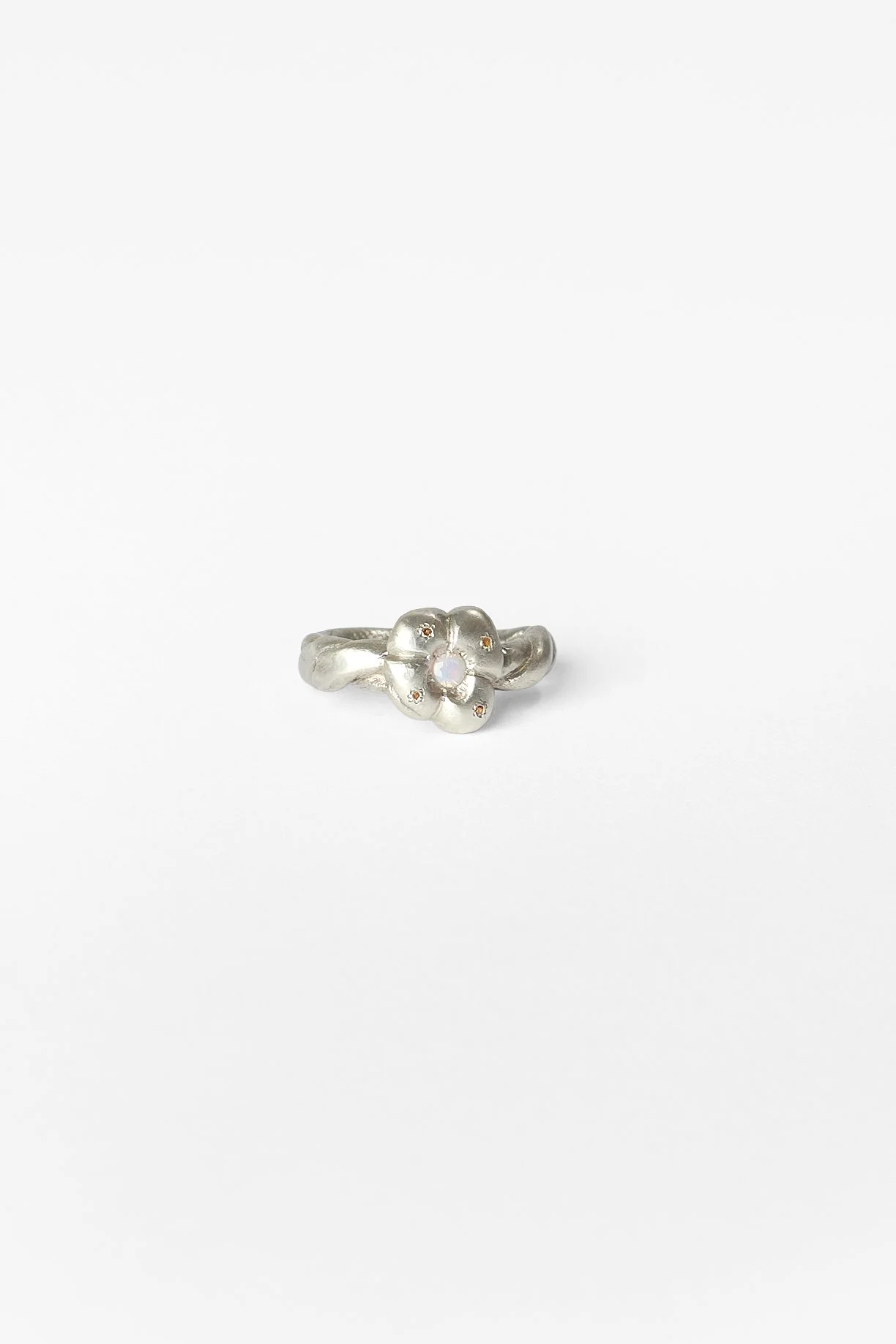
2. Audrey Tan, ‘royal clover’, 2026 recycled sterling silver, lab grown corundum, glass, approx. size L. Price: $450
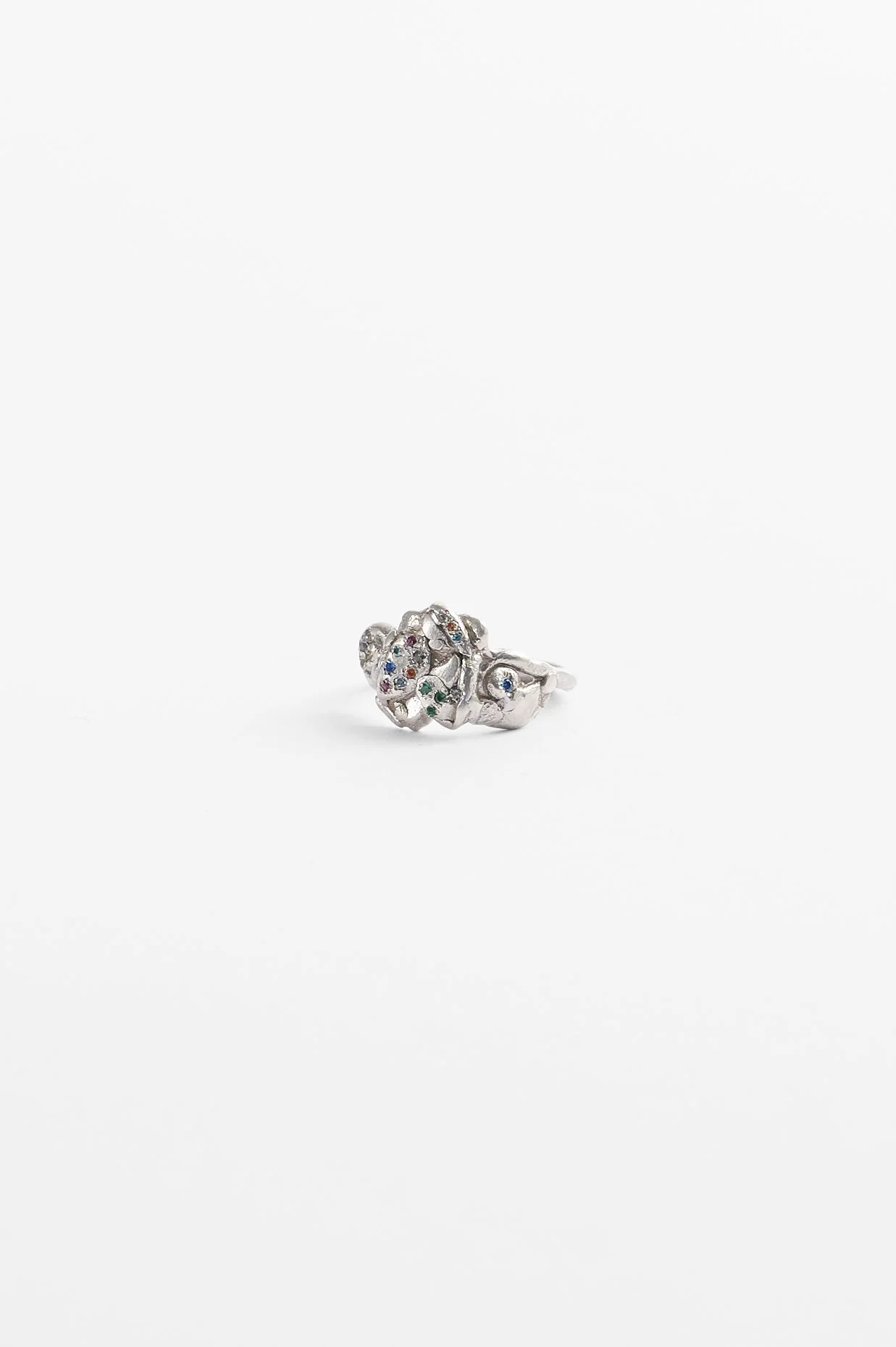
3. Audrey Tan, ‘Crushed sandcastles’, 2025 sterling silver, lab grown spinel, ruby, moissanite, nano and sapphire, approx. size K. Price: $450
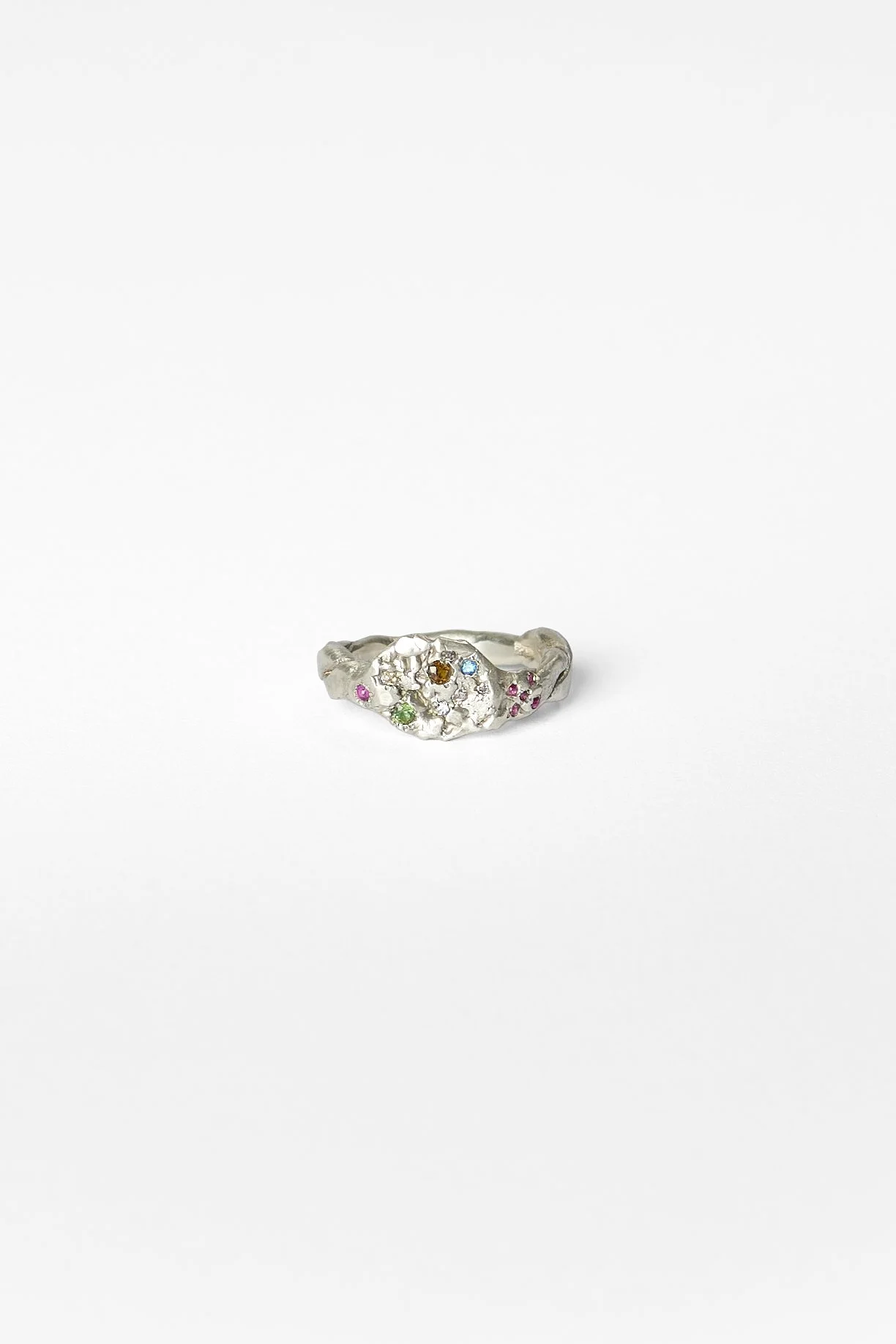
4. Audrey Tan, ‘bug croissant ii’, 2026 recycled sterling silver, lab grown gemstones (spinel, corundum, ruby), tourmaline, approx. size N ½. Price: $450
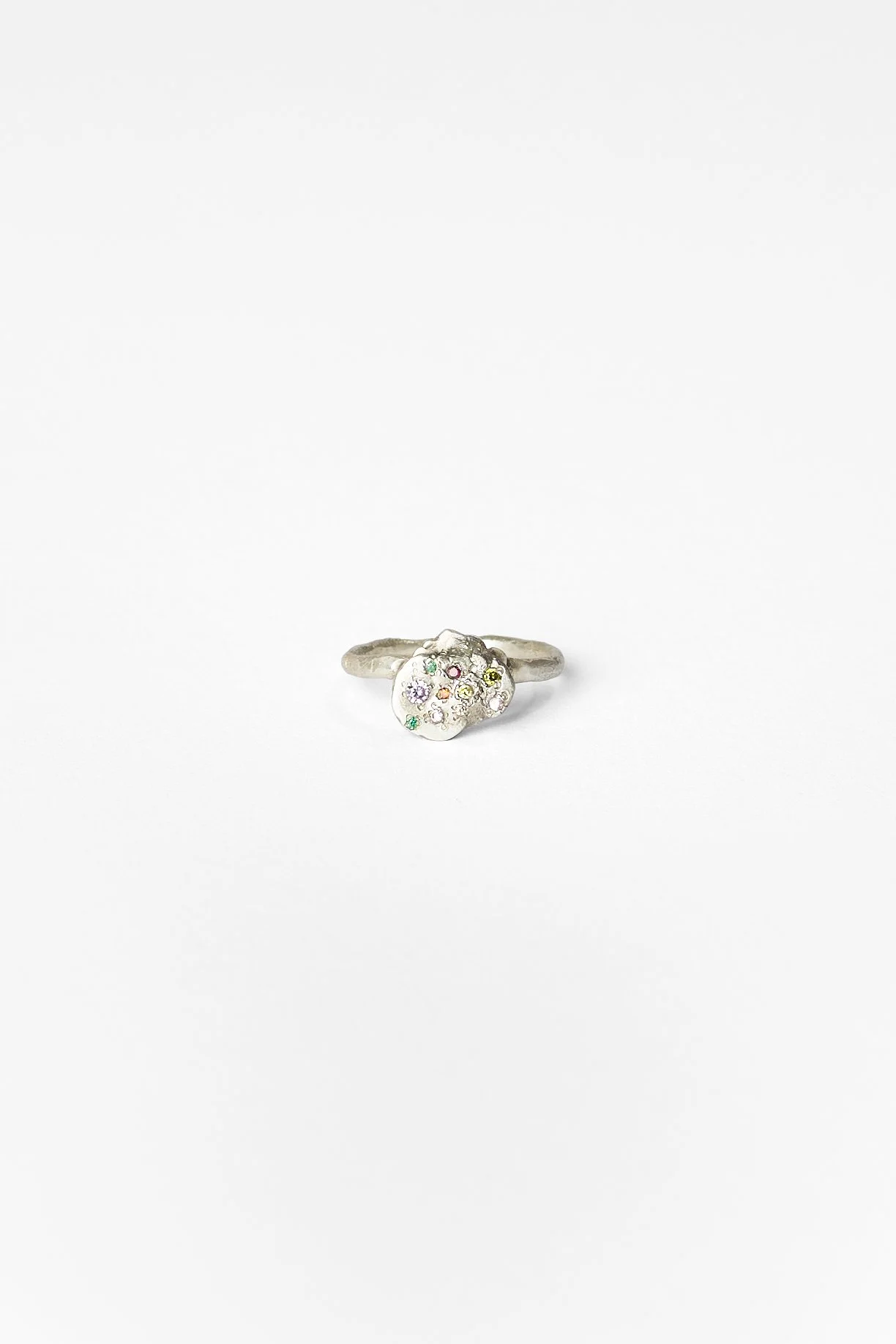
5. Audrey Tan, ‘squashed button’, 2025 recycled sterling silver, cubic zirconia, approx. size M. Price: $350
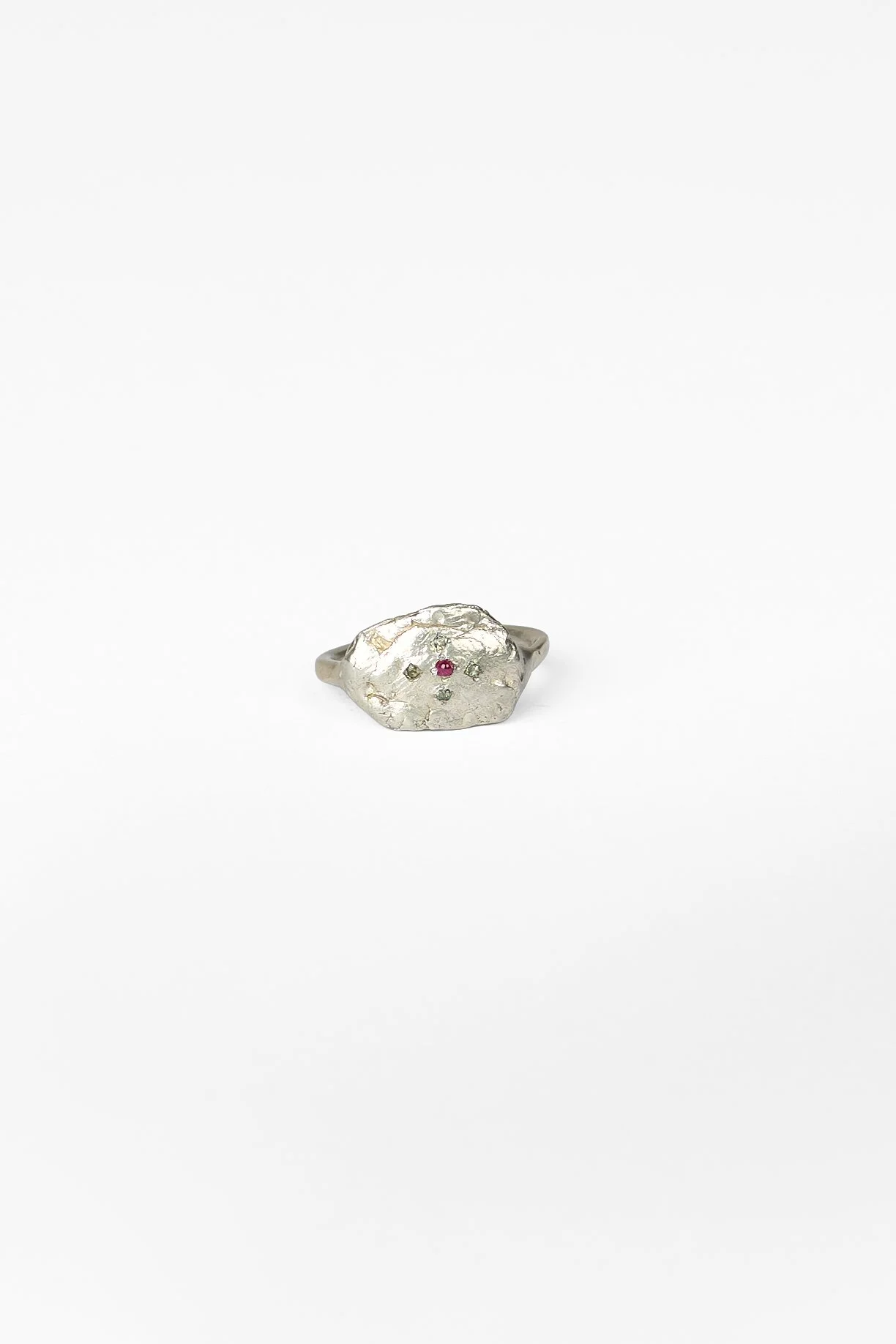
6. Audrey Tan, ‘Beetle shield’, 2025 sterling silver, lab grown spinel and ruby, approx. size M. Price: $450
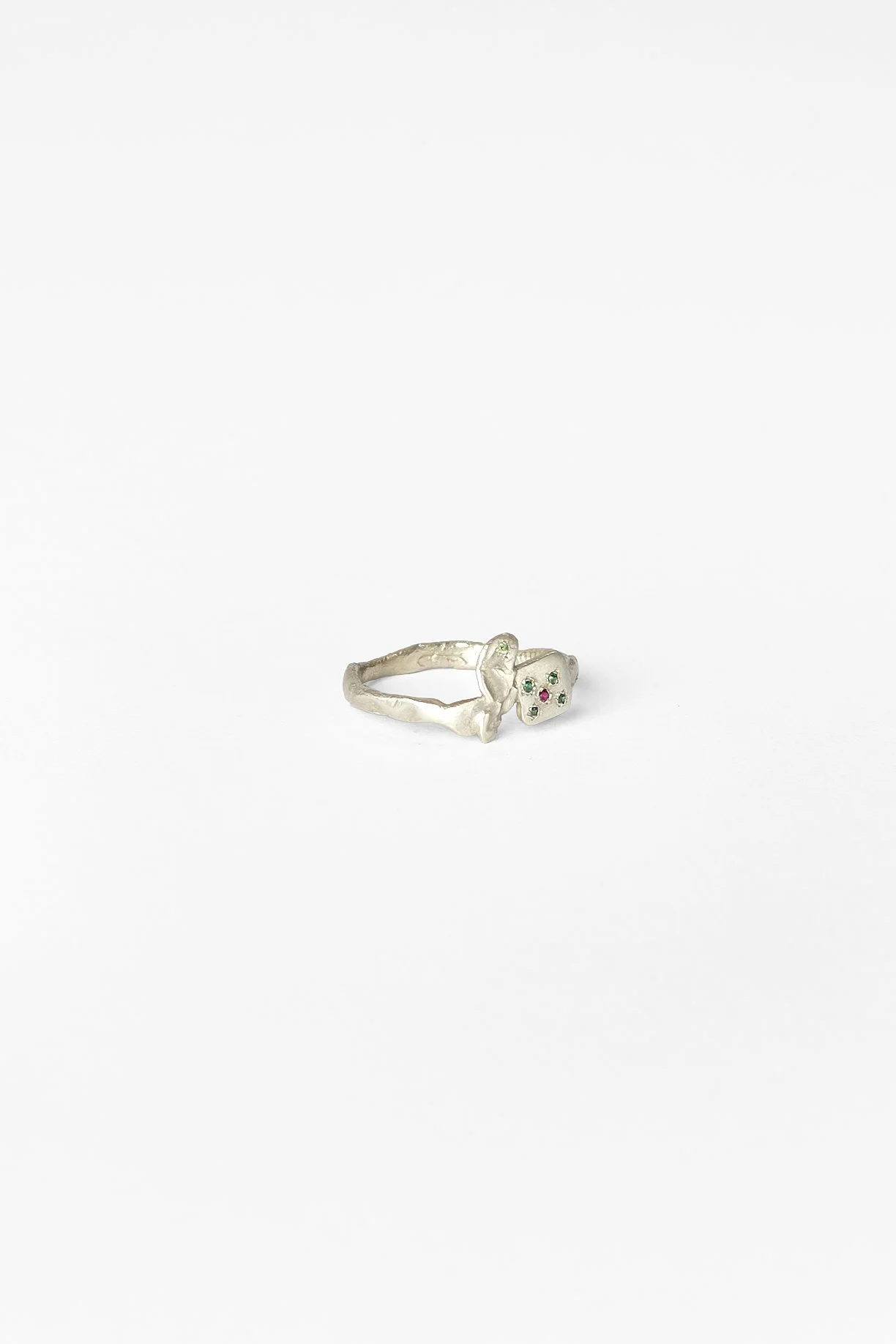
7. Audrey Tan, ‘mysterious guest’, 2026 Recycled sterling silver, lab grown gemstones (corundum, cubic zirconia), approx. size O. Price: $350
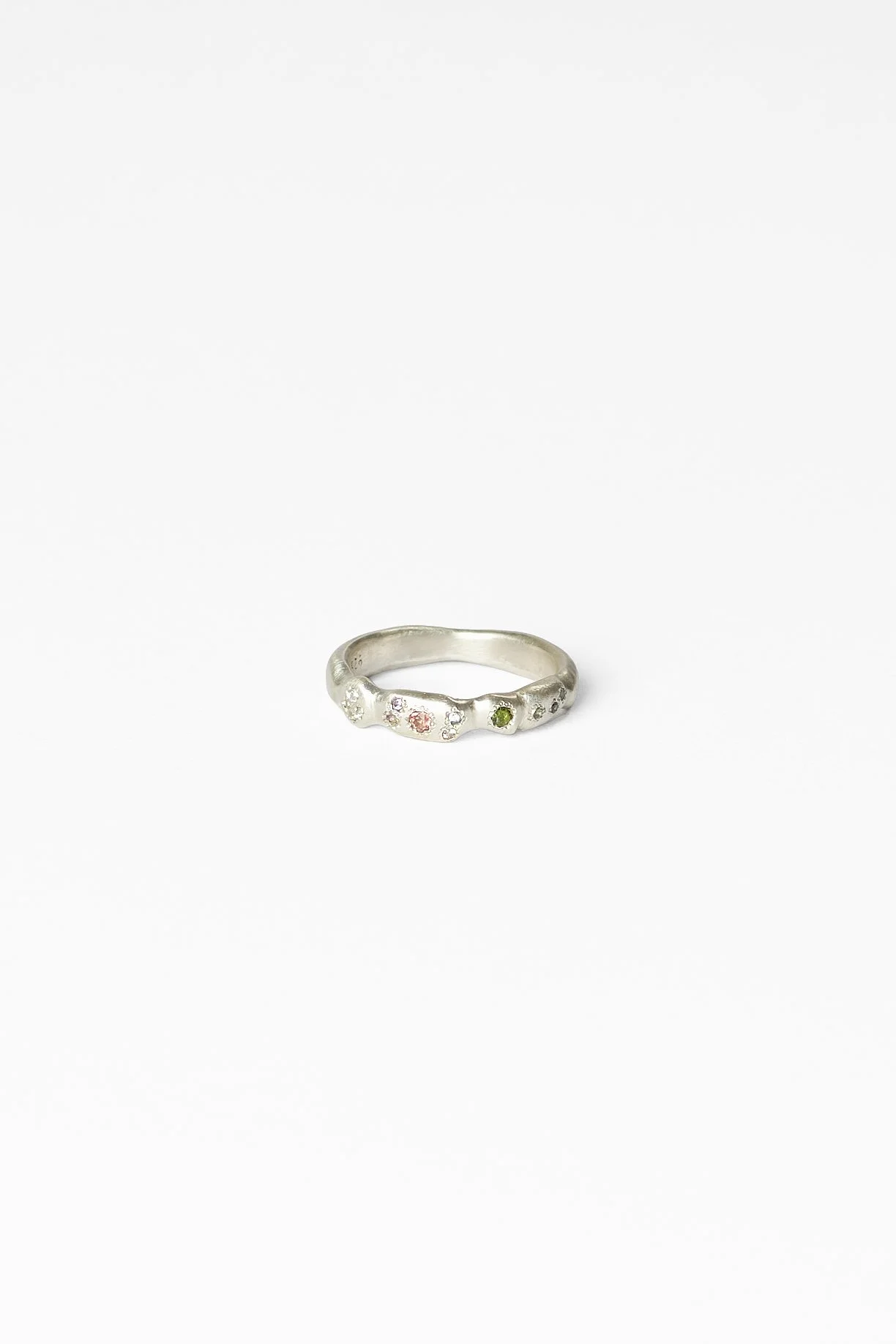
8. Audrey Tan, ‘crumbling footpath’, 2026 recycled sterling silver, lab grown gemstones (spinel, corundum, moissanite), tourmaline, approx. size O. Price: $450
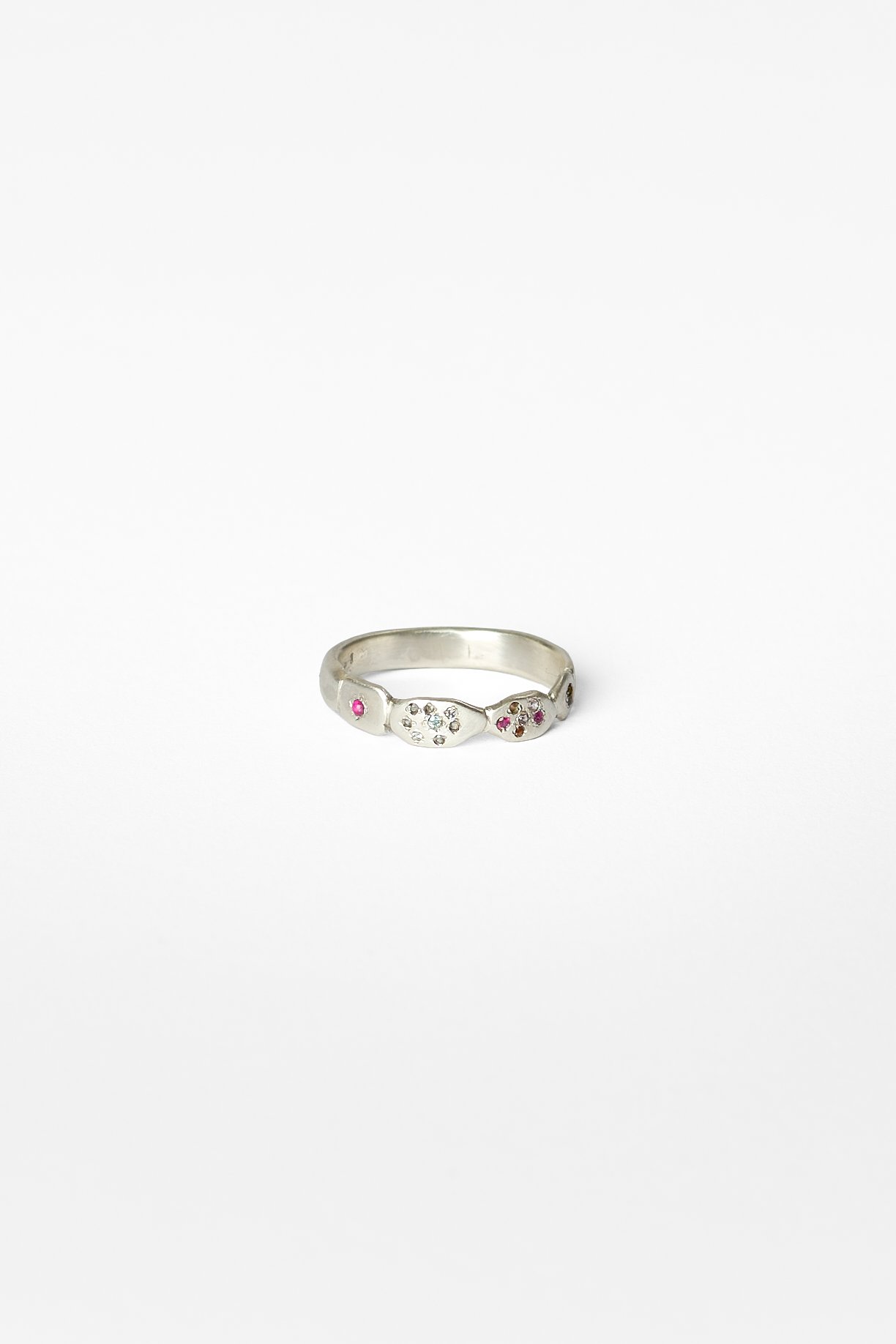
9. Audrey Tan, ‘crumbling footpath ii’, 2026 recycled sterling silver, lab grown gemstones (spinel, ruby, moissanite, corundum), tourmaline, approx. size S1/2. Price: $450
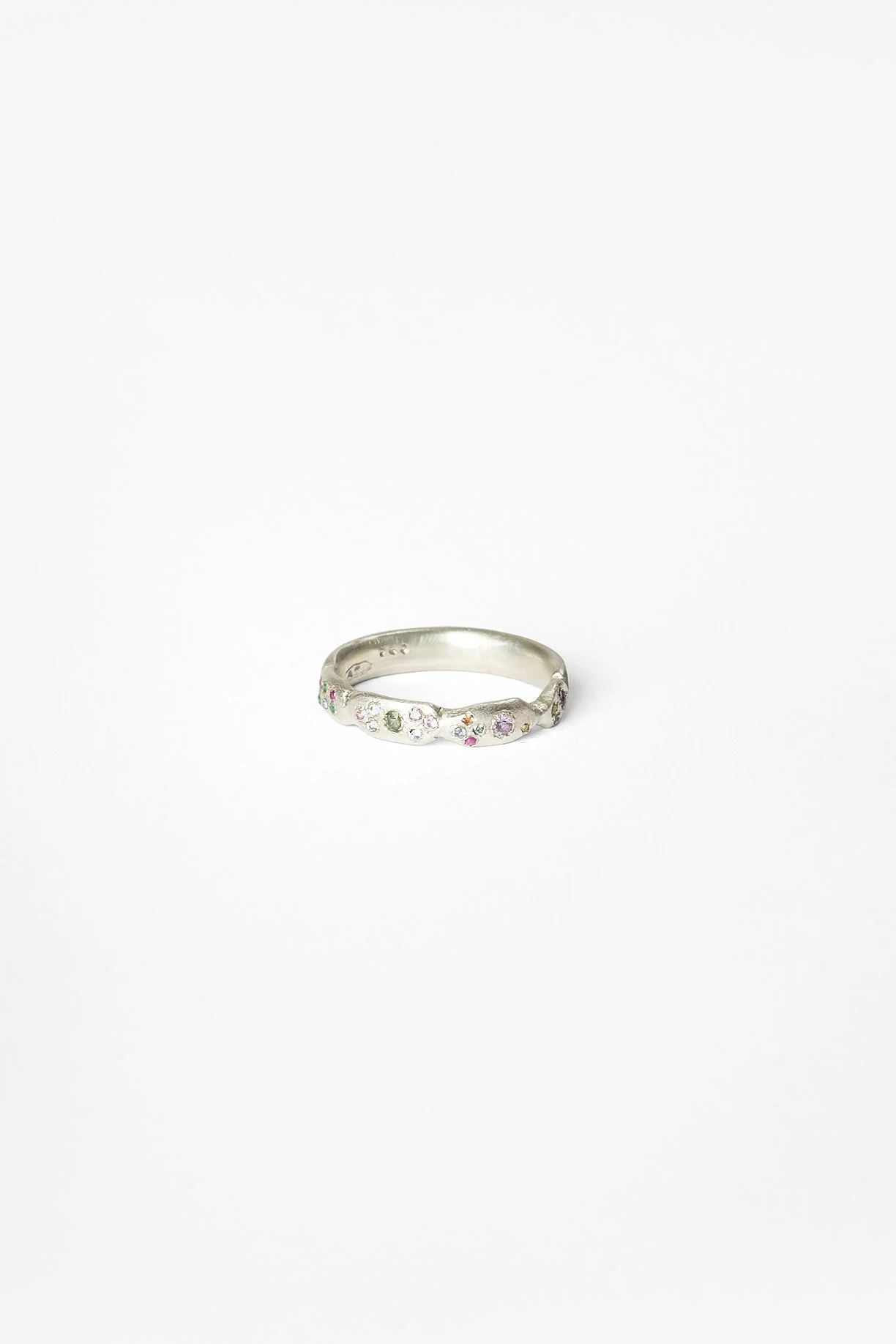
10. Audrey Tan, ‘crumbling footpath iii’, 2026 recycled sterling silver, lab grown gemstones (spinel, corundum, ruby, moissanite), tourmaline, approx. size P. Price: $450
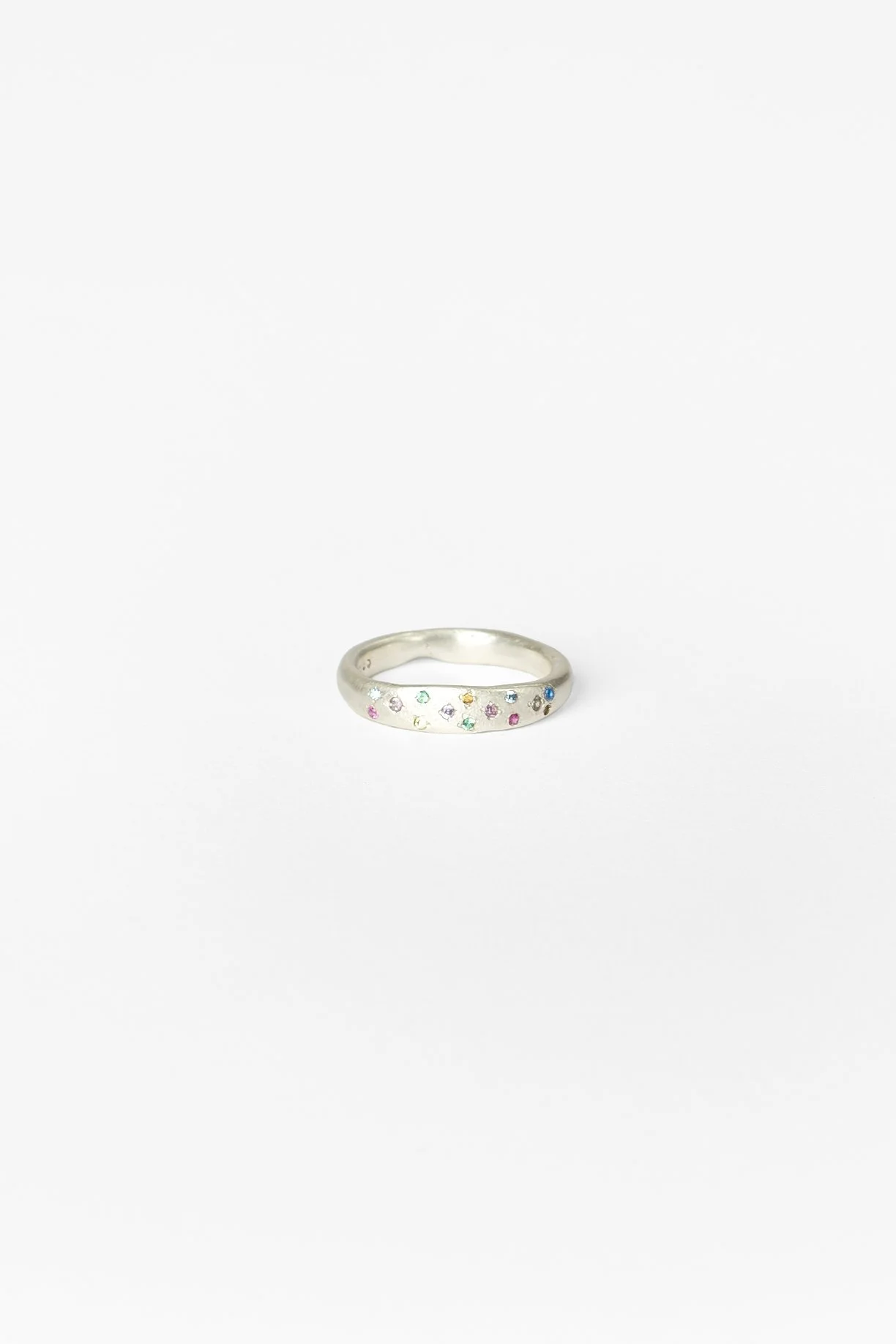
11. Audrey Tan, ‘casual clown’, 2026 recycled sterling silver, lab grown gemstones (spinel, corundum, moissanite, cubic zirconia), approx. size L. Price: $450
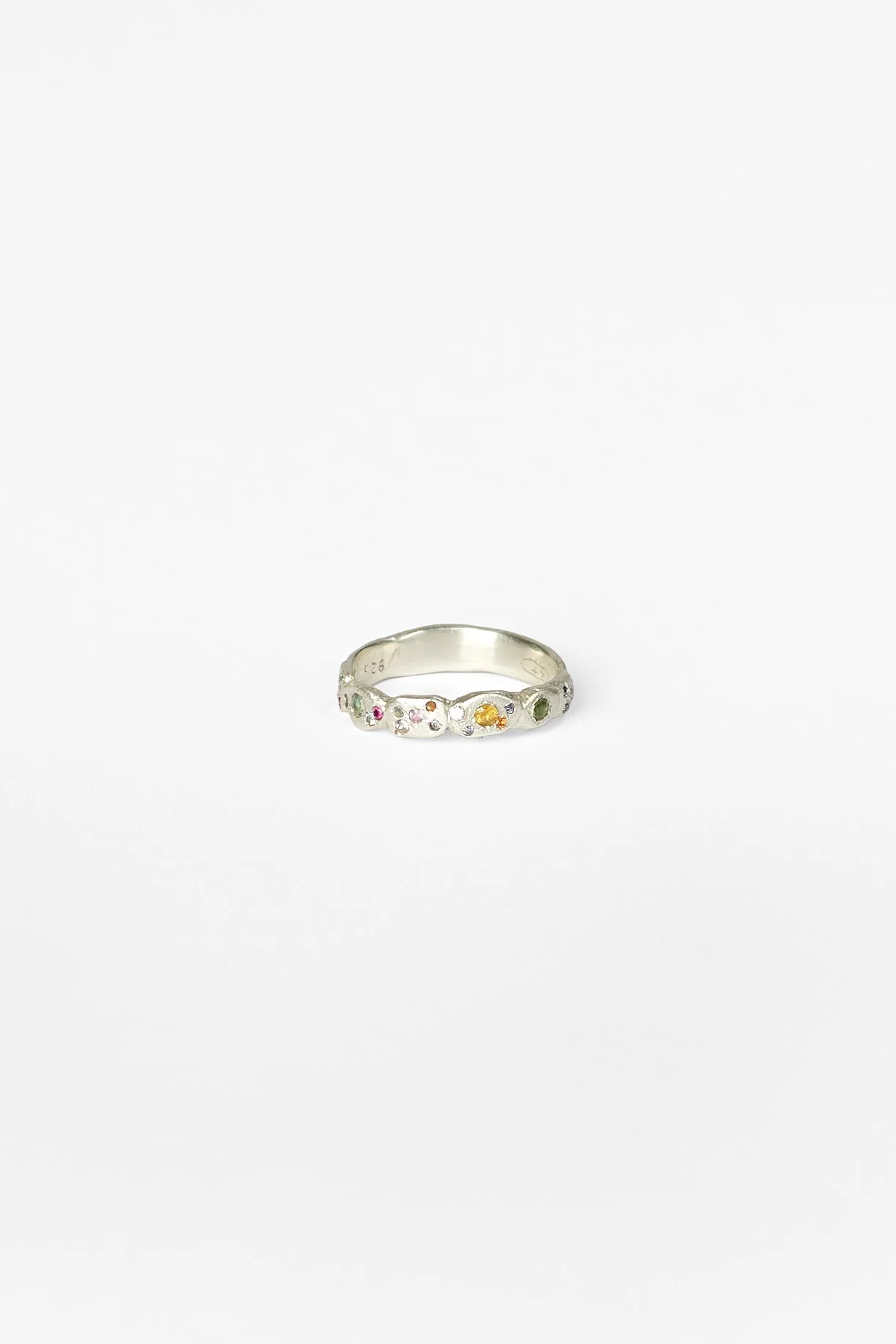
12. Audrey Tan, ‘crumbling footpath iv’, 2026 recycled sterling silver, lab grown gemstones (spinel, corundum, cubic zirconia, moissanite), tourmaline, approx. size N. Price: $450
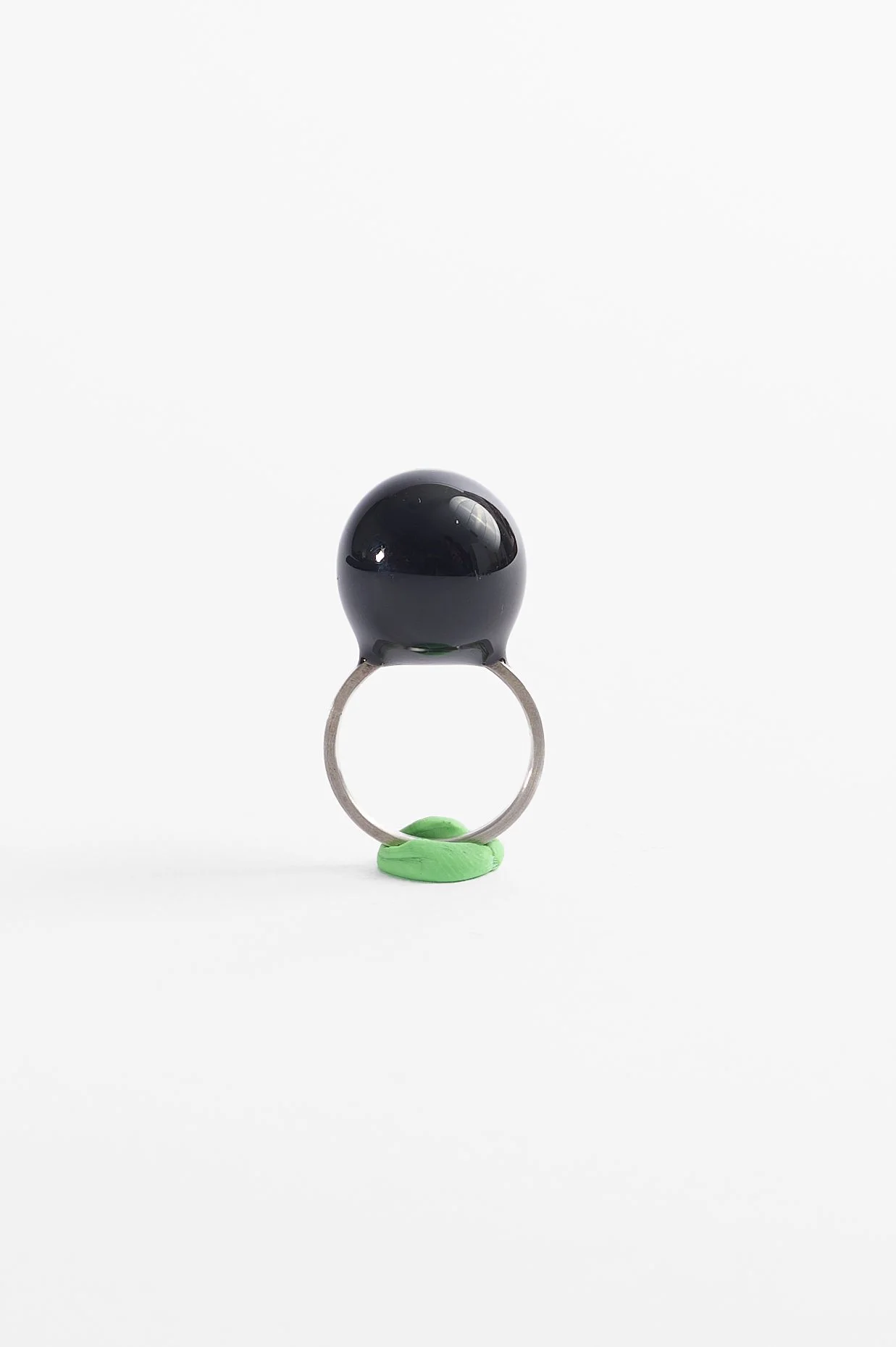
13. Rosy Shanks, ‘Oolite’ rings, (Black), 2019 sterling silver and resin, two available approx. sizes. H and L. (Please note due to the unique shape of these rings the gallery recommends trying these works on for correct fit). Price: $400
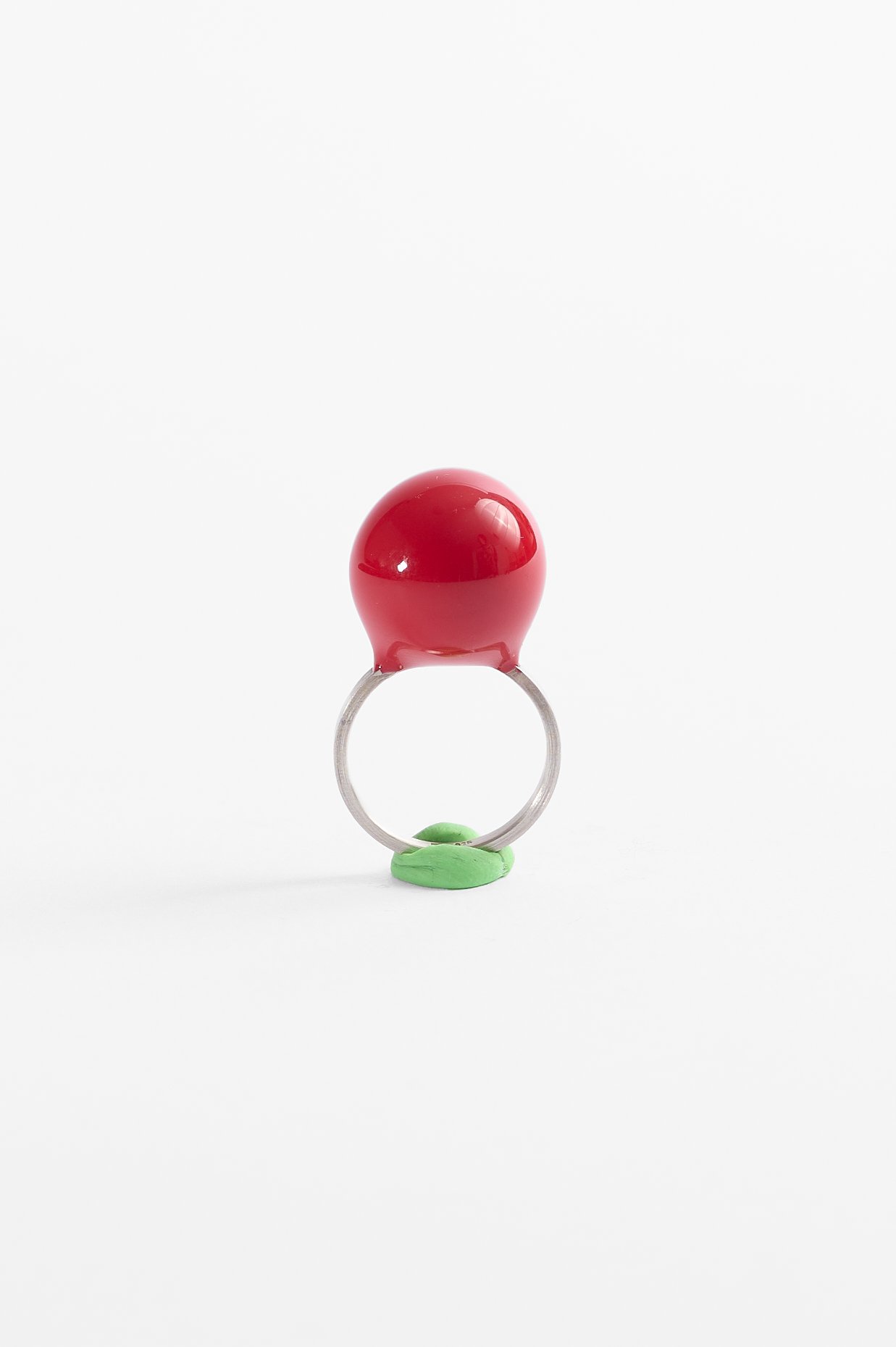
14. Rosy Shanks, ‘Oolite’ rings, (Red), 2019 sterling silver and resin, approx. size N. (Please note due to the unique shape of these rings the gallery recommends trying these works on for correct fit). Price: $400
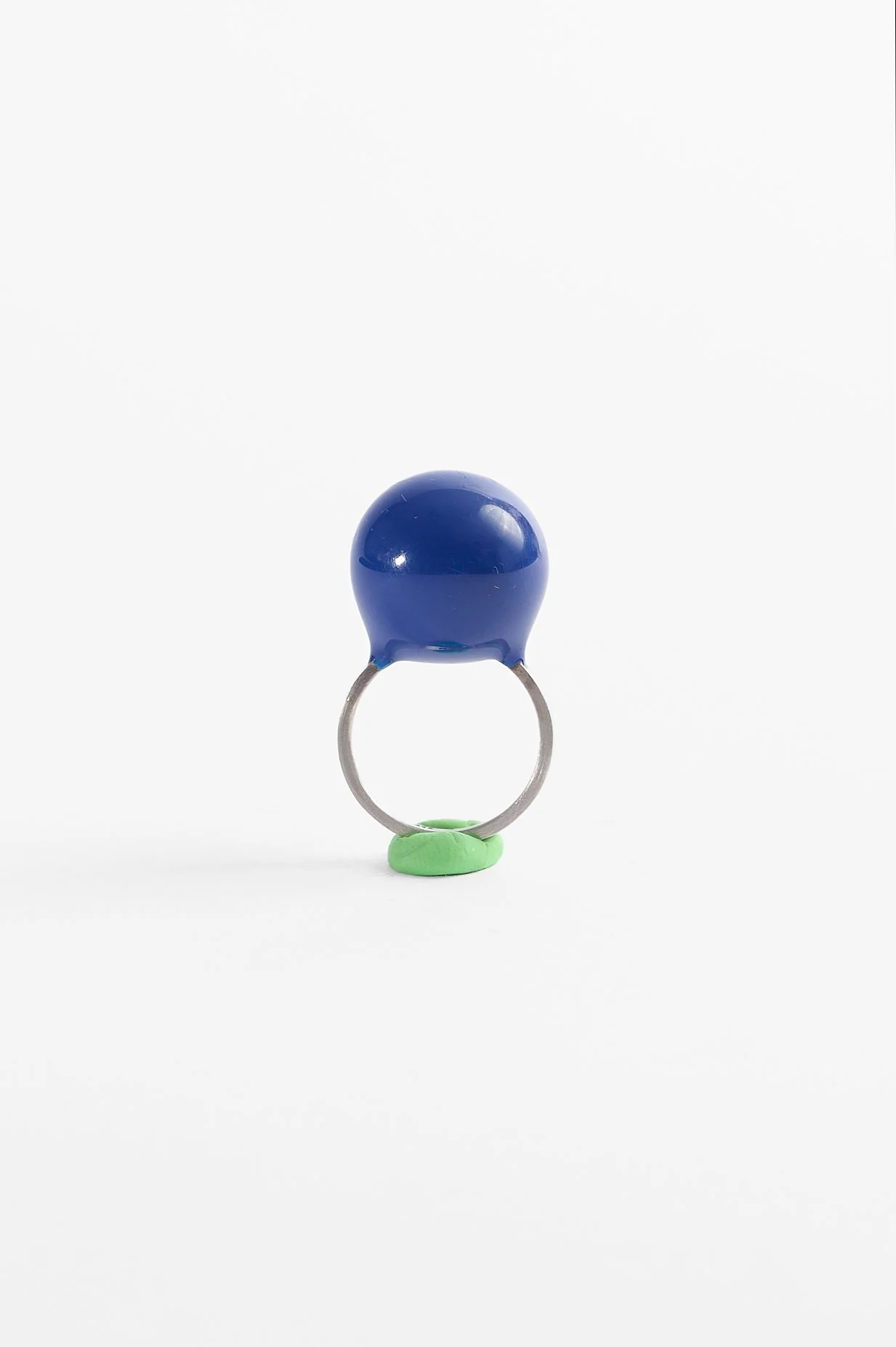
15. Rosy Shanks, ‘Oolite’ rings, (Blue), 2019 sterling silver and resin, approx. size J. (Please note due to the unique shape of these rings the gallery recommends trying these works on for correct fit). Price: $400
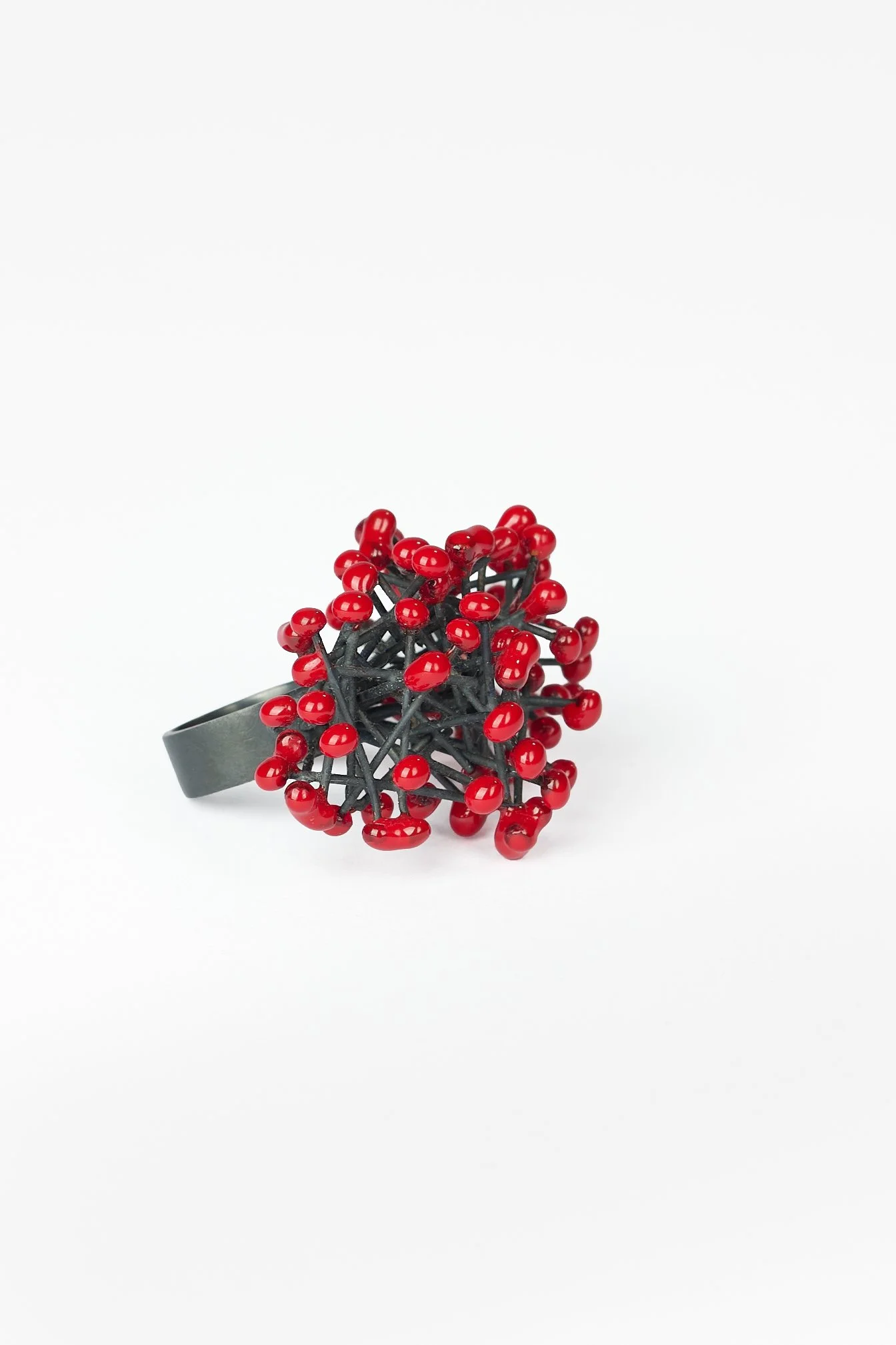
16. Rosy Shanks, ‘Untitled’ ring, 2009 Oxidised sterling silver, resin. 4x5.5x3cm, approx. size J3/4. Price: $800
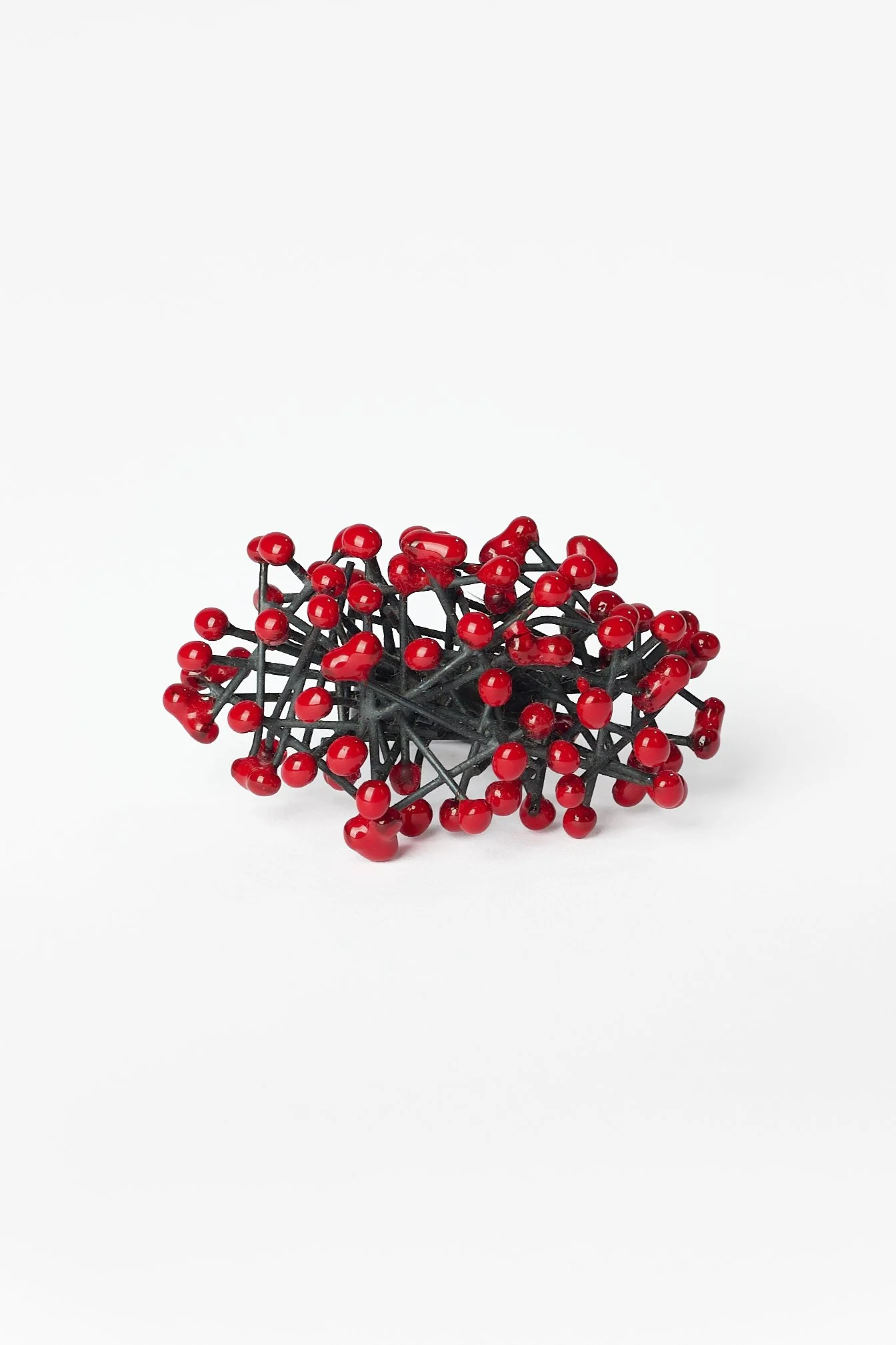
16. Rosy Shanks, ‘Untitled’ ring, 2009 Oxidised sterling silver, resin. 4x5.5x3cm, approx. size J3/4. Price: $800
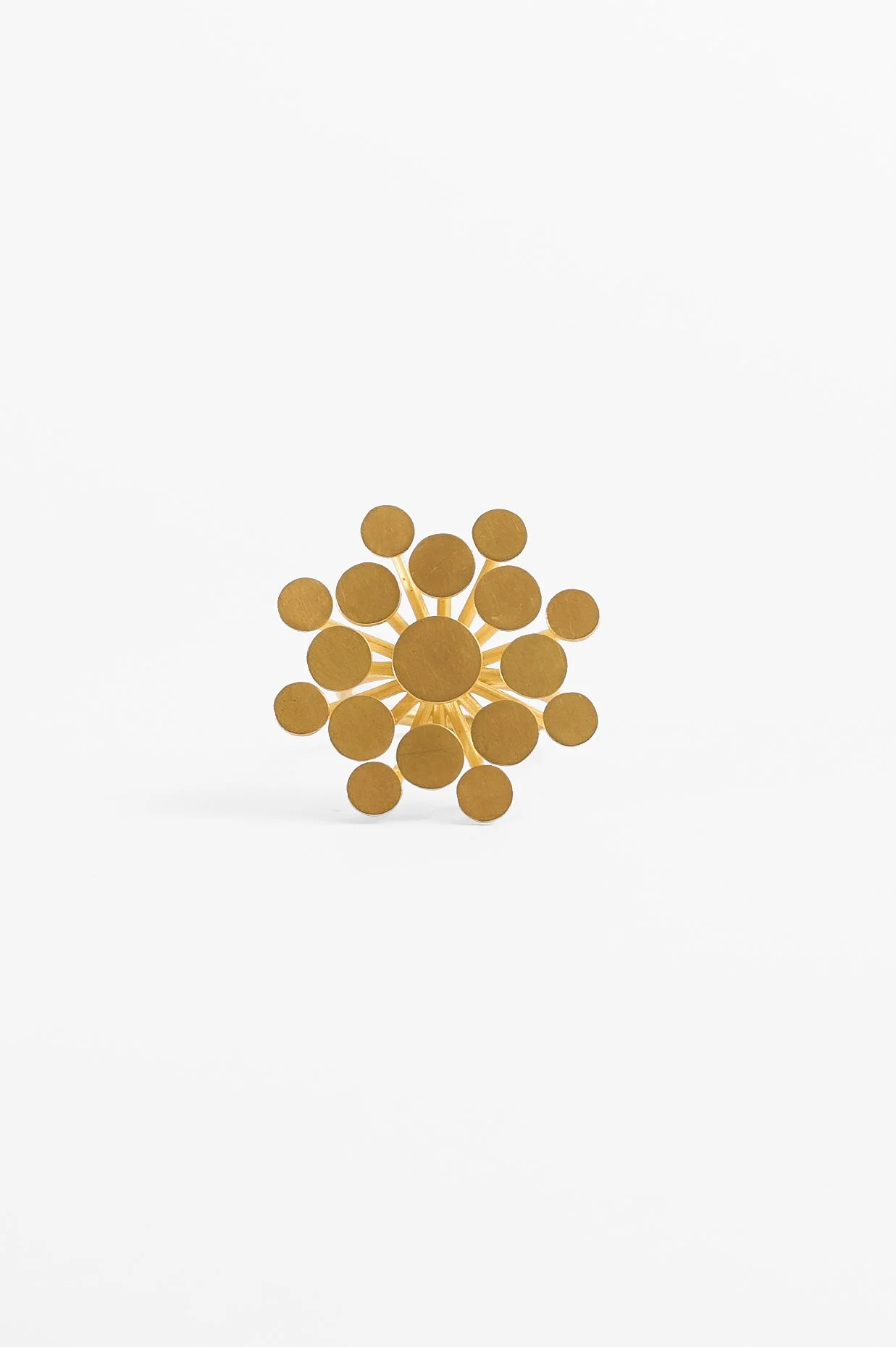
17. Mascha Moje, ‘Untitled’, (gold flower) 2025 20ct gold ring, 3x3x3cm, size approx. Q1/2, 2025. Price: $5000 (Price subject to change)
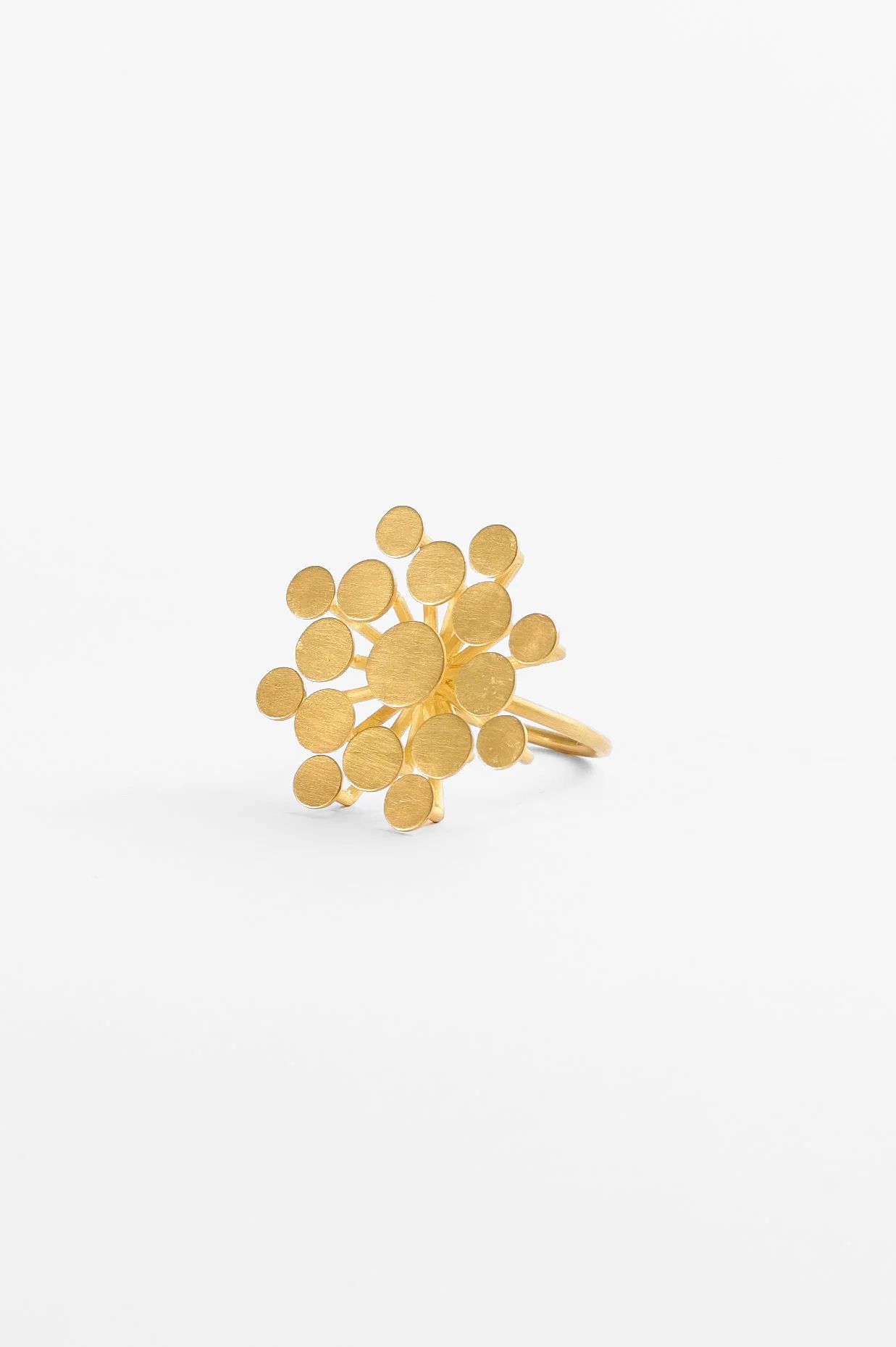
17. Mascha Moje, ‘Untitled’, (gold flower) 2025 20ct gold ring, 3x3x3cm, size approx. Q1/2, 2025. Price: $5000 (Price subject to change)
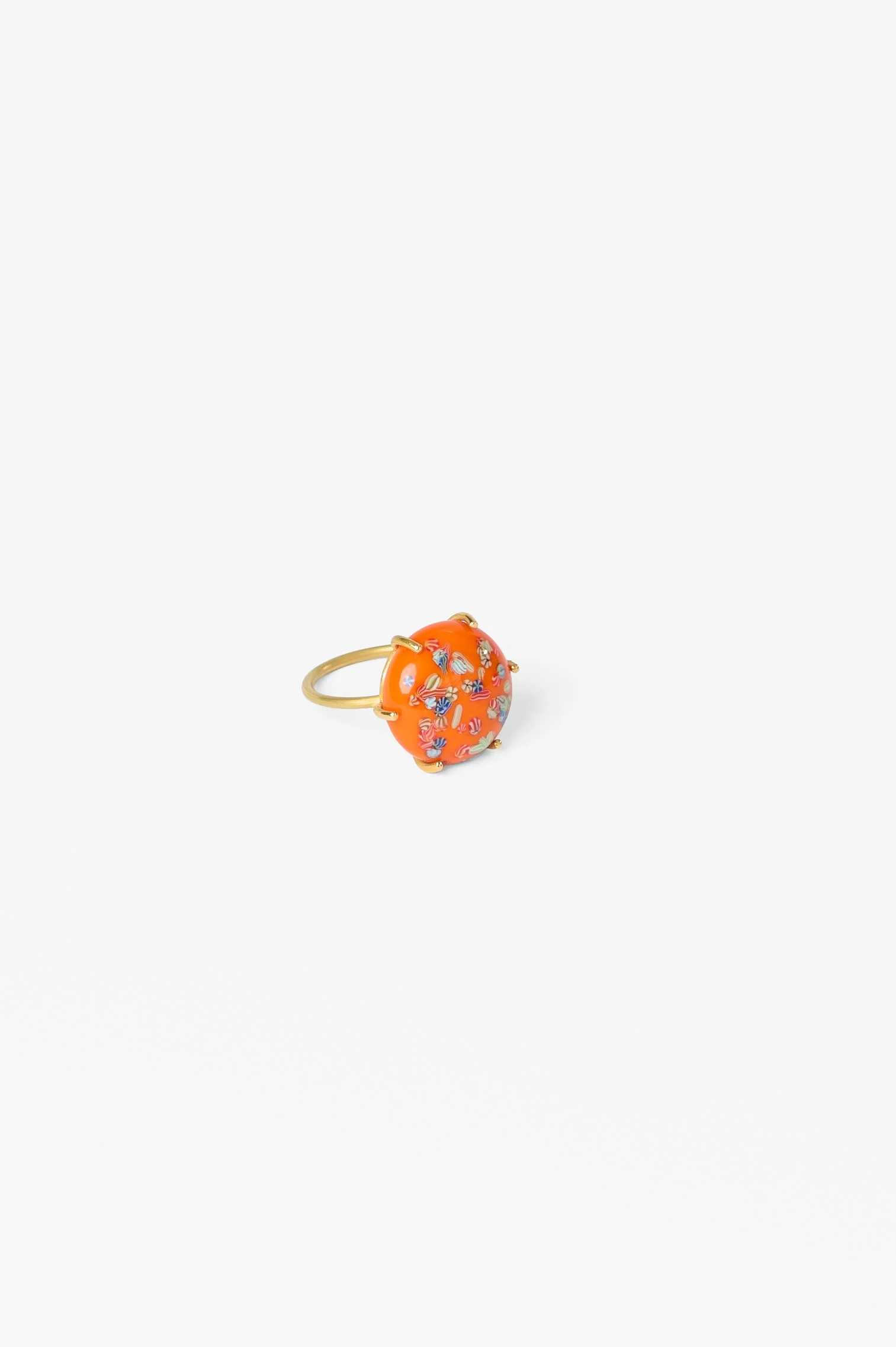
18. Mascha Moje, ‘Untitled’, 2025 20ct gold ring with glass orange millefiori, 3x2x2cm, approx. size Q. Price: $2000 (Price subject to change)
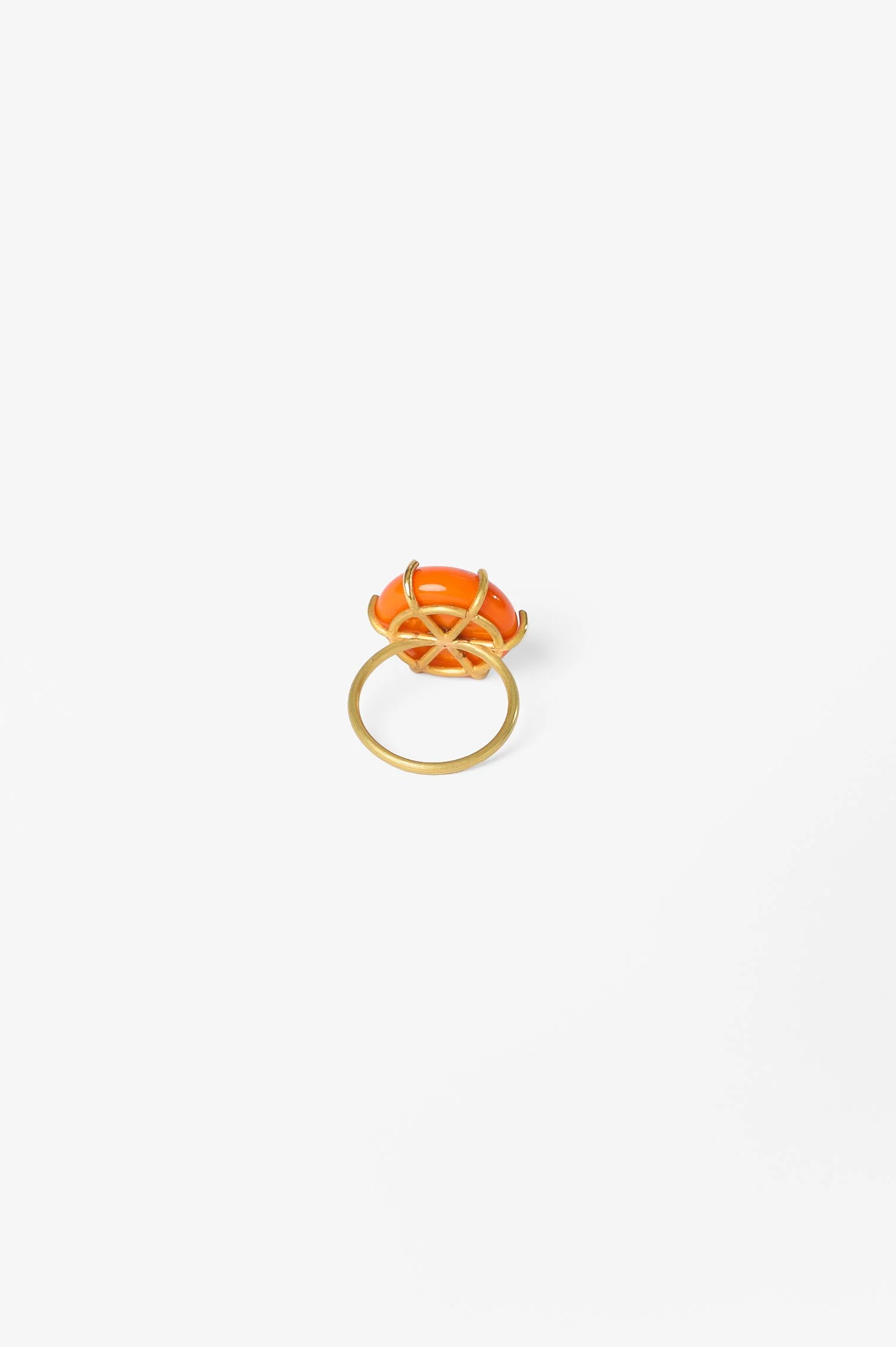
18. Mascha Moje, ‘Untitled’, 2025 20ct gold ring with glass orange millefiori, 3x2x2cm, approx. size Q. Price: $2000 (Price subject to change)
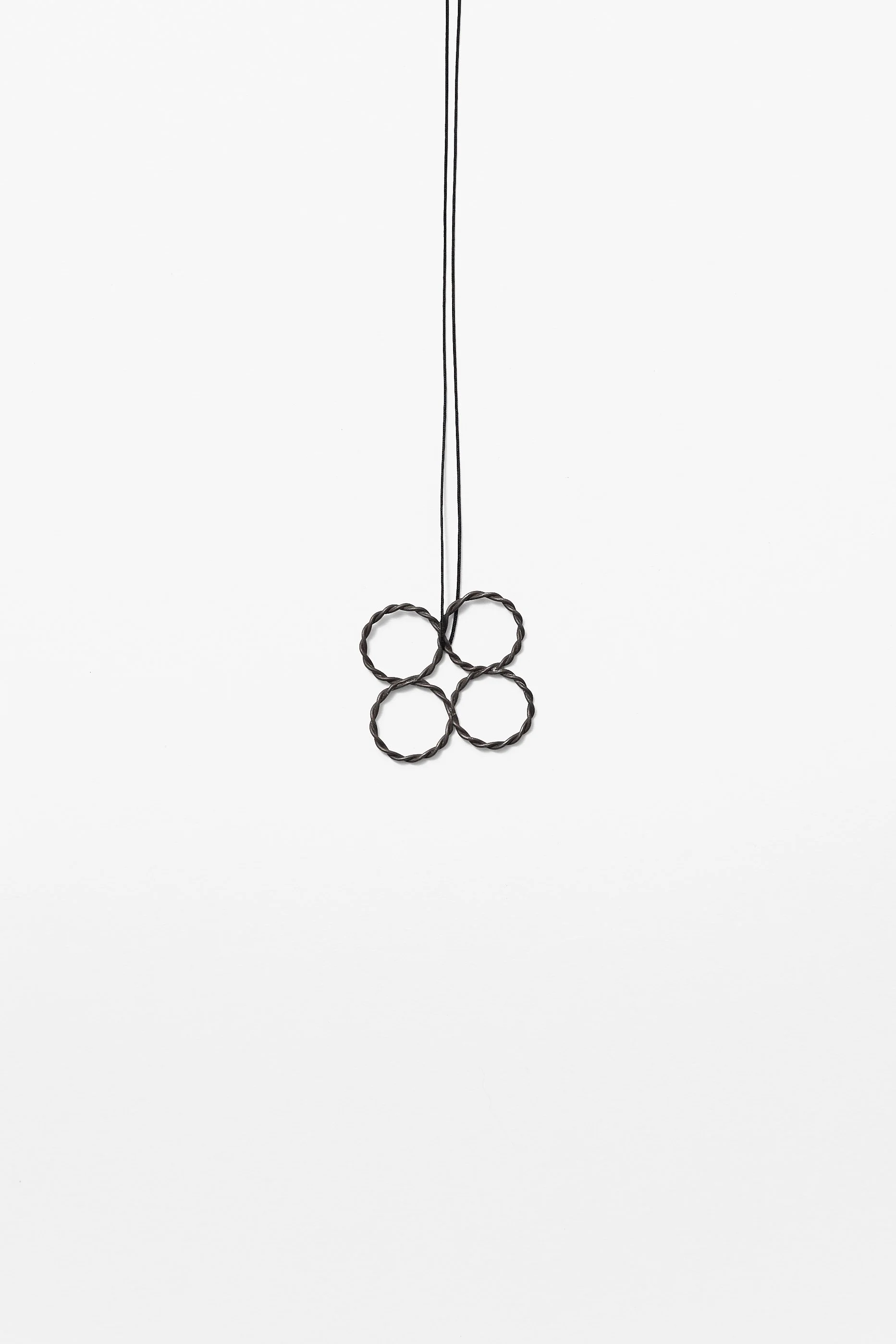
19. Mascha Moje, ‘Twisties’, (black large), 2023, monel, nylon thread, 3.2x3x.5cm, 40cm cord. Price: $440
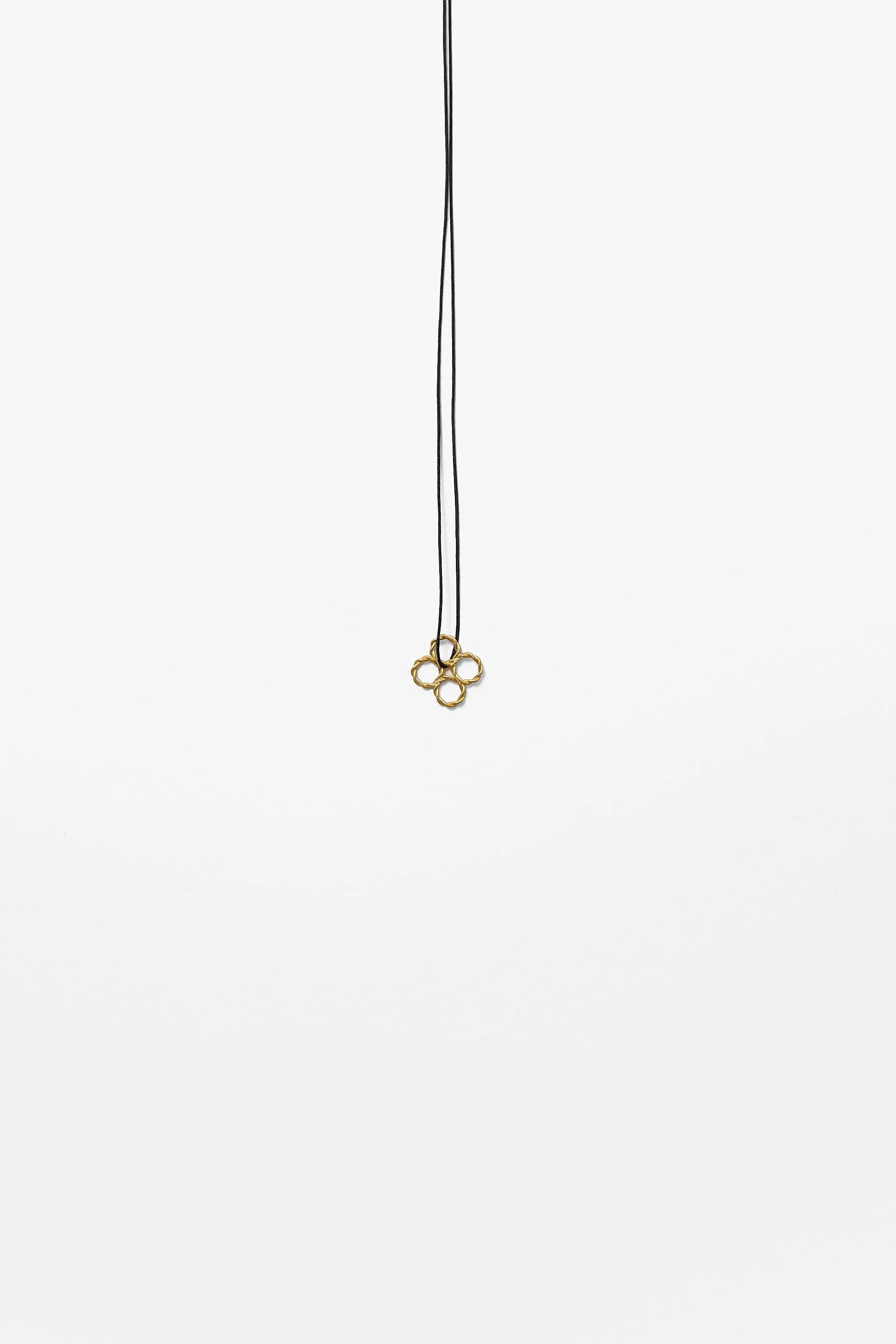
20. Mascha Moje, ‘Twisties’, (gold small), 2023, 20ct gold wire, 1.2x1.2x.1cm, 40cm cord. Price: $710 (Price subject to change)
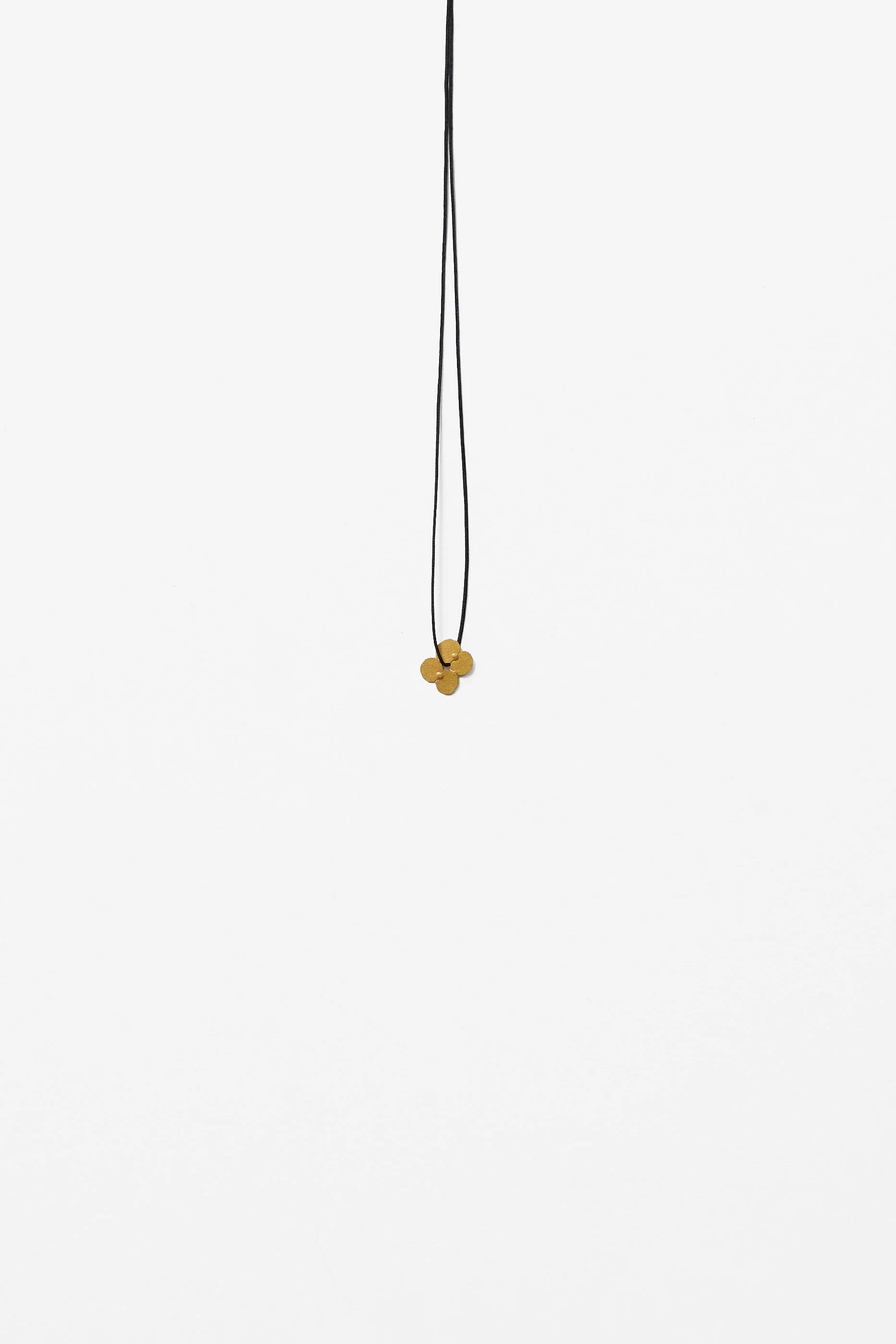
21. Mascha Moje, ‘Squishes’, (gold), 2023 Fine gold, 1×1×.2cm, 40cm cord. Price: $600 (Price subject to change)
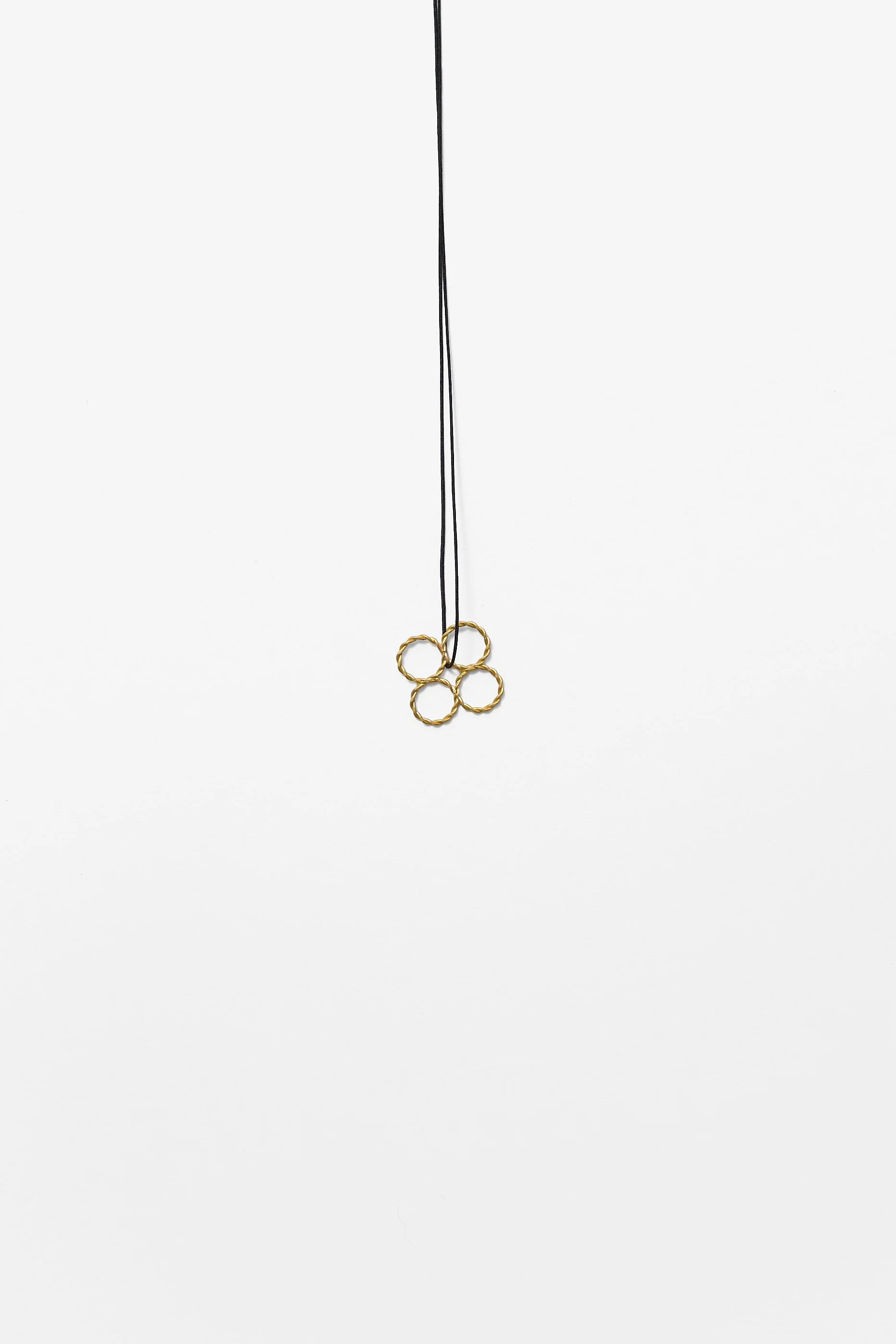
22. Mascha Moje, ‘Twisties’, (gold large), 2023 20ct gold wire, 1.9x1.8x.1cm, 40cm cord. Price: $845 (Price subject to change)
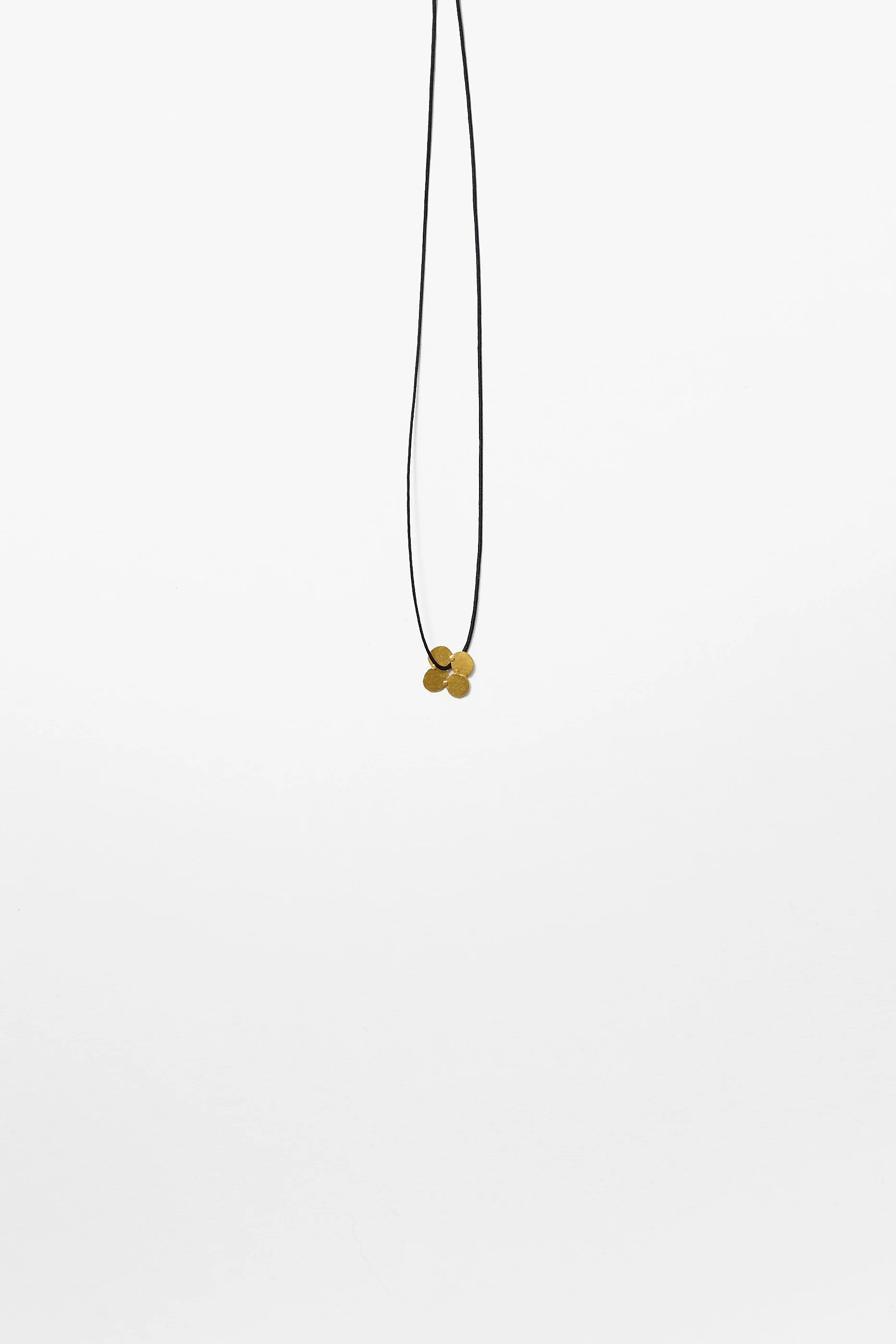
23. Mascha Moje, ‘Squishes’, (gold), 2023 Fine gold, 1×1×.2cm, 40cm cord. Price: $600 (Price subject to change)
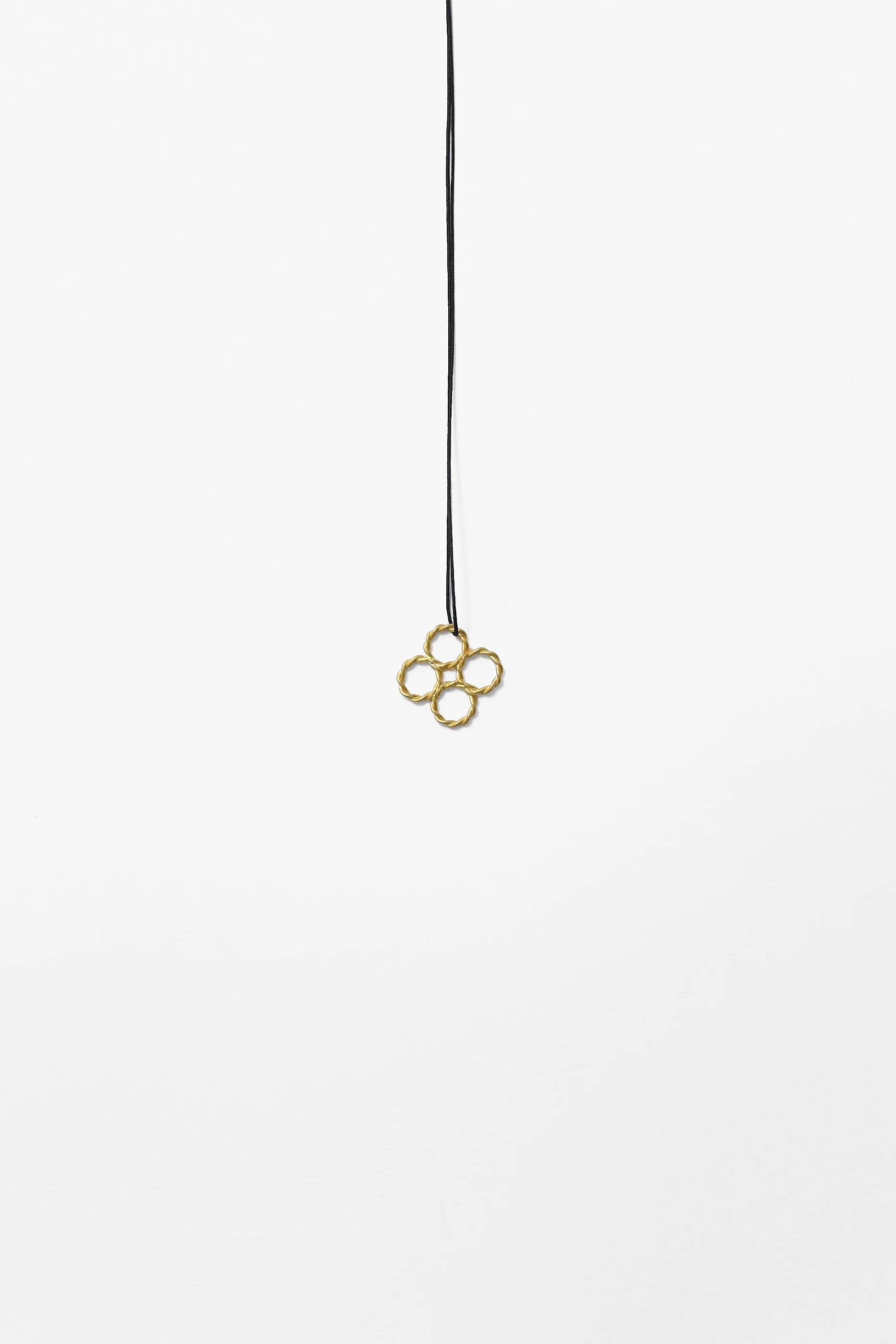
24. Mascha Moje, ‘Twisties’, (gold thick), 2023 20ct gold wire, 1.8x1.8x.1.1cm, 40cm cord. Price: $1000 (Price subject to change)
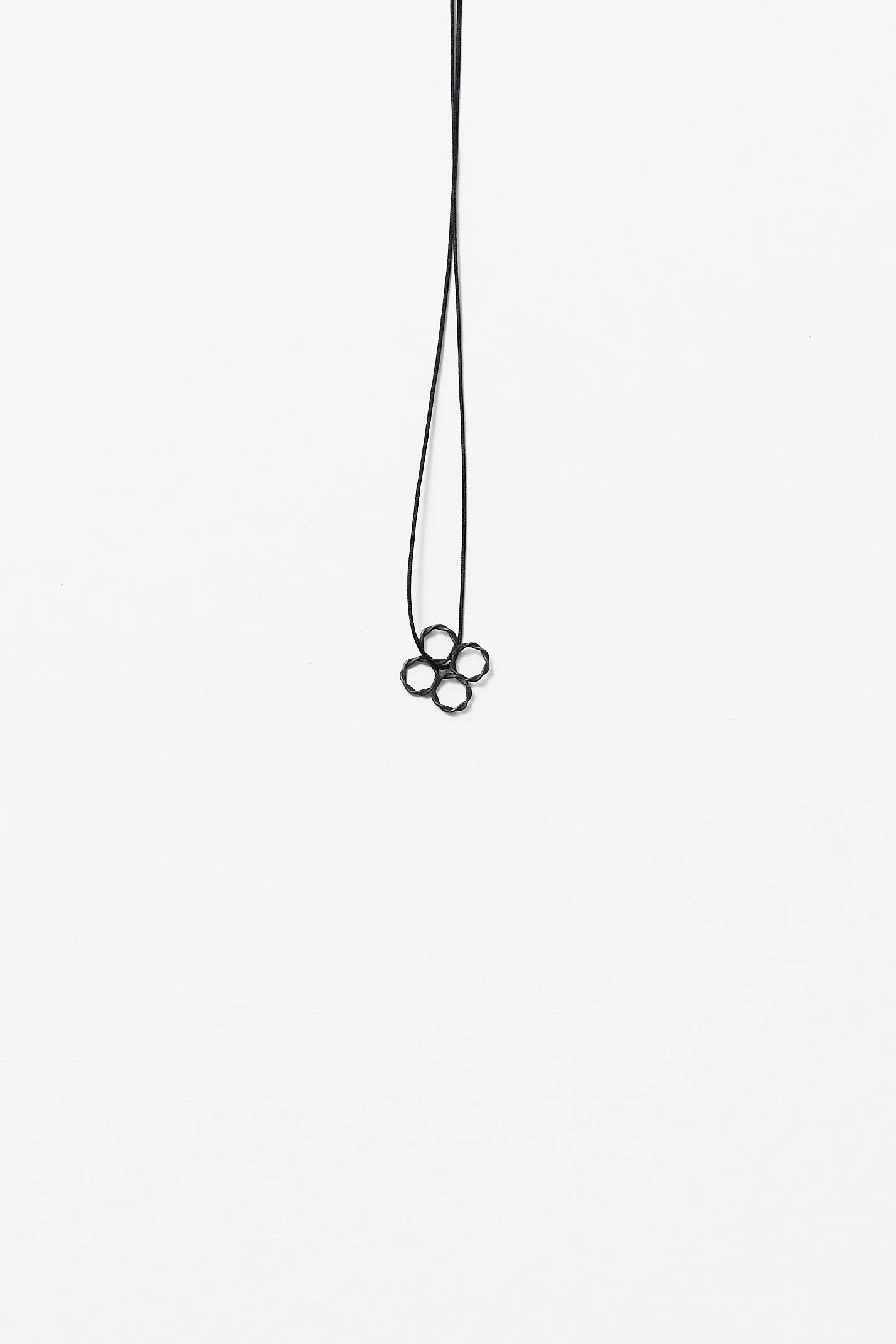
25. Mascha Moje, ‘Twisties’, (black small), 2023, monel, nylon thread, 1.1x1.1x.1cm, 40cm cord. Price: $350
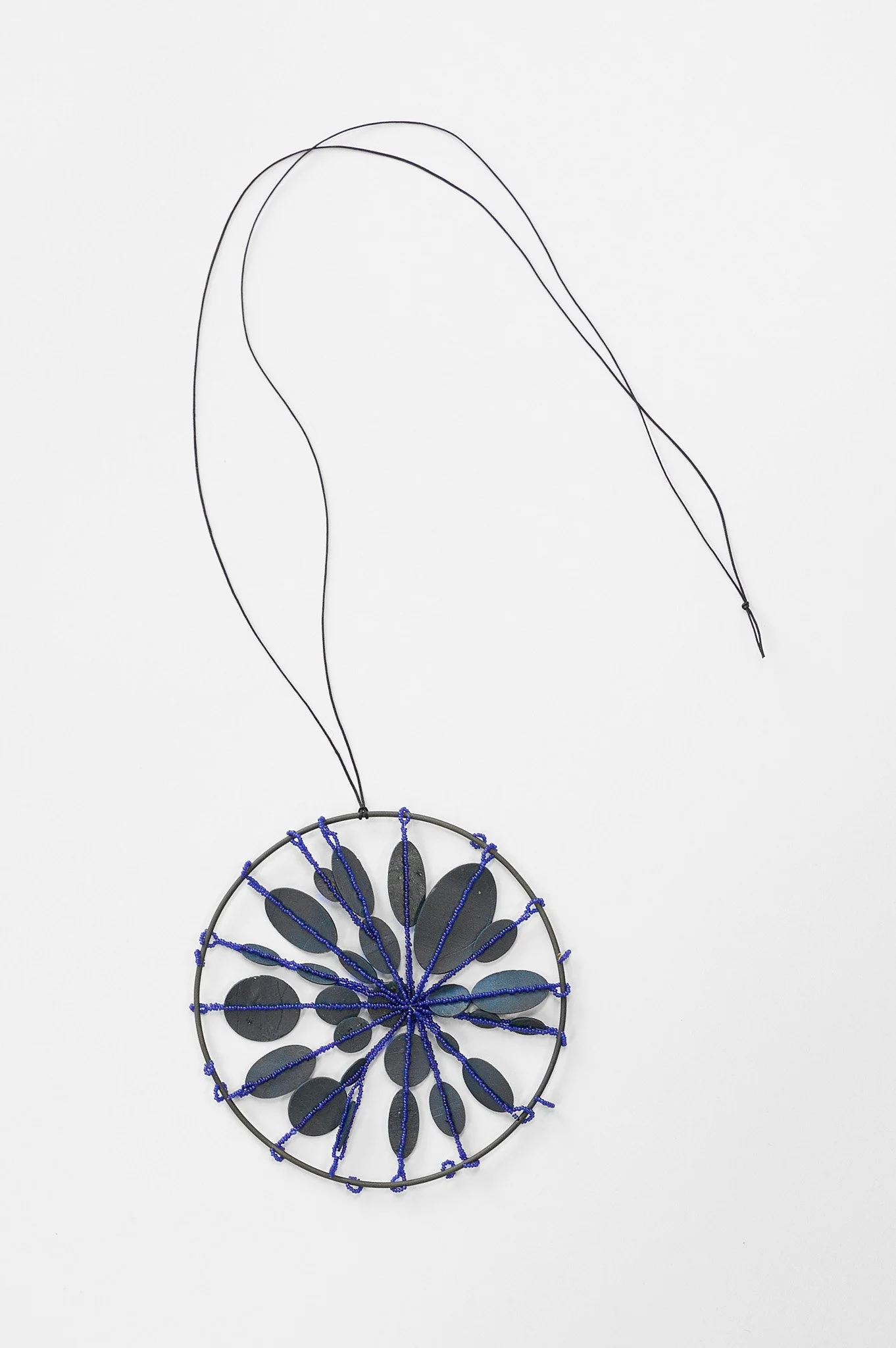
26. Mascha moje, ‘Untitled’, (blue circle), 2025, oxidized mild steel circle, porcelain and cobalt glass beads, pendant 9.5cm diameter, cord 35cm. Price: $1,400
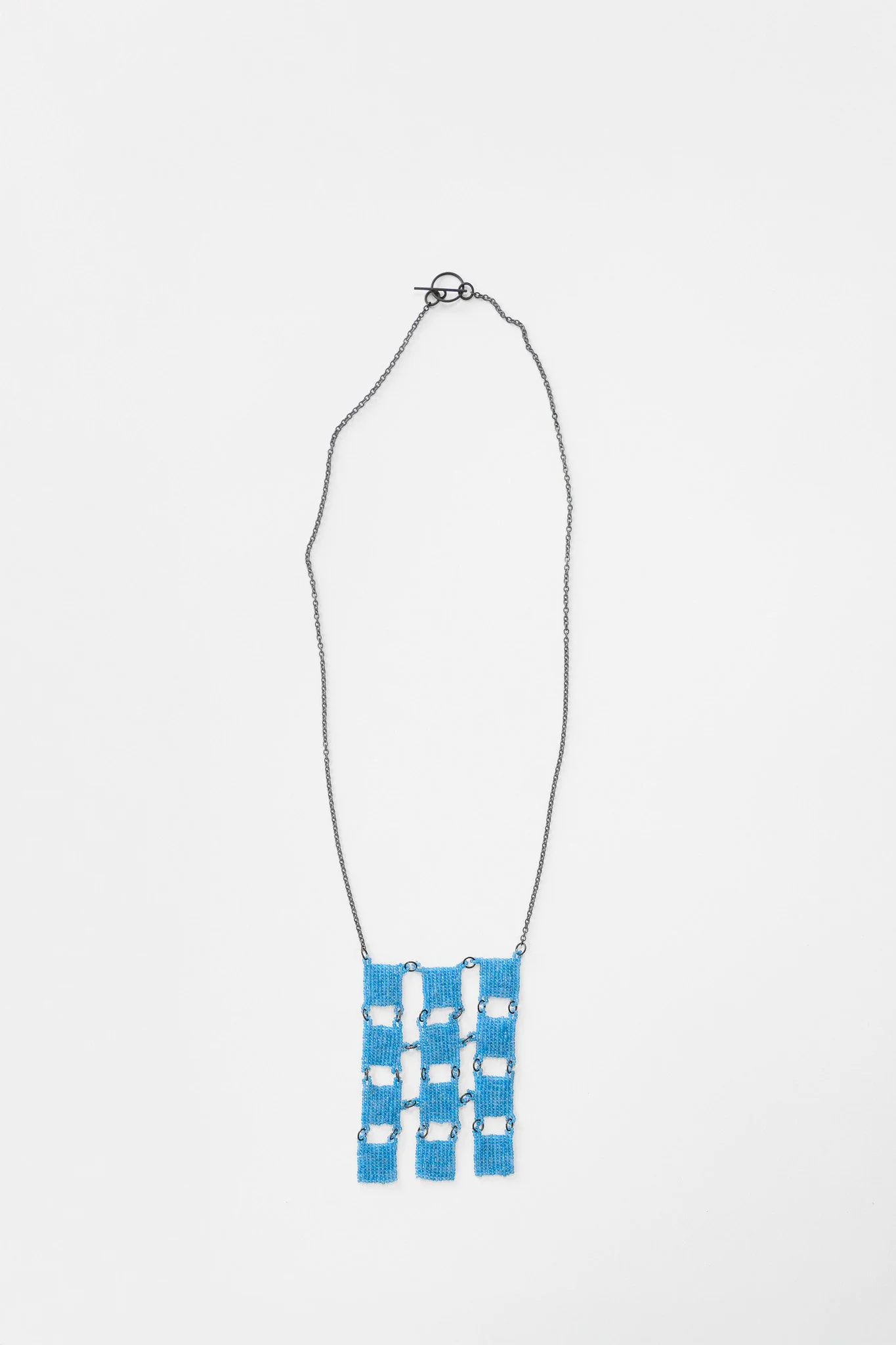
27. Mascha moje, ‘Untitled’, (12 light blue squares), 2025, oxidized mild steel, oxidized sterling silver chain, monel clasp and findings and 12 glass bead squares, pendant 6.5x9cm, chain 33cm. Price: $1,600
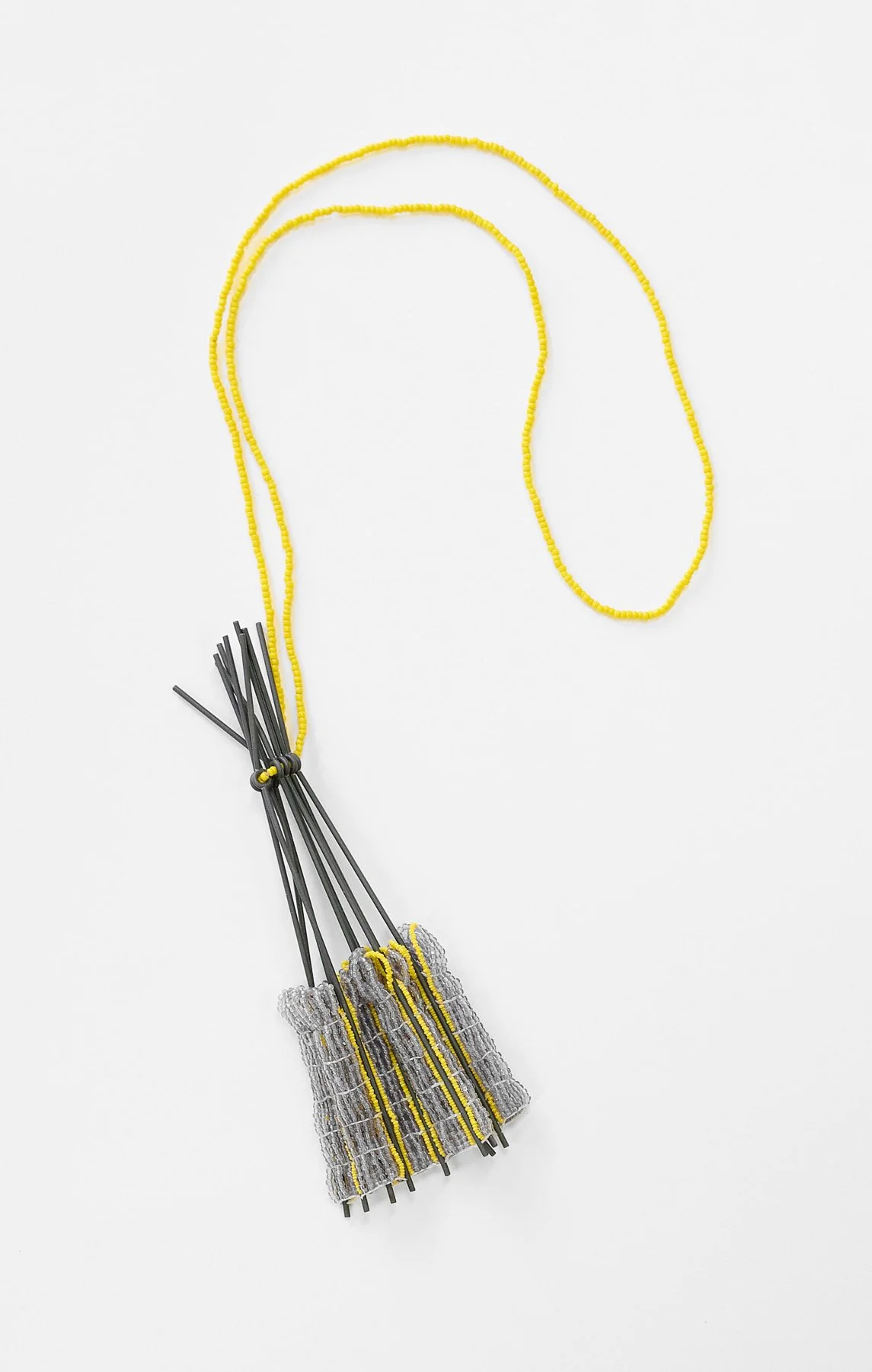
28. Mascha Moje, ‘Untitled’, (drying flowers), 2025, oxidized mild steel and woven yellow and mauve glass beads, pendant 6x15cm, cord 30cm. Price: $1,700
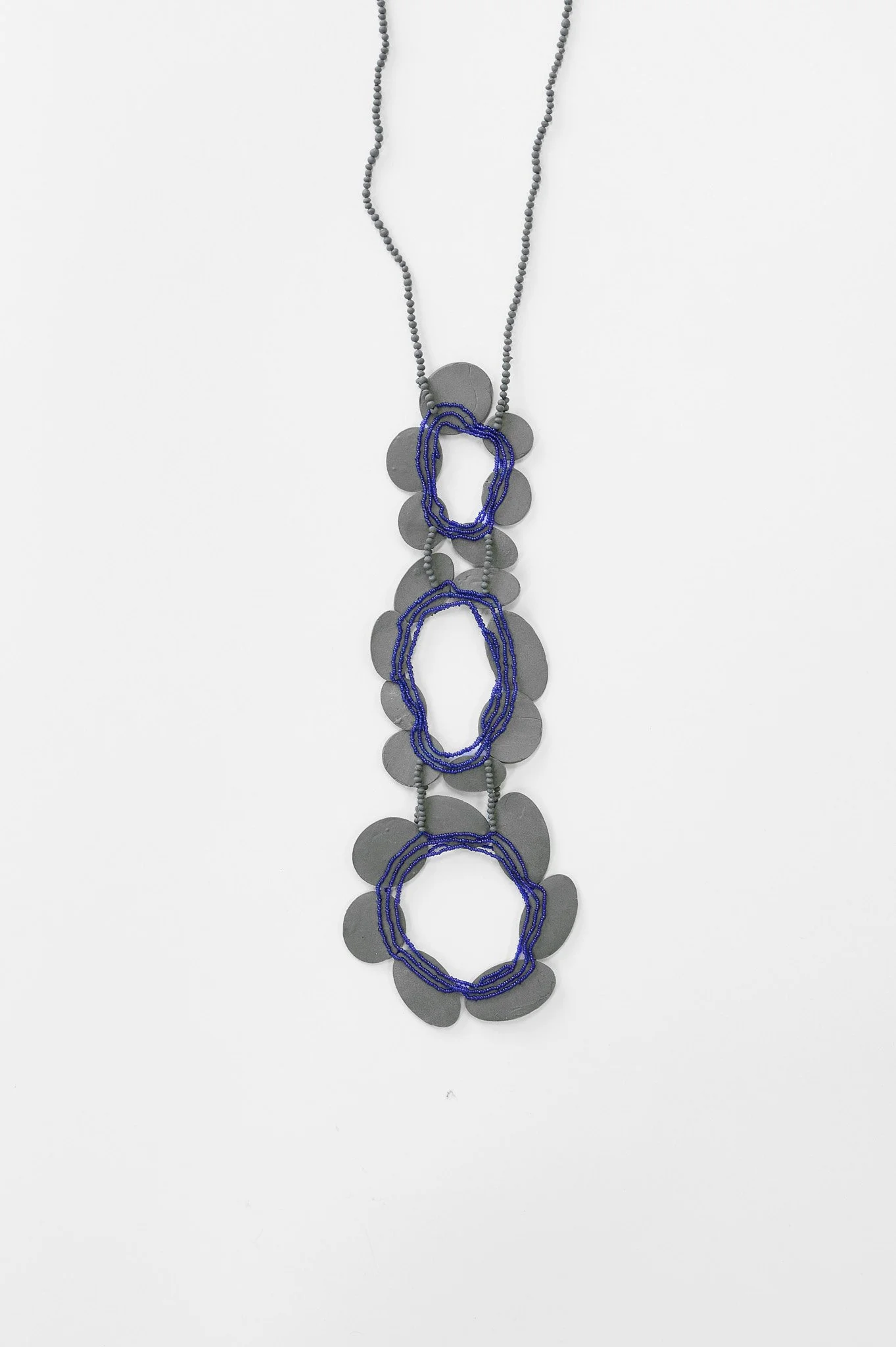
29. Mascha Moje, ‘Untitled’, (3 vertical flowers blue), 2025, porcelain, ceramic flowers, oxidized sterling silver and cobalt glass beads, pendant 23x8cm, necklace 24cm. Price: $2,600
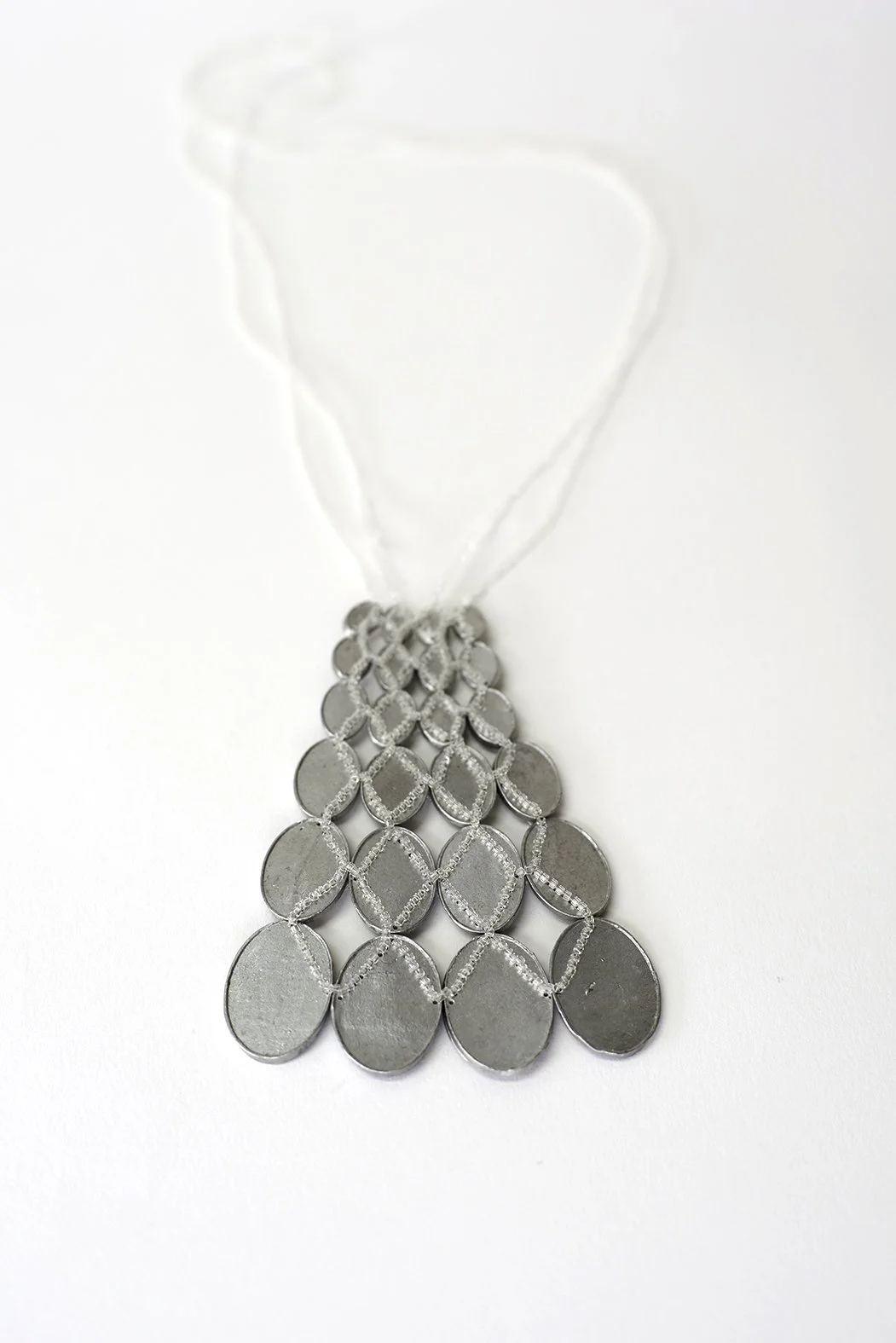
30. Mascha Moje, ‘Untitled’, (trapezoid aluminium pendant), 2024, aluminium, glass beads, pendant 8x11cm, necklace 22.5cm. Price: $1,500
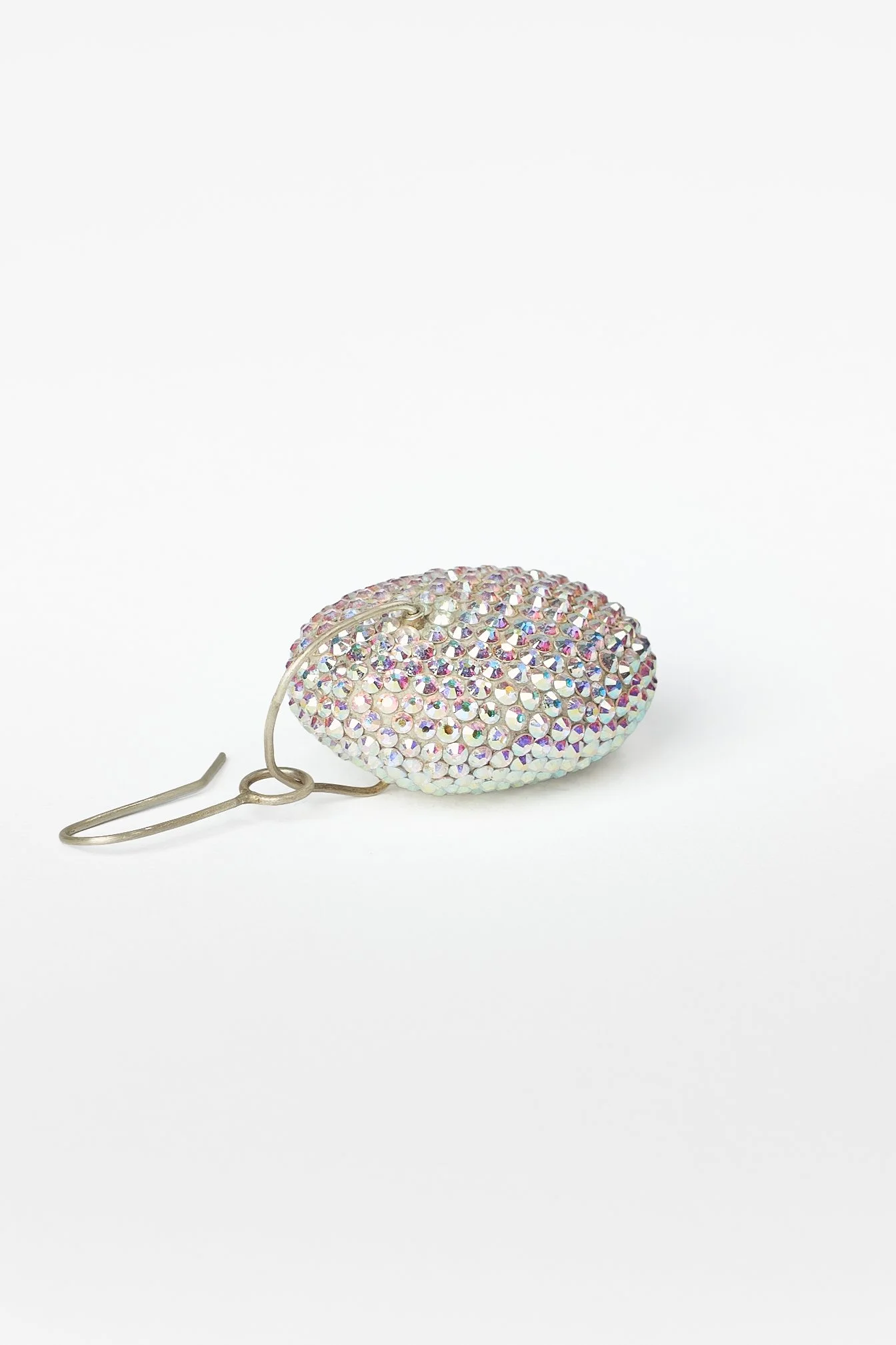
31. Raewyn Walsh, ‘single earring’, rhinestone earring (bright white), 2025, found pumice, preciosa crystals, sterling silver, 7x2x3cm. Price: $220.
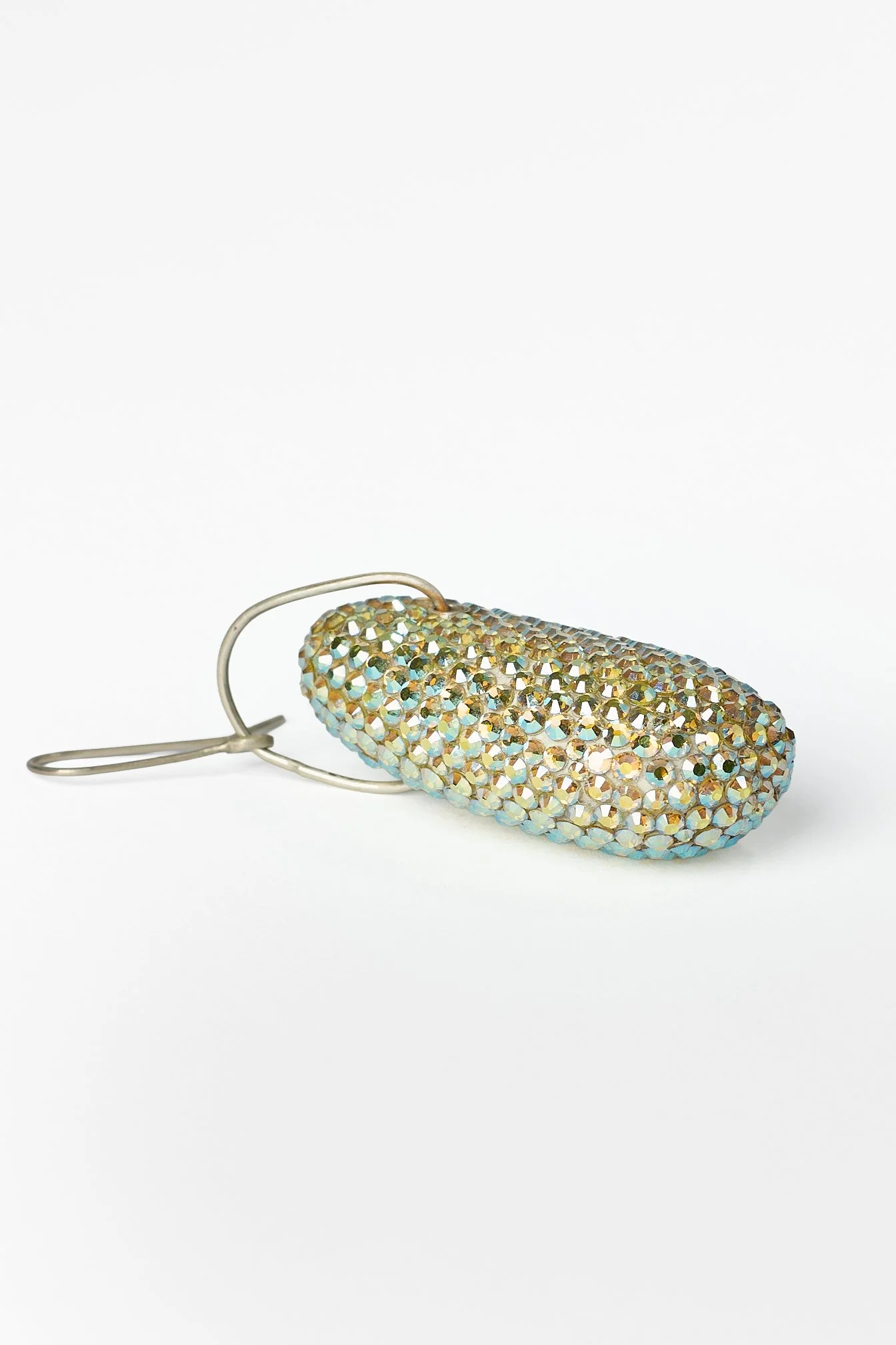
32. Raewyn Walsh, ‘single earring’, rhinestone earring, (yellow white), 2025 found pumice, Preciosa crystals, sterling silver, 8x2.5x3cm. Price: $250
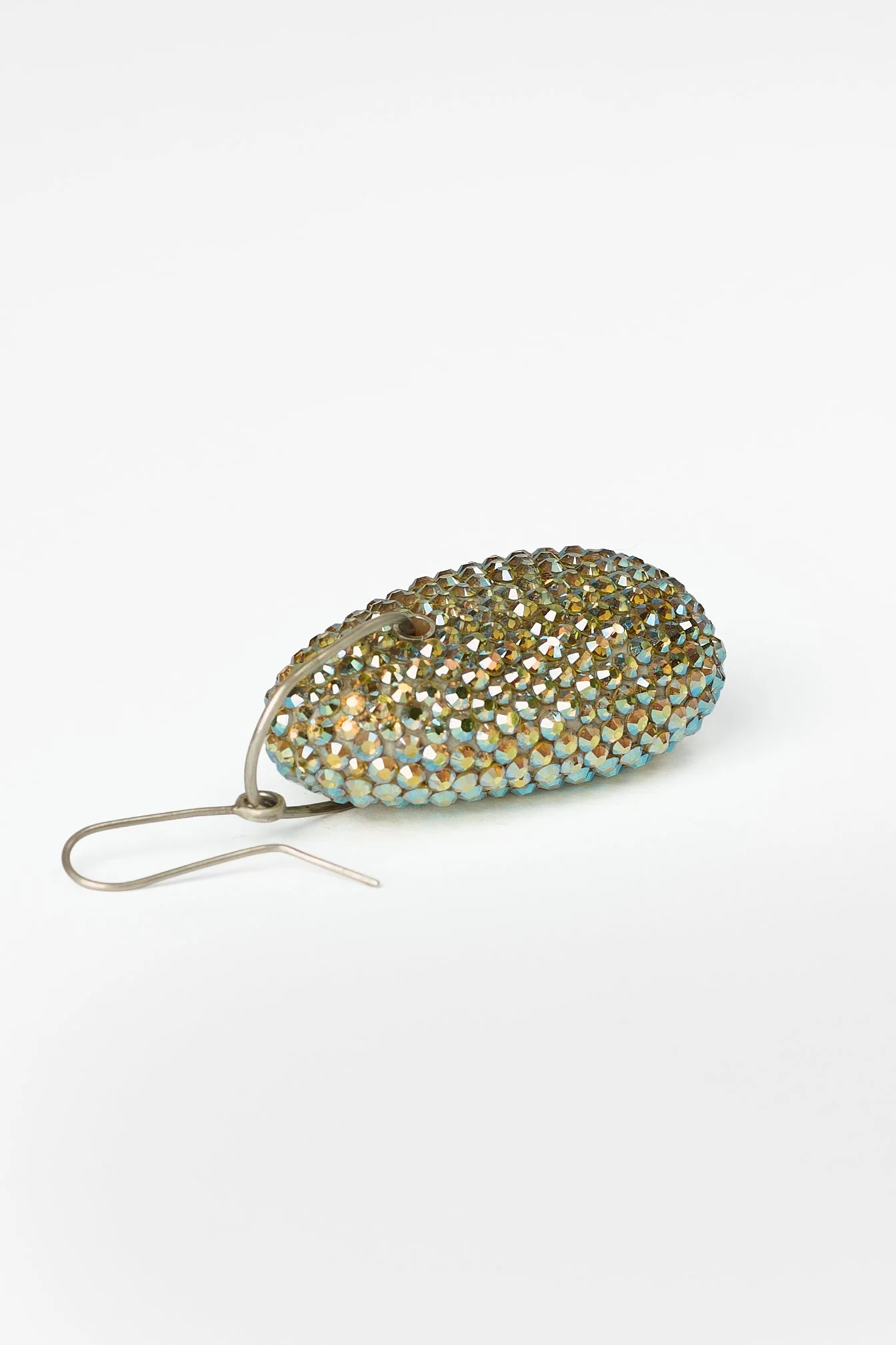
32. Raewyn Walsh, ‘single earring’, rhinestone earring, (yellow white), 2025 found pumice, Preciosa crystals, sterling silver, 8x2.5x3cm. Price: $250
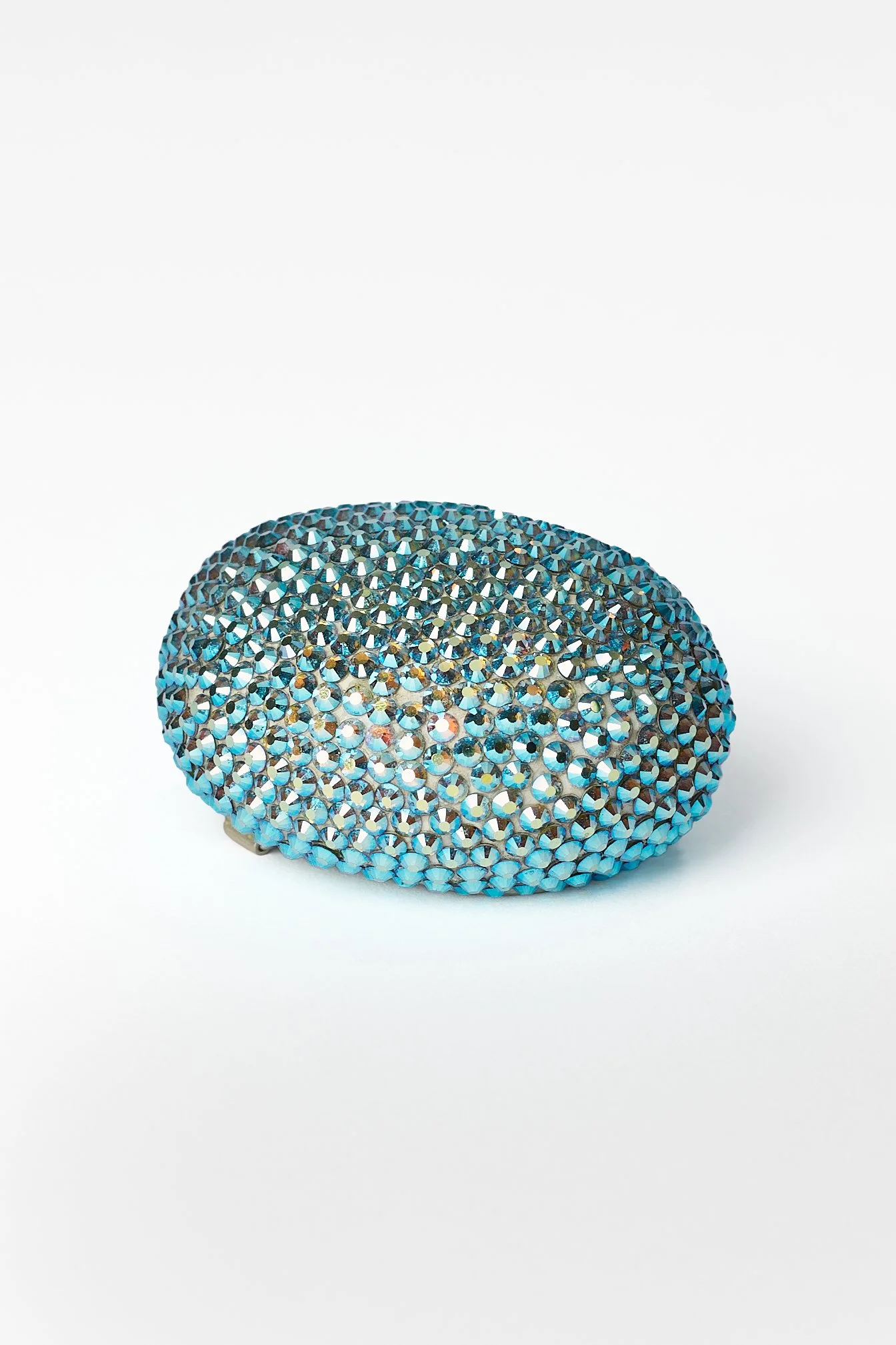
33. Raewyn Walsh, ‘blue guy’, brooch, (round blue), 2025, rhinestone brooch, found pumice, preciosa crystals, sterling silver, stainless steel wire, 5x5.5x3cm. Price: $390.
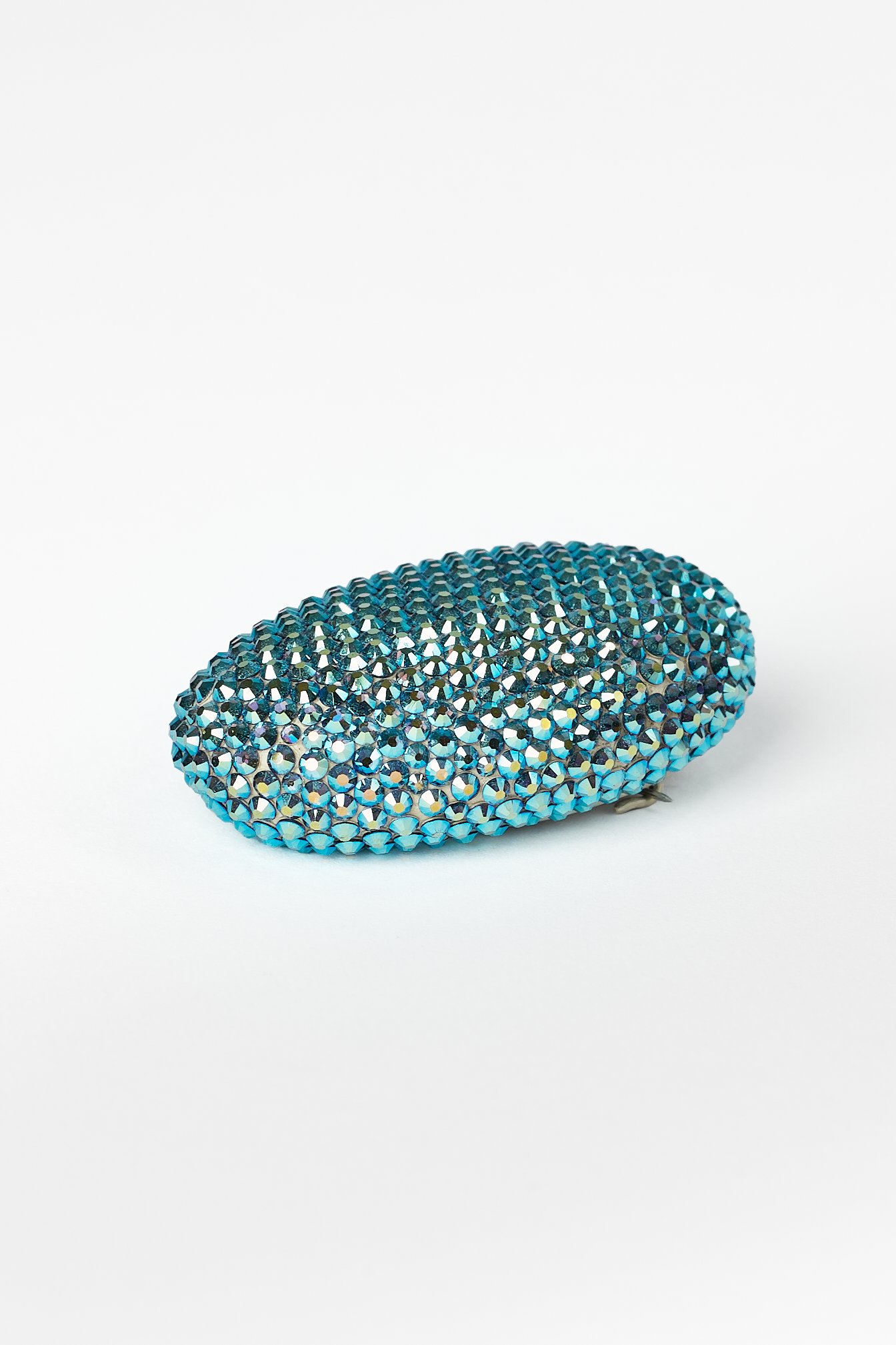
34. Raewyn Walsh, ‘lil blue’, rhinestone brooch, (oval blue), 2025, found pumice, Preciosa crystals, sterling silver, stainless steel wire, 6x2x4cm. Price: $390.
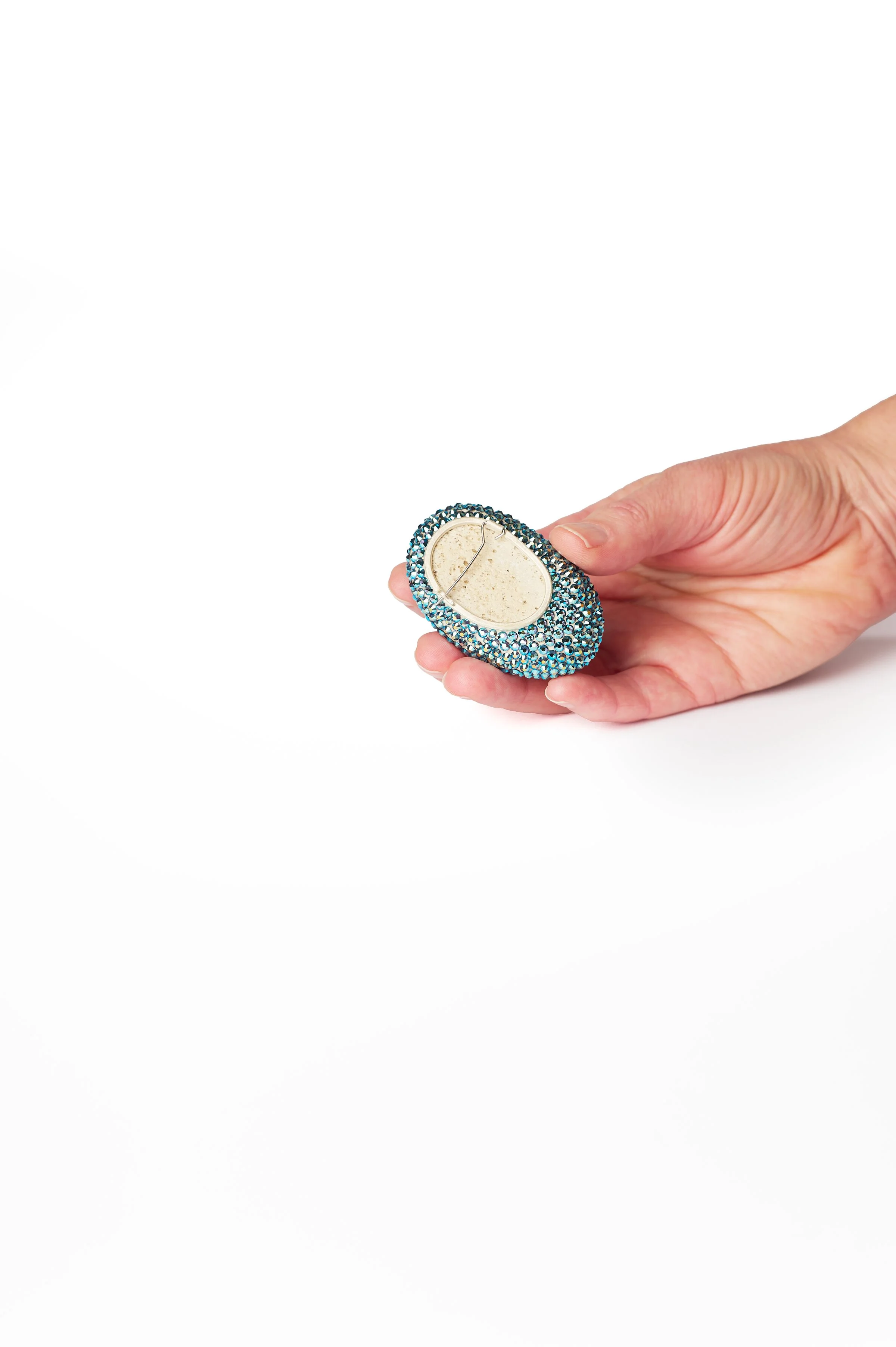
34. Raewyn Walsh, ‘lil blue’, rhinestone brooch, (oval blue), 2025, found pumice, Preciosa crystals, sterling silver, stainless steel wire, 6x2x4cm. Price: $390.
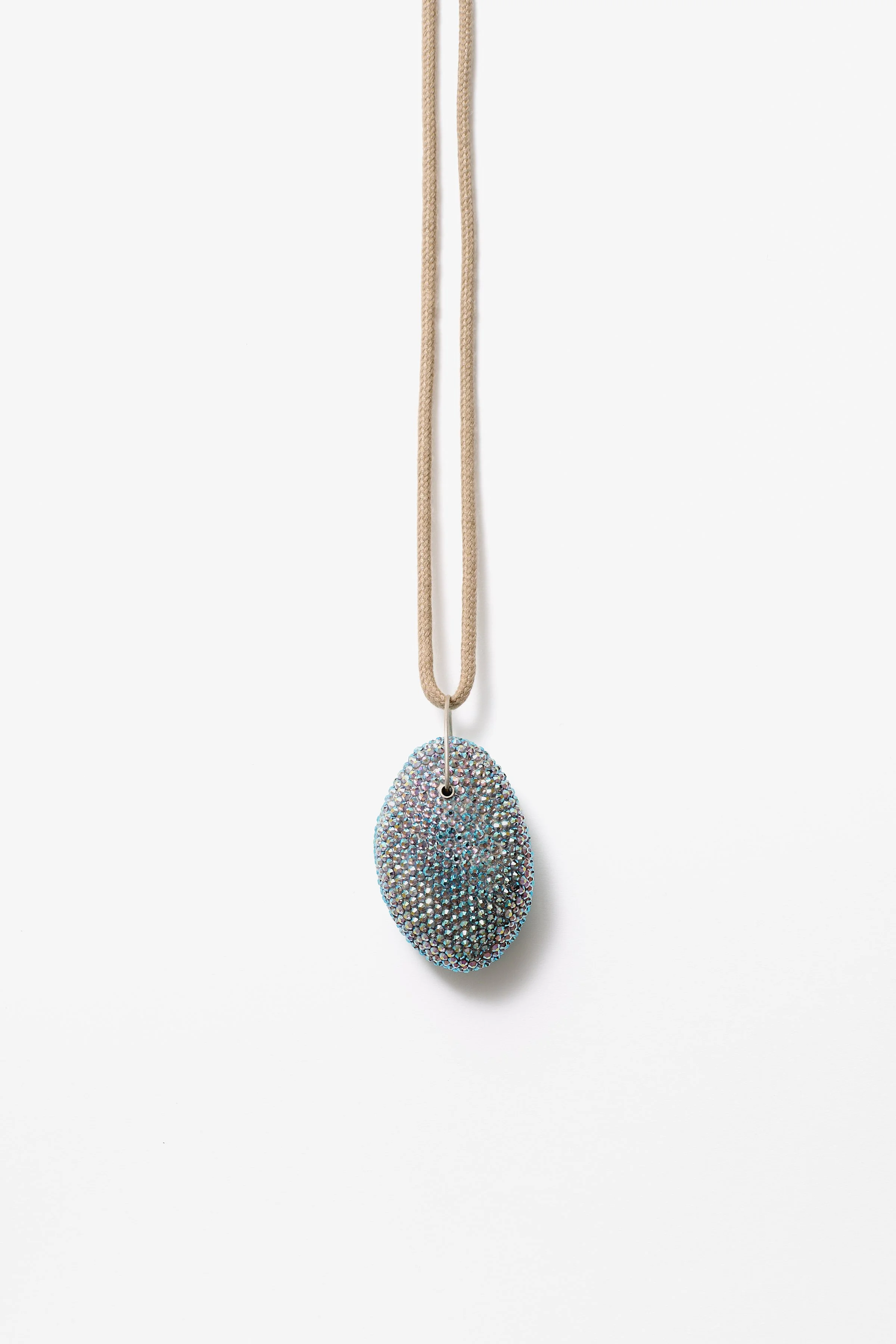
35. Raewyn Walsh, ‘lilac ash’, rhinestone pendant, (pale blue), 2025, found pumice, preciosa crystals, stg silver, shoelace, 8x4.5x3cm, cord 35cm. Price: $450
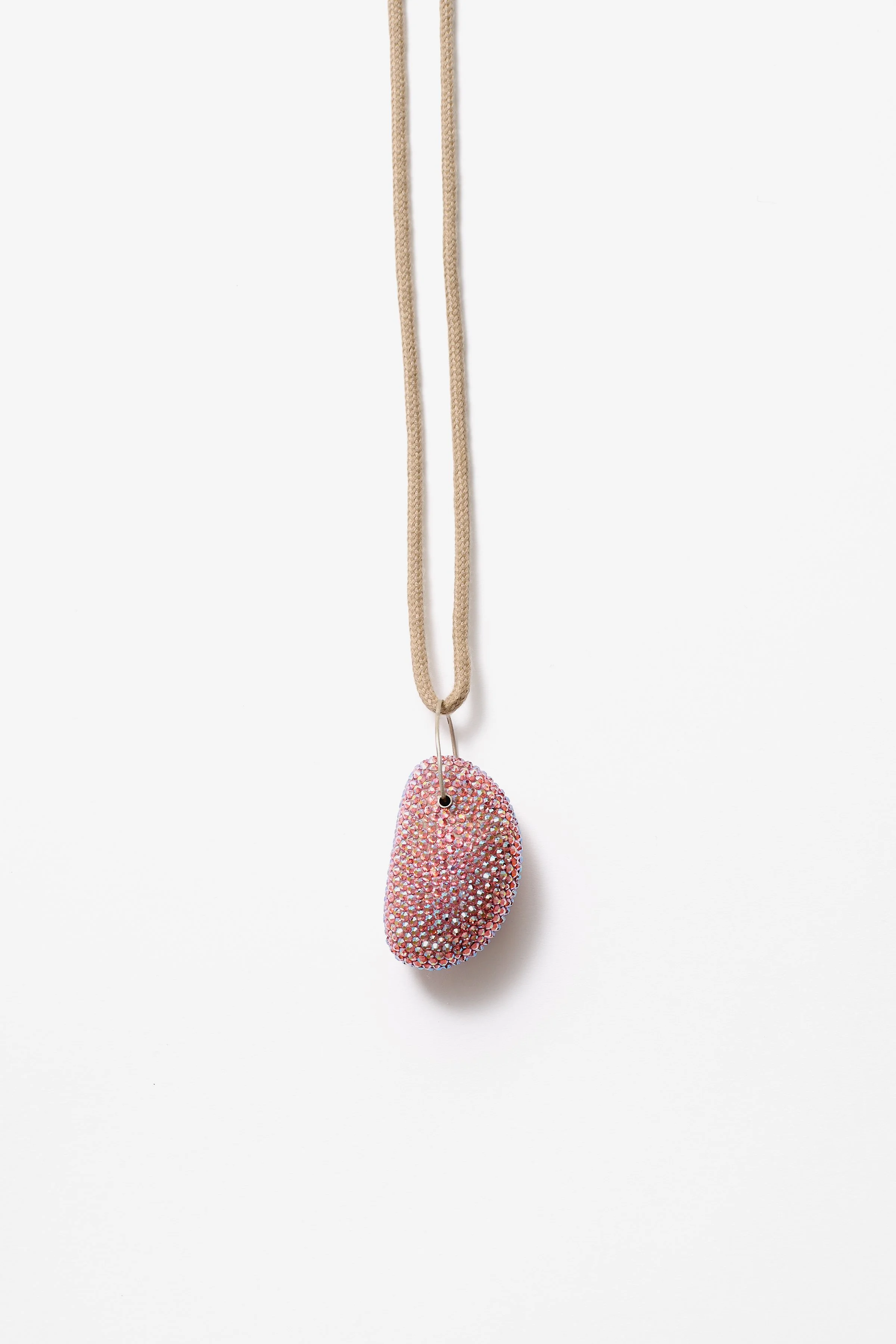
36. Raewyn Walsh, ‘rose pink’, rhinestone pendant, (pale pink), 2025, found pumice, preciosa crystals, stg silver, shoelace, 8x3.2x3.5cm, cord 35cm. Price: $450
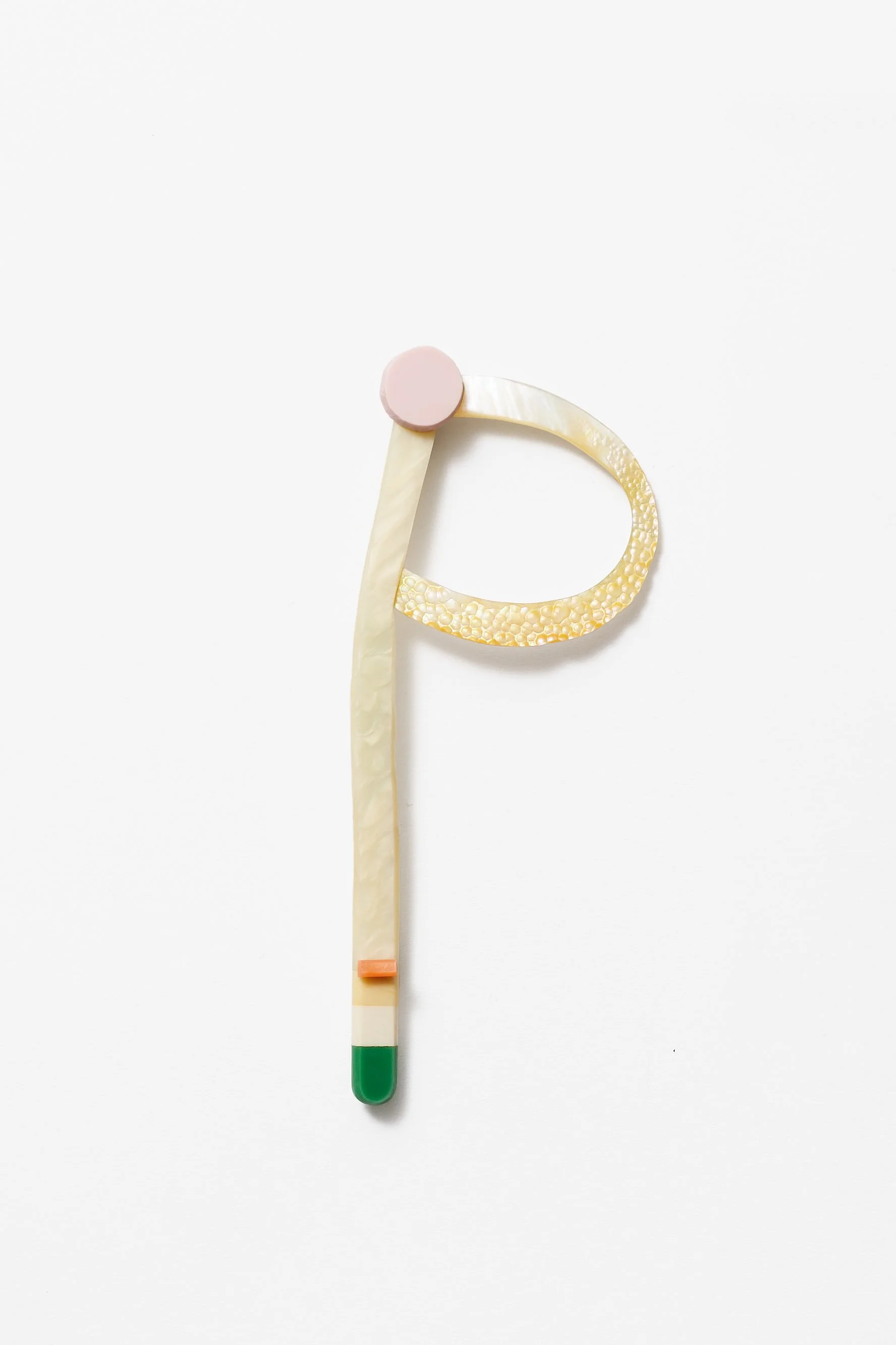
37. Danny Schwaag, ‘solo / – movement 02’, brooch, 2022, galalith, mother of pearl, silver, stainless steel, 14x5.5x0.5cm. Price: $1,100
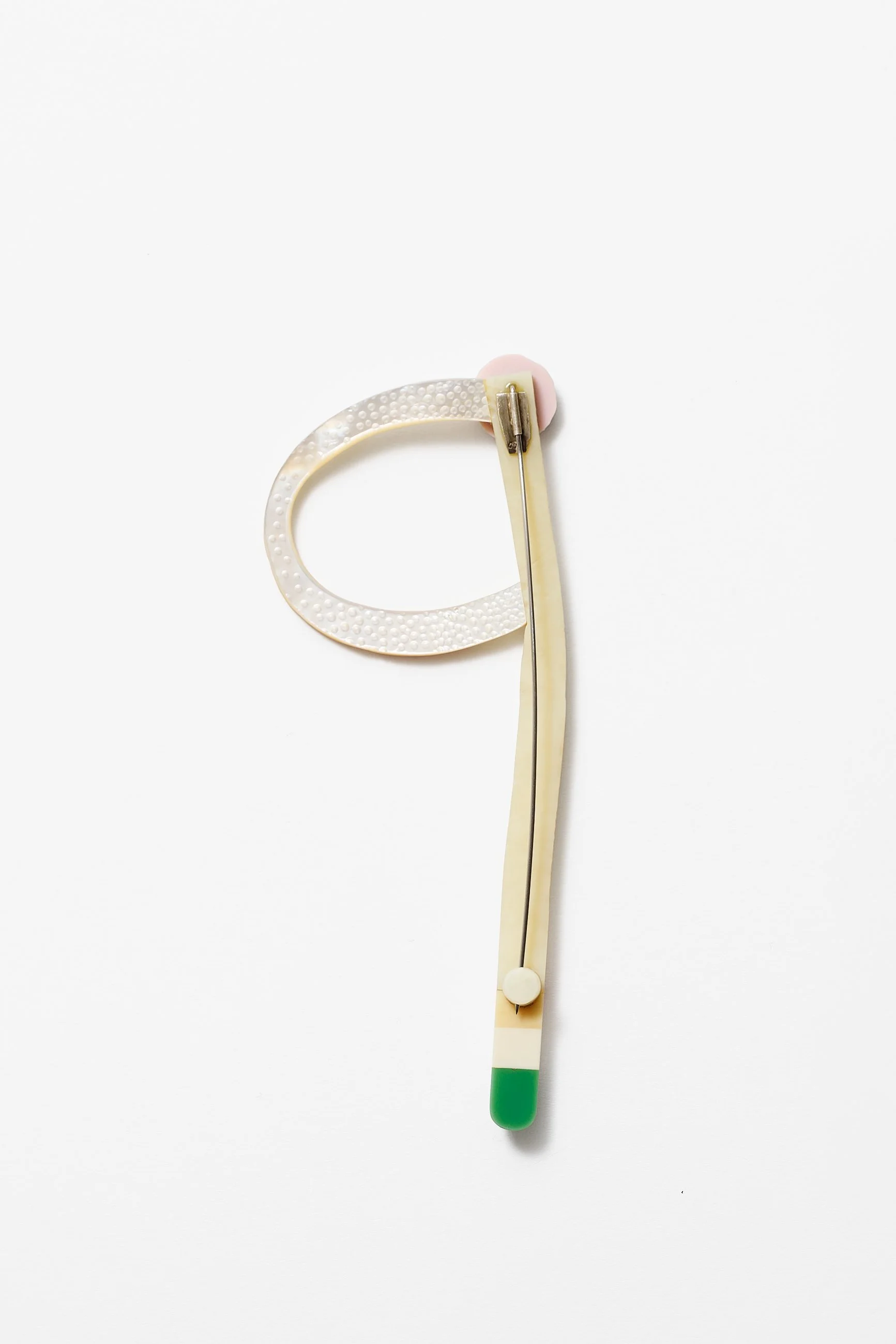
37. Danny Schwaag, ‘solo / – movement 02’, brooch, 2022, galalith, mother of pearl, silver, stainless steel, 14x5.5x0.5cm. Price: $1,100
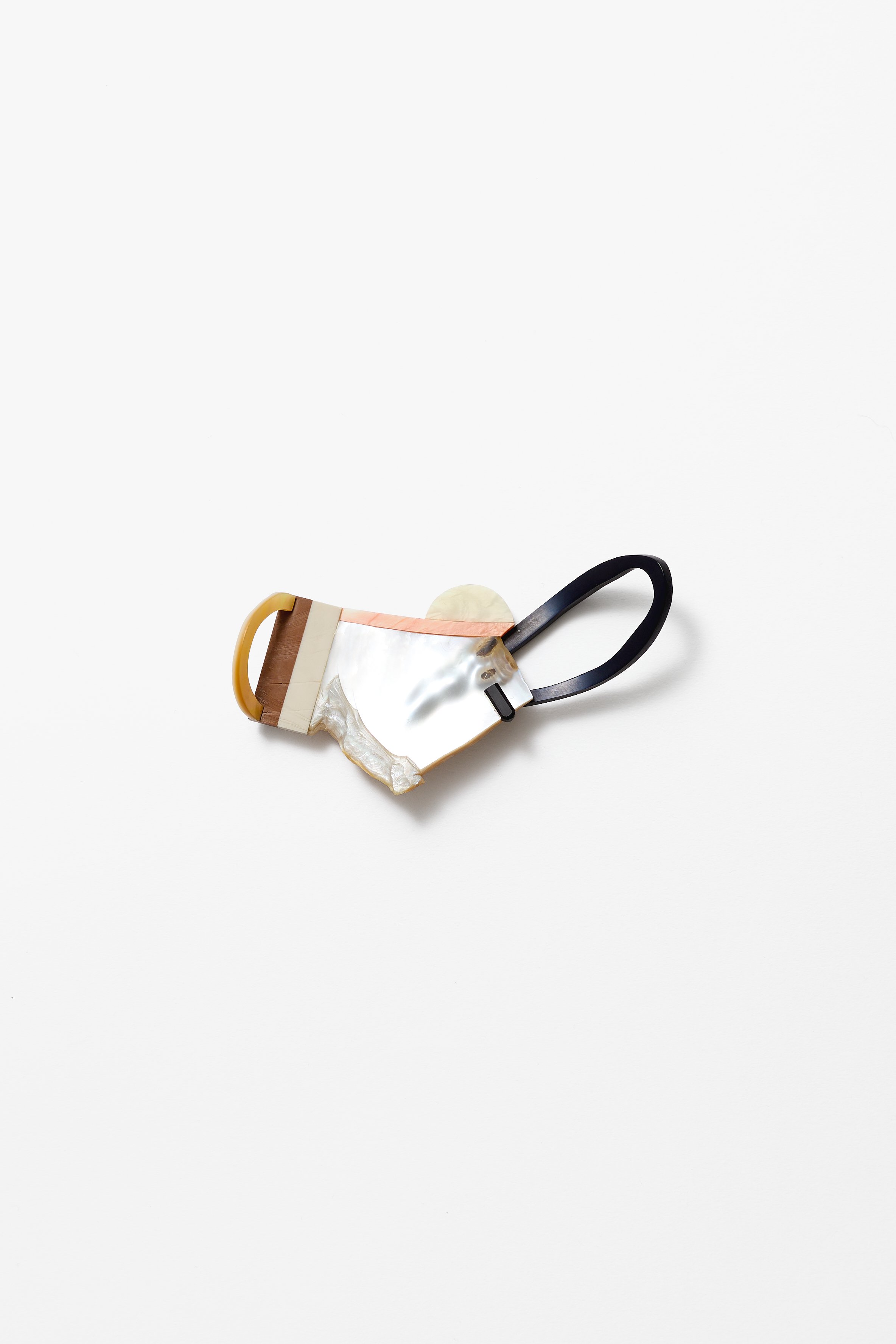
38. Danny Schwaag, ‘solo / – movement 09’, (brooch), 2022, galalith, mother of pearl, silver, stainless steel, brooch, 2022, 10.5x5x2cm. Price: $1,250
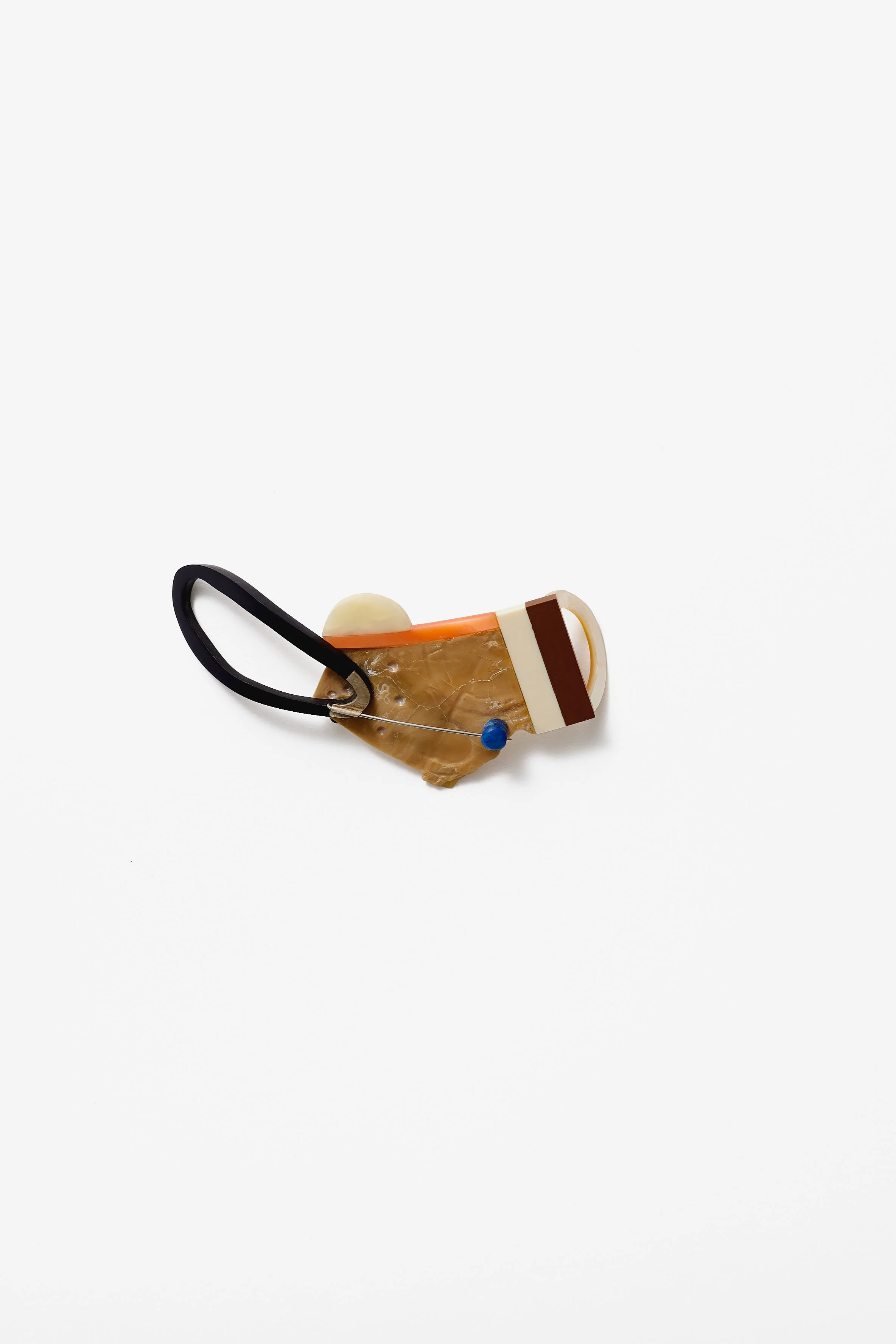
38. Danny Schwaag, ‘solo / – movement 09’, (brooch), 2022, galalith, mother of pearl, silver, stainless steel, brooch, 2022, 10.5x5x2cm. Price: $1,250
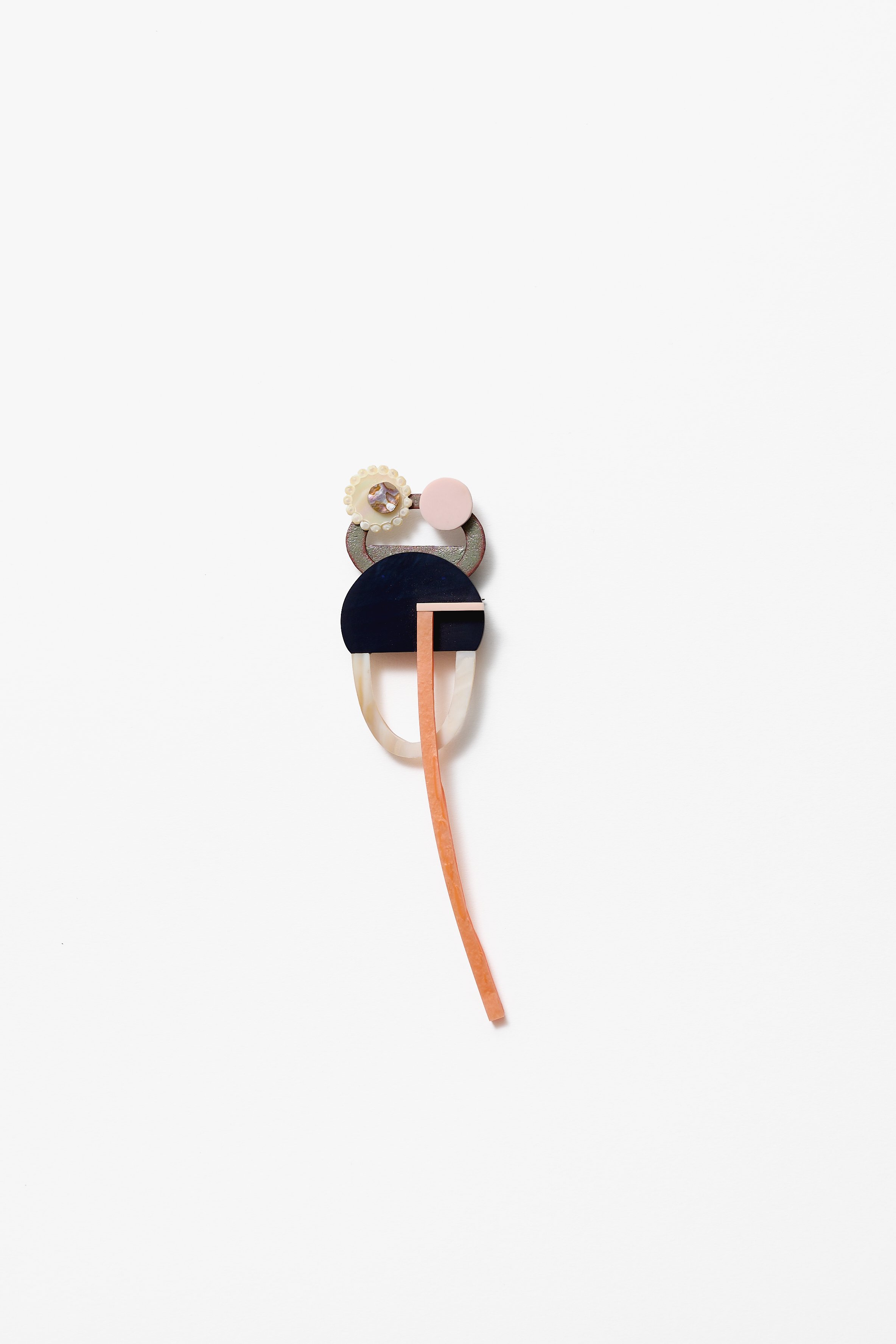
39. Danny Schwaag, ‘solo / – movement 05’, brooch, 2024, galalith, mother of pearl, abalone, enamel on copper, gold, 14x3.5x1cm. Price: $1,500
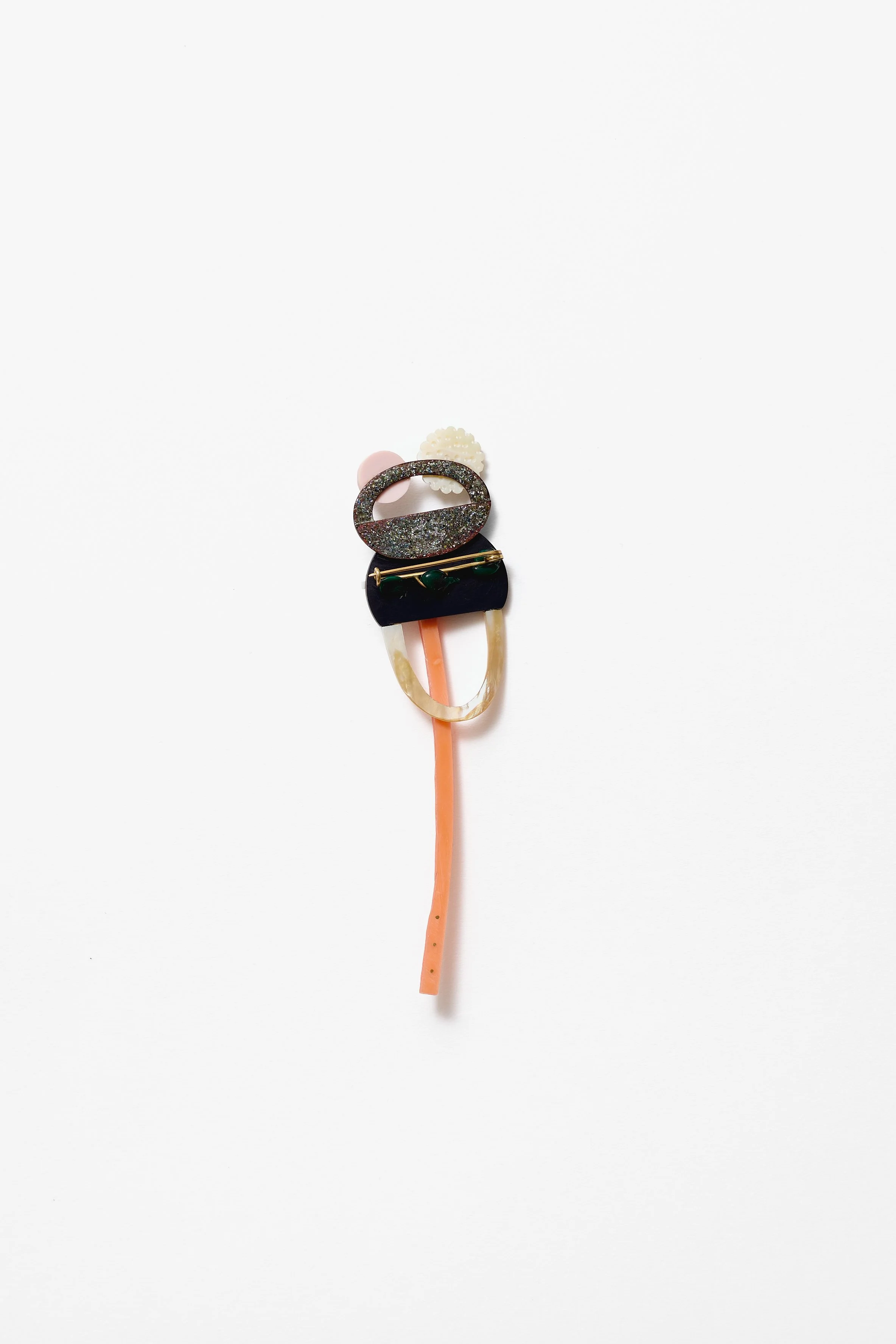
39. Danny Schwaag, ‘solo / – movement 05’, brooch, 2024, galalith, mother of pearl, abalone, enamel on copper, gold, 14x3.5x1cm. Price: $1,500
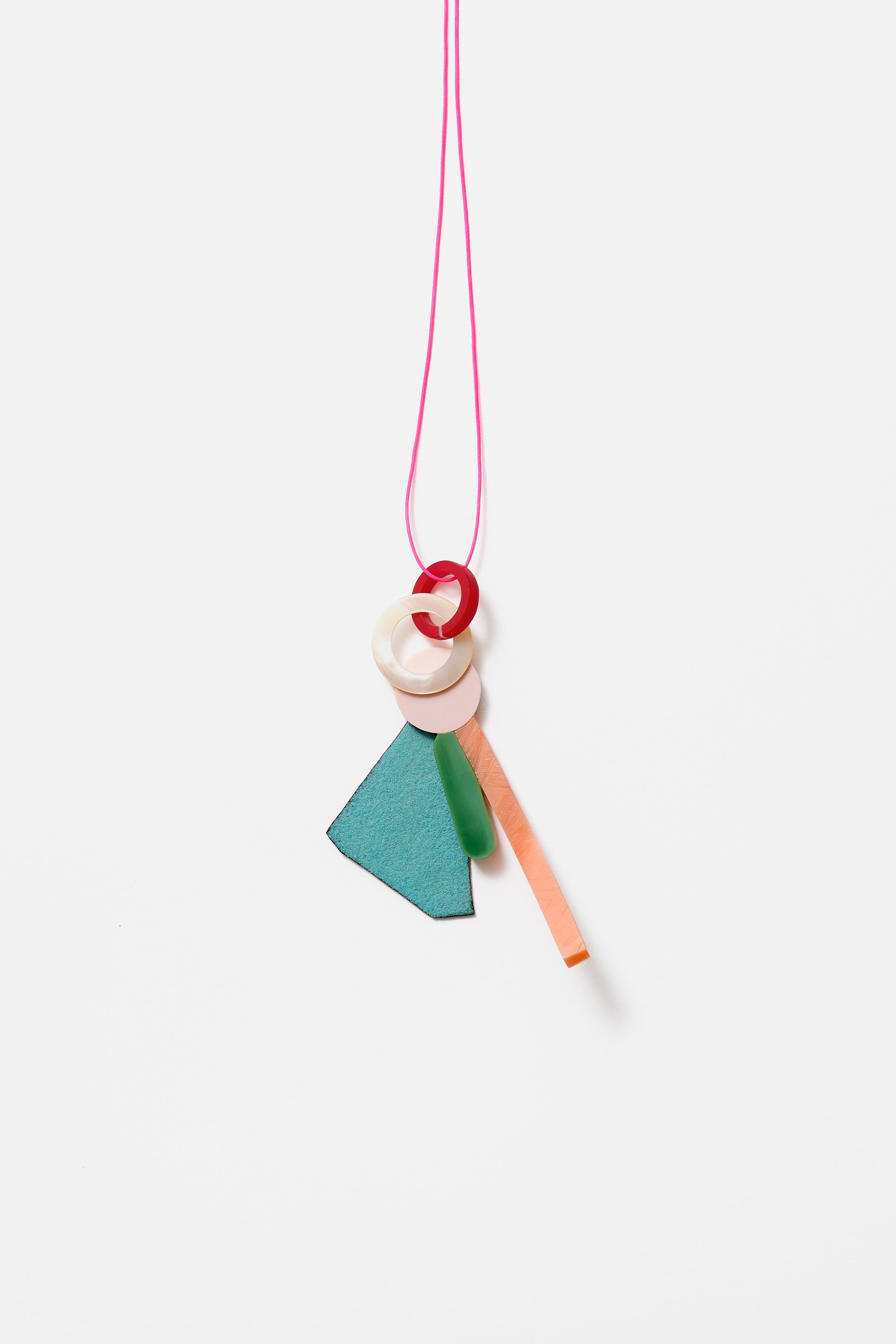
40. Danny Schwaag, ‘solo / – movement 10’, pendant/(wall) object, 2022, galalith, mother of pearl, enamel on copper, silver, 9.5x6x2.5cm. Price: $1,100
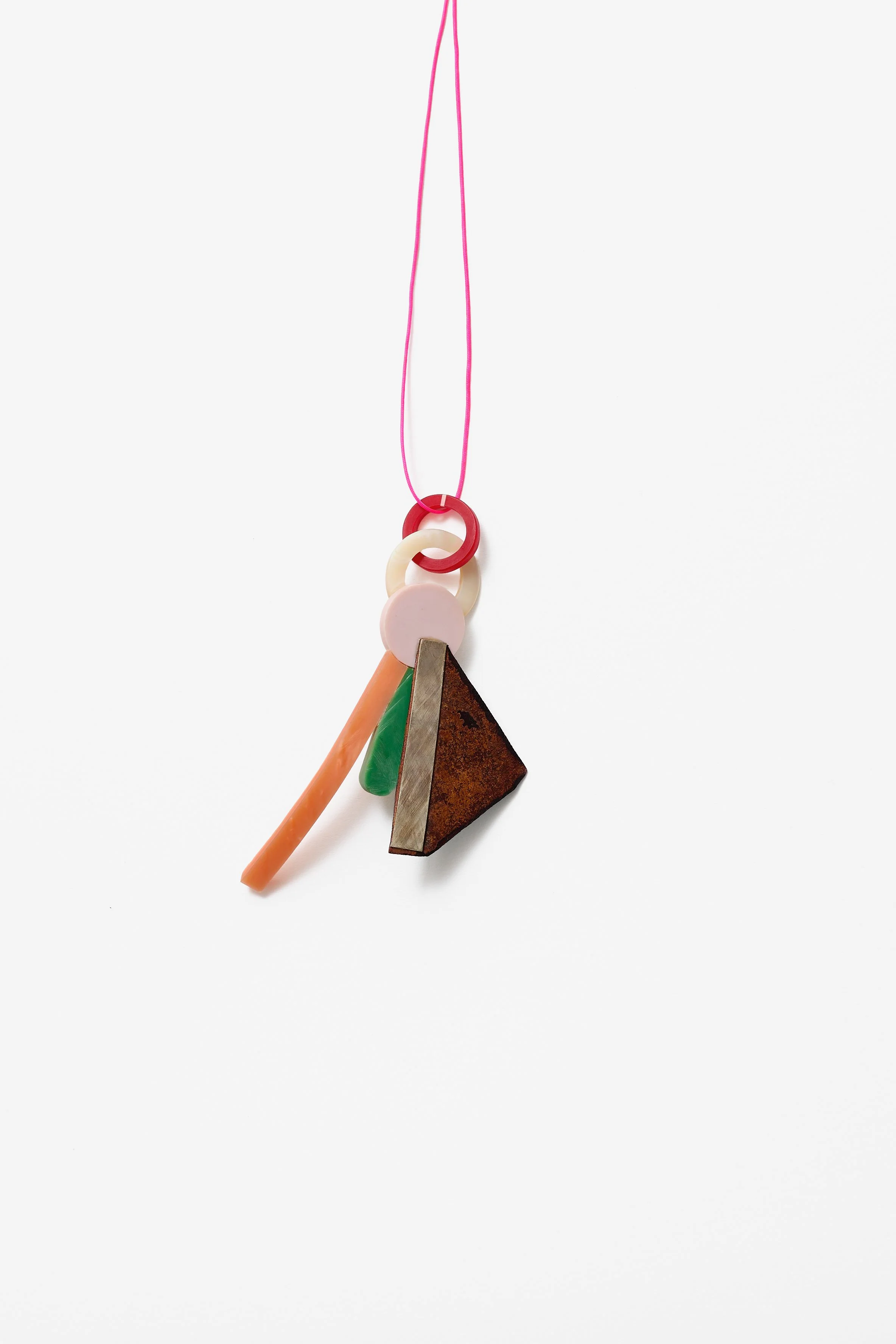
40. Danny Schwaag, ‘solo / – movement 10’, pendant/(wall) object, 2022, galalith, mother of pearl, enamel on copper, silver, 9.5x6x2.5cm. Price: $1,100
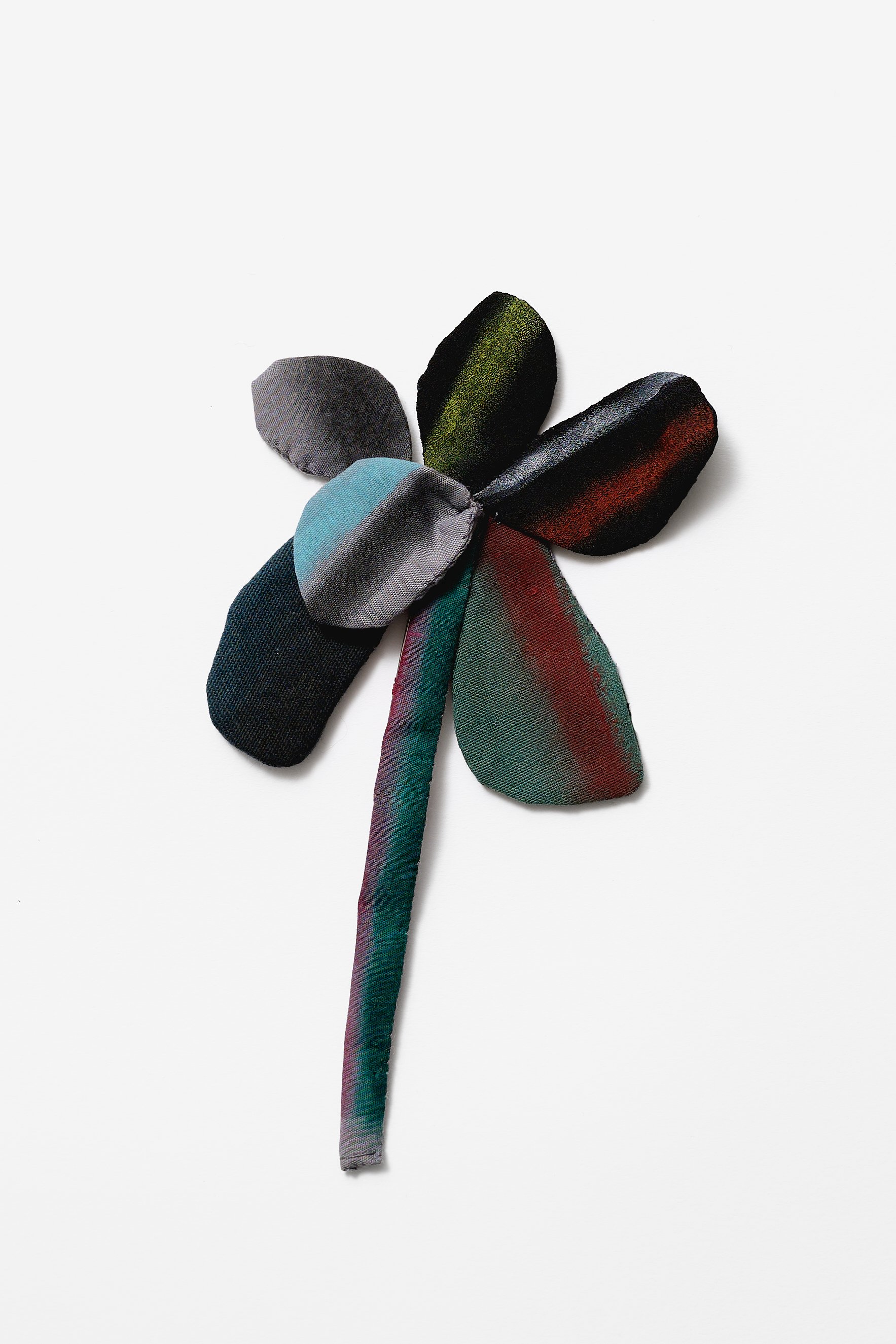
41. Peta Kruger, ‘Floral’ brooch, (grey, red, green, black, blue, yellow, long stem), 2026, paint on fabric, stainless steel, 16.5x8.5x1cm. Price: $310
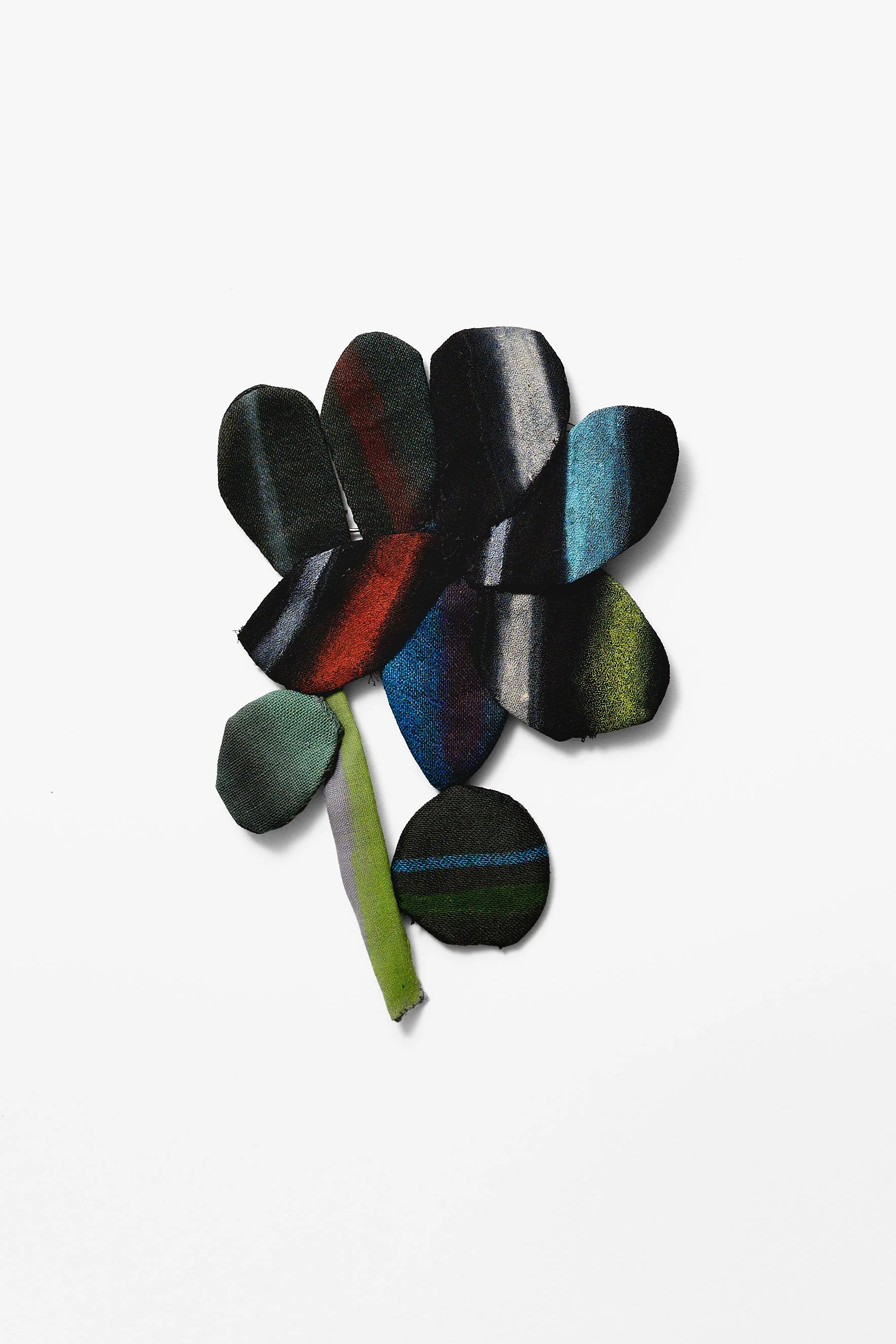
42. Peta Kruger, ‘Floral’ brooch, (grey, red, green, black, blue, yellow, short stem), 2026, paint on fabric, stainless steel, 13x9.5x1cm. Price: $310
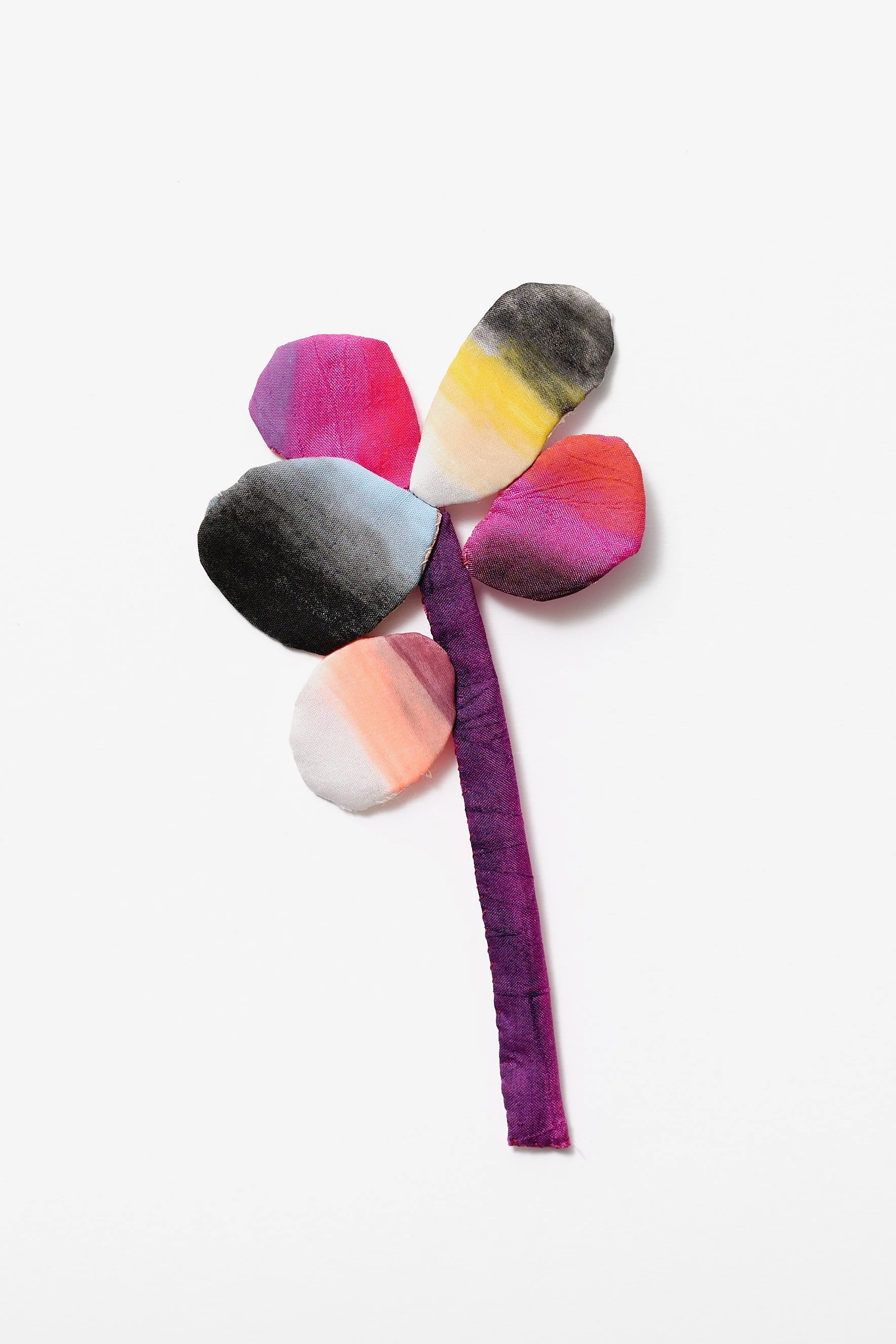
43. Peta Kruger, ‘Floral’ brooch, (red, pink, yellow, black, purple, long stem), 2026, paint on fabric, stainless steel, 15.5x9x1cm. Price: $310
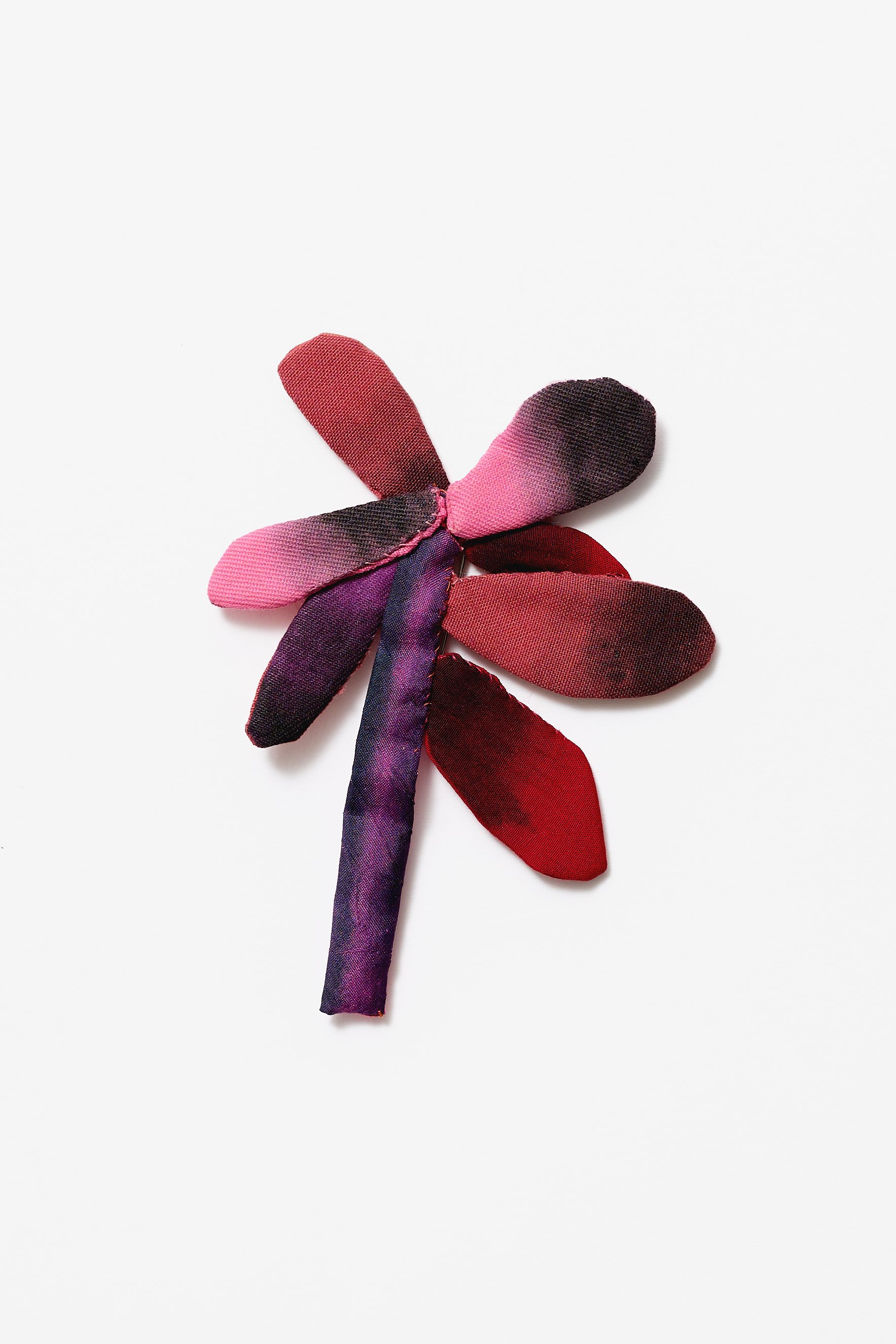
44. Peta Kruger, ‘Floral’ brooch, (red, pink, black, purple, short stem), 2026, paint on fabric, stainless steel, 13x9x1cm. Price: $310
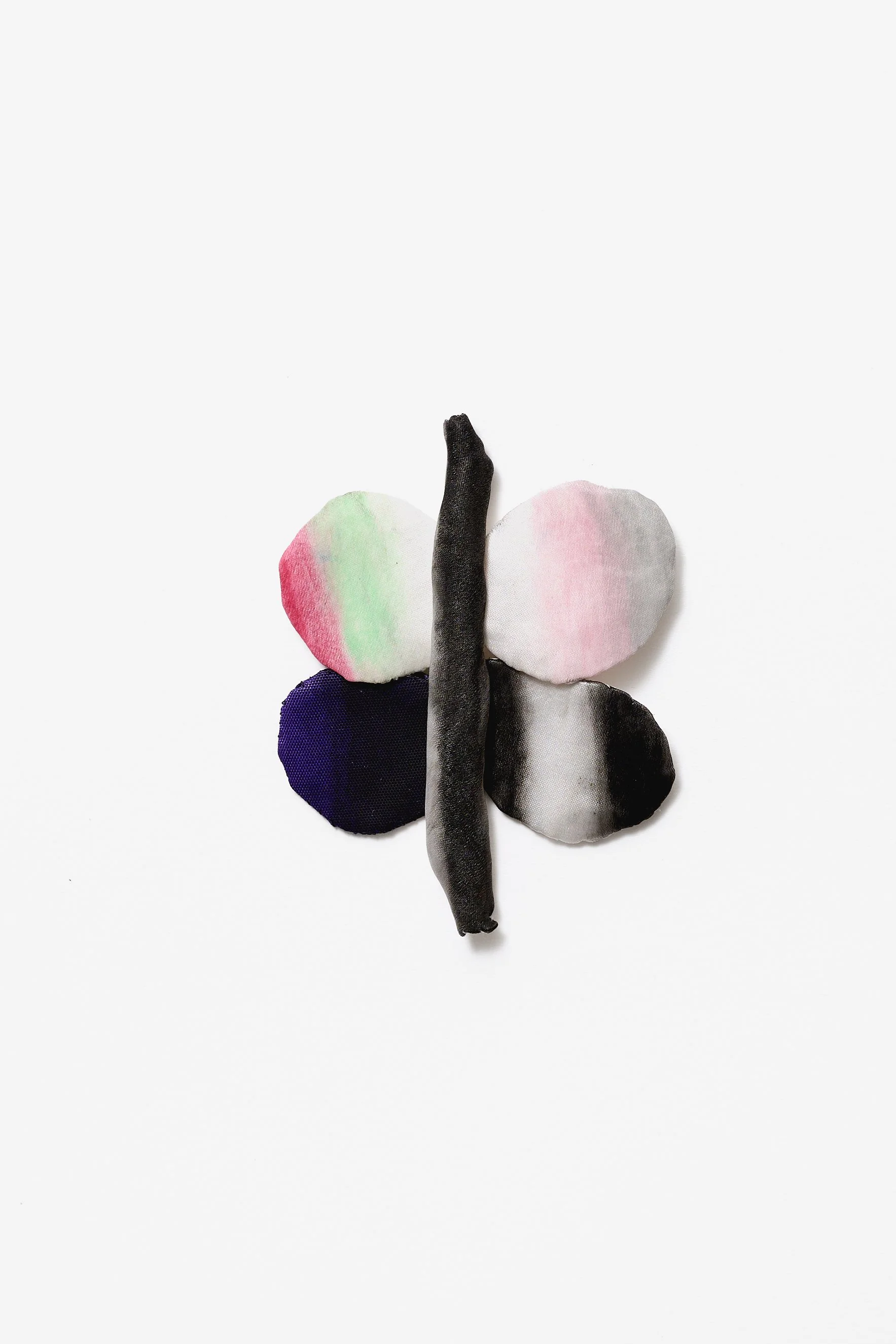
45. Peta Kruger, ‘Butterfly’ brooch, (pink, green, grey, white, purple), 2026, paint on fabric, stainless steel, 9.5x7.5x1cm. Price: $260
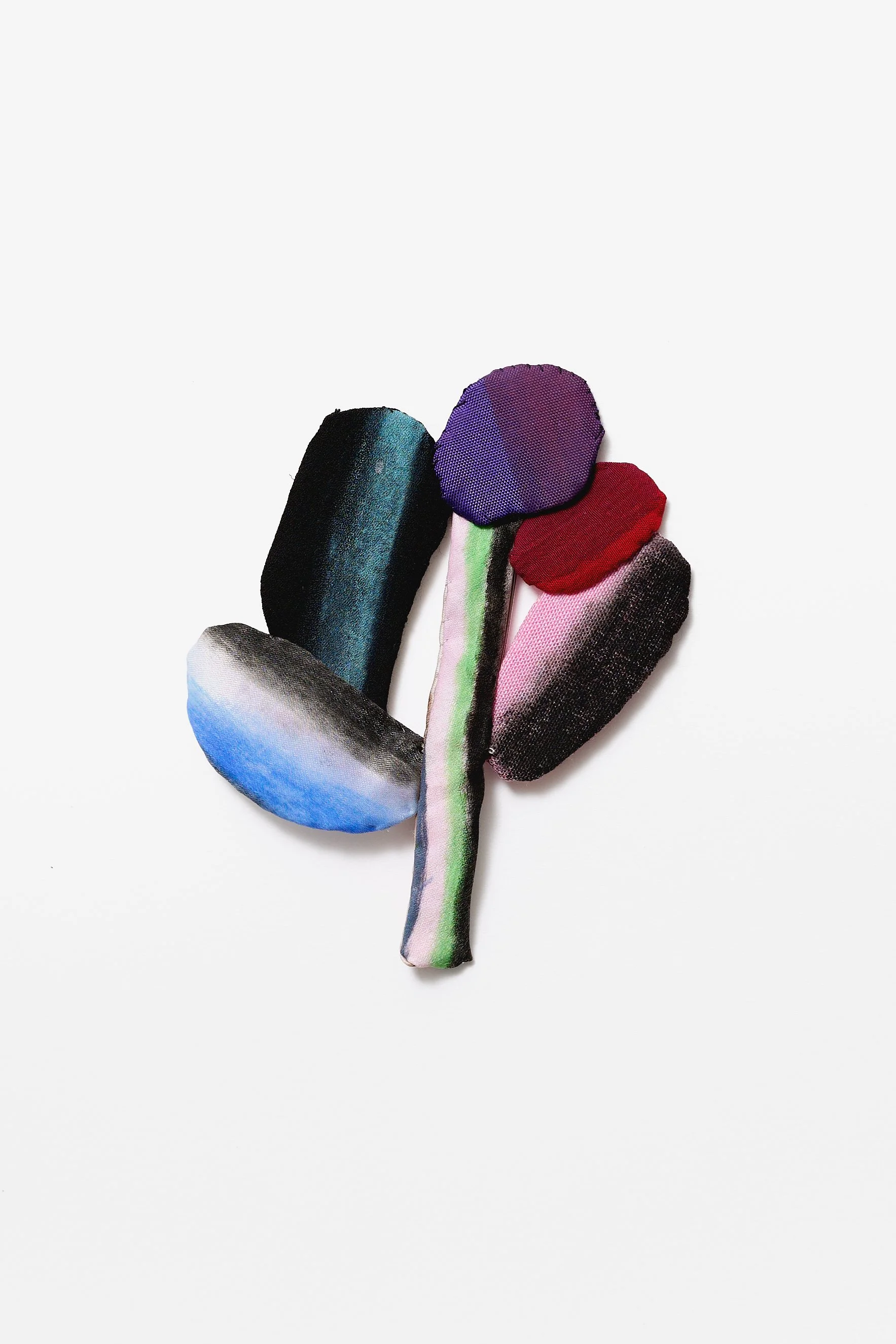
46. Peta Kruger, ‘Floral’ brooch, (blue, green, white, red, pink, black, purple, short stem), 2026, paint on fabric, stainless steel, 11.5x9x1cm. Price: $310
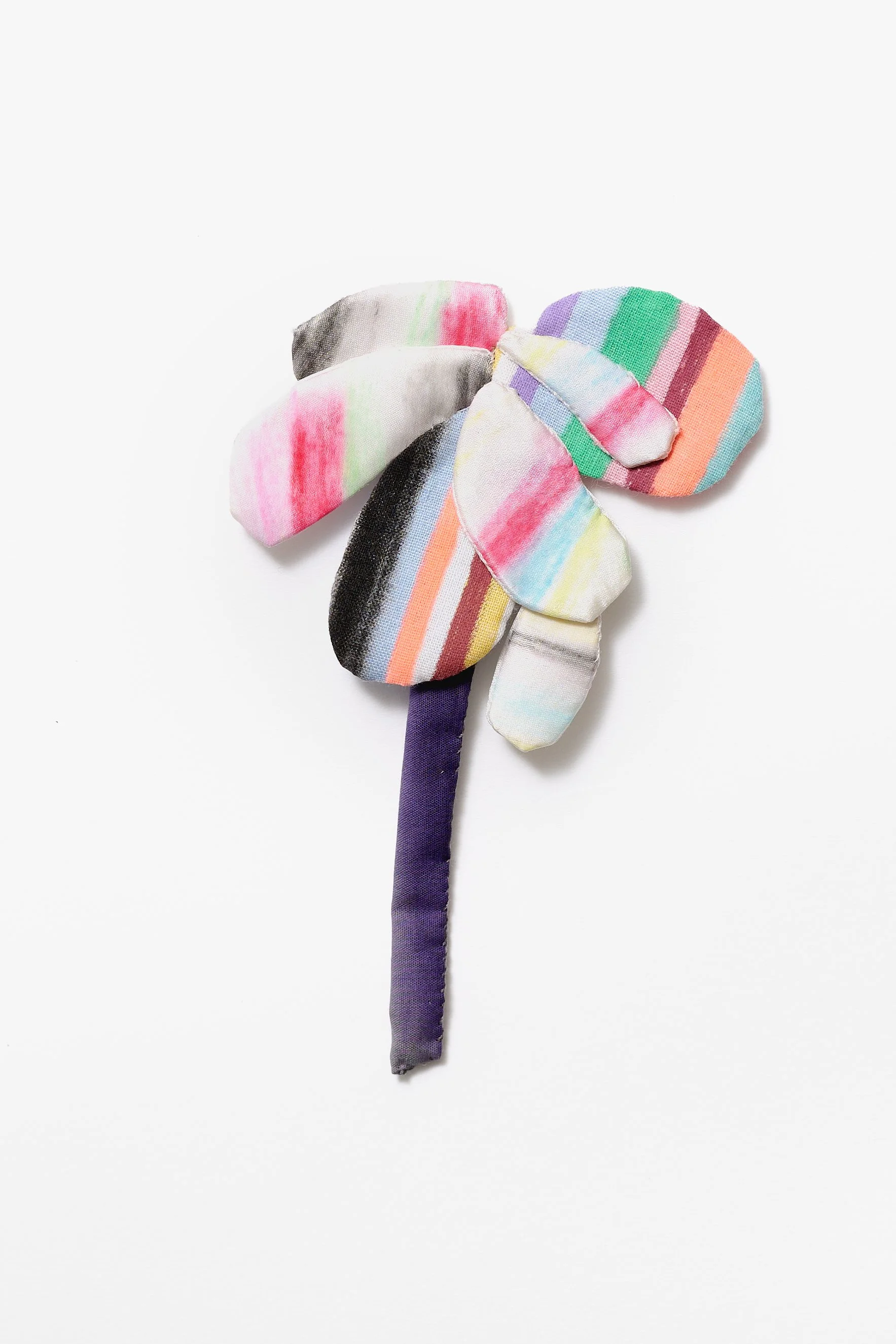
47. Peta Kruger, ‘Floral’ brooch, (multi-colour, long stem), 2026, paint on fabric, stainless steel, 15x10x1cm. Price: $310
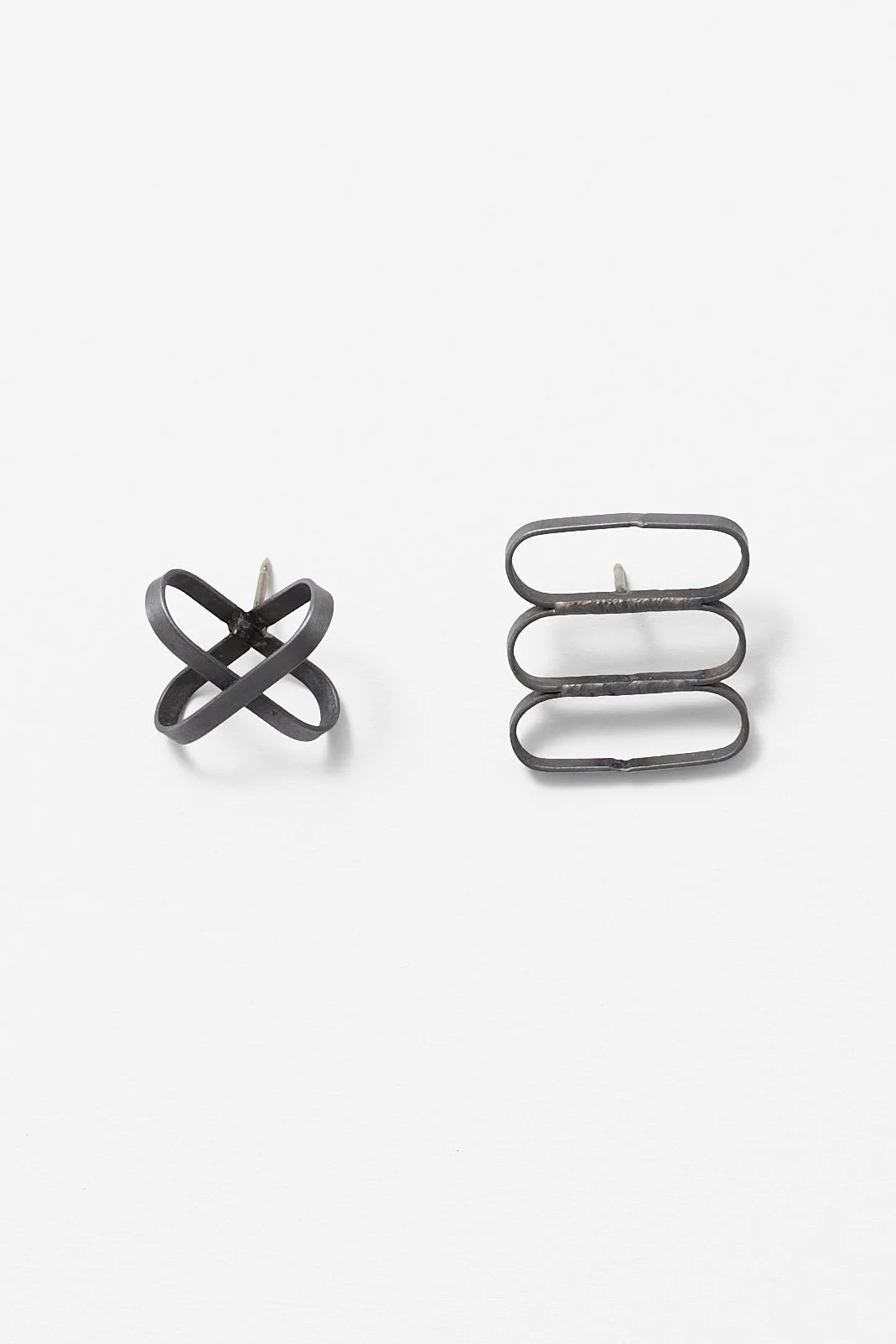
48. Melissa Cameron, left: ‘Sweeper Blade Cross Pin’, 2025, found steel street sweeper blades, nickel silver pin, waxed brushed finish, 2.7x2.7x 2cm. Price: $180; right, ‘Sweeper Blade 3 link pin’, 2025, found steel street sweeper blades, nickel silver pin, waxed brushed finish, 3x2x1cm. Price: $130.
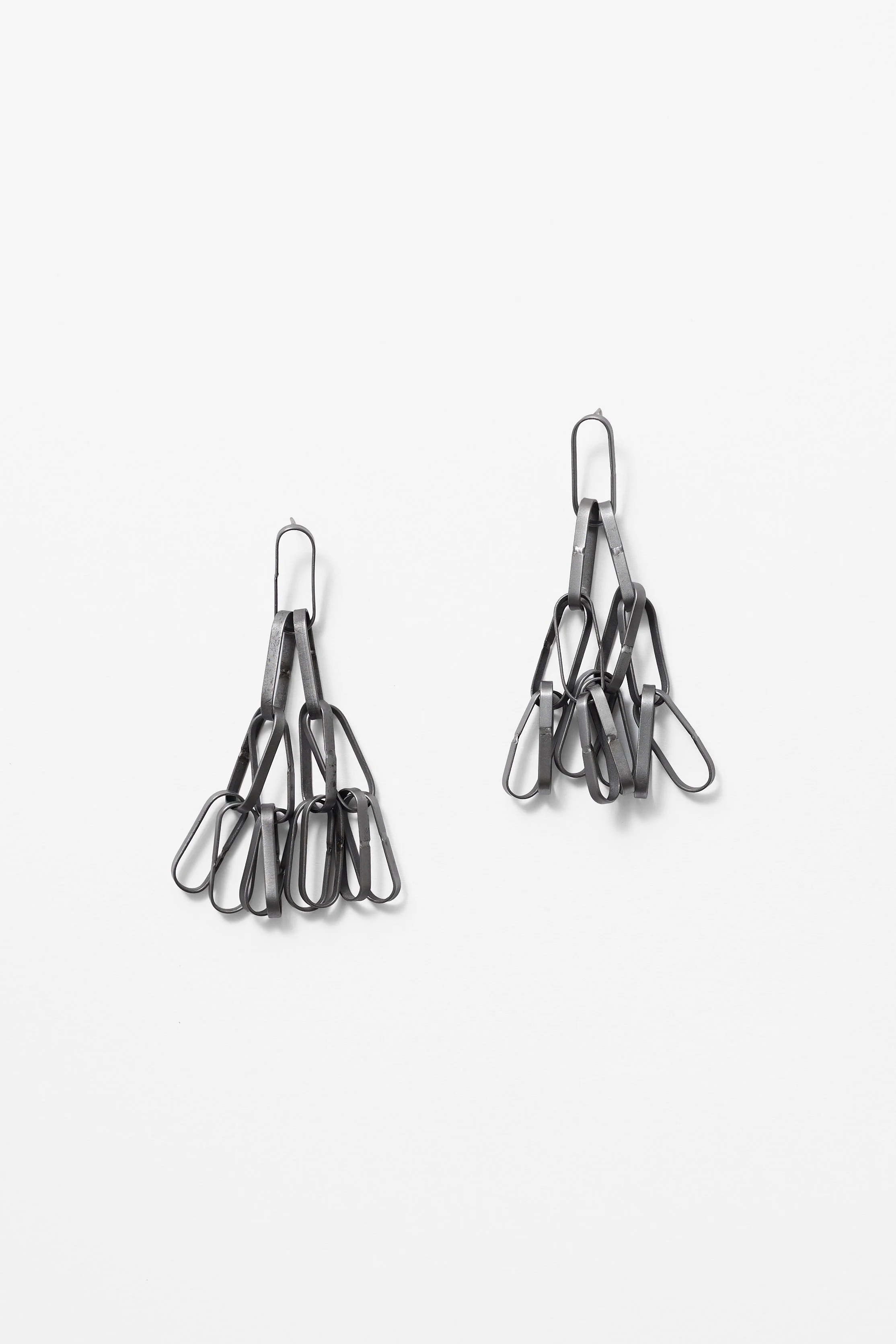
49. Melissa Cameron, ‘Sweeper Blade 4 Tier Earrings – profile’, 2025, found steel street sweeper blades, stainless steel, brushed finish, each earring measures: 10 x4x2cm. Price: $480
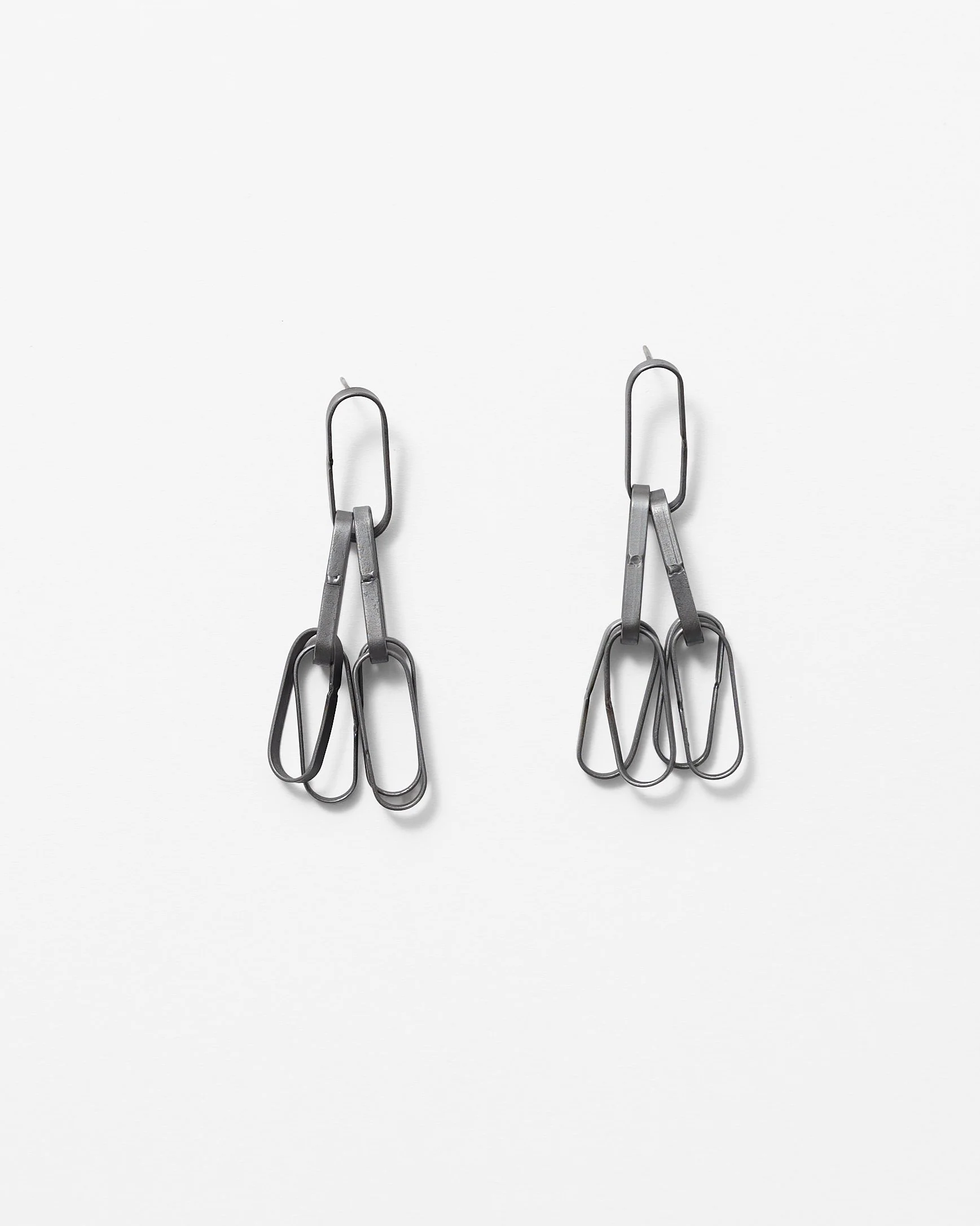
50. Melissa Cameron, ‘Sweeper Blade 3 Tier Earrings – profile’, 2025, found steel street sweeper blades, stainless steel, brushed finish, each earring measures: 7.5x2x1.8cm. Price: $350
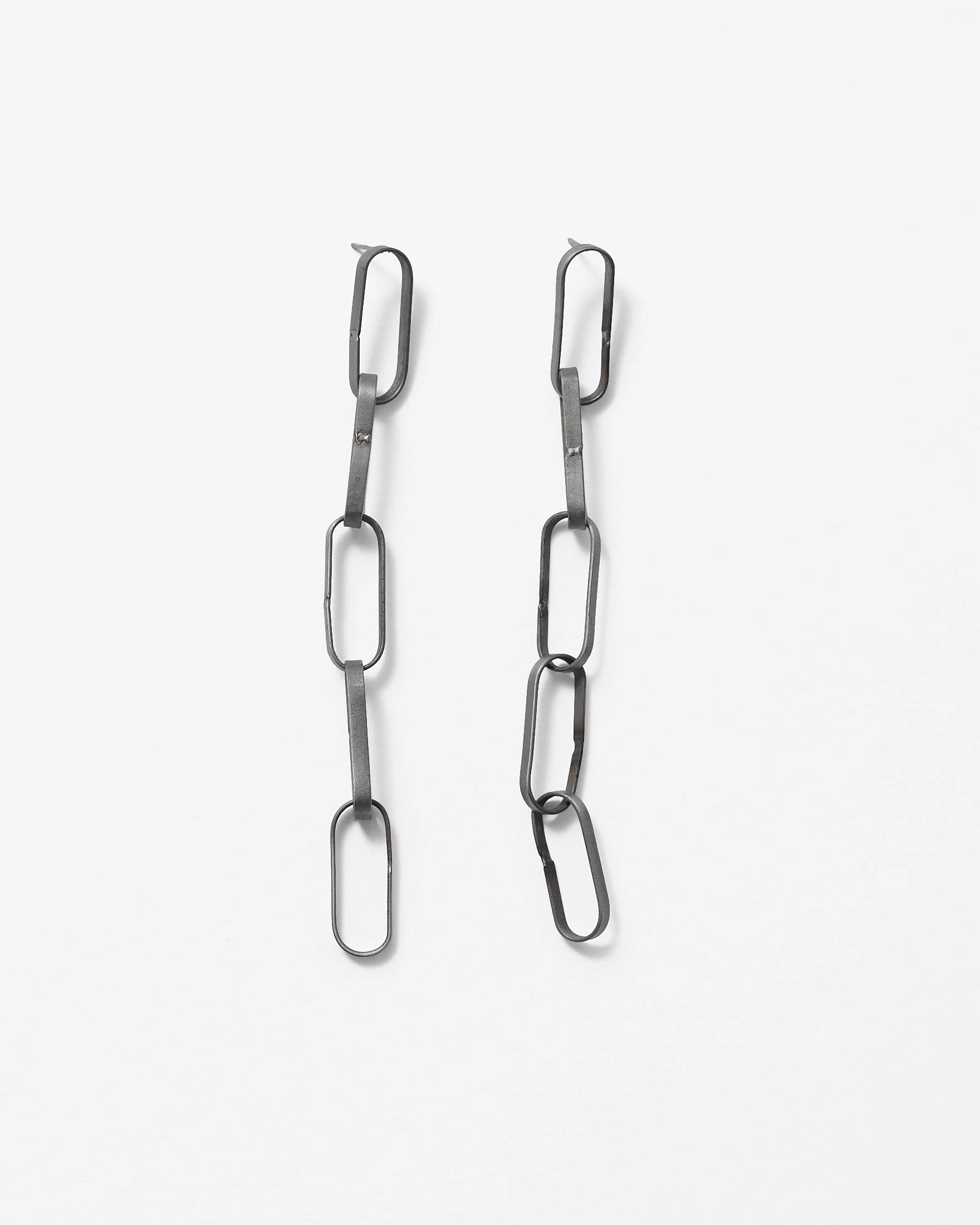
51. Melissa Cameron, ‘Sweeper Blade 5 link earrings’, 2025, found steel street sweeper blades, stainless steel posts, waxed brushed finish, each earring measures: 3x2x1cm. Price: $280
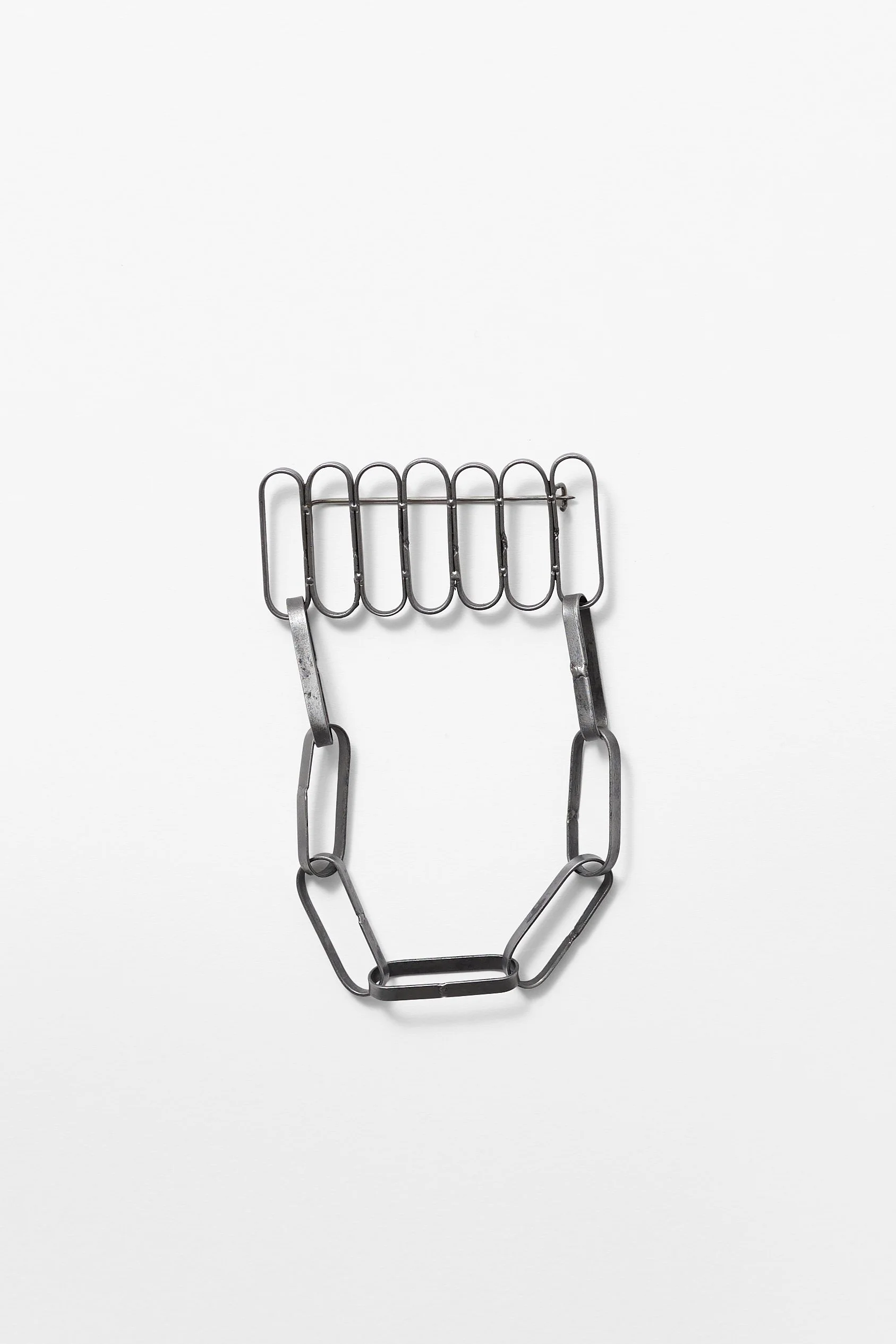
52. Melissa Cameron, ‘rcw...#1 brushed chain brooch 01’, 2024, found steel street sweeper blades, stainless steel, brushed finish, 6x10.5x1cm. Price: $480
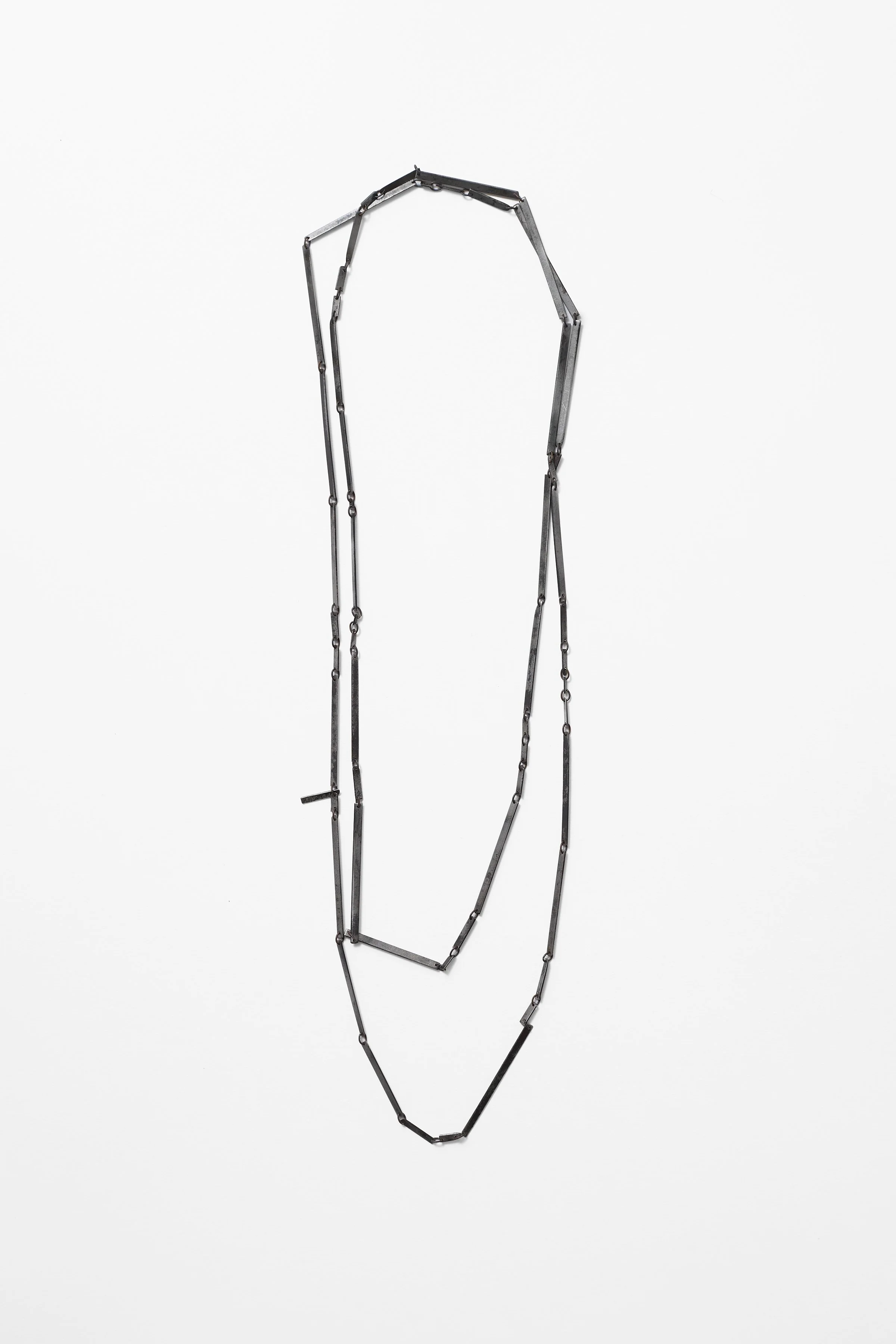
53. Melissa Cameron, ‘rapidly #b – chain’, 2024, found steel street sweeper blades, stainless steel chain links, brushed steel, 145cm chain. Price: $450
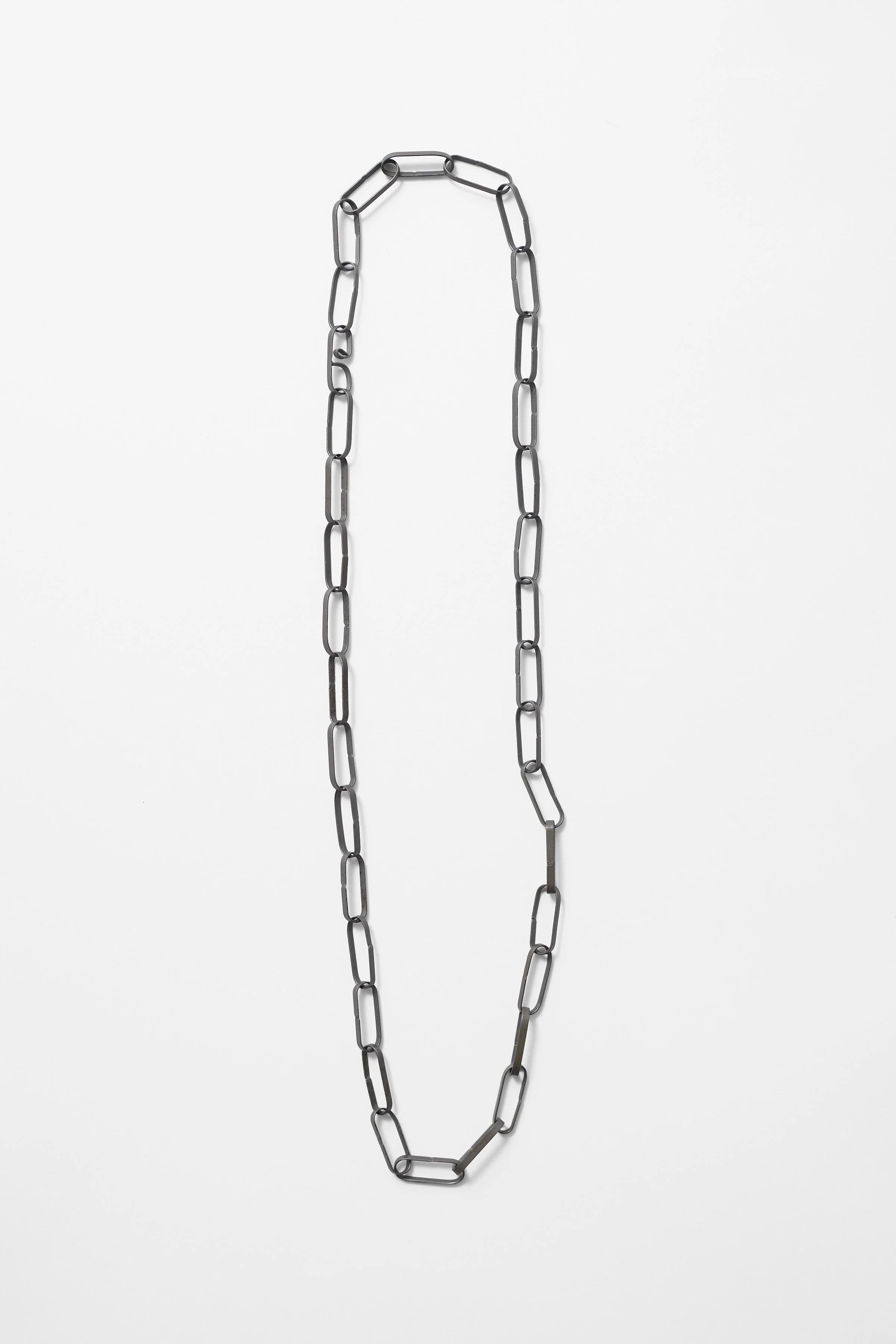
54. Melissa Cameron, ‘rcw... #1 Sandblasted Chain’, 2023, found steel street sweeper blades, sandblasted finish. 30 links, 1x7.5cm chain. Price: $480
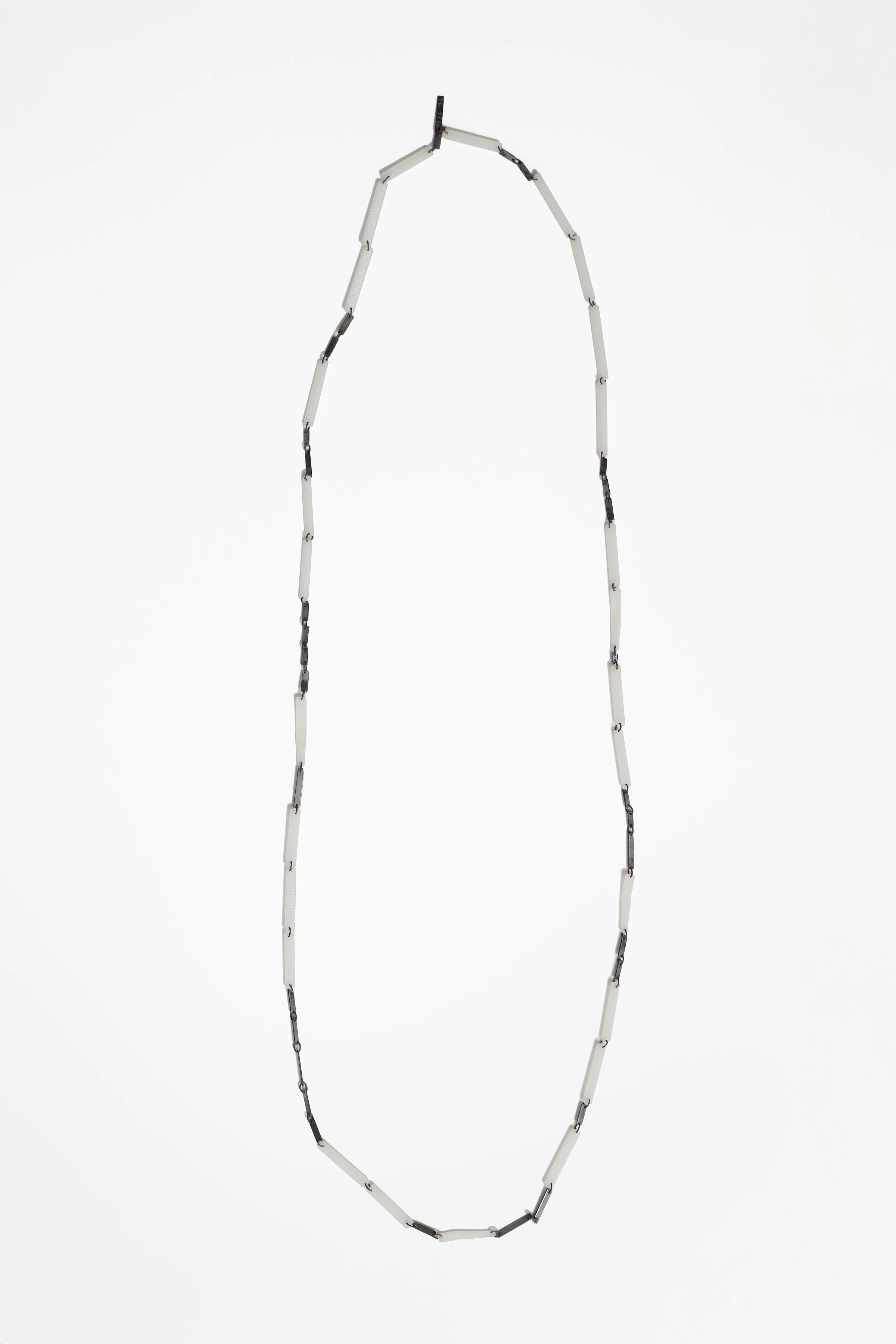
55. Melissa Cameron, ‘rapidly #c – chain’, 2024, found steel street sweeper blades, recycled nylon zip ties, stainless steel chain links, brushed steel, 110cm chain. Price: $400
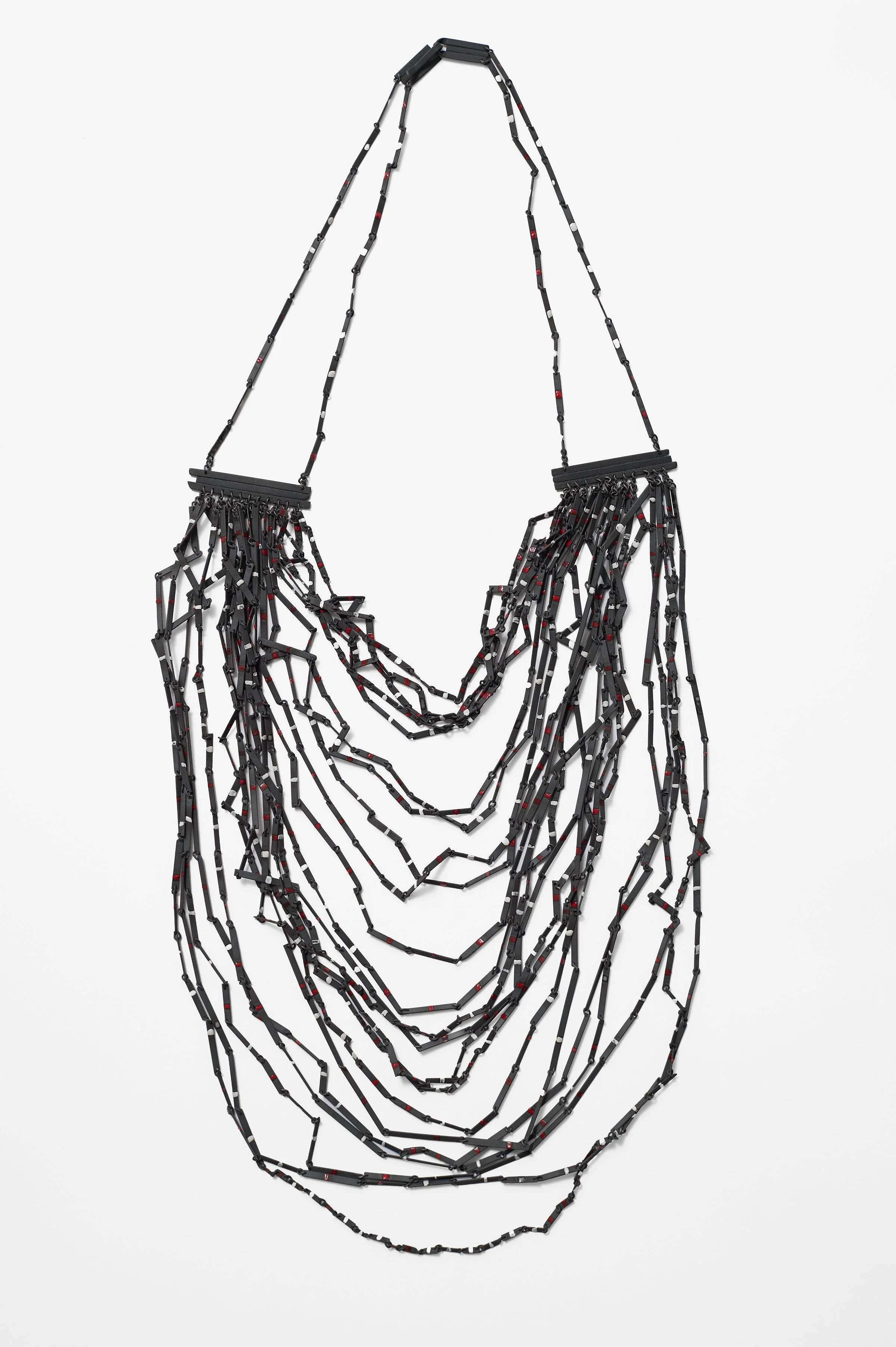
56. Melissa Cameron, ‘rapidlyclosingwindow... #5’, found steel street sweeper blades, vitreous enamel, recycled steel chain, heat blackened finish, 55x22x1cm. Price: $8,000
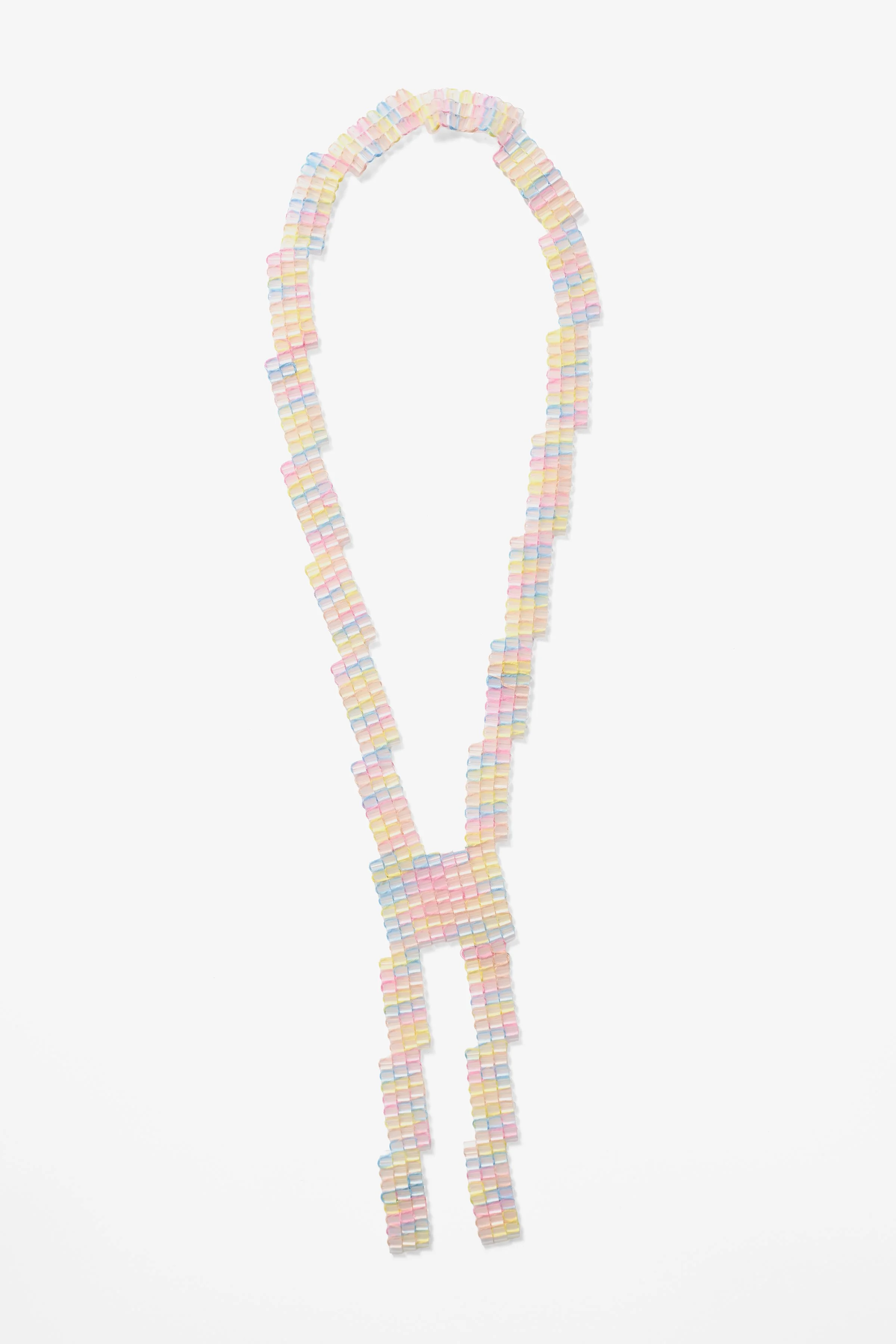
57. Eli Gianinni, ‘Kewpie Doll Series #4 Zig-Zag Pendant’, 2026, plastic beads and cotton thread, necklace 32cm, pendant 16x4.5x.3cm. Price: $350
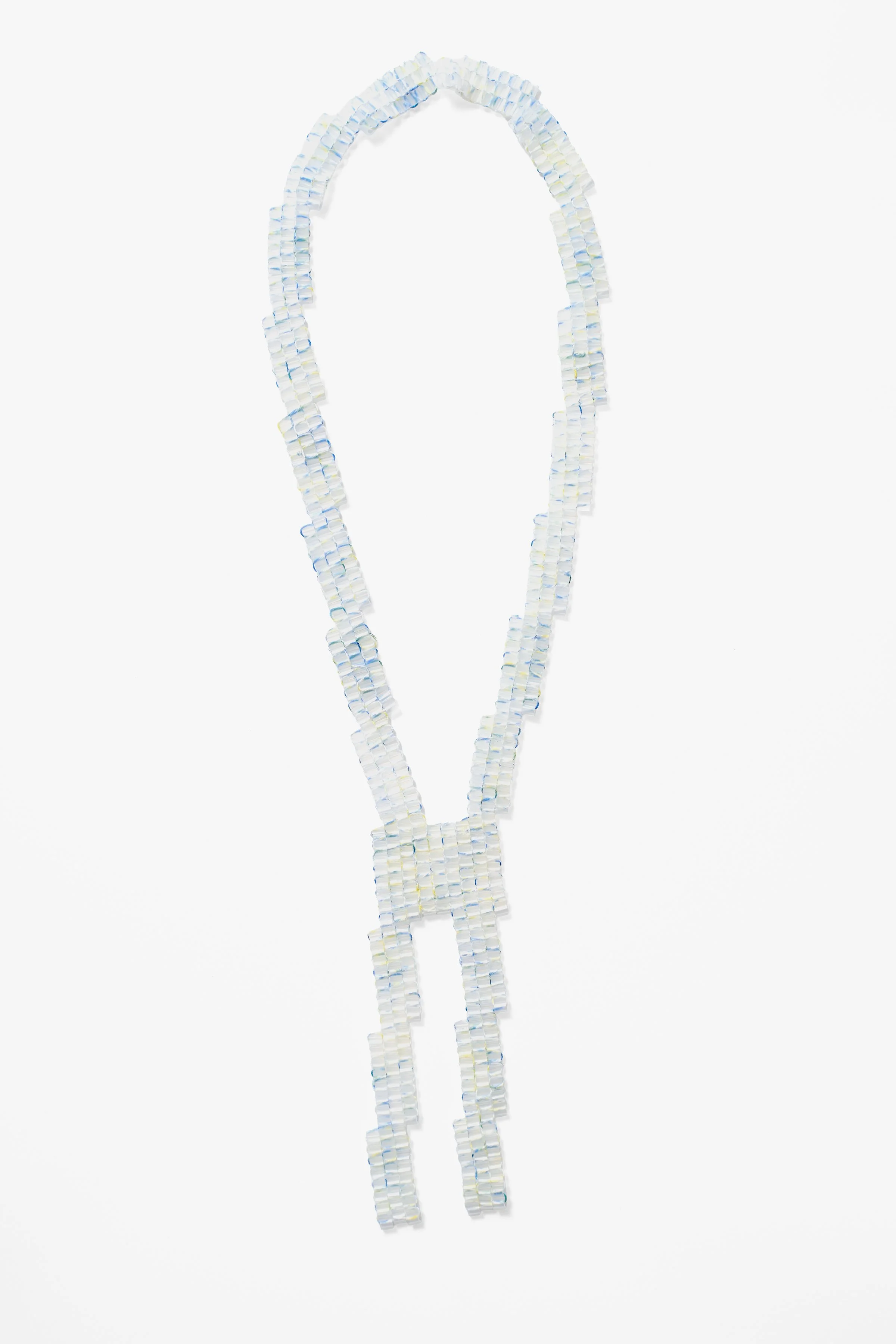
58. Eli Gianinni, ‘Speckle Series #2 Zig-Zag Pendant’, 2026, plastic beads and cotton thread, necklace 32cm, pendant 16x4.5x.3cm. Price: $350
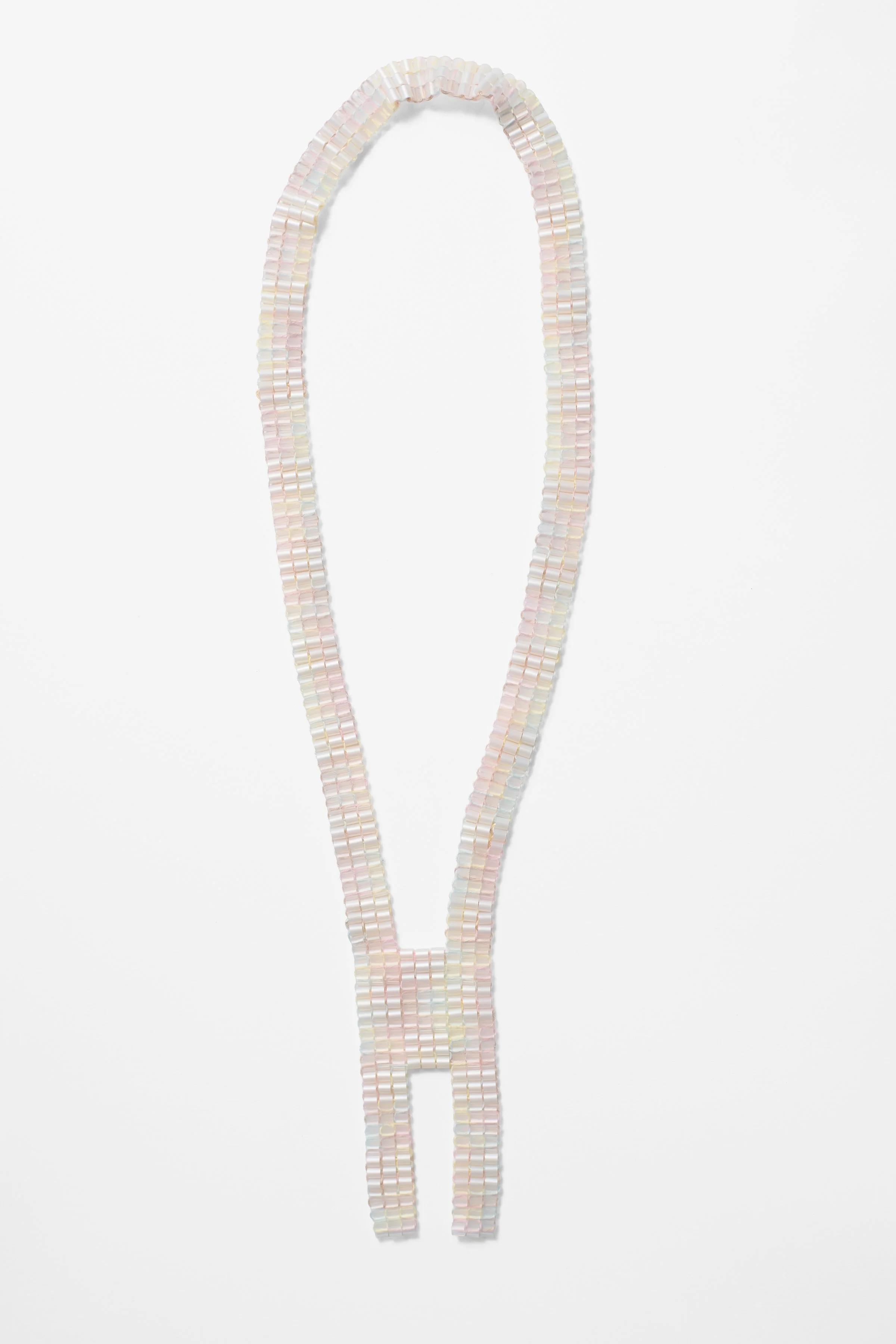
59. Eli Gianinni, ‘Moonbeam Series #4 Pearl Checkers Pendant’, 2026, plastic beads and cotton thread, necklace 36cm, pendant 11x5.2x.3cm. Price: $350
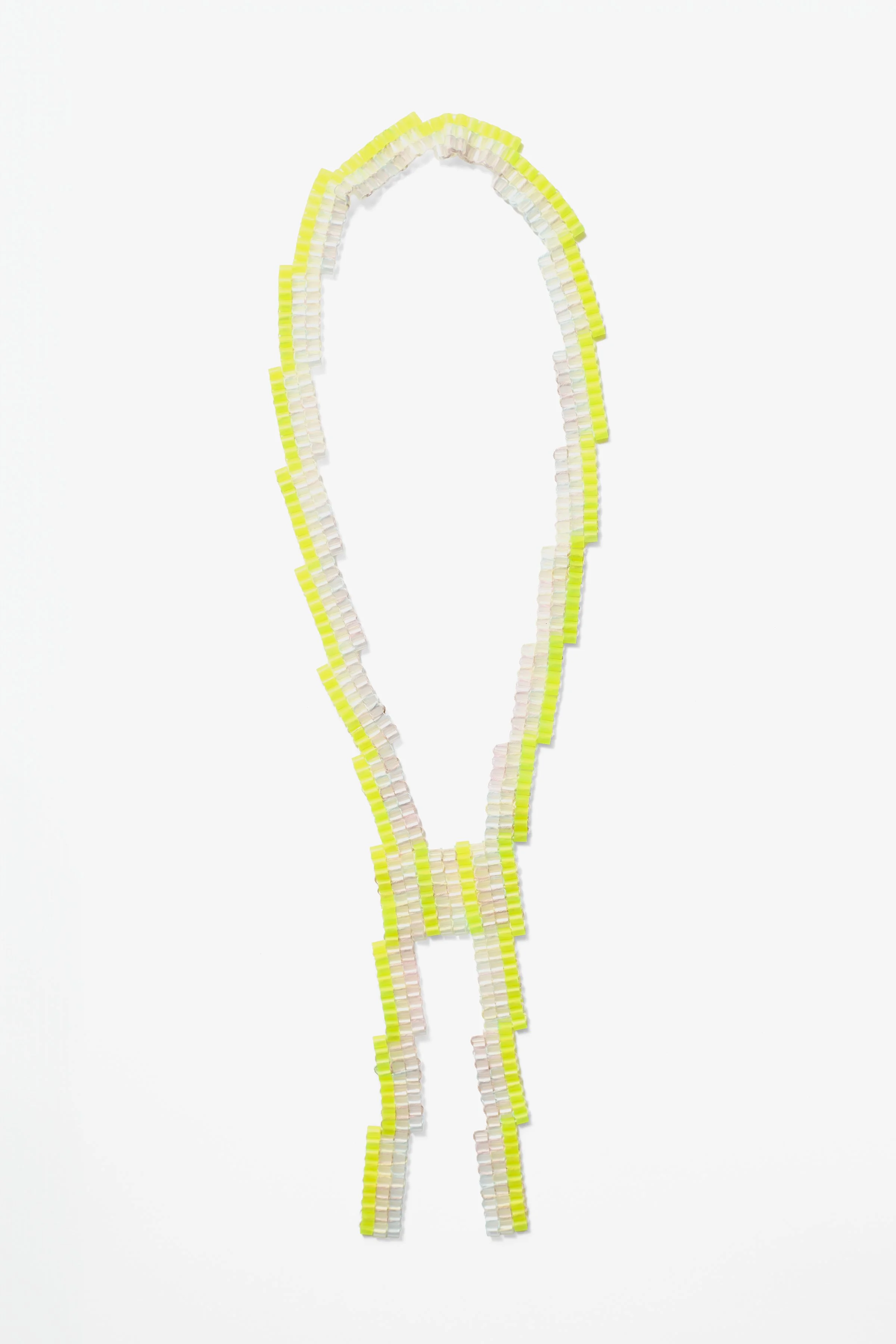
60. Eli Gianinni, ‘Fluro Series #1 Zig-Zag Pendant’, 2026, plastic beads and cotton thread, necklace 32cm, pendant 16.5x6x.3cm. Price: $350
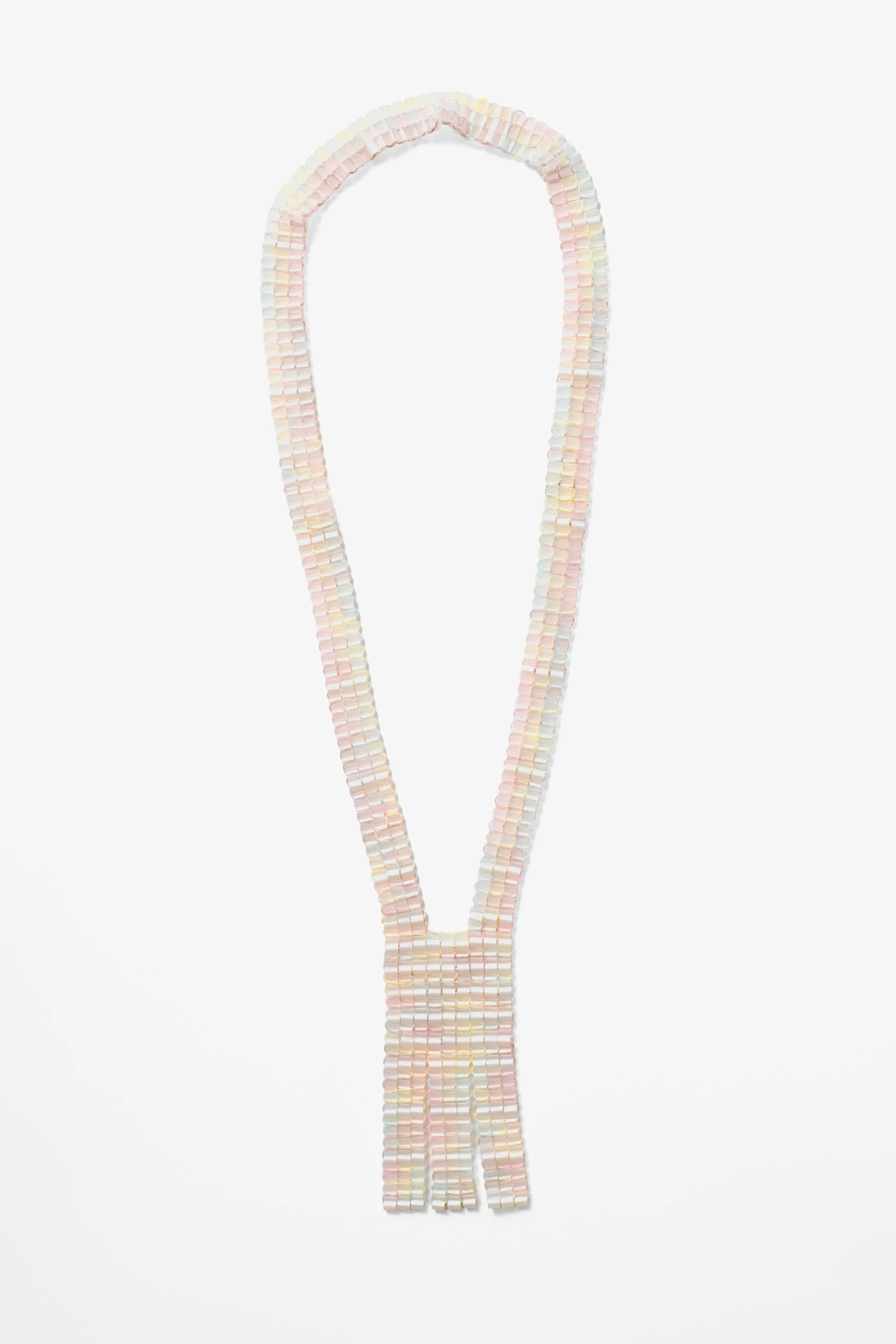
61. Eli Gianinni, ‘Moonbeam Series #3 Pearl, Stripes Pendant’, 2025, plastic beads and cotton thread, necklace 37cm, pendant 11.5x5x.3cm. Price: $350
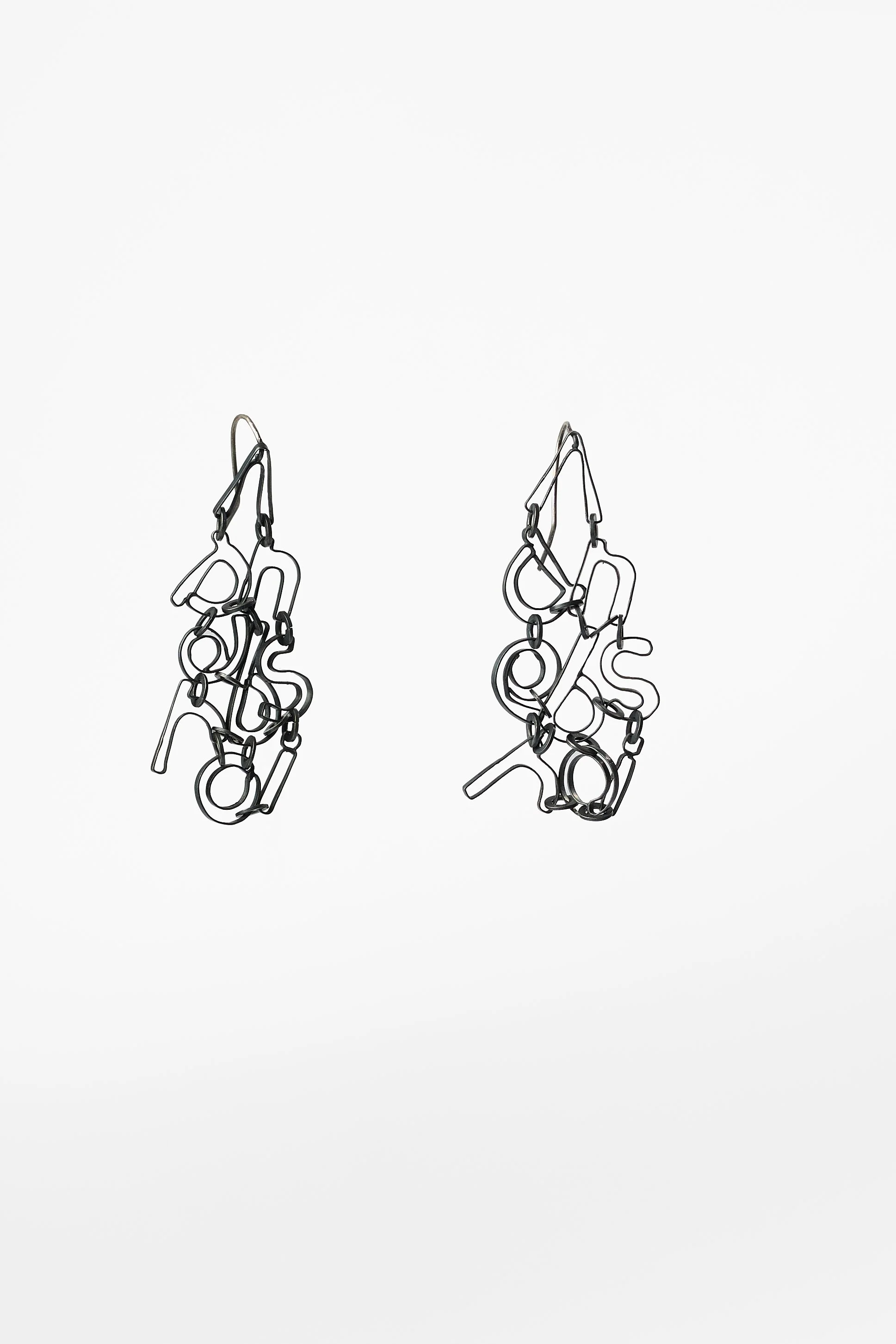
62. Roseanne Bartley, ‘Every earring tells a story: 8 letters’, earrings, 2025, oxidised sterling silver, each earring measures: 7.5x4x1.5cm. Price: $650; also available ‘Every earring tells a story: 6 letters’, earrings, 2025, oxidised sterling silver, each earring measures: 7.5x3x1.5cm. Price: $550.
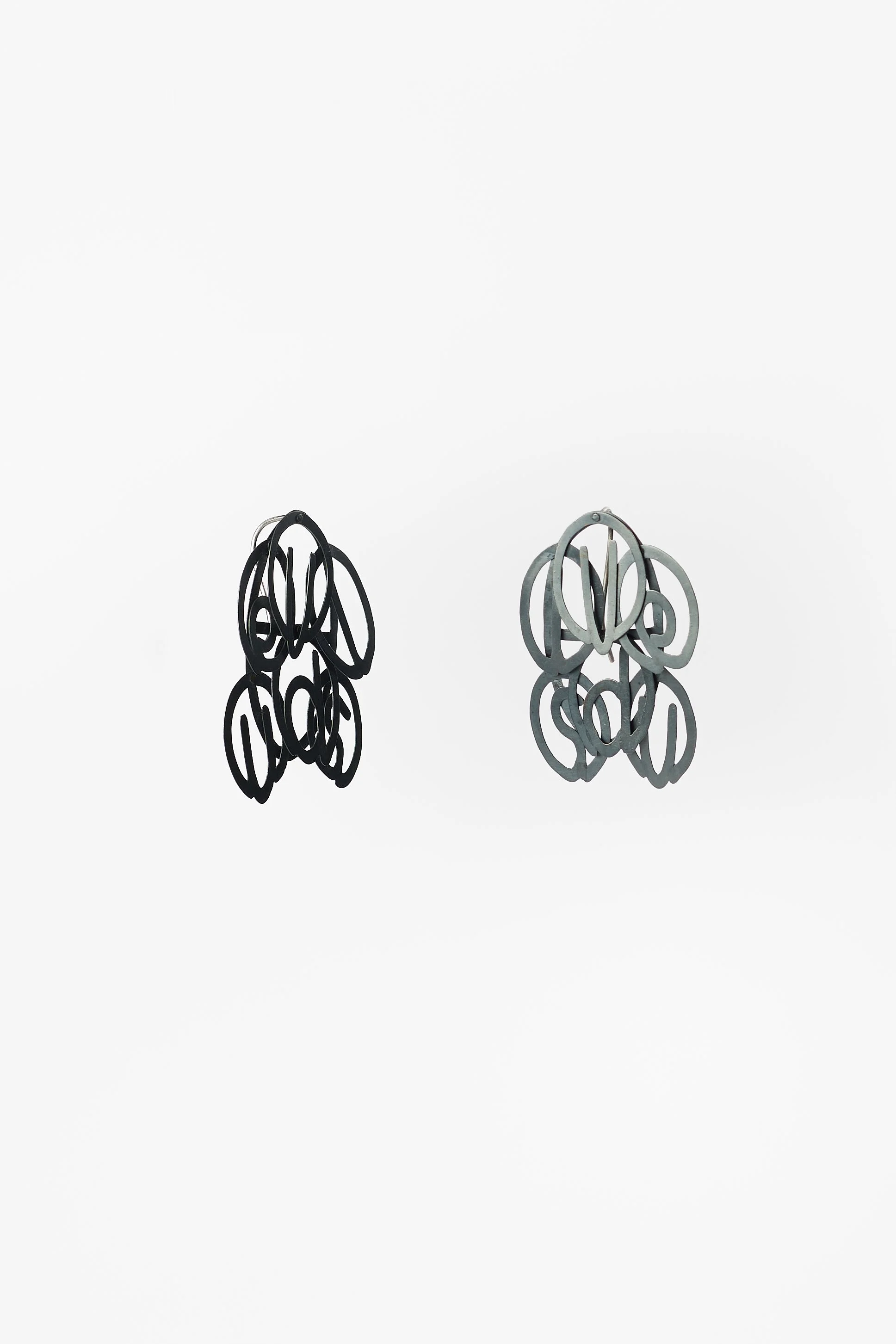
63. Roseanne Bartley, ‘Speaking Common Raven’, earrings, 2025, oxidised sterling silver, each earring measures: 5x3.2x1.6cm. Price: $650
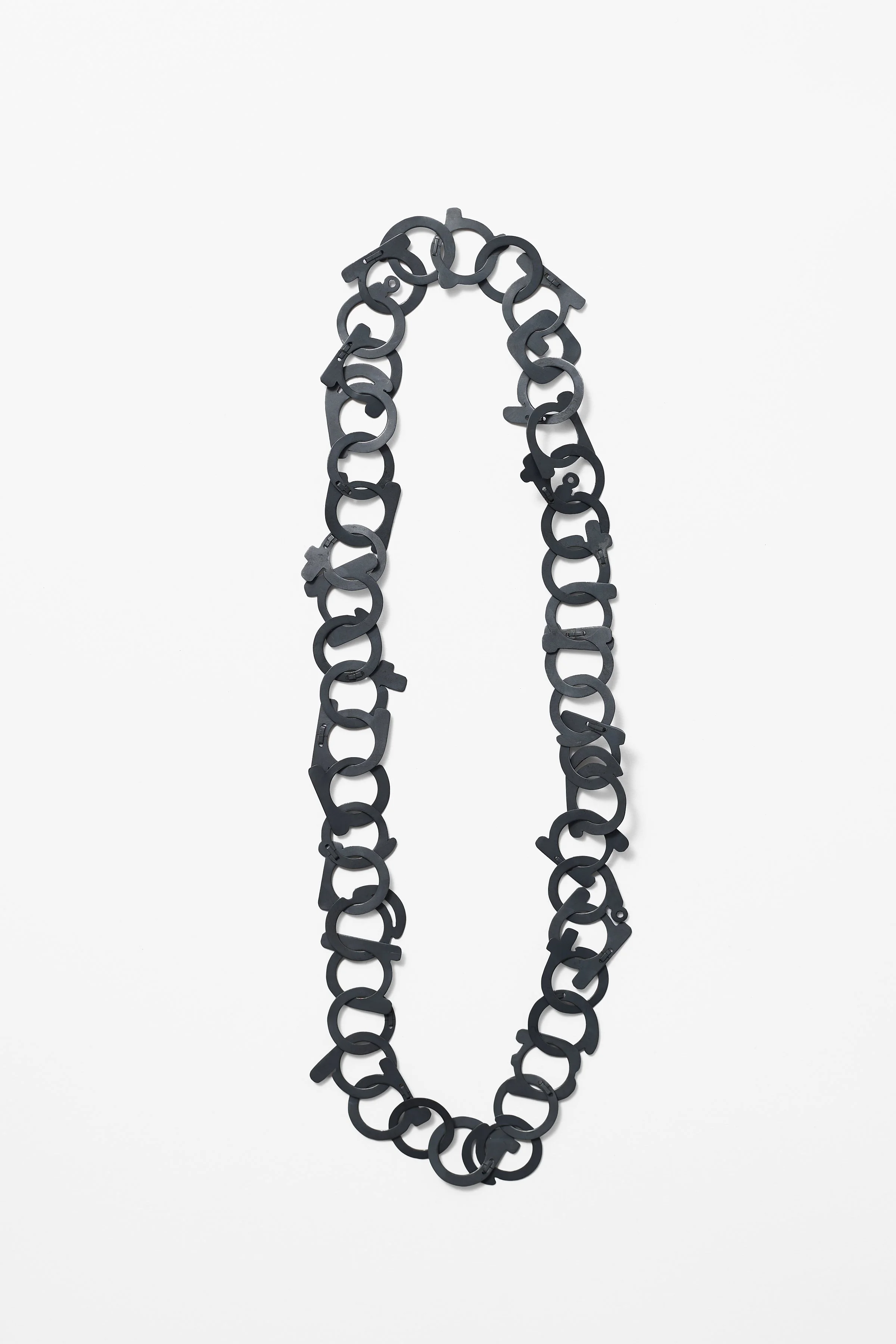
64. Roseanne Bartley, ‘Hovering on the threshold of something beautiful’, necklace, 20254, oxidised sterling silver, necklace section 32cm, pendant 12x10x.5cm. Price: $1,500
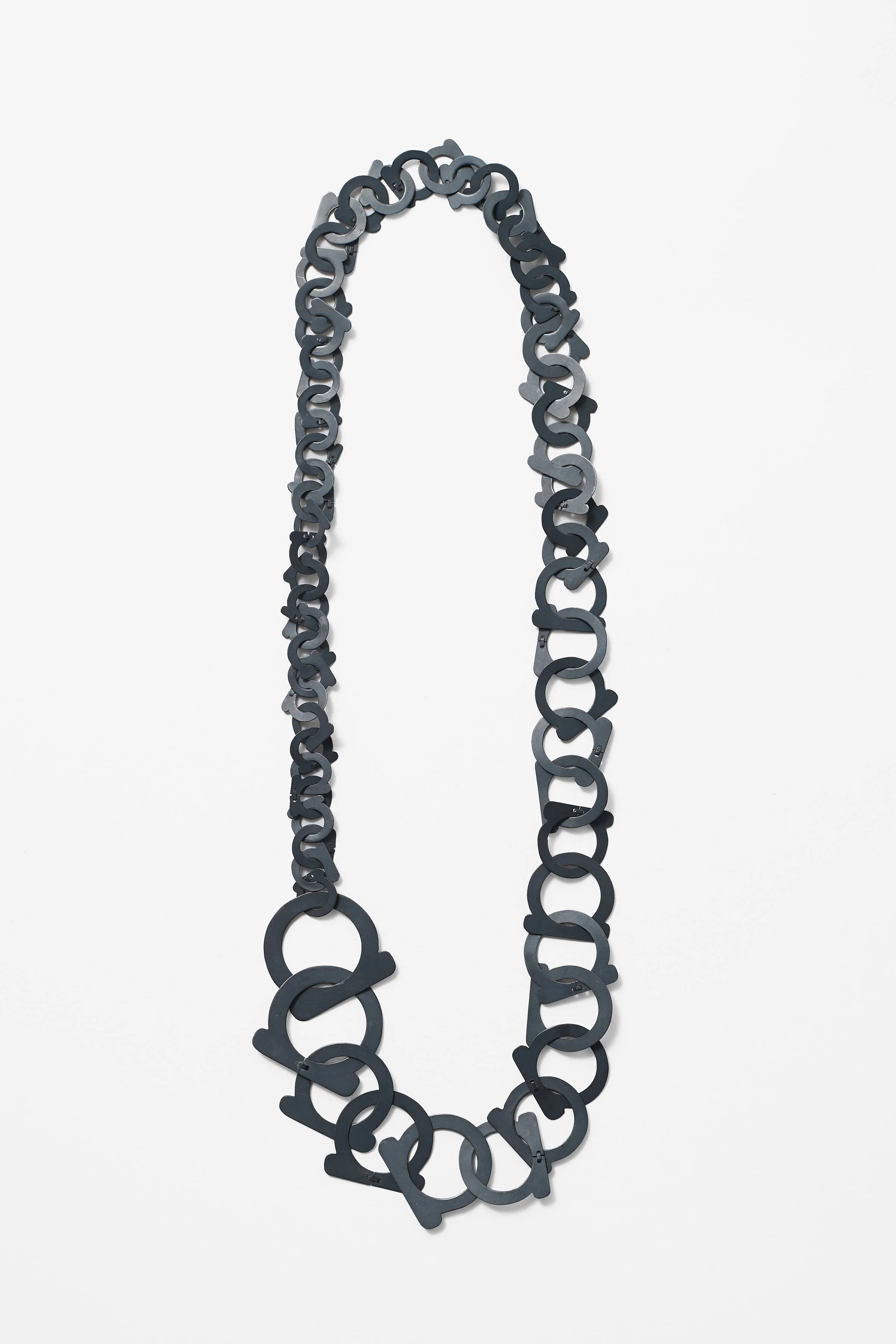
65. Roseanne Bartley, ‘”a” graduated necklace – long’, oxidised sterling silver, 35x1.4-4x.5cm. Price: $1,600
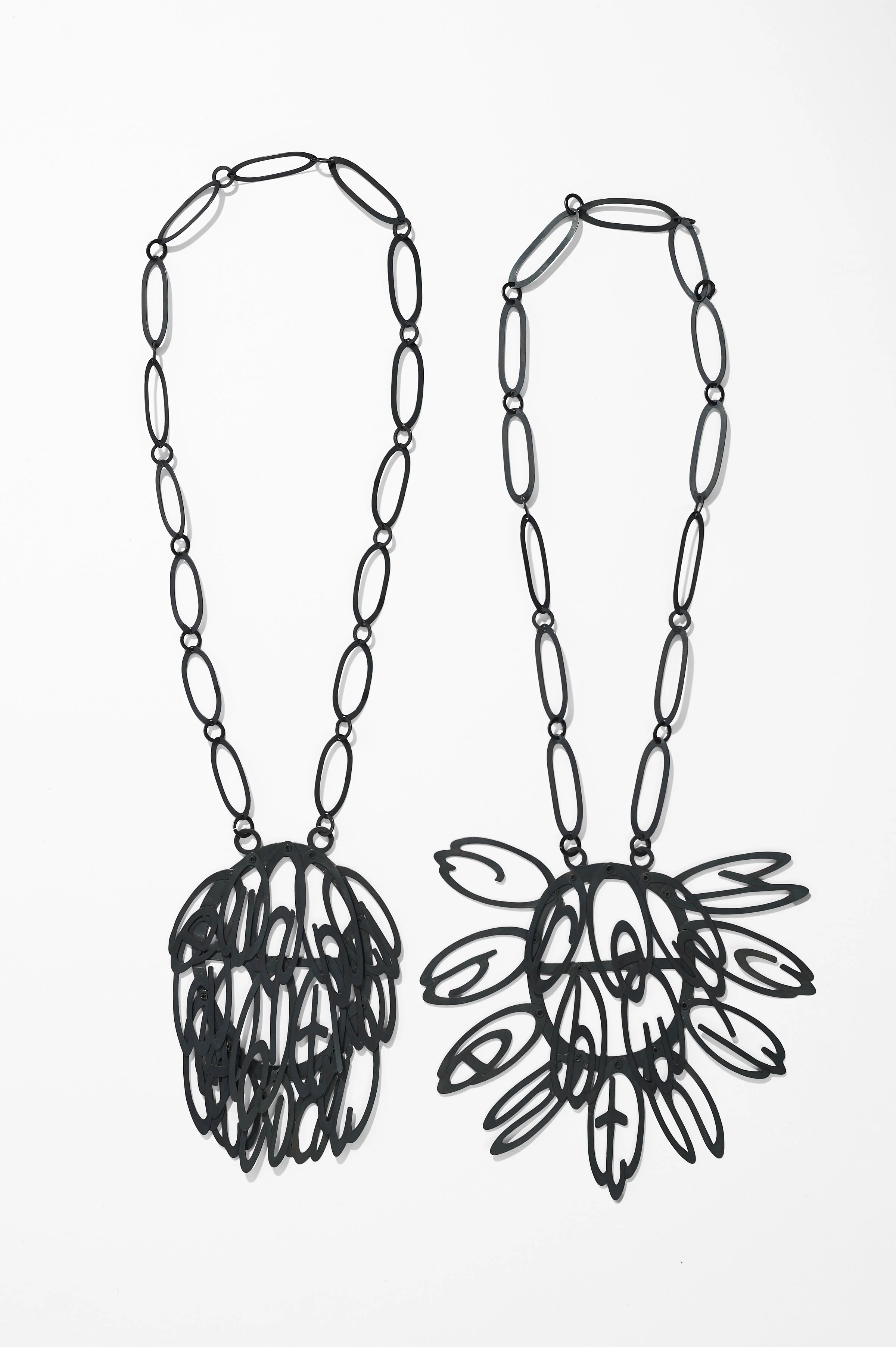
66. Roseanne Bartley, ‘Speaking Common Raven’ necklace, 2025, oxidised sterling silver, necklace section 28cm, pendant 14x9x.5cm. Price: $3,200
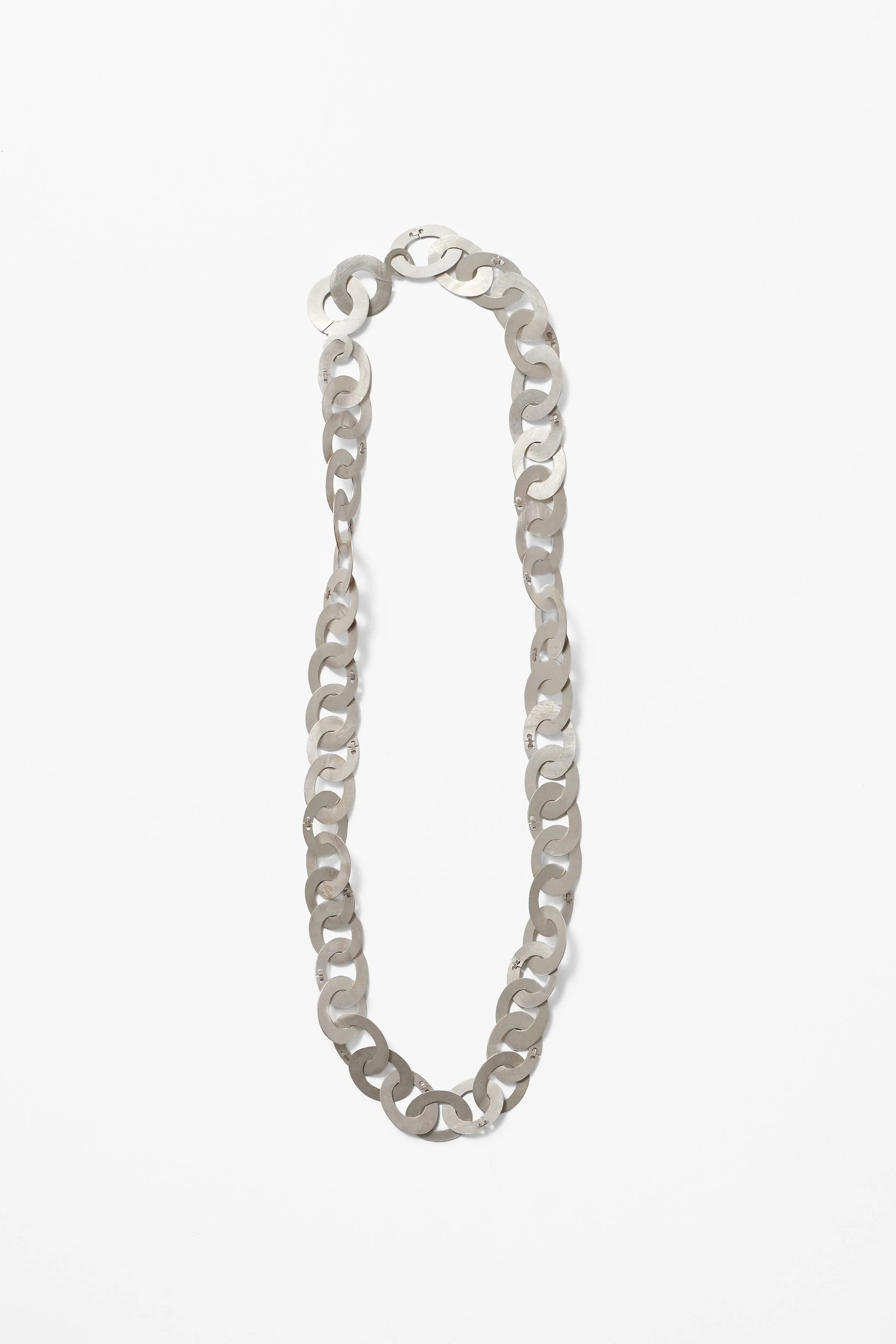
67. Roseanne Bartley, ‘O-link necklace’, 2025 sterling silver, 29.5x1.5x.5cm. Price: $1,250
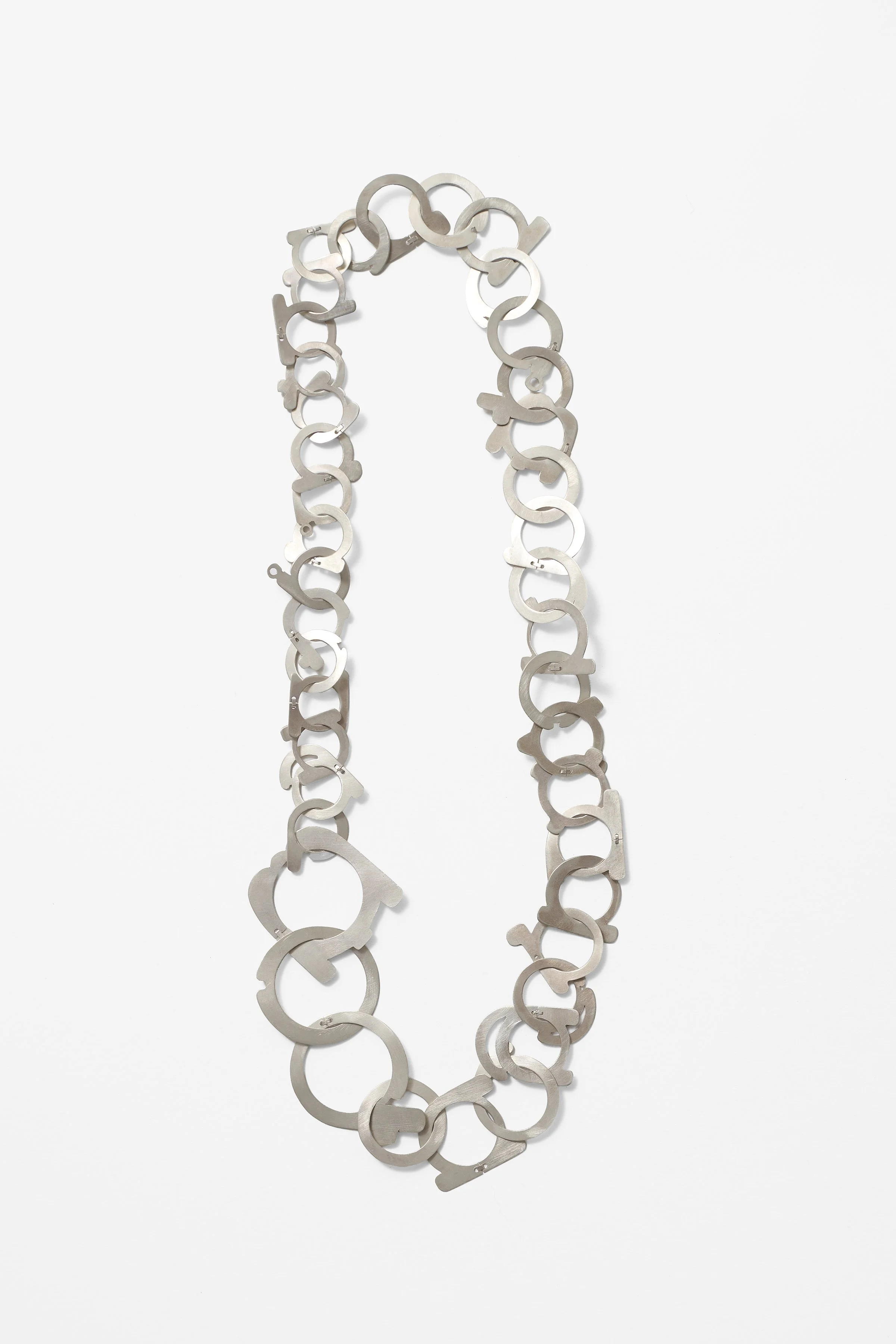
68. Roseanne Bartley, ‘Assorted alphabet necklace’, 2025, sterling silver, 32x2-4x.5cm. Price: $1,500
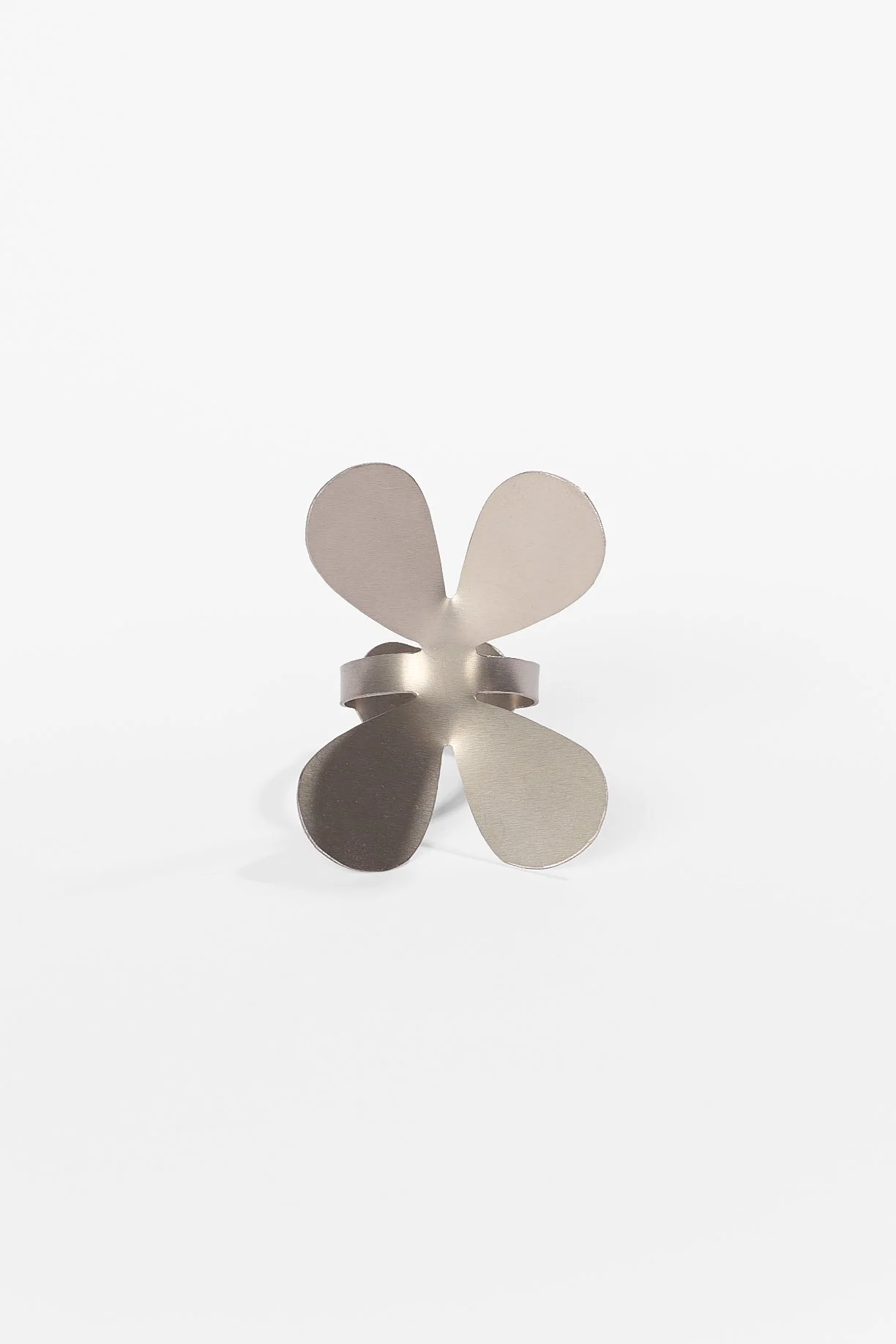
69. Elisa Zorraquin, ‘Protesis para el alma I-III (Prosthesis for the soul), 2026, titanium, 3.5x3.5x4.5, ring size adjustable. Price: $200
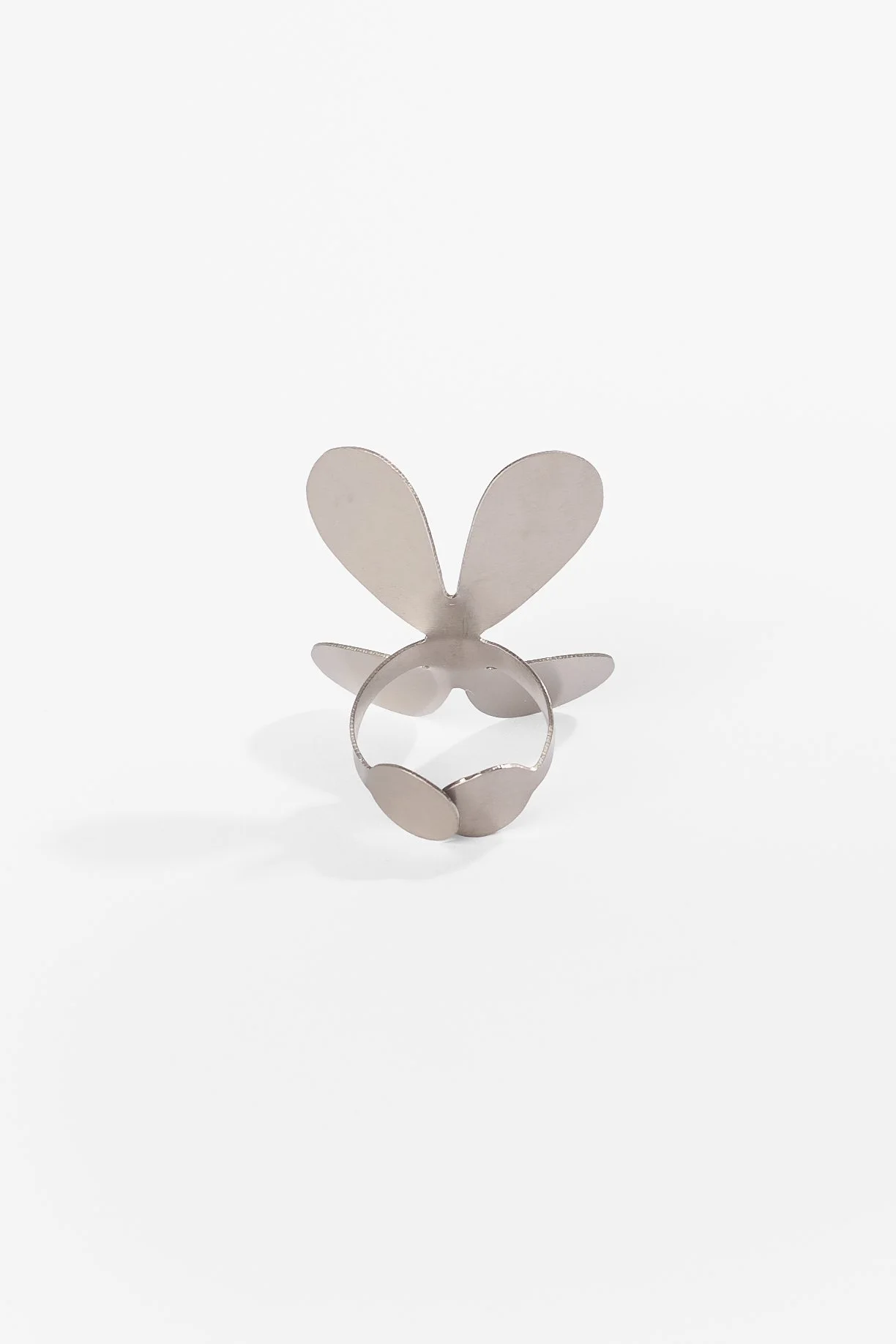
69. Elisa Zorraquin, ‘Protesis para el alma I-III (Prosthesis for the soul), 2026, titanium, 3.5x3.5x4.5, ring size adjustable. Price: $200
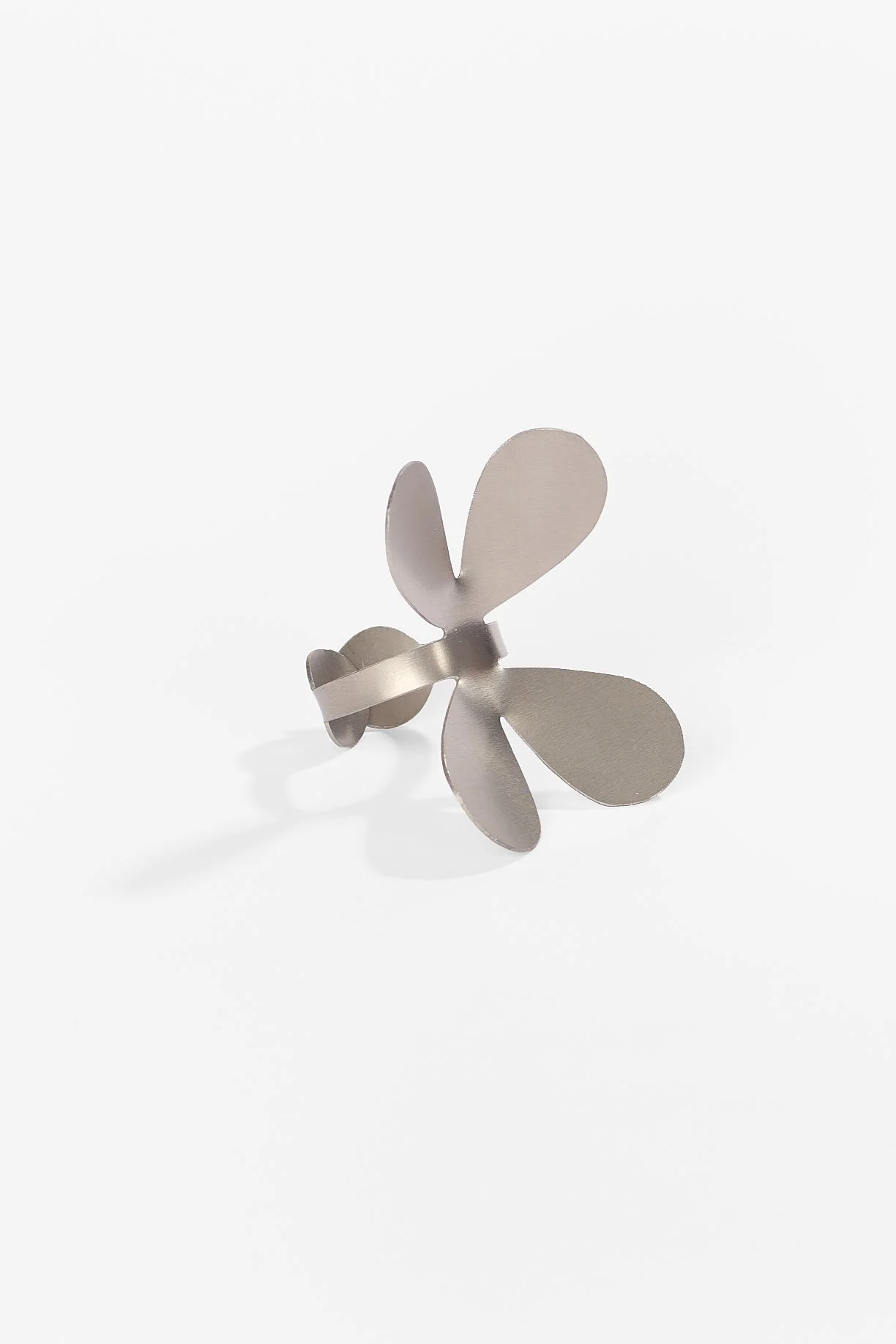
69. Elisa Zorraquin, ‘Protesis para el alma I-III (Prosthesis for the soul), 2026, titanium, 3.5x3.5x4.5, ring size adjustable. Price: $200
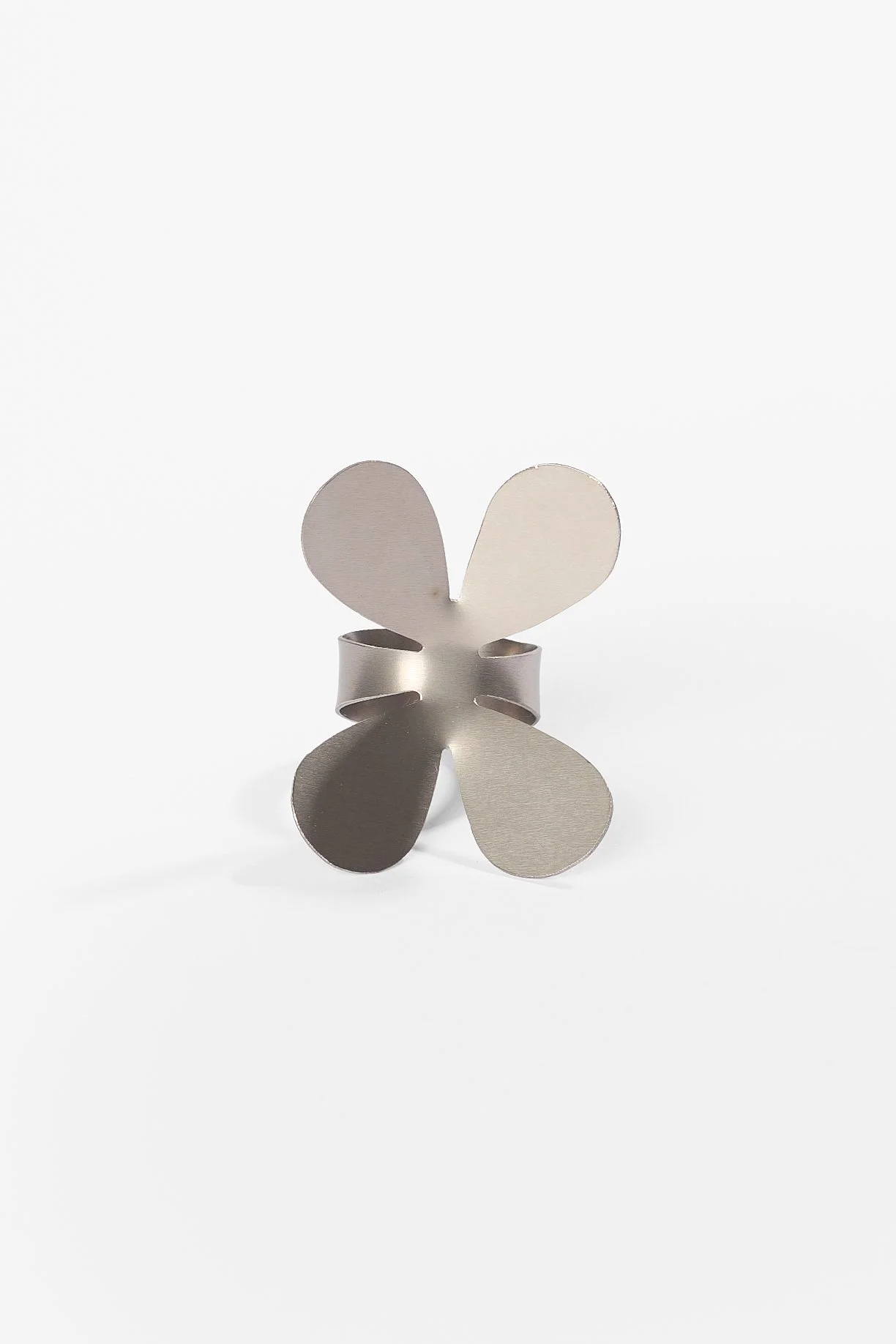
70. Elisa Zorraquin, ‘Protesis para el alma IV (Prosthesis for the soul), 2026, titanium, 3.5x3.5x4.5, ring size adjustable. Price: $200
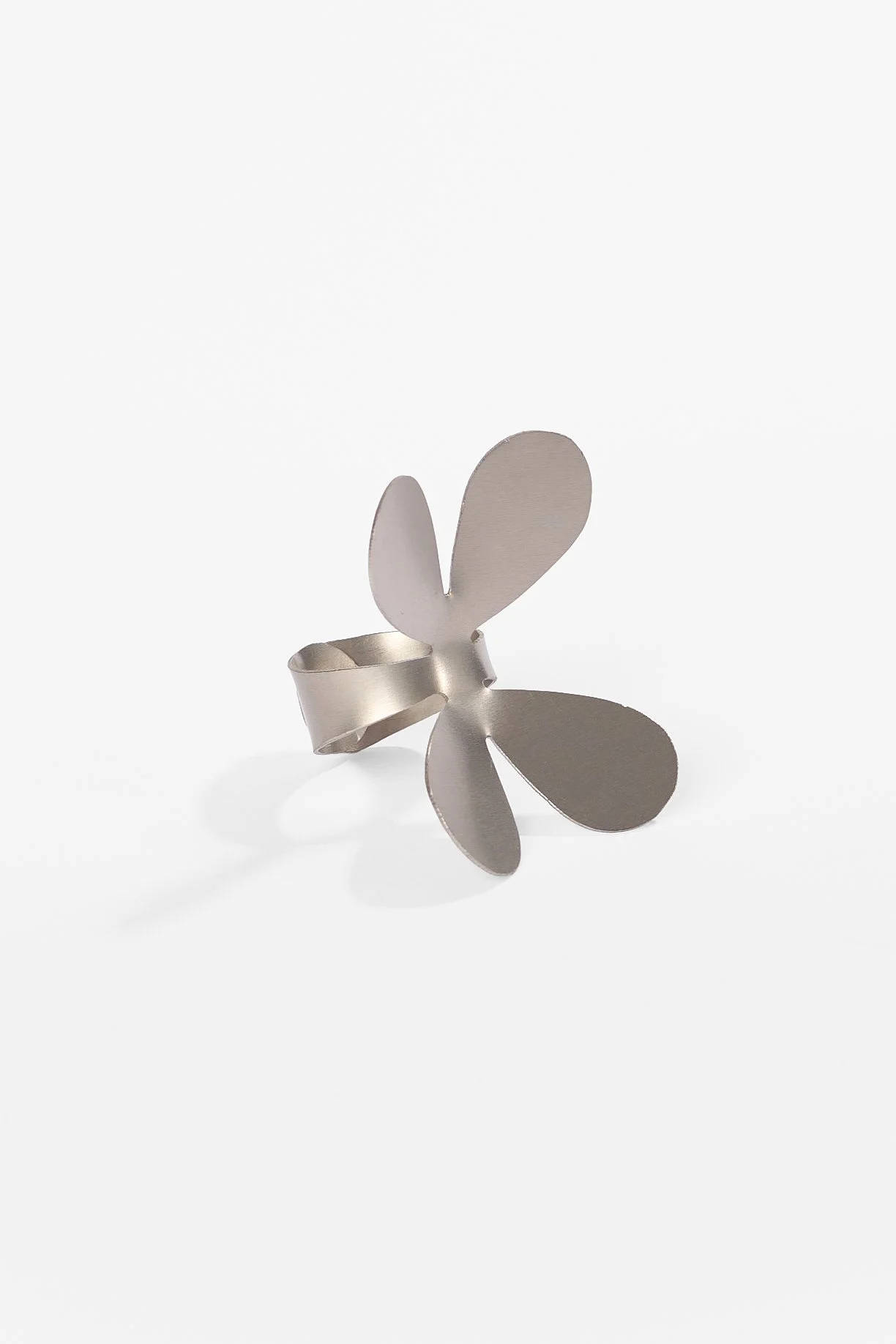
70. Elisa Zorraquin, ‘Protesis para el alma IV (Prosthesis for the soul), 2026, titanium, 3.5x3.5x4.5, ring size adjustable. Price: $200
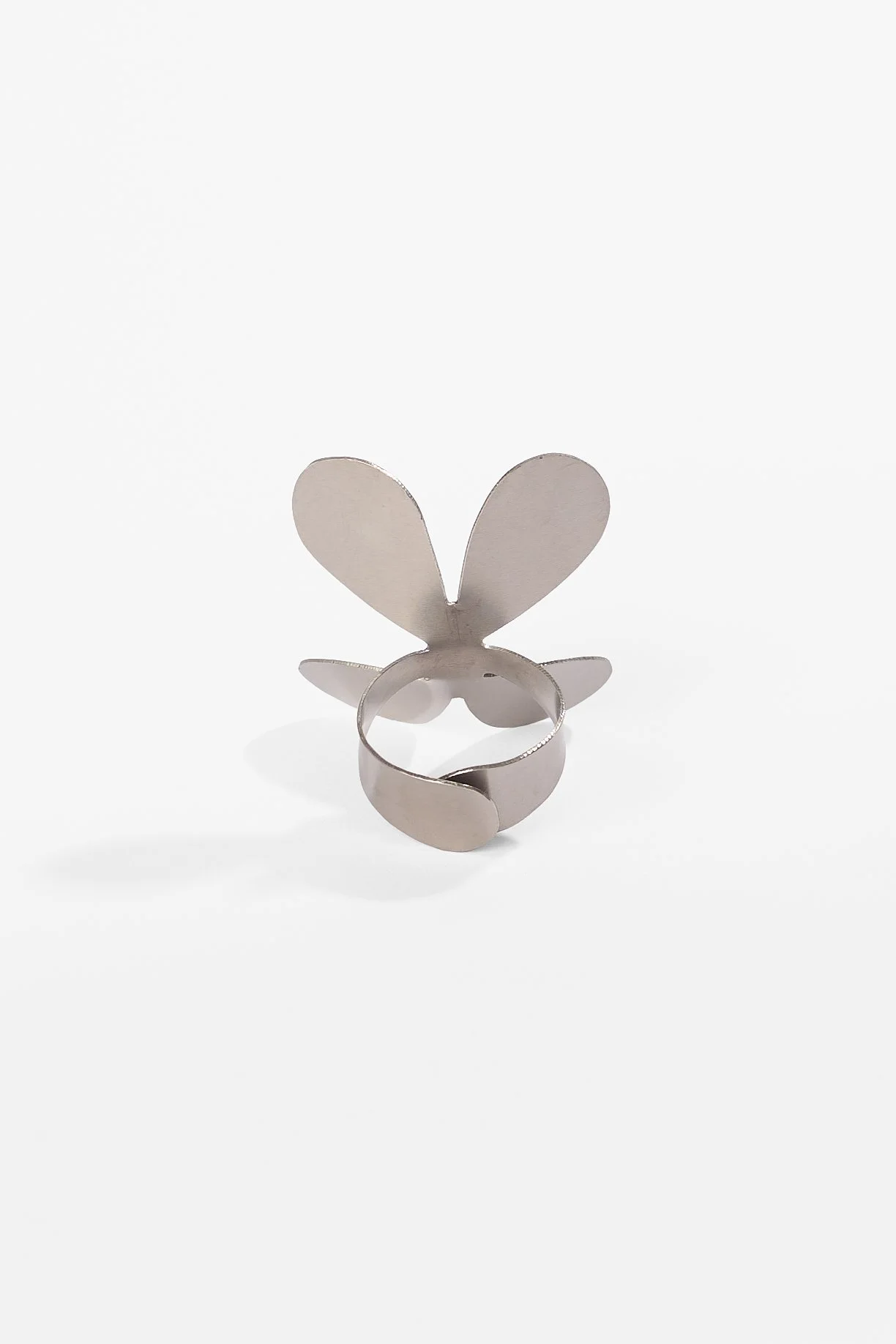
70. Elisa Zorraquin, ‘Protesis para el alma IV (Prosthesis for the soul), 2026, titanium, 3.5x3.5x4.5, ring size adjustable. Price: $200
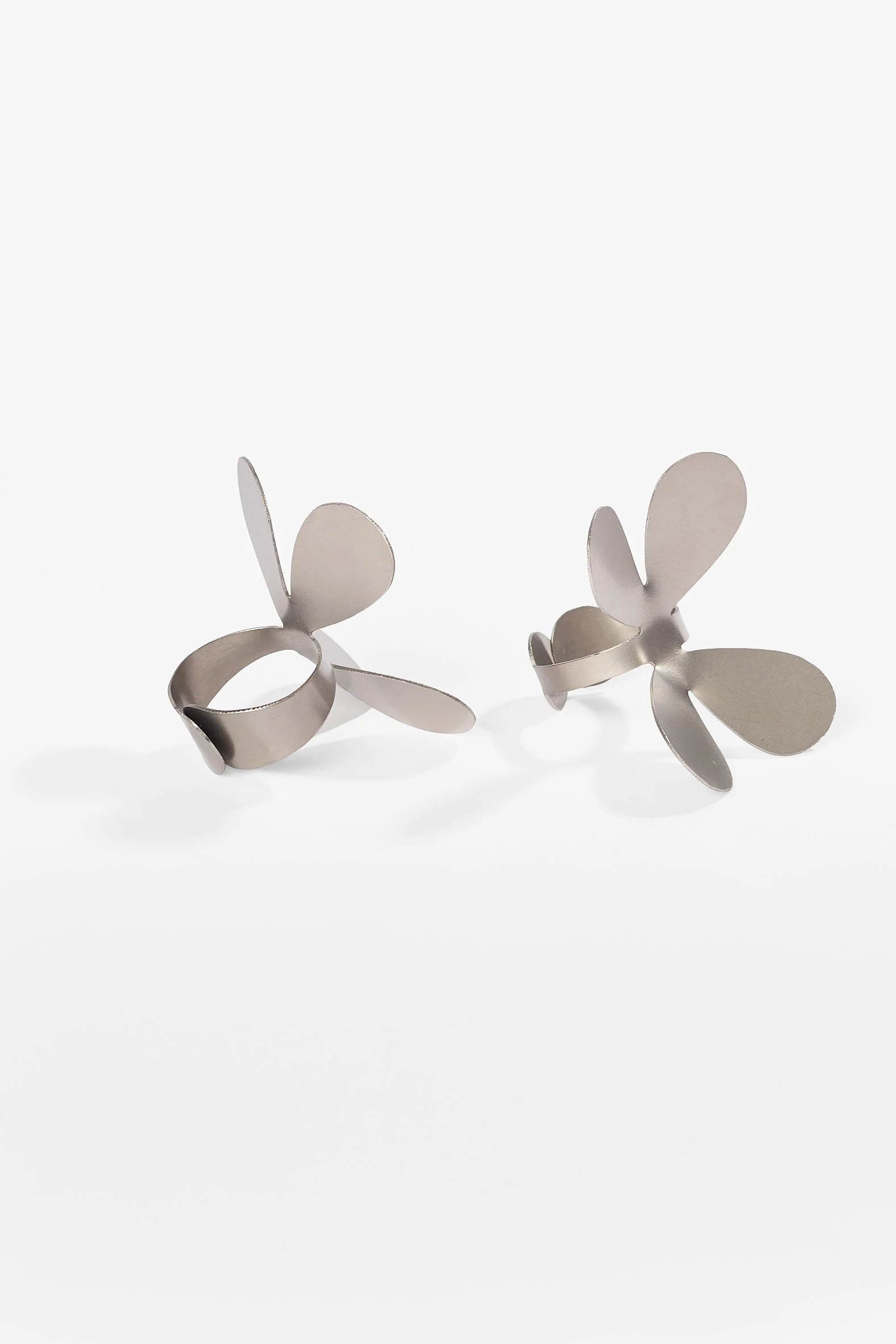
70. Elisa Zorraquin, ‘Protesis para el alma IV and I (Prosthesis for the soul), 2026, titanium, 3.5x3.5x4.5, ring size adjustable. Price: $200
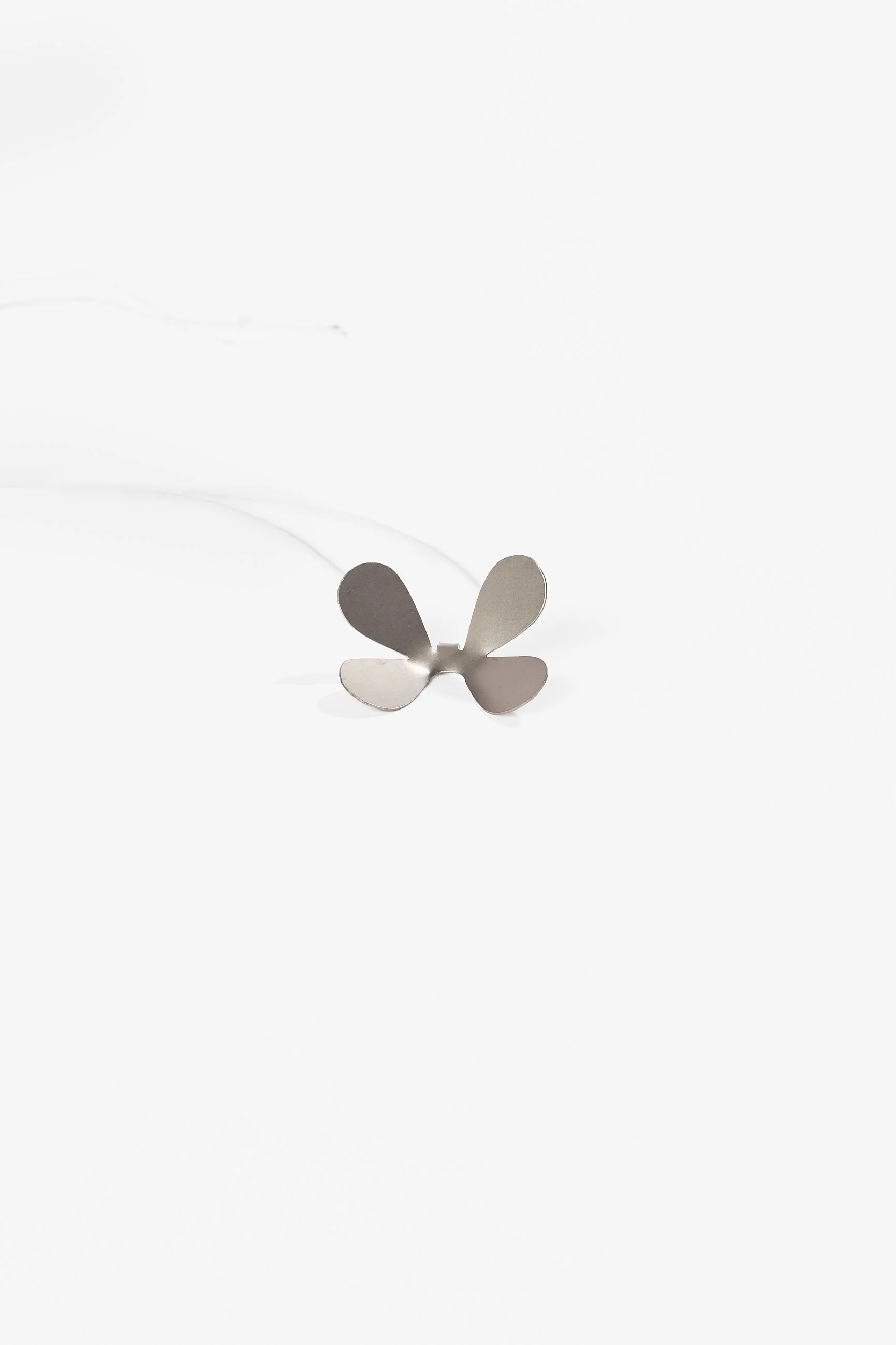
71. Elisa Zorraquin, ‘Protesis para el alma (Prosthesis for the soul)’, 2026, pendant, titanium, nylon thready, 3.5x4.2x2cm, cord 38cm. Price: $200
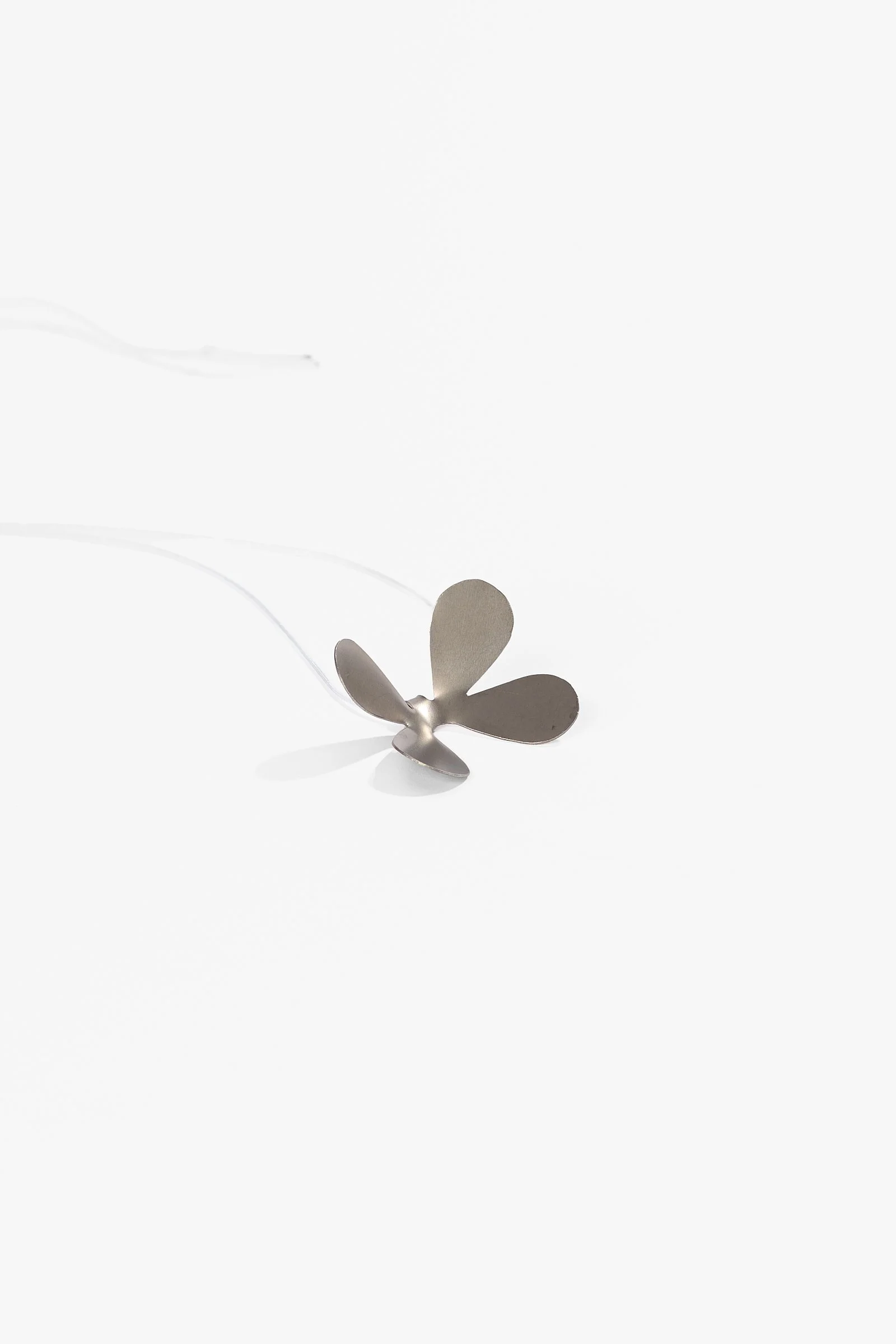
71. Elisa Zorraquin, ‘Protesis para el alma (Prosthesis for the soul)’, 2026, pendant, titanium, nylon thready, 3.5x4.2x2cm, cord 38cm. Price: $200
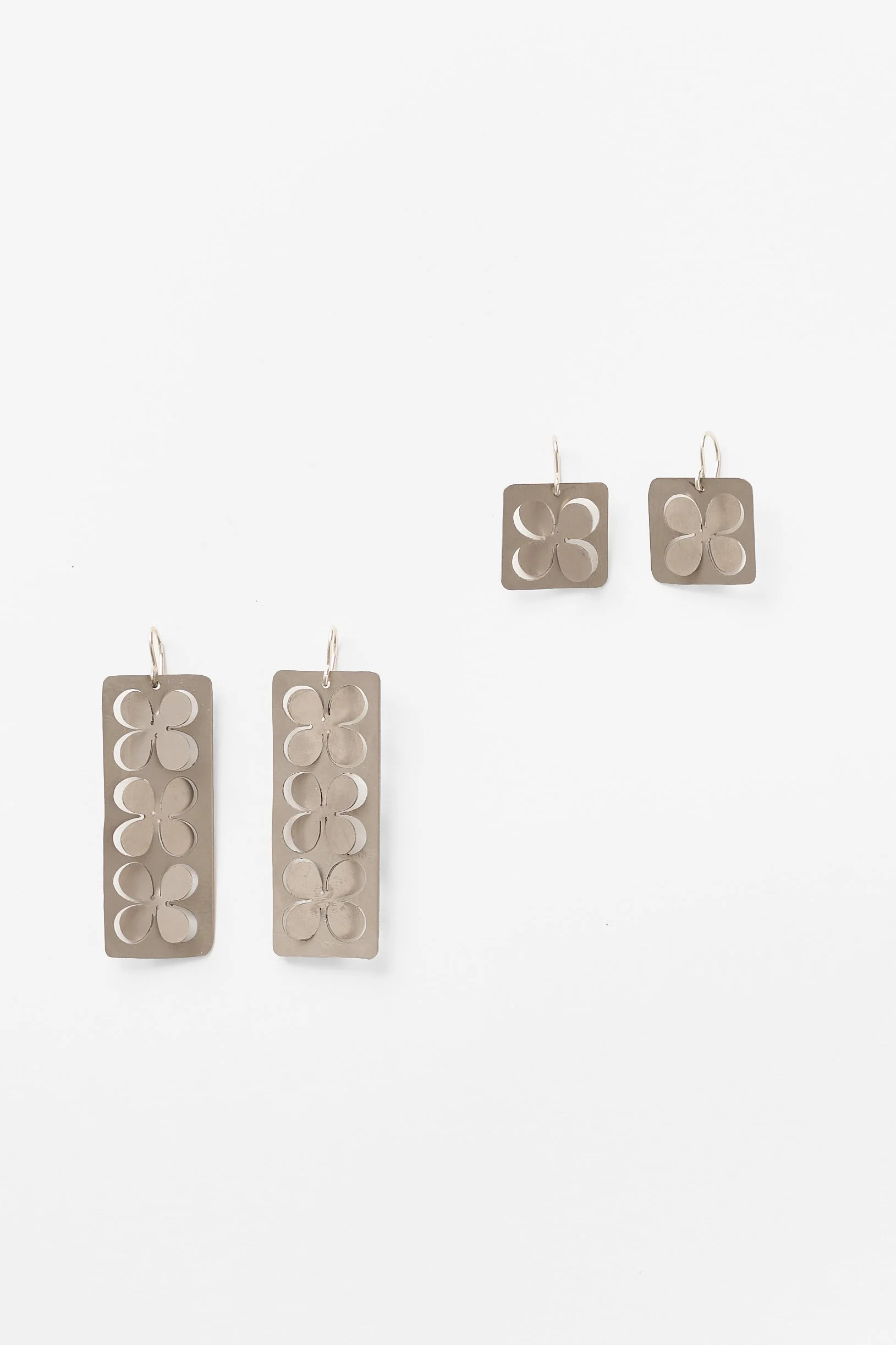
72. Elisa Zorraquin, ‘Vaivén I, II’, (triple flower), 2026, earrings, titanium, sterling silver, each earring measures: 6x1.9x1.2cm. Price: $220 and 73. ‘Oscillation I, II’, (single flower), 2026 earrings, titanium, sterling silver, each earring measures: 2.8x1.9x1.2cm. Price: $180
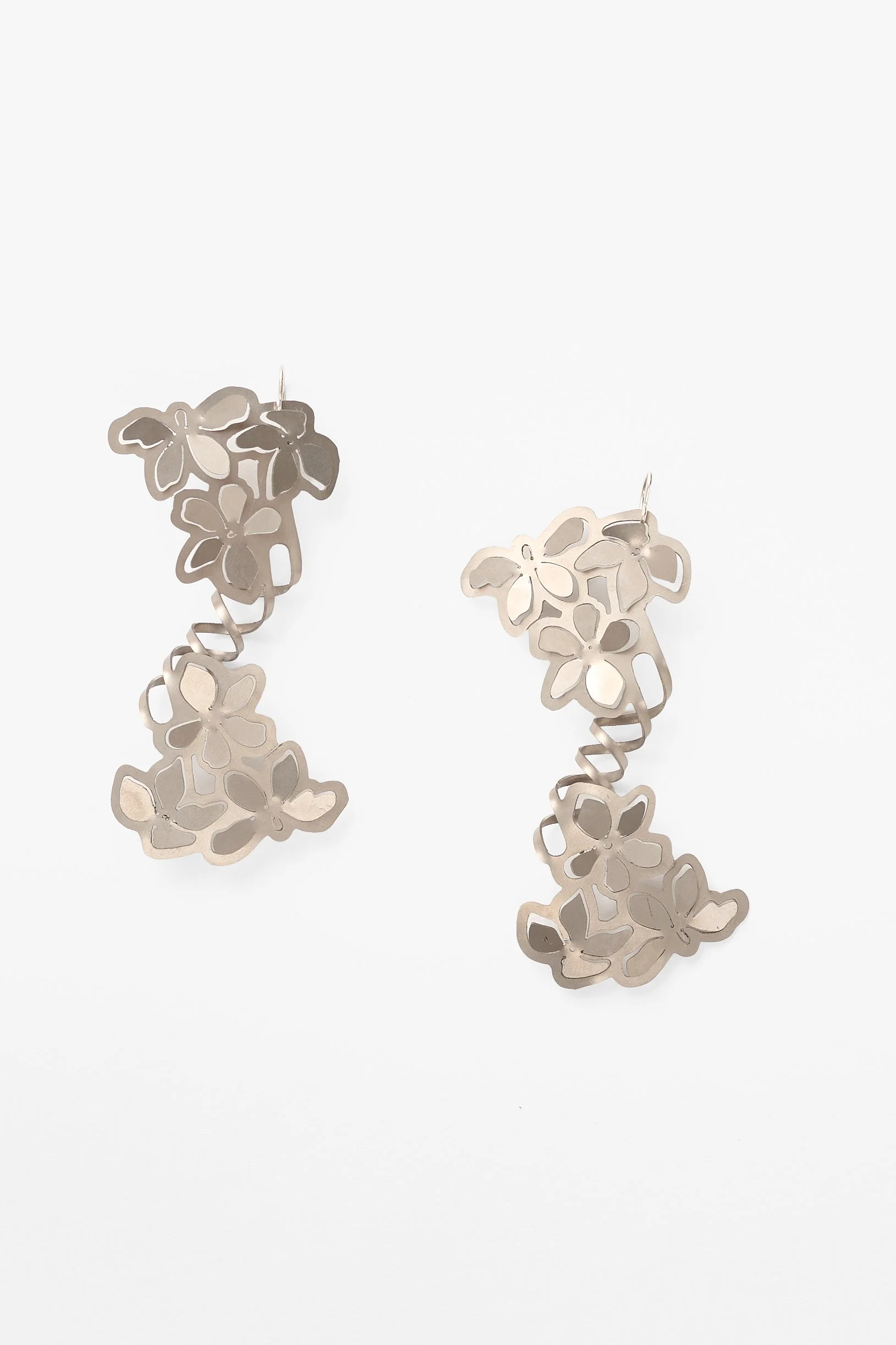
74. Elisa Zorraquin, ‘Antes del reposo (Before the Swirl Settles)’, 2026, flower drop earrings with spiral, titanium, sterling silver, each earring measures: 9.3x5.7x1.3cm. Price: $300
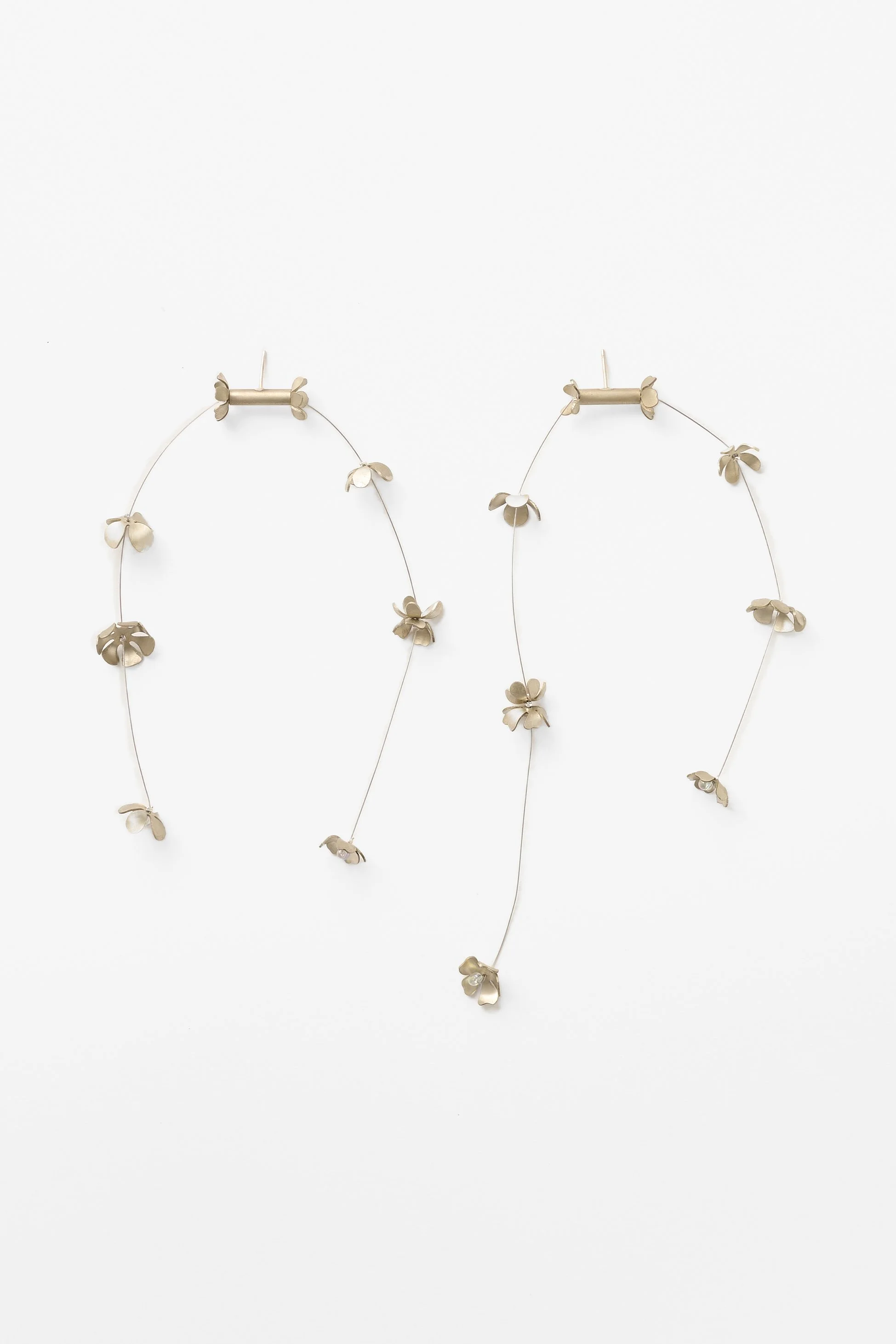
75. Elisa Zorraquin, ‘Las flores salen porque son curiosas I/II (Flowers bloom because they are curious)’, 2026, double strand flower earrings, nickel silver, sterling silver, stainless steel, glass beads, crimping wire, approx. each earring measures: 15.3x5.5x1cm. Price: $400 each.
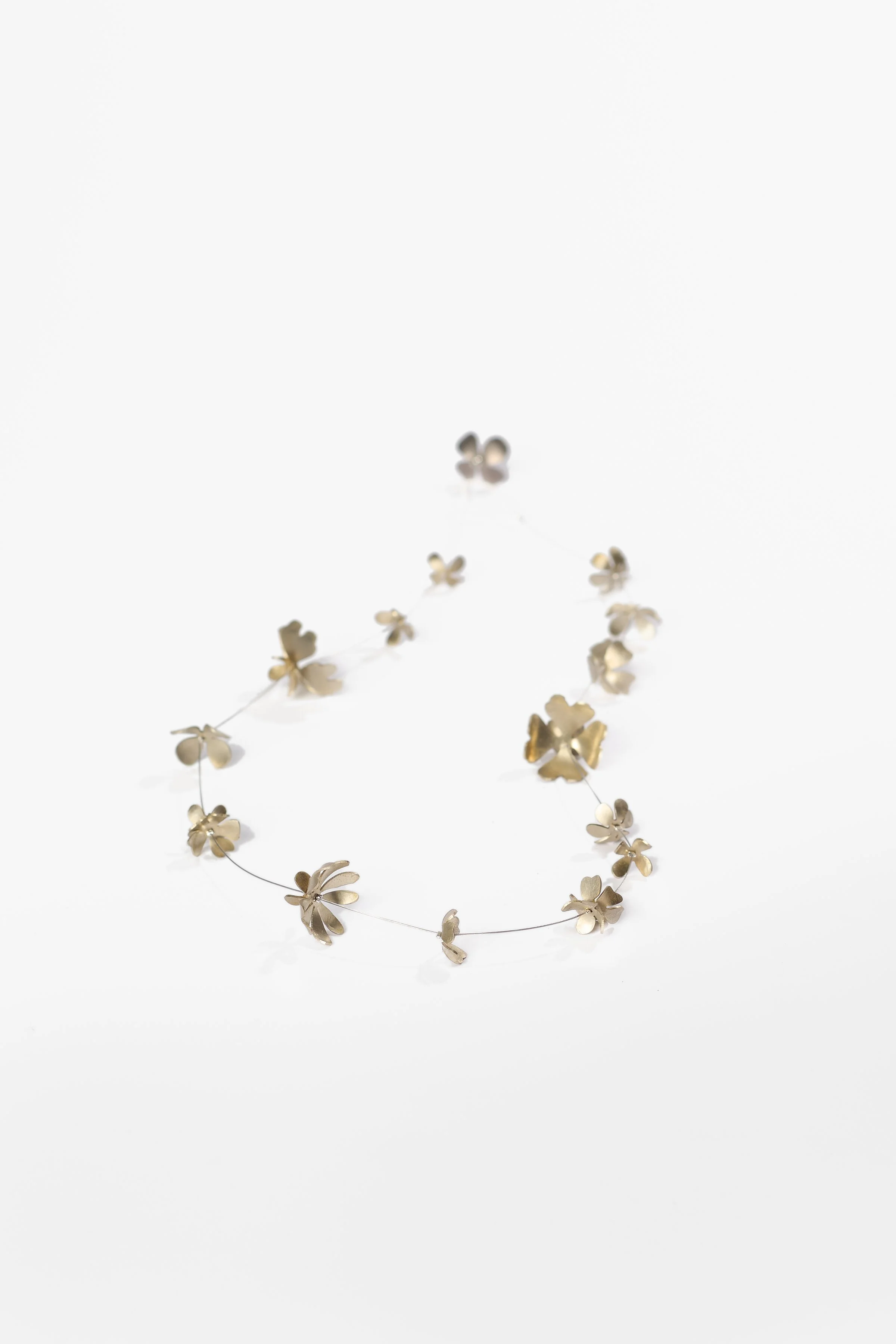
76. Elisa Zorraquin, ‘Las flores salen porque son curiosas (Flowers bloom because they are curious)’, 2026, necklace, nickel silver, titanium, sterling silver, stainless steel, glass beads, crimping wire, necklace 52.5cm (from end to end) x 1.8cm wide. Price: $350
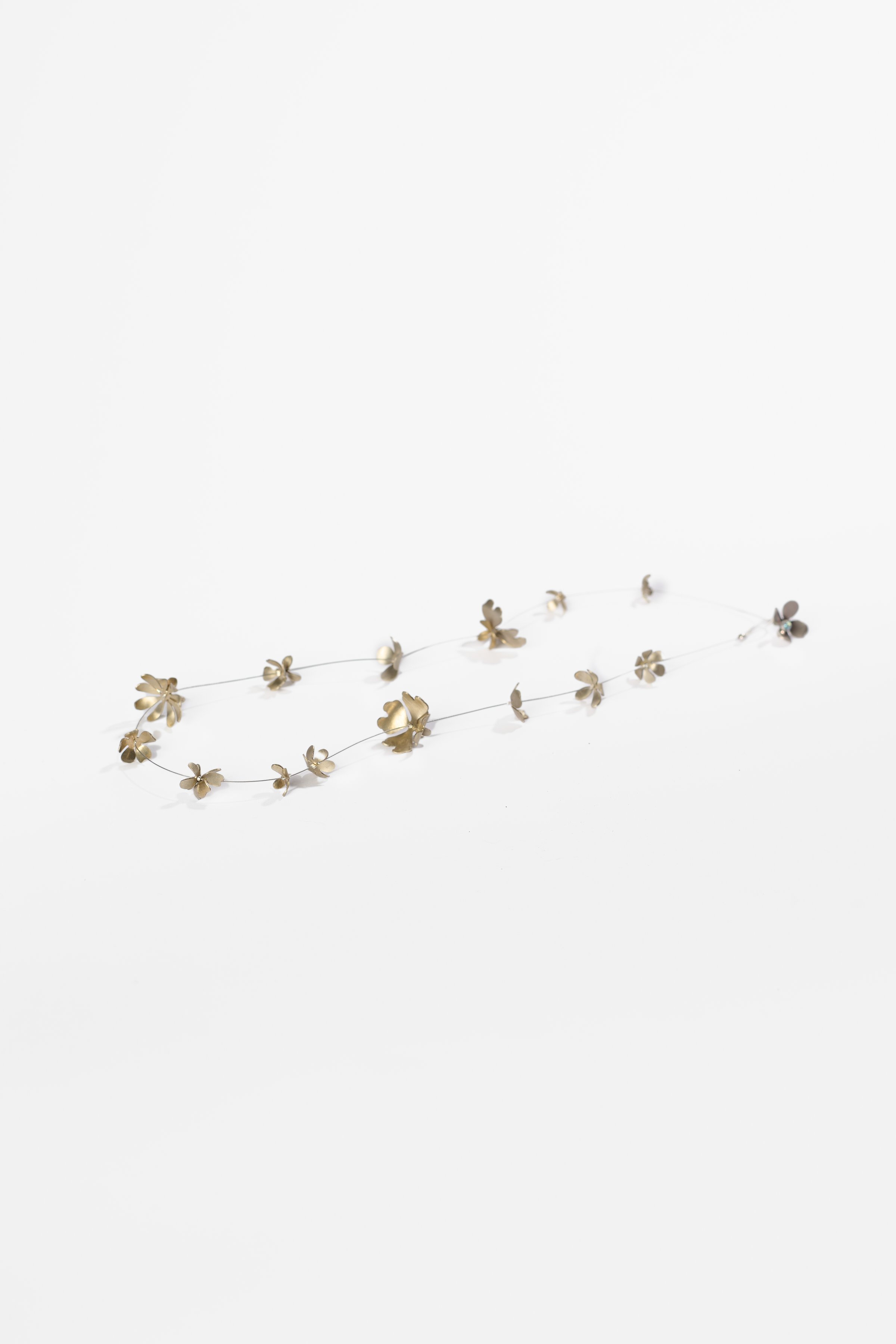
76. Elisa Zorraquin, ‘Las flores salen porque son curiosas (Flowers bloom because they are curious)’, 2026, necklace, nickel silver, titanium, sterling silver, stainless steel, glass beads, crimping wire, necklace 52.5cm (from end to end) x 1.8cm wide. Price: $350
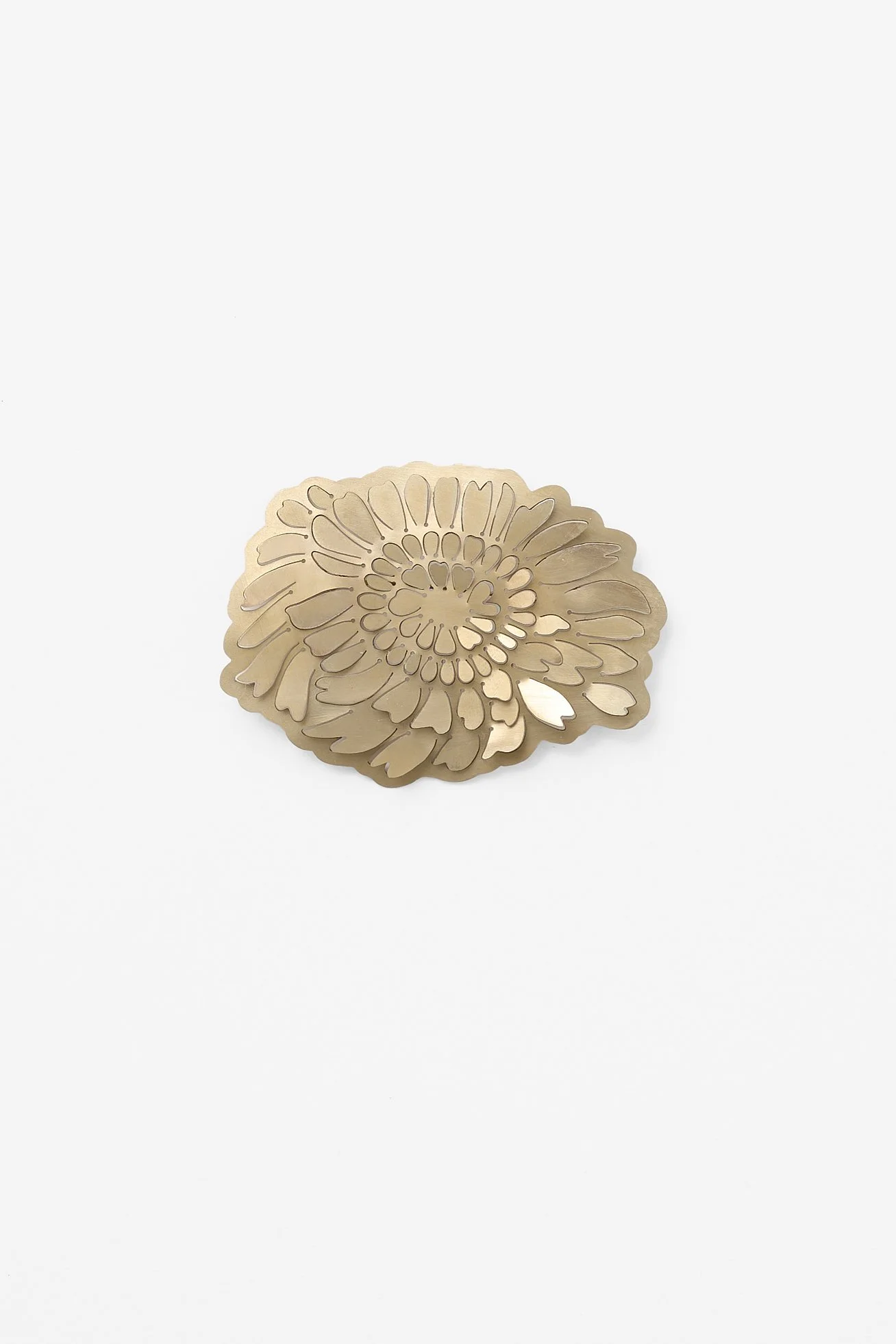
77. Elisa Zorraquin, ‘Respira I (Breathe)’, 2026 flower brooch, nickel silver, sterling silver, stainless steel, 6.3x8.4x.8cm. Price: $300
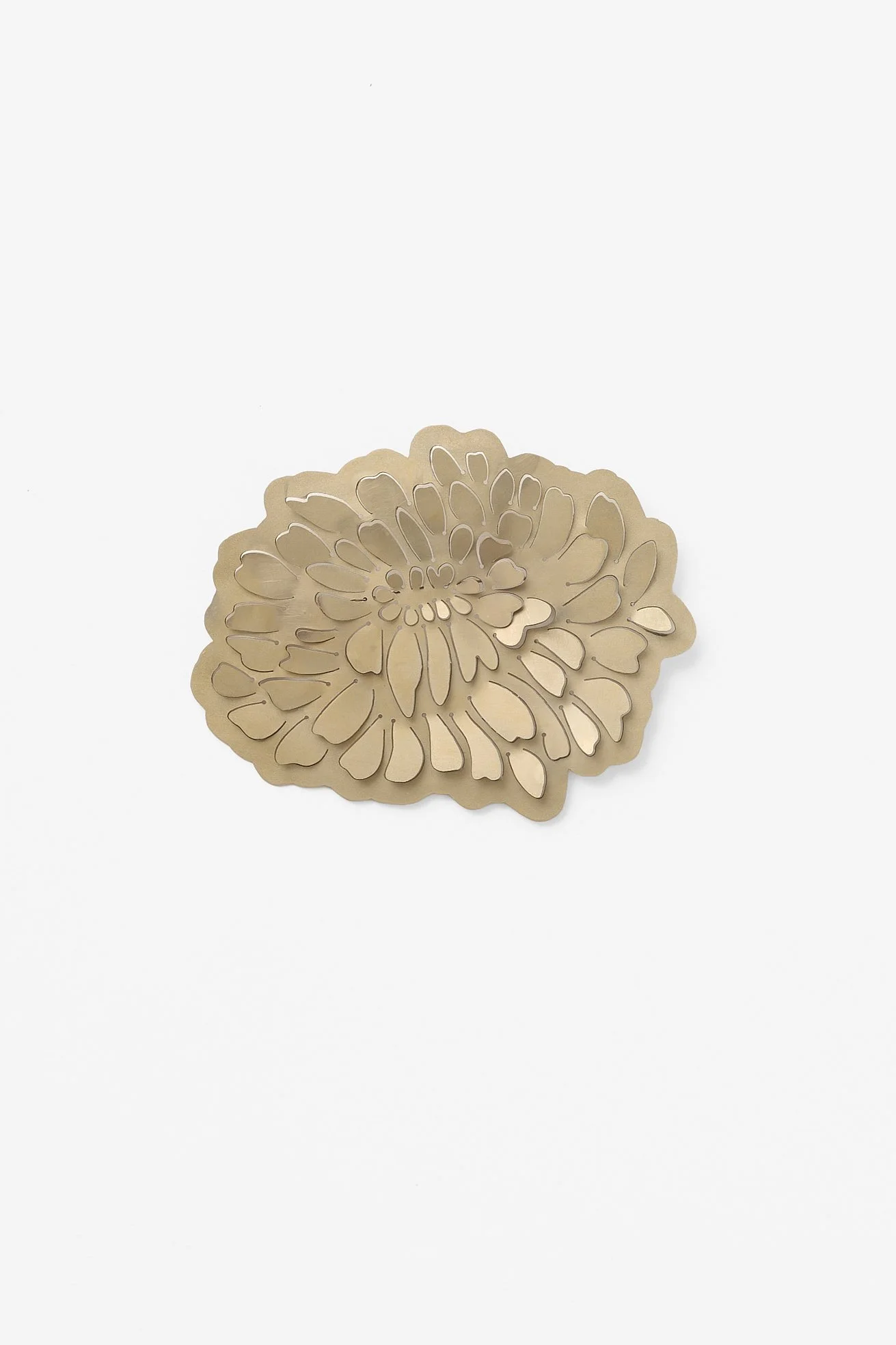
78. Elisa Zorraquin, ‘Respira II (Breathe)’, 2026 flower brooch, nickel silver, sterling silver, stainless steel, 7.7x9.6x.8cm. Price: $300
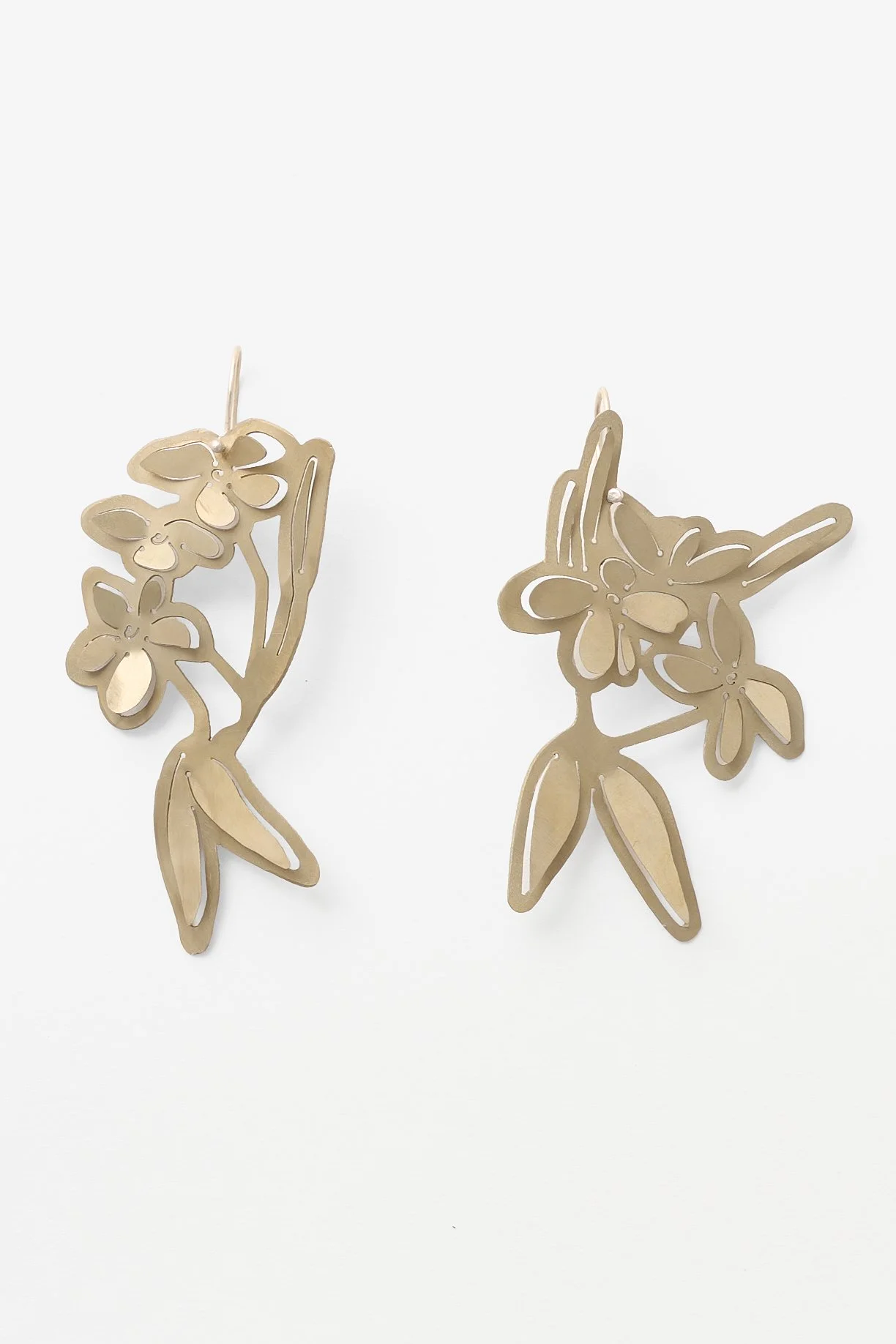
79. Elisa Zorraquin, ‘Recolectora Urbana I (Street Forager I)’, 2026, earrings, nickel silver, sterling silver, each earring measures: approx. 7.5x5x1.5cm. Price: $450
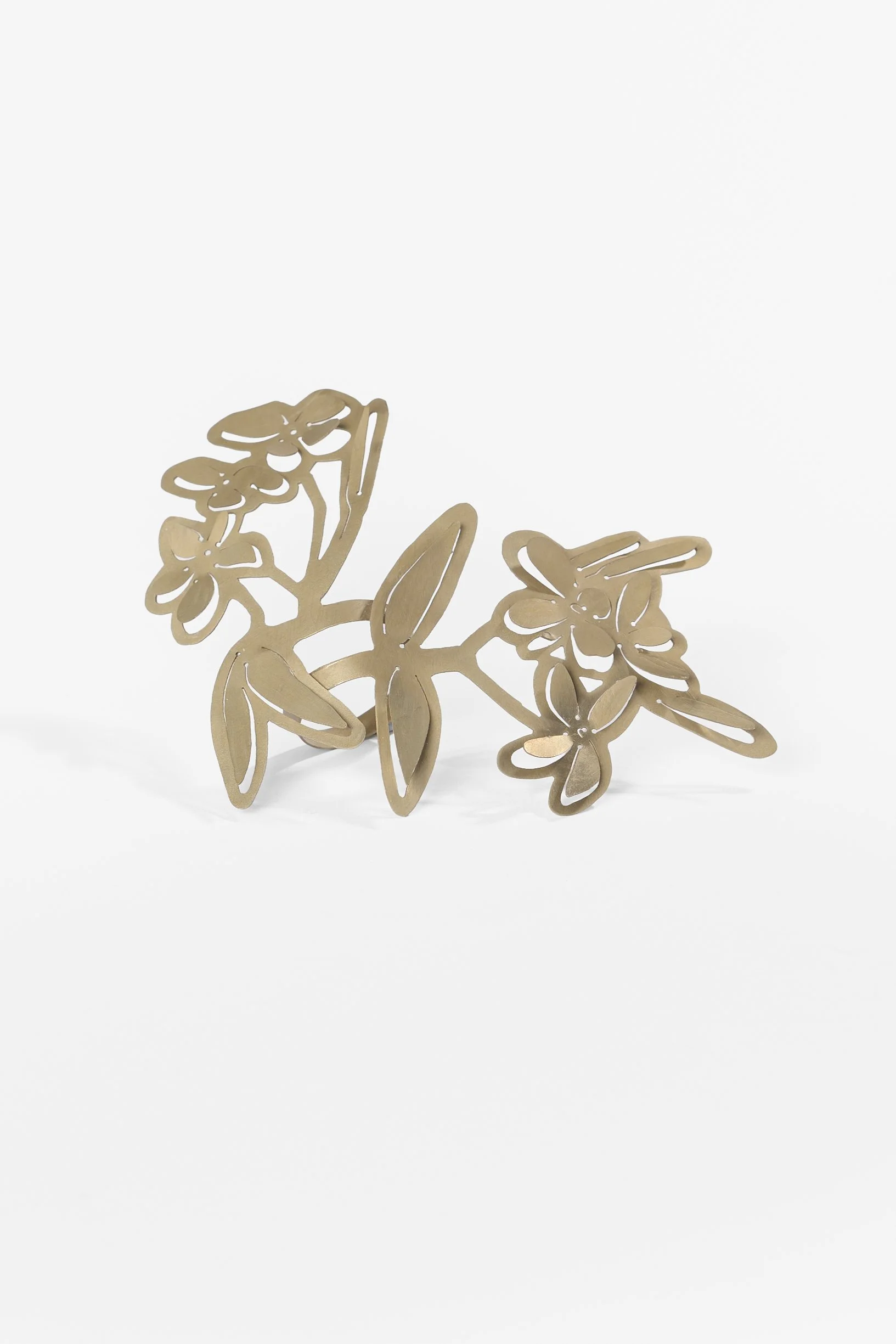
80. Elisa Zorraquin, ‘Recolectora Urbana II (Street Forager II), 2026, ring, nickel silver, waxed finish, 2.5x10.2x7.5cm, ring size adjustable. Price: $450
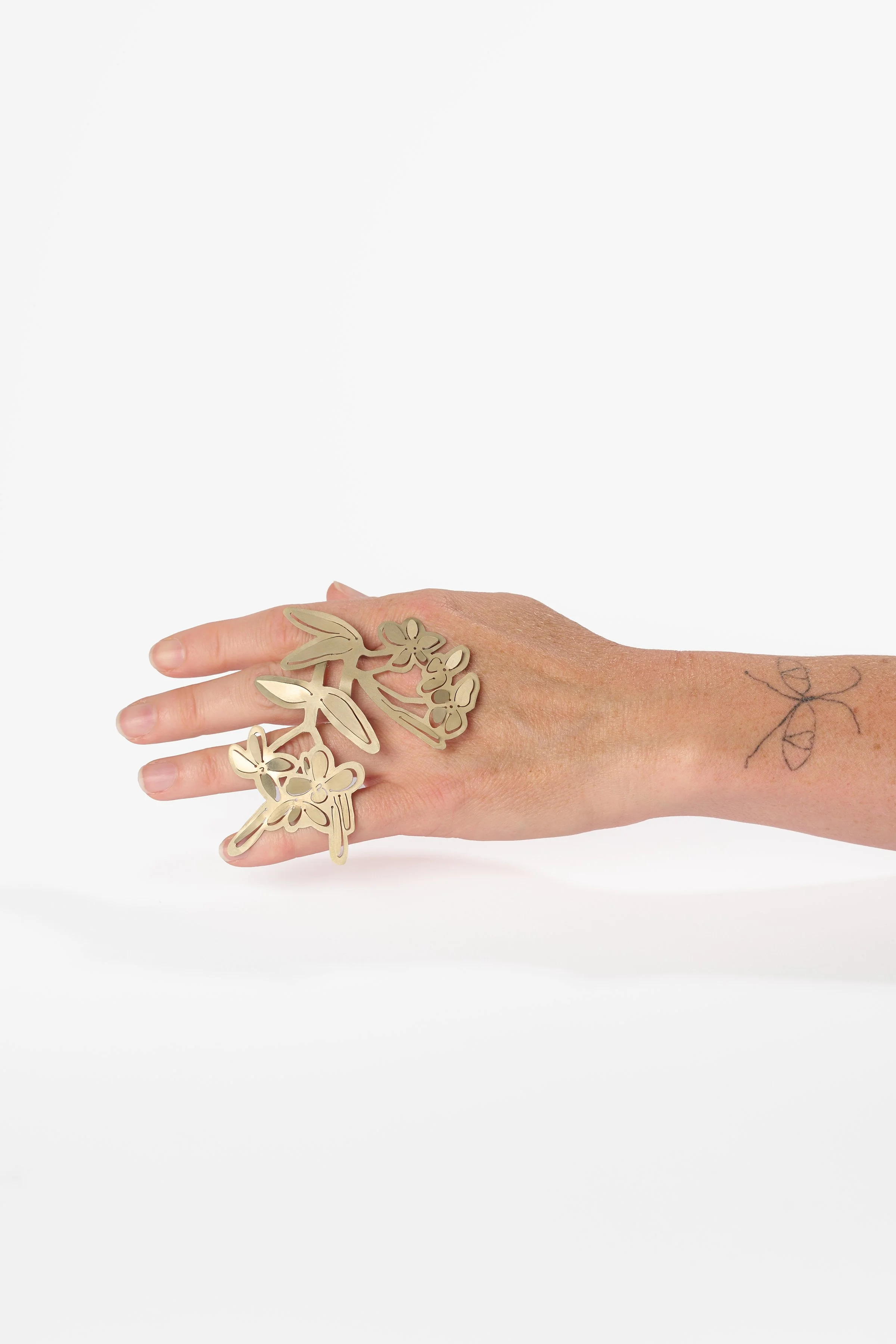
80. Elisa Zorraquin, ‘Recolectora Urbana II (Street Forager II), 2026, ring, nickel silver, waxed finish, 2.5x10.2x7.5cm, ring size adjustable. Price: $450
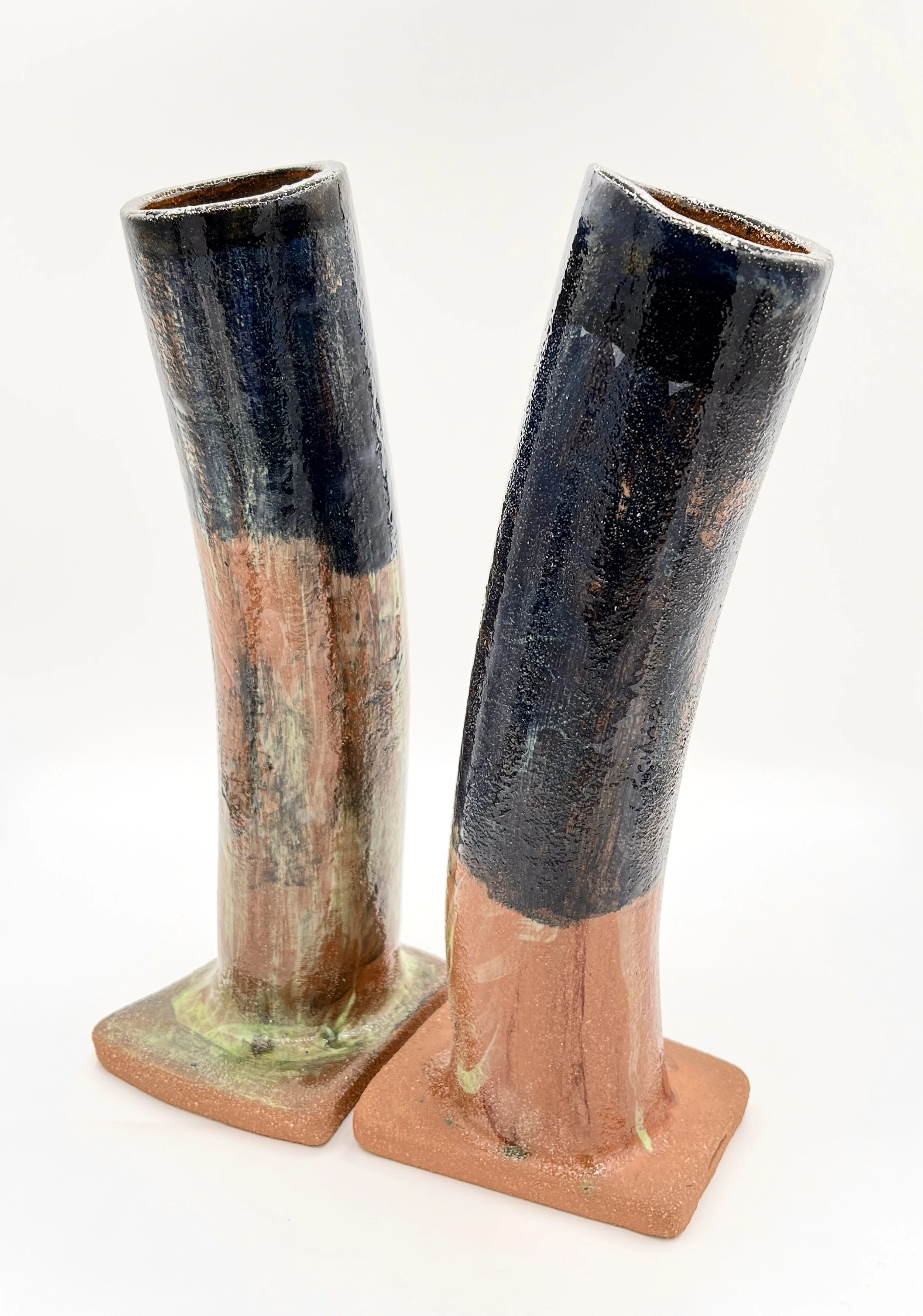
81. Benjamin Woods, ‘flutes with water mark’, 2025, terracotta, earthenware glaze, underglaze, 28x10x10cm each. Price: $800 pair.

82. Benjamin Woods, ‘flute with drawing’, 2025, terracotta and bamboo clay, glaze and glaze pencil, 27x6x8cm.Price: $300
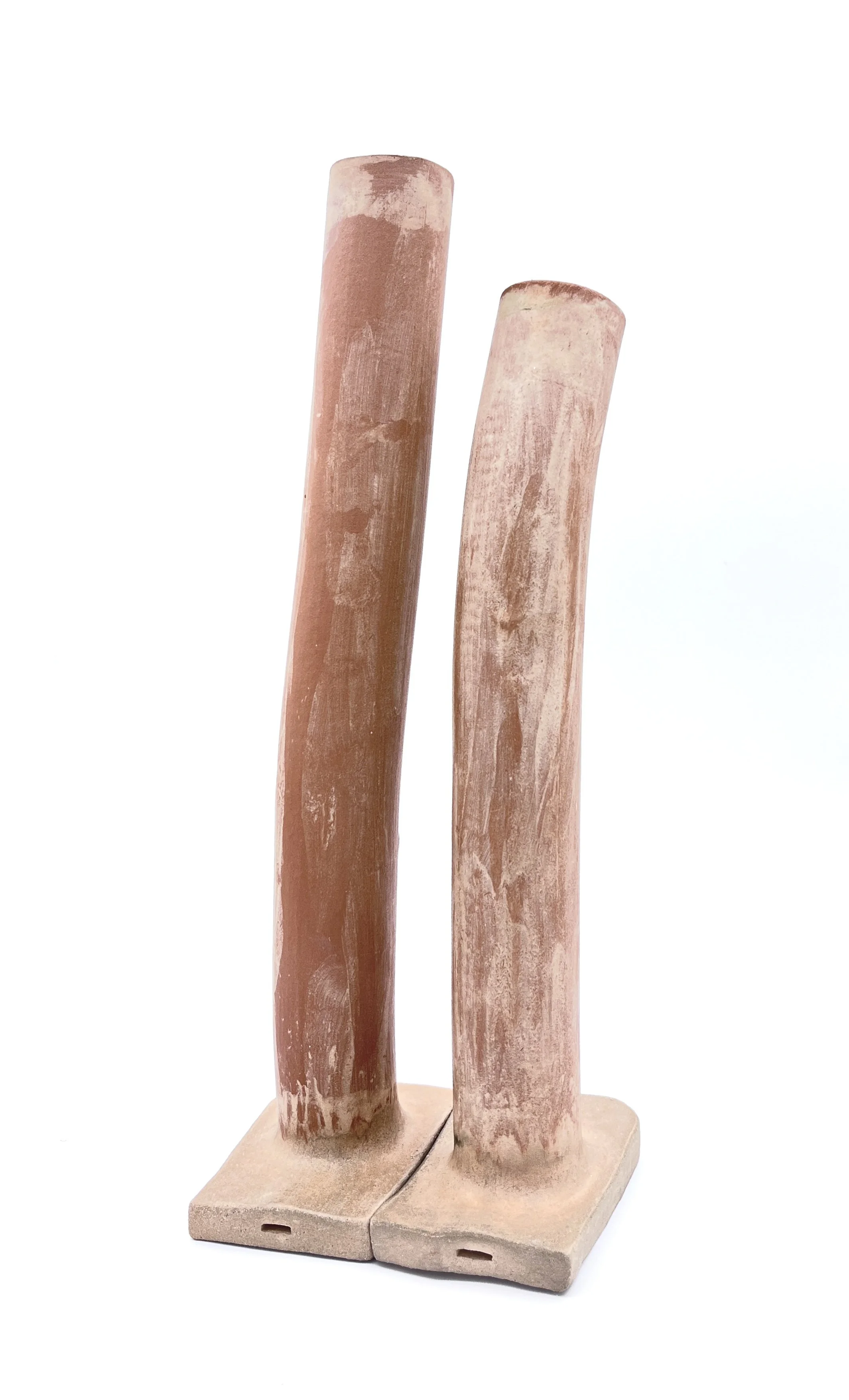
83. Benjamin Woods, ‘Two flutes’, 2025 terracotta and bamboo clay, 26x4x8cm. Price: $500 pair
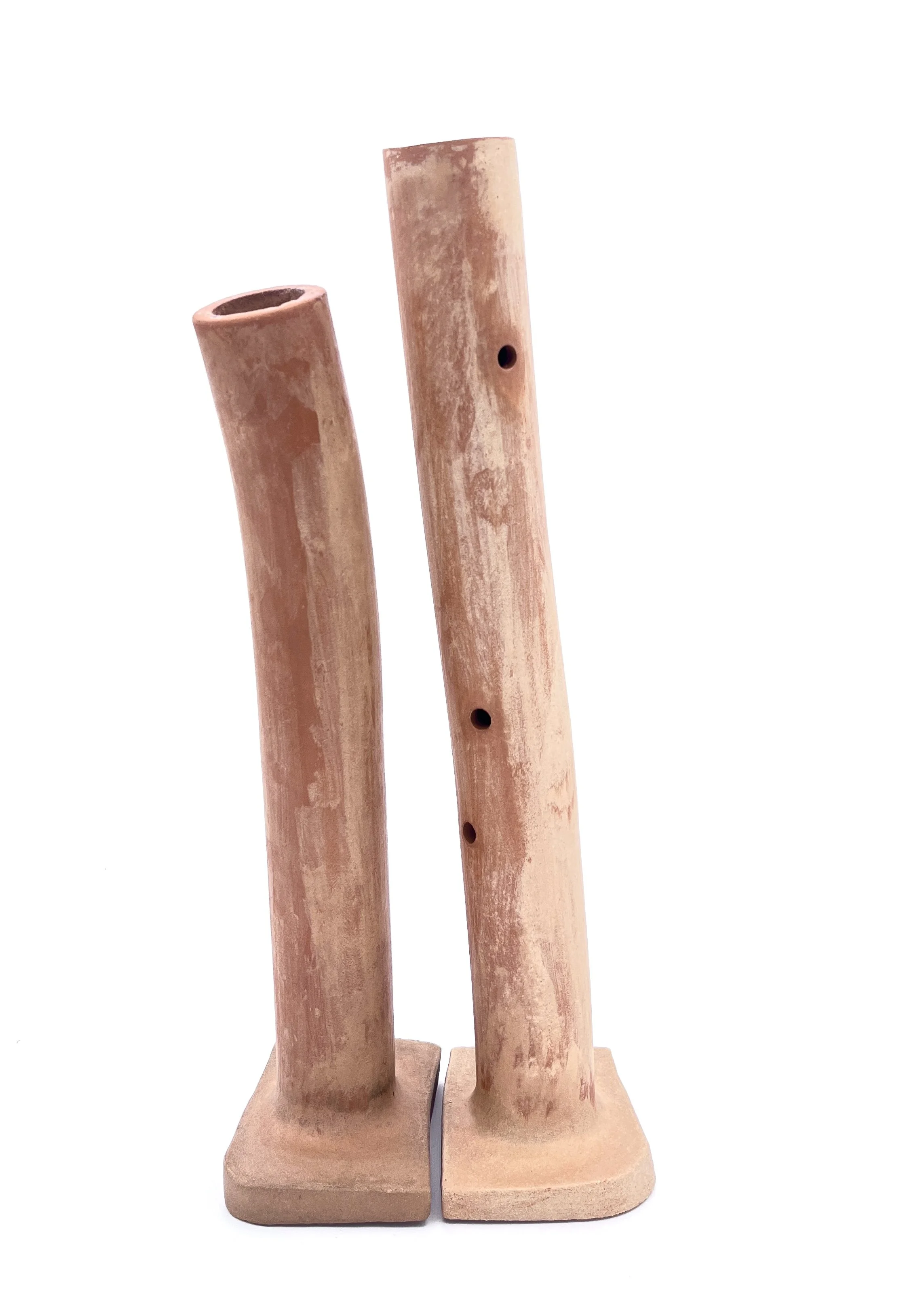
83. Benjamin Woods, ‘Two flutes’, 2025 terracotta and bamboo clay, 26x4x8cm. Price: $500 pair
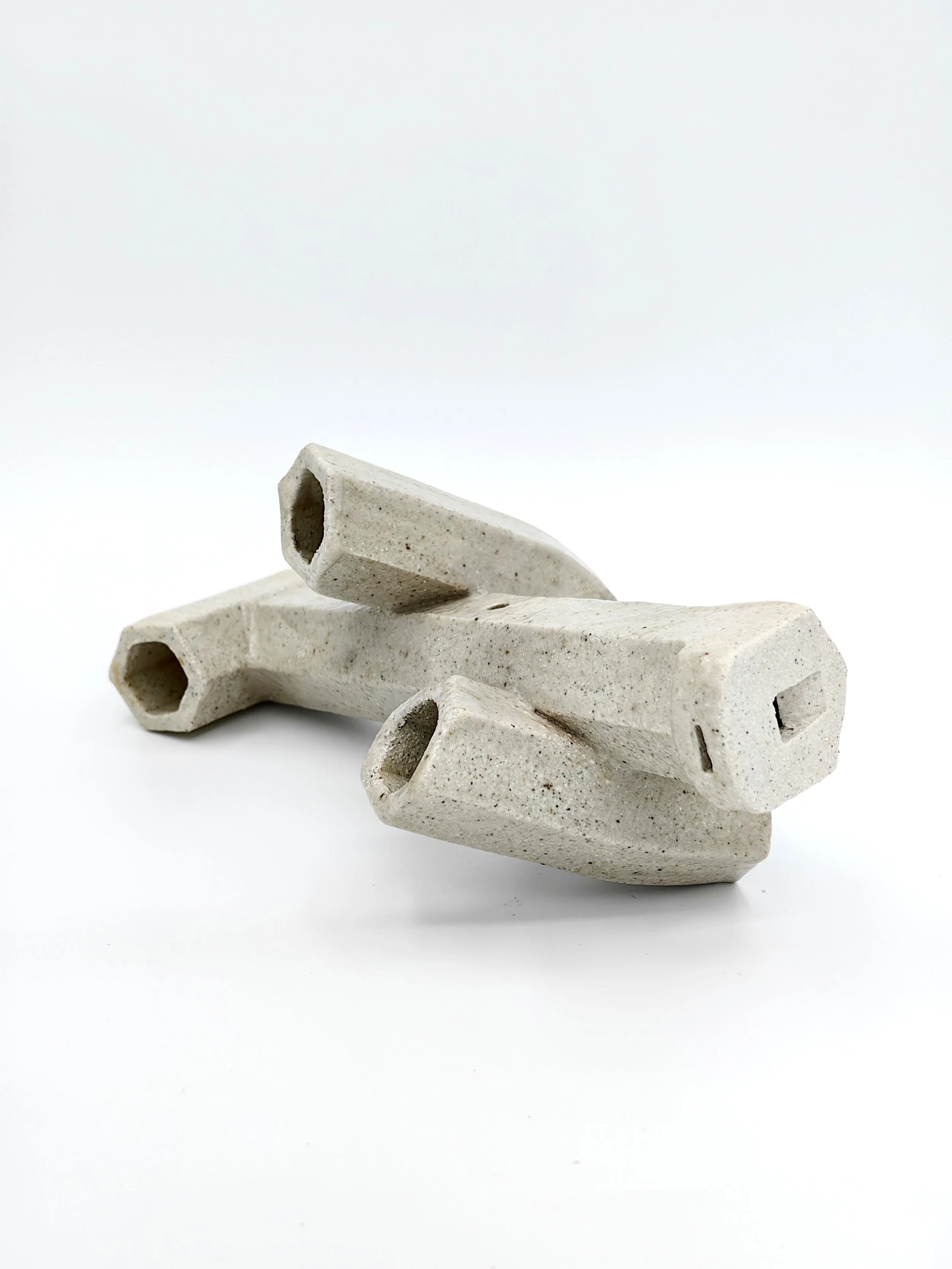
84. Benjamin Woods, ‘sludge flute’, 2025 raku clay, sink sludge ash glaze, 17x12x12cm.Price: $400
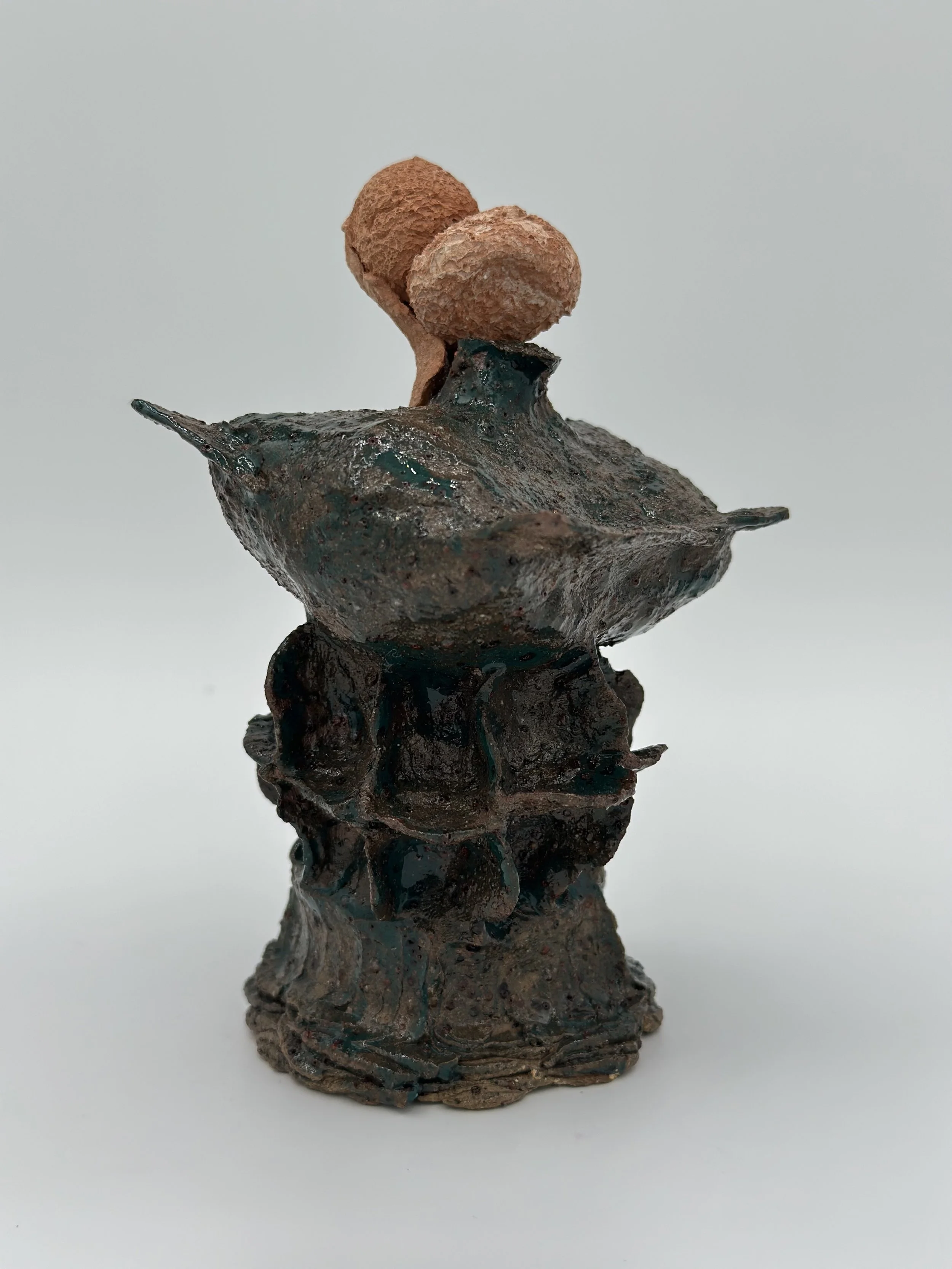
85. Yongping Ren, ‘Peach Orchard’, 2024 glazed ceramic, 12x12x9cm. Price: $1,300
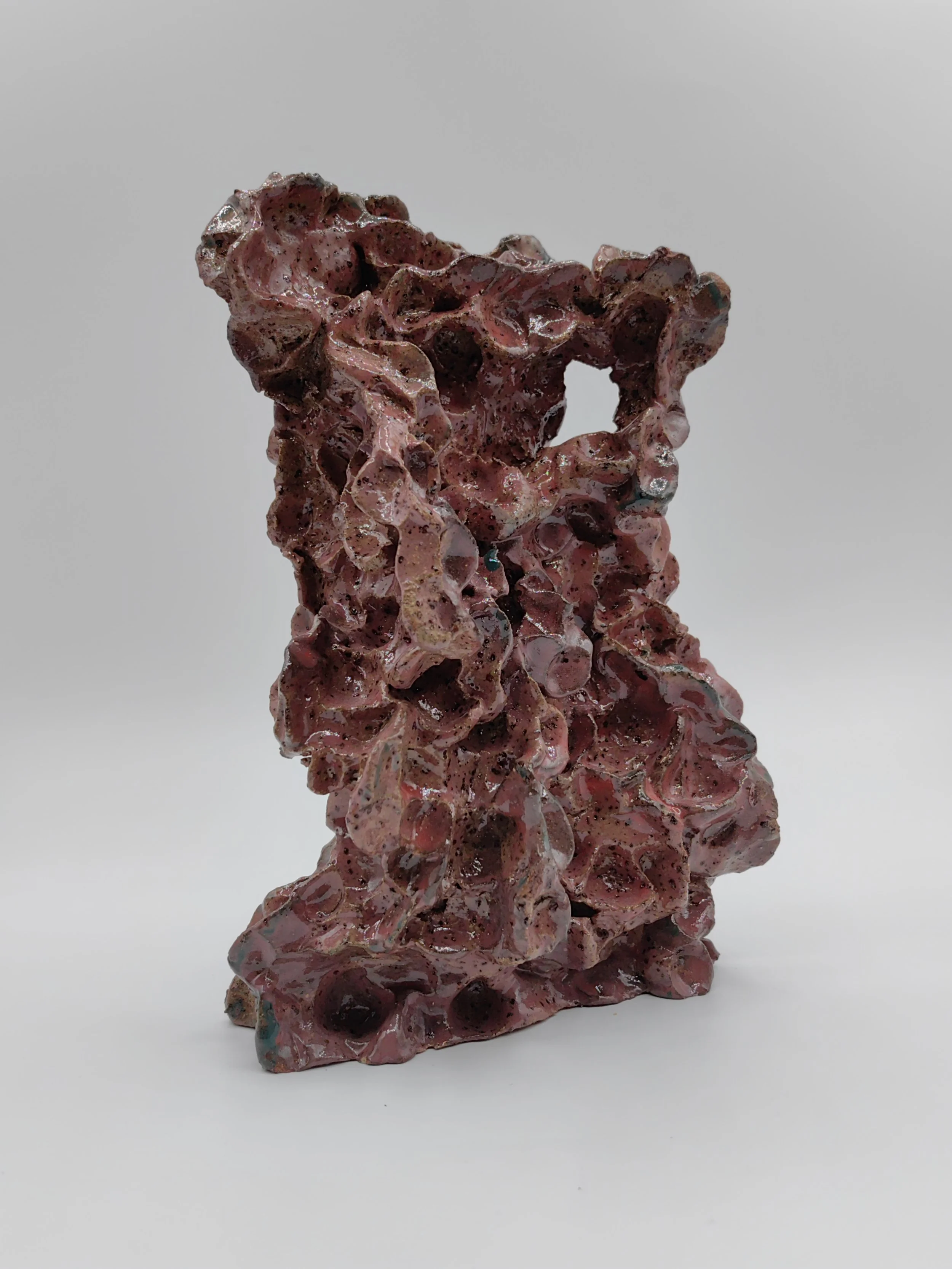
86. Yongping Ren, ‘Grapevines’, 2024 glazed ceramic, 21x16x7cm. Price: $800
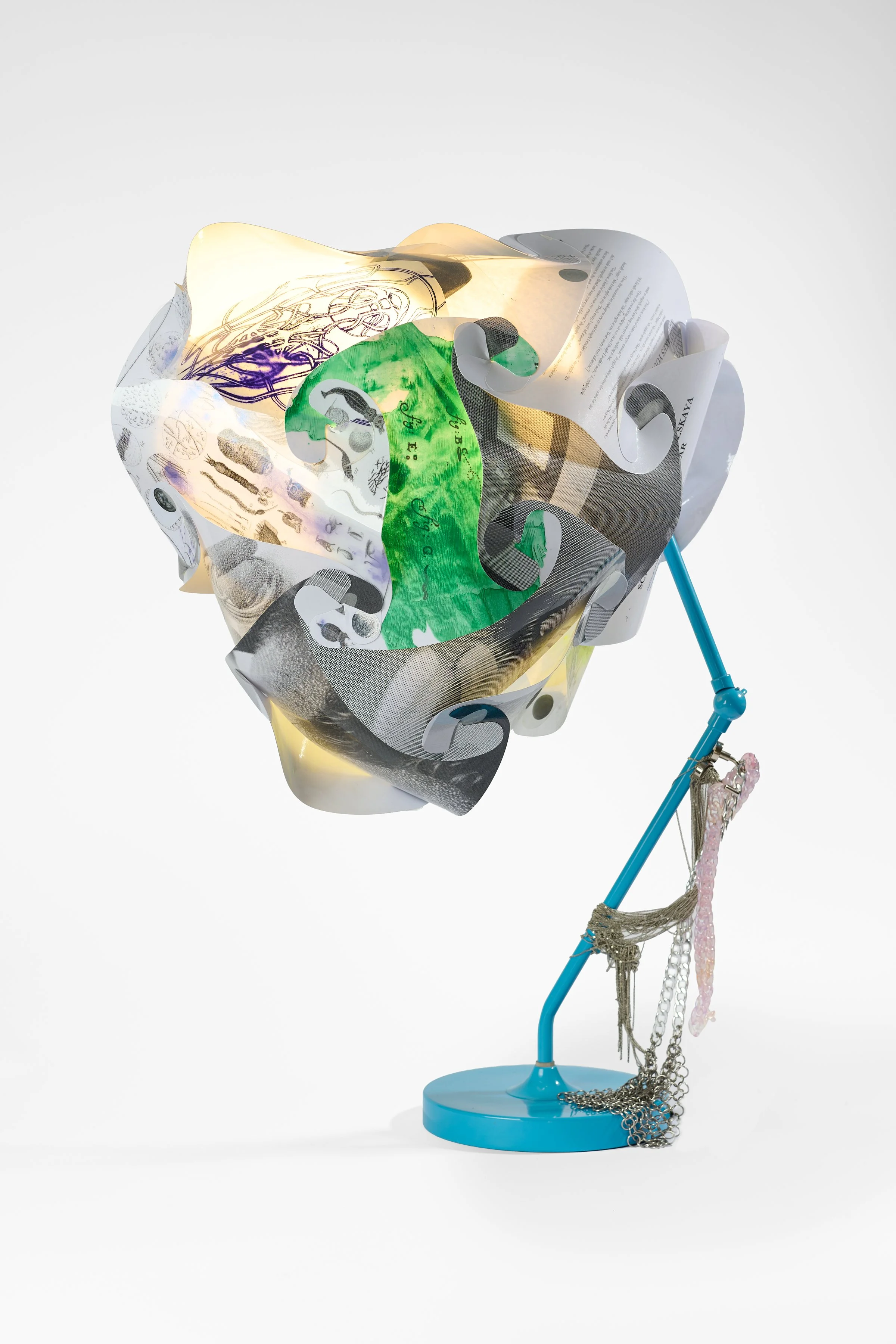
87. Debris Facility Pty Ltd, ‘PlastiCorpus 2.6’, 2024–2026, found Light fixtures, replica ‘IQ lampshades’ (processed digital images, laminated printed paper, tattoo transfer paper c/o Dreambod Remit, text via Holly Childs) laminated plastic, PVA glue, acrylic, makeup, holographic authenticity stickers), magnets, jewellery, 66x46x32cm. Price: $900
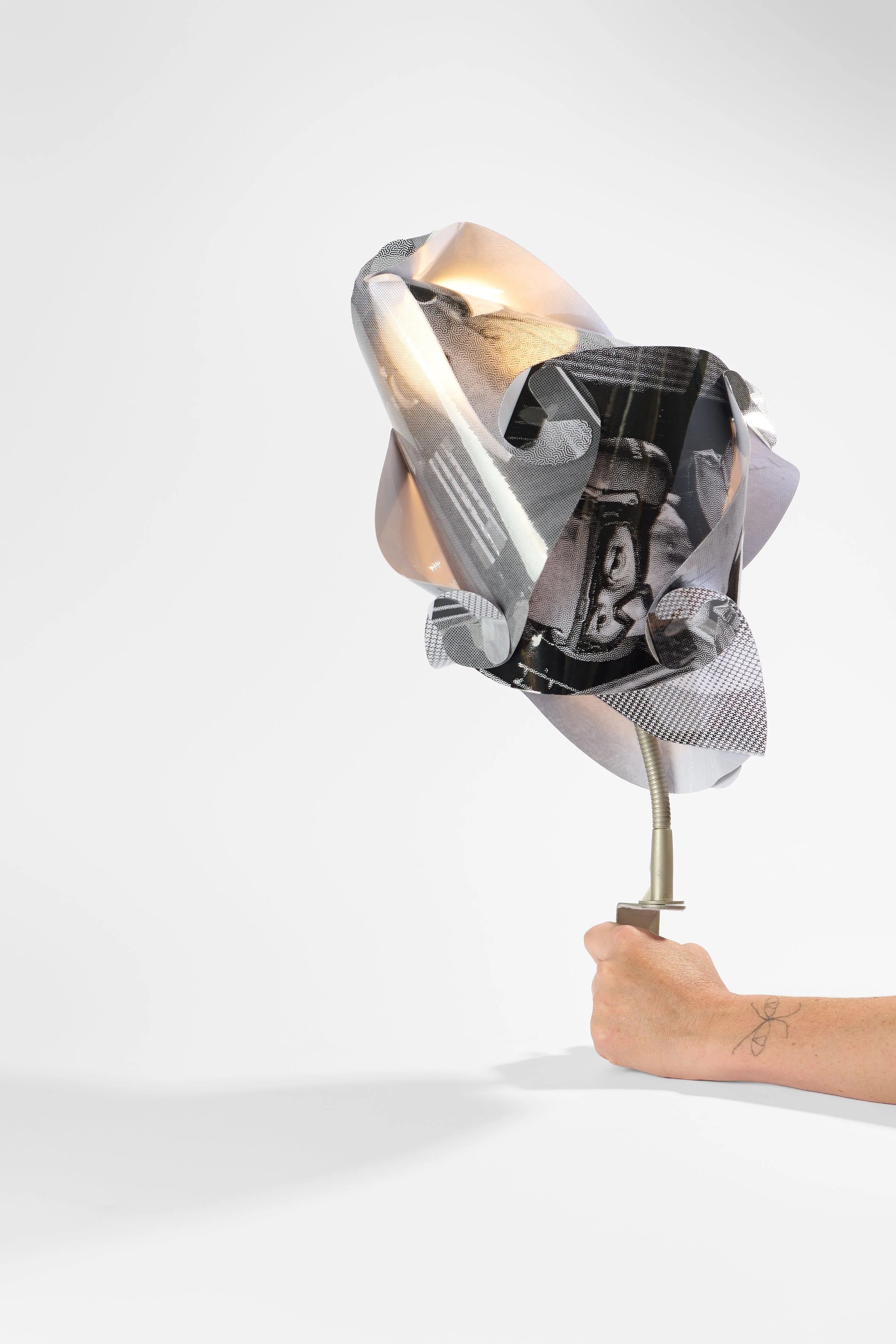
88. Debris Facility Pty Ltd, ‘PlastiCorpus 2.6’, 2024–2026, found Light fixtures, replica ‘IQ lampshades’, processed digital images, laminated printed paper, 55x28x28cm. Price: $700
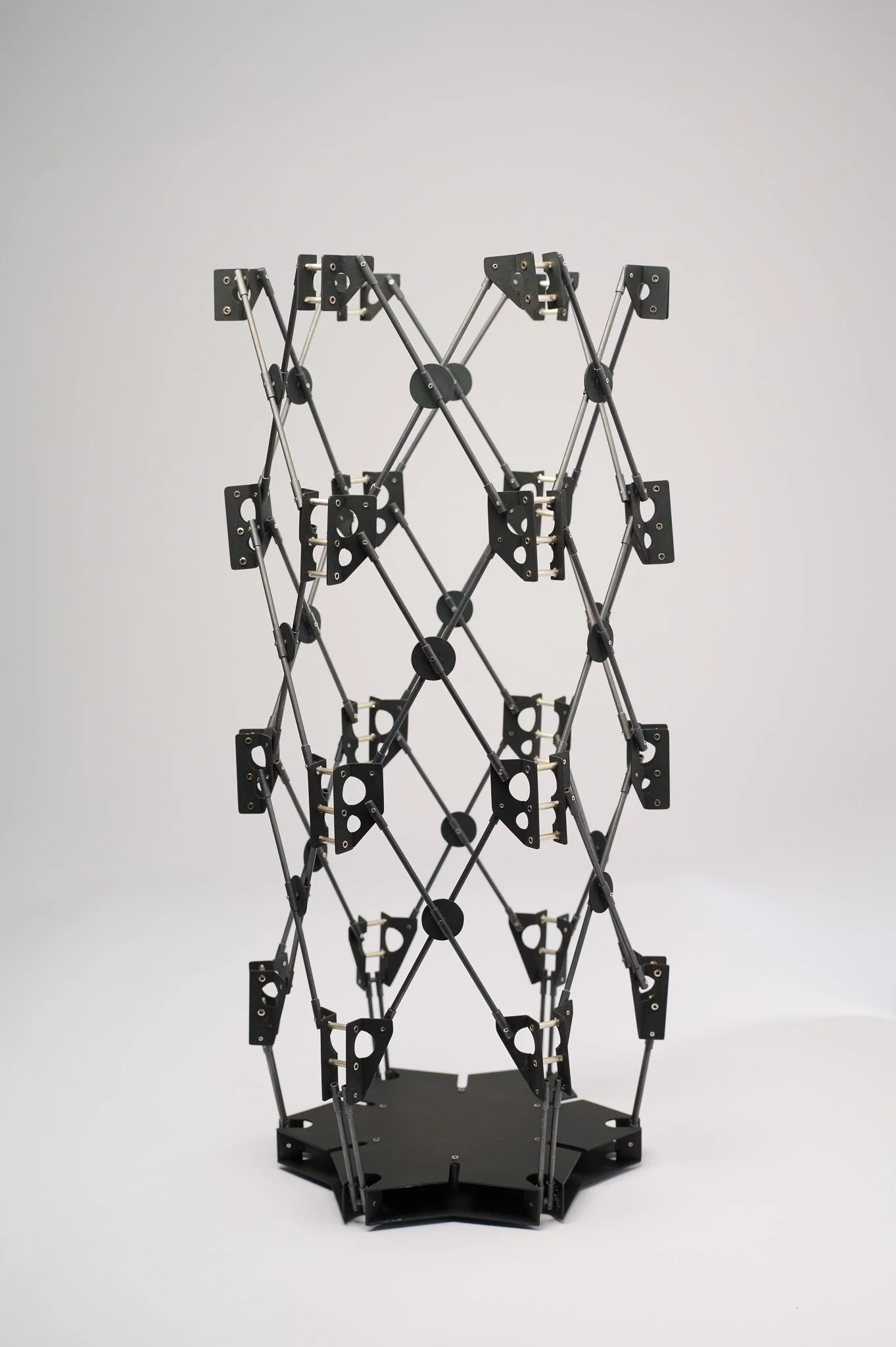
89. Katie Collins, ‘Vessel 2’, 2025 blackened steel, oxidised sterling silver, sterling silver, articulated vessel: 17.5cm diameter x 40cm high to 25cm diameter x 25cm high. Price: $8,800
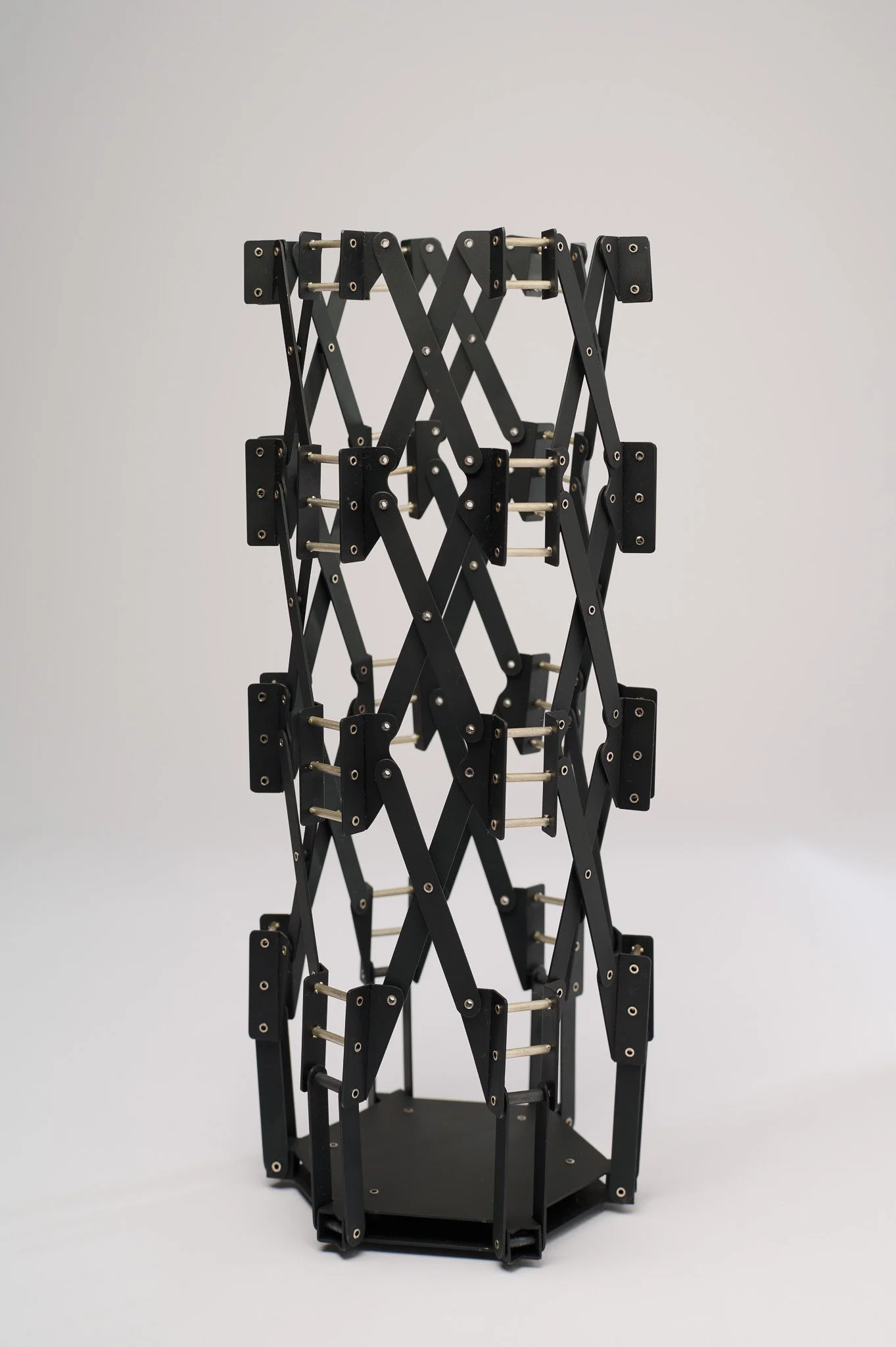
90. Katie Collins, ‘Vessel 1’, 2025 blackened steel, oxidised sterling silver, sterling silver, articulated vessel: 12.5cm diameter x 31cm high to 20cm diameter x 17cm high. Price: $5,500
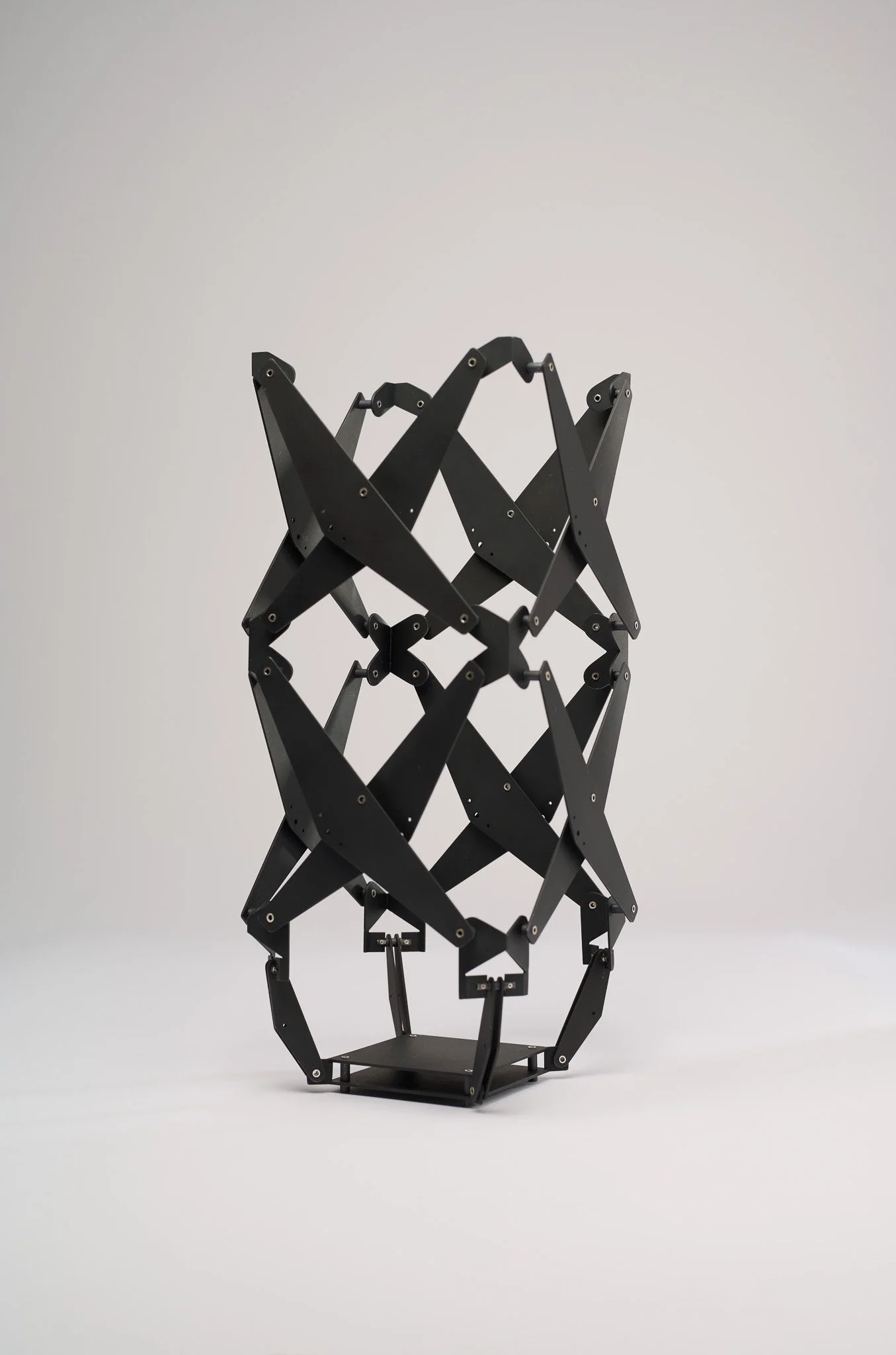
91. Katie Collins, ‘Vessel 3’, 2025 blackened steel, oxidised sterling silver, sterling silver, articulated vessel: 9x9cm wide x 30cm high to 14.5x14.5wide x 13cm high. Price: $3,300
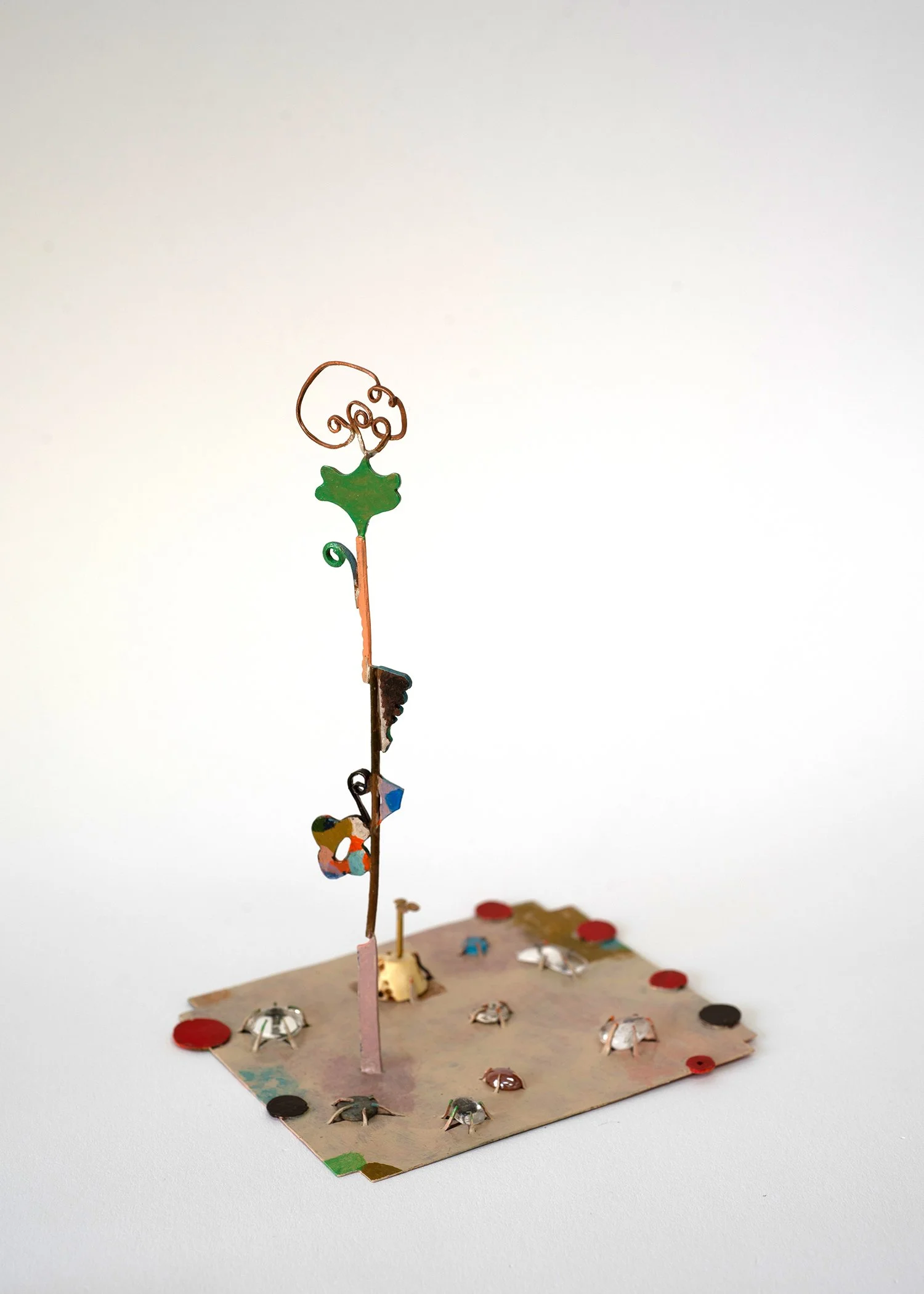
92. Audrey Tan, ‘Crying over angels’, copper, silver solder, acrylic paint, glass, lemon tree wasp gall, steel, pewter, plastic, 2025, 15x9x11cm. Price: $660
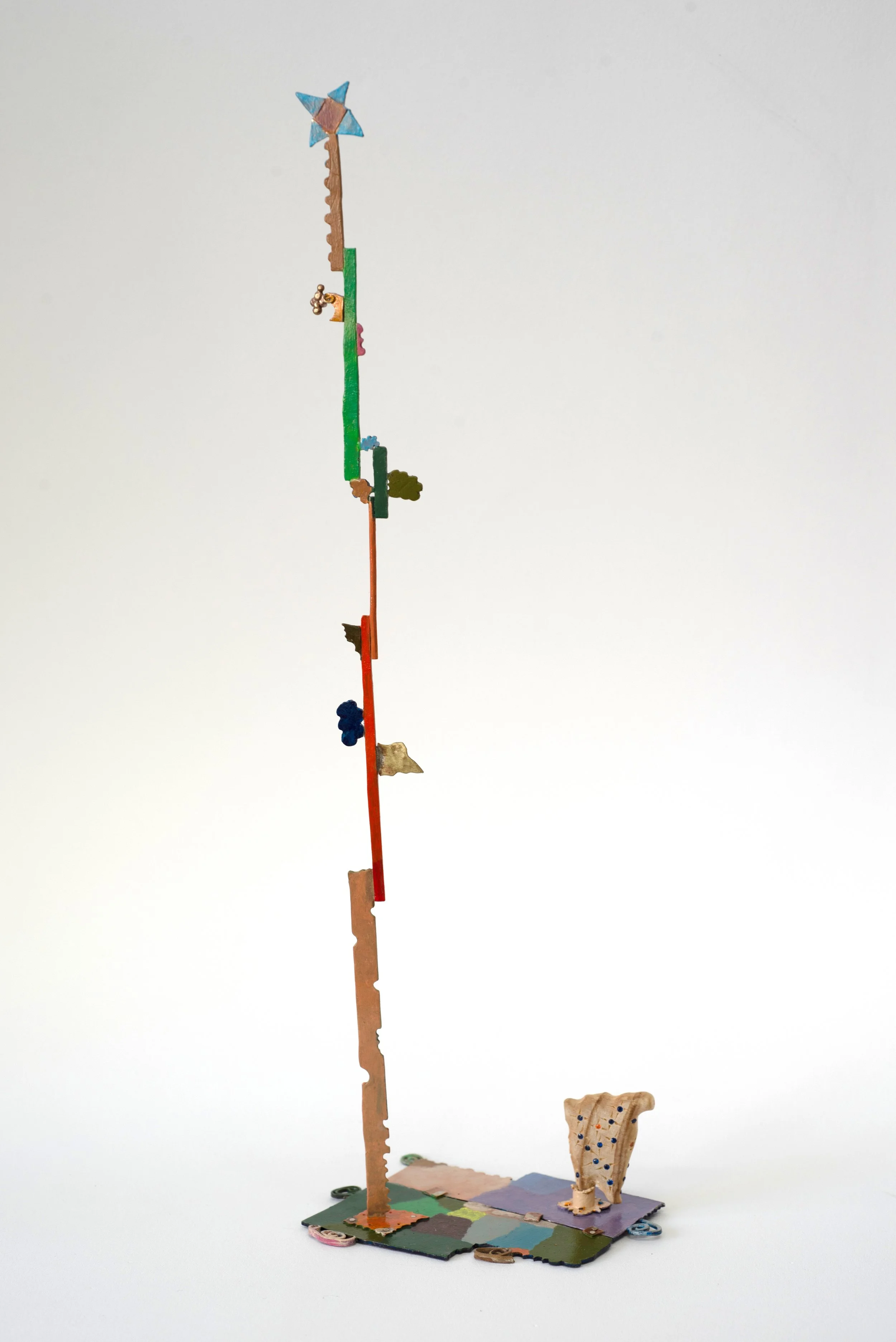
93. Audrey Tan, ‘Immovable parts’, 2025 copper, silver solder, brass, sterling silver, acrylic paint, enamel paint, pine, cubic zirconia, 32x9.5x6.5cm. Price: $660
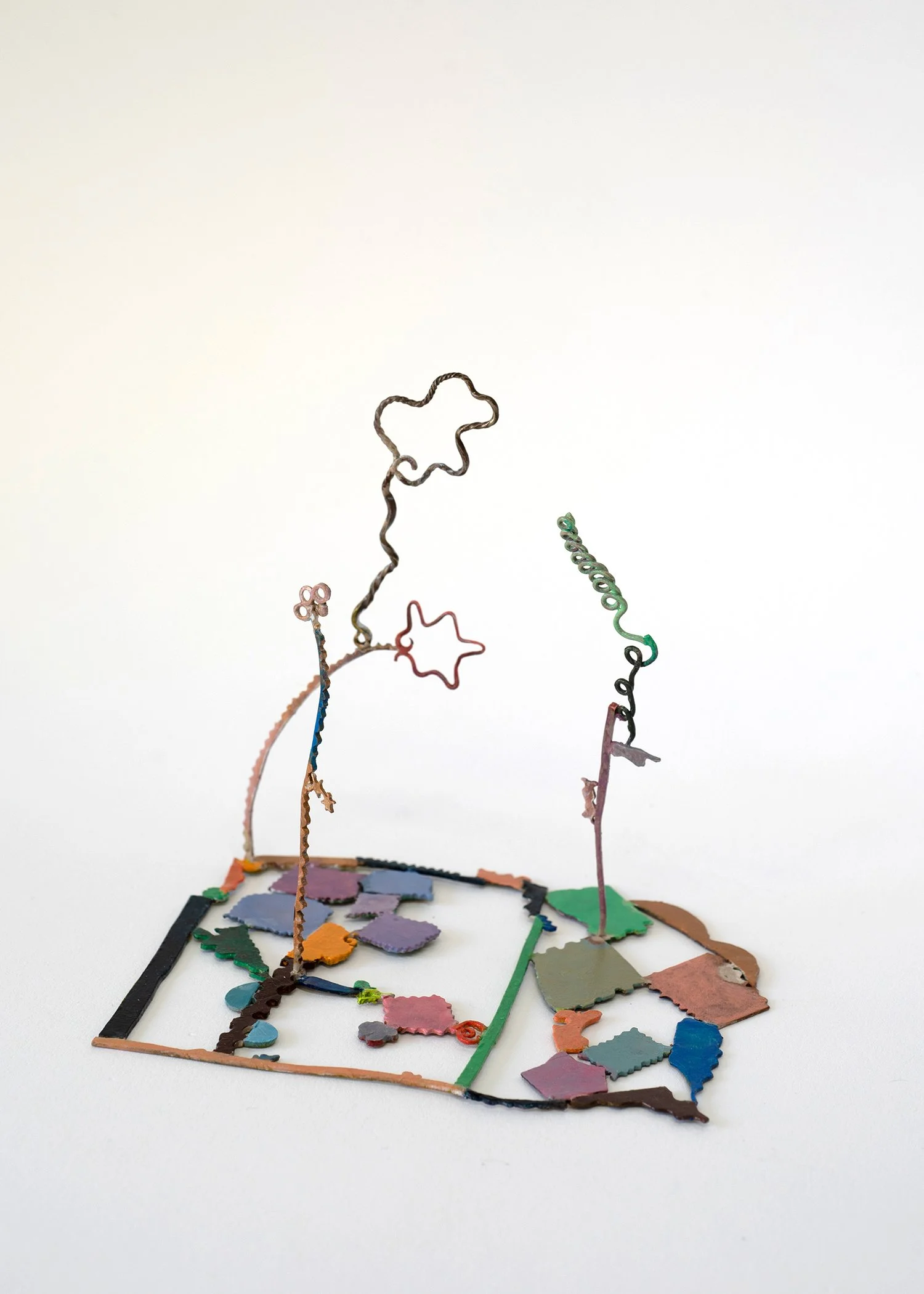
94. Audrey Tan, ‘Clown school’, 2025 copper, nickel silver, brass, silver solder, acrylic paint, 10x9x7cm. Price: $660
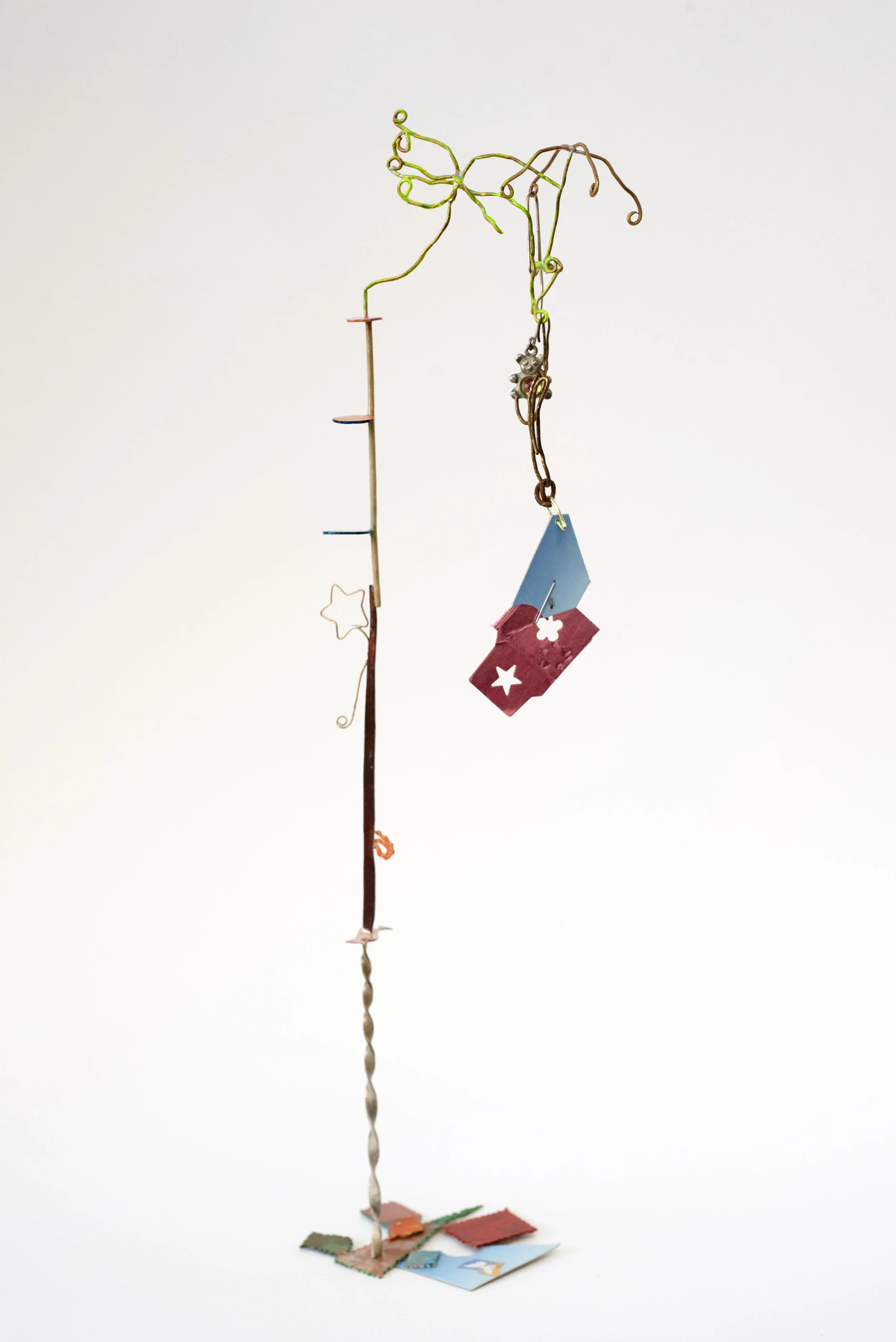
95. Audrey Tan, ‘Something crawled along the back of my neck’, 2025, copper, silver solder, sterling silver, brass, nickel silver, acrylic paint, beauty product packaging, vape packaging, paperclip, staple, easter egg wrapper, earring charm, steel, rust, 33x10x5cm. Price: $660
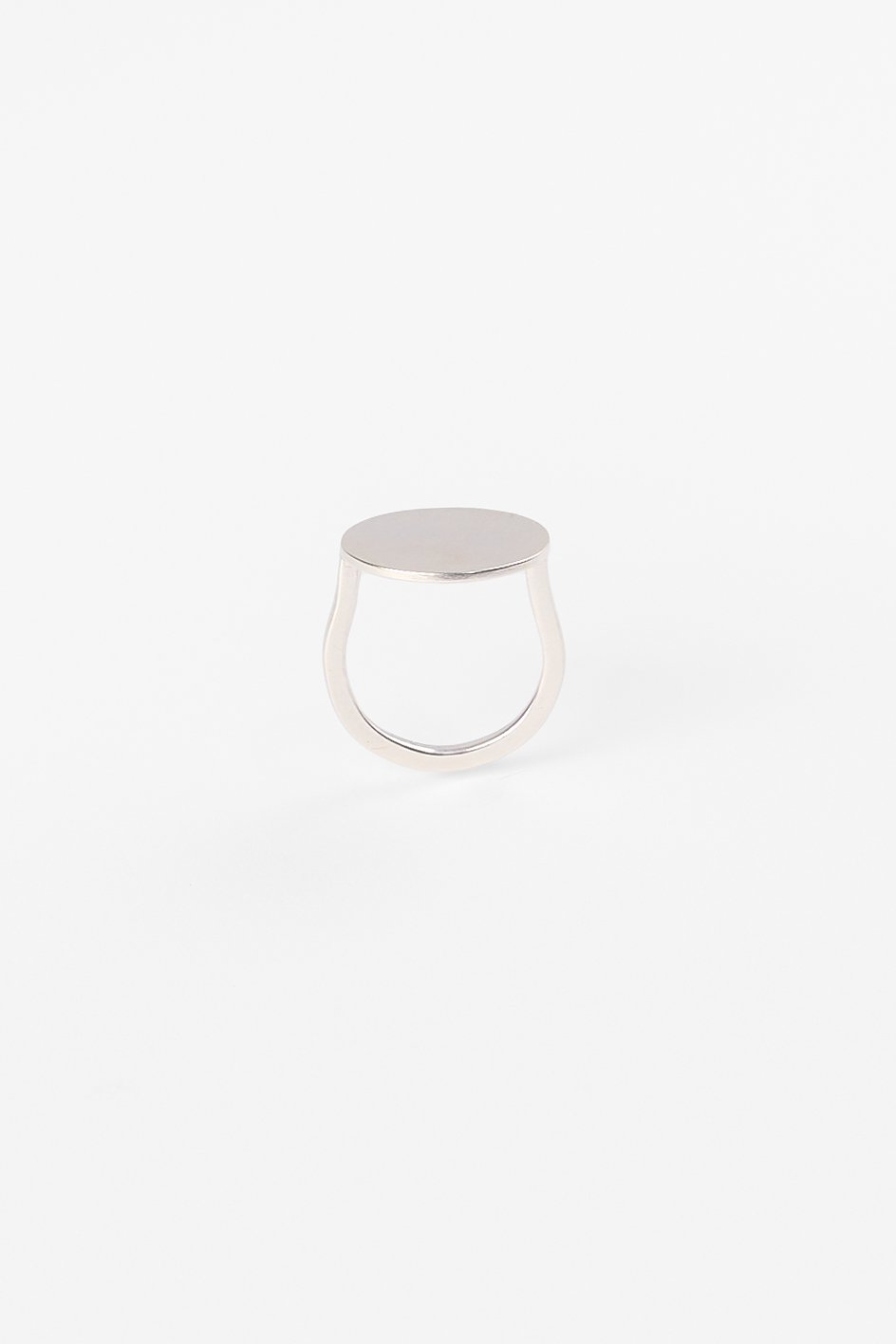
96. Anna Varendorff, ‘Circle Signet’, 2026, sterling silver, 1.7cm dia (approx. sizes K and O available. Please note due to the unique shape of these rings the gallery recommends trying these works on for correct fit). Price: $360

96. Anna Varendorff, ‘Circle Signet’, 2026, sterling silver, 1.7cm dia (approx. sizes K and O available. Please note due to the unique shape of these rings the gallery recommends trying these works on for correct fit). Price: $360

97. Anna Varendorff, ‘Circle Signet with Diamond’, 2026, diamond, sterling silver, 1.7cm dia (approx. sizes K and O available. Please note due to the unique shape of these rings the gallery recommends trying these works on for correct fit). Price: $460
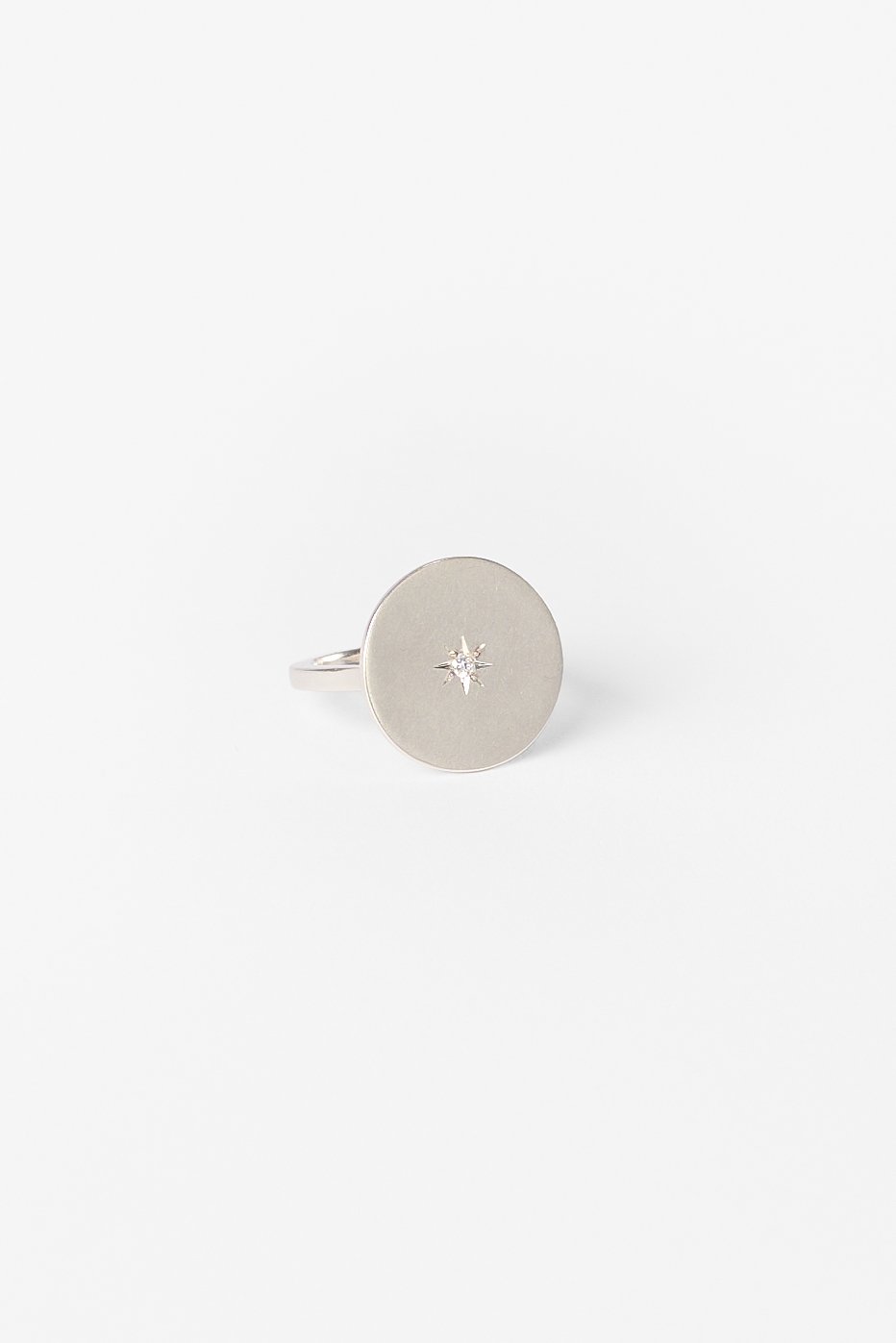
97. Anna Varendorff, ‘Circle Signet with Diamond’, 2026, diamond, sterling silver, 1.7cm dia (approx. sizes K and O available. Please note due to the unique shape of these rings the gallery recommends trying these works on for correct fit). Price: $460
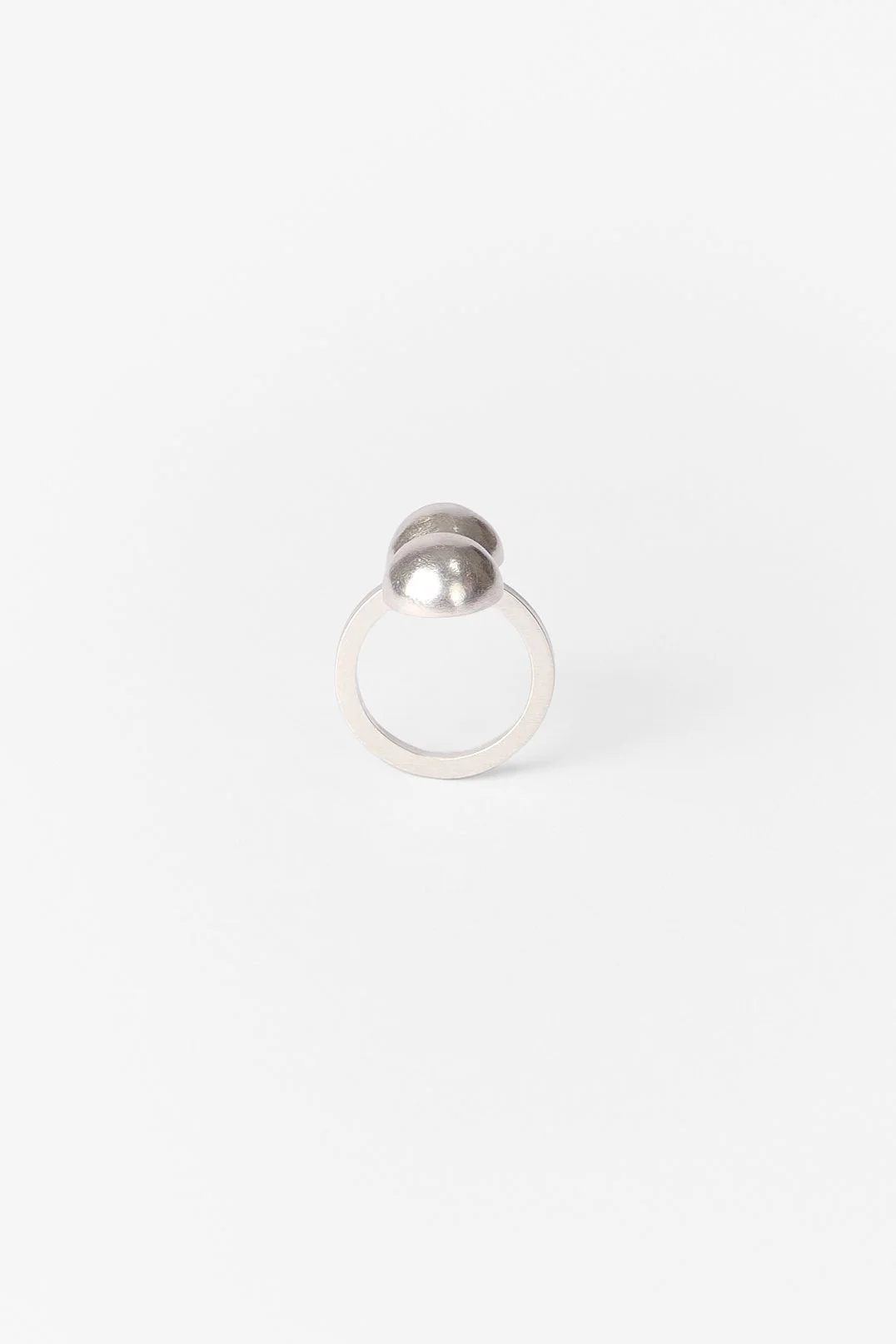
98. Anna Varendorff, ‘Soft Eyes Ring’, 2026 sterling silver, 2.5x2x2cm, approx. size O. Price: $420

98. Anna Varendorff, ‘Soft Eyes Ring’, 2026 sterling silver, 2.5x2x2cm, approx. size O. Price: $420

99. Anna Varendorff, ‘Tourmaline Ring’, 2026 sterling silver, tourmaline, 2.8x2.x1cm, approx. size O. Price: $800

99. Anna Varendorff, ‘Tourmaline Ring’, 2026 sterling silver, tourmaline, 2.8x2.x1cm, approx. size O. Price: $800
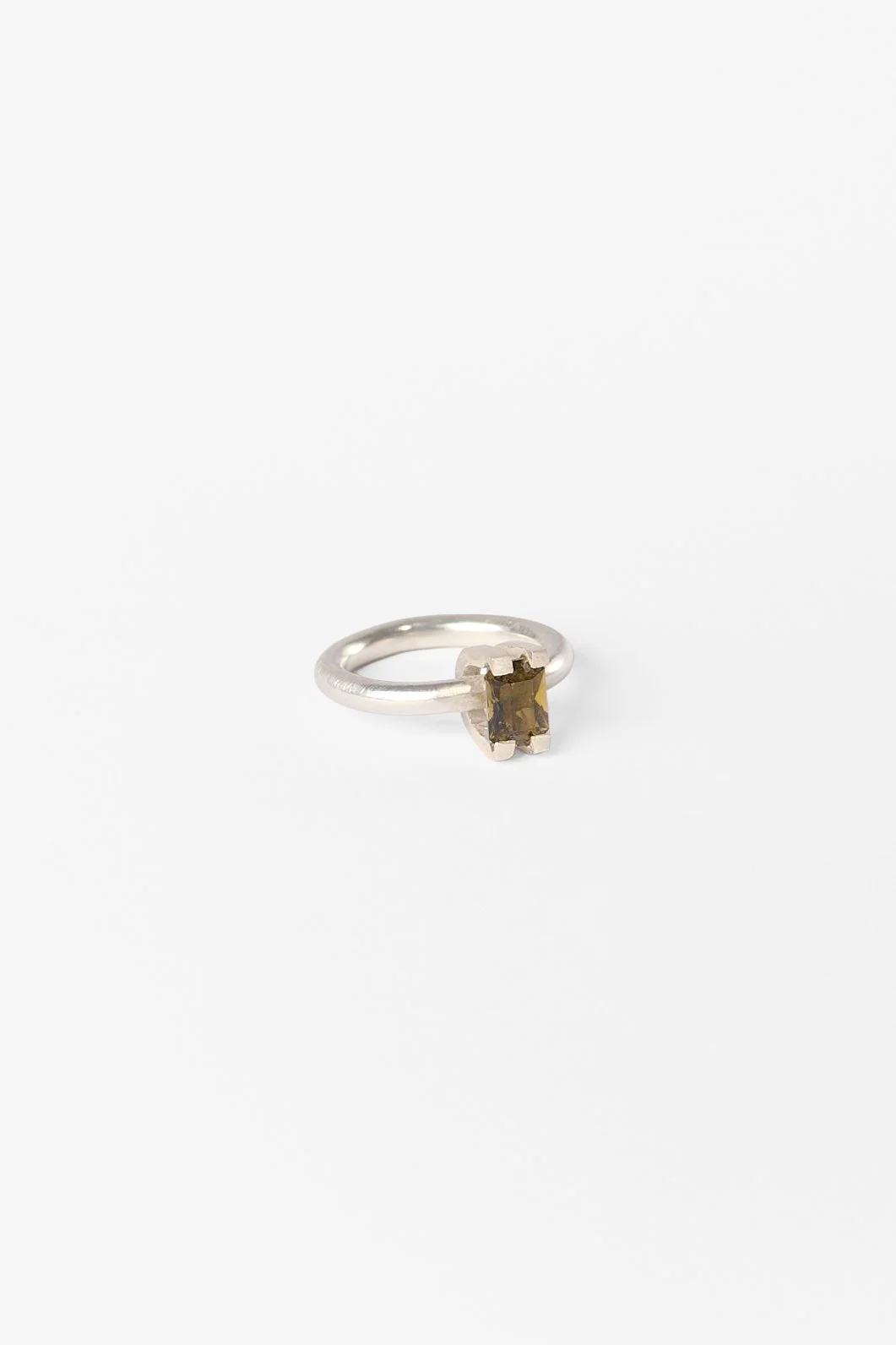
99. Anna Varendorff, ‘Tourmaline Ring’, 2026 sterling silver, tourmaline, 2.8x2.x1cm, approx. size O. Price: $800
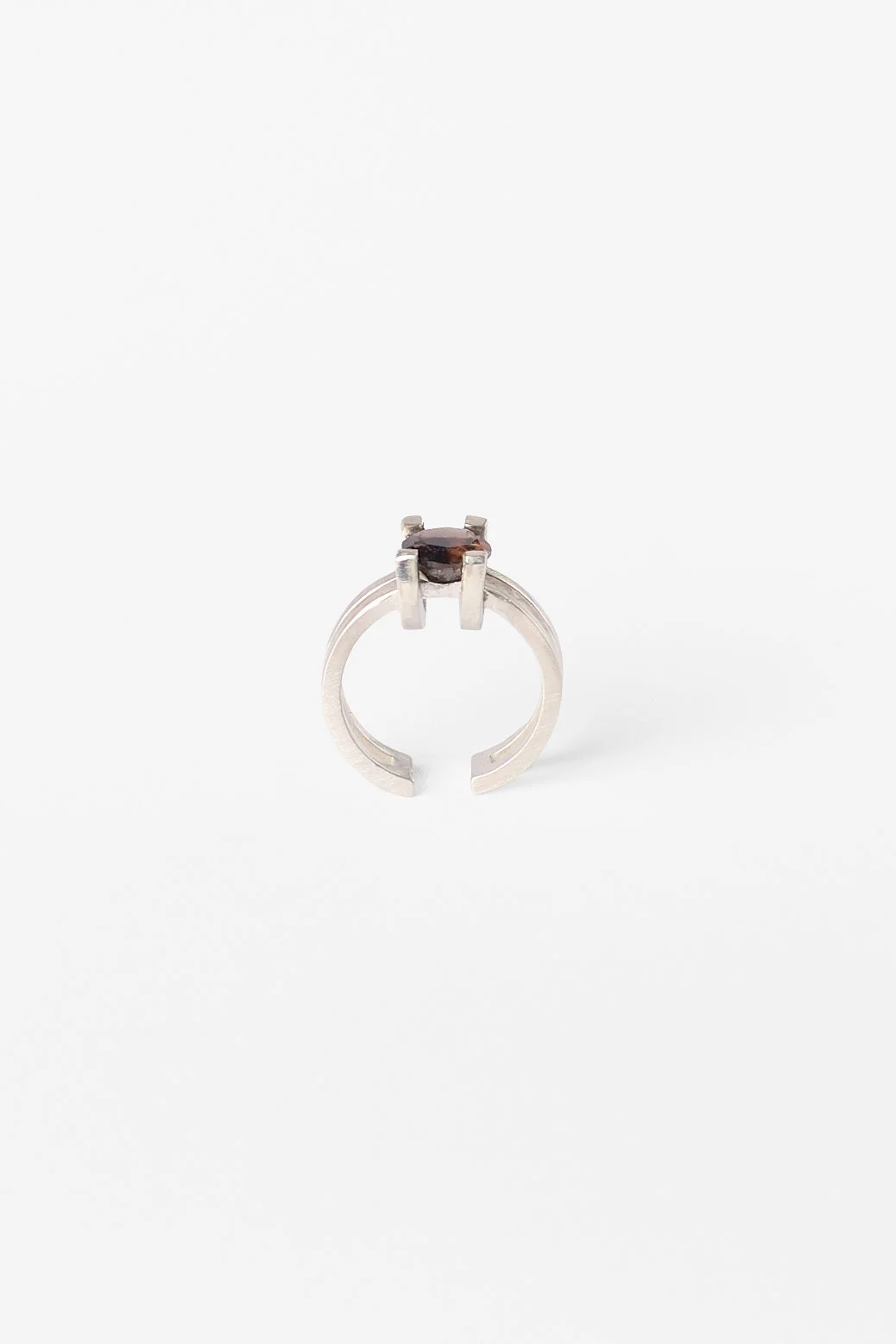
100. Anna Varendorff, ‘Smokey Quartz Ring’, 2026, sterling silver, smokey quartz, 2.5x2.x1cm, adjustable size. Price: $800
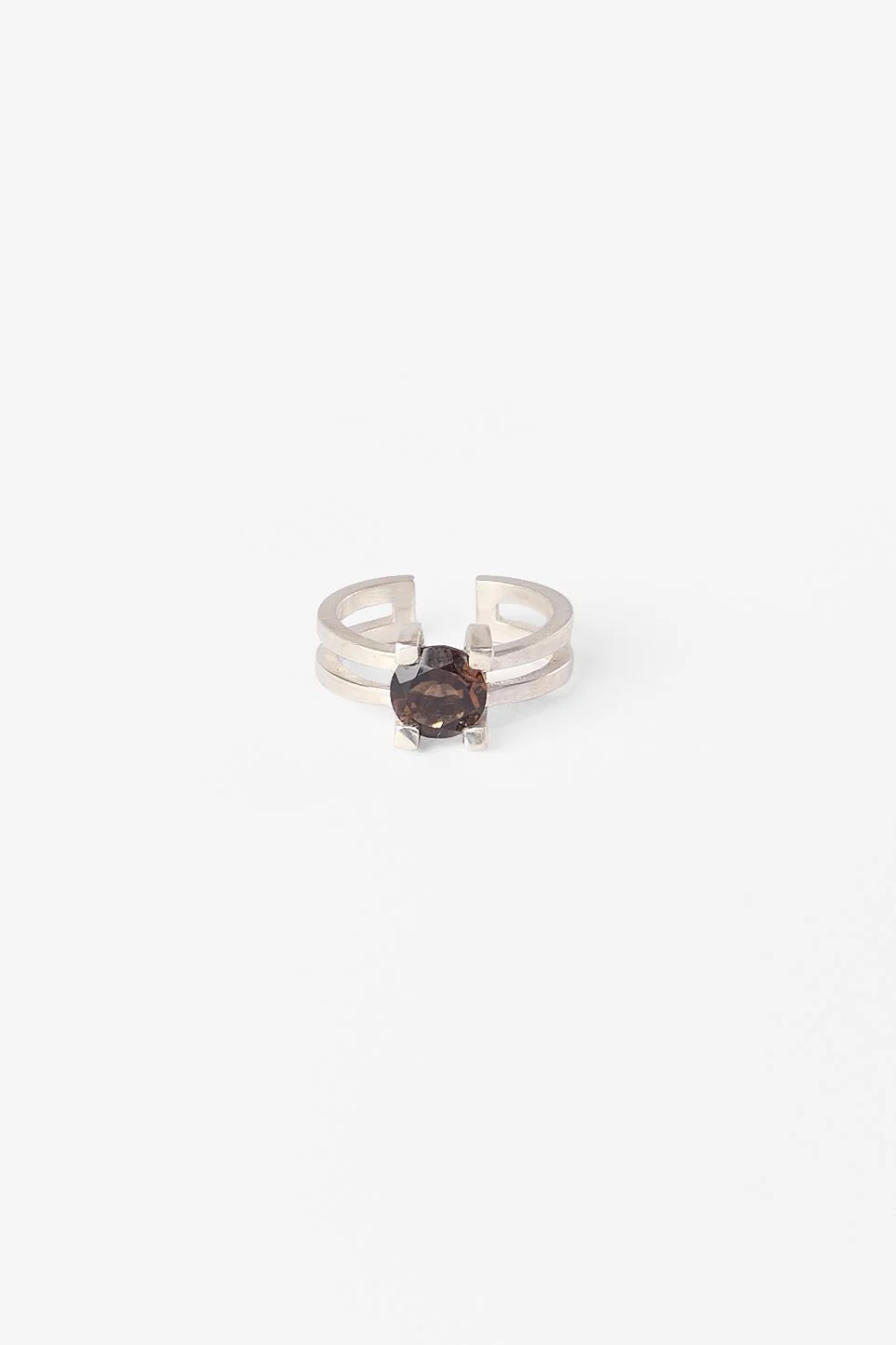
100. Anna Varendorff, ‘Smokey Quartz Ring’, 2026, sterling silver, smokey quartz, 2.5x2.x1cm, adjustable size. Price: $800

100. Anna Varendorff, ‘Smokey Quartz Ring’, 2026, sterling silver, smokey quartz, 2.5x2.x1cm, adjustable size. Price: $800
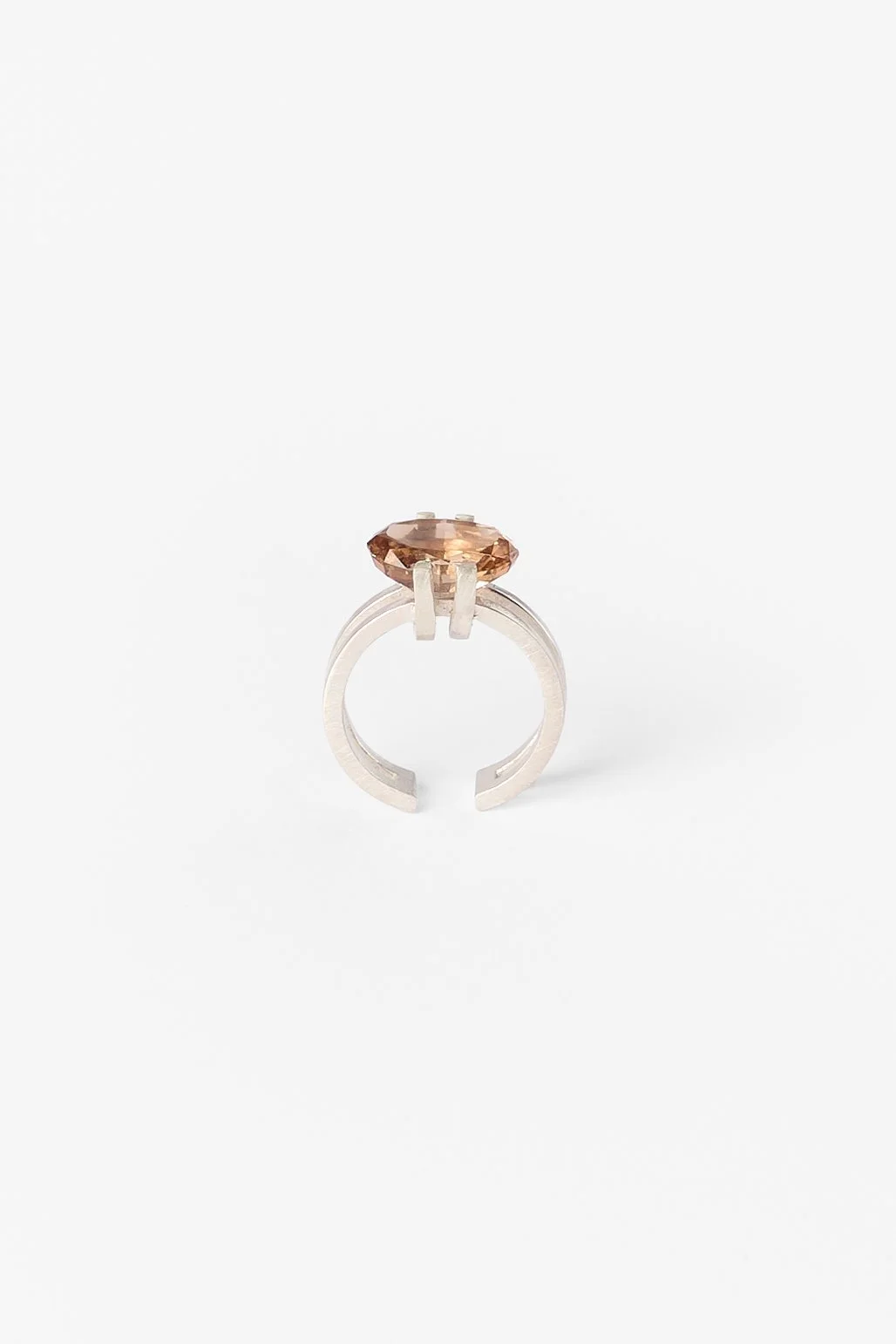
101. Anna Varendorff, ‘Topaz Ring’, 2026 sterling silver, topaz, 2.5x2.x1cm, adjustable size. Price: $800

101. Anna Varendorff, ‘Topaz Ring’, 2026 sterling silver, topaz, 2.5x2.x1cm, adjustable size. Price: $800

101. Anna Varendorff, ‘Topaz Ring’, 2026 sterling silver, topaz, 2.5x2.x1cm, adjustable size. Price: $800
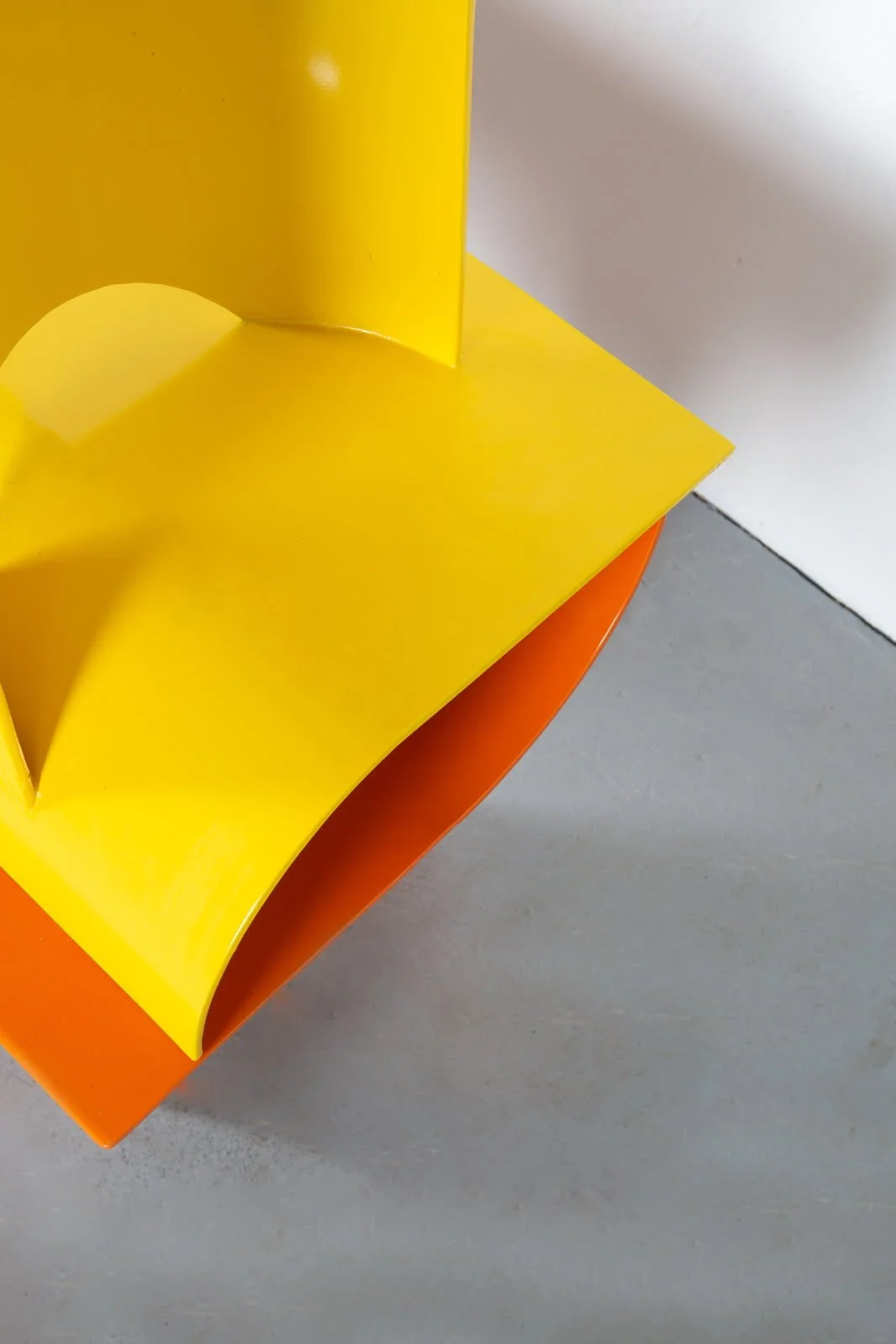
Sam Blomley, ‘Fitzroy Benches’, 2026 Mild steel, powder coat (yellow and orange powder coat shown, available in any colour) Fitzroy Benches: 160 (L) x 50 (H) x 60 (D) cm $2,800 each
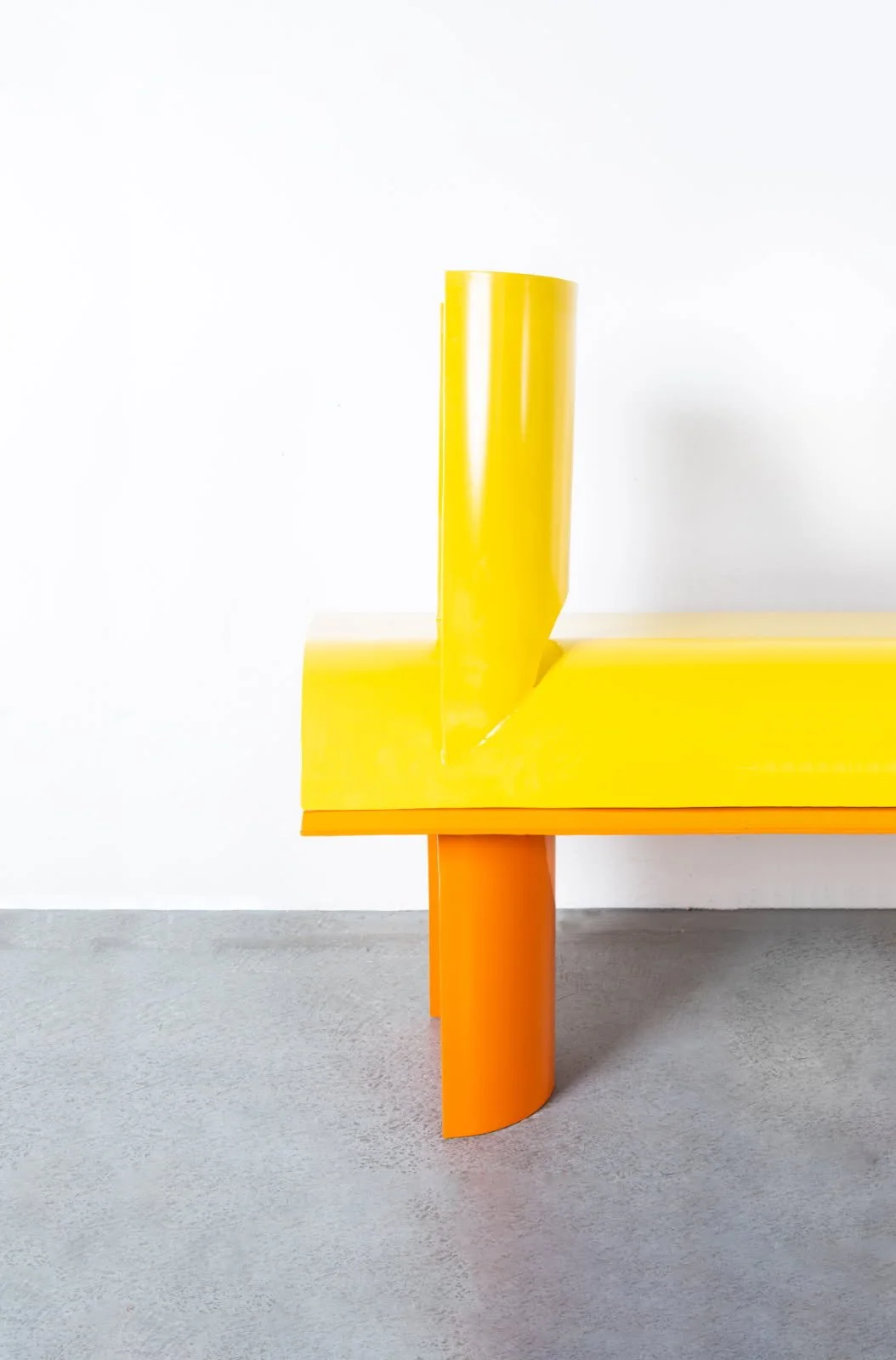
Sam Blomley, ‘Fitzroy Benches’, 2026 Mild steel, powder coat (yellow and orange powder coat shown, available in any colour) Fitzroy Benches: 160 (L) x 50 (H) x 60 (D) cm $2,800 each
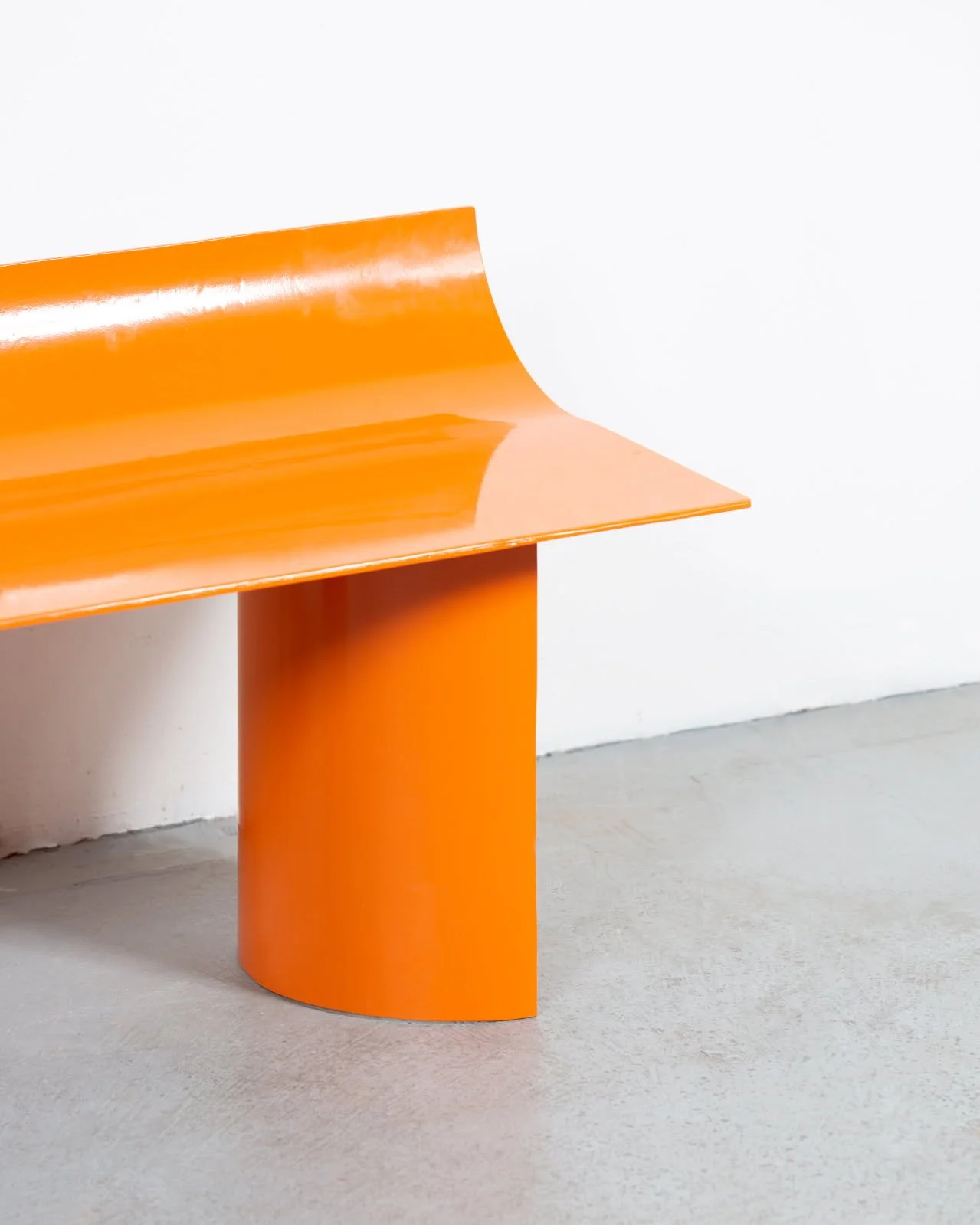
Sam Blomley, ‘Fitzroy Benches’, 2026 Mild steel, powder coat (yellow and orange powder coat shown, available in any colour) Fitzroy Benches: 160 (L) x 50 (H) x 60 (D) cm $2,800 each
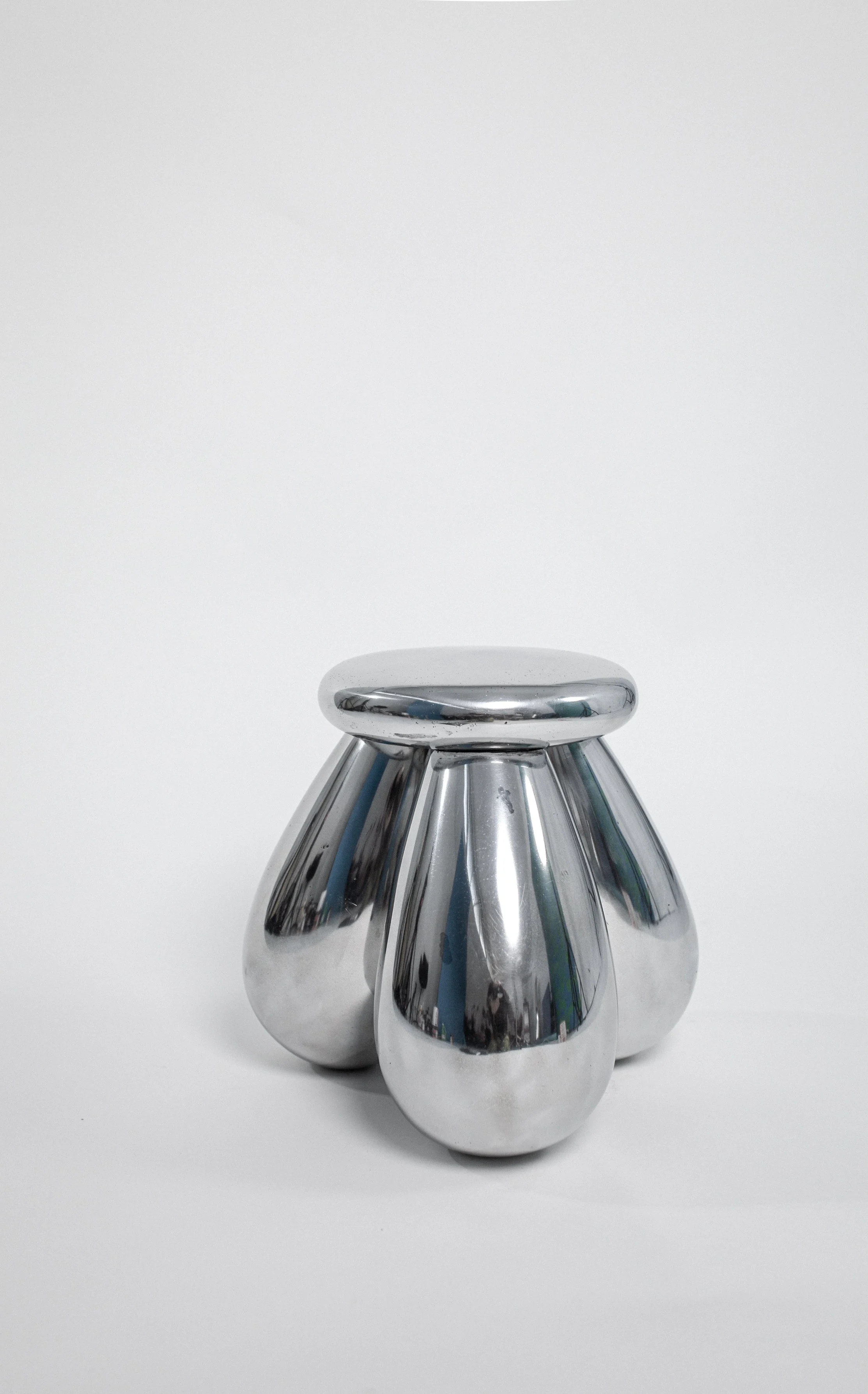
Sam Blomley and Gilda Jones ‘Stumpy’ (available in 4 finishes: natural, charred, black stain, polished cast aluminium), polished cast aluminium – edition of 6, $2,700 each, Douglas fir – edition of 1 , Shining gum – edition of 3, Stumpy (wood): $1,700 each
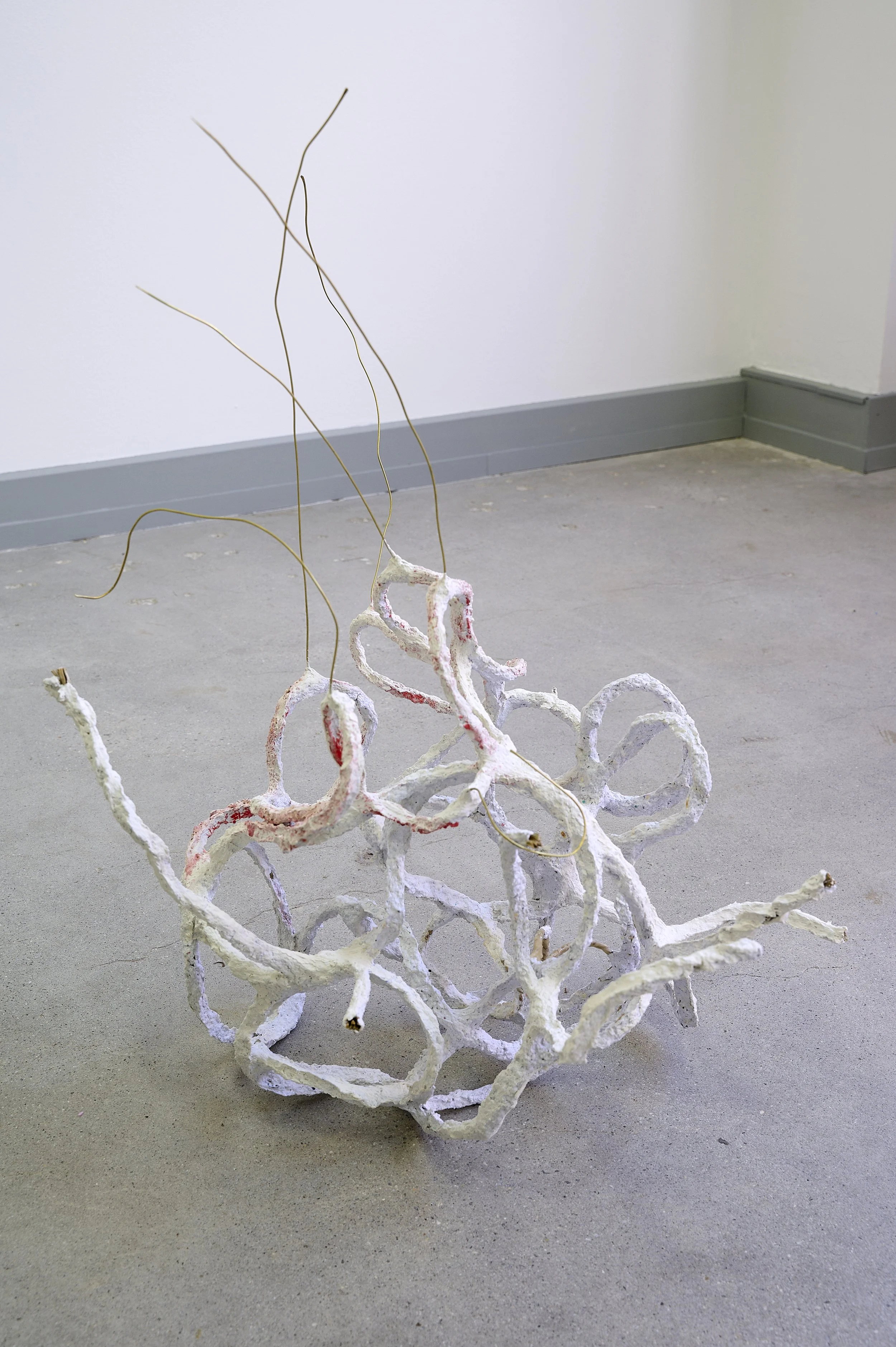
Benjamin Woods, ‘Numbers may irrupt after good rain, 2024-2025, seagrass twine, rope, beeswax, wire, paper pulp, pva, gesso, plaster, acrylic paint, brass, nail polish, 59x36x29cm. Price: $850
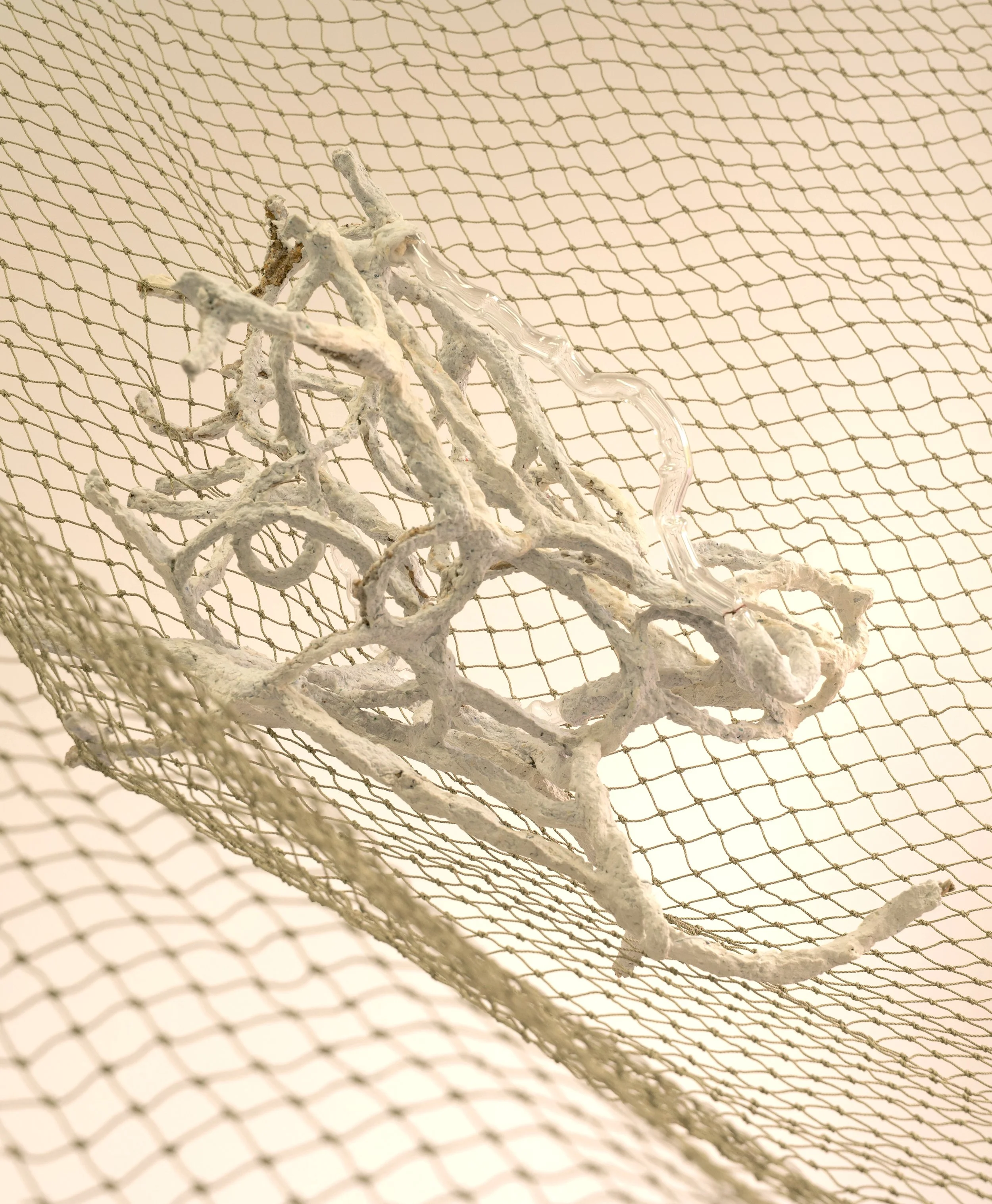
Benjamin Woods, ‘Rhizome’, 2024-2025, flame-work borosilicate glass (2021), seagrass twine, rope, wire, paper pulp, pva, plaster, gesso, acrylic paint. 59x41x31cm. Price: $900
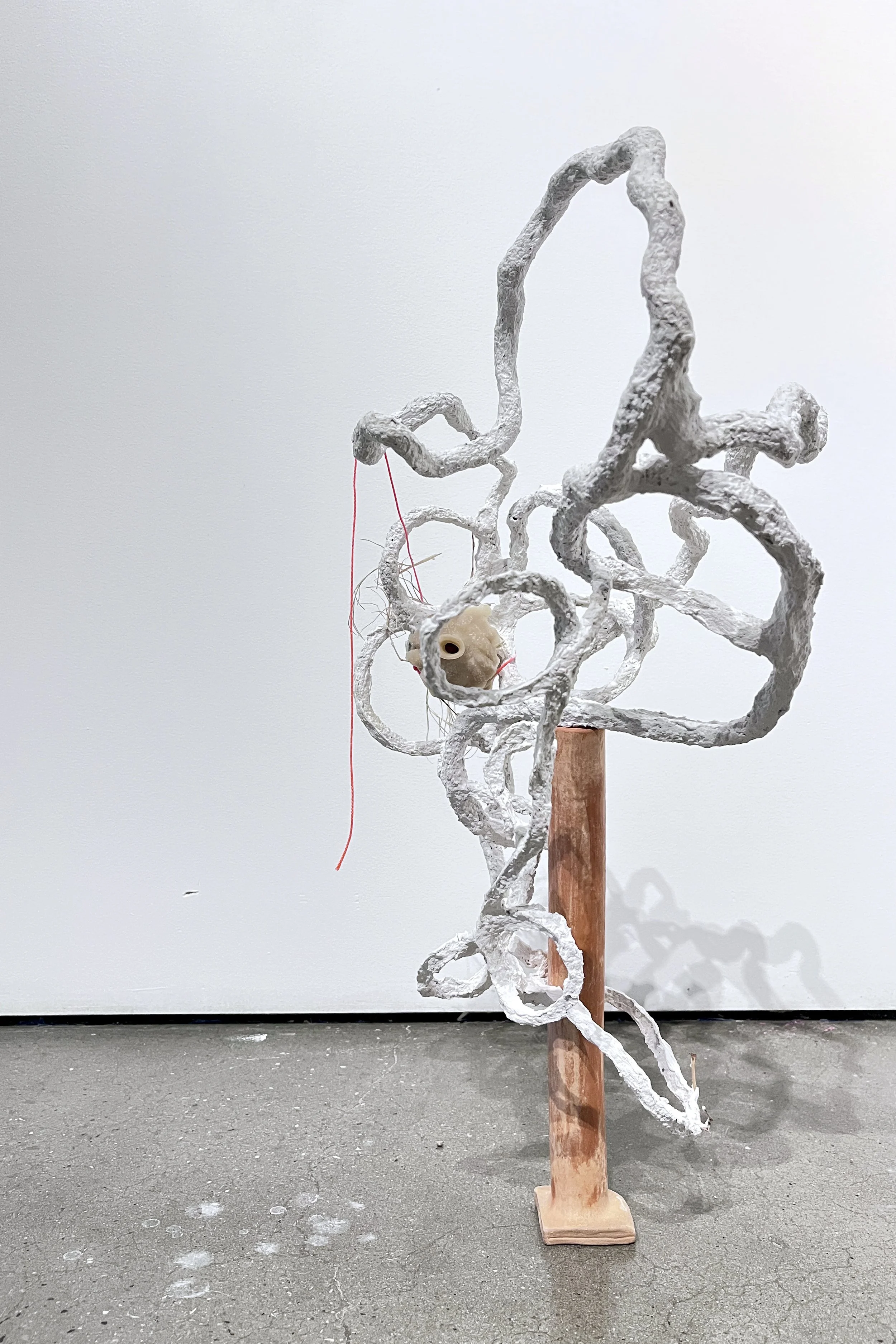
Benjamin Woods, ‘Buzzing and agglomerating when inundated (skinks)’, 2025 seagrass twine, beeswax flute (2023), grass from Skink territory in "Royal Park", wire, paper pulp, pva, plaster, gesso, builders’ twine, terracotta and bamboo paper clay flute, 53x36x52cm. Price: $850
About the artists:
Roseanne Bartley
Roseanne Bartley is an artist-jeweller whose practice integrates narrative, social, and material processes. Her work positions jewellery as both method and medium, a doubling that foregrounds its relational ecology and its capacity to act as a dynamic agent of human communication. Through wearable artefacts, exhibition installations, participatory events, and collaborative formats, her practice creates situations for encounter, dialogue, and reflection. Recent projects engage the alphabet as material and structure, attuning to the ways glyphic forms are shaped through the gestures, constraints, and vernacular of jewellery. Through processes of forming and recontextualising, letters become objects that hover between reading and wearing, sensory and signification. Based in Naarm/Melbourne, Roseanne holds a practice-led PhD from the School of Architecture and Design at RMIT University (2018). She was awarded the Australia Council Barcelona Residency and has received funding from Australia Council for the Arts, Arts Victoria, Punctum, and Ian Potter Foundation. Her work is held in the collections of the National Gallery of Victoria, the Powerhouse Museum, and Toowoomba Regional Gallery. In 2025 her work A Poetry of Rings: The Mulga Alphabet was highly commended in the Make Award Prize.
Sam Blomley and Gilda Jones
Sam Blomley and Gilda Jones’ collaborative practice spans moving image, design, and sculpture. Their work considers how movement can be embedded in material form, how objects might retain traces of gesture and the physical processes that shape them. Through the interplay of touch and materiality, objects accumulate evidence of engagement: the subtle wear, the impressions of handling, the ways materials age and hold memory. Their practice explores the ephemeral qualities of embodied experience, translating fleeting gestures of the body into forms that can be revisited. In this way, their work negotiates the tension between the temporal and the permanent, between movement as it occurs and the enduring presence of material.
The Stumpy Stools
This Collection is a contemporary reimagining of one of the most enduring and iconic pieces of furniture: the milking stool. Built from necessity, the original milking stool embodies the essence of design economy: three legs, a flat top and nothing more. It uses only what it needs to function, its stability derived from minimal means. This simplicity is what continues to make it timeless. Stumpy takes this humble archetype as a foundation and playfully reinterprets it for contemporary living. Materially, the stools honour both sustainability and history. The timber was sourced from Whelan the Wrecker, a name synonymous with Melbourne’s cycles of demolition and renewal throughout the twentieth century. Using reclaimed wood from these historic sites imbues each stool with a distinct character and patina, visible traces of the city’s architectural past. The cast recycled aluminium versions are produced from imprints of the original hand-turned timber stools.
Quarter Pipe Bench
The Fitzroy Bench is composed of a carefully divided length of 300mm diameter electric resistance welded line pipe. A single length of pipe can make a pair of these weighty benches.
Melissa Cameron
Melissa is an Australian artist who works on Whadjuk Noongar land in Perth and has lived and worked in Naarm/Melbourne and on Duwamish lands in Seattle, USA. Her aesthetic sensibility is influenced by her early studies in computer science and her first career and BFA (hons) in interior architecture (Curtin University, 2001). She holds a Postgraduate Diploma in Jewellery Production (Curtin University, 2006) and a jewellery and metalsmithing MFA (Monash University, 2009). Her practice alternates between meticulously researched socially aware / protest art, and technology / materials-based investigations. Her works are in many public collections, including the National Gallery of Australia, the University of Iowa Museum of Art, and Cheongju Collection in South Korea, and she has exhibited in the prestigious Schmuck exhibition in Munich. Cameron has received grants and prizes, presented at conferences, attended residencies, and published writings on jewellery and architecture globally. I have been making social conscious art, or protest art, for a while now. I moved to the USA in early 2012 and back again in late 2018, and my observations about the increasing lack of equality between its residents, citizens and victims of its foreign policy filtered into my work. When I arrived, I was already making narrative works – storytelling through jewellery and relatively small metal sculpture – but the narratives took a sharp turn. The lack of empathy I saw in the way people treated one another, and in the way the state treated its citizens–shockingly differently depending on their race and economic circumstances – emboldened me to use my practice as my megaphone. With the aim of facilitating an understanding and respect for the interconnected-ness of all humanity, I work to forge an intimate link through my work between the viewer and wearer of my pieces, and an external narrative. Lately, these narratives have centred on our vulnerability to climate change. Sharing stories through my jewels and objects opens my eyes to the meanings inherent in all our material culture. I recognize and respect that which is embedded in both used and new materials and rework them always with consideration for such intrinsic messages. I interleave my introduced patterns among these signs and symbols, so that each message, mine and those of the material, are enriched by the collaboration.
Katie Collins
Katie Collins is a maker of jewellery and objects based in Naarm/Melbourne. She is a graduate of RMIT, completing bachelor honours degrees in Interior Design and Fine Art, specialising in Gold and Silversmithing. Her work has been selected for national and international exhibitions, including the Itami International Craft Exhibition in Japan, Mari Funaki Award Exhibition in Australia and Talente in Germany. She is a sessional lecturer at RMIT University. In 2014, Katie exhibited her jewellery pieces at Galerie Marzee, in the Netherlands, where she received the Marzee International Graduate Prize. Her work is included in permanent collections in the Dallas Museum of Art and the NGV.
The ‘Still Life’ series aims to explore our engagements with objects; their stories, materiality and connections. Taking the form of vessels, they serve as an example of how objects can be more than they seem at first glance. These works also reference the ‘Gas Tanks’ series of photographs by Bernd and Hilla Becher; the series of black and white images abstracts and celebrates industrial details, allowing their graphic qualities to create pattern and appear decorative. I’m interested in how decorative objects often lay in wait, patiently waiting for our attention; however, with closer observation, they reward our curiosity. On first view, the forms appear to be known, it is only in the handling of the objects where they reveal their ability to physically change and shift their proportions. Each connection and component, perhaps seeming only decorative, provides a function. Suggestions of movement are present in the mechanical details; it is not hidden or secret but requires a closer look and engagement from the viewer. Shifting from short to tall and back again, I hope to encourage a closeness between person and object. The shifting profiles of the objects serve to remind us of the complexities of the lives of objects and the embedded stories that they hold.
Debris Facility Pty Ltd
Debris Facility (them/all) is a Naarm-based, queer body corporate found-dead in 2015. As an artistic/corporate entity whose activities often parody and parasite processes of neoliberal identity construction and industrial commodification, they produce wearable works, installations, interventions, design and performances which respond to specific contexts and coworkers. They have extended their pedagogical work through contracts with Liquid Architecture and Victorian College of the Arts. They have exhibited and produced works in local, national and international contexts, in galleries, performance spaces, publications and others. Their work is held in numerous private collections and landfill. PlastiCorpus 1.0-2.6 was developed by Debris Facility Pty Ltd for the exhibition "This Hideous Replica" curated by Joel Stern and Sean Dockray at RMIT Gallery in 2024. The work deploys knock off replica modular "IQ Lamps" created by the Danish designer Holger Strøm in 1973, and proliferating through copies of the appropriated design. PlastiCorpus looks at plastics re- production as an expanse of noise and cancerous growth within economic and waste systems. Lighting systems are deployed as affect management tools and architectural adornments which critically reflect plastic as a queer materiality.
Eli Giannini
Eli Giannini is a Melbourne architect, practicing artist and art critic. She has promoted design, theory and research through her writing, exhibitions and conference presentations and as eminent architect of design competitions juries. Being an artist gives me an opportunity to explore a different territory to the one I’ve practiced in for over 30 years, architecture. The one constant is my continued exploration of typology through a deepening understanding of tradition in jewellery and object-based practice. Unlike my architecture practice, my art practice is an exploration of ideas through making with non-precious materials. The challenge I pose myself is the transformation of the ‘everyday’ into a meaningful object ready for the body to wear. These series of neckpieces and pendants celebrate the ‘string’ rather than the ‘pearl’. Made of translucent plastic beads (HAMA Beads) and Sashiko thread these works are inspired by archetypal bead necklace designs reinterpreted through the playful nature of the chosen materials: the multicoloured coloured thread, the toy beads and the upscaling and abstraction of the designs.
Peta Kruger
Peta works across the fields of textiles, public art and contemporary jewellery. She received her Masters by Research in Visual Arts from the University of South Australia in 2020. Recent exhibitions include: Transformative Repair, JamFactory (SA), Used, JamFactory (SA) and the Hadley’s Art Prize, Hadley’s Hotel (TAS). With the support of Lendlease and ASPECT Studios, Peta completed her first public art project in Steam Mill Lane in Sydney’s Darling Square precinct in 2018. This collection is made from discarded fabric remnants, celebrating Australian native flora while acknowledging a core contradiction: making objects that honour nature contributes to its displacement. I draw from psychedelic woodland imagery and embroidered patterns from my East Prussian ancestry, layering cultural memory with ecological concern. The synthetic, bright colours deliberately clash with the muted Australian bushland, highlighting this tension. By transforming waste into wearable art, each brooch becomes both an act of care and complicity; questioning whether we can truly preserve what we love through the very processes that replace it.
Mascha Moje
Mascha Moje was born in Hamburg Germany. In 1984 she travelled to Australia to undertake training in gold and silversmithing at the Australian National University, Canberra Institute of the Arts, completing her studies in 1989. She went on to teaching roles at RMIT University, ANU and Monash University. Moje has exhibited extensively in Australia, as well as exhibitions in Denmark, Holland, Belgium, New York, Germany, Austria, Japan and completed a 3-month residency in the Ceramic Centre Hertogenbosch, Holland. Her work is widely collected in both private and public collections including NGA, NGV, AGSA, Museum for Art and Design in New York, and several public collections in Germany. Mascha’s practice distils ideas of material memory, while employing the impeccable craft of the master maker across a broad range of materials. For more than two decades Mascha has predominantly worked within the field of Jewellery, her interest stemming from questions of how objects are worn and the interface of body and object. She employs a reductionist mode of making, fascinated with the language of the material and the essence of form. Mascha’s practice is not defined by material, craft or placement, but the careful consideration of given parameters, be they the interface of body and worn object or object in space. Mascha welcomes these challenges to expand on possible answers around closely investigated concepts.
Yongping Ren
Yongping Ren is a Melbourne-based artist and arts worker whose practice investigates how materials accumulate and preserve gestures, thoughts, and desires through time. Working with tensions between public and private, permanence and fragility, his work dissolves boundaries between the sacred and profane while centering marginalized forms of spatial intimacy, failure, and instability. These two selected ceramic works are part of Yongping’s exploration of personal desire and spiritual believes through Daoist and Buddhist studies.
Danni Schwaag
Danni Schwaag is a jewellery artist living and working in Bremen, Germany. Behind each group of works there is a story and intense research into colours and materials and their visual impact. Mother-of-pearl, enamel, galalith - an early form of plastic (1900-1930) - are dominant materials in her work. She also combines wood, copper, dried acrylic paint, porcelain, threads or found objects to create abstract and figurative compositions. After a traineeship as a goldsmith she studied Gemstone and Jewellery Design from 2004-2008 at the Fachhochschule Trier, University of Applied Arts, Idar-Oberstein, Germany and the Escola Massana, Barcelona, Spain. In 2013 her work was awarded with the Bremen advancement award for applied art for her series l’art pour l’art – an ironic view on the fine art scene. Recent exhibitions in 2025 include Kunst RAI Amsterdam, presented by Galerie Door, Amsterdam (NL); Modern Times, Galerie Door, Nijmwegen (NL); Modern Times, Munich Jewellery Week Galerie Door guest of Galerie Smudajescheck, Munich (DE) and in 2024 Faszination Schmuck, 7000 Jahre, Museum of applied Art Cologne (DE). Danni’s work for this exhibition is informed by her artist-in-residence at the Jakob Bengel Foundation and the Idar-Oberstein University of Applied Sciencestjat in 2024.
Audrey Tan
Audrey Tan is a multidisciplinary artist based in Naarm/Melbourne via Boorloo/Perth. She completed a Bachelor of Fine Art (Honours) at Monash University in 2014, and an Advanced Diploma of Jewellery and Object Design at Melbourne Polytechnic in 2018. Working across drawing, bricolage, jewellery and gardening, Audrey is interested in the entanglements that exist between people and objects - and how objects of adornment can act as absorbers of energy, as well as an archive of time, site and self. The work is (loosely): scrap led compositions, extremely composting, I am on the precipice of rot, rotten floral arrangements, making wishes, a note in my phone that only says “frozen spinach”, borborygmi, trying and trying and trying, holding hands under the moon. Thinking about: circus formalism and the outfits that clowns wear, maquettes - pavilions - monuments, sudden eruptions from under the ground, when flowers overtake the height of the fence, bauhaus, bookmarks, beehives, there’s a wasp in my house!
Raewyn Walsh
Raewyn Walsh is a Tāmaki Makaurau, Auckland based jeweller. She investigates the attachments humans have to physical things and ideas that surround collection, possession, ownership and function, and the subsequent associations these themes have with time and memory. Raewyn completed a Bachelor of Design (Honours) from Unitec in 2009. She studied at Unitec under the tutelage of Pauline Bern, Areta Wilkinson and Ilse-Marie Erl. She was the 2011 prize winner of the Objective Art Awards. She participated in the mentoring project HANDSHAKE set up by Peter Deckers, in HANDSHAKE 2, 2016 when Raewyn was mentored by Henriette Schuster and in HANDSHAKE 3, 2017. Raewyn has work held in the collections of The James Wallace Arts Trust and Tairawhiti Museum, Gisborne. Recent exhibitions include: in 2025, A Leaky Abstraction, Nelson Jewellery Week, and GOODNESS, Deutsche Meisterschule Für Mode, Sendlinger-Tor-Platz, Munich-Altstadt-Lehel, Germany and in 2024, Let’s play, Masterworks Gallery, Tāmaki Makaurau and Victory over Death, Stanley Street Gallery, Sydney.
Benjamin Woods
Benjamin Woods is an artist and researcher living in Naarm on unceded Wurundjeri Woi-wurrung Country. His sculpture and sound installation practice mutates and develops in the context of specific place-based research projects. Ben holds a BFA Honours (2007-10) and MFA (2012) from the Victorian College of the Arts; and a PhD from Monash University, Fine Art (2018-22). He is a Lecturer at Monash University Fine Art, and currently co-directs Run Artist Run, a studio residency space in Docklands. Ben is a member of the Climate Aware Creative Practice research group (CACP), and the Australasian Queer Research Network (AQuRN), and a member of the collective Tributaries (with Ying-Lan Dann, Saskia Schut, Geoff Robinson, Justine Walsh). For Alta Forma at MAF 2026, Woods is showing a series of ceramic flute sculptures shown alongside linear paper-pulp assemblages that describe sonic ideas. The works engage queer intimacies and continue Woods’s long-held obsession with the moment at which something becomes resonant. The works Woods is presenting hope for an ongoing becoming of material play and emotional entanglement through sound—imagining transformative potential through minor tonal relationships.
Elisa Zorraquin
Elisa Zorraquin is a jewellery artist from Argentina and PhD candidate at RMIT University, Melbourne, exploring contemporary jewellery through community engagement and sustainable practices. Her research, "Crafting Connections: How Emergent Material Practices in Jewellery Build Community," investigates how jewellery fosters dialogue and connection through playful, interactive designs for multiple wearers. With an industrial design background, Elisa challenges fragmented, disconnected modes of living, offering alternative landscapes of value. Her work has been exhibited internationally, including Munich, Buenos Aires, New York, and Melbourne. My work responds to impressions of my children, things I see, conversations with strangers, thoughts about value, movement, and the tide of change. I centre my practice on the poetics of the everyday, valuing repurposed materials and honouring overlooked offerings and ephemera that go unnoticed in our fast-paced world, yet act as quiet anchors of presence for those who pay attention. Through slow, meditative processes such as saw-piercing, I approach making as a way of being. These jewellery objects expand into liminal spaces, moving beyond traditional notions of what things should be, offering alternative landscapes of value.