Alta Forma presents: ‘GIFT’, Ross Coulter and Lynette Smith, 2025
28 August - 20 September, 2025
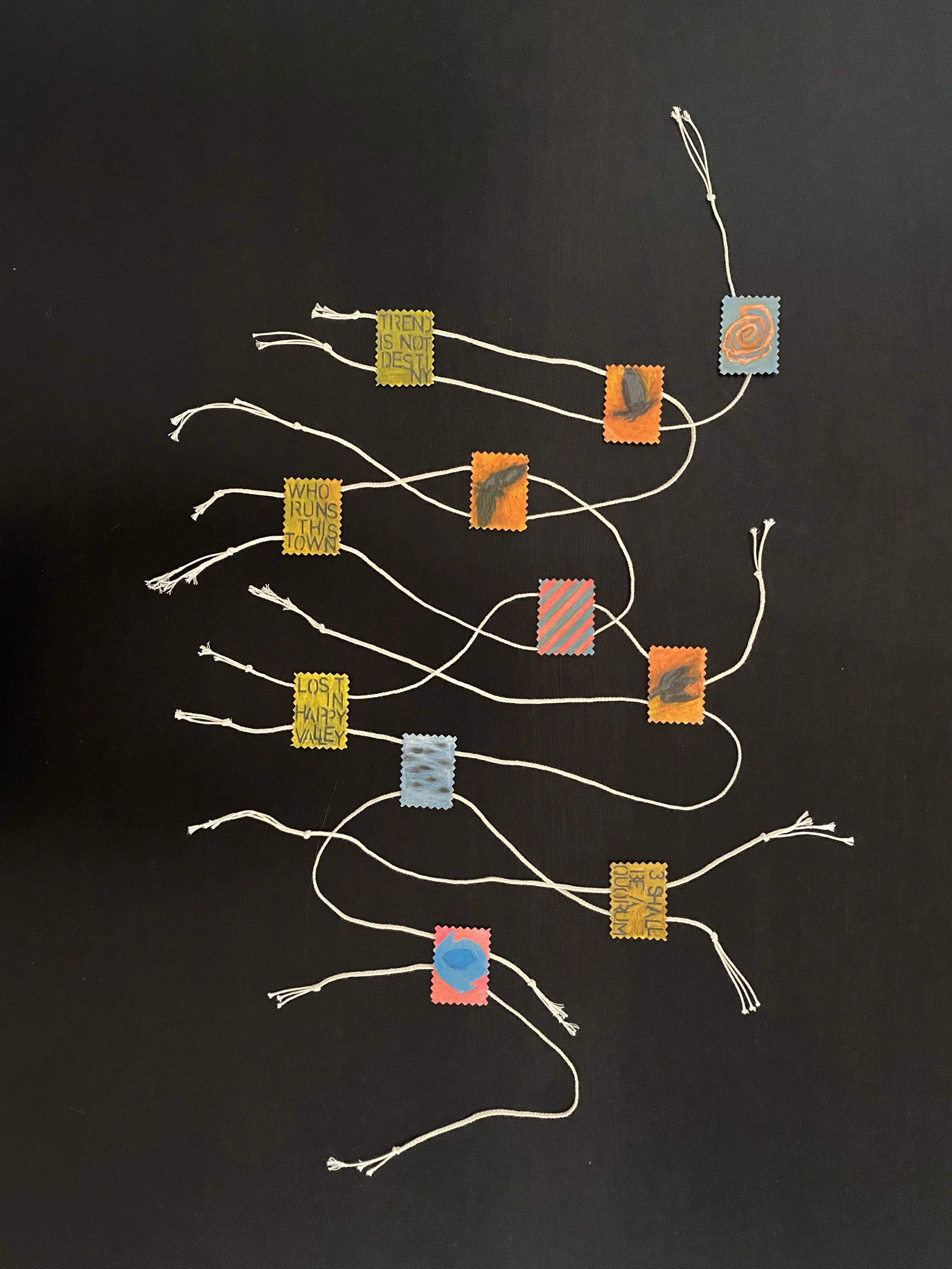
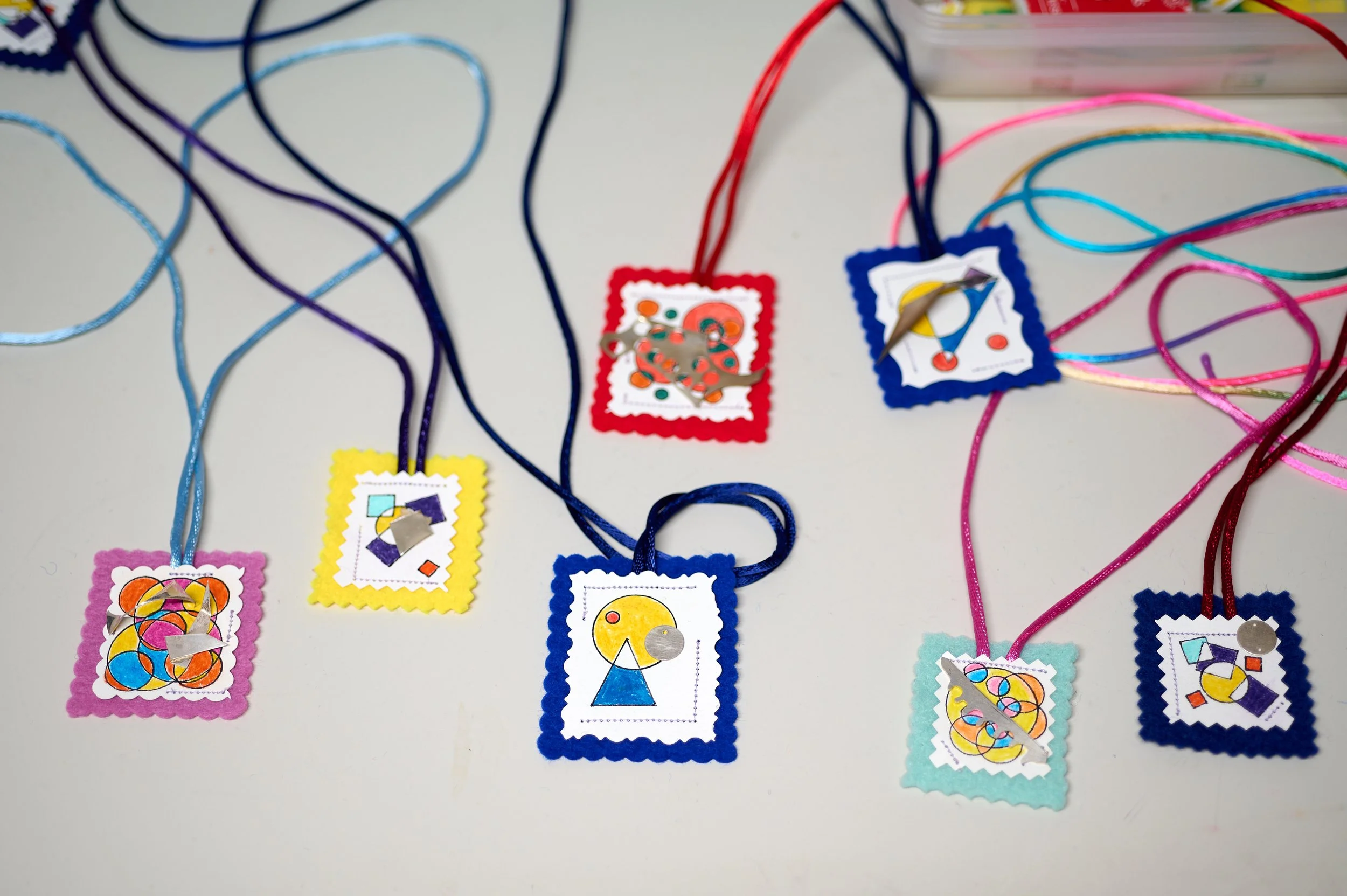
A small thing held in the hand, a protection against large forces and a reminder of strange futures…
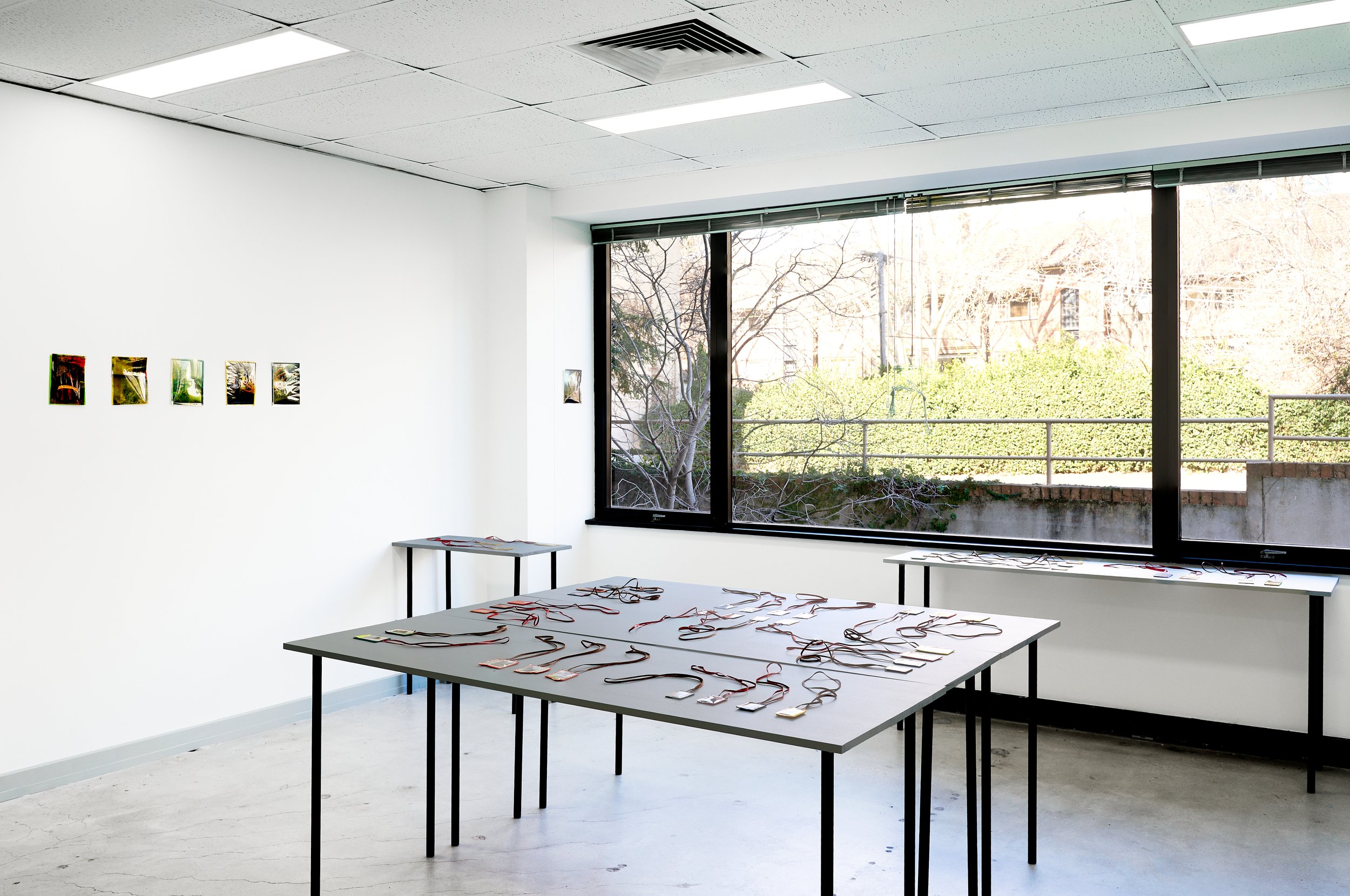
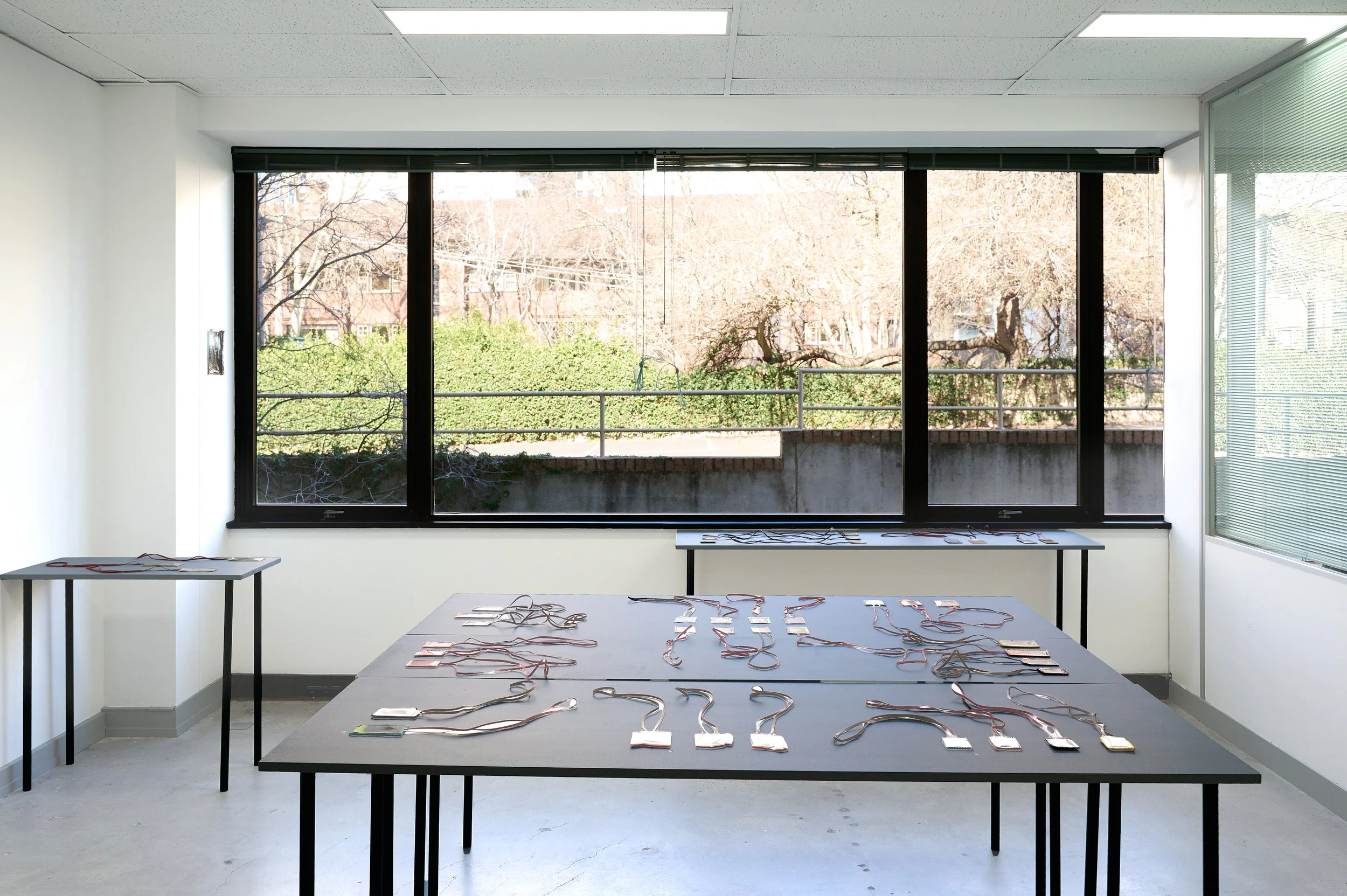
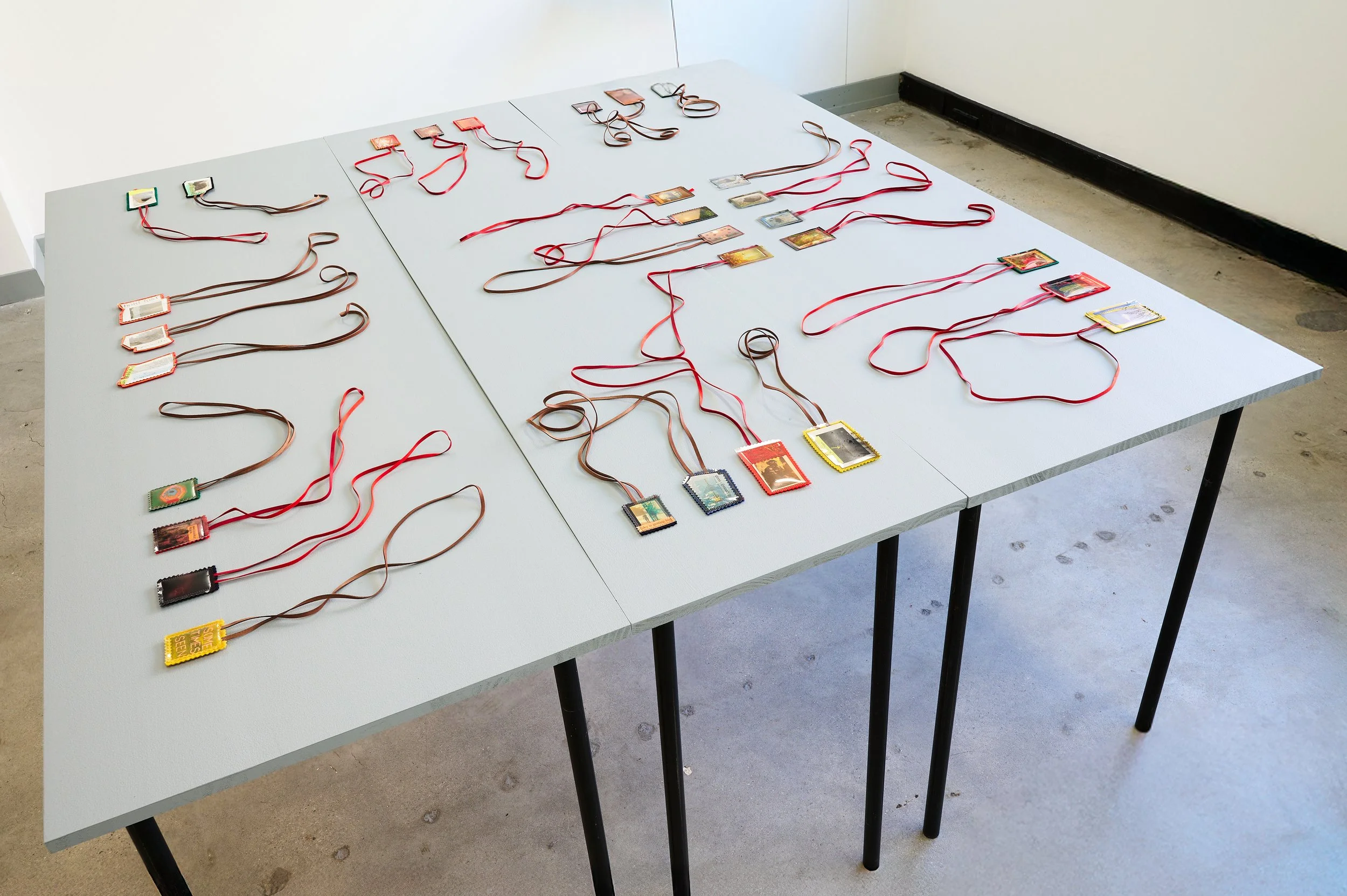
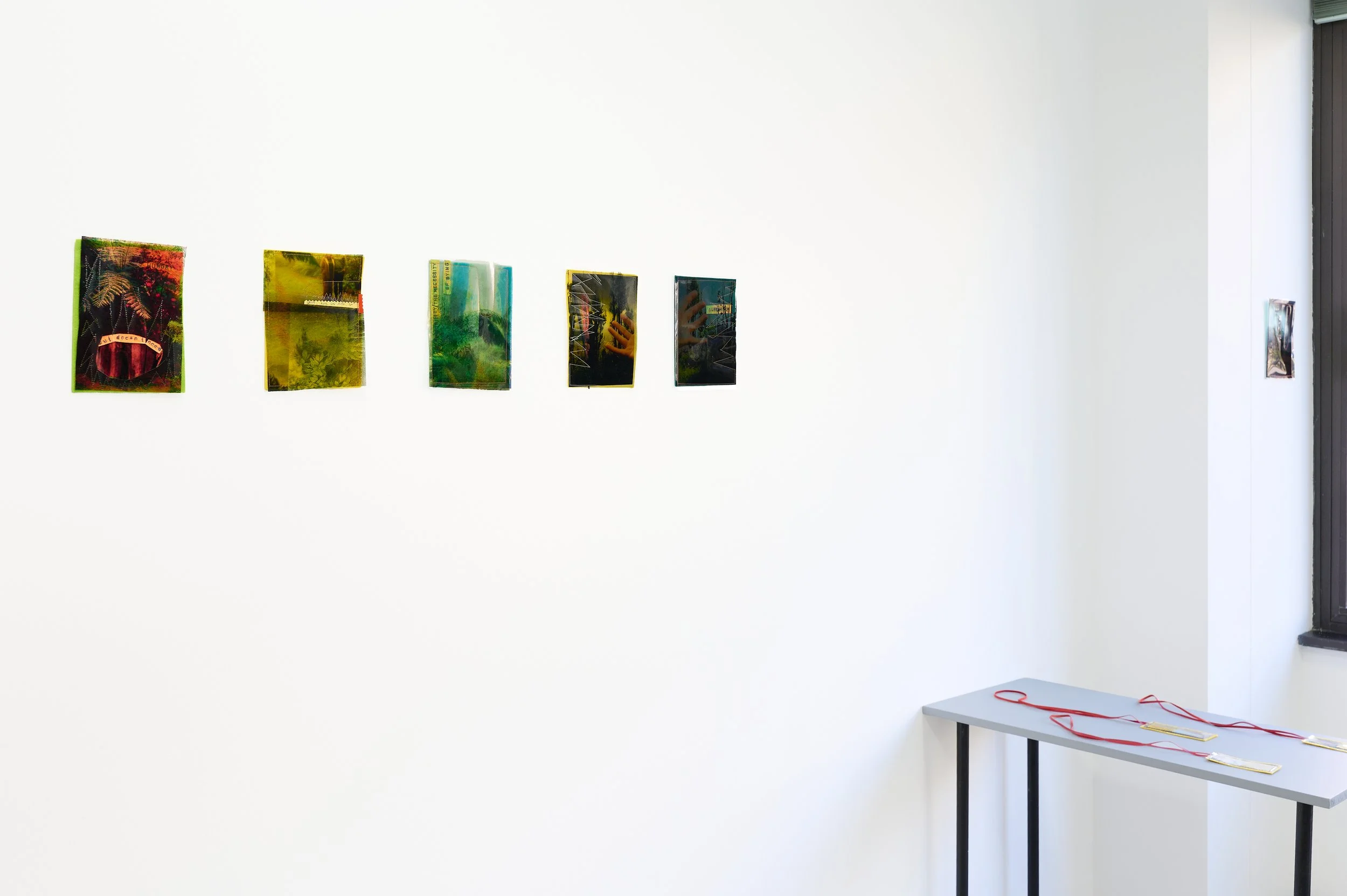
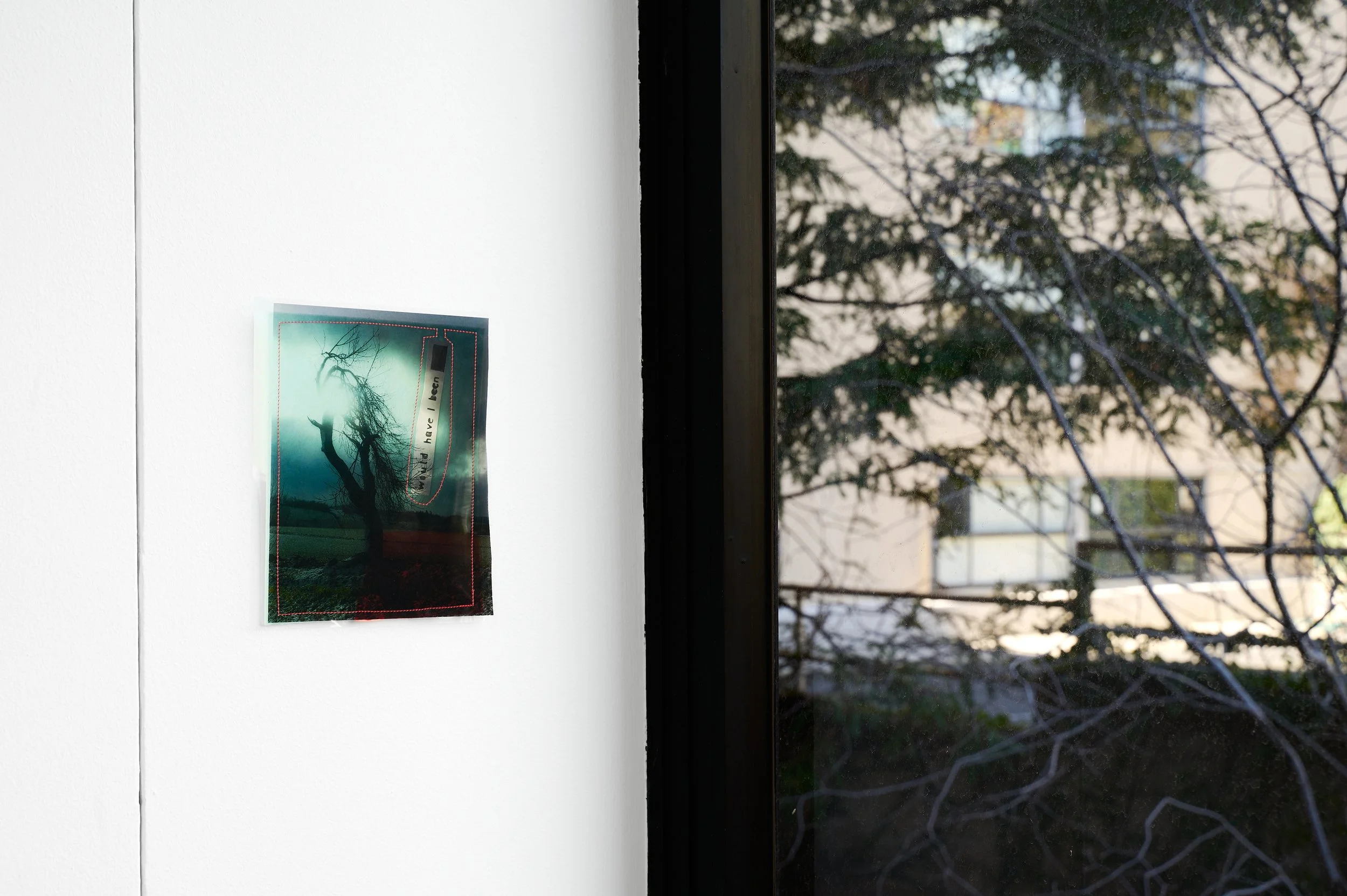
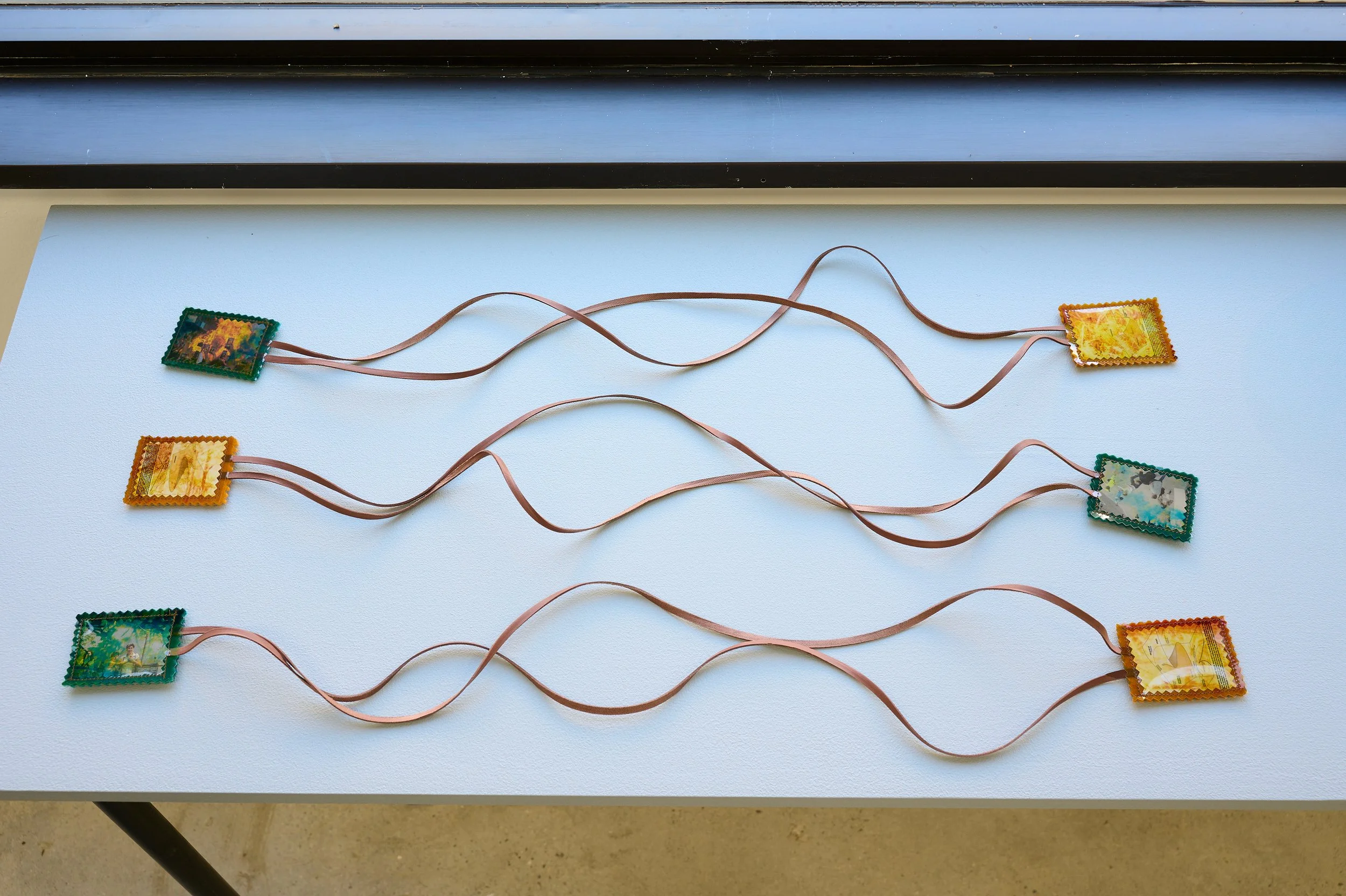
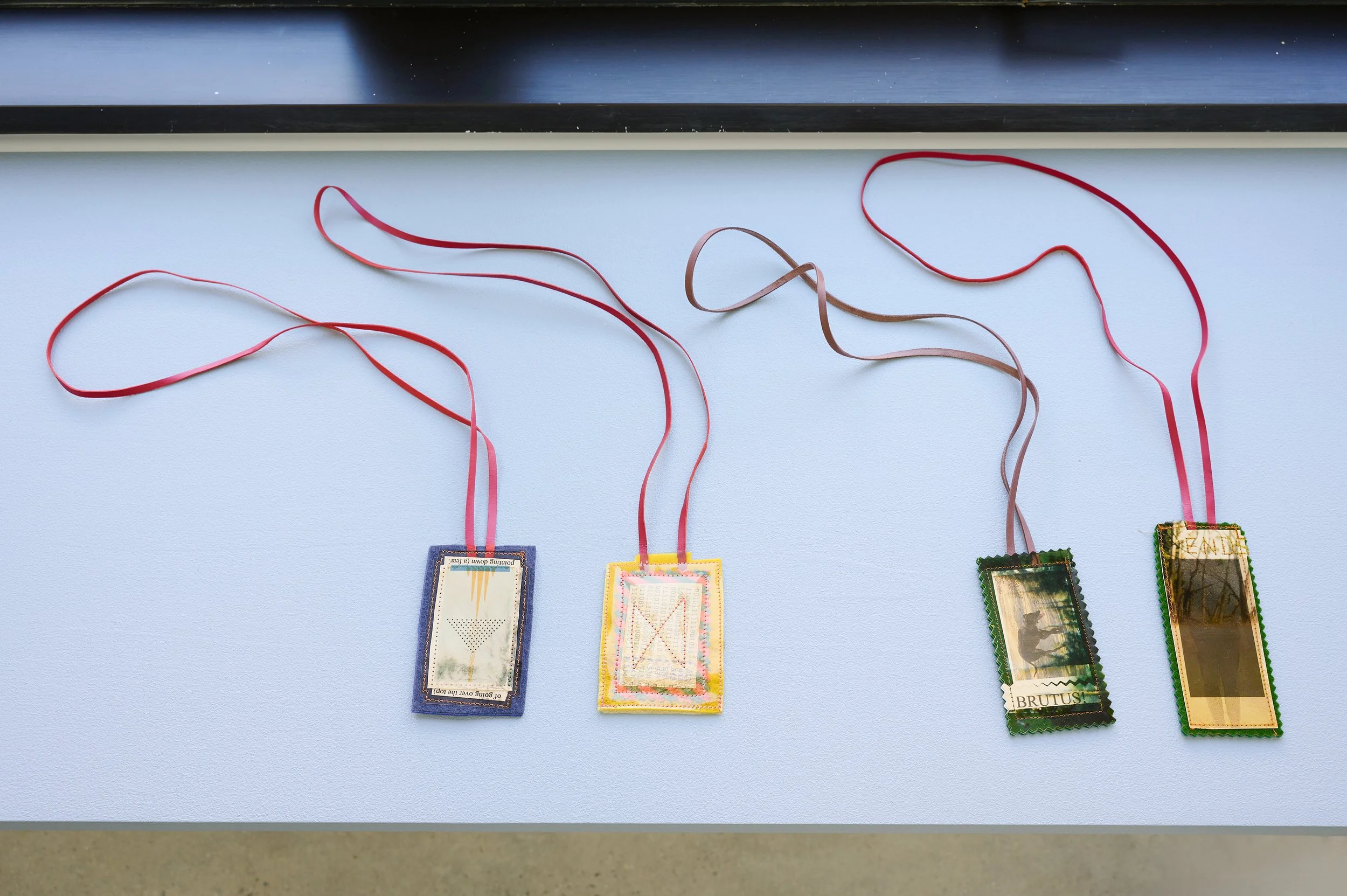
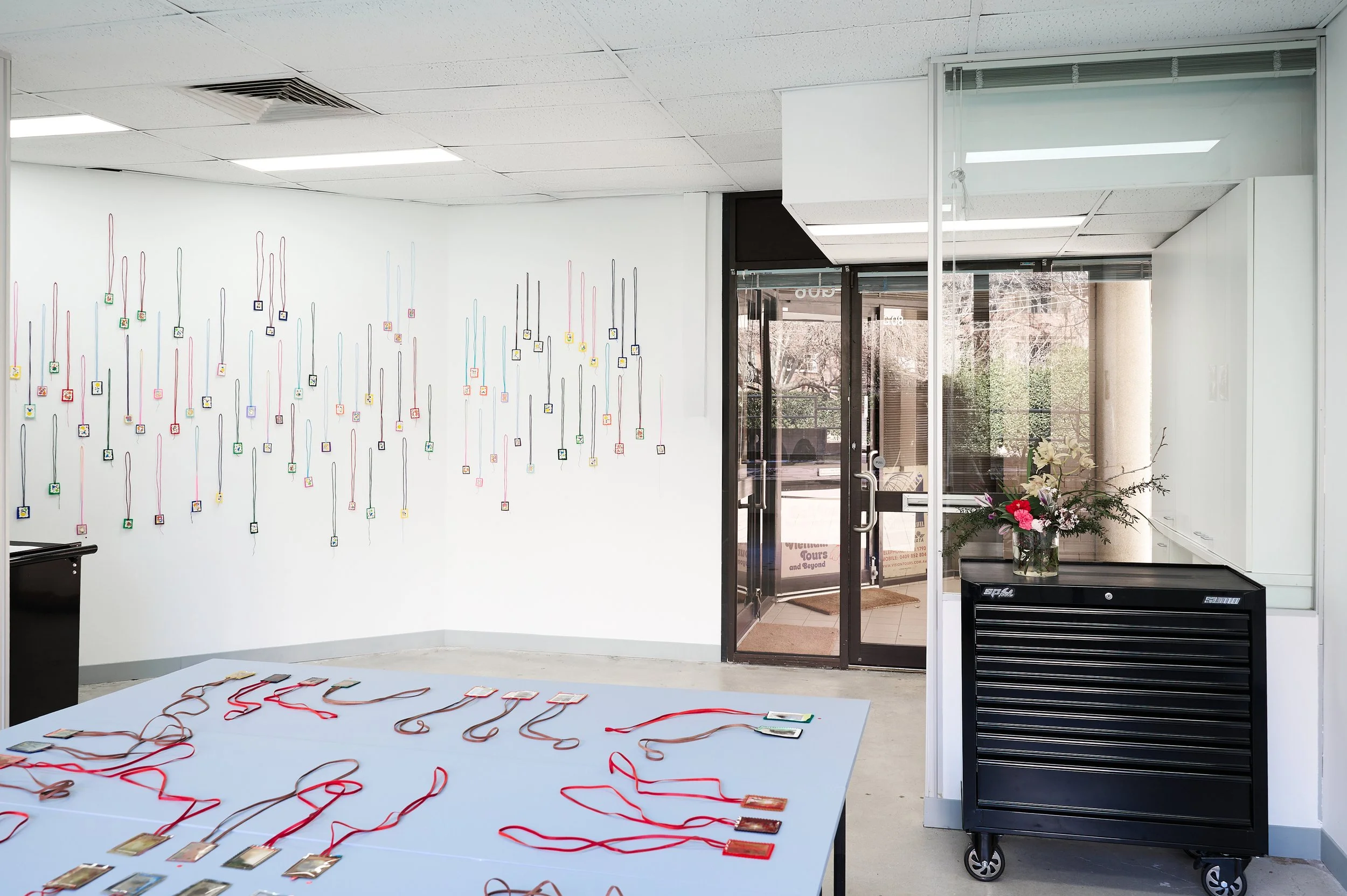
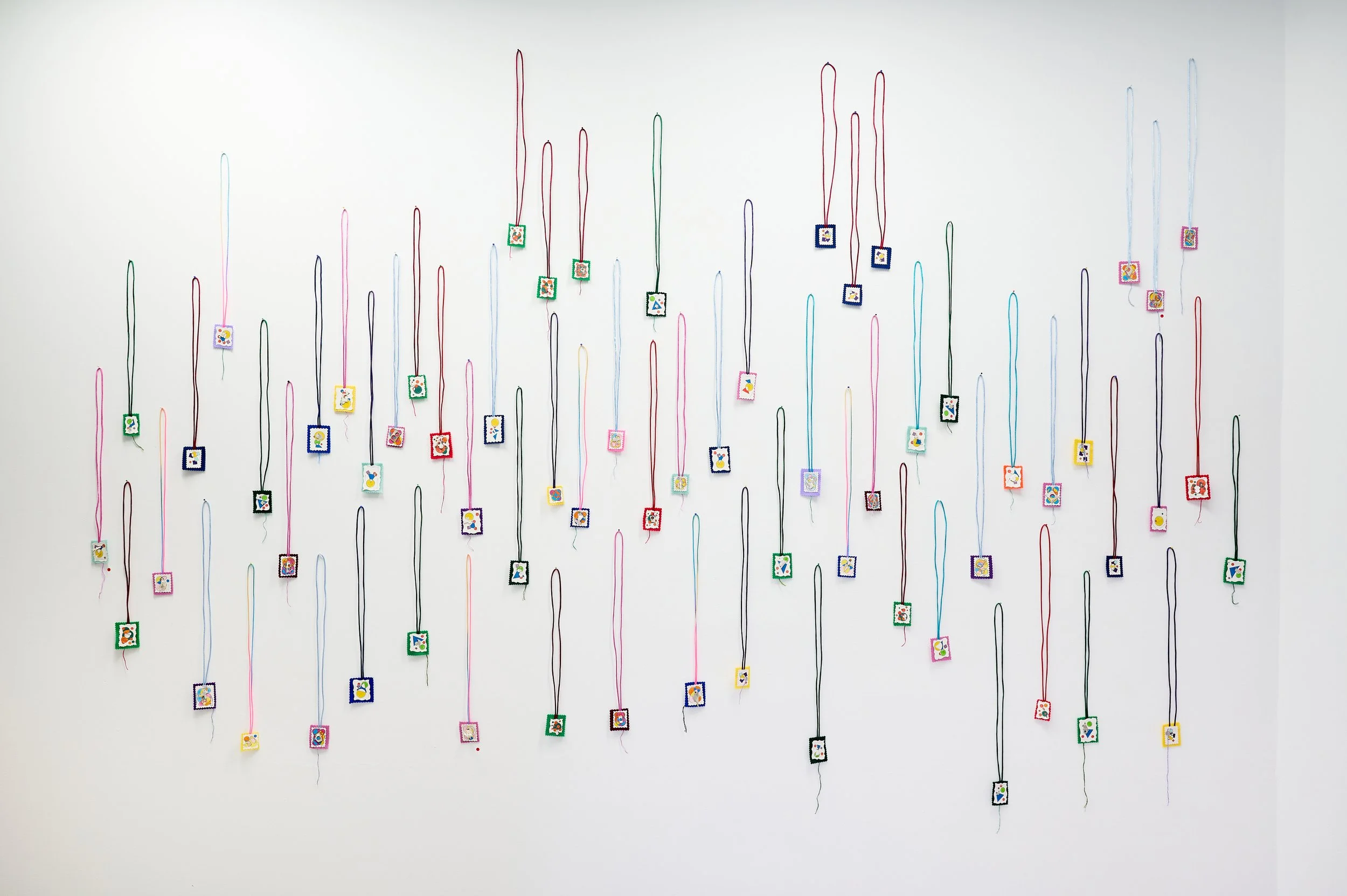
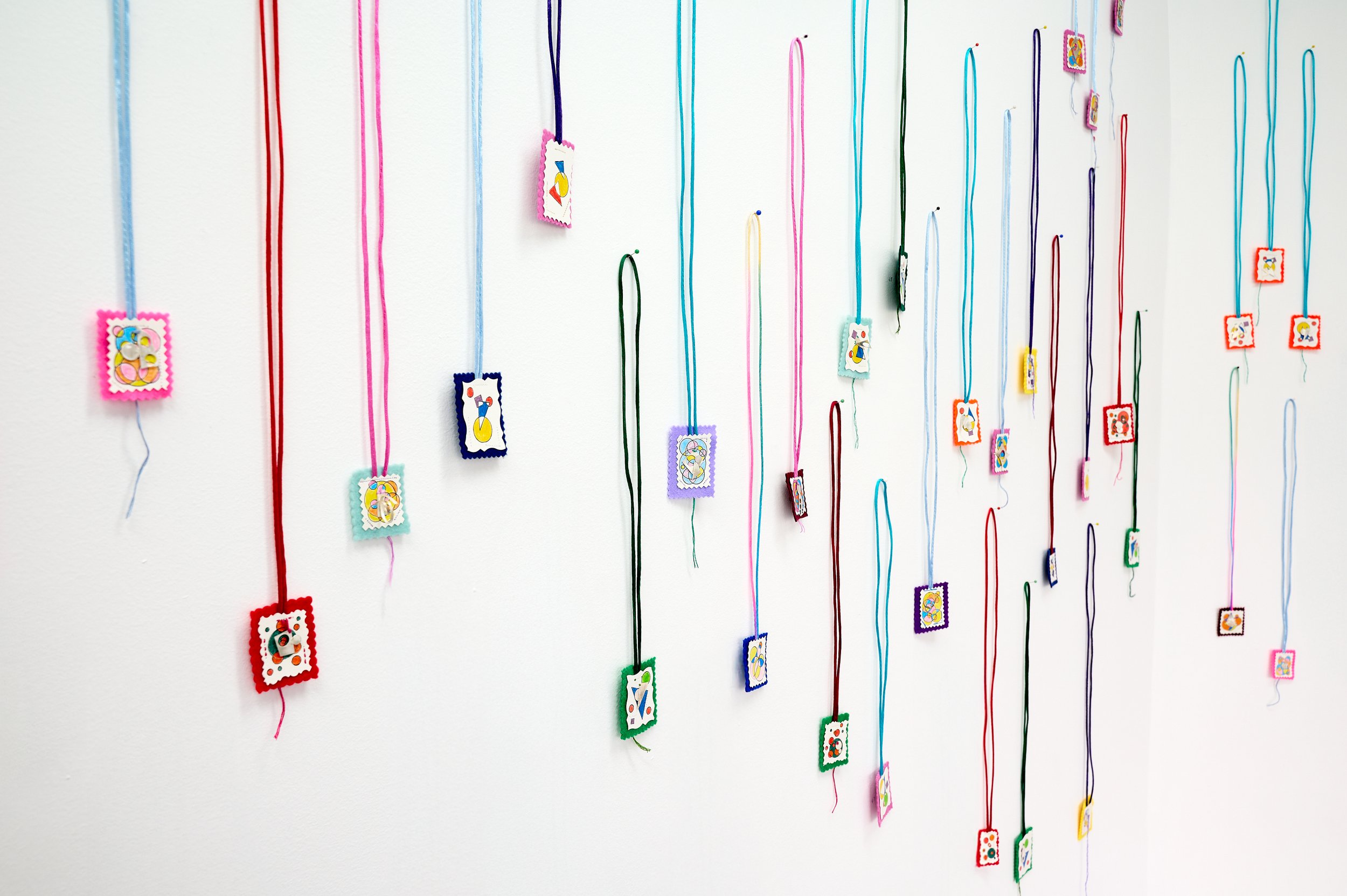
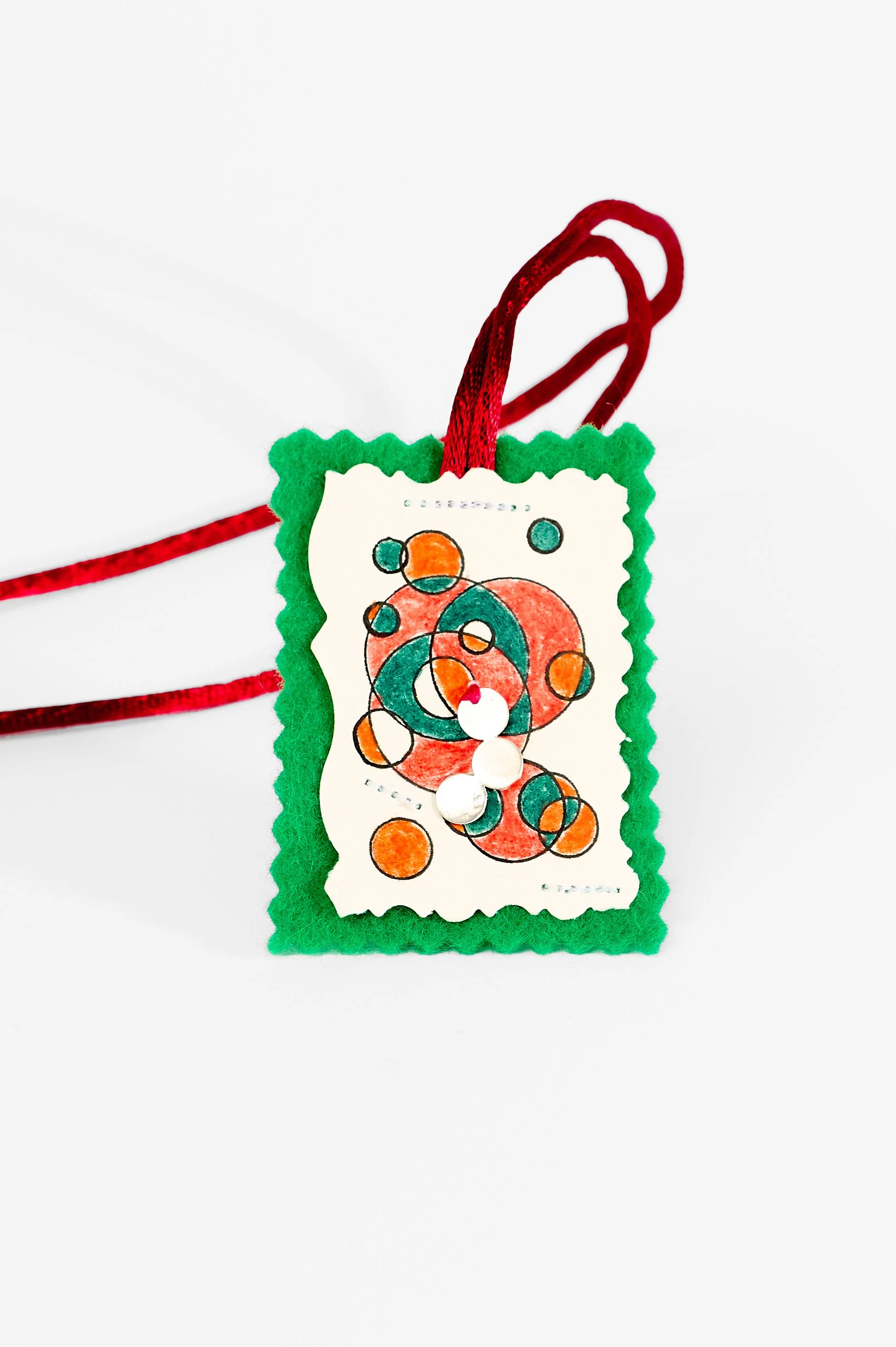
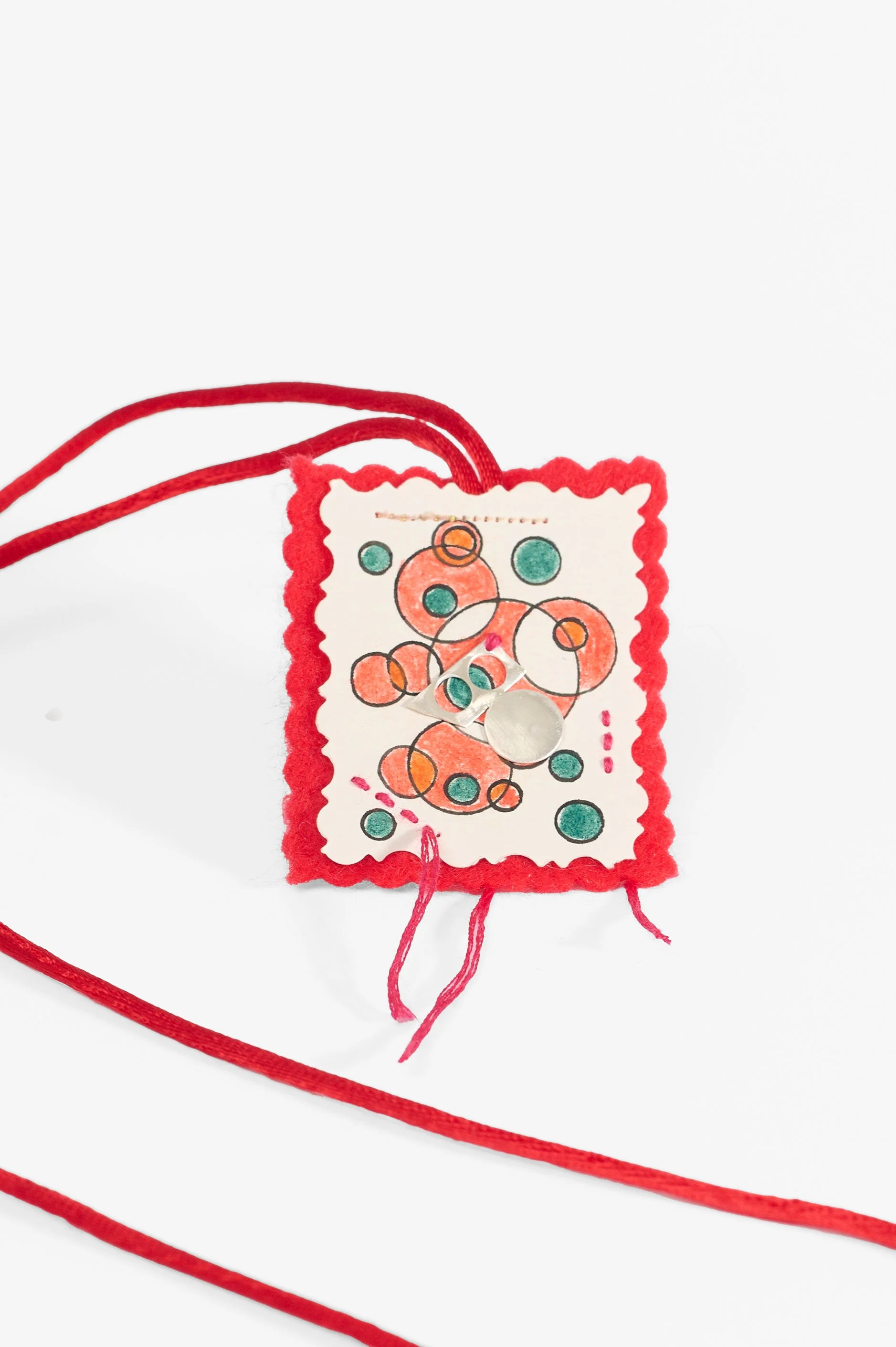
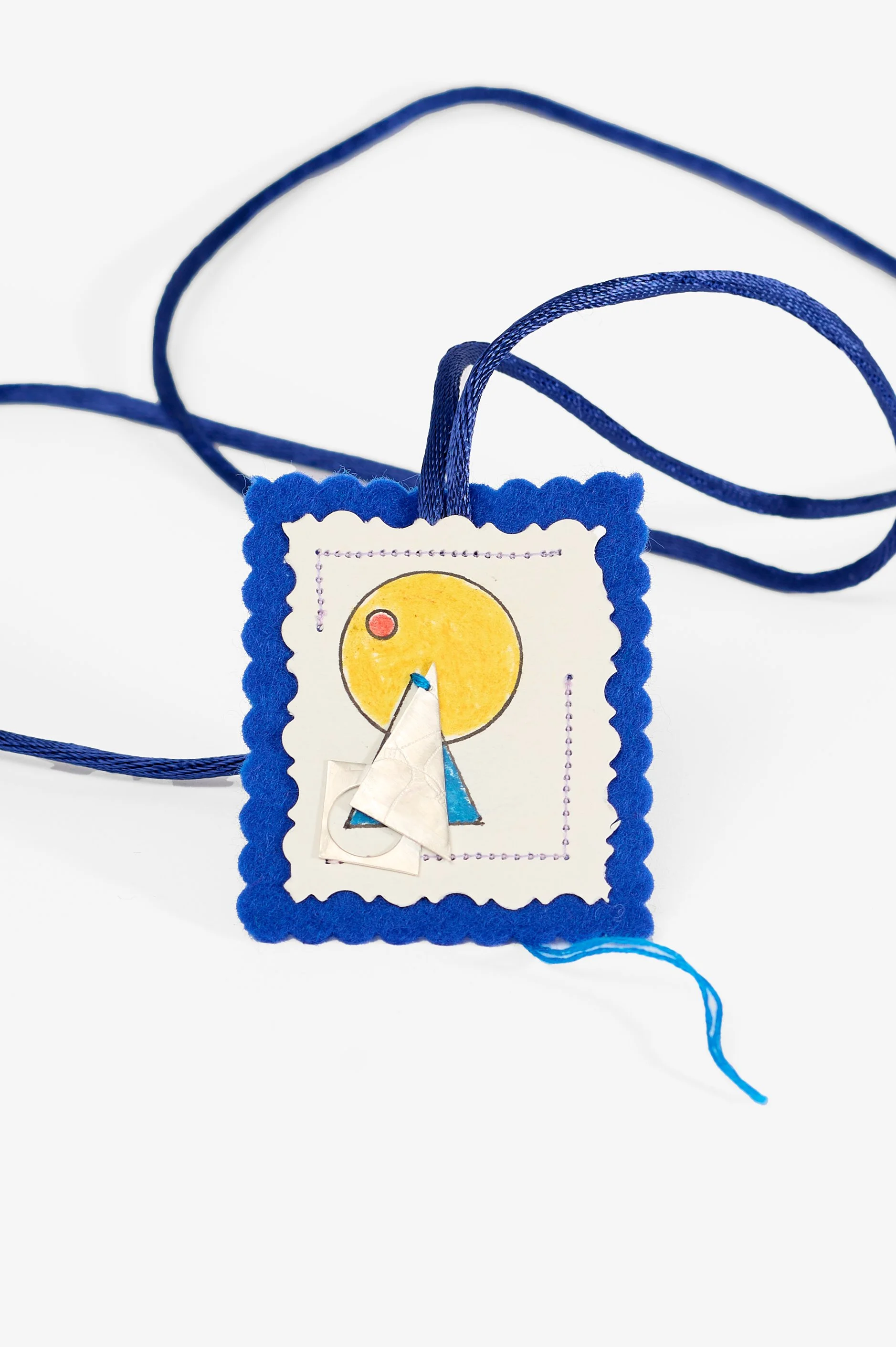
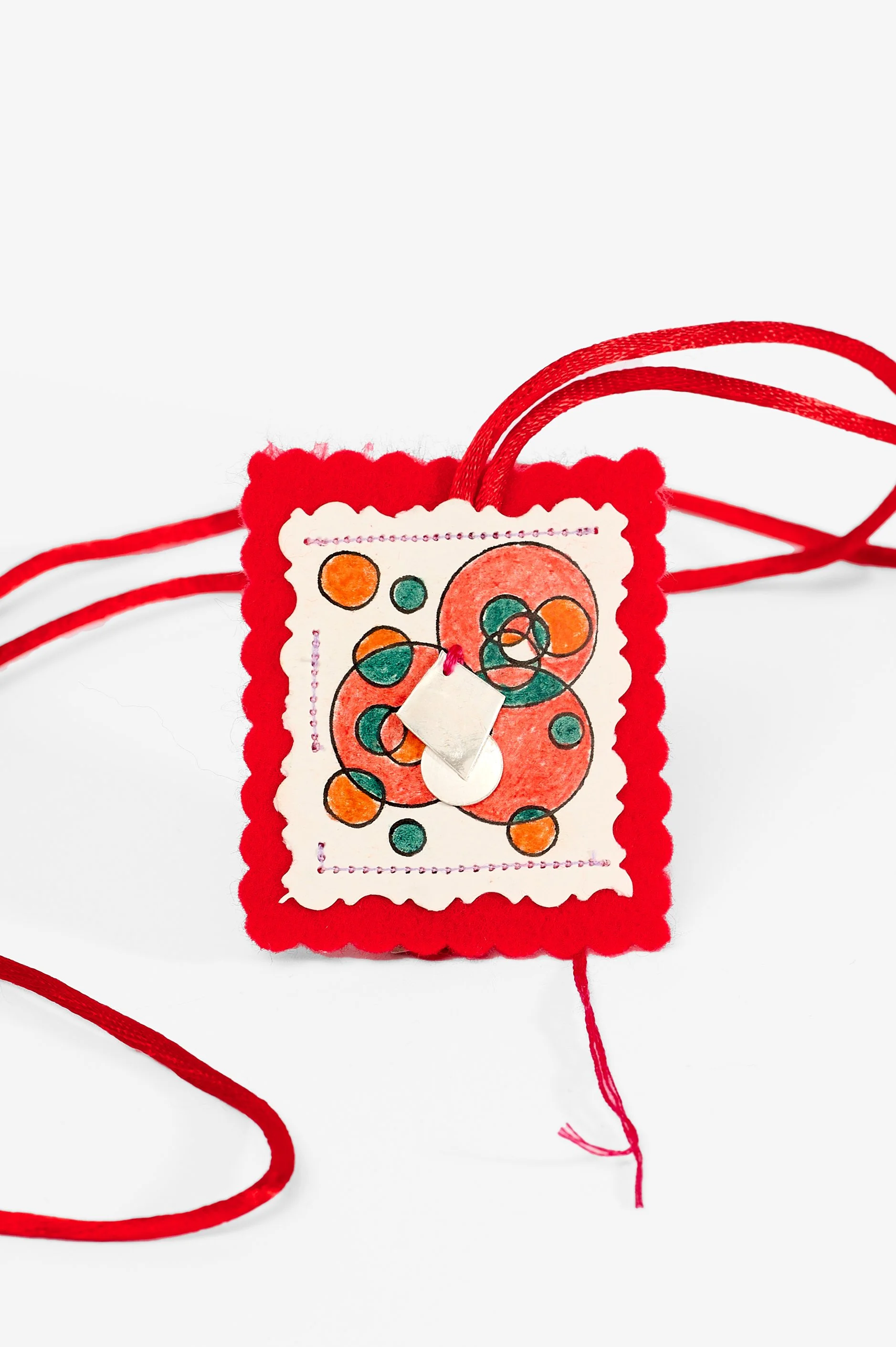
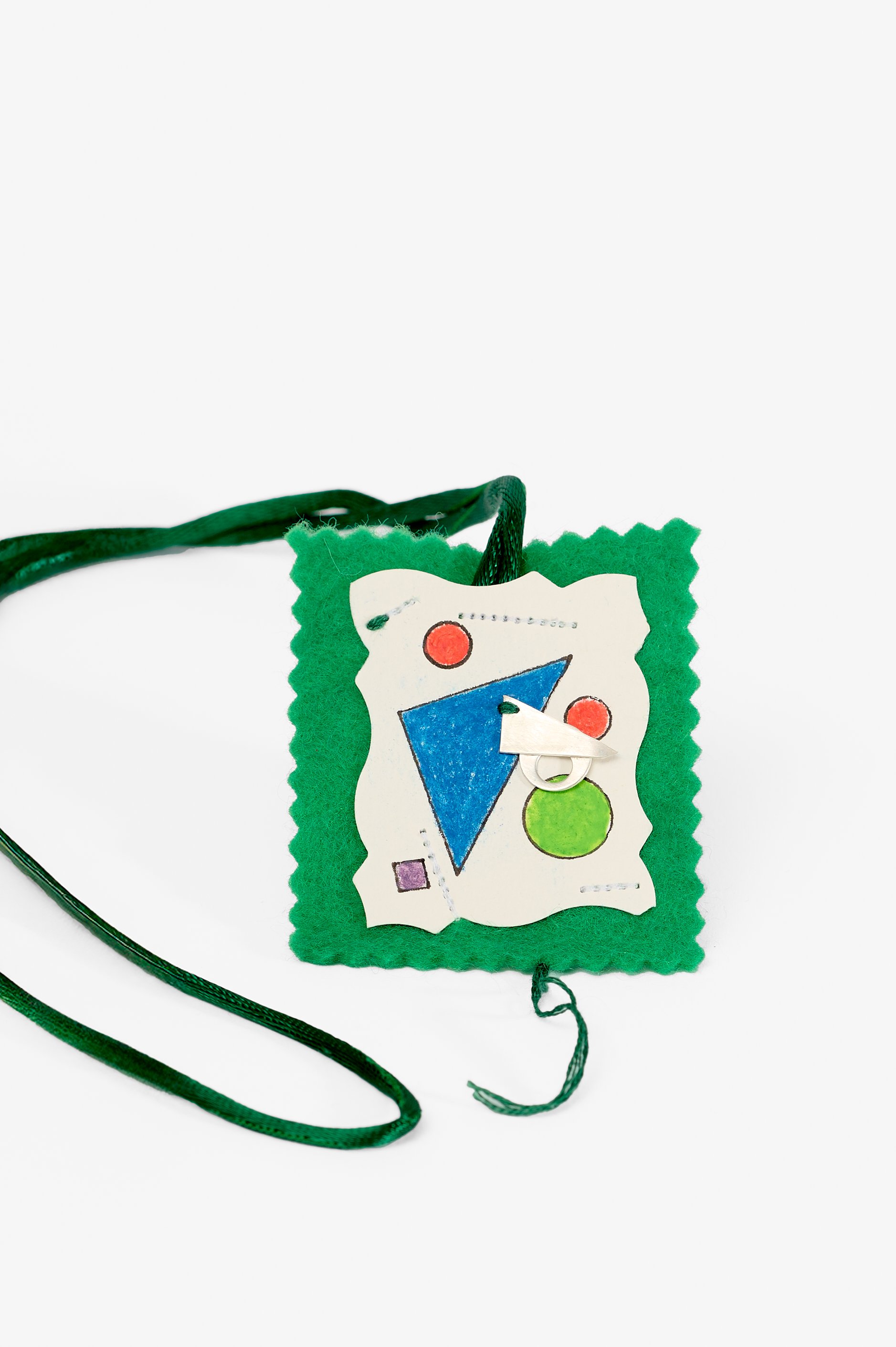
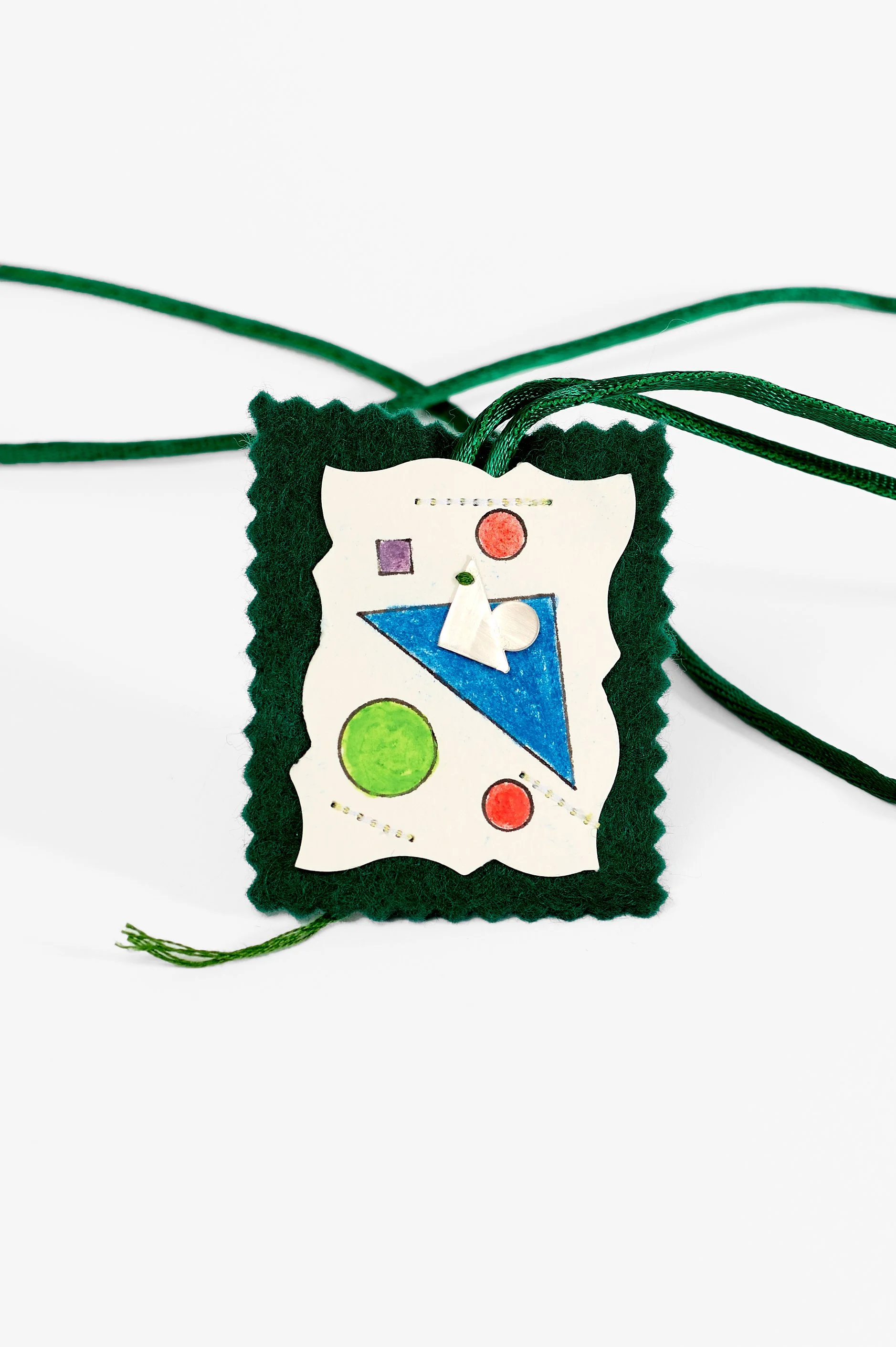
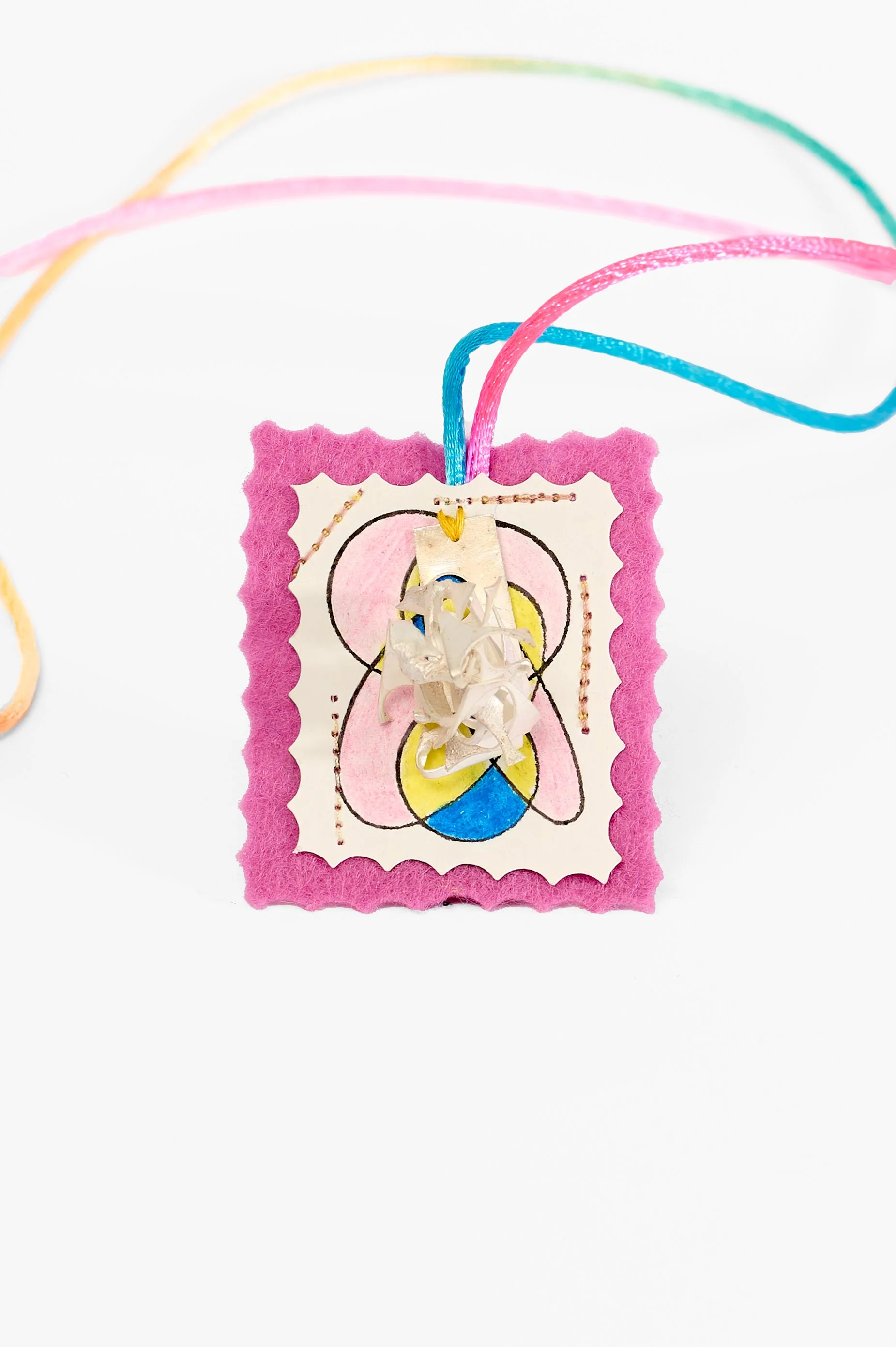
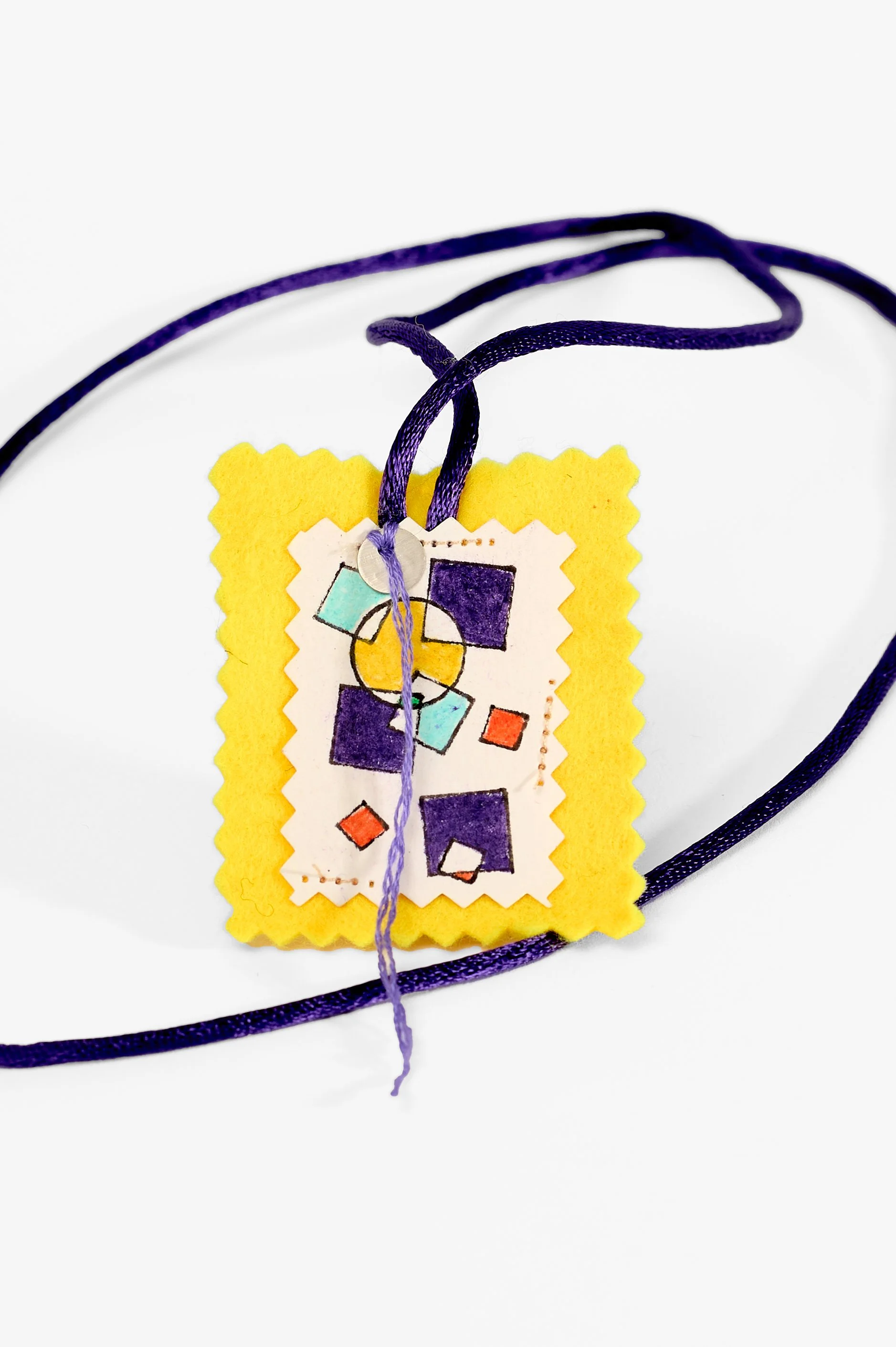
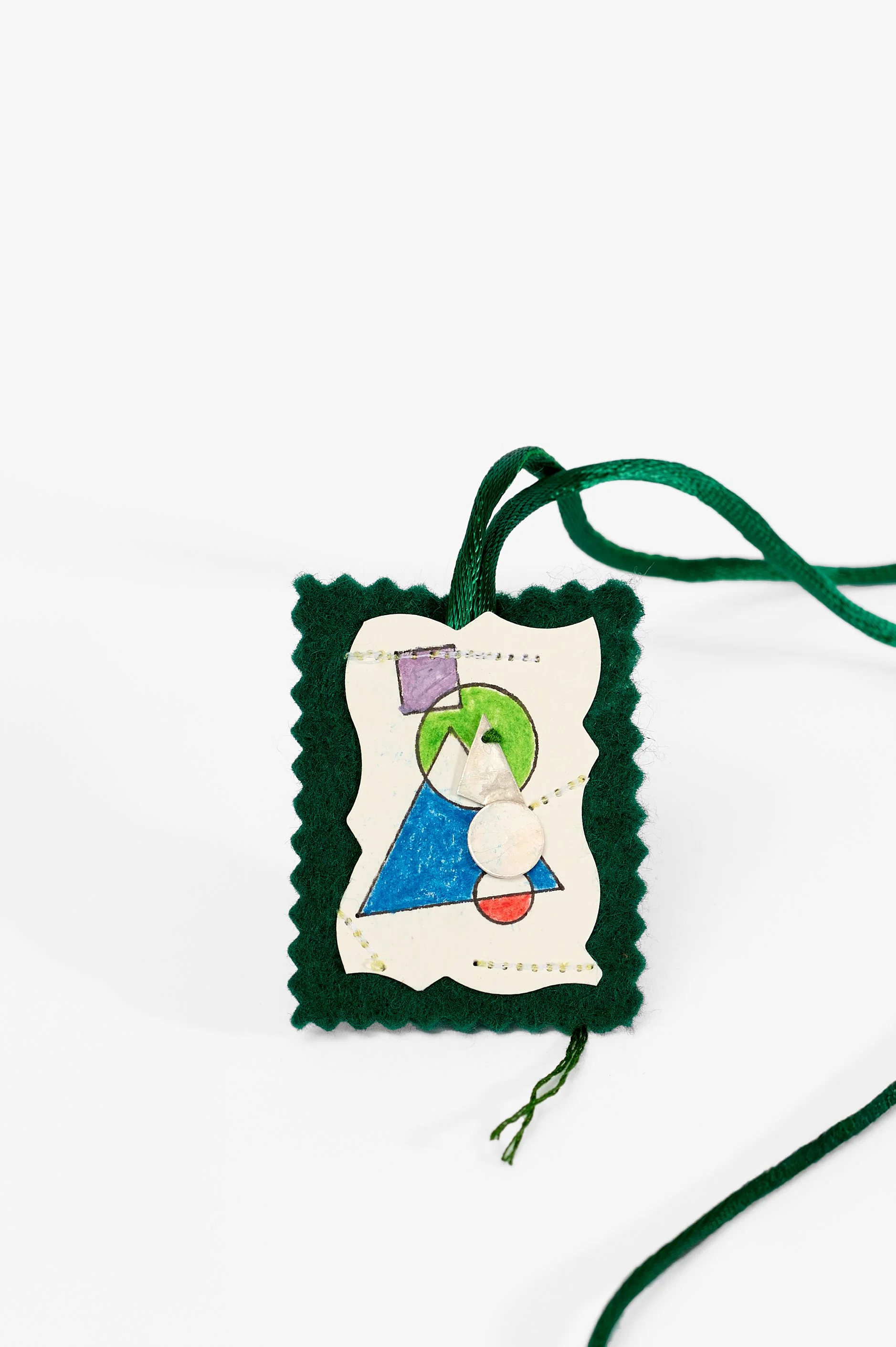
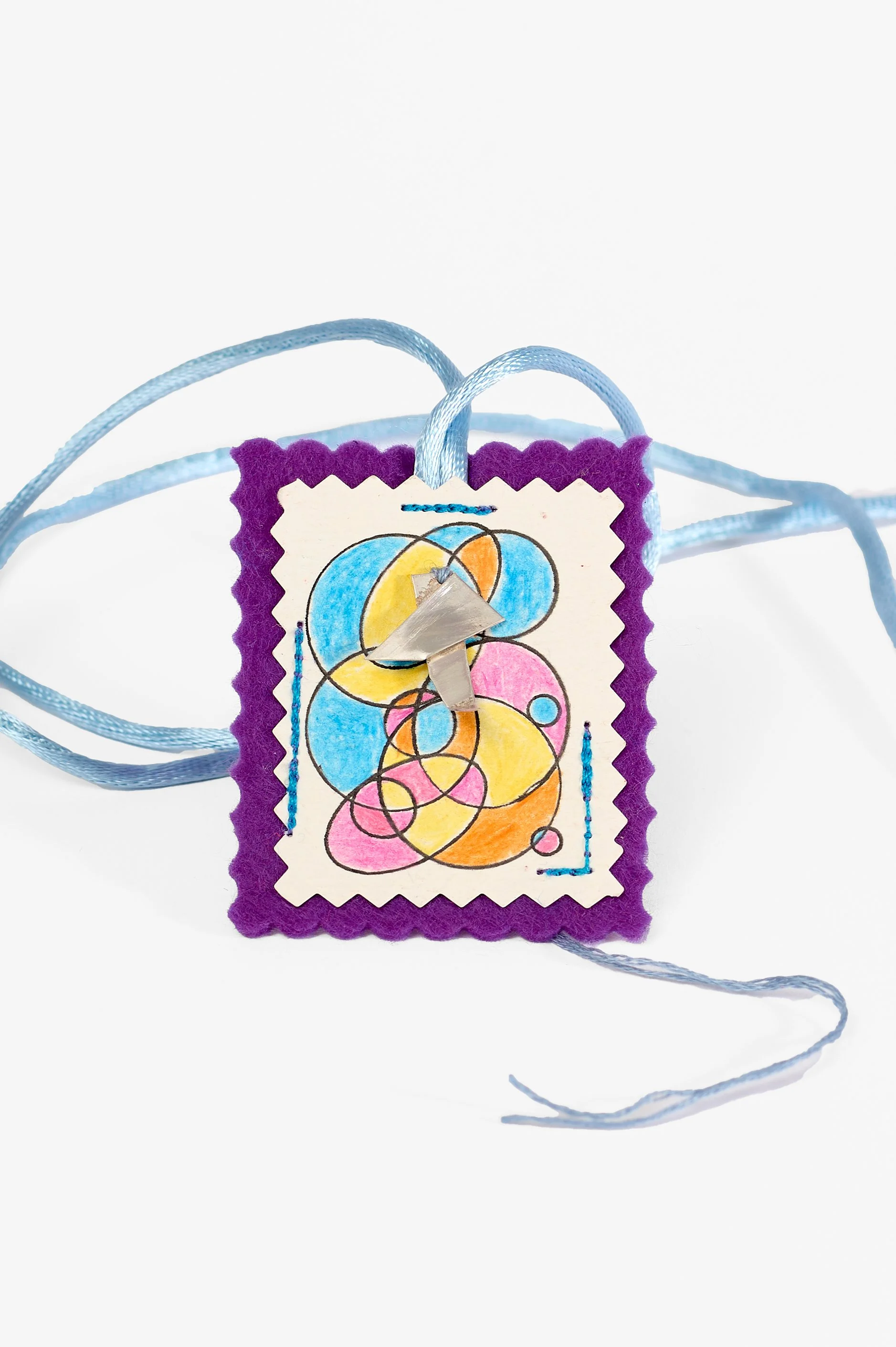
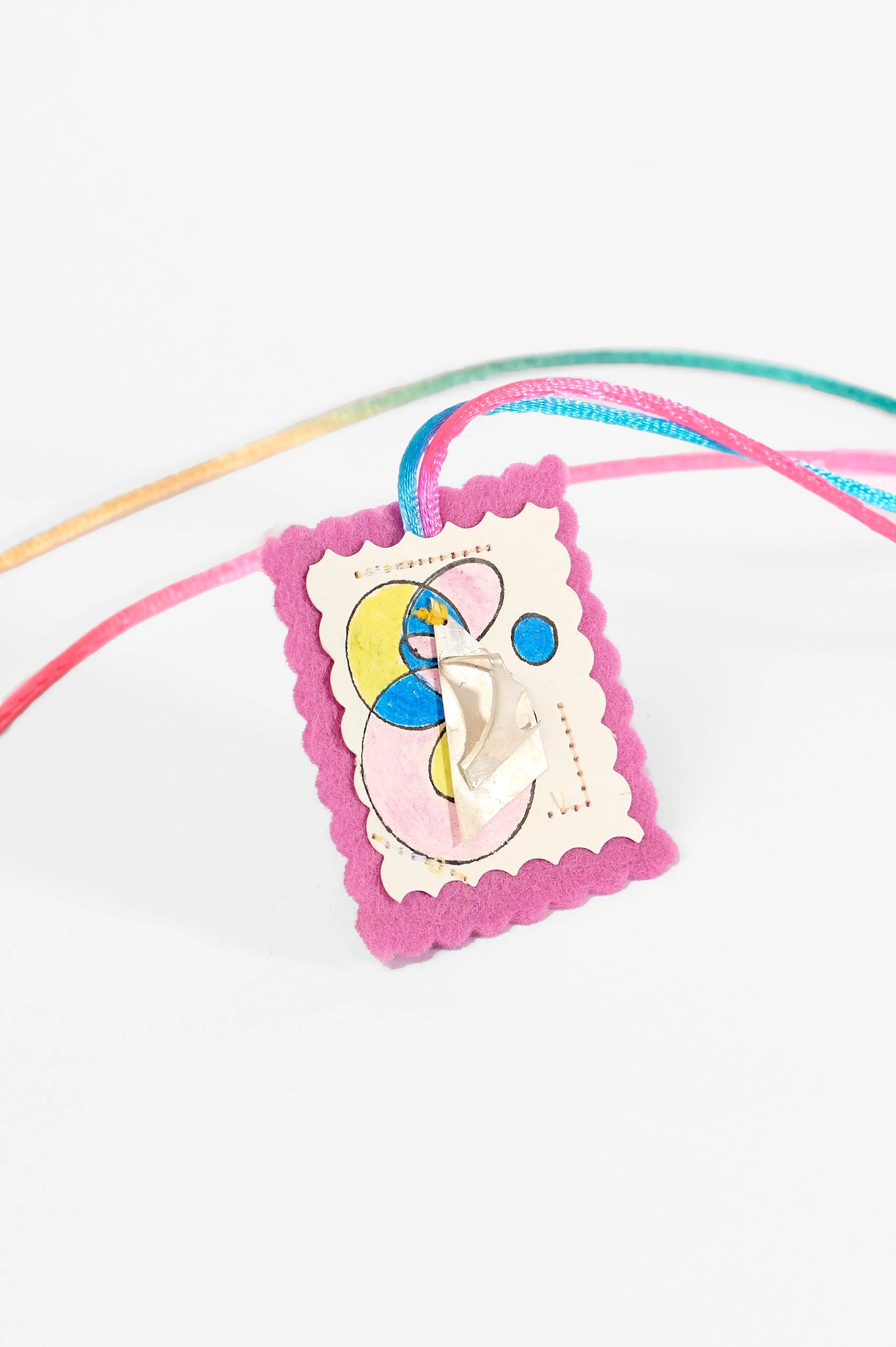
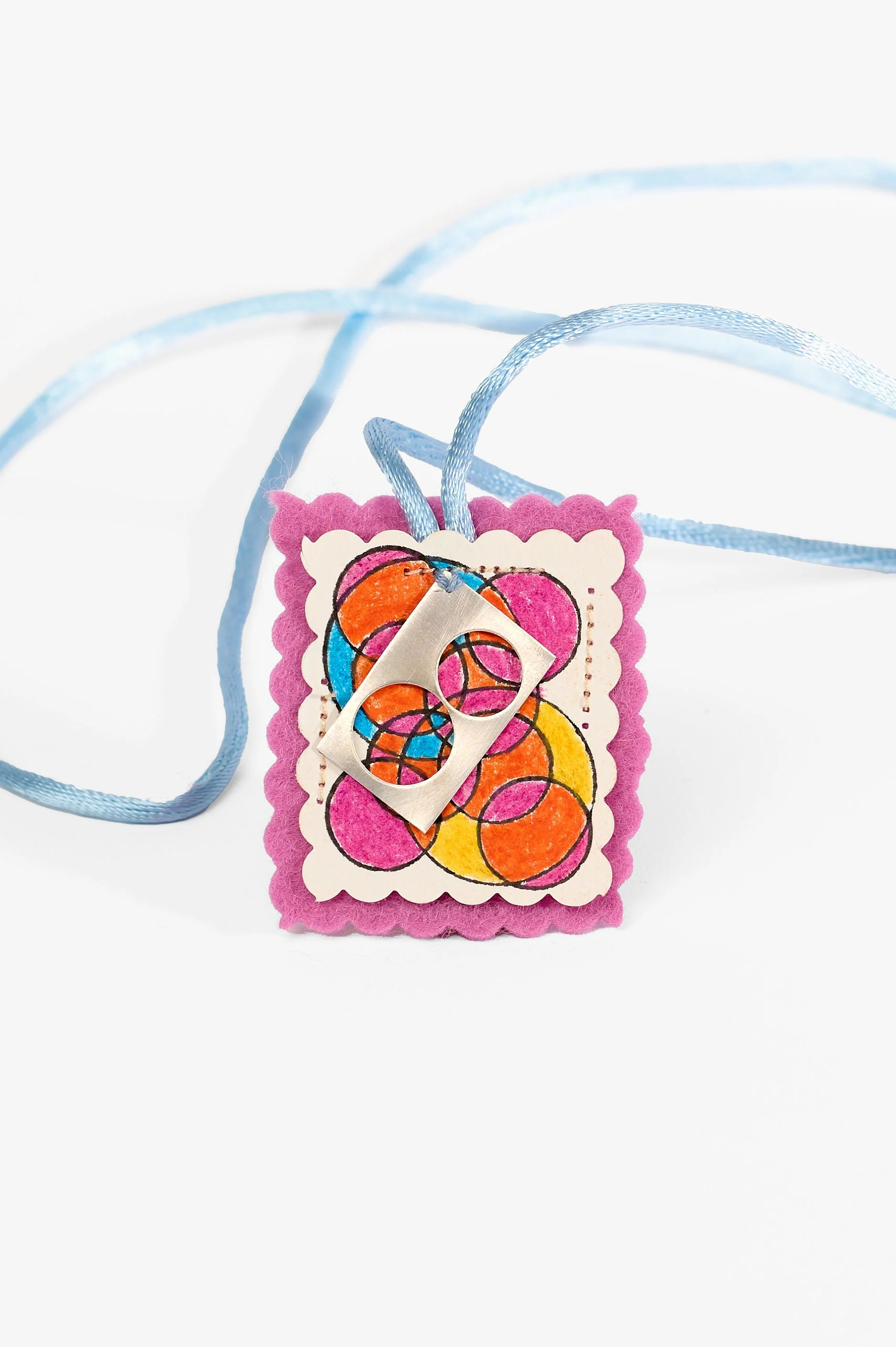
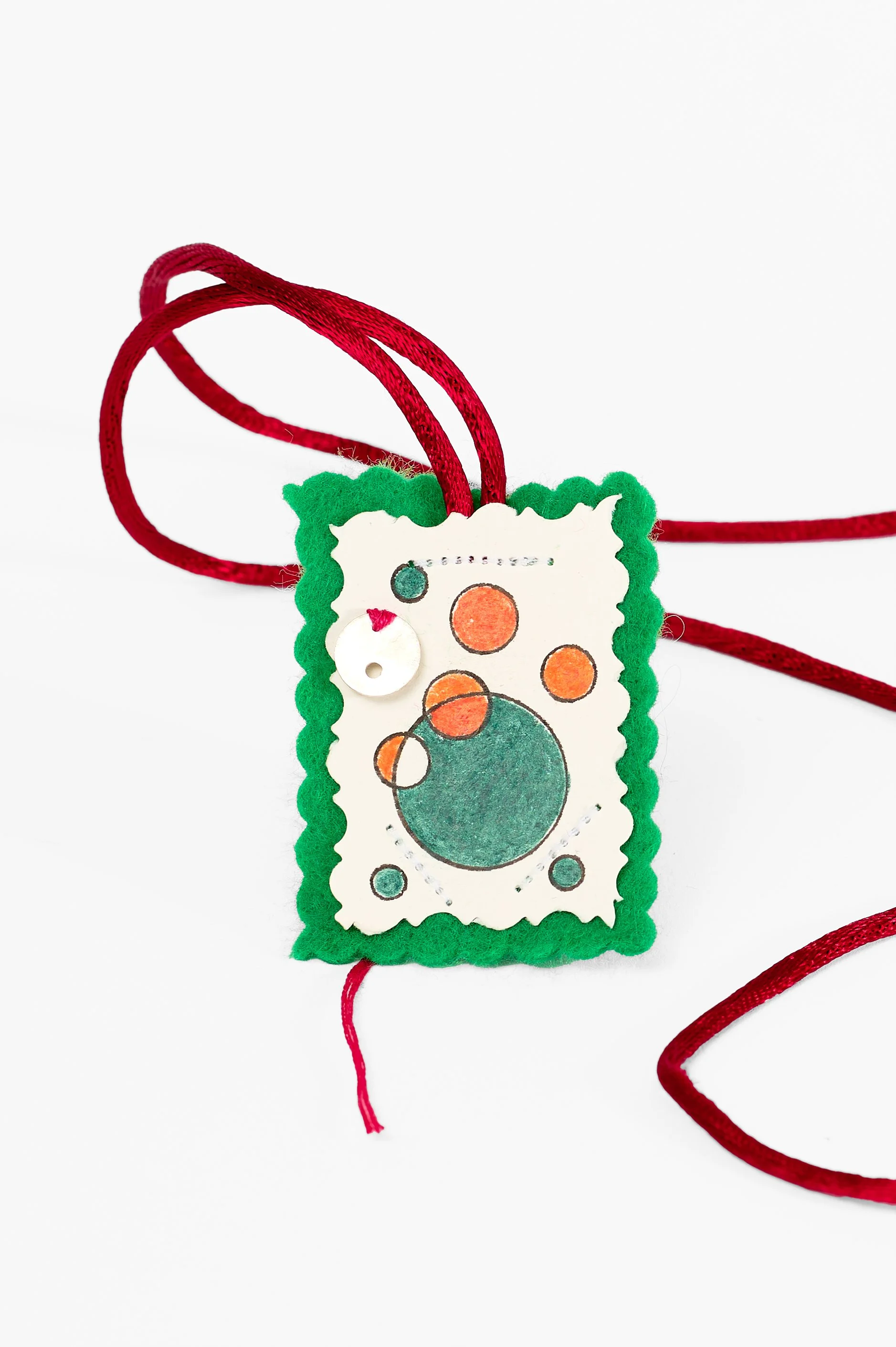
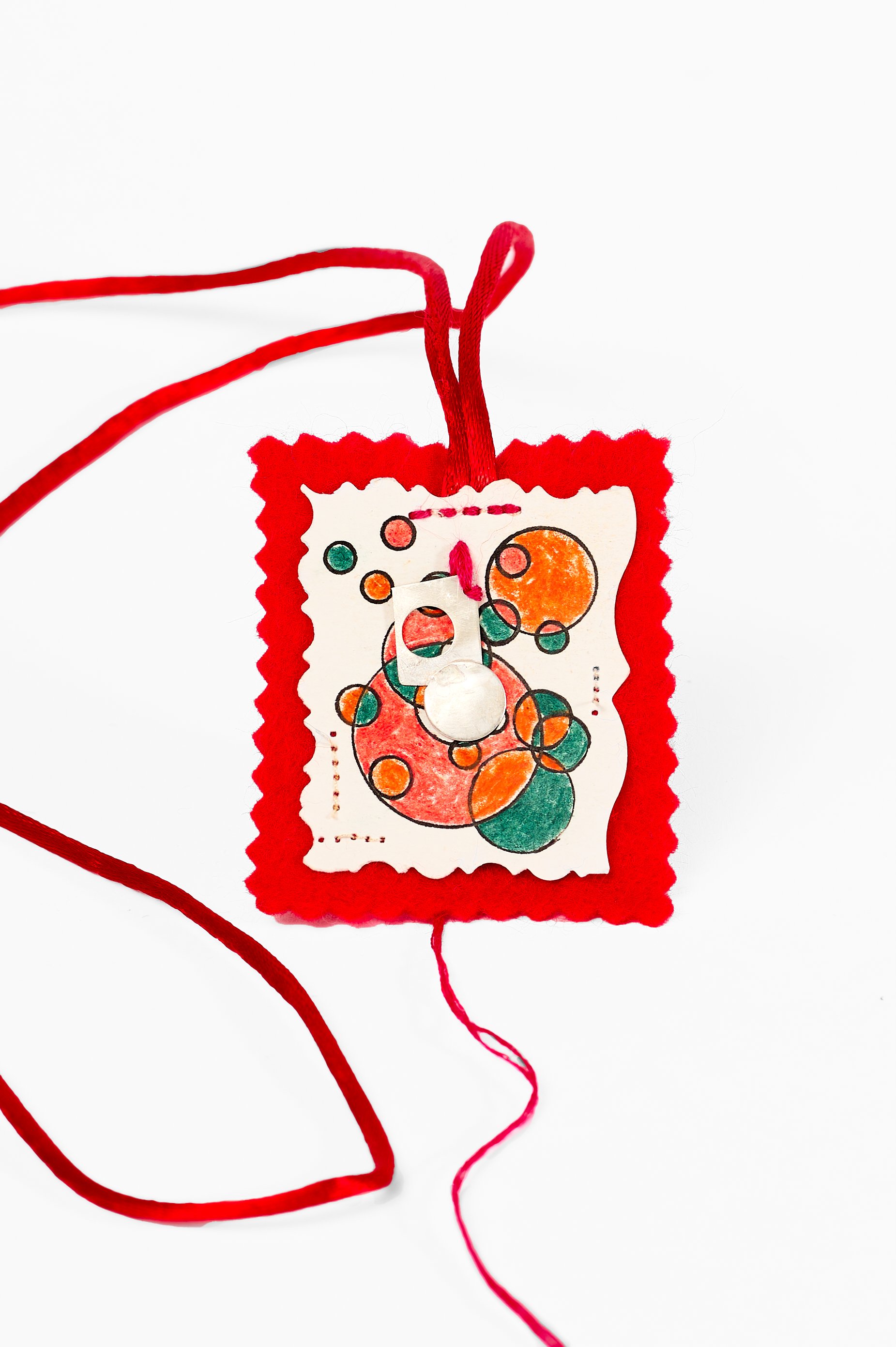
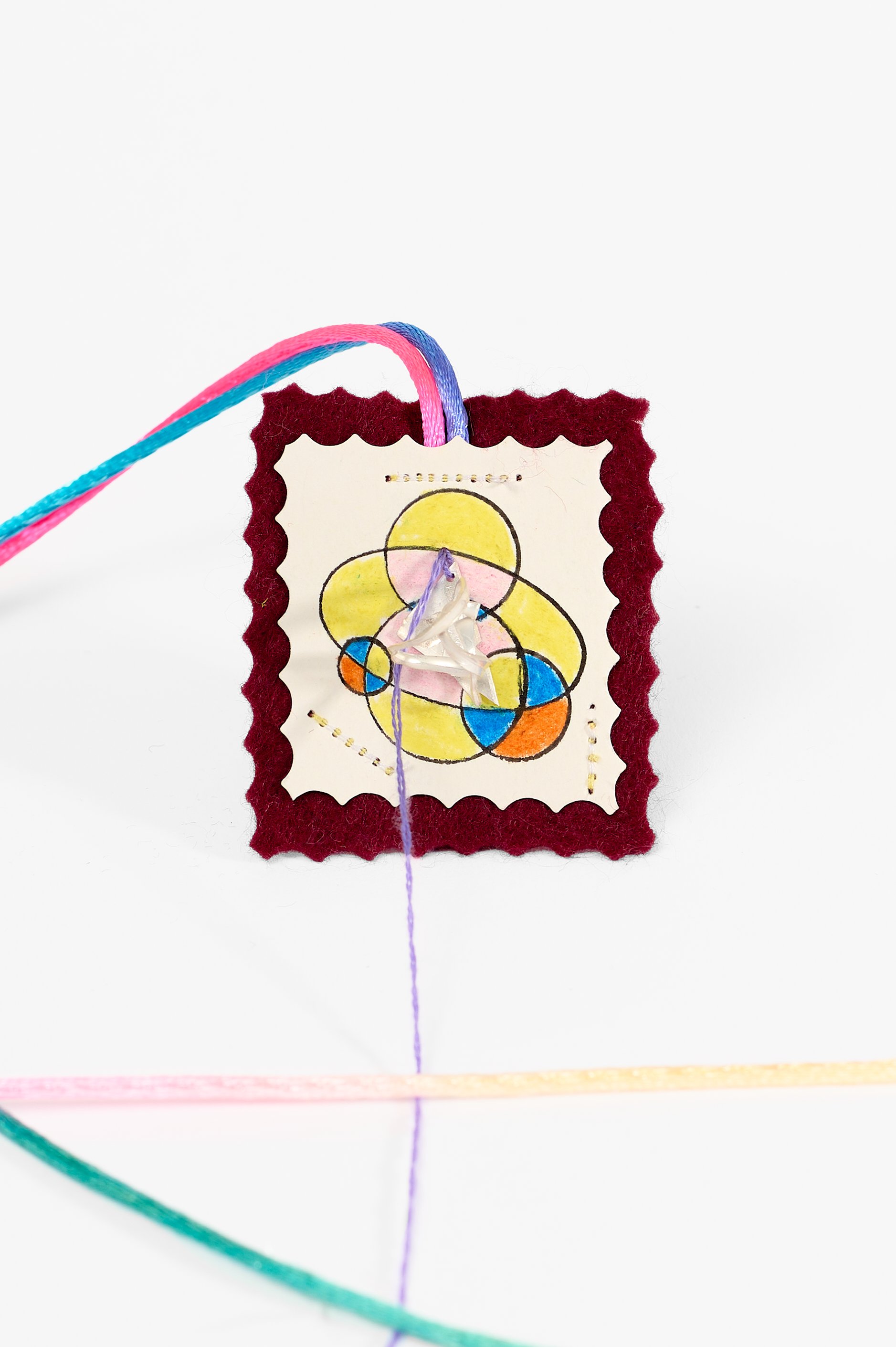
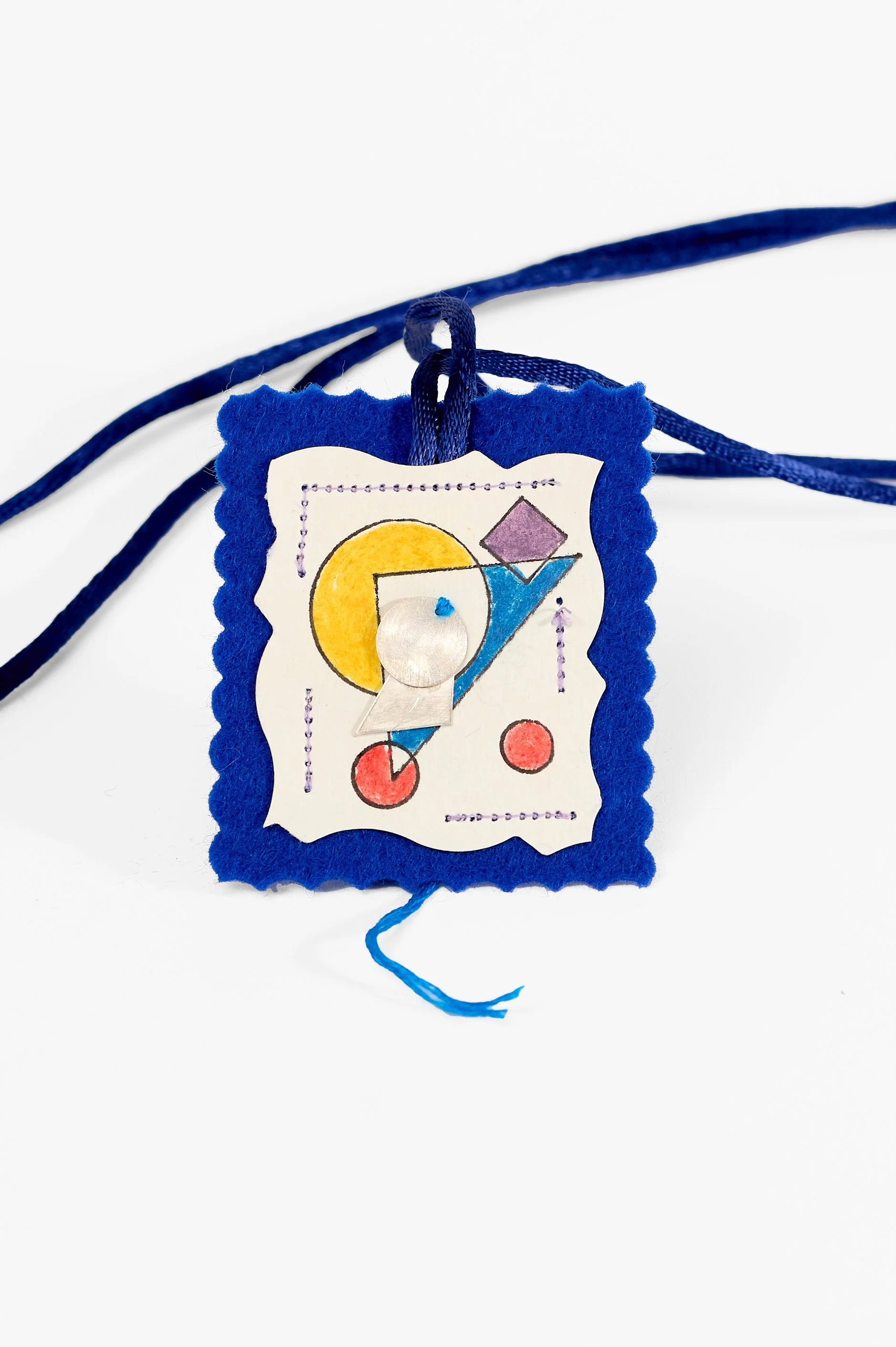
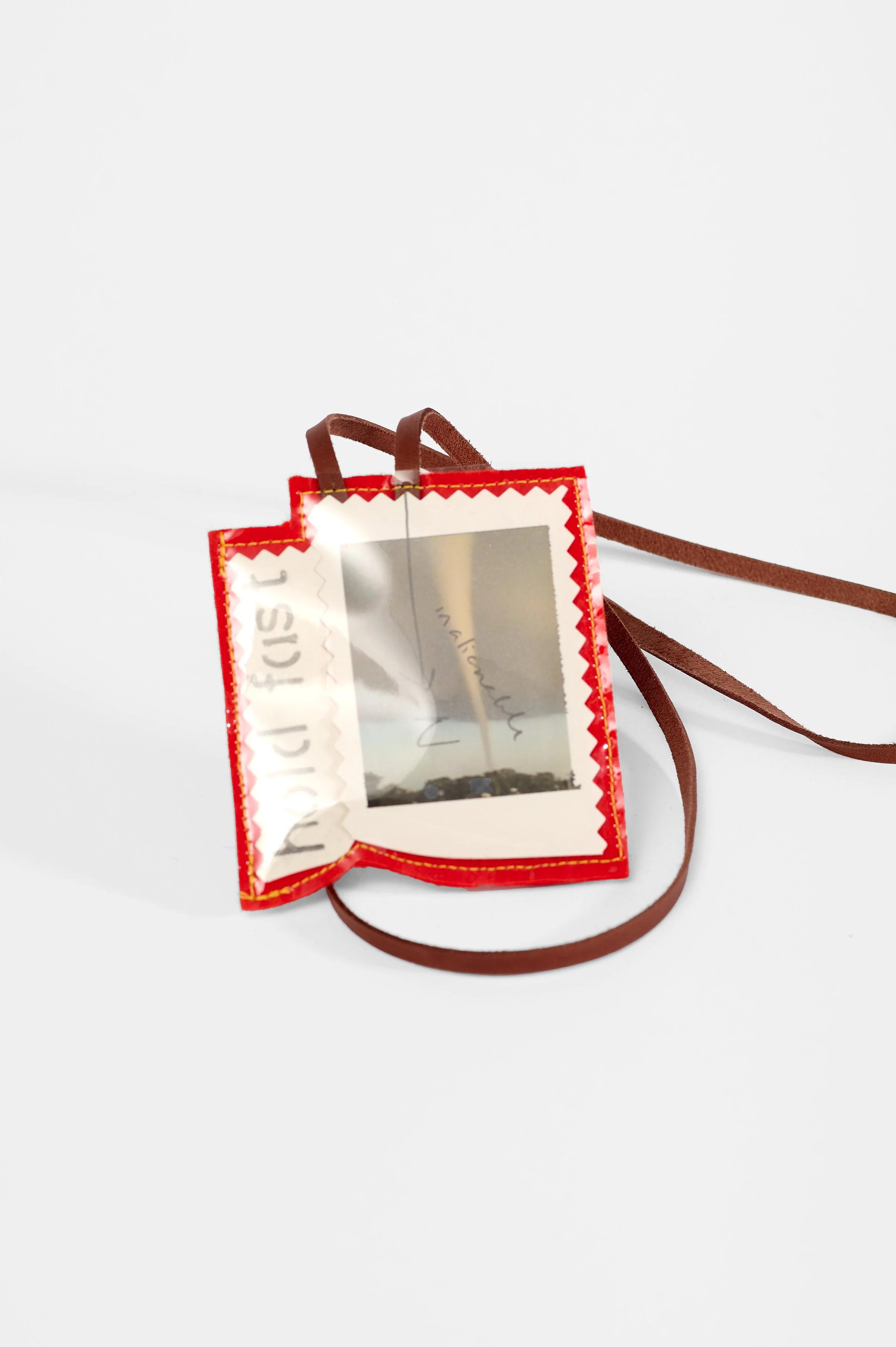
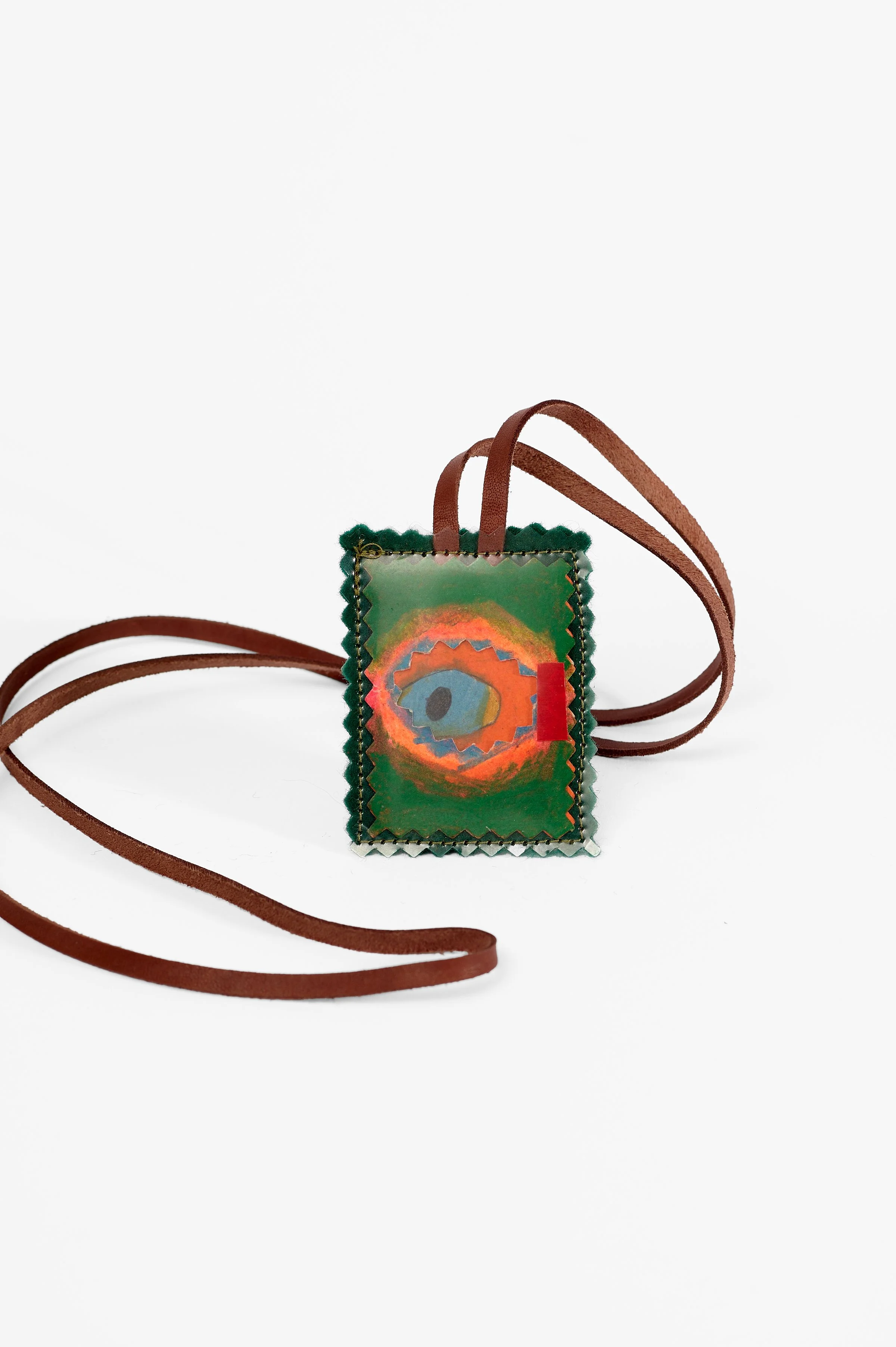
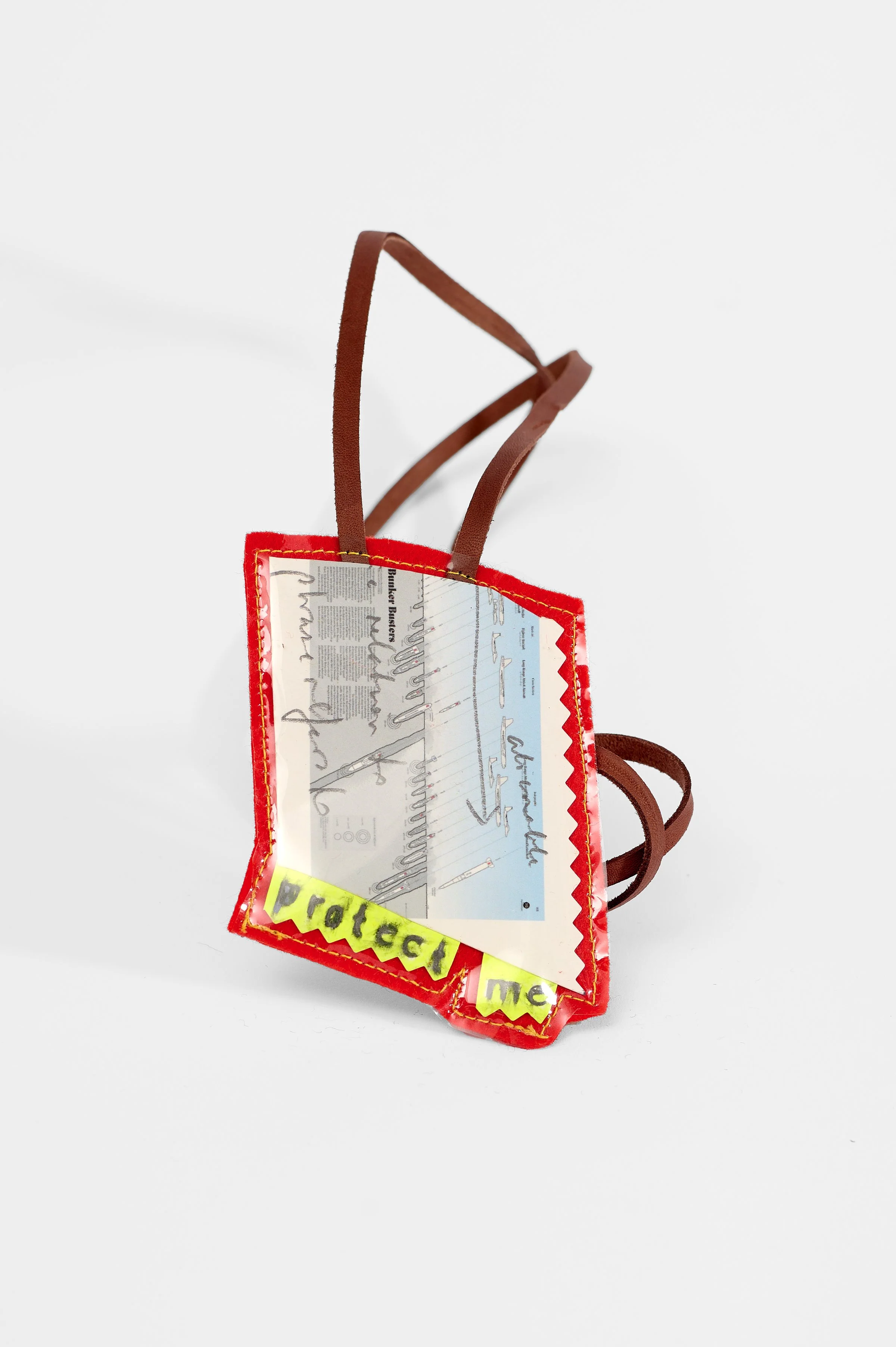
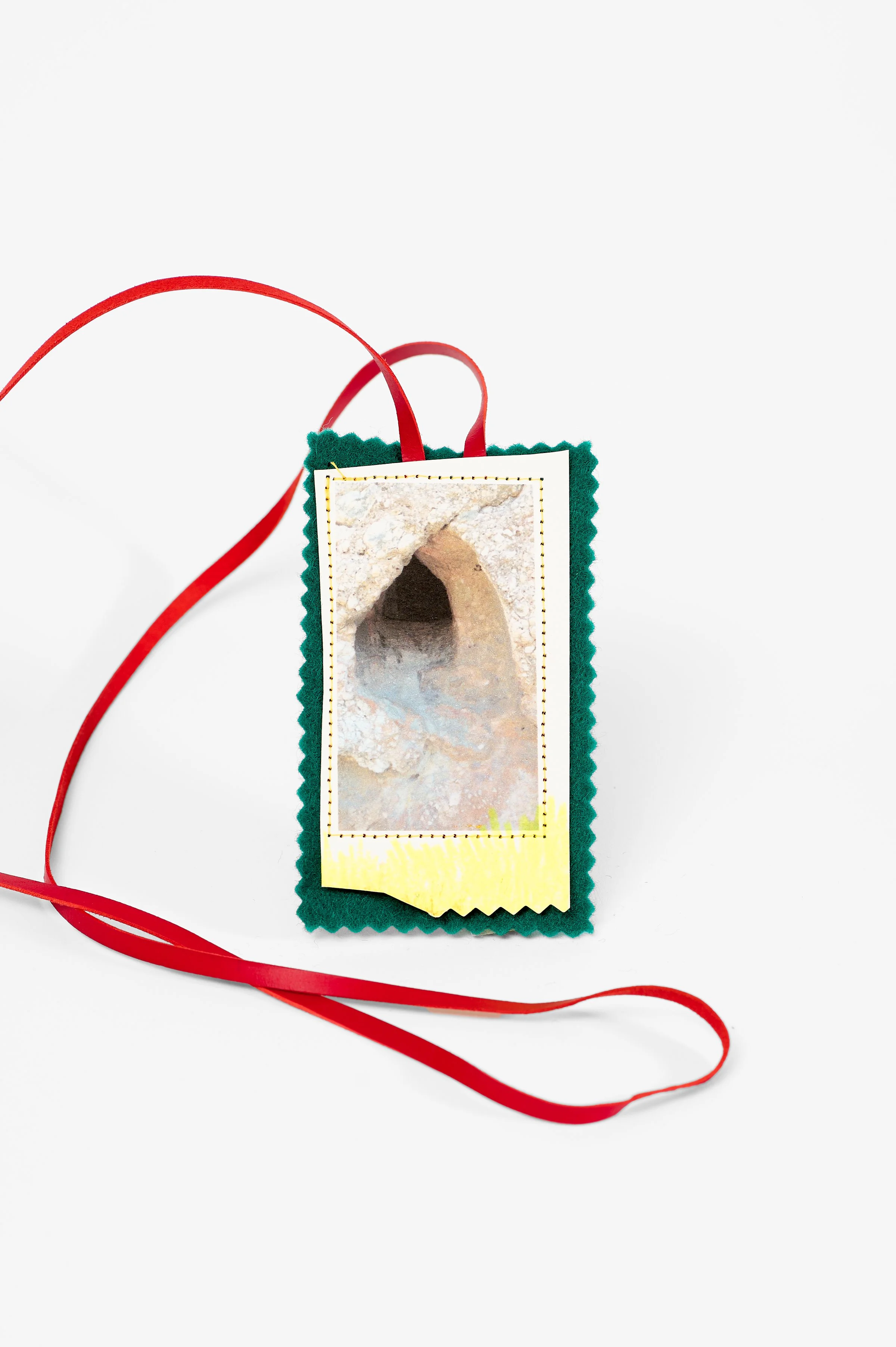
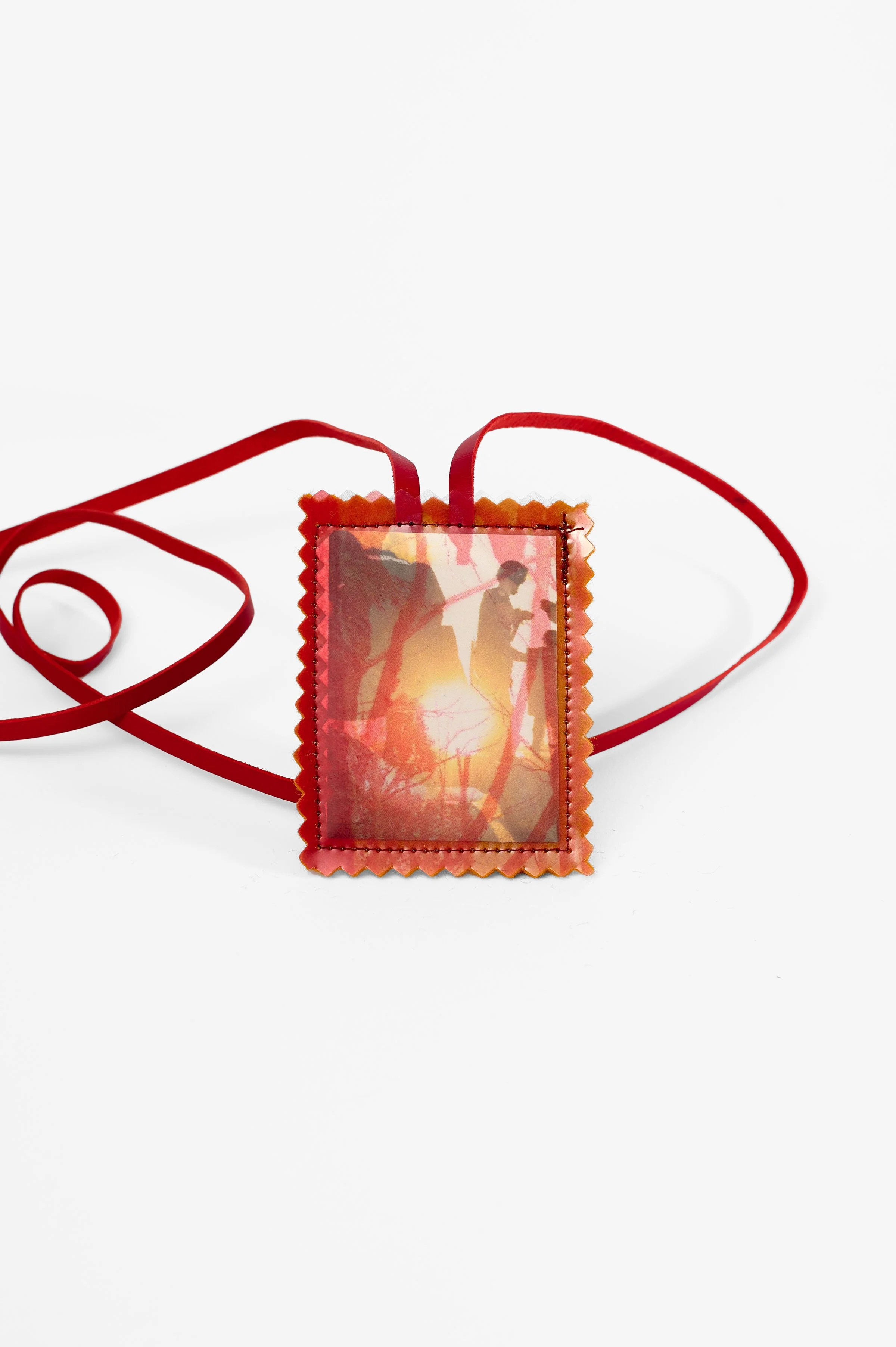
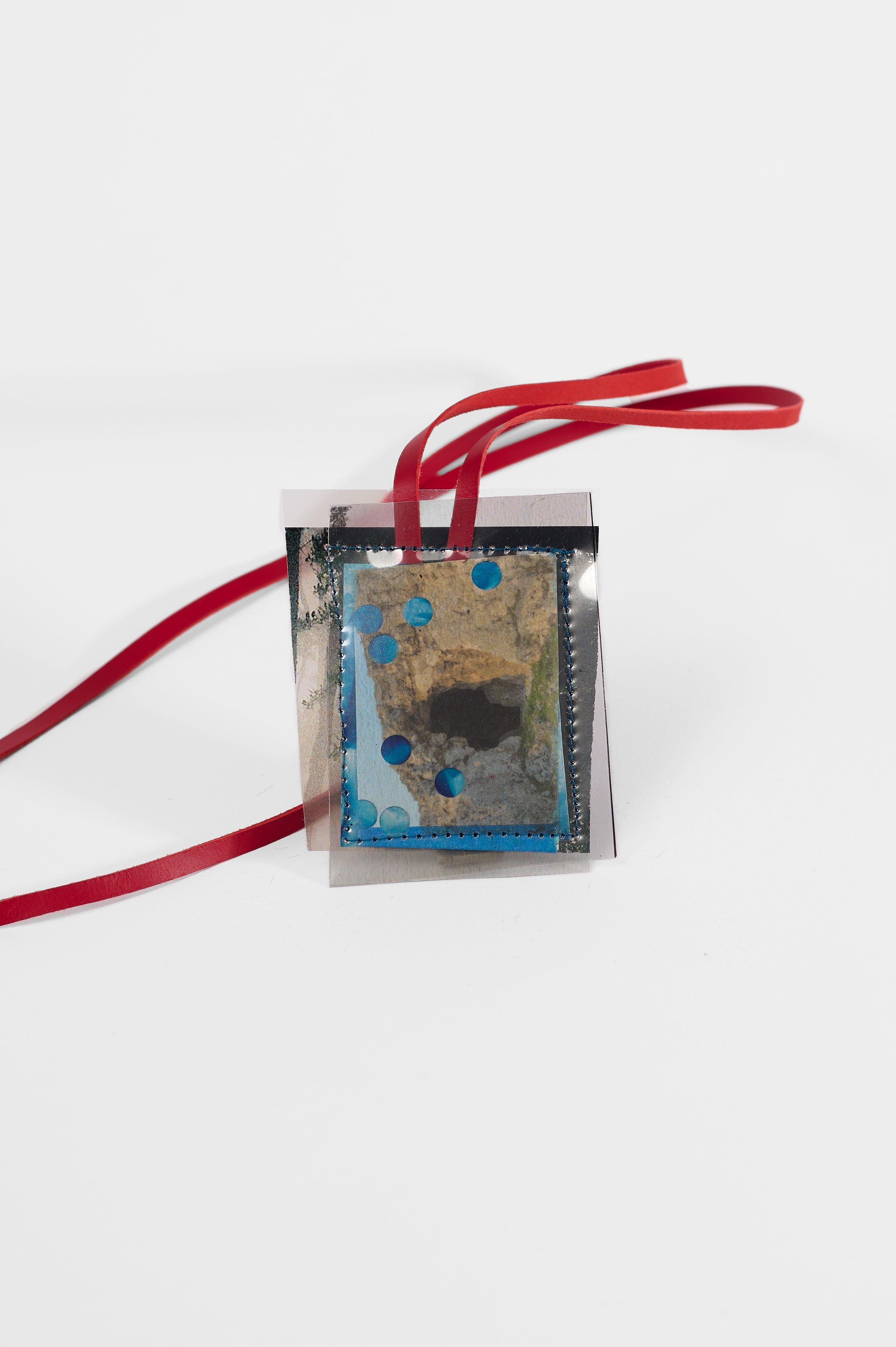
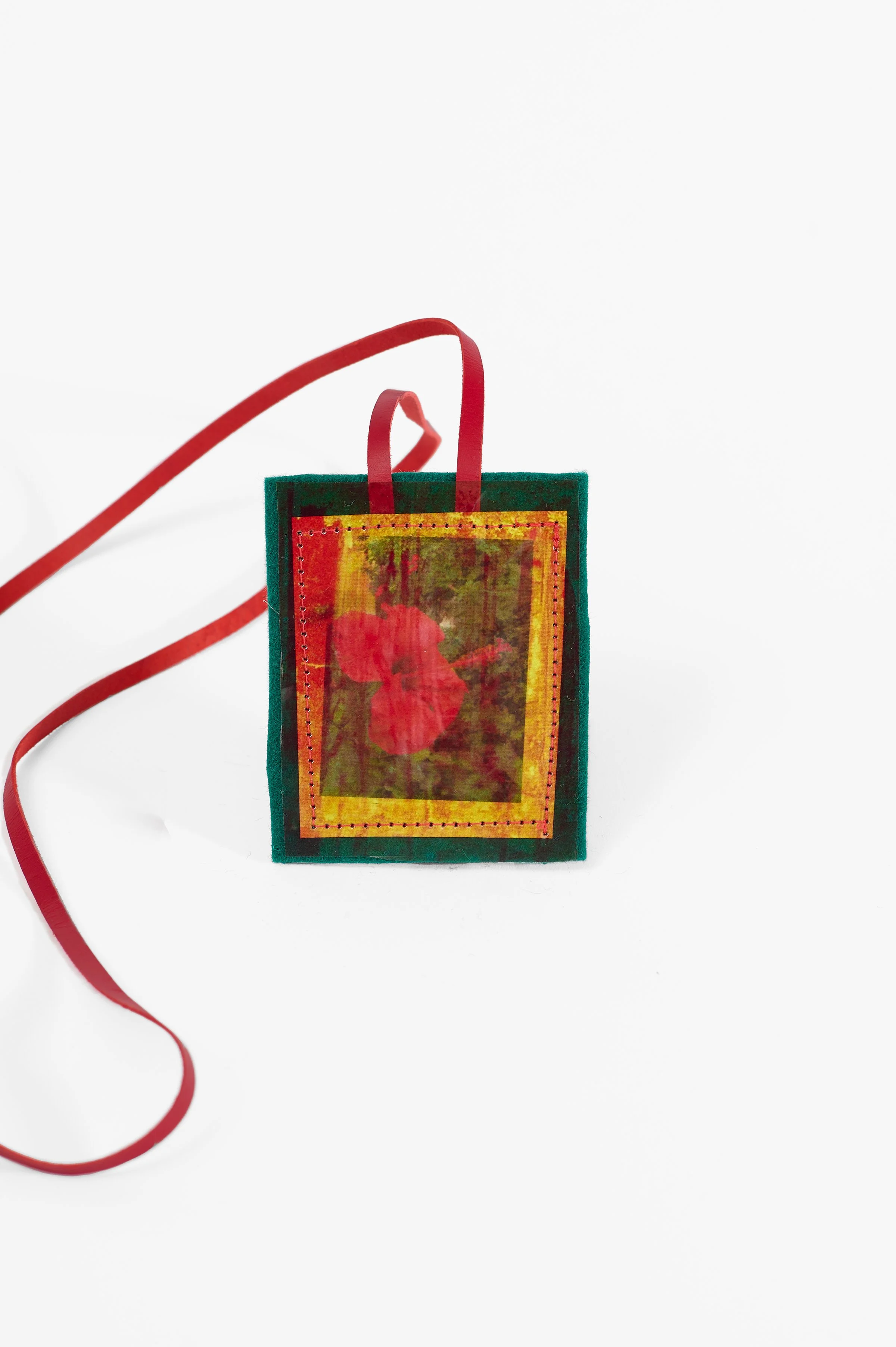
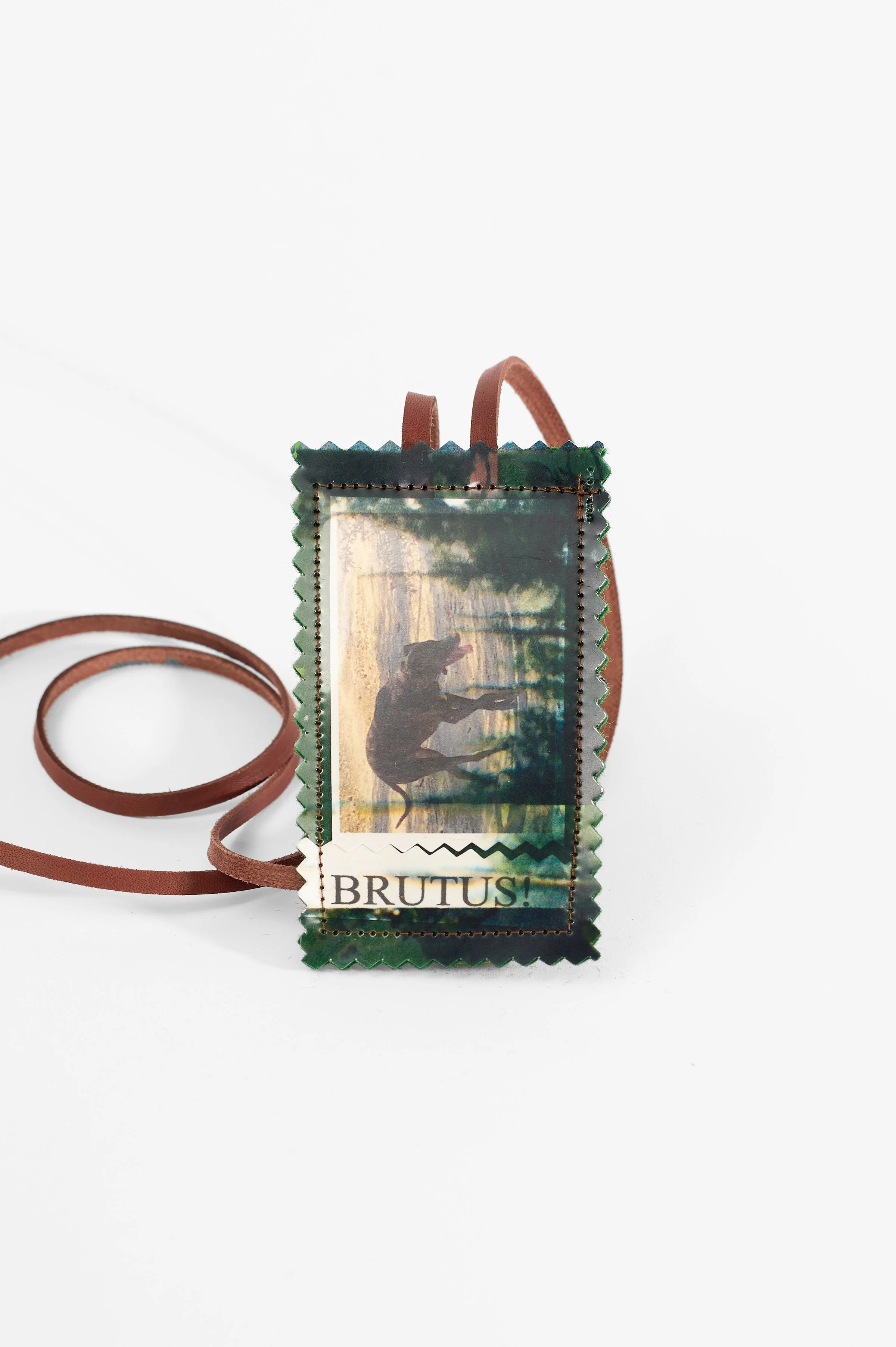
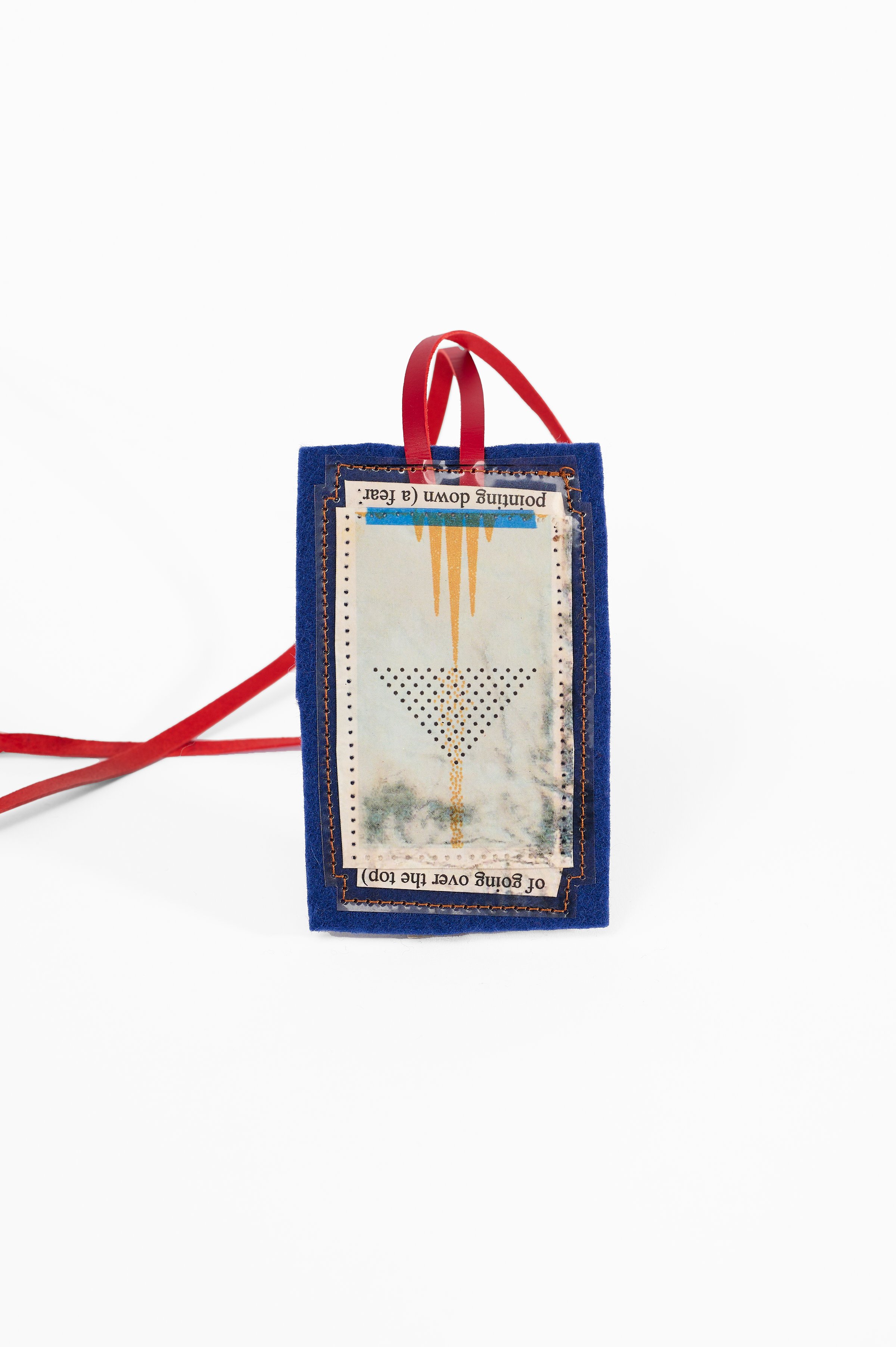
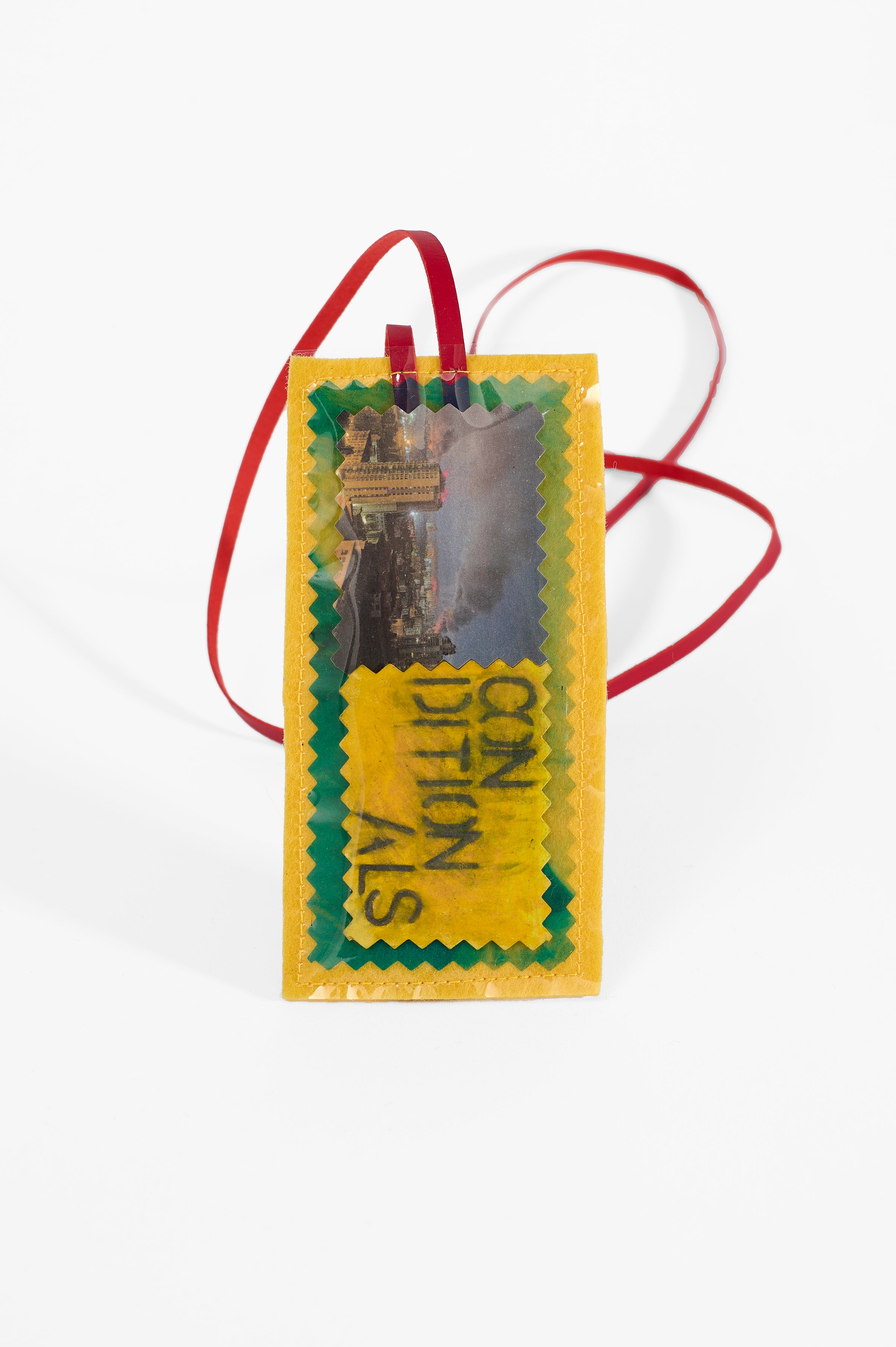
Alta Forma is delighted to present the final project in our series of duo exhibitions for 2025. ‘Gift’ features Naarm based artists Ross Coulter and Lynette Smith. Both are known for their conceptual approaches to art making, with practices spanning photography, video, sculpture, drawing and performance. Often, poetic or lyrical, their work focuses on distinct narrative making and specific qualities of being and experience. Using the form of the scapular, a charged wearable object that can be an expression of faith, commitment or grace, Ross and Lynette have made new, collaborative and symbiotic artworks, reflecting on their shared experiences of being raised religious, the loss of faith, and their lifelong practices of making meaning within contemporary art contexts.
About the project:
“On my first visit to Lyn’s studio, I was struck by the intimate work she was creating, inspired by a scapular gifted to her by a friend’s mother. The scapular is a holy object, originally given by Saint Mary of Mount Carmel to Saint Simon Stock—an object like a “get out of jail free” card, said to release a soul from purgatory into heaven. I was intrigued by this relic from my childhood.
For a while, I had mixed feelings about reflecting on my time growing up in the Catholic faith—or, as our local Palatine German priest Father Walter would call it, “the faith struggle” ~ the struggle to believe. As a young person, belonging to the Catholic Church had given me meaning and purpose and when the powerful feelings of belief vanished—when the veil lifted or as Andrew Denton once said, once “the tunnel at the end of the light” was glimpsed, for years I carried with me a pain, a mental anguish and existential dread. What remains from these early religious childhood experiences, imprinted in my character, is the need for connection, belonging, participation and community. In my twenties, I was introduced to the idea that images could transmit ideas, reflect culture, and shape who we are—or aspire to be. And slowly, meaning-making through art has become central to my life.
Back in Year Nine maths, my teacher suggested I get a job with Australia Post, as my handwriting and mathematical equations would be “very useful in making postage stamps.” Perhaps that’s why I’ve remained drawn to small-format works—there’s a certain intimacy in getting up close to a piece, in encountering a small work. I think of Tom Friedman’s self-portrait carved out of aspirin or the experience of seeing a 35mm black and white image of Yayo Kusama’s early performance work, cut from the contact sheet, framed and displayed amid a large, bright, colourful survey of her work.
Lyn and I had numerous conversations around religion, belief, images and meaning. Working at times together, other times in parallel, in person and remotely, making connections and meaning through wearable, small images. I’ve enjoyed the experience.
So did I.
The scapular, which Ross mentioned, was given to me 20 years ago without many words and no explanation. I was very moved and I’ve held on to it, wearing it last year at the funeral of the woman who gave it to me.
These objects I have made do stem from that gift, but it’s an indirect path, more like a triangulation. Several ideas have attached to them: about images, about bodies, about being tricked by appearances. The sources are perverse. I was provoked, for example, by Renée Thom’s theory of the image, a mathematical theory that he called catastrophe theory. Another point of a triangle was the death of Hector in The Iliad, the man who held fast until he couldn’t anymore (and that was the end of the song). There was also the Cave of the Apocalypse, on the island of Patmos in the eastern Mediterranean, where I sat and watched tourists kiss the icons in the holy cave.
For a semiotician, an image is both continuous with what came before, but also new. A catastrophic break is needed to reach that possibility of the new – which makes me think that producing an image is the only way to break with the existential dread that hits when anything powerful vanishes.
These objects for hanging on the body are not religious in purpose. They could be given to someone in a serious way, though, for protection or to steady a body caught too long on the cusp of fight or flight. They aren’t precious but I think they could be worth looking at and holding in the hand.
I grew up in a different religion from the one that Ross was part of – an iconoclastic one. I know Mary as told in the Bible, not as an image. I think that could be why, when I look at the tiny picture of the Mother of God on that scapular that was given to me, I see a surface only. This aspect of the gift is opaque to me. But there is a great deal that is intelligible: a small thing held in the hand, a protection against large forces and a reminder of strange futures.” Ross Coulter and Lynette Smith, 2025
Artist Talk: Saturday 30th of August at 1pm followed by opening celebration: 2-4pm. All welcome.
About the artists:
Ross Coulter is a Naarm/Melbourne-based artist who completed a BFA (Hons) in 2007 and an MFA (Research) in 2014 at the Victorian College of the Arts. His projects include Untrained with Lucy Guerin Inc. (2009–2010) and the George Mora Fellowship (2010–2011) at the State Library of Victoria, where he released 10,000 paper planes into the Domed Reading Room. Awards include the Keith & Elizabeth Murdoch Travelling Fellowship (2011), Australia Postgraduate Award (2012–2013), 2022 Rupert Bunny Special Projects Grant, 2018 Australia Council for the Arts Creation Grant and Yarra Ranges Council Arts Grant. He has held residencies at Shakespeare Grove Artist Studios, Gertrude Contemporary and Japan’s Echigo-Tsumari Artist-in-Residence Program, with his series Audience (2013–2016) exhibited at the NGV in 2017. His works are held in the collections of the National Gallery of Victoria, the State Library of Victoria, Parliament House Art Collection (Canberra), City of Melbourne, City of Port Phillip, City of Monash, the Victorian College of the Arts – University of Melbourne and in private collections.
Lynette Smith completed her Bachelor of Fine Arts at RMIT University in 1995 and went on to do postgraduate study in linguistics and philosophy at the University of Melbourne in the 2000s. She lives and works in Naarm/Melbourne, a city built on the unceded lands of the Kulin Nations. Her work is held in private collections in Australia, United States and Europe, as well as public collections: National Gallery of Victoria, Queensland StateLibrary, RMIT University, State Library of Victoria, University of Melbourne, Santa Fe Art Institute. She has done residencies at Plumwood Mountain, New South Wales, in 2024, Nida Art Colony (Vilnius Arts Academy) in 2016 and 2018, and Santa Fe Art Institute Residency 2012. Her work has been supported by the National Assistance Program for the Arts, Sidney Myer Fund & The Myer Foundation, 2020, City of Melbourne development grant, 2020, Arts Victoria, Cultural Exchange 2012. In 2004-2005 she was a West Space board member.